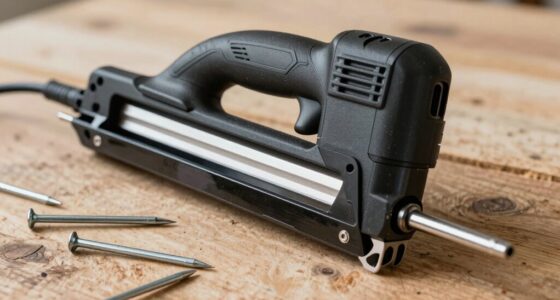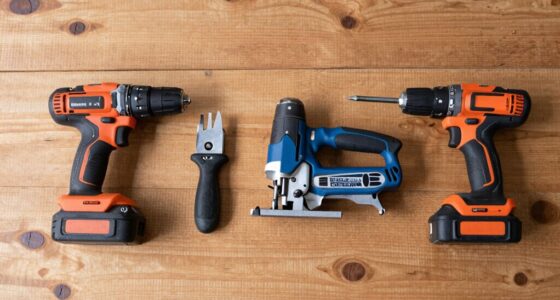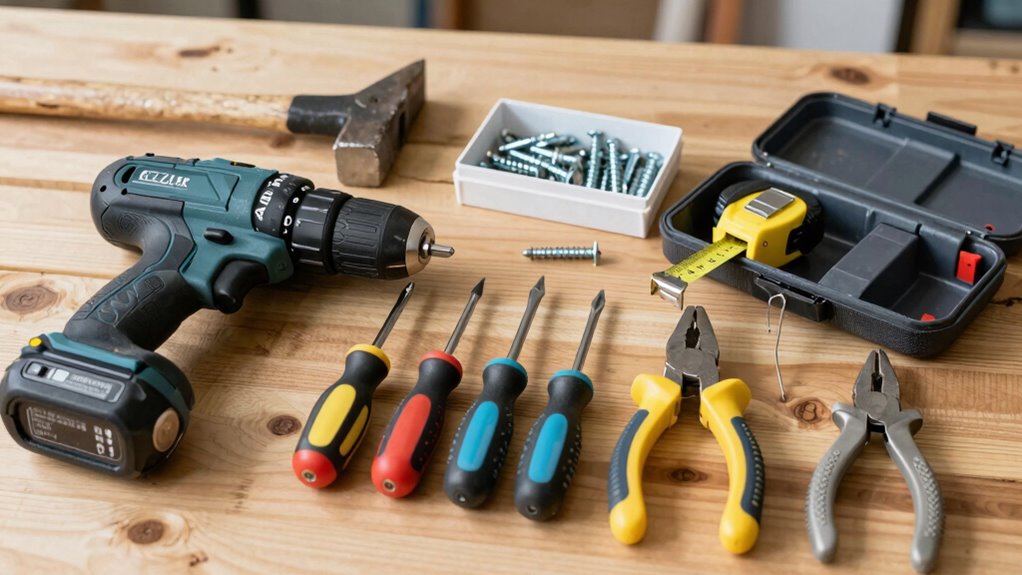
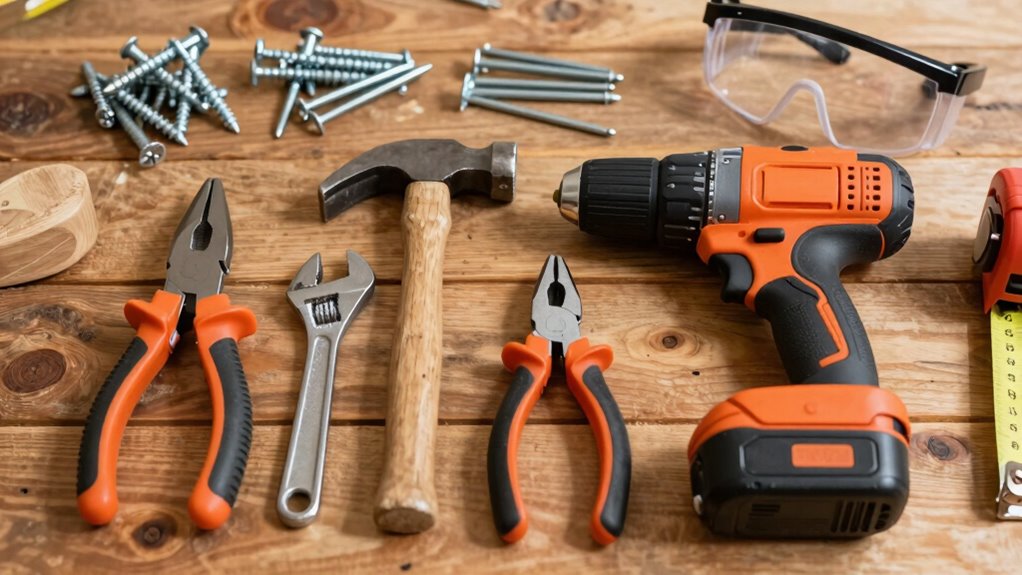
As a beginner, start with a basic, versatile toolkit that includes a cordless drill, screwdrivers, a hammer, and a handsaw. These tools cover most fundamental tasks like drilling, driving screws, and cutting. Focus on safety gear like goggles and gloves, and keep your workspace organized. Mastering these essentials builds confidence and prepares you for more advanced projects. Keep exploring, and you’ll discover how to expand your collection wisely as you gain experience.

Turn the school run and nap time into listening time
- Thousands of audiobooks, podcasts and originals
- Listen on your phone, tablet or Echo — also offline
- Cancel anytime
Key Takeaways
- Start with a cordless drill, screwdriver set, hammer, tape measure, and handsaw for versatile basic tasks.
- Prioritize safety gear like goggles, gloves, and a clutter-free workspace for safe operation.
- Master accurate measurement tools and techniques to ensure precise cuts and fittings.
- Focus on essential, multi-purpose tools before investing in specialized equipment.
- Maintain and handle tools properly to ensure safety, longevity, and project success.
Starting your DIY journey can be exciting, but choosing the right tools is vital to build confidence and guarantee safety. When you’re just beginning, it’s tempting to buy every gadget you see, but focusing on a few reliable tools will serve you better. The first priority is understanding power tool safety. Power tools can make tasks easier and faster, but they also pose risks if used improperly. Always read the safety instructions that come with each tool, wear protective gear like goggles and gloves, and make sure your workspace is clear of clutter. Keeping your hands steady and maintaining focus prevents accidents and helps you complete projects accurately. Practicing proper power tool safety builds your confidence, making you more comfortable with handling different equipment over time. Developing a solid understanding of safety protocols and proper handling techniques is essential for long-term success. Additionally, familiarizing yourself with tool maintenance can extend the lifespan of your equipment and ensure it operates safely. Learning how to properly care for your tools can prevent malfunctions and accidents, reinforcing safe working habits.
Alongside safety, learning basic measurement techniques is vital. Accurate measurements determine the success of your project, whether you’re cutting wood or installing fixtures. Invest in a good tape measure, a square, and a level—these are your fundamental tools for precise work. When measuring, always double-check your marks before making cuts or drilling. Use your square to ensure corners are at right angles, and a level to keep surfaces even. Developing these basic measurement techniques helps you avoid mistakes, saves material, and ensures your project looks professional. Precision in measurement also reduces frustration, as you won’t need to redo work due to errors. Mastering these foundational skills will give you confidence as you progress into more complex projects.
Once you’ve grasped the importance of power tool safety and measurement techniques, you can start with a few versatile tools. A cordless drill is a great first power tool—it’s useful for drilling holes and driving screws, and it’s relatively safe once you follow proper procedures. Pair it with a set of screwdrivers, a hammer, and a handsaw for basic carpentry tasks. These tools allow you to handle a variety of projects without overwhelming yourself. As you get more comfortable, you can gradually add more specialized tools, but initially, focus on mastering the basics. Building a reliable tool collection around these essentials will set a strong foundation for your DIY endeavors.
As an affiliate, we earn on qualifying purchases.
Frequently Asked Questions
What Safety Equipment Should I Always Use With DIY Tools?
You should always wear protective gear like safety goggles, ear protection, and gloves when using DIY tools to prevent injury. Make sure your tools are stored properly in a secure tool storage area to avoid accidents and damage. Wearing the right safety equipment keeps you safe from flying debris, loud noises, and cuts, while organized tool storage helps maintain a safe workspace. Prioritize safety to enjoy your projects without unnecessary risks.
How Do I Choose the Right Tool for a Specific Project?
You’d think choosing the right tool is obvious, but it’s trickier than it looks. Start with your project compatibility—know what materials you’re working with and the scope of your task. Then, consider tool selection carefully: pick tools designed for your specific job to avoid frustration and damage. Don’t just grab the newest gadget; think about what genuinely works best for your project’s needs, saving you time and headaches.
Are There Budget-Friendly DIY Tools That Are Still Effective?
Yes, there are budget options that are still effective for DIY projects. Look for versatile tools like a basic cordless drill, a set of screwdrivers, and a multi-tool, which can handle many tasks. These budget-friendly options often offer great value, allowing you to complete various projects without breaking the bank. Prioritize tools with multiple functions to maximize tool versatility and guarantee you’re prepared for different DIY tasks.
How Often Should I Maintain or Replace My Tools?
You should maintain your tools regularly, ideally following a set Maintenance schedule, to keep them in top shape. Check your Tool storage often for signs of rust, wear, or damage, and clean or lubricate tools as needed. Replace tools promptly if they show significant wear or damage that could compromise safety or efficiency. Consistent care guarantees your tools last longer and perform reliably during your DIY projects.
What Are Common Beginner Mistakes With DIY Tools?
You often make beginner mistakes with DIY tools by neglecting proper tool organization, which leads to lost or damaged tools. Focus on developing your skills gradually, avoiding rushing projects and ignoring safety measures. Keep your workspace tidy, learn to use each tool correctly, and practice patience. This approach helps prevent accidents, saves money, and boosts confidence, making your DIY projects more enjoyable and successful.
As an affiliate, we earn on qualifying purchases.
Conclusion
With these beginner-friendly tools in your kit, you’re armed like a knight ready for any DIY quest. Each tool is a trusty sidekick, guiding you through the maze of projects with confidence. Think of your toolbox as a garden where skills bloom and creativity takes root. As you grow more skilled, these tools will become your trusted companions on your journey of turning ideas into reality. So grab your tools—adventure in DIY awaits!
As an affiliate, we earn on qualifying purchases.
As an affiliate, we earn on qualifying purchases.
Fall Picks
fall essentials
As an affiliate, we earn on qualifying purchases.