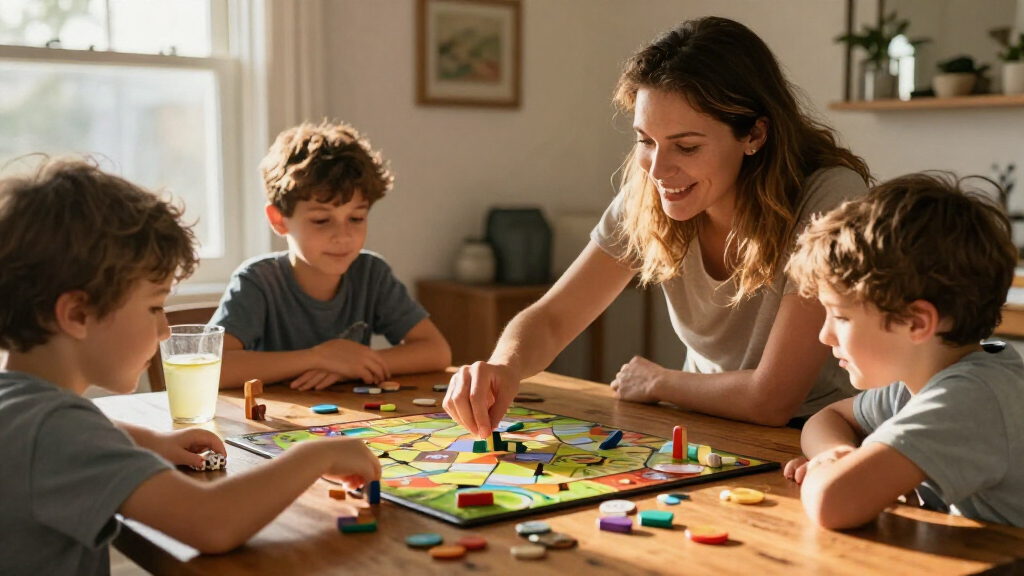
The best board games for kids balance easy-to-learn rules with enough interaction to keep the whole family involved. Outfoxed! stands out as the best overall pick for cooperative mystery-solving, while Guess Who? is a strong choice for quick head-to-head play and The Uzzle 3.0 suits kids who enjoy spatial puzzles. The main tradeoffs are age fit, reading and attention demands, active versus seated play, and whether a game works well with just two players. Read on for a ranked breakdown of all 15 options, plus guidance for choosing a game your household will actually want to replay.

Turn the school run and nap time into listening time
- Thousands of audiobooks, podcasts and originals
- Listen on your phone, tablet or Echo — also offline
- Cancel anytime
Complete the kit


Key Takeaways
- Outfoxed! earns the strongest all-around position because cooperative deduction gives kids a shared goal instead of making every round a direct contest.
- Guess Who? and Connect 4 are more practical for short two-player sessions, while several classic race games need a larger group to feel lively.
- Candy Land and Chutes and Ladders suit very young players who are still learning turn-taking, but their limited choices may hold older children’s attention for less time.
- The Uzzle 3.0 offers a different kind of challenge from clue and guessing games: its appeal depends on whether a child enjoys visual-spatial puzzles.
- The lineup spans active play, quick card action, deduction, and familiar licensed themes, so choosing by play style and age fit matters more than choosing a game with the most elaborate components.
| Hasbro Gaming Battleship Classic Board Game |  | Best for Two-Player Strategy | Brand: Hasbro Gaming | Players: 2 | Recommended age: 7 years and up | VIEW LATEST PRICE | See Our Full Breakdown |
| Hasbro Gaming Clue Junior: Case of the Broken Toy |  | Best for Young Detectives | Brand: Hasbro Gaming | Age range: 5 years and up | Players: 2–6 | VIEW LATEST PRICE | See Our Full Breakdown |
| Taco Cat Goat Cheese Pizza Card Game | 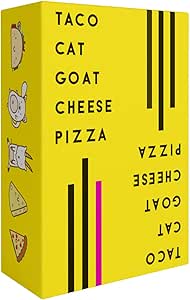 | Best for Quick, High-Energy Rounds | Players: 2–8 | Age range: 7 years and up | Play time: 10–15 minutes | VIEW LATEST PRICE | See Our Full Breakdown |
| Hasbro Gaming Chutes and Ladders Board Game for 2–4 Players, Ages 3+ |  | Best for Preschool Beginners | Brand: Hasbro Gaming | Players: 2–4 | Recommended age: 3 years and up | VIEW LATEST PRICE | See Our Full Breakdown |
| Hasbro Gaming Operation Electronic Board Game for Ages 6+ |  | Best for Fine-Motor Skill Play | Brand: Hasbro Gaming | Age range: 6 years and up | Players: 1 or more | VIEW LATEST PRICE | See Our Full Breakdown |
| Outfoxed! Cooperative Mystery Board Game |  | Best for Cooperative Deduction | Brand: Gamewright | Game type: Cooperative mystery board game | Players: 4 | VIEW LATEST PRICE | See Our Full Breakdown |
| Hasbro Twister Party Classic Board Game – 2 to 4 Players, Indoor & Outdoor, Ages 6+ |  | Best for Active Play | Brand: Hasbro Gaming | Age range: 6 years and up | Players: 2–4 | VIEW LATEST PRICE | See Our Full Breakdown |
| Spin Master Games Hedbanz Classic Edition Picture Guessing Game |  | Best for Larger Groups | Players: 2–6 | Age range: 6 years and up | Included components: 6 headbands, 6 headplates, 16 scoring badges, 1 timer, 69 picture cards, 3 sample question cards, instructions | VIEW LATEST PRICE | See Our Full Breakdown |
| Hasbro Gaming Guess Who? Plus Board Game with People and Pet Cards | 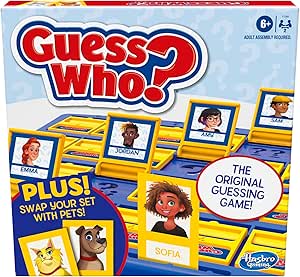 | Best for Two-Player Face-Offs | Brand: Hasbro Gaming | Players: 2 | Recommended age: 6 years and up | VIEW LATEST PRICE | See Our Full Breakdown |
| The Uzzle 3.0 Family Board Game |  | Best for Solo Puzzle Play | Brand: The Uzzle | Model: The Uzzle 3.0 | Age range: 4 years and up | VIEW LATEST PRICE | See Our Full Breakdown |
| Monopoly Junior: Super Mario Edition Board Game |  | Best for Super Mario Fans | Edition: Super Mario Edition | Players: 2 or more | Recommended age: 5 years and up | VIEW LATEST PRICE | See Our Full Breakdown |
| Hasbro Gaming Candy Land Board Game for Kids Ages 3 and Up |  | Best for Preschool Beginners | Players: 2–4 | Recommended age: 3 years and up | Estimated playing time: 15 minutes | VIEW LATEST PRICE | See Our Full Breakdown |
| Hasbro Gaming Trouble Board Game for Ages 5 and Up |  | Best for Satisfying Dice Rolls | Edition: Classic Edition | Players: 2–4 | Recommended age: 5 years and up | VIEW LATEST PRICE | See Our Full Breakdown |
| Hasbro Connect 4 Game (2025 Edition) with Carrying Case and Score Trackers |  | Best Compact Travel Pick | Edition: 2025 Edition | Players: 2 | Recommended age: 6 years and up | VIEW LATEST PRICE | See Our Full Breakdown |
| Hasbro Gaming Sorry! Family Board Game |  | Best for Card-Driven Choices | Edition: Standard | Players: 2–4 | Recommended age: 6 years and up | VIEW LATEST PRICE | See Our Full Breakdown |
| board games for kid | Players | Included components | Brand | Recommended age |
|---|---|---|---|---|
| Hasbro Gaming Battleship Class | 2 | 2 portable battle cases, 10 plastic ships, 73 red hit pegs, 168 green miss pegs, and instructions | Hasbro Gaming | 7 years and up |
| Hasbro Gaming Clue Junior: Cas | 2–6 | Gameboard, 6 character pawns, 6 furniture tokens, 7 white bases, 7 yellow bases, detective notepad, die, label sheet, and game guide | Hasbro Gaming | — |
| Taco Cat Goat Cheese Pizza Car | 2–8 | Cards | — | — |
| Hasbro Gaming Chutes and Ladde | 2–4 | — | Hasbro Gaming | 3 years and up |
| Hasbro Gaming Operation Electr | 1 or more | Gameboard with Cavity Sam, tweezers, 26 cards, 12 Funatomy parts, play money, rubber band, and instructions | Hasbro Gaming | — |
| Outfoxed! Cooperative Mystery | 4 | Board game, dice, evidence decoder, clues | Gamewright | 5 years and up |
| Hasbro Twister Party Classic B | 2–4 | Vinyl mat, spinner, instructions | Hasbro Gaming | — |
| Spin Master Games Hedbanz Clas | 2–6 | 6 headbands, 6 headplates, 16 scoring badges, 1 timer, 69 picture cards, 3 sample question cards, instructions | — | — |
| Hasbro Gaming Guess Who? Plus | 2 | 2 gameboards, 48 people face cards, 24 people mystery cards, 48 pets face cards, 24 pets mystery cards, 2 scorekeepers, game rules | Hasbro Gaming | 6 years and up |
| The Uzzle 3.0 Family Board Gam | 1–4 | 4 sets of 10 blocks; 100 challenges | The Uzzle | — |
| Monopoly Junior: Super Mario E | 2 or more | Gameboard, 4 character tokens with plastic bases, 4 character cards, Coin Sound Unit, 20 Chance cards, 48 Sold Signs, power-up die, numbered die, 90 cardboard coins, label sheet, and game guide | — | 5 years and up |
| Hasbro Gaming Candy Land Board | 2–4 | Gameboard, 4 gingerbread pawns, card deck, and instructions | — | 3 years and up |
| Hasbro Gaming Trouble Board Ga | 2–4 | Gameboard, plastic game unit with Pop-O-Matic die roller, 16 pegs, and instructions | — | 5 years and up |
| Hasbro Connect 4 Game | 2 | Grid and tray, 42 discs (21 red and 21 yellow), and game rules | — | 6 years and up |
| Hasbro Gaming Sorry! Family Bo | 2–4 | Gameboard, 12 pawns, 45 cards, and instructions | Hasbro Gaming | 6 years and up |
More Details on Our Top Picks
Hasbro Gaming Battleship Classic Board Game
Battleship is the strongest fit here for kids who enjoy planning, tracking information, and trying to outguess one opponent. Calling coordinates and recording hits turns each round into a simple logic challenge, while the Salvo option gives older or more experienced players a change from the standard rules. Its portable cases keep ships and pegs together, a practical advantage over larger board games such as Chutes and Ladders. The tradeoff is its strict two-player format: unlike Clue Junior, it cannot bring a larger family group into the same game. The tiny pegs can also go missing, so this is a better choice for families ready to keep track of small pieces than for very young children.
Pros:- Coordinate calls encourage planning and logical tracking.
- Portable cases provide storage for travel.
- Salvo rules add an advanced play option.
- Five ship types give players a varied fleet to place.
Cons:- Designed for exactly two players.
- Small hit and miss pegs can be easy to lose.
Best for: Two children or a parent and child who want a tactical, head-to-head game with a more advanced play option.
Not ideal for: Families looking for a game everyone can play together, or households where small pegs are likely to get lost.
- Brand:Hasbro Gaming
- Players:2
- Recommended age:7 years and up
- Edition:Classic
- Playing time:30 minutes
- Included components:2 portable battle cases, 10 plastic ships, 73 red hit pegs, 168 green miss pegs, and instructions
- Language:English
- Model number:F4527
Our verdict“Choose Battleship for a portable, strategic two-player contest, but pick Clue Junior if you need a game for a larger group.”
Hasbro Gaming Clue Junior: Case of the Broken Toy
Clue Junior gives younger players a reason to observe, compare clues, and rule out possibilities, making it a more thinking-focused choice than the luck-driven Chutes and Ladders. Players investigate who broke a toy, what was broken, and when it happened, then use a notepad to track what they learn. Support for 2–6 players also makes it more flexible for family play than two-player Battleship. The mystery is deliberately aimed at a young audience, so older children who want a more demanding deduction game may outgrow its premise. Reading and recording clues can also slow down play for children who are not yet comfortable with those tasks; for them, a no-reading game such as Chutes and Ladders may be a better fit.
Pros:- Clue gathering introduces basic deductive reasoning.
- Detective notepad helps players track and eliminate possibilities.
- Supports 2–6 players for family or group play.
- Combines a simple mystery with reading and problem-solving practice.
Cons:- The broken-toy mystery may feel too young for older children.
- Using the notepad and following clues requires reading comprehension.
Best for: Families with children around five and up who are ready to practice reading clues and basic deduction together.
Not ideal for: Children who are not comfortable reading or tracking written clues, and older kids seeking a complex mystery.
- Brand:Hasbro Gaming
- Age range:5 years and up
- Players:2–6
- Theme:Mystery
- Play mode:Manual
- Included components:Gameboard, 6 character pawns, 6 furniture tokens, 7 white bases, 7 yellow bases, detective notepad, die, label sheet, and game guide
- Educational objective:Critical thinking, problem-solving through deductive reasoning, and reading comprehension
- Model number:C1293
Our verdict“Choose Clue Junior for a group of young readers who enjoy solving a simple mystery, rather than a no-reading game like Chutes and Ladders.”
Taco Cat Goat Cheese Pizza Card Game
Taco Cat Goat Cheese Pizza suits families who want a lively game that starts quickly and fits into a short break. Players chant the sequence and slap the pile when a card matches the spoken word; action cards keep the pattern from feeling entirely predictable. Its 10–15 minute play time and compact card format make it easier to take along than board-based choices such as Operation. It also accommodates up to eight players, unlike head-to-head Battleship. That energy comes with a real limitation: winning depends on fast reactions and hand coordination, and the slapping mechanic may frustrate or exclude some players. Choose it for a playful, noisy group, not for children who prefer measured turns or calmer strategy.
Pros:- Simple rules make it quick to learn.
- Action cards add twists to the matching routine.
- Compact cards are convenient for travel.
- Supports 2–8 players and short rounds.
Cons:- Fast reactions and hand coordination strongly affect play.
- The slapping mechanic may not suit every player.
Best for: Families or groups with children aged seven and up who want a portable, fast round with plenty of players involved.
Not ideal for: Children who dislike frantic hand-slapping games or have difficulty with quick reactions and hand coordination.
- Players:2–8
- Age range:7 years and up
- Play time:10–15 minutes
- Included components:Cards
- Edition:Original
- Unit count:1
Our verdict“Pick Taco Cat Goat Cheese Pizza for a quick, energetic group game, but choose Clue Junior for slower clue-based play.”
Hasbro Gaming Chutes and Ladders Board Game for 2–4 Players, Ages 3+
Chutes and Ladders is the most accessible starting point in this group for children who are still learning to count and recognize numbers. There is no reading required; players spin, move, and see whether a ladder helps or a chute sends them back. That simplicity makes it easier for preschoolers to join than Clue Junior, which asks players to follow clues and use a detective notepad. The tradeoff is that children have few meaningful choices: outcomes come from the spinner and the board, not strategy. Compared with the quick, reactive Taco Cat Goat Cheese Pizza, this game is slower and more predictable. Cardboard playing pieces may also be less sturdy than the plastic components in some other games.
Pros:- No reading is required to participate.
- Spinning and moving offer practice with counting and number recognition.
- Supports 2–4 players.
- Straightforward rules suit young first-time players.
Cons:- The roll-and-move format leaves little room for player choice.
- Playing pieces are made of cardboard.
Best for: Families introducing children aged three and up to turn-taking, counting, and a simple shared board game.
Not ideal for: Older children who want tactical decisions, fast action, or more varied ways to play.
- Brand:Hasbro Gaming
- Players:2–4
- Recommended age:3 years and up
- Playing time:Approximately 30 minutes
- Includes:Game board, cardboard playing pieces, and spinner
- Reading required:No
- Skills:Counting and number recognition
- Battery required:No
Our verdict“Choose Chutes and Ladders as a simple first board game for preschoolers, but look to Clue Junior for more active decision-making.”
Hasbro Gaming Operation Electronic Board Game for Ages 6+
Operation turns careful hand control into the main challenge: players use tweezers to remove one of 12 ailments without touching the cavity’s metal edges. The buzzer and light-up nose give immediate feedback, so children can see and hear when a move goes wrong. Unlike Chutes and Ladders, it asks players to control each action rather than rely on a spinner, and solo play gives it more flexibility than two-player Battleship. The tradeoff is that steady hands matter; children who find precise movements frustrating may not enjoy repeated buzzer-triggering attempts. It also needs 2 D batteries, adding a requirement that the non-electronic options in this lineup avoid.
Pros:- Can be played solo or with multiple players.
- Buzzer and light-up nose provide immediate feedback.
- Twelve removable ailments give players several challenges.
- Tweezers-based play practices fine motor coordination.
Cons:- Requires 2 D batteries.
- Careful hand control is needed to avoid touching the metal cavity edges.
Best for: Children aged six and up who enjoy hands-on challenges and want to practice fine motor coordination alone or with others.
Not ideal for: Players who dislike precision tasks, or families seeking a game that can be played without batteries.
- Brand:Hasbro Gaming
- Age range:6 years and up
- Players:1 or more
- Ailments:12
- Included components:Gameboard with Cavity Sam, tweezers, 26 cards, 12 Funatomy parts, play money, rubber band, and instructions
- Skills:Fine motor coordination and strategy
- Batteries required:2 D batteries
- Instruction languages:English and Spanish
Our verdict“Choose Operation for hands-on precision play with solo flexibility, but pick Chutes and Ladders for a simpler, battery-free game.”
Outfoxed! Cooperative Mystery Board Game
Outfoxed! is my pick for kids who enjoy solving a problem together rather than competing to win. Players gather clues and use an evidence decoder to identify the pot-pie thief before the fox escapes, giving simple turns a clear shared purpose. At 15–20 minutes, it fits a shorter family game session better than a longer strategy game, while the changing culprit gives repeat plays a reason to feel different. Compared with Guess Who? Plus, which pits two players against each other, Outfoxed! makes communication part of the game and can suit siblings who dislike direct competition. The tradeoff is its listed four-player setup, which offers less flexibility than Guess Who? Plus or Hedbanz. Kids who prefer movement or head-to-head play may also find the clue-solving pace too quiet.
Pros:- Shared objective gives players a reason to communicate and make decisions together.
- Clues and the evidence decoder turn deduction into a concrete activity for young players.
- 15–20-minute sessions work well when attention or family game time is limited.
- Different outcomes give the mystery replay value.
Cons:- The listed four-player count may not fit smaller groups.
- Cooperative clue-solving may feel less exciting to children who want direct competition.
Best for: Families with children ages 5 and up who want a short, collaborative game that encourages clue-sharing and logical thinking.
Not ideal for: Households that often have only two or three players, or children who prefer active or competitive games over cooperative deduction.
- Brand:Gamewright
- Game type:Cooperative mystery board game
- Players:4
- Recommended age:5 years and up
- Playing time:15–20 minutes
- Included components:Board game, dice, evidence decoder, clues
- Language:English
- Edition:Standard Edition
Our verdict“Choose Outfoxed! for a short, team-based mystery; pick Guess Who? Plus instead if you need a two-player competitive game.”
Hasbro Twister Party Classic Board Game – 2 to 4 Players, Indoor & Outdoor, Ages 6+
Twister Party is the most physical choice in this group: kids follow the spinner’s color-and-movement prompts while trying to stay balanced on the mat. That makes it a useful change of pace from seated games like Outfoxed! and Hedbanz, especially for families who want play to involve coordination as well as turn-taking. Its indoor-or-outdoor format also offers more flexibility about where to play, and tournament instructions can help a group organize rounds. The main limitation is capacity: each session is for 2–4 players, so a larger gathering has to rotate participants. The mat can also slip on smooth floors, which makes the playing surface a real setup concern. Choose it for active, social fun, not for a quiet game night or compact travel play.
Pros:- Movement prompts give kids a chance to practice balance and coordination.
- Can be played indoors or outdoors.
- Spinner, mat, and tournament instructions provide the basic setup for group play.
- Familiar rules make it easy to bring into a mixed-age gathering.
Cons:- Only 2–4 people play in one session, so larger groups need to take turns.
- The mat may slip on smooth surfaces, requiring careful placement.
- The large mat is less convenient to carry and store than compact games such as Guess Who? Plus.
Best for: Families with children ages 6 and up who want an active group game for a clear, nonslip play area.
Not ideal for: Buyers seeking a seated logic game, a portable option, or a game that keeps a group larger than four playing at once.
- Brand:Hasbro Gaming
- Age range:6 years and up
- Players:2–4
- Included components:Vinyl mat, spinner, instructions
- Play setting:Indoor or outdoor
- Number of packs:1
- Warranty:No warranty
Our verdict“Pick Twister Party when you want active play for up to four kids and have a safe, stable surface for the mat.”
Spin Master Games Hedbanz Classic Edition Picture Guessing Game
Hedbanz brings quick verbal guessing to a group, with each player asking yes-or-no questions to identify the picture on their headband. Its 2–6 player range gives it an advantage over two-player-only Guess Who? Plus when more children want to join, while the picture cards keep the idea accessible for players who are new to deduction games. Collecting three badges gives each round a straightforward goal, and the included timer adds pace. The tradeoff is that the fun depends on children taking turns asking and answering questions; quieter kids or players who find verbal improvisation difficult may need encouragement. It also requires at least two players and works better as a lively group activity than as a solo puzzle like The Uzzle 3.0.
Pros:- Accommodates 2–6 players, more than two-player Guess Who? Plus.
- Yes-or-no questions invite deductive thinking in an accessible format.
- Picture cards and headbands give the game a hands-on group feel.
- Three-badge objective and timer help keep rounds moving.
Cons:- Requires at least two players and offers no solo mode.
- Players need to ask and answer questions, which may not suit children reluctant to speak in a group.
- The timer can add pressure for kids who prefer a slower pace.
Best for: Families and playgroups with children ages 6 and up who want a verbal guessing game that can include up to six players.
Not ideal for: Solo players, children uncomfortable speaking in a group, or buyers looking for a quiet puzzle with individual play.
- Players:2–6
- Age range:6 years and up
- Included components:6 headbands, 6 headplates, 16 scoring badges, 1 timer, 69 picture cards, 3 sample question cards, instructions
- Game objective:Collect 3 scoring badges by guessing picture cards
- Model year:2023
- Game format:Picture guessing with yes-or-no questions
Our verdict“Choose Hedbanz for a lively guessing game with a larger group, but choose The Uzzle 3.0 if solo play matters.”
Hasbro Gaming Guess Who? Plus Board Game with People and Pet Cards
Guess Who? Plus is the clearest fit here for two children who want a direct, easy-to-follow guessing contest. Players use yes-or-no questions to identify a mystery person or pet, and the two card sets add variety without changing the familiar core task. Compared with Hedbanz, it avoids headbands and spoken clues from a wider group, but it is limited to exactly two players. The fold-up cases and easy-load frames make setup and storage more straightforward than a game with a large mat, such as Twister Party. That portability comes with a narrower social role: siblings can play head-to-head, but a third child cannot join the same match. Kids who want teamwork, movement, or a solo challenge should look to Outfoxed!, Twister, or The Uzzle 3.0 instead.
Pros:- People and pet card sets offer two themes within the same guessing format.
- Easy-load frames support quick setup.
- Fold-up cases make the game easier to carry and store than Twister Party.
- Simple yes-or-no questions give two players a clear way to narrow choices.
Cons:- Designed for exactly two players, leaving out larger groups.
- The gameplay stays focused on the same question-and-elimination format.
- Not suited to solo play or cooperative team solving.
Best for: Two children ages 6 and up who want a portable, head-to-head guessing game with both people and pet cards.
Not ideal for: Families needing a game for three or more players, or children seeking cooperative, active, or solo play.
- Brand:Hasbro Gaming
- Players:2
- Recommended age:6 years and up
- Included components:2 gameboards, 48 people face cards, 24 people mystery cards, 48 pets face cards, 24 pets mystery cards, 2 scorekeepers, game rules
- Material:Plastic
- Model:F1360
- Model year:2021
- UPC:195166103754
Our verdict“Pick Guess Who? Plus for a portable two-player contest; choose Hedbanz if you need room for a larger group.”
The Uzzle 3.0 Family Board Game
The Uzzle 3.0 is the most flexible pick for children who enjoy matching shapes and patterns: it supports solo play or groups of up to four, unlike Guess Who? Plus, which requires exactly two players. Its 100 challenges across four difficulty levels give families room to start simply and move toward harder patterns as skills develop. The larger blocks are designed for easier handling, while the compact 8-by-8-inch format makes storage simpler than the full mat in Twister Party. This is still a visual puzzle game, not a broad mix of social activities; quick matching also asks players to move and arrange pieces at speed. Children who prefer conversation, storytelling, or physical group play may get more from Hedbanz or Twister. The four-player limit also means larger groups must share turns or use extra games.
Pros:- Solo mode makes it usable when no play partner is available.
- 100 challenges across four difficulty levels offer a range of puzzle demands.
- Four block sets support play with up to four people.
- 8-by-8-inch dimensions and 1.7-pound weight make it more manageable to store than Twister Party.
Cons:- Supports up to four players; larger groups need extra games or turns.
- Fast-paced visual matching and hand movements may frustrate children who prefer a slower activity.
- Pattern puzzles offer less conversation and social deduction than Hedbanz or Guess Who? Plus.
Best for: Families with children ages 4 and up who want a reusable pattern puzzle that works for solo play and small groups.
Not ideal for: Children who prefer verbal or active games, or larger groups that need everyone to play at the same time.
- Brand:The Uzzle
- Model:The Uzzle 3.0
- Age range:4 years and up
- Players:1–4
- Challenges:100
- Difficulty levels:4
- Included components:4 sets of 10 blocks; 100 challenges
- Dimensions:8 x 8 in
- Weight:1.7 lbs
Our verdict“Choose The Uzzle 3.0 for adaptable solo-to-four-player puzzle play, but pick Hedbanz for a more conversational group game.”
Monopoly Junior: Super Mario Edition Board Game
Familiar characters and a kid-friendly Monopoly format give this game a clear draw for children who already enjoy the Mushroom Kingdom. Players collect coins and buy themed properties, while the power-up die and Coin Sound Unit add a playful flourish that sets it apart from the more straightforward race in Candy Land. At around 30 minutes, it asks for more attention than that preschool-friendly choice, but its simplified approach makes Monopoly-style turns more approachable for younger players. The tradeoff is that the theme does much of the work: children who do not care about Mario may get less from the character pieces and locations. It also needs at least two players, and the Coin Sound Unit requires batteries that are not listed among the included components.
Pros:- Super Mario characters and Mushroom Kingdom locations give fans an immediate connection to the game.
- The power-up die and Coin Sound Unit add interactive moments beyond a basic property game.
- Designed as a more accessible Monopoly experience for younger players.
- Includes character cards, coins, Chance cards, and tokens for a complete themed setup.
Cons:- The Super Mario theme may have limited appeal for children who are not fans.
- The Coin Sound Unit requires batteries, which are not listed as included.
- Requires at least two players.
Best for: Families with children ages 5 and up who love Super Mario and want a themed introduction to buying properties and collecting coins.
Not ideal for: Households seeking a reading-free game for preschoolers or a game that can be played solo; it requires at least two players and the sound unit needs batteries.
- Edition:Super Mario Edition
- Players:2 or more
- Recommended age:5 years and up
- Estimated playing time:30 minutes
- Included components:Gameboard, 4 character tokens with plastic bases, 4 character cards, Coin Sound Unit, 20 Chance cards, 48 Sold Signs, power-up die, numbered die, 90 cardboard coins, label sheet, and game guide
- Manufacturer:Hasbro
- Model number:F4817
Our verdict“Choose this for young Super Mario fans who want a themed, more involved alternative to Candy Land, and skip it if the theme or battery-powered sound feature is a poor fit.”
Hasbro Gaming Candy Land Board Game for Kids Ages 3 and Up
No reading and simple color matching make Candy Land an easy first board game for children ages 3 and up. Players follow color-coded cards along an illustrated route, so younger kids can take turns without needing to read or manage much strategy. Compared with Monopoly Junior: Super Mario Edition, Candy Land is simpler and quicker to explain; that is an advantage for preschoolers, but it also means less to hold the attention of older children. The 15-minute playtime and four gingerbread pawns suit short family sessions, while English and Spanish instructions help adults set it up. This is a beginner pick, not a game for families seeking meaningful tactical choices, and it supports only two to four players.
Pros:- No reading is needed to follow the color-coded cards.
- Color matching gives preschoolers a simple way to take part in every turn.
- Short listed playtime suits younger children’s attention spans.
- Includes four gingerbread pawns and instructions in English and Spanish.
Cons:- The straightforward gameplay may not hold older children’s interest.
- Supports only two to four players.
- Offers little strategic choice compared with games such as Monopoly Junior: Super Mario Edition.
Best for: Families introducing board games to preschoolers who can match colors and are not yet ready for reading or more involved rules.
Not ideal for: Families with older children looking for strategic decisions or a game that accommodates more than four players.
- Players:2–4
- Recommended age:3 years and up
- Estimated playing time:15 minutes
- Included components:Gameboard, 4 gingerbread pawns, card deck, and instructions
- Instruction languages:English and Spanish
- Play style:Color-coded card matching and race to the castle
Our verdict“Pick Candy Land as a first game for preschoolers who need simple, reading-free turns, but choose a more involved game for older kids.”
Hasbro Gaming Trouble Board Game for Ages 5 and Up
The Pop-O-Matic die roller is Trouble’s defining feature: children press the bubble to roll, keeping the die contained and giving turns a tactile ritual. The goal—moving all four pegs around the board to the Finish zone—is easy to explain, while the optional Power Up spaces give families a variation beyond the classic rules. Compared with Connect 4, Trouble supports up to four players and suits a group race rather than a head-to-head pattern challenge. That broader player count comes with a less predictable outcome: an opponent can land on a peg and send it back to the beginning. This setback can create lively moments, but children who dislike losing progress may find it frustrating. The game also depends on turn-by-turn movement rather than the strategic choices of Sorry!
Pros:- Pop-O-Matic roller keeps the die contained and makes rolling an engaging part of each turn.
- Accommodates two to four players, unlike two-player Connect 4.
- Optional Power Up spaces provide an alternate way to play.
- Simple race-to-the-finish goal is accessible to children and adults playing together.
Cons:- An opponent can send a peg back to the beginning, undoing progress.
- Turn outcomes rely heavily on the die roll rather than player choice.
- Supports no more than four players.
Best for: Families with children ages 5 and up who enjoy a simple multiplayer race and like pressing a built-in die roller.
Not ideal for: Children who get upset when their progress is reset, or families wanting the more card-driven choices found in Sorry!.
- Edition:Classic Edition
- Players:2–4
- Recommended age:5 years and up
- Included components:Gameboard, plastic game unit with Pop-O-Matic die roller, 16 pegs, and instructions
- Objective:Move all four pegs around the board into the Finish zone
- Alternate rules:Optional version with Power Up spaces
Our verdict“Choose Trouble for families who want a tactile, easy-to-learn race for up to four players, but avoid it if setbacks tend to spoil game time.”
Hasbro Connect 4 Game (2025 Edition) with Carrying Case and Score Trackers
Fold-up storage and a carrying handle make this Connect 4 a practical choice for families who want a game that packs away neatly or travels between rooms. Its two-player format is the main constraint, but it also keeps play focused: each person drops discs into the grid and tries to make a line of four. Compared with Trouble, it suits quick head-to-head matches rather than a group race, and its built-in score trackers help families keep count across repeated rounds. The 42 discs store inside the game unit, reducing loose-piece cleanup, though the discs are small and unsuitable for children under 3. This is a strong fit for siblings or an adult and child, but families seeking a game for three or four players should choose Trouble or Sorry! instead.
Pros:- Foldable grid, carrying handle, and internal disc storage make packing and cleanup easier.
- Sliding score trackers help track wins across multiple rounds.
- The simple four-in-a-row goal supports quick play.
- Includes 42 discs, with 21 in each color.
Cons:- Designed for exactly two players.
- Small discs may be unsuitable for children under 3.
- Less suited to a group setting than multiplayer games such as Trouble or Sorry!.
Best for: Families with children ages 6 and up who want a compact, portable two-player game for siblings or adult-child matchups.
Not ideal for: Families who need a game for three or more players, or households with children under 3 who could access the small discs.
- Edition:2025 Edition
- Players:2
- Recommended age:6 years and up
- Included components:Grid and tray, 42 discs (21 red and 21 yellow), and game rules
- Storage and portability:Foldable grid with carrying handle and disc storage
- Scorekeeping:Built-in sliding score trackers
- Model number:G1500
Our verdict“Choose this Connect 4 edition for portable, short two-player matches, but select a game with room for more players if the whole family joins in.”
Hasbro Gaming Sorry! Family Board Game
Card-driven movement gives children choices beyond the roll-and-move feel of Trouble: players draw cards to move pawns, race toward home, and can send opponents back to start. That interaction gives Sorry! a more competitive, tactical feel, while its support for two to four players makes it a better fit for family groups than two-player Connect 4. The tradeoff is time. Its listed playing time is 120 minutes, far longer than Candy Land’s 15 minutes, so this is a better choice for older children who can stay engaged through an extended game. Sending another player back can be exciting for some families and frustrating for others. For children ages 6 and up who enjoy changing plans, Sorry! offers more decisions; for a quick session, a shorter game is a better match.
Pros:- Card-driven movement gives players choices from turn to turn.
- Can be played by two to four people.
- Sending opponents back creates direct interaction between players.
- Includes the gameboard, pawns, cards, and instructions.
Cons:- Listed playing time is 120 minutes, making it a poor fit for short sessions.
- Sending a pawn back to start can frustrate children who dislike losing progress.
- The competitive setback mechanic may not suit every family.
Best for: Families with children ages 6 and up who enjoy competitive card choices and have time for a longer game with two to four players.
Not ideal for: Families seeking a short activity, or children who find it upsetting when an opponent sends their pawn back to start.
- Edition:Standard
- Players:2–4
- Recommended age:6 years and up
- Listed playing time:120 minutes
- Included components:Gameboard, 12 pawns, 45 cards, and instructions
- Language:English
- Brand:Hasbro Gaming
Our verdict“Choose Sorry! for older kids who enjoy card-based decisions and competitive play, but pick Candy Land or Trouble for a shorter, simpler session.”
How We Picked
I ranked these games by how well their rules, pace, and interaction suit children and the adults or siblings likely to join them. I gave more weight to clear turn structure, age-appropriate challenge, replay potential, and flexibility across common household group sizes than to theme or name recognition alone. I also looked at whether a game encourages useful play habits—such as deduction, cooperation, pattern recognition, or turn-taking—without making the rules a barrier.
The ranking reflects different kinds of family value, not a claim that every child will prefer the same style. Games that offer engaging choices and work for a range of family situations sit higher; simpler games remain useful picks when their narrow age or play-style fit is an advantage. I factored in practical tradeoffs such as active-space needs, reading demands, reliance on luck, and whether the experience is strongest with two players or a group.
| board games for kid | Brand |
|---|---|
| Hasbro Gaming Battleship Class | Hasbro Gaming |
| Hasbro Gaming Clue Junior: Cas | Hasbro Gaming |
| Taco Cat Goat Cheese Pizza Car | — |
| Hasbro Gaming Chutes and Ladde | Hasbro Gaming |
| Hasbro Gaming Operation Electr | Hasbro Gaming |
| Outfoxed! Cooperative Mystery | Gamewright |
| Hasbro Twister Party Classic B | Hasbro Gaming |
| Spin Master Games Hedbanz Clas | — |
| Hasbro Gaming Guess Who? Plus | Hasbro Gaming |
| The Uzzle 3.0 Family Board Gam | The Uzzle |
| Monopoly Junior: Super Mario E | — |
| Hasbro Gaming Candy Land Board | — |
| Hasbro Gaming Trouble Board Ga | — |
| Hasbro Connect 4 Game | — |
| Hasbro Gaming Sorry! Family Bo | Hasbro Gaming |
Factors to Consider When Choosing Best Board Games For Kids
Before choosing a game, match the play experience to your child and your household—not just the age printed on the box. These broader factors can help you avoid buying a game that is technically age-appropriate but awkward for your group.
Match the Challenge to the Child, Not Just Their Age
Age labels are a useful starting point, but children of the same age can differ in reading fluency, patience, and comfort with losing. Check what players actually need to do: read clues, remember details, plan several turns ahead, or simply follow a color or symbol. A game that asks for too much independent reading can leave younger players relying on adults to run every turn. On the other hand, a game with almost no meaningful choices may feel short-lived to a child who already enjoys strategy. When buying for siblings, look for a format where an adult can explain or support play without becoming the only person who understands the rules.
Choose Between Cooperation and Competition
Competitive games can make turns exciting, but direct take-that mechanics may frustrate children who are still learning to handle setbacks. Cooperative play gives a group one shared outcome and can make it easier for adults and children to participate together. That does not mean every family needs a cooperative game: some children enjoy trying to outguess or outscore a sibling. Think about the mood you want at the table, especially if the game is meant for a regular family routine. A mix of cooperative and competitive options can serve different moods better than expecting one game to suit every occasion.
Count Players and Plan for Uneven Groups
Check the minimum and maximum player count against who is usually available, not only the largest gathering you host. A game that shines with four players may feel less engaging when only one adult and one child are free. Also ask whether children can play independently or need an adult to manage clues, setup, or rule disputes. If siblings have a large age gap, games with simultaneous activity or flexible difficulty can reduce waiting and give younger players a meaningful role. Buying for a group that changes from week to week favors adaptable rules over a narrowly tuned player count.
Account for Attention Span and Session Length
A short game is easier to fit into a busy evening and less likely to lose a young player midway through. Yet very brief rounds can feel repetitive if the game offers few decisions or little variation. Consider how much time setup and cleanup add, not just the advertised play time. Children who are still building patience may do better with quick turns and visible progress, while older kids may enjoy a longer puzzle or mystery. If your household rarely has a full uninterrupted hour, prioritize games that can be paused naturally or played in short rounds.
Think About Space, Movement, and Storage
Not every board game fits neatly on a small table: some need room for a large layout, movement around the play area, or space to handle many pieces. Active games can be a welcome change from seated play, but they may be a poor match for tight rooms, fragile surroundings, or quiet settings. Small components can also be harder for younger children to manage and easier to misplace. Before buying, consider where the game will be played and whether pieces can be stored together after the session. A compact, easy-to-reset game may get used more often than a more involved choice that takes work to set up.
Pay for Replayability, Not Just a Familiar Theme
A recognizable character or classic title can help a child become interested, but the theme alone cannot make repeated rounds satisfying. Look for variety in decisions, changing puzzles, or enough player interaction to keep the game from feeling identical each time. Simpler games still have a place when the goal is a gentle first introduction or a quick activity with a young child. For an older child who asks to play the same game often, a little more complexity may pay off through added choices and longer-term interest. The best fit is the one that matches the child’s current stage while leaving room for the household to enjoy repeat sessions.
Frequently Asked Questions
Which games in this list are easiest for a child who is new to board games?
Start with games that have visible turns, simple actions, and little reading, such as Candy Land or Chutes and Ladders. They can help a child get comfortable waiting, moving a piece, and following a shared set of rules. Their simplicity also means fewer choices, so they may not hold an older beginner’s attention for long. If the child is ready to make guesses or answer prompts, Guess Who? can add decision-making without requiring a long rule explanation. Choose based on the child’s ability to follow the play loop, not only their age.
What should I choose if my child gets upset when they lose?
A cooperative game such as Outfoxed! can reduce the focus on one child beating another because players work toward a shared result. If your child prefers competition, consider playing alongside them and modeling how to respond to an unlucky turn without changing the rules. Games with quick rounds can also help: a loss feels less final when another turn or rematch is close. Avoid assuming that luck-based play will always feel gentle; random setbacks can still frustrate some children. The best match depends on whether your child finds shared goals or short competitive rounds more comfortable.
Which options work best when only two people are playing?
Guess Who? and Connect 4 are natural choices for two players because their central challenge is direct interaction between opponents. Battleship also fits a head-to-head format, though its hidden information makes it a different kind of experience from visual grid play. By comparison, active or group-oriented games may lose some of their energy with only two participants. Check the listed player range and consider whether the game still offers enough variety when the same pair plays repeatedly. If adults and children have different skill levels, choose a game where the younger player can make meaningful choices rather than relying only on luck.
Should I choose a familiar classic or a newer style of game?
Classics such as Trouble, Sorry!, and Chutes and Ladders can be easier to explain when adults already know the basic play pattern. Newer or less traditional choices may offer a more distinctive experience, such as cooperative deduction or spatial puzzles. Familiarity is helpful, but it does not guarantee that a game suits your child’s attention span or preferred level of challenge. Think about whether your household values quick rule explanations or fresh decisions across repeat plays. A familiar theme can attract a child, while the mechanics determine whether the game stays in rotation.
How can I pick one game for children with a wide age gap?
Look for a game where younger players can take part without reading or planning at the older child’s level, while older players still have choices to make. Cooperative play may help because siblings share a goal rather than comparing every result. An adult can support the younger child, but avoid a setup where one sibling makes all the decisions for everyone. You can also rotate who leads, reads, or handles setup so each child has a clear role. If one game cannot serve both ages comfortably, pairing a simple option with a more challenging one may be a better fit than expecting a single box to solve every playtime.
Conclusion
Best overall: Choose Outfoxed! if your family wants a shared mystery with deduction and teamwork. Best for two players: Guess Who? is the more focused pick for quick question-and-answer rounds, while Connect 4 suits families who prefer a direct strategy contest. Best for beginners: Candy Land or Chutes and Ladders offers a straightforward first step for young children learning turn-taking. Best for puzzle fans: The Uzzle 3.0 is the standout when visual-spatial challenges matter more than a traditional board-game race. For value, I’d prioritize a game that fits your usual player count and gets repeated play over one chosen mainly for its theme; for a premium-feeling family pick, choose the option with the kind of sustained challenge your household will return to. Match the game to your child’s age, play style, and typical group, and the right choice becomes much clearer.