
When searching for a smart thermostat, the goal is to find a device that balances ease of use, compatibility, and energy savings. The Google Nest Thermostat stands out as the best overall choice for its intuitive interface and reliable automation features. The ecobee Smart Thermostat Enhanced offers advanced functionality for tech enthusiasts, while the Amazon Smart Thermostat delivers excellent value for budget-conscious buyers. These options highlight the key tradeoff in this category: more features often come with higher costs or complexity. Continue reading to explore a detailed breakdown of the top picks and what makes each one unique.

Turn the school run and nap time into listening time
- Thousands of audiobooks, podcasts and originals
- Listen on your phone, tablet or Echo — also offline
- Cancel anytime
Complete the kit


Key Takeaways
- The top-ranked thermostats excel in user-friendly interfaces and seamless app integration.
- Compatibility with voice assistants like Alexa and amazon.com/dp/B08HRPDYTP?tag=geistforlife-20&ascsubtag=dc-919697″ target=”_blank” rel=”nofollow sponsored noopener”>Google Assistant was a major differentiator.
- Energy-saving features and energy Star certification consistently influenced rankings.
- Price ranges vary significantly, with budget options offering basic automation and premium models adding advanced features.
- Installation ease and DIY-friendly setup were common considerations that impacted overall value.
| Honeywell Home FocusPRO N100 Thermostat TH1210U4001 |  | Best for Conventional Systems Without Smart Features | System Compatibility: 20–30 VAC systems, up to 2 heat/1 cool heat pumps with auxiliary heat or 1 heat/1 cool conventional systems | Supported Applications: Gas, oil, electric, radiant hot-water, steam, dual-fuel systems | Display Size: 4.09 sq. in. | VIEW ON AMAZON | See Our Full Breakdown |
| Amazon Smart Thermostat – Pack of 2 |  | Best Value for Alexa-Integrated Control | C-wire required: Yes | Pack size: 2 | Compatibility: Alexa, Ring | VIEW ON AMAZON | See Our Full Breakdown |
| Google Nest Thermostat – Smart Wi-Fi Programmable Thermostat for Home – Snow |  | Best for Energy Savings and Remote Control | Connectivity Protocol: Wi-Fi | Energy Star Certified: Yes | Compatibility: Works without C wire in most homes; check online | VIEW ON AMAZON | See Our Full Breakdown |
| Amazon Smart Thermostat | | Best for DIY Installers and Alexa Users | Works with: Alexa, Ring | C-wire required: Yes | Energy savings: Up to $90 annually | VIEW ON AMAZON | See Our Full Breakdown |
| Sensi Smart Thermostat, Wi-Fi, DIY, Alexa, Energy Star Certified, ST55 |  | Best for Multi-Platform Compatibility and Energy Insights | Controller Type: Amazon Alexa, Apple HomeKit, Google Assistant, SmartThings, Vera | Additional Features: Data Privacy, Easy DIY Install, Energy Savings, Filter Indicator, Programmable | Specific Uses: Air Conditioner, Boiler, Furnace, Heat Pump | VIEW ON AMAZON | See Our Full Breakdown |
| Google Nest Thermostat – Smart Thermostat for Home – Programmable Wi-Fi – Charcoal | 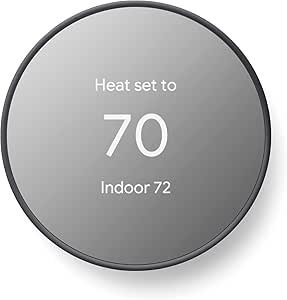 | Best Overall Smart Thermostat | Connectivity: Wi-Fi 2.4/5 GHz, Bluetooth LE | Compatibility: Most HVAC systems; no C-wire needed in many cases | Control: Remote via app; voice control with Google Assistant | VIEW ON AMAZON | See Our Full Breakdown |
| Sensi Lite Smart Thermostat, WiFi, Alexa, DIY, Energy Star Certified, ST25 | 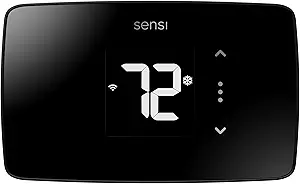 | Best for DIY Installers and Energy Savings | Compatibility: Most HVAC with common wire | Energy Savings: Approximately 23% | Connectivity: WiFi, Alexa compatible | VIEW ON AMAZON | See Our Full Breakdown |
| Honeywell Home RTH9585WF Wi-Fi Smart Color Thermostat |  | Best for Customization and Flexibility | Programmable: 7-day | Display: Touchscreen | Energy Star: Yes | VIEW ON AMAZON | See Our Full Breakdown |
| ecobee Smart Thermostat Enhanced, Programmable Wi-Fi Thermostat |  | Best for Advanced Features and Learning Capabilities | Compatibility: Most HVAC systems | Control: Wi-Fi, app, Alexa, Siri, Google | Included Accessories: Power Extender Kit, Trim Kit | VIEW ON AMAZON | See Our Full Breakdown |
| ecobee Smart Thermostat Essential – WiFi, Energy Star Certified |  | Best Budget-Friendly Smart Thermostat | Energy Star: Yes | Compatibility: Most 24 VAC HVAC systems | Connectivity: Wi-Fi | VIEW ON AMAZON | See Our Full Breakdown |
| smart thermostat | Compatibility |
|---|---|
| Honeywell Home FocusPRO N100 T | — |
| Amazon Smart Thermostat | Alexa, Ring |
| Google Nest Thermostat | Works without C wire in most homes; check online |
| Amazon Smart Thermostat | — |
| Sensi Smart Thermostat | — |
| Google Nest Thermostat | Most HVAC systems; no C-wire needed in many cases |
| Sensi Lite Smart Thermostat | Most HVAC with common wire |
| Honeywell Home RTH9585WF Wi-Fi | Forced air, hot water, steam, heat pumps |
| ecobee Smart Thermostat Enhanc | Most HVAC systems |
| ecobee Smart Thermostat Essent | Most 24 VAC HVAC systems |
More Details on Our Top Picks
Honeywell Home FocusPRO N100 Thermostat TH1210U4001
The Honeywell Home FocusPRO N100 stands out for its compatibility with a wide range of traditional heating and cooling systems, including gas, oil, electric, and steam, making it ideal for those who prefer a reliable, no-frills thermostat. Unlike smart options like the Google Nest, it lacks Wi-Fi and remote control capabilities, which means it won’t support energy-saving schedules or mobile access. Instead, it offers straightforward operation with a backlit display and multiple modes, supported by flexible power options—batteries or hardwiring. The installation requires prior verification of voltage and wiring, which could be a hurdle for some users. This model excels in durability and simplicity but doesn’t appeal to those seeking automation or voice control. It’s a solid choice for homeowners who want a dependable, easy-to-use thermostat with broad system compatibility but aren’t interested in smart features.
Pros:- Compatible with a variety of heating and cooling systems, including heat pumps with auxiliary heat
- Backlit display for easy reading in low light
- Flexible power options with batteries or hardwiring
- Includes comprehensive installation accessories
Cons:- Requires careful verification of voltage, stages, and wiring before installation
- Limited to 20–30 VAC systems, not suitable for low-voltage applications
- No smart features or Wi-Fi connectivity
Best for: Homeowners with traditional HVAC systems who prefer a basic, reliable thermostat without smart capabilities
Not ideal for: Tech-savvy users seeking remote access, automation, or integration with smart home ecosystems
- System Compatibility:20–30 VAC systems, up to 2 heat/1 cool heat pumps with auxiliary heat or 1 heat/1 cool conventional systems
- Supported Applications:Gas, oil, electric, radiant hot-water, steam, dual-fuel systems
- Display Size:4.09 sq. in.
- Modes:Heat, Cool, Auto, Off, Emergency Heat
- Fan Settings:Auto, On, Circulate
- Power Source:Batteries (2 AA alkaline) or 20–30 VAC hardwiring
Our verdict“This thermostat suits those who prioritize system compatibility and simplicity over smart features or remote control capabilities.”
Amazon Smart Thermostat – Pack of 2
This Amazon Smart Thermostat is a strong pick for those wanting to integrate their heating controls into Amazon’s Alexa ecosystem, helping to reduce energy bills with programmable schedules. Compared to Google Nest, it lacks advanced HVAC monitoring but makes installation straightforward with guided instructions, making it suitable for DIYers. Its remote control via the app and voice commands provides convenience, especially for busy households. However, it requires a C-wire for installation, which could be a hurdle for older or simpler systems. While it helps save up to $50 annually, it’s best suited for users already invested in Alexa or Ring devices. For those seeking a budget-friendly, easy-to-install smart thermostat that emphasizes value over advanced features, this model makes a compelling choice.
Pros:- Easy installation with guided instructions, ideal for DIY setup
- Compatible with Alexa and Ring for voice and app control
- Helps save energy and reduce bills with programmable schedules
- Pack of two offers good value for multi-zone setups
Cons:- Requires a C-wire for installation, which is not available in all homes
- Limited compatibility with some older or basic HVAC systems
- Does not include advanced HVAC monitoring or analytics
Best for: Owners with compatible HVAC systems and existing Alexa or Ring devices wanting an affordable, easy smart control
Not ideal for: People without a C-wire or those who prefer a more advanced HVAC monitoring system
- C-wire required:Yes
- Pack size:2
- Compatibility:Alexa, Ring
- Energy savings:Up to $50 annually
Our verdict“This model works well for budget-conscious users with compatible systems who want straightforward smart control through Alexa and Ring.”
Google Nest Thermostat – Smart Wi-Fi Programmable Thermostat for Home – Snow
The Google Nest Thermostat offers a sleek, modern interface with energy-saving features that make it appealing for tech-savvy homeowners. Its compatibility with Google Assistant and Alexa, along with Wi-Fi connectivity, allows for convenient remote management. Compared with the Amazon Smart Thermostat, it emphasizes energy efficiency with smart scheduling and HVAC monitoring, but it often requires a C-wire for installation, which might be a barrier for some users. Its ability to adapt to your routines helps reduce energy bills while maintaining comfort. The setup process may involve checking system compatibility online, which can be a minor inconvenience. Overall, this model suits those seeking a smart, eco-conscious thermostat that integrates seamlessly into a Google or Alexa ecosystem.
Pros:- Energy-saving features and adaptive scheduling
- Remote control via smartphone or tablet
- Compatible with Google Assistant and Alexa for voice commands
- HVAC monitoring helps optimize system performance
Cons:- Requires C wire for some HVAC setups, which could complicate installation
- Setup may require verification of system compatibility online
- No lock feature to prevent manual setting changes
Best for: Homeowners wanting energy-efficient control with remote access and voice assistant compatibility
Not ideal for: Users with incompatible HVAC systems or who prefer a non-remote, no-friction device
- Connectivity Protocol:Wi-Fi
- Energy Star Certified:Yes
- Compatibility:Works without C wire in most homes; check online
- Voice Control:Google Assistant, Alexa
Our verdict“This thermostat is ideal for users who want smart energy management with remote control in a compatible, modern design.”
Amazon Smart Thermostat
The Amazon Smart Thermostat is designed for simple DIY installation, making it suitable for users comfortable with tech setup. It offers programmable schedules that can help reduce energy costs—up to $90 annually—similar to other Amazon models but with the backing of Honeywell’s technology. Its integration with Alexa and Ring provides voice control and app management, with the added benefit of Amazon’s user-friendly interface. However, like other smart options, it requires a C-wire, which might exclude homes with simpler wiring. This pick makes the most sense for those already invested in Amazon’s ecosystem who want an easy, cost-effective smart thermostat with energy-saving benefits.
Pros:- Easy to install with app guidance, ideal for DIYers
- Compatible with Alexa and Ring for voice and remote control
- Helps cut energy bills with programmable settings
- Backed by 130 years of Honeywell experience
Cons:- Requires a C-wire for installation, not suitable for all homes
- Limited to specific smart home ecosystems
- Lacks advanced HVAC analytics or detailed system monitoring
Best for: DIY enthusiasts with compatible HVAC systems seeking a budget-friendly, Alexa-compatible thermostat
Not ideal for: Users without a C-wire or those needing advanced HVAC monitoring features
- Works with:Alexa, Ring
- C-wire required:Yes
- Energy savings:Up to $90 annually
- Installation:DIY with app guidance
Our verdict“This thermostat fits DIYers invested in Amazon Alexa seeking an affordable, straightforward smart control solution.”
Sensi Smart Thermostat, Wi-Fi, DIY, Alexa, Energy Star Certified, ST55
The Sensi ST55 is tailored for homeowners who want flexible control across multiple smart home platforms, including Alexa, Google Assistant, and Apple HomeKit. Its DIY installation process, supported by detailed app instructions, appeals to tech-savvy users. Its energy savings of about 23% make it a cost-effective choice, and features like usage reports and maintenance alerts help optimize HVAC performance. Compared to the simpler Amazon models, Sensi’s broader compatibility and detailed reports make it attractive for those who want more insight into their system’s efficiency. The need for a common wire in some cases can be a complication for older homes. Overall, this model offers a balanced mix of accessibility, compatibility, and energy management for those comfortable with DIY setup.
Pros:- Easy DIY installation with step-by-step app instructions
- Compatible with Alexa, Google Assistant, Apple HomeKit, and SmartThings
- Saves about 23% on HVAC costs with programmable features
- Provides usage reports and maintenance alerts
Cons:- Requires a common wire (c-wire) in some applications, which may be unavailable in older homes
- Some users find app interface or setup challenging
- Limited detailed technical specs in the product description
Best for: Homeowners seeking multi-platform compatibility and detailed HVAC performance insights
Not ideal for: Users with very basic HVAC systems or those preferring plug-and-play solutions without detailed reports
- Controller Type:Amazon Alexa, Apple HomeKit, Google Assistant, SmartThings, Vera
- Additional Features:Data Privacy, Easy DIY Install, Energy Savings, Filter Indicator, Programmable
- Specific Uses:Air Conditioner, Boiler, Furnace, Heat Pump
Our verdict“This thermostat suits tech-savvy homeowners who want broad smart home compatibility and detailed energy insights, despite a slightly complex setup process.”
Google Nest Thermostat – Smart Thermostat for Home – Programmable Wi-Fi – Charcoal
The Google Nest Thermostat stands out as the best overall choice due to its seamless integration with Google Assistant, energy-saving features, and user-friendly installation. It offers automatic adjustments when you’re away, which can lead to noticeable savings, and remote control via the Google Home app adds convenience. Compared to the ecobee options, Nest’s simplicity and compatibility with Android devices make it more accessible for casual users. However, the lack of a lock feature and reliance on Wi-Fi for notifications introduce some limitations, especially if your internet is unreliable. This model is ideal for those who want a reliable, easy-to-use smart thermostat with strong ecosystem integration, but less so for users seeking advanced security controls or extensive customization.
Pros:- Automatic energy savings through adaptive learning
- Remote control via smartphone app
- Supports voice commands with Google Assistant and Matter
Cons:- Lock feature not available, which limits security
- Requires consistent internet for full functionality
Best for: Homeowners looking for a straightforward, energy-efficient thermostat with Google ecosystem integration
Not ideal for: Users who prioritize advanced security features or do not have a stable Wi-Fi connection
- Connectivity:Wi-Fi 2.4/5 GHz, Bluetooth LE
- Compatibility:Most HVAC systems; no C-wire needed in many cases
- Control:Remote via app; voice control with Google Assistant
- Energy Star:Yes
Our verdict“This is the best pick for users wanting a simple, reliable smart thermostat compatible with Google devices.”
Sensi Lite Smart Thermostat, WiFi, Alexa, DIY, Energy Star Certified, ST25
The Sensi Lite Smart Thermostat is designed with DIYers in mind, offering clear installation instructions and a built-in level, making it accessible for those comfortable with basic home wiring. It helps reduce energy costs by around 23%, thanks to scheduling and geofencing features that adapt to your lifestyle. Unlike the ecobee Smart Thermostat Enhanced, which offers learning capabilities, the Sensi Lite focuses on straightforward control and privacy—no data selling here. Its lack of a display or touchscreen may be a drawback for users who prefer visual feedback, but for those who value simplicity and privacy, it’s a solid choice. It’s best suited for homeowners with compatible HVAC systems who want to save without complex setup.
Pros:- Easy DIY installation with built-in level and instructions
- Reduces utility bills with scheduling and geofencing
- Remains privacy-focused without data selling
Cons:- Requires a common wire for some HVAC systems
- No touchscreen or display for quick adjustments
Best for: DIY homeowners seeking energy savings without complicated installation
Not ideal for: Users with systems lacking a common wire or those who prefer touchscreen controls
- Compatibility:Most HVAC with common wire
- Energy Savings:Approximately 23%
- Connectivity:WiFi, Alexa compatible
- Certification:Energy Star
Our verdict“Ideal for DIY enthusiasts who want a simple, energy-saving thermostat with strong privacy protections.”
Honeywell Home RTH9585WF Wi-Fi Smart Color Thermostat
The Honeywell Home RTH9585WF combines a vibrant color touchscreen with flexible 7-day programming, making it a standout for those who want both aesthetics and control. Its compatibility with a variety of heating systems, including hot water and steam, makes it suitable for complex setups, unlike the ecobee Smart Thermostat Essential, which has more limited system compatibility. The ability to support energy savings programs and utility rebates adds value, but its reliance on C-wire and the potential complexity of installation may challenge some users. For homeowners who appreciate customization and a visually appealing interface, this thermostat offers a compelling balance of features and flexibility.
Pros:- Color touchscreen display to match home décor
- Supports energy-saving programs and rebates
- Flexible programming options for weekly schedules
Cons:- Requires C-wire for installation
- Complex setup for some users
Best for: Homeowners with diverse heating systems who want a colorful, customizable interface
Not ideal for: Basic users seeking a plug-and-play solution or those with electric baseboard heat
- Programmable:7-day
- Display:Touchscreen
- Energy Star:Yes
- Compatibility:Forced air, hot water, steam, heat pumps
Our verdict“Best suited for users wanting a visually customizable thermostat that supports complex HVAC systems.”
ecobee Smart Thermostat Enhanced, Programmable Wi-Fi Thermostat
The ecobee Smart Thermostat Enhanced excels at balancing comfort and efficiency, with the ability to learn occupancy patterns and adjust accordingly—saving up to 26% annually. It’s more sophisticated than the Sensi Lite, offering smart sensors (sold separately) for room-specific control, making it ideal for larger or multi-zone homes. Its compatibility with most HVAC systems and voice assistants like Alexa, Siri, and Google Assistant makes it versatile, but setup can be more involved, especially with additional sensors. Compared to the ecobee Smart Thermostat Essential, which has a more straightforward installation, the Enhanced provides a richer feature set at the cost of added complexity. It’s best for tech-savvy users who want a high level of automation and comfort customization.
Pros:- Learns user preferences for optimal comfort
- Saves up to 26% on energy costs annually
- Includes accessories like Power Extender Kit for easier installation
Cons:- SmartSensors sold separately
- Setup may be complex for some users
Best for: Tech-savvy homeowners who want advanced occupancy-based automation
Not ideal for: Casual users or those with complex HVAC systems requiring extensive setup or additional sensors
- Compatibility:Most HVAC systems
- Control:Wi-Fi, app, Alexa, Siri, Google
- Included Accessories:Power Extender Kit, Trim Kit
- Energy Savings:Up to 26%
Our verdict“Best for homeowners seeking a learning thermostat with advanced automation features and multi-room control.”
ecobee Smart Thermostat Essential – WiFi, Energy Star Certified
The ecobee Smart Thermostat Essential offers a compelling mix of affordability and smart features, helping you save up to 23% annually. Its easy DIY installation, with no C-wire needed when using the Power Extender Kit (sold separately), makes it accessible for most homeowners. While its compatibility with major smart home ecosystems like Apple HomeKit, Alexa, and Google Assistant is a plus, its SmartSensor options are sold separately, which could limit multi-room control for some users. Compared to the ecobee Smart Thermostat Enhanced, it sacrifices some advanced automation but remains a practical, energy-focused choice for budget-conscious buyers. This thermostat is ideal for those seeking basic smart features without extensive setup complexity.
Pros:- Saves up to 23% on energy costs annually
- Easy DIY installation with no C-wire required
- Compatible with major smart home ecosystems
Cons:- SmartSensor pack sold separately
- Limited to 85% system compatibility
Best for: Budget-conscious homeowners wanting a straightforward, compatible smart thermostat
Not ideal for: Users needing room-specific temperature control without additional sensor purchases
- Energy Star:Yes
- Compatibility:Most 24 VAC HVAC systems
- Connectivity:Wi-Fi
- Installation:DIY, no C-wire needed with Power Extender
Our verdict“A great choice for budget-minded users seeking basic smart control and energy savings with simple installation.”

How We Picked
To determine the best smart thermostats, I evaluated each product based on core performance factors such as compatibility with major smart home ecosystems, ease of installation, and user experience. Build quality and interface responsiveness were key to assessing usability, while features like scheduling, automation, and energy reports influenced overall value. Price was a secondary factor, with a focus on whether the device delivered good value for its feature set. The ranking reflects a balance between affordability, functionality, and ease of use, aiming to help a broad range of buyers find the right fit for their home and budget.Factors to Consider When Choosing Smart Thermostat
Choosing a smart thermostat involves more than just picking the most feature-rich model. Consider compatibility with your existing HVAC system and smart home setup to avoid costly upgrades. Ease of installation can save you time and frustration—DIY-friendly options are ideal for most homeowners. Think about your daily routines and whether the device offers customizable scheduling or adaptive learning. Price varies widely, so identify which features are essential versus nice-to-have. Lastly, prioritize energy efficiency and compatibility with your preferred voice assistants to maximize your investment.Compatibility with Your HVAC System
Not all smart thermostats work with every HVAC setup. Before purchasing, verify whether the device supports your heating and cooling system—especially for multi-stage or heat pump systems. Choosing a compatible model prevents installation headaches and guarantees your system functions correctly. Manufacturers typically list compatible systems on their product pages, but consulting a professional can prevent costly errors. Compatibility also extends to smart home platforms, so check if your preferred voice assistant or automation system integrates seamlessly.
Ease of Installation and DIY Setup
Many smart thermostats advertise DIY installation, but the actual complexity can vary. If you’re comfortable with basic wiring, models with clear instructions and minimal wiring requirements will save you time. Some devices include step-by-step guides or video tutorials, which are invaluable for beginners. Conversely, more complex systems may require professional installation, adding to the cost. Make sure to consider your technical comfort level and whether the manufacturer offers reliable customer support during setup.
Features and Automation Capabilities
Look beyond basic temperature control and consider what automation features are important. Some models learn your schedule over time, adjusting settings automatically for comfort and savings. Others provide detailed energy reports or geofencing, which adjusts temperature based on your location. Decide if you need advanced features like multi-room control or integrations with other smart devices. Overpaying for features you’ll never use can be a drawback, so match the device’s capabilities with your actual needs.
Price and Long-term Value
While budget options can be appealing, they may lack advanced automation or robust app features. Conversely, premium models often include comprehensive control and energy-saving reports but come at a higher upfront cost. Consider whether the potential energy savings and convenience justify the initial investment. Devices with Energy Star certification generally offer better long-term savings and environmental benefits, making them worth the extra expense for many buyers.
Voice Assistant Compatibility and Ecosystem Integration
Many users prefer thermostats that work seamlessly with existing smart home ecosystems like Alexa, Google Assistant, or Apple HomeKit. Compatibility can simplify voice control and automation routines, making daily adjustments easier. Some devices excel in this area, offering broader ecosystem support, while others are more limited. Think about your current smart home setup and prioritize devices that integrate smoothly to avoid frustration or the need for additional hubs.
Frequently Asked Questions
Can I install a smart thermostat myself?
Many smart thermostats are designed to be DIY-friendly, with clear instructions and minimal wiring requirements. However, the complexity depends on your existing HVAC system and electrical setup. If you’re comfortable with basic wiring and follow the installation guide carefully, you can often set it up without professional help. For more complex systems or if you’re unsure, hiring a professional can ensure proper installation and avoid potential issues down the line. Always check the manufacturer’s compatibility and support resources before starting.
Will a smart thermostat save me money on energy bills?
In many cases, a smart thermostat can reduce energy costs through optimized scheduling and adaptive learning features. Devices with energy reports and geofencing can adjust temperatures when you’re away or asleep, preventing waste. However, the actual savings depend heavily on your usage habits and system efficiency. It’s wise to consider the potential return on investment, especially if your current thermostat is outdated or inefficient. Over time, the energy savings can offset the initial purchase price, making it a smart long-term investment.
Are smart thermostats compatible with all HVAC systems?
Not all smart thermostats work with every HVAC setup, particularly complex or older systems. It’s important to verify compatibility before purchasing, especially if you have a heat pump, multi-stage system, or unique wiring. Most manufacturers provide compatibility lists, but consulting with a technician can prevent surprises. Ensuring the device matches your system’s specifications will help you avoid installation issues and guarantee reliable operation.
How important is voice assistant support in a smart thermostat?
Voice assistant support can significantly enhance convenience, allowing you to change temperature settings hands-free. If you already use Alexa, Google Assistant, or Siri, choosing a thermostat with native support can streamline your smart home routines. However, some models offer broader ecosystem compatibility and more robust voice control features, which might justify a higher price. Consider how often you’ll use voice commands and whether the device’s integration aligns with your existing smart home setup.
What should I consider when choosing between a basic and a feature-rich thermostat?
Basic models provide core temperature control and manual scheduling, often at a lower cost—ideal for budget-conscious buyers or those with simple needs. Feature-rich thermostats add automation, energy reports, and smarter learning capabilities, which can lead to better energy savings and convenience. The tradeoff is complexity and cost; if you’re comfortable with technology and want maximum control, investing in more advanced models makes sense. For casual or minimal use, a simpler device may be sufficient without overpaying for unnecessary features.
Conclusion
For most homeowners seeking a reliable, easy-to-use device, the Google Nest Thermostat offers a balanced mix of smart features and user-friendly design, making it the best overall pick. Budget-conscious buyers or those new to smart home tech will find the Amazon Smart Thermostat provides great value without sacrificing essential functionality. Tech enthusiasts or those with complex systems should consider the ecobee Smart Thermostat Enhanced for its advanced automation and integrations. In short, choose based on your familiarity with smart home devices, your budget, and your specific comfort goals to maximize satisfaction in 2026.
Fall Picks
fall essentials
As an affiliate, we earn on qualifying purchases.