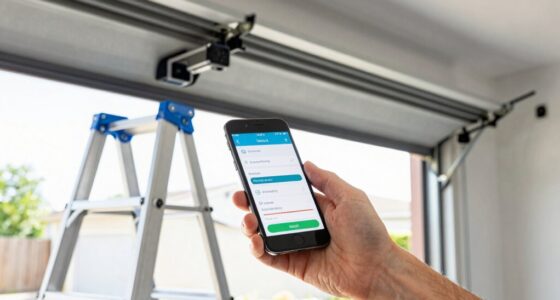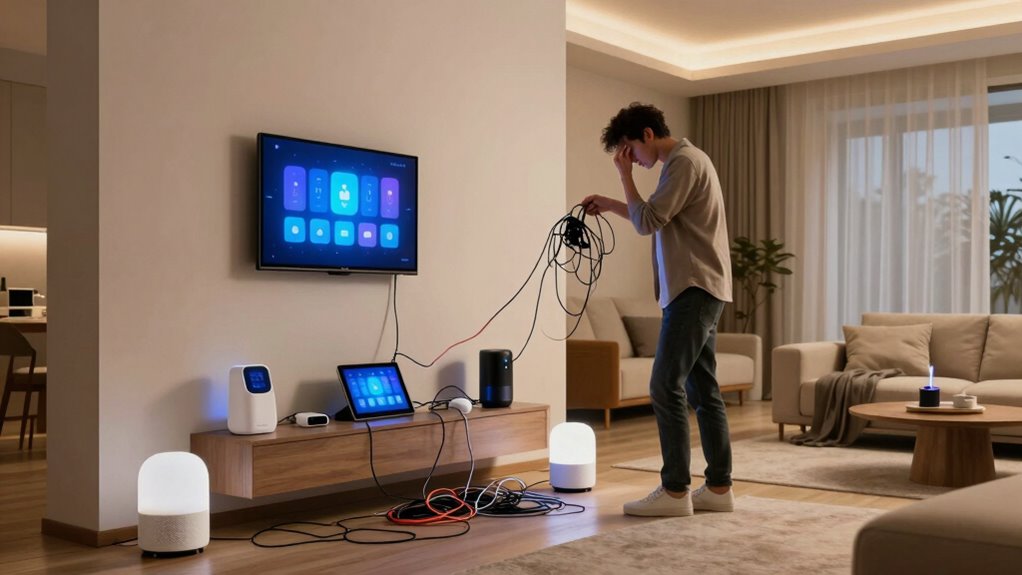

Smart homes often feel more frustrating than helpful because device compatibility issues, voice command mistakes, and constant technology updates create ongoing hassle. When devices don’t work well together or respond inaccurately, it can turn convenience into annoyance. Software bugs, hardware limitations, and evolving protocols add to the frustration, making troubleshooting routine. If you want to understand how these problems develop and what you can do about them, keep exploring the factors behind these issues.

Turn the school run and nap time into listening time
- Thousands of audiobooks, podcasts and originals
- Listen on your phone, tablet or Echo — also offline
- Cancel anytime
Key Takeaways
- Voice command errors and ambient noise cause frustration, reducing the perceived helpfulness of smart assistants.
- Device incompatibility and lack of standardization create a fragmented smart home experience.
- Rapid tech updates and evolving protocols make maintaining seamless integration difficult.
- Hardware and software limitations lead to unreliable performance and frequent troubleshooting.
- Persistent technical issues diminish the convenience and perceived benefits of smart home systems.
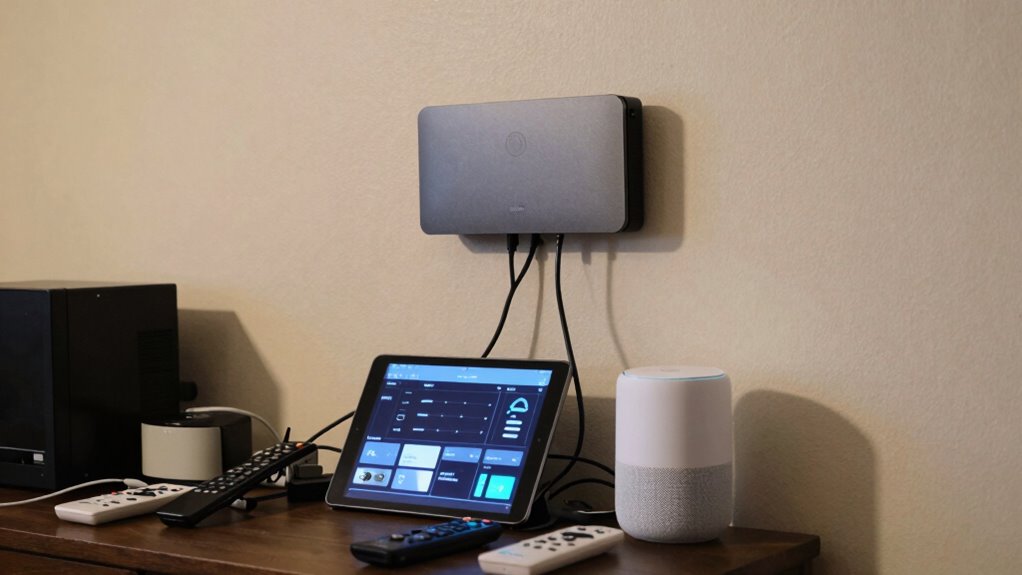
Smart homes promise convenience and seamless living, but for many, they end up feeling more frustrating than helpful. One of the biggest issues you might face is voice command frustrations. You speak clearly, expecting your smart assistant to understand and execute your commands effortlessly. Instead, it often mishears your words or ignores you altogether. You might find yourself repeating commands multiple times, growing increasingly annoyed. This can quickly turn your smart home experience into a source of irritation rather than ease. The technology behind voice recognition isn’t perfect, and ambient noise, accents, or even the way you phrase your command can cause failures. When your voice commands don’t work as intended, it feels less like a helpful tool and more like a constant obstacle. Additionally, the compatibility of devices plays a crucial role in the overall experience. Beyond voice frustrations, device compatibility issues compound the problem. Smart home devices come from different brands, each with its own ecosystem and app. You might buy a smart light bulb, a thermostat, and a security camera, expecting them to work together seamlessly. But instead, you discover that some devices won’t connect to your preferred voice assistant or require separate apps to control. You end up juggling multiple apps, each with its interface and quirks, which defeats the purpose of a streamlined smart home setup. Compatibility issues can cause delays, errors, or complete failures, forcing you to troubleshoot endlessly. This fragmentation makes your smart home feel more like a patchwork of incompatible gadgets than a cohesive system designed for convenience. The lack of standardization in smart home technology can make integration even more challenging for users. Sometimes, the fast-changing technology landscape adds to the confusion, as new devices and protocols are constantly introduced, making it hard to keep everything compatible. Even when devices are compatible, they can sometimes have inconsistent performance because of software updates or hardware limitations. These hiccups are common, and they make you question whether the technology is worth the effort. In fact, ongoing software updates can sometimes introduce new issues or bugs that disrupt device functionality. These hiccups are common, and they make you question whether the technology is worth the effort. Instead of making your life easier, these issues add layers of complexity and stress. In essence, the combination of voice command frustrations and device compatibility issues turns what should be a cutting-edge convenience into an ongoing source of annoyance. Instead of enjoying a seamless experience, you find yourself constantly troubleshooting, recalibrating, or even abandoning certain devices altogether. These persistent problems diminish the promise of smart homes, leaving you feeling more frustrated than fulfilled. It’s a reminder that, despite the hype, smart home technology still has a long way to go before it consistently delivers on its potential to simplify daily life.
smart home device compatibility extender
As an affiliate, we earn on qualifying purchases.
As an affiliate, we earn on qualifying purchases.
Frequently Asked Questions
Can Smart Homes Improve Energy Efficiency Effectively?
Yes, smart homes can improve energy efficiency effectively. By leveraging automation benefits, you can optimize energy savings through smart thermostats, lighting, and appliances. These devices adapt to your habits, reducing waste and lowering utility bills. When set up correctly, smart homes make it easy to monitor and control energy use, ensuring you maximize savings while maintaining comfort. Proper integration is key to avoiding frustration and enjoying the full benefits of smart technology.
How Secure Are Smart Home Devices From Hacking?
Smart home devices are surprisingly vulnerable; studies show over 80% have hacking vulnerabilities. This means your privacy concerns are valid, as hackers can access cameras, locks, or personal data. While manufacturers implement security measures, weak passwords and outdated software increase risks. To stay safe, regularly update your devices, use strong, unique passwords, and enable multi-factor authentication. Being proactive helps protect your home from potential hacking threats.
Do Smart Homes Increase Property Value Significantly?
Smart homes can boost your property value, especially if you prioritize sleek smart home aesthetics that appeal to modern buyers. However, privacy concerns might deter some potential buyers, making it essential to highlight security features and data protection measures. While smart technology adds convenience, ensuring your home looks stylish and addresses privacy issues will help maximize its appeal and investment potential.
Are Smart Home Systems Accessible for Elderly Users?
Smart home systems can be accessible for elderly users, but they often face accessibility challenges that hinder elderly independence. You might find some systems easy to use with simplified controls, voice commands, or large displays. However, others may require technical know-how or adjustments. To make smart homes more elderly-friendly, focus on user-friendly interfaces, voice-activated devices, and personalized settings that support independence and reduce frustration.
What Is the Average Cost of Installing a Comprehensive Smart Home?
The average cost of installing a thorough smart home ranges from $10,000 to $50,000, depending on scale and features. You’ll spend on voice control systems and device integration, which improve convenience and automation. High-end setups with advanced security, lighting, and entertainment options tend to be pricier. Planning your budget carefully helps guarantee you get the most value from your investment, making your smart home truly helpful rather than just frustrating.
voice assistant noise reduction microphone
As an affiliate, we earn on qualifying purchases.
As an affiliate, we earn on qualifying purchases.
Conclusion
So, before you dive headfirst into a smart home, remember that technology isn’t a one-size-fits-all solution. If it starts feeling more like a thorn in your side than a help, don’t be afraid to take a step back and reassess. Sometimes, the best way to keep your home feeling truly helpful is to keep things simple and not bite off more than you can chew. After all, a little goes a long way.
smart home hub for device integration
As an affiliate, we earn on qualifying purchases.
As an affiliate, we earn on qualifying purchases.
universal smart home remote control
As an affiliate, we earn on qualifying purchases.
As an affiliate, we earn on qualifying purchases.
Cold & flu season Picks
humidifiers
As an affiliate, we earn on qualifying purchases.