Many DIYers tend to skip essential safety gear like goggles, gloves, and dust masks until they experience a close call or injury. They often underestimate the risks, risking accidents from splinters, debris, or chemical splashes. Protecting yourself early on keeps injuries at bay and boosts confidence during projects. If you want to avoid avoidable harm and work smarter, stick with safety gear from the start—you’ll discover how it can make a real difference.

Turn the school run and nap time into listening time
- Thousands of audiobooks, podcasts and originals
- Listen on your phone, tablet or Echo — also offline
- Cancel anytime
Key Takeaways
- Many DIYers neglect to wear goggles, risking eye injuries from debris or splinters during tasks like sanding or drilling.
- Gloves are often skipped until handling sharp or rough materials, increasing the risk of cuts and splinters.
- Respirators or dust masks are frequently overlooked, exposing airways to dust, fumes, or chemical vapors.
- Protective clothing is often ignored until a spill or splash causes chemical burns or skin irritation.
- Hearing protection is rarely used during noisy tasks, risking long-term hearing damage.
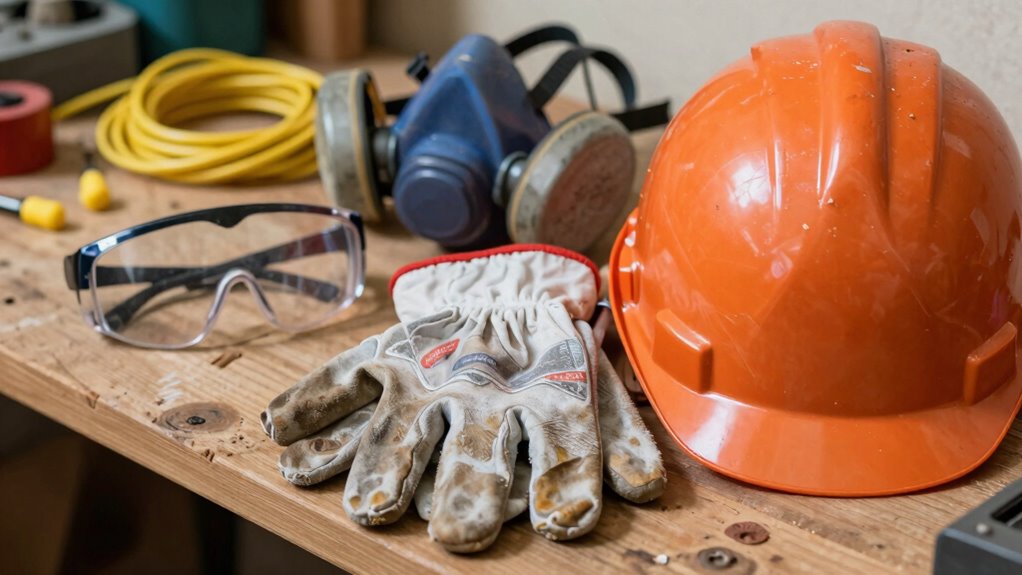
When you’re tackling DIY projects, safety should always come first. It’s easy to get caught up in the excitement of building or fixing something, but neglecting proper safety gear can lead to injuries that could have been easily avoided. Many DIYers tend to overlook essential safety equipment until an accident occurs. That’s why it’s important to recognize the value of protective clothing and to stay on top of tool maintenance before you even start your project. Wearing the right protective clothing, like gloves, goggles, or dust masks, creates a barrier between you and potential hazards. It might seem unnecessary at first, especially for small tasks, but even minor cuts, splinters, or airborne debris can cause discomfort or infection. Investing in good-quality protective gear isn’t just about preventing injuries; it also boosts your confidence, knowing you’re prepared for anything that might happen.
Equally important is the upkeep of your tools. Tool maintenance often gets pushed aside, but dull blades, loose parts, or malfunctioning equipment pose significant safety risks. When tools aren’t properly maintained, they’re more likely to slip, break, or cause accidents. Before starting your project, take the time to inspect your tools—sharpen blades, tighten screws, and replace worn-out parts. Well-maintained tools operate more smoothly and precisely, reducing the chance of mistakes or injuries. It’s a simple step that can save you a lot of frustration and potential harm down the line. Additionally, understanding tool safety standards can help you identify what to look for during inspections and ensure your equipment meets safety guidelines. Being familiar with protective equipment standards can further guide you in choosing the most effective safety gear for your projects. Incorporating safety guidelines into your routine can also help you develop better habits and avoid complacency. Recognizing the importance of personal protective equipment can significantly enhance your safety practices.
Many DIYers make the mistake of thinking safety gear is only necessary for big or complex projects. In reality, even simple tasks like sanding, drilling, or painting can lead to injuries if you’re not careful. Protective clothing can shield you from splinters, chemical splashes, or flying debris. For example, a sturdy pair of gloves can protect your hands during woodwork, while goggles prevent dust or splinters from irritating your eyes. Dust masks or respirators should be part of your safety arsenal whenever you’re working with materials that produce fine particles or fumes. Remember, safety isn’t just about avoiding injuries—it’s also about maintaining a comfortable working environment and ensuring your project is successful. Proper safety precautions can prevent many common accidents and help you work more efficiently.
Ultimately, skipping safety gear until you need it is a risky gamble. Protecting yourself with the right clothing and keeping your tools in top shape might seem like extra effort at first, but it pays off by preventing accidents and prolonging the life of your equipment. Being proactive about safety helps you enjoy your DIY projects more and ensures that your passion for building doesn’t turn into a trip to the emergency room.
As an affiliate, we earn on qualifying purchases.
Frequently Asked Questions
How Often Should Safety Gear Be Inspected and Replaced?
You should inspect your safety gear regularly, ideally before each use. Check your protective eyewear for cracks or fogging, and guarantee your helmet is free of damage or wear. Replace protective eyewear if it’s scratched or compromised, and perform helmet maintenance by replacing straps or padding as needed. Promptly replace any damaged gear to maintain safety, and follow manufacturer guidelines for specific inspection and replacement intervals.
Are There Affordable Options for High-Quality Safety Equipment?
Think of safety gear as armor—you don’t want to wait until you’re vulnerable. Thankfully, there are budget alternatives offering high-quality protection, like brands with solid reviews and certifications. Comparing brands helps you find options that balance affordability and safety. For example, some lesser-known brands provide durable goggles and gloves at a fraction of the cost of premium ones, making safety accessible without breaking the bank.
What Are the Legal Requirements for Safety Gear in DIY Projects?
You need to follow safety gear regulations to guarantee legal compliance on your DIY projects. These regulations typically require wearing protective equipment like gloves, goggles, ear protection, and masks, depending on the task. Check local laws and workplace safety standards, especially if you’re working in a shared or commercial space. Staying compliant not only keeps you safe but also helps you avoid fines or legal issues. Always prioritize safety gear when planning your project.
Can Safety Gear Be Reused After Exposure to Chemicals or Debris?
No, safety gear exposed to chemical or debris contamination shouldn’t be reused. Chemical contamination can weaken materials, making them less effective or unsafe. Debris contamination can carry bacteria or hazardous particles, risking your health if reused. Always inspect safety gear thoroughly after exposure, and replace any items showing signs of damage or contamination. Prioritize your safety by using fresh gear, especially after exposure to chemicals or debris.
How Do I Ensure Proper Fit and Comfort for Safety Equipment?
Ever wondered how to stay safe and comfortable at the same time? To guarantee proper fit and comfort, try on safety equipment before use, adjusting straps and bands as needed. Check that the gear isn’t too tight or loose, and consider comfort features like padding or breathable materials. Proper fit minimizes fatigue and maximizes protection, so take your time to find gear that feels right—your safety depends on it.
As an affiliate, we earn on qualifying purchases.
Conclusion
You might think skipping safety gear is no big deal until that one moment when it’s too late. The tools and equipment are there to protect you, but only if you use them. Don’t let complacency be your downfall—what seems minor now could turn into a serious accident in an instant. Remember, sometimes the smallest oversight can have the biggest consequences. Stay vigilant, stay protected, and always respect the safety gear you’re tempted to ignore.
As an affiliate, we earn on qualifying purchases.
protective clothing for painting
As an affiliate, we earn on qualifying purchases.
As an affiliate, we earn on qualifying purchases.
Fall Picks
fall essentials
As an affiliate, we earn on qualifying purchases.