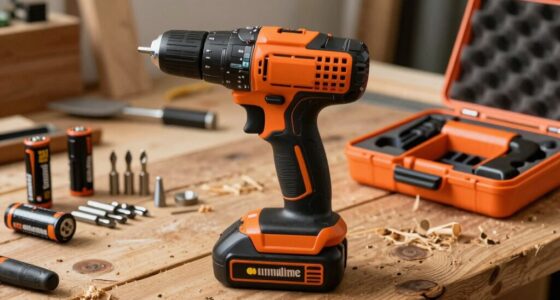
Your power tool’s battery is the key to its performance and reliability. It directly impacts how long and effectively the tool works, often more than the tool’s body itself. A high-quality, well-maintained battery guarantees consistent power, reduces downtime, and extends the tool’s lifespan. While the body is important, the battery’s health and chemistry make all the difference. Keep going to discover more about how battery technology shapes your tool’s efficiency.

Turn the school run and nap time into listening time
- Thousands of audiobooks, podcasts and originals
- Listen on your phone, tablet or Echo — also offline
- Cancel anytime
Key Takeaways
- Battery health directly impacts tool runtime, reliability, and overall performance more than the tool’s physical design.
- High-quality batteries enable longer operation and reduce downtime, making them crucial for productivity.
- Advanced battery chemistries and smart charging technologies enhance efficiency and lifespan beyond the tool’s construction.
- Proper battery maintenance ensures consistent power, preventing failures regardless of the tool’s build quality.
- The effectiveness of a power tool heavily depends on its battery’s condition and capacity.
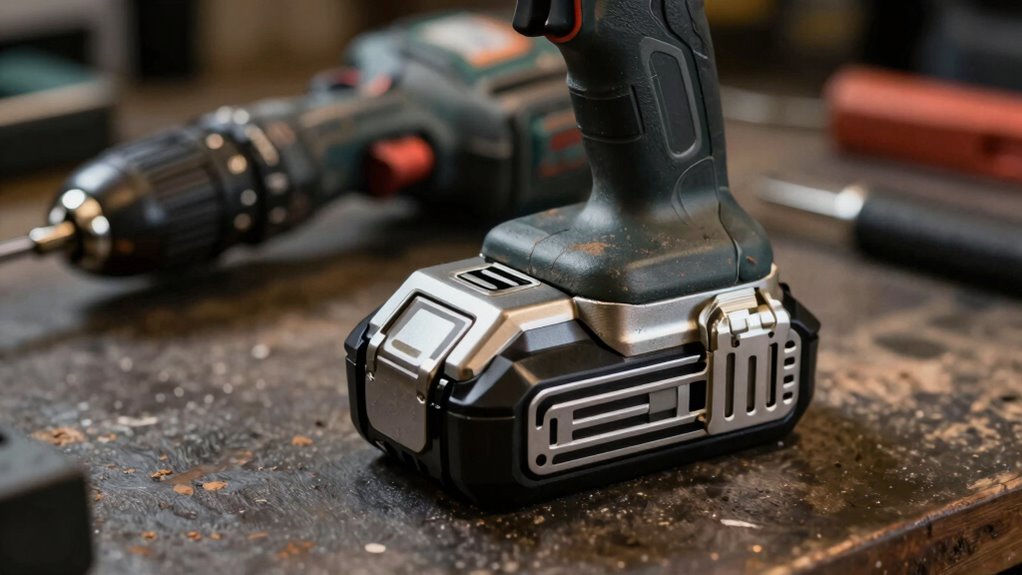
Have you ever experienced a power tool dying in the middle of a project? It’s frustrating, especially when you’re in the zone and just need a few more minutes to finish up. Often, what causes this interruption isn’t the tool body itself but the battery inside. That’s because the battery’s health and performance play a critical role in your tool’s overall reliability. A high-quality battery with a good lifespan ensures your tool stays powered longer and reduces the chances of sudden shutdowns. This is why understanding battery lifespan is essential—over time, batteries lose their capacity to hold a charge, which means you’ll need to replace or upgrade them to keep your tools running smoothly.
Battery health is key to your power tool’s reliability and performance.
Charging technologies have evolved markedly in recent years, making it easier to maintain the health of your batteries and extend their lifespan. Fast-charging systems, for example, allow you to recharge batteries quickly so you can get back to work without long delays. Some advanced chargers even utilize smart technology, monitoring the battery’s temperature and voltage to prevent overcharging or overheating. This not only preserves the battery’s longevity but also enhances safety during charging. When you choose power tools, paying attention to the charging technology used can make a big difference in your overall experience. Tools with compatible, fast-charging batteries are especially valuable if you need to minimize downtime.
It’s tempting to focus on the power tool body—after all, a sleek, durable design can make a difference during tough jobs. But ultimately, the effectiveness and reliability of the tool hinge on the battery’s condition. A well-maintained battery with a long lifespan and modern charging tech ensures your tool performs at its best, whether you’re doing DIY projects or professional work. Investing in batteries with good chemistry, like lithium-ion, means you get better energy density, longer cycle life, and faster charging times. These batteries drain less quickly over time and are more resilient to repeated charge cycles, so you won’t have to replace them as often. Additionally, understanding the importance of battery chemistry can help you make informed decisions about which batteries to invest in for optimal performance. Moreover, selecting batteries with advanced chemistry can significantly impact your tool’s overall efficiency and lifespan. Recognizing battery maintenance practices also plays a vital role in extending the lifespan of your power sources and ensuring consistent performance.
In short, your power tool’s performance depends heavily on the quality of its battery. While the tool body might be impressive, it’s the battery that truly determines how long and reliably you can work. By understanding and prioritizing battery lifespan and embracing advanced charging technologies, you set yourself up for fewer interruptions and a more efficient workflow. Remember, a great tool is only as good as its power source—so don’t overlook the importance of investing in the right batteries.
high capacity lithium-ion power tool batteries
As an affiliate, we earn on qualifying purchases.
As an affiliate, we earn on qualifying purchases.
Frequently Asked Questions
How Often Should I Replace My Power Tool Batteries?
You should replace your power tool batteries when they no longer hold a charge effectively or after about 300 to 500 charging cycles, depending on the battery type. Battery lifespan varies with usage, so monitor how long your battery lasts and how quickly it loses power. If you notice decreased performance despite proper charging, it’s time for a replacement to guarantee your tools work efficiently and safely.
Can I Use Different Brand Batteries in My Power Tools?
Mixing makeshift batteries might seem manageable, but it’s not recommended. You’ll want to prioritize brand compatibility to guarantee your power tools perform perfectly. Using different brand batteries can compromise battery longevity, leading to poor performance or damage. Stick to your tool’s original or compatible batteries to maximize efficiency, safety, and lifespan. Remember, compatibility and consistency keep your tools running reliably and extend their overall lifespan.
What Are the Signs of a Failing Power Tool Battery?
You’ll notice signs of a failing power tool battery when it no longer holds a full charge or drains quickly, which indicates a reduced battery lifespan. If your tool takes longer to charge or doesn’t reach full capacity despite good charging habits, it’s a sign to replace the battery. Additionally, swelling or corrosion are clear indicators of failure, so keep an eye out for these physical signs as well.
How Do Temperature Changes Affect Battery Performance?
Temperature changes considerably impact your battery performance because of battery chemistry and thermal management. When it’s too hot, heat accelerates chemical reactions, leading to faster capacity loss and possible overheating. Cold temperatures slow down chemical activity, reducing power output and runtime. Proper thermal management helps maintain ideal temperatures, ensuring your battery performs well across varying conditions. Keep batteries in moderate temperatures for the best performance and longevity.
Are There Safety Precautions for Handling Battery Replacements?
Think of handling batteries as akin to handling precious cargo—you need safety first. Always wear gloves and eye protection to prevent contact with harmful chemicals. When replacing batteries, follow safety handling guidelines, and never force a battery into a device. Properly dispose of old batteries through designated battery disposal programs. Keep batteries away from heat or flames, and store them in a cool, dry place to prevent leaks or accidents.
fast charging power tool batteries
As an affiliate, we earn on qualifying purchases.
As an affiliate, we earn on qualifying purchases.
Conclusion
Remember, the battery often makes or breaks your power tool experience. A high-quality battery can deliver up to 50% more runtime and lifespan compared to cheaper options. That means you get more work done with less downtime and fewer replacements. Investing in a reliable battery guarantees your tools perform at their peak and last longer, saving you money in the long run. So, next time you shop, prioritize the battery—it’s the real power behind your projects.
smart charger for power tool batteries
As an affiliate, we earn on qualifying purchases.
As an affiliate, we earn on qualifying purchases.
power tool battery replacement kit
As an affiliate, we earn on qualifying purchases.
As an affiliate, we earn on qualifying purchases.
Fall Picks
fall essentials
As an affiliate, we earn on qualifying purchases.