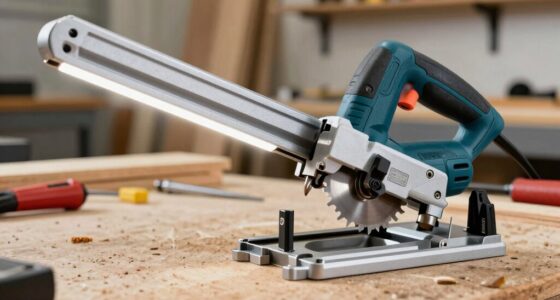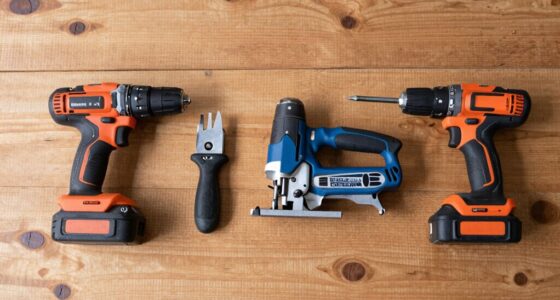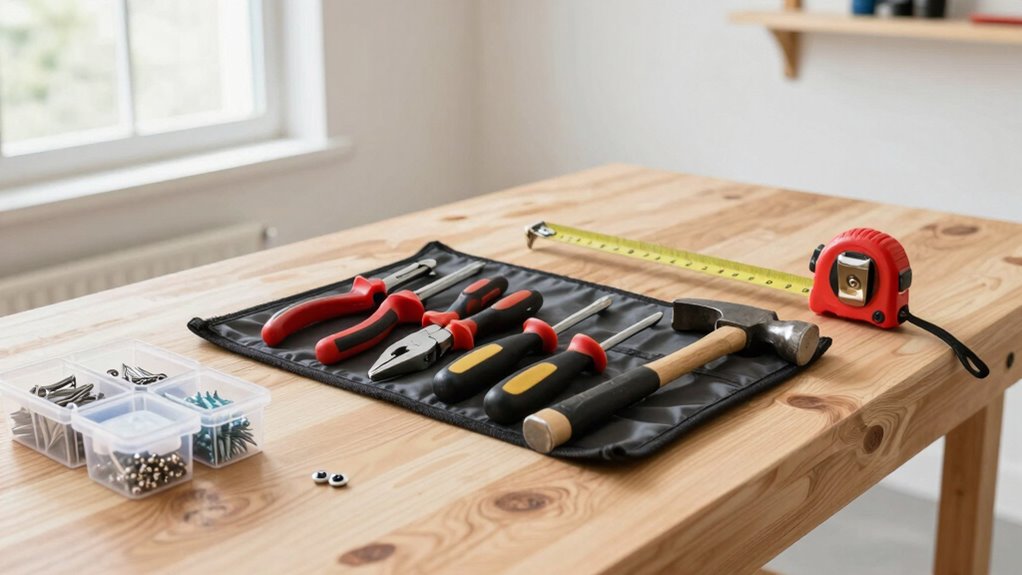
Start with essential, versatile tools like a hammer, screwdrivers, tape measure, and pliers to cover common projects. Focus on quality over quantity, avoiding specialty tools you may not need right away. Organize your tools in a designated space using recycled containers or simple storage solutions, and keep track of your spending to stay within budget. Reassess your needs periodically and add tools gradually as your skills develop—there’s more to discover as you go.

Turn the school run and nap time into listening time
- Thousands of audiobooks, podcasts and originals
- Listen on your phone, tablet or Echo — also offline
- Cancel anytime
Key Takeaways
- Start with essential, versatile tools like a hammer, screwdrivers, and pliers, avoiding specialty items initially.
- Set a clear budget and track purchases to prevent overspending on unnecessary tools.
- Organize tools in a designated space using recycled containers and labels for easy access.
- Focus on quality over quantity to ensure durability and safety of your toolkit.
- Reassess your needs regularly and add tools gradually as projects and skills develop.
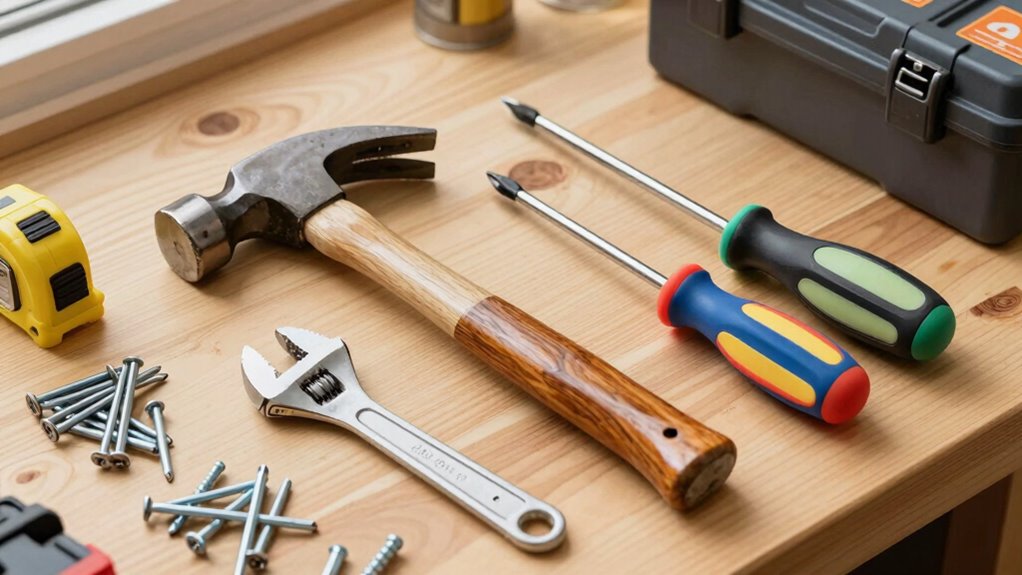
Starting a tool kit can feel overwhelming, especially when you’re tempted to buy everything at once. The key is to focus on essentials first and avoid impulse purchases that can clutter your space and drain your budget. To do this effectively, you need a clear plan for tool storage and budget planning. Think about how you’ll organize your tools from the start—having a designated space prevents clutter and makes your tools easier to find when you need them. You don’t have to invest in fancy storage solutions right away; simple tools like a toolbox or a sturdy storage bin can do the trick initially. As your collection grows, you can upgrade your tool storage options, but starting small helps you stay focused and prevents overspending. Planning for future tool organization from the beginning ensures your kit remains manageable as it expands. Incorporating biodiversity-friendly storage solutions, such as using recycled containers, can also align with sustainable living practices. Additionally, considering environmentally conscious options can help you reduce waste and support eco-friendly habits. Being mindful of eco-friendly materials when selecting storage also supports sustainable living. It’s also helpful to research sustainable tools that are designed with eco-minded manufacturing practices, adding an extra layer of eco-consciousness to your toolkit. Budget planning is crucial when building your first tool kit. Set a realistic limit for how much you want to spend, and stick to it. Prioritize high-quality tools for the most common tasks—like a hammer, screwdrivers, a tape measure, and pliers—because these will serve you well over time. Avoid buying all the specialty tools right away; instead, focus on versatile pieces that can handle multiple jobs. As you gain experience and identify specific needs, you can gradually expand your toolkit. Keep track of your purchases to stay within your budget. Comparing prices online or during sales can help you save money, so don’t rush to buy everything at once. When selecting tools, think about your immediate projects and the types of repairs or DIY tasks you’re likely to encounter. This focus prevents you from buying tools you won’t use often. Remember, quality matters more than quantity—cheaper tools might seem like a good deal initially but can be frustrating or dangerous to use if they break easily. Investing a little more in reliable tools pays off in the long run, especially if you plan to do ongoing projects. As you build your kit, keep your tool storage organized. Use labels or compartments to separate different types of tools, making your work more efficient. Reassess your needs periodically—if you find yourself repeatedly borrowing or searching for certain tools, add those to your kit gradually. The goal is to create a practical, well-organized collection that meets your needs without overwhelming you or your wallet. With a clear plan for storage and budget, you’ll build a useful, manageable tool kit that grows with your skills and projects, not your expenses.
As an affiliate, we earn on qualifying purchases.
Frequently Asked Questions
What Are the Essential Tools for Basic Home Repairs?
You need a hammer, screwdrivers, a wrench set, and pliers for basic home repairs. Keep these tools organized in a sturdy tool storage box to avoid clutter and make repairs quicker. Regularly practice maintenance tips, like tightening loose screws and checking for rust, to prolong your tools’ lifespan. Start with these essentials, and you’ll handle most minor repairs efficiently without overbuying.
How Do I Determine the Quality of a Tool?
Like a knight seeking a legendary sword, you evaluate a tool’s quality by checking its tool durability and brand reputation. Look for sturdy materials, such as hardened steel or high-quality plastic, and guarantee the tool feels solid in your hand. Research reputable brands known for reliable craftsmanship. Avoid flimsy or poorly assembled items, as they tend to break easily, wasting your money and patience. Quality tools last longer and work better for your needs.
Should I Buy Tools Online or In-Store?
You should buy tools in-store to better assess their quality and feel confident in your choices. This helps when considering tool storage options and planning your DIY projects, as you can check the weight and grip firsthand. However, for convenience or better prices, online shopping is fine if you read reviews carefully. Balancing both options guarantees you get reliable tools without overbuying, setting a solid foundation for your projects.
How Often Should I Replace or Upgrade My Tools?
You should replace or upgrade your tools based on wear and tool maintenance needs, typically every few years for frequent use. Regularly inspect for damage or dullness, and compare brands to find durable options. Upgrading tools when they no longer perform well or become unsafe guarantees efficiency. Sticking with reliable brands after a brand comparison helps you choose tools that last longer, saving you money and hassle over time.
Are There Budget-Friendly Brands With Reliable Tools?
Yes, there are budget-friendly brands with reliable tools. You should look for brands with a good reputation for durability and performance, even if they’re affordable. Do a cost comparison to make certain you’re getting the best value for your money. Brands like Black & Decker, Stanley, and Craftsman often offer reliable tools at lower prices, making them a smart choice when building your first toolkit without overspending.
As an affiliate, we earn on qualifying purchases.
Conclusion
Building your first toolkit is like planting a garden—you only need the right seeds to start. I once bought a giant set of tools, only to realize I used just a few. Start small, focus on essentials, and add as your skills grow. Remember, a well-chosen tool is worth more than a cluttered box. With patience and smart choices, you’ll create a sturdy foundation for any project—without the overwhelm.
As an affiliate, we earn on qualifying purchases.
eco-friendly tool storage containers
As an affiliate, we earn on qualifying purchases.
As an affiliate, we earn on qualifying purchases.
Fall Picks
fall essentials
As an affiliate, we earn on qualifying purchases.