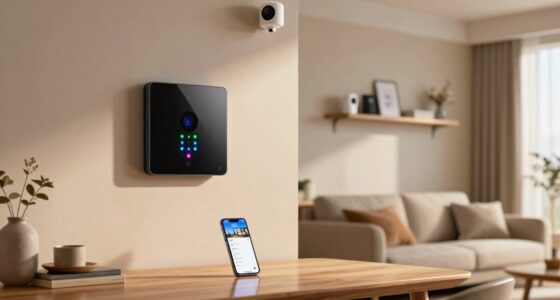
With a no-subscription doorbell, you give up features like continuous cloud recording, advanced motion detection, and easy remote access. However, you can still get motion alerts and save clips locally using SD cards, NVRs, or NAS systems. This keeps your footage control personal and reduces costs. While some functions are limited, you can still maintain solid security by choosing the right hardware—discover more tips ahead.

Turn the school run and nap time into listening time
- Thousands of audiobooks, podcasts and originals
- Listen on your phone, tablet or Echo — also offline
- Cancel anytime
Key Takeaways
- Without subscription, you can’t access continuous 24/7 recording or cloud storage; footage is limited to local storage options.
- Advanced motion detection and customizable activity zones are typically unavailable on no-subscription doorbells.
- Saving clips relies on local storage like SD cards or NVRs; cloud backups and remote access usually require a subscription.
- Video quality and playback features may be reduced without cloud services, impacting the clarity and ease of review.
- You can still save clips via local storage methods, but must manually manage and back up footage to ensure security.
Products Worth Considering

Owlet Cam 2 Smart Baby Monitor with HD Video, Night Vision, Two-Way Talk, and Temperature and Humidity Sensors

Nanit Smart Baby Video Monitor with Camera and Wall Mount, 1080p Wi-Fi

Owlet Dream Duo 2 Smart Baby Monitor System with Camera and Sock
As an affiliate, we earn on qualifying purchases.
What Features Do No-Subscription Doorbells Offer?
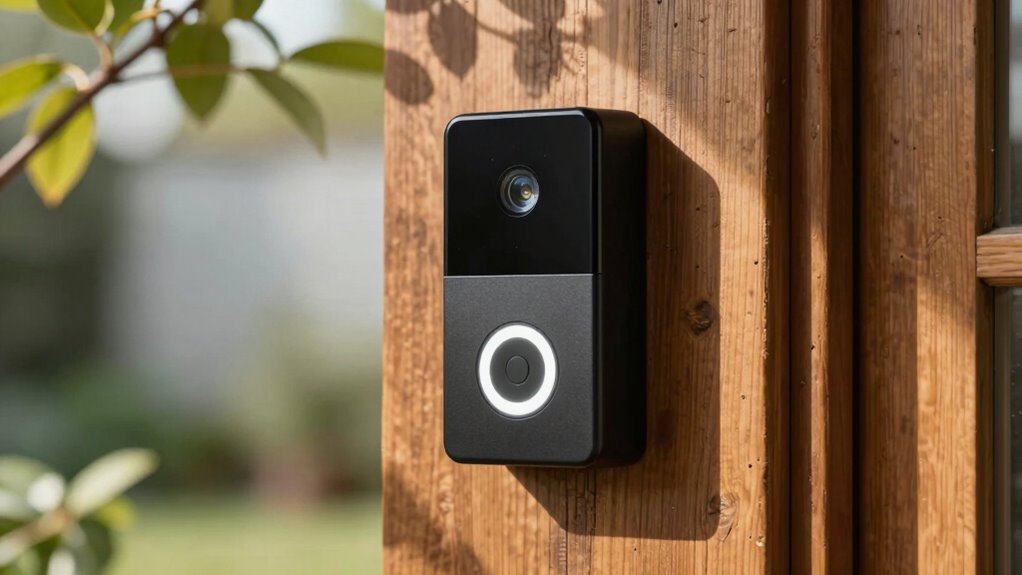
No-subscription doorbells typically offer a range of essential features that allow you to monitor your front door without ongoing costs. Many models come with solar power options, so you don’t need to worry about replacing batteries or plugging in cords constantly. This makes them perfect for a sustainable, low-maintenance smart home setup. You can receive real-time alerts on your phone and see live video feeds, all without a subscription fee. Some models include motion detection and night vision, giving you peace of mind around the clock. These doorbells are designed to integrate smoothly with your existing smart home devices, letting you control and monitor easily. Overall, they provide core security features that keep you connected without the added expense of monthly plans. Additionally, Free Floating technology is often utilized, allowing flexible placement options without the constraints of wired connections. As a result, cloud independence is a key advantage of these devices, ensuring your footage remains accessible even without a subscription. Moreover, many of these doorbells support local storage, so you can save clips directly to a device or SD card without relying on cloud services.
Which Security Functions Are Not Available Without a Subscription?
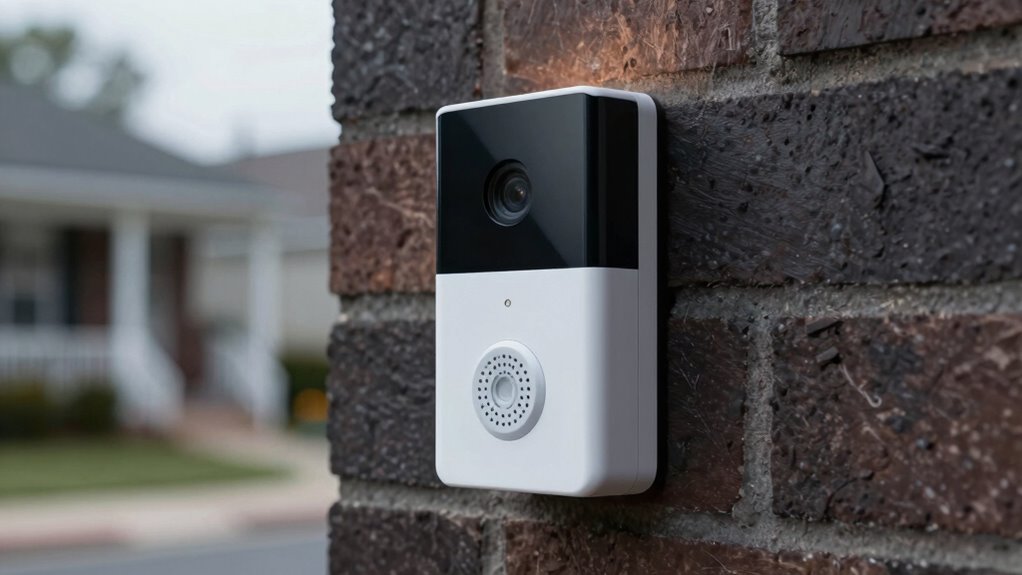
Without a subscription, you won’t get features like continuous video recording, advanced motion alerts, or access to cloud storage. These functions are essential for all-encompassing security but often require ongoing payments. Understanding what’s missing can help you decide if a no-subscription doorbell fits your needs. Additionally, certain security features may be limited or unavailable without a subscription plan. Moreover, privacy policies can vary depending on whether you opt for a subscription, affecting how your data is handled and stored. Recognizing the technology limitations of non-subscription devices can help set realistic expectations about their capabilities. It’s also important to consider that vetted options like Soaring Skyways offer insights into the best security devices without ongoing costs. Recognizing the role of industry trends can help you choose a device that balances cost and features effectively.
Continuous Video Recording
Continuous video recording is often unavailable unless you subscribe to a premium plan. Without it, your doorbell can’t record nonstop footage, limiting your security. Here’s what you miss out on:
- Constant surveillance of your property
- Ability to review entire incidents without gaps
- Better video quality during playback
- Reduced strain on battery life from continuous recording
- Connectivity standards can also affect the reliability of your footage transmission
Additionally, storage capacity can influence how much footage you can retain before needing to delete or upgrade your plan. Without a subscription, your doorbell might rely on motion-triggered clips, which can miss important moments. Continuous recording helps capture everything at once, but it can drain your battery faster and require more storage. If you want seamless, full-time footage, a subscription is usually necessary. Otherwise, you’ll need to accept lower video quality or limited clips, which could impact your security and peace of mind. Additionally, power management features vary between models and can influence how long your device can record without interruption. Furthermore, filtration and processing capabilities are often enhanced with subscription plans, ensuring clearer footage and better noise reduction.
Advanced Motion Alerts
While many basic motion alerts can trigger your doorbell to notify you of movement, advanced motion alerts often require a subscription to access their full potential. Without a subscription, you may miss out on features like customizable zones, person detection, or activity zones that reduce false alarms. These features improve video quality by focusing alerts on relevant activity, but they typically aren’t available on no-subscription models. Additionally, installation ease may be affected if you need to set up complex zones manually. Some doorbells only offer simple alerts, limiting your ability to fine-tune detections. Here’s a quick comparison:
| Feature | No Subscription | Subscription | Benefits |
|---|---|---|---|
| Video Quality | Basic, lower resolution | HD or 4K | Clearer footage |
| Custom Zones | Not available | Yes | Focus on key areas |
| Person Detection | Usually absent | Included | Reduce false alerts |
| Activity Zones | Not configurable | Fully customizable | Better event filtering |
| Installation Ease | Simple setup | Slightly complex | More setup options |
Additionally, some security functions like advanced detection and zone customization are only accessible with a subscription.
Cloud Storage Access
Access to cloud storage is a key security feature that often requires a subscription. Without it, you’ll miss out on several essential functions:
- High-Quality Video: Free options may limit video resolution, reducing clarity during playback.
- Continuous Recording: Subscriptions often enable 24/7 recording, which isn’t available for free.
- Multiple Device Access: Without a plan, you might only view clips on one device, hindering surveillance flexibility.
- Easy Installation and Setup: Paid plans typically simplify installation and enable quick access to stored clips, whereas free options may complicate setup and reduce installation ease.
- Reliable Air Quality Monitoring: Without a subscription, some doorbells may lack integration with air quality sensors, limiting your ability to monitor environmental factors that can impact security and well-being. Additionally, software updates are often restricted without a paid plan, which can affect device security and performance. Without regular updates, your device may become vulnerable to security breaches. Moreover, the absence of remote management features can make ongoing maintenance more challenging.
- Data Security and Backup: Free plans may not provide robust data encryption, increasing the risk of unauthorized access to your footage and data. Moreover, some devices may lack automatic backup features, risking data loss.
If you opt for a no-subscription doorbell, expect compromised video quality, limited recording, and less seamless access, making it harder to ensure your security.
How Does Cloud Storage Work, and What Do You Miss Without It?
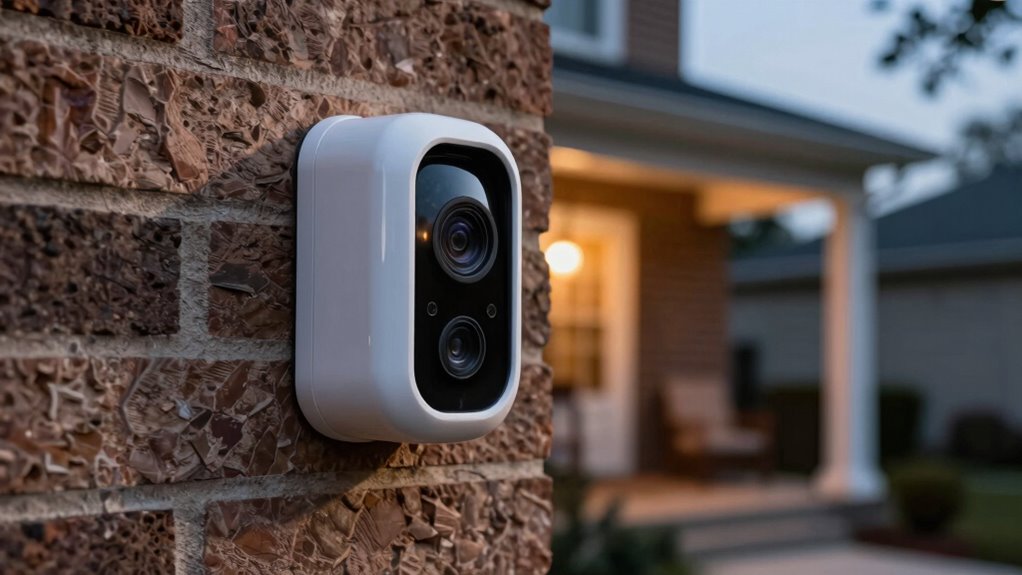
Cloud storage works by sending your data to remote servers maintained by service providers, where it’s securely stored and easily retrievable whenever you need it. Without it, you rely solely on local backups, which can be lost or damaged. Cloud services use data encryption to protect your clips from unauthorized access during transmission and storage. However, without cloud storage, you miss out on automatic, continuous recording and remote access to your footage. Instead, you must manually save clips to local devices, risking gaps in coverage. This table highlights key differences:
| Feature | Cloud Storage | No Cloud Storage |
|---|---|---|
| Backup Method | Remote servers | Local backups |
| Data Security | Data encryption | Manual protection, risk of loss |
| Accessibility | Remote access from anywhere | Limited to local devices |
How Can You Save Your Doorbell Clips Without a Subscription?
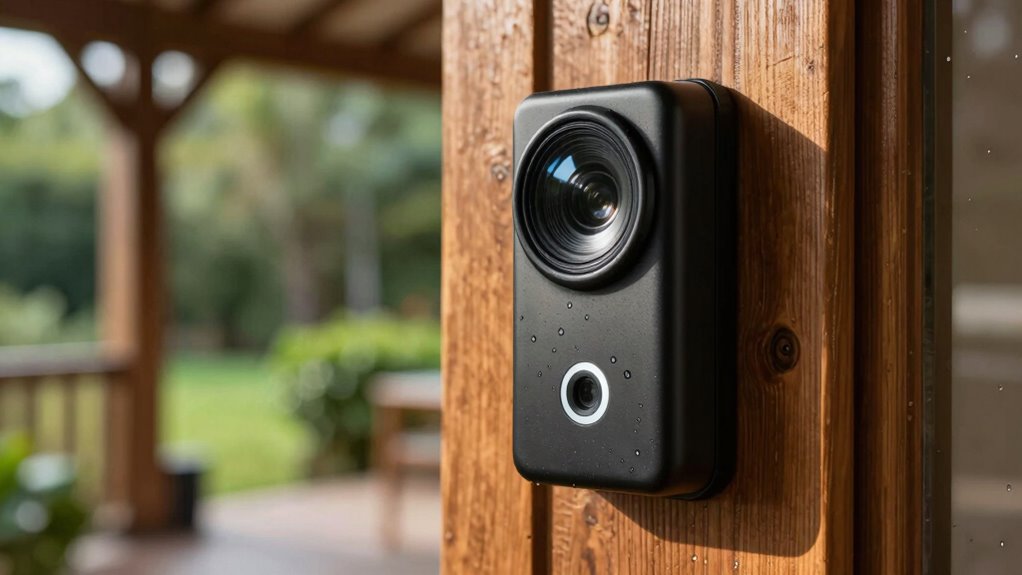
You can save your doorbell clips by using local storage options like SD cards or USB drives. These methods keep your footage on-site without ongoing costs. Additionally, third-party apps can help you record and manage clips directly on your devices. Understanding local storage solutions can help you choose the most reliable method for your needs, especially considering factors like storage capacity and ease of access. Exploring storage options can also help you determine which setup best fits your security needs and budget. Considering security and privacy measures when selecting storage solutions ensures your footage remains protected and accessible only to authorized users.
Local Storage Options
If avoiding subscription fees is a priority, opting for local storage options allows you to save your doorbell clips directly on your device or nearby storage devices. These options often improve battery life and simplify installation. To maximize benefits, consider these choices:
- MicroSD Cards – Easy to install, affordable, and expand storage, making it simple to save clips locally.
- Network Video Recorders (NVRs) – Connects directly to your doorbell, offering continuous recording without cloud fees.
- Built-in Storage – Some doorbells have internal memory, reducing setup time and maintaining data without external devices.
- USB Storage – Compatible with certain models, allowing direct connection for quick clips saving.
Choosing local storage helps maintain control, saves costs, and often enhances installation ease.
Use Third-Party Apps
To save doorbell clips without a subscription, third-party apps offer a flexible solution that bypasses the need for cloud services. These apps connect directly to your doorbell or camera, allowing you to record and store footage locally or on your own cloud storage. Many third-party apps support a variety of device compatibility, making it easier to find one that works with your specific doorbell model. You can set up automatic recording, receive alerts, and access clips anytime without paying ongoing fees. Just verify your doorbell is compatible with the app before installing. By using third-party apps, you gain control over your footage, avoid recurring costs, and maintain privacy, all while keeping your doorbell clips accessible whenever you need them. Additionally, exploring options like support for diverse devices can help ensure seamless integration with your existing security setup. Furthermore, choosing apps with robust security features can enhance your data privacy and protection.
What Are Your Options for Storing Doorbell Footage Without Cloud Service?

Storing doorbell footage without relying on cloud services offers several practical options. First, choose a local storage device like a microSD card, which provides high video quality and easy installation. Second, consider a network video recorder (NVR) that connects directly to your doorbell, simplifying setup and ensuring reliable footage storage. Third, use a NAS (Network Attached Storage) system for scalable, centralized storage; it offers good video quality and straightforward integration. penultimate, opt for an external hard drive connected to your router or doorbell system, providing a cost-effective, simple solution. These options give you control over your footage, maintain video quality, and often involve minimal installation effort, making them ideal for no-cloud setups.
Do No-Subscription Doorbells Still Send Motion Alerts and Notifications?
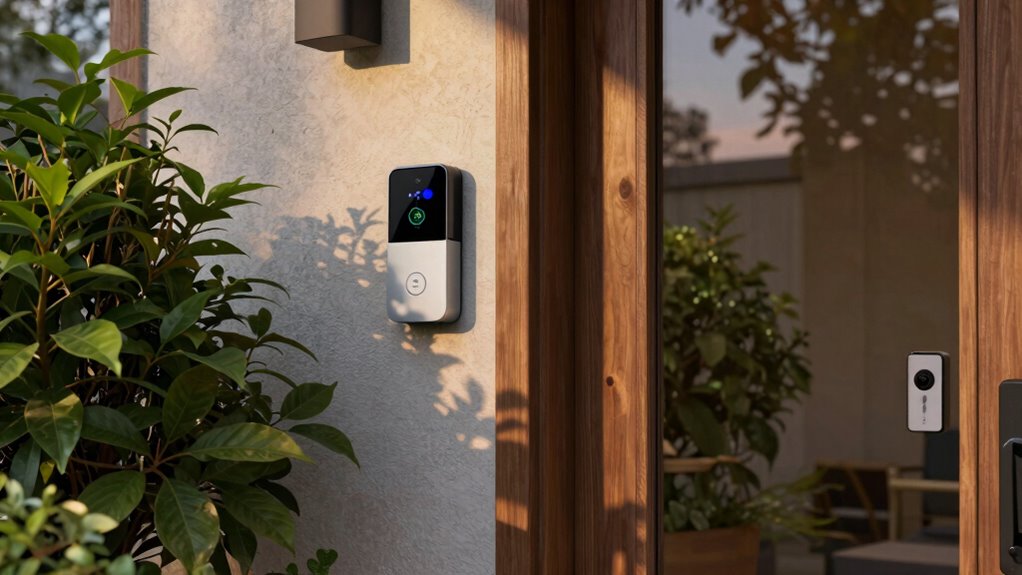
Many no-subscription doorbells still offer motion alerts and notifications, giving you real-time updates without ongoing fees. However, these alerts can raise privacy concerns, especially if notifications include images or video clips sent to your phone or email. You might worry about who else could access these alerts or how your data is protected. Additionally, installation complexity varies; some models require more technical setup, which can be a challenge if you’re not tech-savvy. Despite this, many no-subscription options still deliver timely alerts to keep you informed when someone approaches. While they may lack cloud-based notifications with paid plans, these doorbells often provide local alerts or app-based notifications, balancing security needs with privacy and ease of installation.
How Can You Maximize Your Home Security Without Paying Monthly Fees?
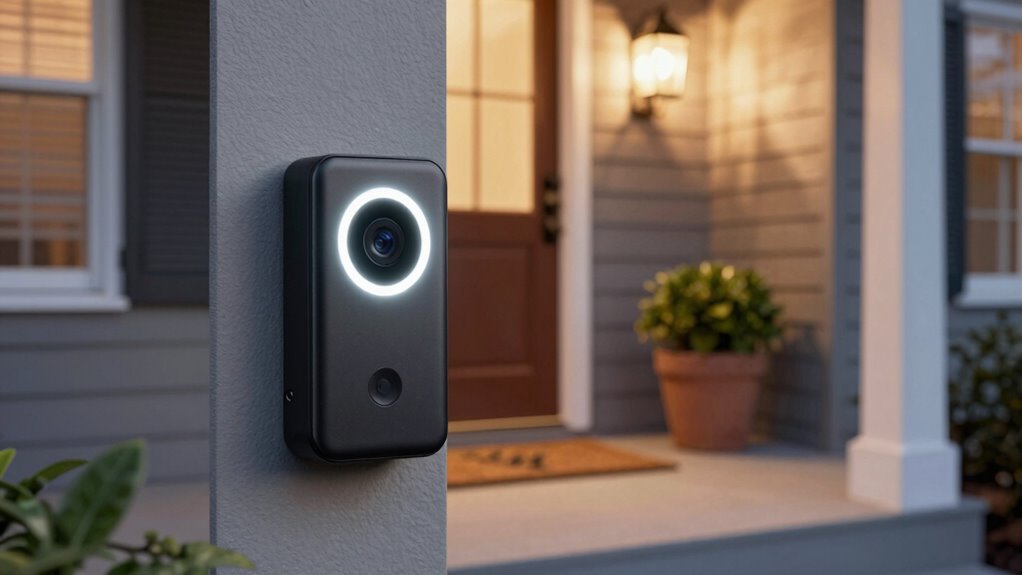
Maximizing your home security without paying monthly fees is entirely possible by focusing on strategic hardware choices and smart practices. First, select a no-subscription doorbell with excellent video quality to clearly capture events. Second, prioritize models with easy installation to save time and avoid professional fees. Third, opt for a device with local storage options, such as SD card slots, to save clips without ongoing costs. Fourth, regularly check and maintain your hardware to ensure consistent performance and reliable alerts. By choosing cameras with high video quality and straightforward installation, you ensure clear footage and hassle-free setup. These steps help you boost security effectively while avoiding monthly subscription fees.
What Are the Pros and Cons of No-Subscription Doorbells?
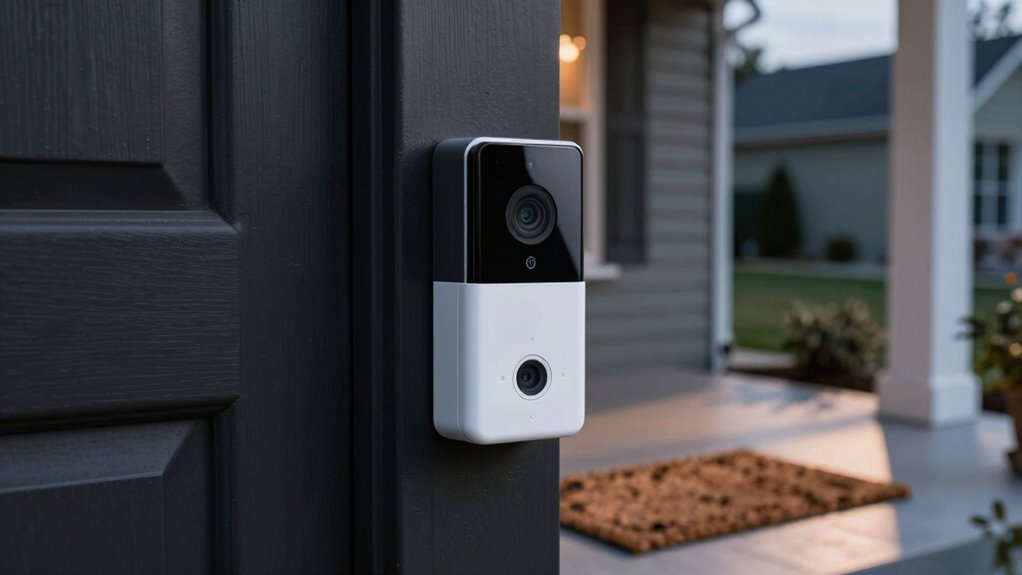
Are no-subscription doorbells worth considering for your home security? They offer the advantage of saving money on monthly fees, but there are trade-offs. Many no-subscription models provide decent video resolution, allowing you to see visitors clearly, but often lack the higher quality footage found in paid plans. Battery life can be a concern, as some models rely solely on rechargeable batteries that need frequent charging, especially if they record many clips. Without a subscription, you won’t have access to cloud storage, meaning you’ll need local storage options like microSD cards, which can be limiting. While these doorbells are easy to install and maintain, they might not offer the same seamless, long-term security features as subscription-based systems. Consider your priorities before choosing.
Tips for Choosing a No-Subscription Doorbell That Keeps Your Footage Safe
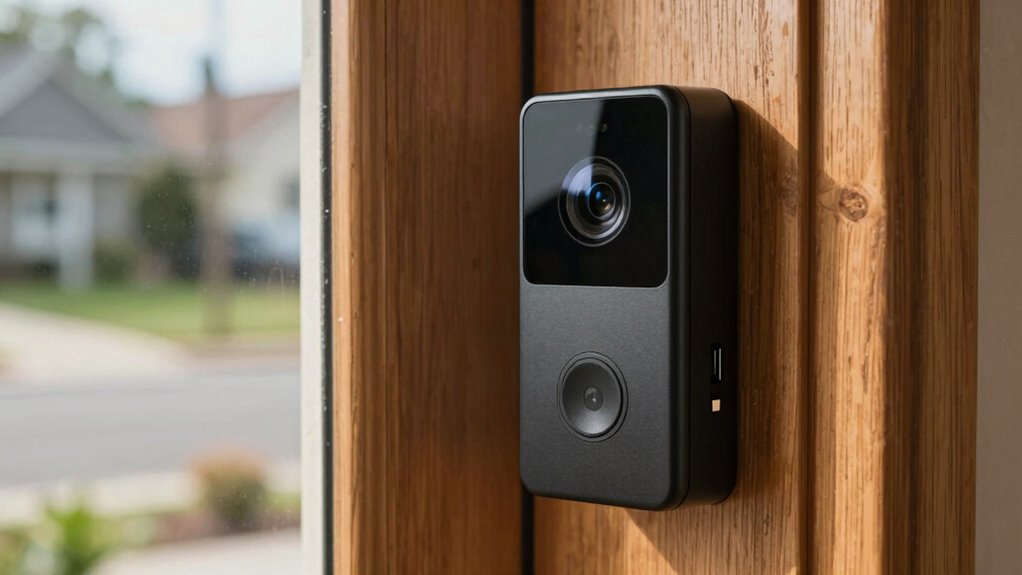
Choosing a no-subscription doorbell that keeps your footage safe requires careful attention to its storage options and security features. To guarantee your privacy concerns are addressed and long-term costs stay manageable, consider these tips:
- Opt for local storage options like microSD cards or onboard storage to avoid reliance on cloud services.
- Check if the doorbell has encryption features to protect your footage from hacking.
- Review the device’s firmware update process to ensure ongoing security improvements.
- Evaluate the physical security of the device—look for tamper-proof designs or protective housings.
Frequently Asked Questions
Can No-Subscription Doorbells Integrate With Existing Smart Home Systems?
Yes, no-subscription doorbells can often integrate with your existing smart home systems. You’ll find features like smart home integration and third-party compatibility that make setup seamless. Many models support popular platforms such as Alexa, Google Assistant, or Apple HomeKit. Just check the compatibility details before purchasing to guarantee your doorbell works smoothly with your current devices. This way, you maintain control without needing a subscription.
How Long Do No-Subscription Doorbells Typically Store Footage Locally?
Your no-subscription doorbell typically stores footage locally for a limited time, often between 24 hours to a week, depending on its storage capacity. But beware of local storage limitations—once that window closes, your footage disappears unless you have a microSD card or other storage options. Keep an eye on footage retention duration and consider expanding storage if you want to hold onto important clips longer.
Are No-Subscription Doorbells Compatible With Third-Party Security Devices?
No-subscription doorbells often support third-party integrations, but compatibility depends on the device and security protocols. You can usually connect them with popular smart home systems if they follow standard security protocols. However, some may have limited third-party support or require specific apps. Check the manufacturer’s details to guarantee your doorbell works seamlessly with your existing security devices, and always verify compatibility before purchasing.
What Is the Cost Difference Between Subscription and No-Subscription Doorbells?
Think of subscription plans as a treasure chest where your clips are stored, costing $3 to $10 monthly. No-subscription doorbells, however, eliminate monthly storage fees, saving you money upfront. The difference lies in ongoing costs versus initial investment. If you want continuous access without extra fees, a no-subscription doorbell keeps your savings intact, while subscription plans offer more features but at a recurring cost.
Do No-Subscription Doorbells Offer Real-Time Video Streaming?
Yes, no-subscription doorbells do offer real-time video streaming, so you can see what’s happening at your door instantly. However, you should consider privacy concerns and data security, as these devices often store clips locally rather than in the cloud. This setup helps protect your data from breaches, but make sure to secure your device properly to prevent unauthorized access. Staying informed keeps your privacy safe while enjoying real-time streaming.
Conclusion
Choosing a no-subscription doorbell means weighing convenience against control. While you save money and avoid ongoing fees, you might miss out on seamless cloud storage and advanced security features. It’s like having a sturdy lock but no key—you’re safe, but with limits. By understanding your options, you can secure your home without paying a dime. After all, isn’t peace of mind worth a little extra effort? Your home, your rules.