To guarantee your smart light bulbs stay connected without daily re-pairing, you should choose models with stable Wi-Fi or mesh networking, like Philips Hue or LIFX, which feature reliable communication protocols. Proper placement away from interference, updates for firmware, and compatibility with your existing setup also boost connection stability. If you’re curious about more tips and the best devices for hassle-free smart lighting, keep exploring how to improve your setup for long-lasting connections.
Key Takeaways
- Choose smart bulbs with mesh networking or Zigbee/Z-Wave protocols for more stable, long-lasting connections.
- Ensure bulbs are compatible with your existing smart home hub or platform to prevent frequent re-pairing.
- Position bulbs within a strong Wi-Fi or hub signal range, avoiding thick walls and interference sources.
- Regularly update firmware and app software to maintain optimal connectivity and fix bugs.
- Use dedicated networks for smart devices to reduce congestion and improve connection reliability.
Why Do Smart Light Bulbs Lose Connection?
Smart light bulbs can lose their connection for several reasons, often related to network issues or interference. Wireless interference is a common culprit, especially if other devices like cordless phones, microwaves, or neighboring Wi-Fi networks operate on the same frequency. This interference weakens the signal, causing disconnections. Another factor is outdated firmware; if your smart bulb’s firmware isn’t current, it might struggle to maintain a stable connection. Manufacturers regularly release firmware updates to improve stability and fix bugs. Failing to keep your bulbs updated can lead to connection dropouts. Ensuring your Wi-Fi network is clear of interference and keeping firmware up-to-date helps your smart bulbs stay connected reliably, reducing the need for constant re-pairing. Additionally, leveraging European cloud servers can enhance the reliability and security of your smart home devices by providing a more stable and sustainable infrastructure. Regularly monitoring your network’s signal strength can also prevent unexpected disconnections and improve overall device performance, especially when utilizing network management tools to optimize connectivity. Being aware of network congestion and managing device bandwidth can further help maintain a steady connection.
What Causes Connection Dropouts in Smart Lighting?
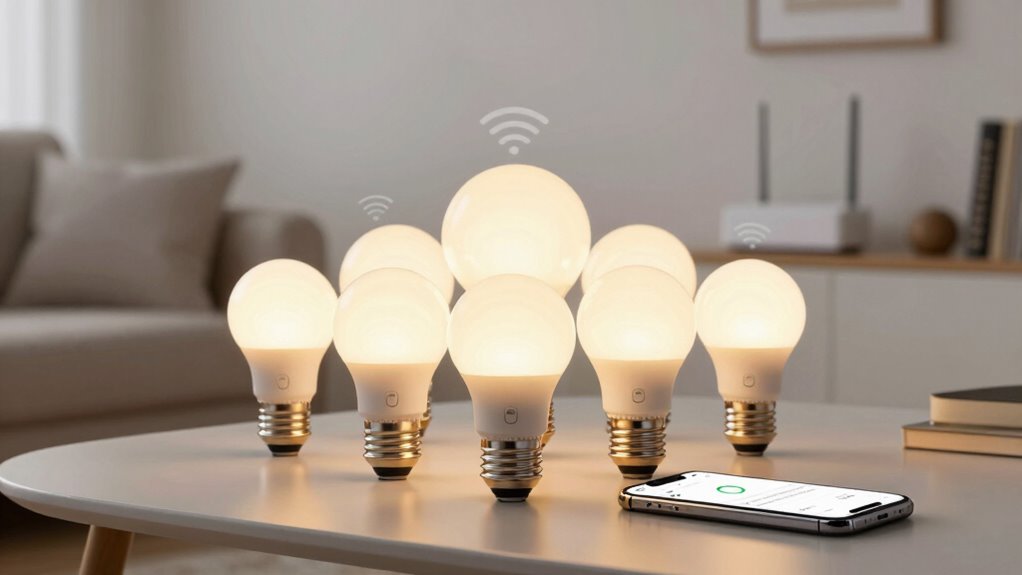
Connection dropouts in smart lighting often occur when the network signal becomes weak or unstable, disrupting communication between your device and the bulb. Wireless interference from other electronics, such as cordless phones or microwaves, can weaken your Wi-Fi signal, causing disconnections. Additionally, outdated firmware updates can impair your smart bulb’s ability to stay connected, as they often include bug fixes and stability improvements. If your network is congested or experiencing interference, your smart bulbs may frequently disconnect. Ensuring your Wi-Fi is strong and free from interference is essential. Regularly updating the firmware can also prevent dropouts by fixing known connectivity issues. Keeping your network optimized and firmware current minimizes the chances of losing connection unexpectedly. Furthermore, understanding the role of contrast ratio in your network’s performance can help diagnose persistent connectivity problems. To improve reliability, consider network segmentation to reduce traffic congestion on your main Wi-Fi band. Also, evaluating signal strength across your space can help identify weak spots that contribute to disconnections. Addressing network congestion can significantly enhance connection stability for your smart lighting system, and being aware of router placement can also prevent dead zones that cause dropouts.
Which Features Help Smart Bulbs Stay Connected?
Have you ever noticed your smart bulbs staying connected even in busy Wi-Fi environments? Features like advanced wireless protocols, such as Zigbee or Z-Wave, help bulbs communicate reliably without overloading your network. Additionally, regular firmware updates ensure your bulbs stay compatible with your system and fix connectivity bugs. These updates optimize performance and improve stability, reducing dropouts. Some smart bulbs also include mesh networking capabilities, allowing them to relay signals through other bulbs, which boosts overall connection strength. Understanding these features can help you choose the best options for a seamless smart lighting experience. Moreover, selecting bulbs with robust wireless protocols can significantly enhance reliability in complex network setups, especially when combined with mesh networking capabilities that expand coverage in larger or congested spaces. To further enhance connection stability, choosing bulbs with long-range communication features can help maintain a reliable connection over greater distances within your home.
What Are the Best Smart Bulbs for Reliable Connection?

When choosing smart bulbs that deliver a reliable connection, it’s important to look beyond basic features and focus on those designed for stability. Proper smart bulb placement is key; keep bulbs within a good range of your Wi-Fi router or hub to prevent signal drops. Avoid placing bulbs behind thick walls or metal objects that can block signals. Additionally, select smart bulbs that offer broad compatibility with your devices and platforms, such as Apple HomeKit, Google Assistant, or Alexa. Compatibility ensures smooth integration and reduces connection issues. Brands known for stable connections often invest in better antennas or use mesh networking technologies. By considering smart bulb placement and ensuring compatibility with your existing devices, you can enjoy a consistently reliable smart lighting experience.
How Can I Keep My Smart Light Bulbs Connected Long-Term?
Maintaining a long-term connection with your smart light bulbs requires proactive management and thoughtful setup. To keep them reliably connected, start by choosing a strong Wi-Fi network with minimal interference. Position your router centrally to improve signal strength. Regularly update your bulb firmware and app to fix bugs and improve stability. Use voice control options for quick adjustments, reducing dependency on manual controls. Additionally, creating a dedicated Wi-Fi network for your smart devices can help isolate them from other network traffic and improve connection reliability. Finally, optimize energy efficiency by avoiding frequent toggling, which can disrupt the connection. Maximize your truck bed’s potential by considering how your smart devices are integrated into your overall setup, ensuring they function seamlessly over time.
Frequently Asked Questions
Do Smart Bulbs Require a Dedicated Hub for Stable Connection?
You don’t necessarily need a dedicated hub for stable smart bulb compatibility, especially with newer models designed for direct Wi-Fi or Bluetooth connection. These bulbs often offer better energy efficiency and reliable performance without extra hardware. However, some advanced smart bulbs or larger setups might benefit from a hub to bolster stability and control. Check the manufacturer’s specifications to guarantee your chosen bulbs meet your needs for convenience and energy savings.
How Does Wi-Fi Interference Affect Smart Bulb Connectivity?
Imagine your smart bulb as a delicate dance partner, needing clear space to follow your lead. Wi-Fi interference, caused by radio frequency congestion, can disrupt this dance, causing flickering or disconnection. Signal interference from other devices like microwaves or cordless phones hampers the radio frequency communication between your bulb and Wi-Fi router. To keep the dance smooth, reduce interference by relocating devices or switching to less crowded Wi-Fi channels.
Are Mesh Networks Better for Maintaining Smart Bulb Connections?
Yes, mesh networks are better for maintaining smart bulb connections. They improve connection stability by creating multiple pathways for your devices to communicate, reducing the chances of signal dropouts. With a mesh network, your smart lights stay connected even if one node experiences interference or goes offline. This setup makes your smart lighting system more reliable, ensuring consistent performance without the need for daily re-pairing or troubleshooting.
Can Firmware Updates Improve the Stability of Smart Light Bulbs?
Firmware updates can greatly improve the stability of your smart light bulbs. They often include bug fixes, security patches, and performance enhancements that enhance firmware stability. By keeping your bulbs updated, you benefit from smoother operation, fewer disconnections, and better compatibility with your smart home system. Regular updates ensure your smart bulbs perform reliably, giving you peace of mind and a seamless lighting experience.
What Troubleshooting Steps Fix Persistent Connectivity Issues?
You can fix persistent connectivity issues by first checking your Wi-Fi security settings to make sure your network isn’t blocking the bulbs. Reset the bulbs and update their firmware for better stability. Address power fluctuations by using a surge protector or stable power source. Keep your router firmware current, and move the bulbs closer to your Wi-Fi router. These steps help maintain a strong, consistent connection, reducing daily re-pairing needs.
Conclusion
To enjoy hassle-free lighting, choosing smart bulbs that stay reliably connected is key. While occasional hiccups might happen, the right features can make a world of difference. With a little attention to your setup, you’ll find your smart bulbs more dependable over time—almost like they’re quietly working behind the scenes just for you. So, invest wisely and keep your smart lighting experience smooth, making every moment brighter without the need for constant fussing.