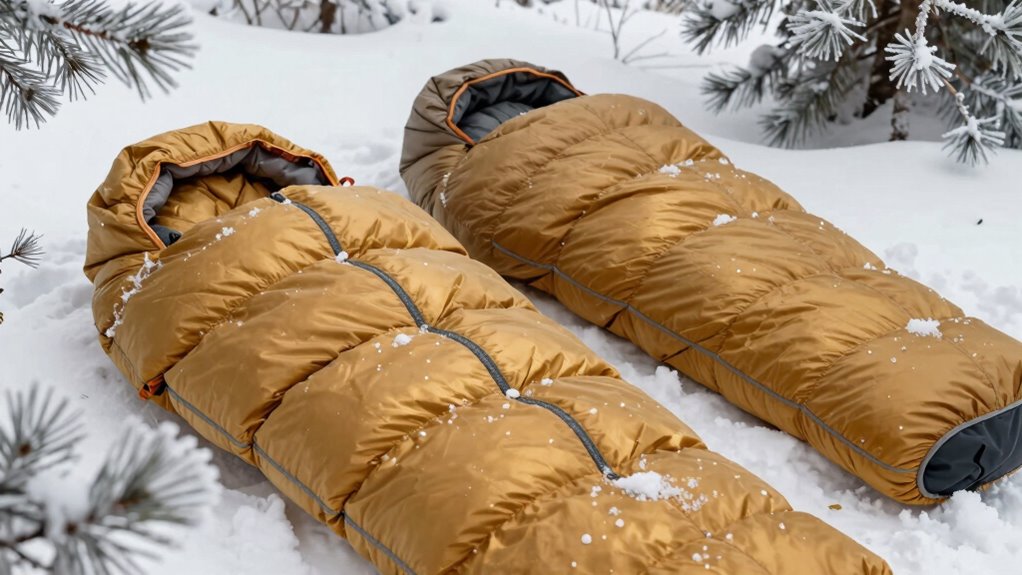

A 0-degree down sleeping bag is designed to keep you warm in freezing conditions, with high-quality down insulation and features like draft collars and weather-resistant fabrics. To stay cozy, layer with moisture-wicking base layers and choose clothing that traps heat but vents moisture. Proper fit and using a sleeping pad also make a big difference. Keep exploring to discover more tips and tricks for cold-weather camping success.

Turn the school run and nap time into listening time
- Thousands of audiobooks, podcasts and originals
- Listen on your phone, tablet or Echo — also offline
- Cancel anytime
Key Takeaways
- 0-degree down sleeping bags are tested to maintain warmth at or below 0°F in controlled conditions.
- High fill power down (800+) maximizes warmth-to-weight ratio and compressibility for cold-weather camping.
- Layering with moisture-wicking base layers and insulating mid-layers enhances overall warmth and comfort.
- Use a sleeping pad, liner, and proper clothing to prevent heat loss and optimize the sleeping system’s effectiveness.
- Proper fit, draft collars, and hood features improve thermal efficiency and prevent cold spots during winter sleep.
As an affiliate, we earn on qualifying purchases.
What Does a 0-Degree Down Sleeping Bag Do?
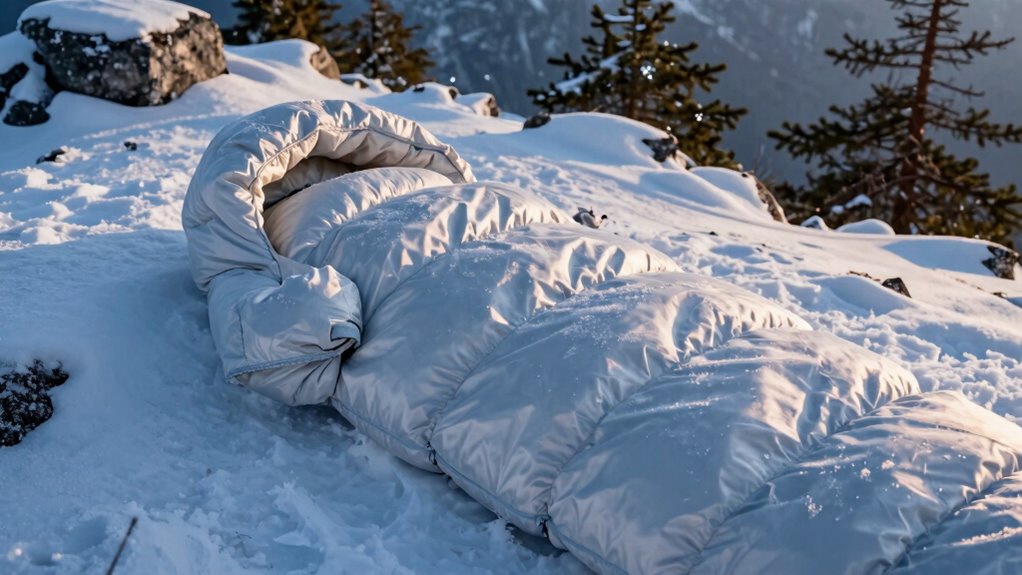
A 0-degree down sleeping bag is designed to keep you warm in extremely cold conditions, often down to freezing temperatures or below. Its effectiveness depends on the sleeping bag insulation, with down being known for its superior warmth-to-weight ratio and compressibility. Down insulation traps more air, providing excellent insulation in cold weather. When choosing between down versus synthetic, consider that down offers better warmth and packability but can lose insulating properties when wet. Synthetic insulation, while slightly heavier and less compressible, retains warmth even when damp and tends to be more affordable. A 0-degree down sleeping bag is ideal for winter camping or high-altitude adventures, ensuring you stay warm even in freezing conditions. Additionally, care and maintenance of down sleeping bags can extend their lifespan and preserve insulation performance over time. Proper storage and regular cleaning help maintain their insulating properties and prevent damage from moisture or pests. To maximize their performance, understanding the layering tricks can also help you adapt to varying temperatures and weather conditions. Being aware of moisture management techniques is crucial to prevent down insulation from clumping and losing its insulating ability. Incorporating proper drying methods after use can further protect the insulation from mold and deterioration.
As an affiliate, we earn on qualifying purchases.
Understanding How Temperature Ratings Are Tested
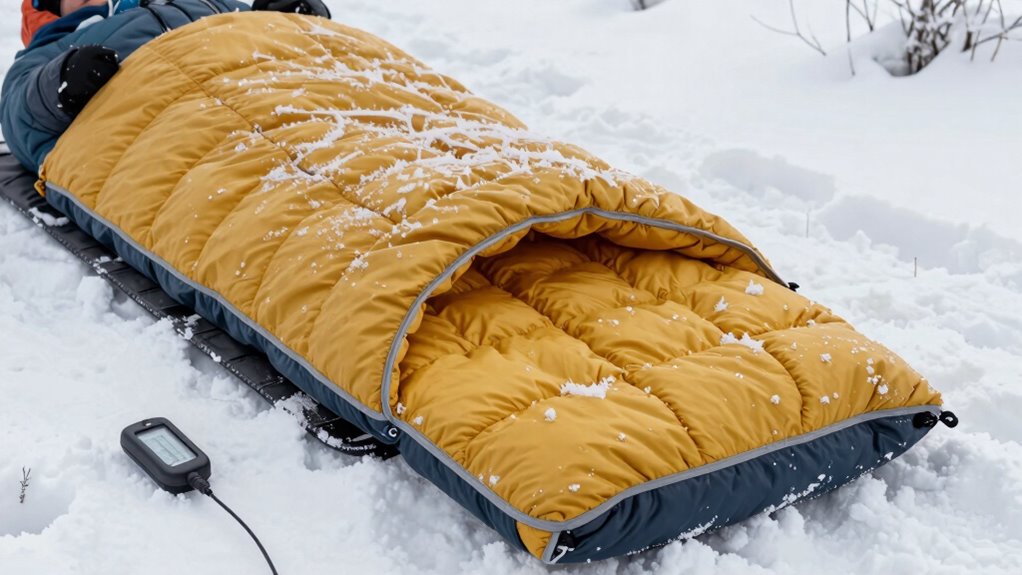
Understanding how temperature ratings are tested is essential to choosing the right sleeping bag for your needs. Manufacturers evaluate sleeping bag insulation using specific temperature testing methods, usually in controlled environments. These tests often involve placing a heated mannequin or a human subject inside the bag, then measuring heat loss at various temperatures. The goal is to determine the lowest temperature where the insulation can maintain core body temperature comfortably. Keep in mind that different testing standards, like EN or ISO, may produce slightly different ratings. These methods give you a standardized way to compare sleeping bags, but real-world conditions like wind, humidity, and layering can influence actual performance. Being aware of testing standards helps you select a sleeping bag that matches your expected outdoor temperatures accurately. It’s also helpful to understand insulation performance to gauge how well a bag will perform in various environments. Additionally, understanding layering techniques can optimize your warmth and comfort in cold conditions. For outdoor enthusiasts, understanding temperature ratings in context with your activity level and environment can lead to better gear choices, ensuring comfort and safety. Knowing this helps you select a sleeping bag that matches your expected outdoor temperatures accurately.
down sleeping bag with draft collar
As an affiliate, we earn on qualifying purchases.
As an affiliate, we earn on qualifying purchases.
Key Features to Look for in a 0-Degree Down Sleeping Bag
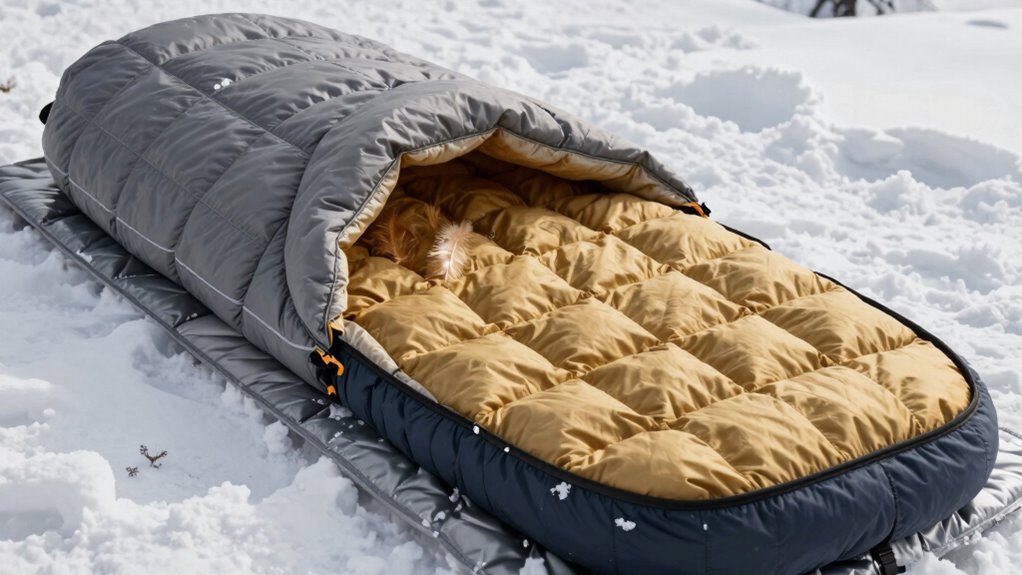
When choosing a 0-degree down sleeping bag, focusing on key features guarantees you get reliable warmth and comfort in cold conditions. First, prioritize insulation quality — look for high fill power down, which offers better warmth-to-weight ratio. A higher fill power (800+) traps more air, providing superior insulation. Additionally, consider weight considerations; a lightweight bag makes backpacking easier without sacrificing warmth. Features like a draft collar and zipper draft tubes help prevent heat loss. Durability matters too; durable shells protect against moisture and wear. Weather-resistant fabrics and treatments can enhance longevity and performance in damp environments. Understanding regulatory standards can also help ensure you select a safe and compliant sleeping bag. Moreover, selecting a bag with proper layering options allows greater versatility across different conditions.
As an affiliate, we earn on qualifying purchases.
How to Layer Properly Under Your Cold-Weather Sleeping Bag
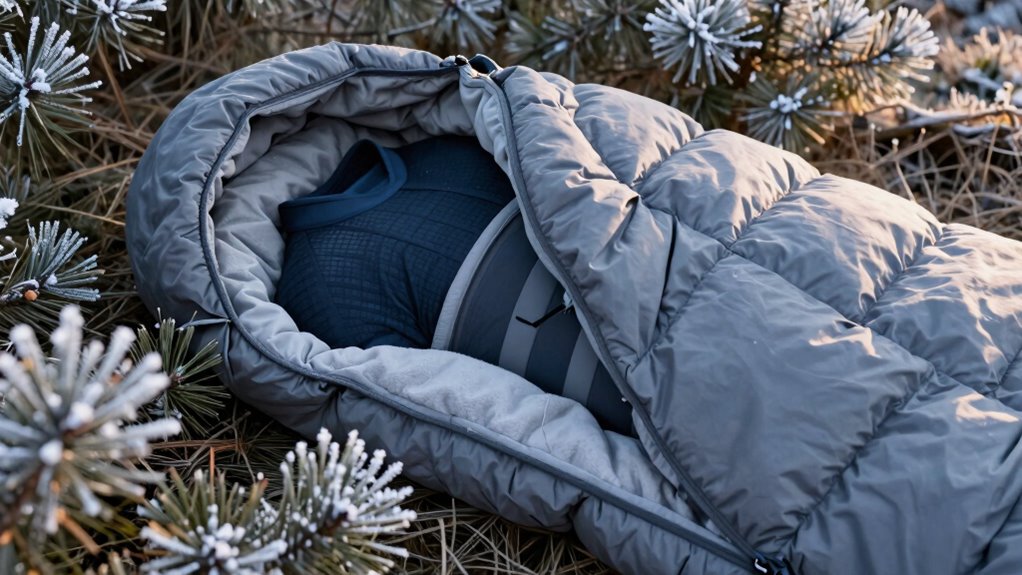
Choosing the right layer materials is essential to stay warm without adding bulk. You should also develop clothing strategies that trap heat effectively while venting moisture. Proper layering can make a big difference in how comfortable and warm you stay overnight. Incorporating layering techniques that optimize insulation and moisture management can greatly enhance your sleep quality in cold conditions. Additionally, selecting moisture-wicking fabrics for base layers helps keep sweat away from your body, maintaining consistent warmth and comfort throughout the night. Understanding thermal regulation principles can further help you fine-tune your layering system for optimal warmth and dryness. Practicing moisture control through proper layering not only keeps you dry but also prevents dampness that can lead to heat loss. Mastering layering strategies also involves considering breathability to prevent overheating and moisture buildup inside your sleeping system.
Layer Materials Matter
The materials you choose for your base layers can considerably impact your comfort and warmth inside a 0-degree down sleeping bag. Opt for insulation types that trap heat effectively, like merino wool or synthetic fabrics designed for cold weather. Durable fabrics ensure your layers withstand friction and wear, maintaining insulation quality over time. Proper layering involves selecting materials that wick moisture away, prevent heat loss, and resist compression. For example, choosing essential oils with antimicrobial properties can help keep your layers fresher during extended trips. Additionally, selecting high-quality fabrics can significantly improve your layering system’s effectiveness. Using fabrics with moisture-wicking capabilities helps keep sweat away from your body, which is crucial for maintaining warmth in cold environments. Understanding the layering hierarchy ensures each piece works synergistically to optimize insulation and comfort. Incorporating breathable fabrics into your layers can further enhance moisture management and overall warmth. Here’s a quick guide:
| Material | Insulation Type | Fabric Durability |
|---|---|---|
| Merino Wool | Natural insulation | High |
| Synthetic | Quick-drying, resilient | Very high |
| Fleece | Insulation, soft touch | Moderate |
| Silk | Lightweight, breathable | Low |
Choosing the right materials guarantees your layers work together to keep you warm and comfortable.
Proper Clothing Strategies
Layer materials set the foundation for staying warm, but how you assemble those layers directly impacts your comfort inside a 0-degree down sleeping bag. Choose insulation types like merino wool, synthetic thermals, or fleece, which wick moisture and retain heat. Base layers made from quality sleeping bag materials ensure ideal insulation without excess bulk. Avoid cotton, which traps moisture and cools your body. Layer with lightweight, moisture-wicking fabrics next, then add an insulating layer if needed. Your goal is to trap warm air close to your body while managing sweat. Proper clothing strategies involve adjusting layers based on activity level and conditions. Additionally, understanding layering techniques can help you optimize warmth and moisture management. Using the right insulation materials enhances your overall warmth and comfort. This way, you maximize the insulating power of your sleeping bag and stay warm throughout the night.
Best Clothing and Gear to Keep You Warm in Freezing Conditions
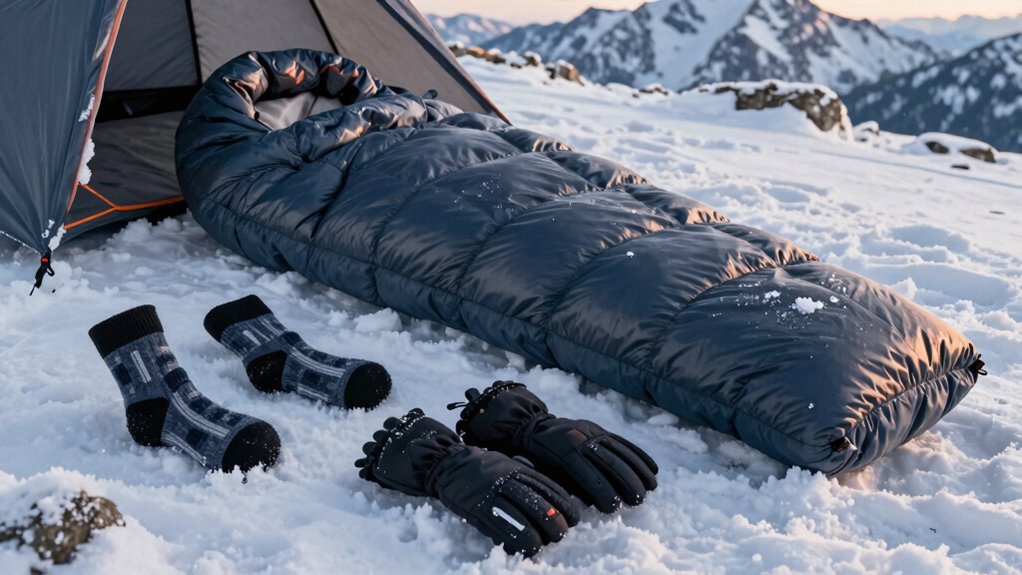
When temperatures plummet to freezing or below, having the right clothing and gear becomes vital to stay warm and safe. Focus on layering clothing with high insulation quality to trap body heat effectively. A thermal base layer, insulating mid-layer, and waterproof outer shell work together to block cold and wind. Don’t forget insulated boots, gloves, and a hat—these prevent heat loss from extremities. For gear, a compact, reliable sleeping pad adds essential insulation from the cold ground. Always prioritize campfire safety; ensure your fire is well-ventilated and contained, as it can boost warmth but also poses risks. Proper clothing and gear, combined with safe fire practices, create a solid barrier against freezing temperatures, keeping you comfortable and protected throughout your trip.
Choosing the Right Fit and Size for Cold-Weather Camping
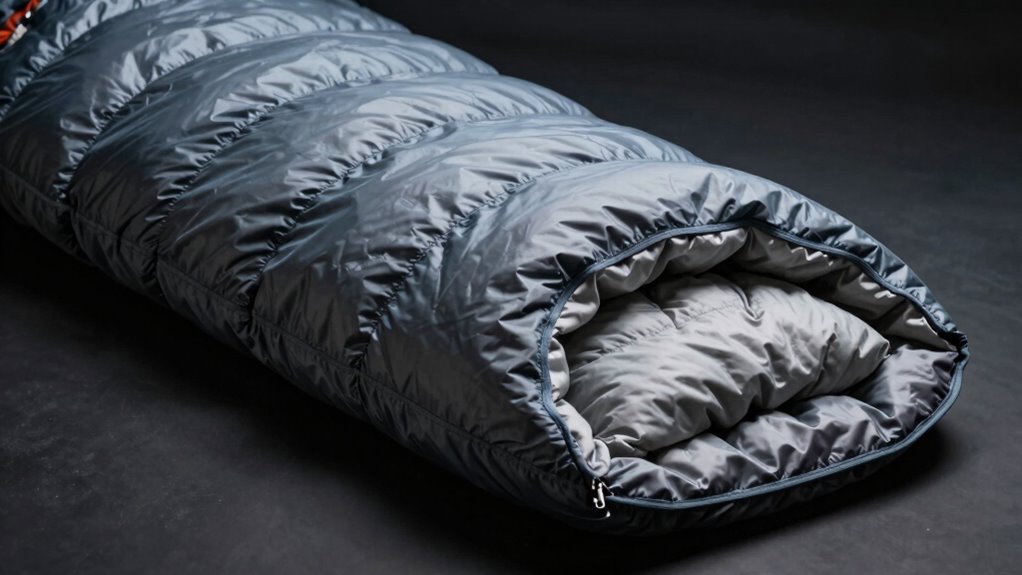
Choosing the right fit and size for your sleeping bag is essential to stay warm and comfortable in cold weather. You want a bag that fits snugly without restricting movement, and the right size guarantees you can sleep peacefully. Consider your body type and adjust accordingly to maximize insulation and comfort throughout your camping trip.
Proper Sleeping Bag Fit
A properly fitting sleeping bag is essential for staying warm and comfortable during cold-weather camping. Your sleeping bag fit directly impacts heat retention and overall comfort. If it’s too tight, you’ll feel restricted; if too loose, heat escapes. To optimize your warmth, focus on layer adjustment and choosing a bag that contours your body without excess space. Visualize this:
| Tight Fit | Loose Fit |
|---|---|
| Snug around your shoulders | Excess fabric around hips |
| Minimal air gaps | Gaps that let cold air in |
| Efficient heat retention | Heat loss due to excess space |
Finding the right fit guarantees your insulation works effectively, helping you stay warm all night. Properly fitted gear makes all the difference in cold-weather camping success.
Selecting Size For Comfort
Selecting the right size for your cold-weather sleeping bag is crucial to guarantee maximum comfort and warmth. Proper sleeping bag sizing ensures you’re not too cramped or too loose, which can affect insulation. To find your ideal comfort fit, consider these tips:
- Measure your height and choose a bag slightly longer for room to move.
- Check the width; a snug fit prevents cold spots but avoid restricting movement.
- Look for bags with adjustable features like draft collars or hoods.
- Prioritize bags with a tapered design for better heat retention without sacrificing mobility.
Adjusting Based On Body Type
Your body type plays a significant role in finding the right sleeping bag fit for cold-weather camping. If you’re taller or broader, choose a bag with extra room to avoid compression of insulation, which reduces warmth. For those with a leaner build, a snug fit helps retain heat more efficiently. Your sleeping style also matters; if you tend to move around or change positions, opt for a slightly roomier bag to stay comfortable. Conversely, if you sleep in one position, a more fitted bag can improve insulation by minimizing dead space. Pay attention to size charts and consider trying different models to see what fits best. Adjusting your sleeping bag based on your body type ensures suitable insulation, comfort, and warmth during cold nights.
Common Mistakes That Can Make You Too Cold at Night
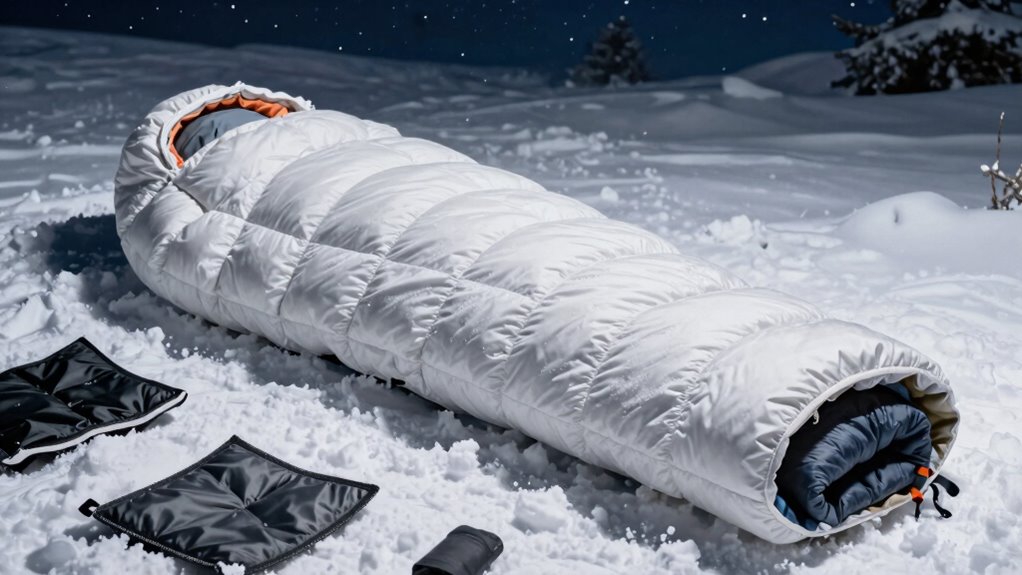
One of the most common mistakes that can leave you cold at night is choosing a sleeping bag that doesn’t match the conditions. If your sleeping bag selection isn’t appropriate, you risk inadequate warmth. Additionally, neglecting proper clothing layering can cause heat loss. Here are four mistakes to avoid:
Choosing the right sleeping bag and layering properly are key to staying warm outdoors.
- Underestimating the temperature—using a bag rated too high for the conditions.
- Skipping proper clothing layering—wearing just a base layer won’t keep you warm enough.
- Relying solely on the sleeping bag’s rating—overlooking other insulation factors.
- Choosing a bag without considering your body type and sleep style.
Pay attention to your clothing layering and select a sleeping bag suited for the environment to stay warm through the night.
How to Care for and Maintain Your Down Sleeping Bag in Cold Weather
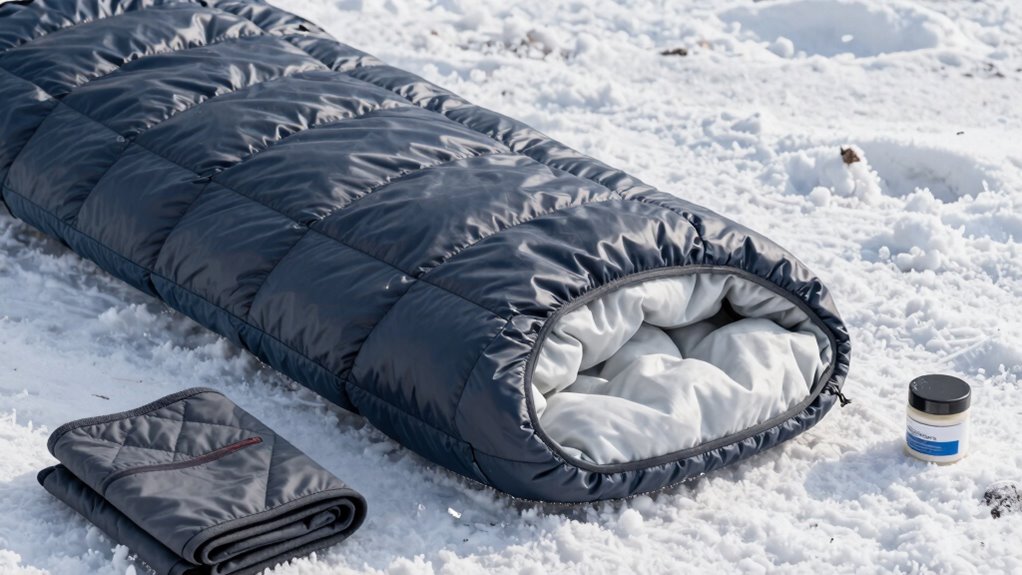
To keep your down sleeping bag warm and fluffy in cold weather, you need to care for it properly. Make sure you store it in a loose, breathable bag when not in use, and regularly dry it to prevent moisture buildup. Also, repair any tears or damages promptly to maintain its insulating power.
Proper Storage Techniques
Proper storage is essential for maintaining the loft and insulating properties of your down sleeping bag, especially in cold weather. To guarantee longevity, follow these storage techniques:
- Avoid keeping your bag compressed for long periods. Store it in a large, breathable storage sack to prevent damage.
- Never leave your bag in tight compression bags when not in use, as this can flatten the down and reduce insulation.
- Find a cool, dry, and ventilated spot for storage, away from direct sunlight and moisture.
- Regularly inspect and fluff your bag to restore its loft and prevent clumping of down feathers.
Regular Drying Practices
Regularly drying your down sleeping bag is essential to maintaining its loft and insulating properties, especially after cold or damp conditions. Proper drying techniques help remove residual moisture that can compromise insulation and cause odors. To control moisture, always air out your bag thoroughly after use, preferably in a well-ventilated space. Use a low-heat dryer with clean tennis balls or dryer balls to gently fluff the down and restore loft. Avoid high heat, which can damage the feathers and fabric. If your bag feels damp, don’t pack it away; instead, let it dry completely before storage. Moisture control is key to prolonging your sleeping bag’s lifespan and ensuring it performs well in cold weather. Regular drying practices keep your down bag warm, dry, and ready for your next adventure.
Repairing Damages Promptly
Damages to your down sleeping bag can quickly compromise its insulation, especially in cold weather, so addressing issues promptly is crucial. Ignoring tears or holes allows cold air to seep in, reducing warmth. To maintain its performance:
- Examine your bag regularly for signs of damage, especially after use.
- Mend tears immediately using appropriate repair tape designed for down gear.
- Patch holes with durable, waterproof patches to prevent insulation loss.
- Keep your bag clean and dry; moisture can weaken fabric and increase the risk of damage.
Promptly repairing tears and patching holes helps preserve warmth and prolongs your sleeping bag’s lifespan. Taking quick action ensures your bag remains effective in cold conditions, keeping you warm and comfortable.
Top Features to Compare When Picking a 0-Degree Down Bag
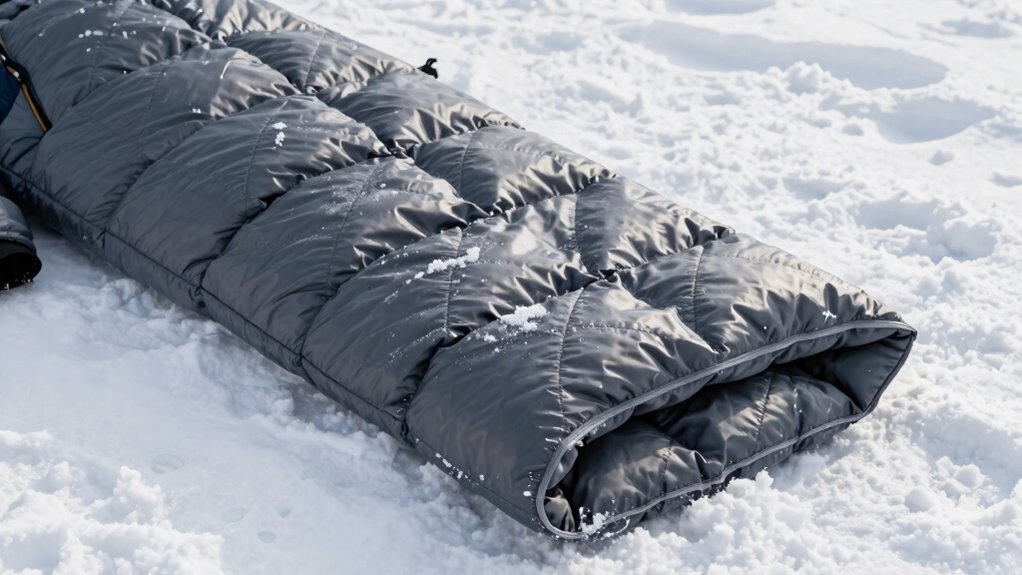
When choosing a 0-degree down sleeping bag, focusing on key features can make all the difference in guaranteeing warmth, comfort, and durability. First, examine the sleeping bag insulation—look for high-quality down, which offers superior warmth-to-weight ratio and compressibility. Check the fill power; higher fill power indicates better insulation and loft. Next, consider camping gear compatibility; ensure the bag fits well with your tent or sleeping platform to prevent drafts and heat loss. Look for features like draft collars, hood design, and zipper drafts that enhance thermal efficiency. Additionally, assess the outer shell material for water resistance and durability. By comparing these features, you can select a bag that not only keeps you warm at 0 degrees but also integrates seamlessly into your overall camping setup.
Expert Tips for Staying Warm and Comfortable All Night
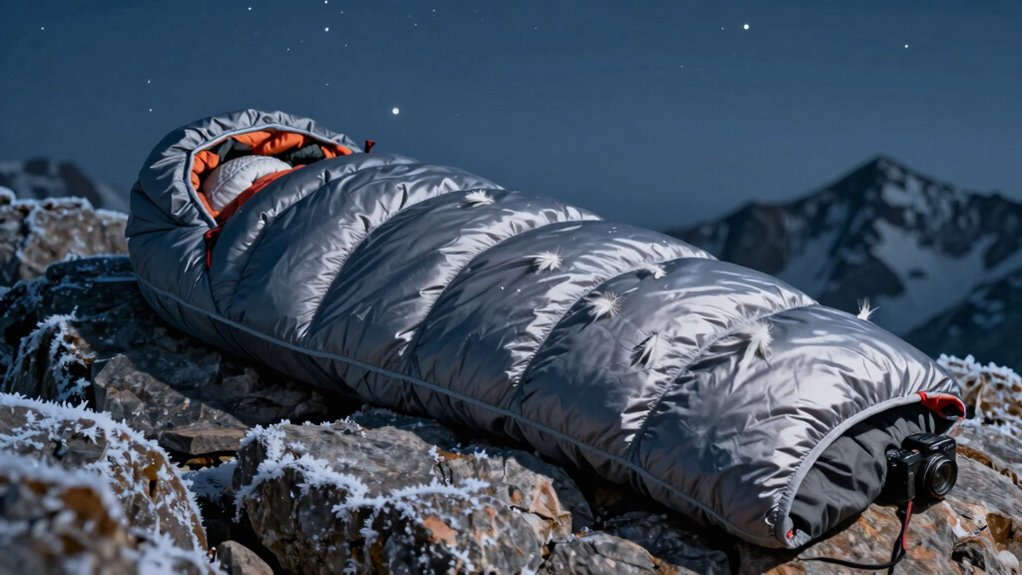
To stay warm and comfortable throughout the night, focus on proper sleeping bag setup and body insulation techniques. Confirm your sleeping bag insulation is fully lofted and free of compression, trapping heat effectively. Use a sleeping pad to prevent heat loss from the ground and add a liner for extra warmth. Keep your head covered with a hat or hood to conserve body heat. Also, stay mindful of campfire safety—never sleep too close to the fire, and extinguish it completely before sleeping. Here are some expert tips:
Ensure your sleeping bag is fully lofted, stay dry, and keep your head covered for a warm, safe night outdoors.
- Keep your sleeping bag dry to maintain insulation efficiency.
- Use layered clothing to regulate temperature without overheating.
- Position your sleeping bag properly inside your tent for maximum warmth.
- Prepare your campsite with safety in mind, especially around campfires.
Frequently Asked Questions
How Does Altitude Affect a 0-Degree Down Sleeping Bag’s Performance?
Altitude effects can diminish your 0-degree down sleeping bag’s insulation performance because colder temperatures and thinner air make it harder for insulation to trap heat. As you ascend, you might notice it feels less warm, even if the bag’s rated for 0 degrees. To counter this, layer up, use a sleeping pad, or add a sleeping bag liner to maintain warmth and guarantee your insulation stays effective at higher altitudes.
Can a 0-Degree Down Sleeping Bag Be Used Comfortably in Damp Conditions?
Yes, you can use a 0-degree down sleeping bag in damp conditions, but moisture resistance is key. Down insulates well when dry, so if your bag gets wet, its insulation effectiveness drops considerably. To stay warm, use a waterproof shell or sleeping bag liner, and keep your bag as dry as possible. Proper care and moisture protection ensure your down bag keeps you comfortable even in damp environments.
What Are the Signs That My Sleeping Bag Needs to Be Replaced?
Your sleeping bag is practically begging for retirement if you notice significant wear and tear or a noticeable loft reduction. These signs mean its insulation no longer traps heat effectively, making it feel like sleeping on a cold, hard stone. Also, persistent dampness or unpleasant odors can signal it’s time to replace it. Don’t ignore these signs—your comfort and warmth depend on a reliable, well-maintained sleeping bag.
How Do I Pack My Down Sleeping Bag to Avoid Compression Damage?
To avoid compression damage, you should use proper packing techniques for your down sleeping bag. Instead of stuffing it into a small sack, roll or gently fold it, then store it in a large, breathable bag or stuff sack designed for compression avoidance. Avoid tight compression packs, and keep your bag loosely stored when not in use. This helps preserve the loft and insulation, ensuring your bag stays warm and effective.
Are There Specific Brands Known for the Most Reliable 0-Degree Down Sleeping Bags?
If you’re looking for reliable 0-degree down sleeping bags, brands like Western Mountaineering, Marmot, and REI Co-op stand out for their reputation. You should check customer reviews to verify quality and durability, as these brands consistently receive praise for warmth and craftsmanship. Opt for models with high fill power and good insulation, and always consider your specific needs to choose the best option for cold weather camping.
Conclusion
With the right 0-degree down sleeping bag, you’ll feel like you’re wrapped in a cozy cloud amidst a frozen tundra, defying winter’s icy grip. Master layering, choose quality gear, and care for your bag properly, and you’ll conquer the cold like a fearless explorer. No frostbite or shivering will stand a chance against your warmth. Get prepared, stay warm, and turn icy nights into your personal comfort zone—your ultimate cold-weather adventure awaits!
Fall Picks
fall essentials
As an affiliate, we earn on qualifying purchases.