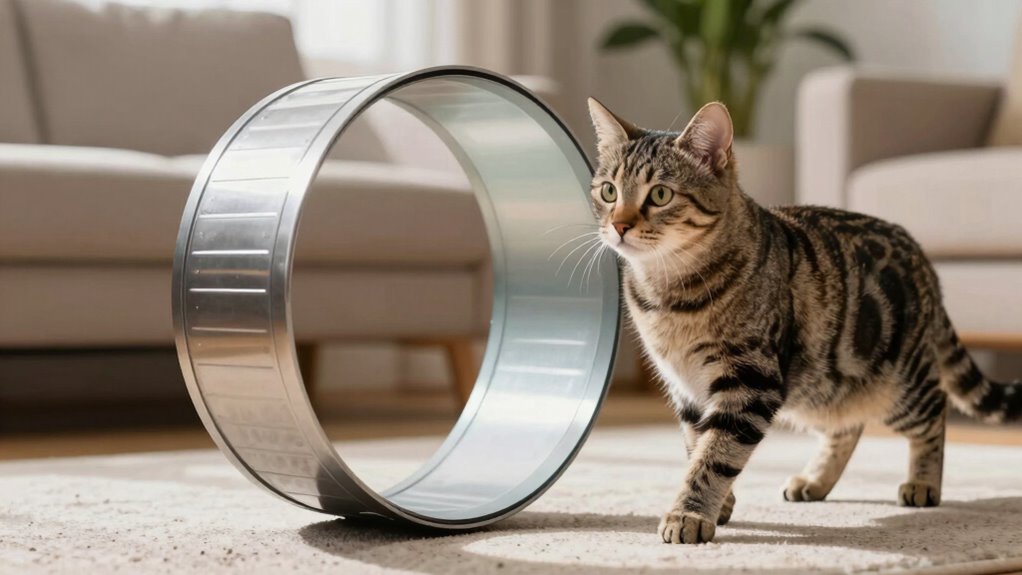

To prevent your cat from fearing the exercise wheel, introduce it gradually and let your cat explore at their own pace. Use treats, toys, and positive reinforcement to create positive associations and encourage curiosity. Keep training sessions short and consistent, and choose a quiet, safe space for use. Watch your cat’s body language carefully, and step back if they seem stressed. Keep these steps in mind, and you’ll help your cat feel confident. Continue with these tips to learn more.

Turn the school run and nap time into listening time
- Thousands of audiobooks, podcasts and originals
- Listen on your phone, tablet or Echo — also offline
- Cancel anytime
Key Takeaways
- Introduce the wheel gradually, allowing the cat to explore at its own pace without pressure.
- Use positive reinforcement, like treats and praise, to associate the wheel with pleasant experiences.
- Keep training sessions short, frequent, and focused on fun to prevent overwhelm and build confidence.
- Ensure the wheel is quiet, stable, and appropriately sized to reduce startle responses and discomfort.
- Monitor the cat’s body language and progress regularly, adjusting the approach to maintain comfort and encourage curiosity.
cat exercise wheel with quiet operation
As an affiliate, we earn on qualifying purchases.
As an affiliate, we earn on qualifying purchases.
Why Might Your Cat Be Afraid of the Exercise Wheel?
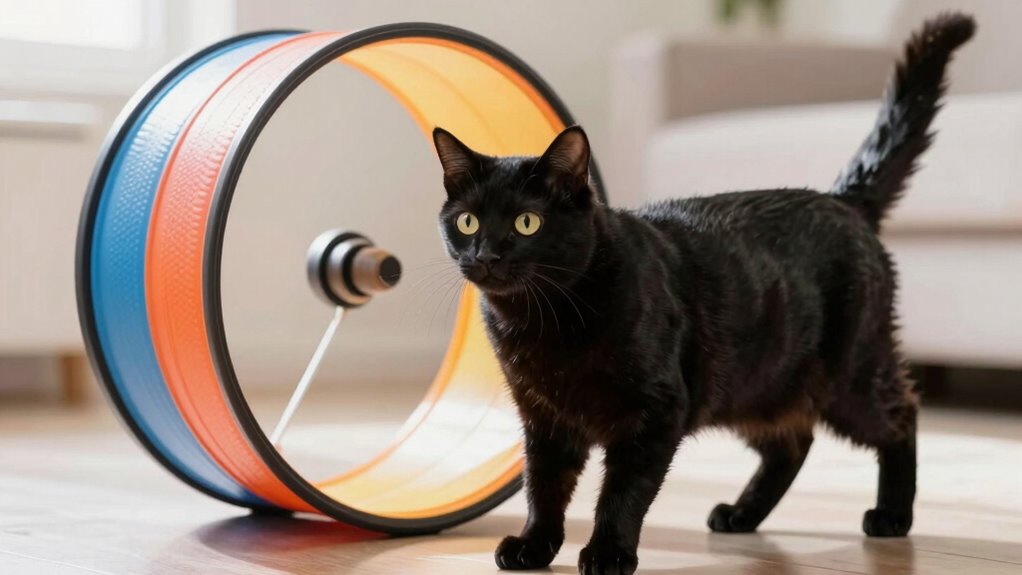
If your cat seems hesitant or frightened of the exercise wheel, it’s often because the unfamiliarity or noise startles them. Cats have a strong fear response to new environments, and anything unfamiliar can trigger anxiety. The moving wheel may seem unpredictable or intimidating, especially if your cat isn’t used to such objects. Sudden sounds or vibrations can also contribute to their discomfort. This reaction is a natural defense mechanism to protect them from potential threats. To help your cat overcome this fear, introduce the wheel gradually, allowing them to explore at their own pace. Providing positive reinforcement and patience will help your feline associate the wheel with comfort rather than danger, easing their fear response over time. Incorporating natural behaviors into their training can also reduce anxiety and build confidence with the new equipment. Additionally, understanding how color perception influences their reactions can assist in creating a more calming environment during training sessions. Recognizing their sensory sensitivities can further help tailor the training process to suit their comfort level. Being aware of their environmental sensitivities can also make the training process smoother and less stressful. Moreover, considering their breed-specific traits may help in customizing a more effective and comfortable approach.
large cat exercise wheel for active cats
As an affiliate, we earn on qualifying purchases.
As an affiliate, we earn on qualifying purchases.
How to Choose the Best Cat Exercise Wheel for Your Feline
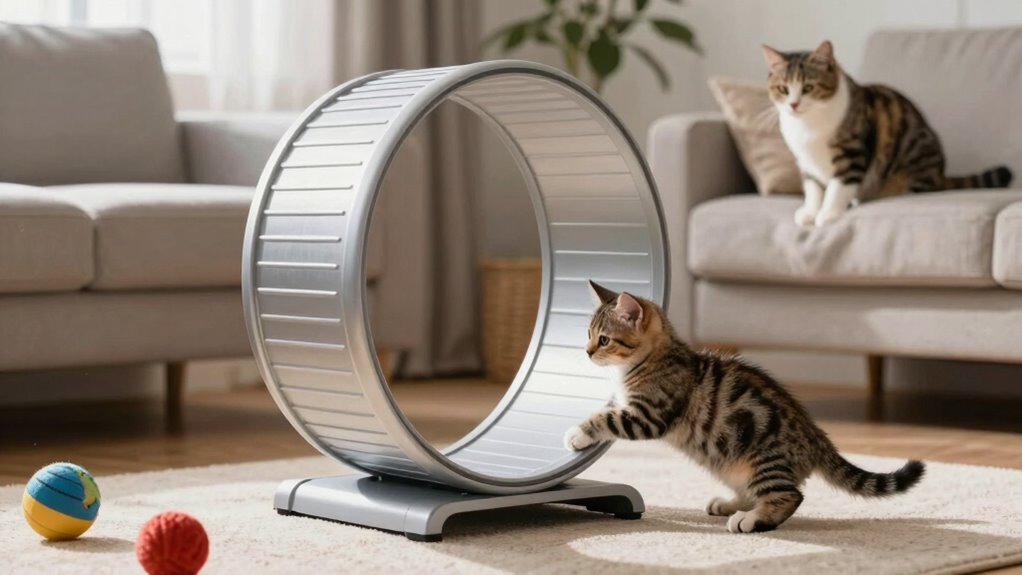
When selecting a cat exercise wheel, start by considering the wheel size and fit to guarantee your cat can move comfortably. Next, check the material for durability and safety, so it withstands active use without risks. Additionally, pay attention to noise levels and comfort, making sure the wheel operates quietly and provides a smooth, enjoyable experience for your feline. Incorporating smooth operation can help prevent fear and encourage consistent use, especially since understanding animal behavior can inform better design choices. Monitoring energyLast can also give insights into your cat’s activity levels and help tailor the exercise routine accordingly. Being aware of ergonomic design principles can further enhance your cat’s comfort and safety during use. Furthermore, selecting a wheel with protective features can minimize potential injuries and increase your cat’s confidence during exercise.
Wheel Size and Fit
Choosing the right wheel size is essential to guarantee your cat stays comfortable and safe during exercise. Proper cat wheel dimensions ensure your feline can move naturally without feeling cramped or unstable. When considering fitting considerations, measure your cat’s height and length to select a wheel that accommodates their size comfortably. Keep in mind:
- The diameter should be at least 1.5 times your cat’s length.
- The surface should allow smooth, unrestricted movement.
- The wheel’s width must support your cat’s gait.
- Ensure there’s enough clearance around the wheel for easy access.
- Regularly review your cat’s comfort and adjust the wheel size as needed to maintain optimal fit.
- Incorporating ergonomic design principles can improve overall safety and comfort for your feline.
- Considering adjustable features can help accommodate your cat’s growth or changing preferences.
- Paying attention to size and fit can prevent injuries and improve your cat’s exercise experience.
- Monitoring your cat’s reactions during initial use helps identify potential discomfort early on.
A well-fitting wheel reduces stress and encourages regular use. Pay close attention to these fitting considerations to find a wheel that promotes safe, enjoyable activity while preventing injury or discomfort.
Material Durability and Safety
Selecting a durable and safe material for your cat’s exercise wheel is essential to guarantee long-lasting use and your feline’s well-being. You want a wheel made from materials that pass rigorous durability testing to withstand daily activity without warping or breaking. Material safety is equally important—ensure the wheel is free from toxic substances like harmful plastics or paints that could harm your cat if chewed or ingested. Look for high-quality, non-toxic materials such as sturdy metals or eco-friendly plastics that are designed for pet products. Confirm the manufacturer provides details on durability testing and safety standards. A well-chosen material not only prolongs the wheel’s lifespan but also minimizes risks, creating a safe environment for your cat to exercise comfortably and confidently. Additionally, understanding the evolving standards in nanotechnology can help you identify innovative materials that enhance safety and durability in pet products. Staying informed about advanced material testing ensures you select a product that meets the highest safety benchmarks. Properly tested and innovative materials also contribute to the longevity of pet equipment, providing peace of mind for pet owners and a safer workout space for your feline. Incorporating innovative materials can further improve the overall safety and durability of the exercise wheel, ensuring your pet’s health and safety over time.
Noise Levels and Comfort
Since cats are sensitive to loud noises and sudden movements, paying attention to the noise levels of an exercise wheel is essential for their comfort. Look for wheels with low sound levels to prevent startling your feline. Features like soft padding on the edges reduce noise and enhance comfort during use. Consider these factors:
- Quiet operation with minimal mechanical noise
- Soft padding on the running surface for smoother motion
- Insulation or soundproofing to dampen vibrations
- Stable, anti-slip base for steady movement
In addition, choosing a wheel with soundproofing features can significantly improve your cat’s exercise experience by reducing disturbances. This guarantees your cat feels safe and at ease, which is crucial for safe and comfortable use. Selecting a wheel with noise reduction benefits can also help maintain a calm environment in your home. Incorporating noise-canceling technology can further enhance the overall tranquility of the space, encouraging your cat to use the wheel regularly and comfortably. Understanding the importance of home environment can help you select the best wheel for your feline, fostering a positive exercise experience, reducing stress, and encouraging regular activity.
cat training treats for exercise wheel
As an affiliate, we earn on qualifying purchases.
As an affiliate, we earn on qualifying purchases.
Preparing Your Cat to Try the Exercise Wheel Safely
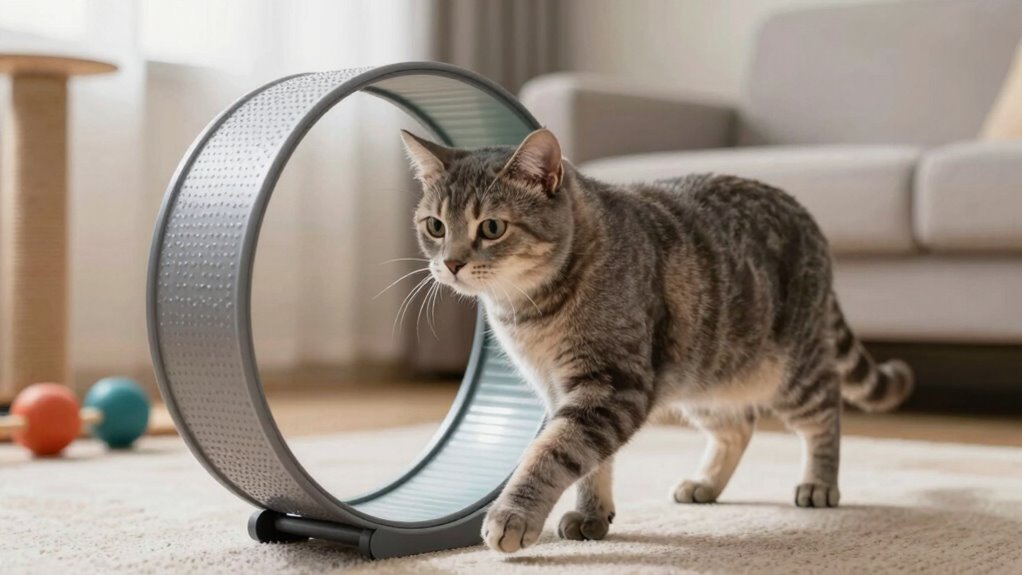
Before your cat tries the exercise wheel, introduce it gradually to guarantee fear or hesitation. Set up a safe, quiet space where your cat can explore the wheel at its own pace. This approach helps build confidence and assures a positive experience when they start using the wheel. Incorporating sustainable foraging practices into your routine can also promote a calm environment, reducing stress for your feline during new activities.
Gradual Exposure Strategies
To help your cat feel comfortable with the exercise wheel, start by introducing it gradually and calmly. Use positive reinforcement to reward curiosity and calm behavior. Gradual exposure helps your cat build confidence without feeling overwhelmed. Begin by placing the wheel in a common area where your cat spends time. Let your cat explore it at their own pace, rewarding any gentle interaction. When your cat shows interest, gently encourage them to approach the wheel closer. Use treats or praise to create positive associations. Avoid rushing—patience is key. Over time, increase their exposure by encouraging brief interactions, always paired with positive reinforcement. This step-by-step process eases your cat into accepting the wheel comfortably and safely.
Safe Environment Setup
Creating a safe environment is the foundation for your cat to try the exercise wheel comfortably. Start by selecting a quiet, low-traffic spot away from busy cat furniture or other distractions. Clear the area of any objects that could cause injury or stress. Guarantee the floor is slip-resistant to prevent accidents when your cat approaches or steps onto the wheel. Use pet safety measures like secure barriers or mats around the wheel to create a designated, safe space. Avoid loud noises or sudden movements that might scare your cat. Making the environment calm and predictable encourages your cat to explore the exercise wheel without fear. This careful setup helps build confidence and promotes positive associations with their new activity.
As an affiliate, we earn on qualifying purchases.
Training Tips to Help Your Cat Feel Confident on the Wheel
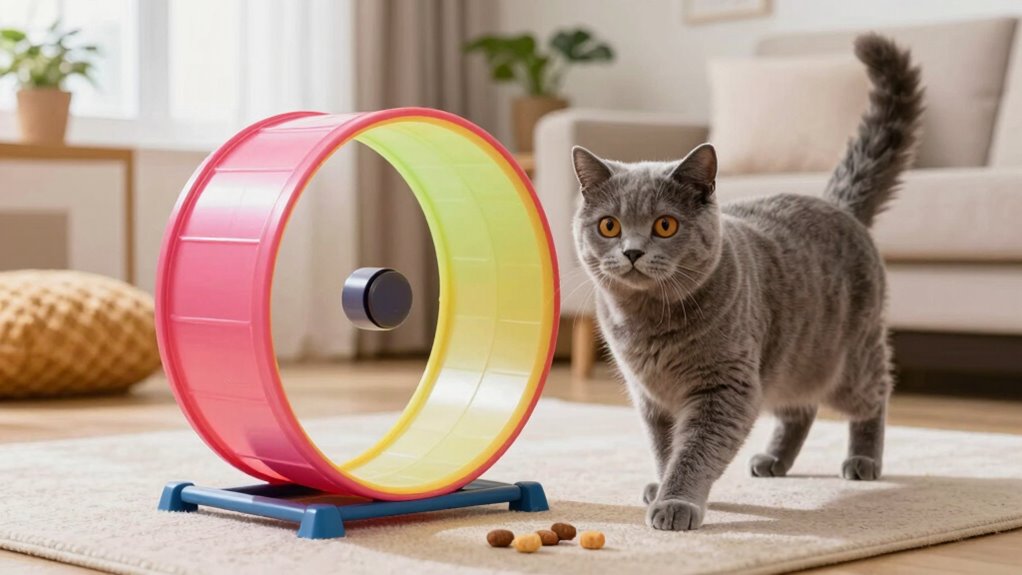
Getting your cat comfortable on the exercise wheel starts with patience and positive reinforcement. Use gentle encouragement and treats to create a positive association. Incorporate playful interaction to make the experience enjoyable and engaging. To boost your cat’s confidence, try these tips:
- Introduce the wheel gradually, allowing your cat to explore at their own pace
- Use toys and treats to encourage curiosity and participation
- Incorporate sensory enrichment, like soft mats or calming scents around the wheel
- Keep sessions short and frequent to prevent overwhelm
Focusing on fun and gentle guidance helps your cat see the wheel as a safe, stimulating environment. Consistency and patience will build their confidence, making exercise a natural part of their routine.
How to Monitor Your Cat’s Comfort and Progress During Training
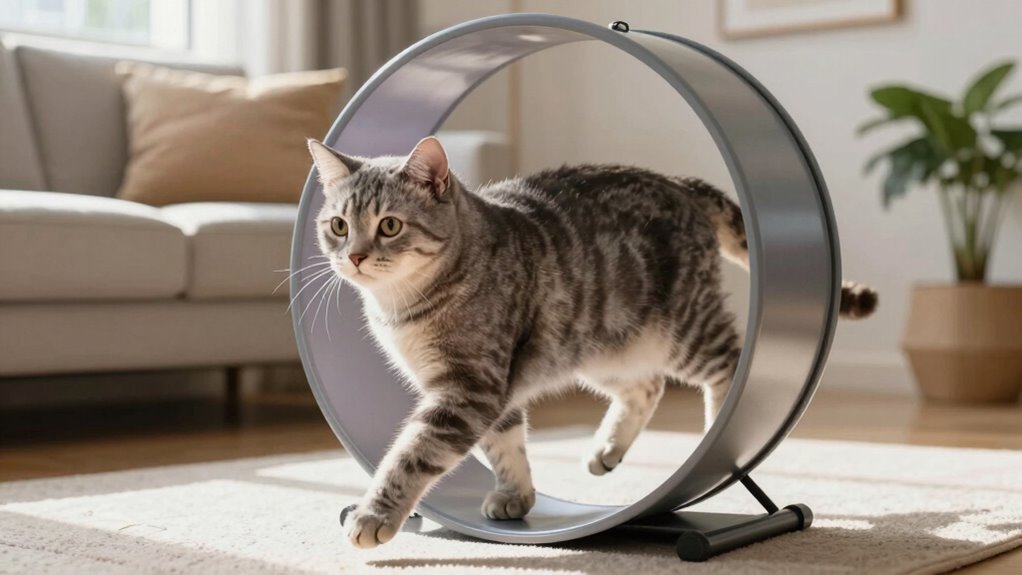
Monitoring your cat’s comfort and progress during training is essential to guarantee they stay relaxed and engaged. Pay close attention to your cat’s body language—relaxed posture, slow blinking, and gentle tail movements indicate comfort, while stiffness or flattened ears suggest stress. Regular progress tracking helps you see how your cat responds over time, identifying improvements or signs of discomfort. Keep sessions short and observe subtle cues to make certain your cat isn’t overwhelmed. If you notice tension or hesitation, pause and give them time to settle. Celebrating small successes keeps their confidence high. By staying attentive to these signals, you can adjust your approach, creating a positive and fear-free training environment that encourages your cat’s enjoyment and progress.
Common Challenges and How to Help Your Cat Overcome Them
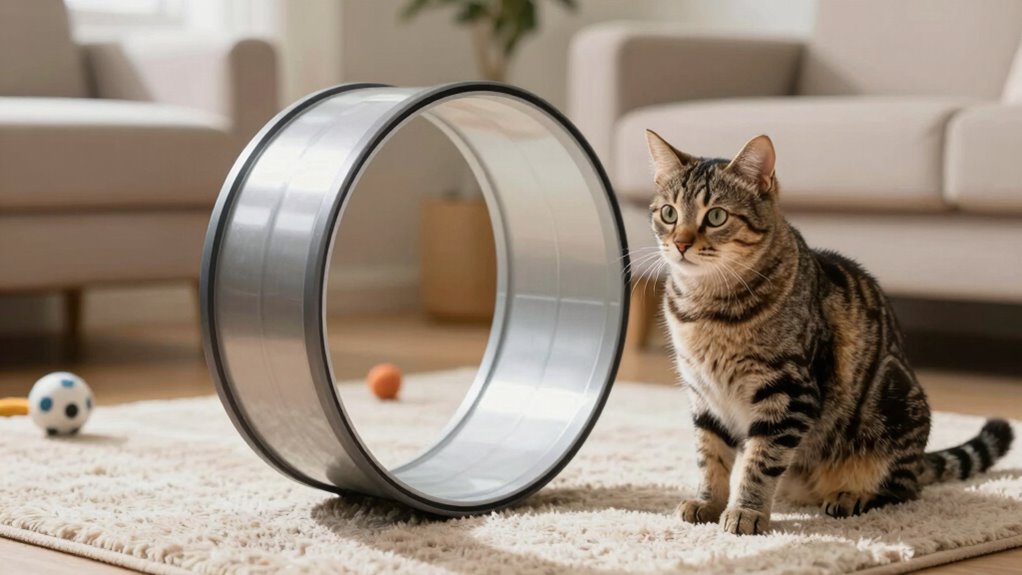
Even with careful monitoring, your cat may encounter obstacles during training that cause frustration or hesitation. Common challenges include fear of the wheel, reluctance to approach, or inconsistent participation. To address these, focus on behavior modification techniques and environmental enrichment. You can:
- Gradually introduce the wheel with treats and praise
- Use calming pheromones to reduce stress
- Create a safe, inviting space around the wheel
- Break training into short, positive sessions to build confidence
Patience is key; avoid forcing your cat. Instead, observe their reactions and adapt strategies accordingly. Reinforcing positive associations helps your cat see the wheel as a source of enrichment rather than a threat. Overcoming these challenges strengthens both their confidence and your bond.
Making the Exercise Wheel a Fun, Stress-Free Part of Your Cat’s Day
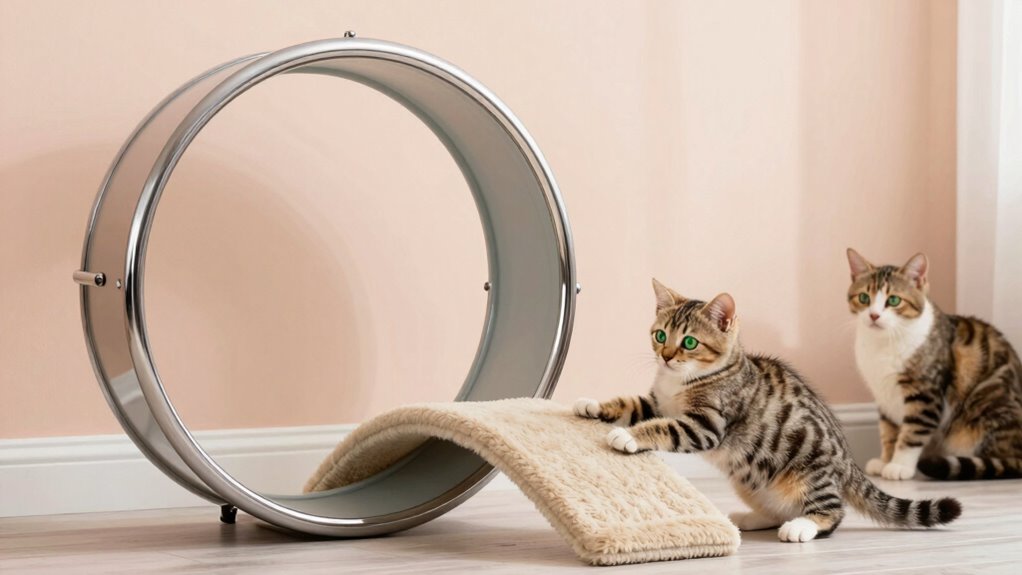
Transforming the exercise wheel into a fun, stress-free part of your cat’s day starts with making the experience enjoyable and inviting. Place the wheel near familiar spots, like the litter box or grooming routines, so your cat associates it with positive activities. Use treats or toys to encourage curiosity without forcing your cat onto the wheel. Keep sessions short and positive, gradually increasing time as your cat becomes more comfortable. Avoid overwhelming your cat with loud noises or sudden movements, which can create stress. Praise and reward your cat for any interest or progress. Over time, this approach helps your cat see the wheel as a safe, rewarding part of their daily routine, making exercise feel natural and enjoyable.
Frequently Asked Questions
How Long Should Initial Training Sessions Last?
You should keep initial training sessions around 5 to 10 minutes, following duration guidelines to prevent your cat from feeling overwhelmed. Focus on session frequency by practicing once or twice daily, allowing your cat time to rest and stay interested. Watch for signs of fatigue or stress, and gradually increase session length as your cat becomes more comfortable. Consistent, short sessions help build confidence without causing fear.
Can Fear of the Wheel Be Linked to Past Trauma?
Fear of the wheel can indeed be linked to past trauma, acting like ghosts from trauma recovery that haunt your cat’s mind. When your feline has experienced fear triggers before, they may associate the wheel with danger, making it harder to overcome. Understanding this connection helps you be patient and gentle, gradually building trust so your cat can see the wheel as a safe, fun space rather than a threat.
What Signs Indicate My Cat Is Ready to Progress?
You’ll know your cat is ready to progress when you observe behavior cues like increased curiosity, relaxed posture, and willingness to approach the wheel. When your cat shows these signs, use positive reinforcement, like treats or praise, to encourage confidence. Avoid rushing, and gradually introduce new steps. If your cat responds calmly and continues to engage, it’s a good indication they’re ready to move forward comfortably.
How Can I Prevent My Cat From Escaping During Training?
Your cat’s escape attempts can feel like trying to hold back a hurricane, but you can prevent this by creating a secure environment. Use a sturdy cat enclosure during training, and guarantee it’s escape-proof. Keep scratching posts nearby to keep your cat engaged and less tempted to escape. Always supervise, and gradually increase free time outside the enclosure, building trust and reducing the urge to flee.
Is It Normal for Cats to Initially Refuse the Wheel?
Yes, it’s normal for cats to initially refuse the wheel. Their behavior shows they’re unsure or uncomfortable, which is common during new training. You need patience and gentle encouragement to help them adjust. Keep sessions short, use positive reinforcement, and let your cat explore at their own pace. Over time, with consistent training patience, your cat will become more confident and willing to use the wheel comfortably.
Conclusion
Remember, patience is key when introducing your cat to the exercise wheel. Take small steps, celebrate progress, and never force your feline friend. With gentle encouragement and understanding, you’ll help build their confidence and turn the wheel into a fun, stress-free part of their daily routine. As the saying goes, “Rome wasn’t built in a day”—so give your cat time to adapt, and enjoy watching them thrive and stay active.
Fall Picks
fall essentials
As an affiliate, we earn on qualifying purchases.