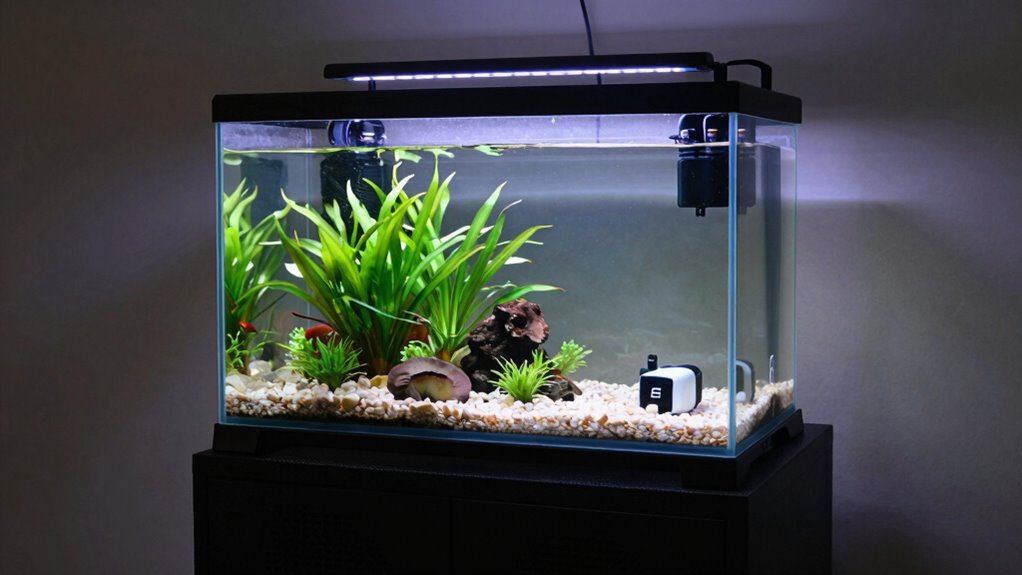

To set up your 55-gallon aquarium, start by placing a sturdy, level stand in a safe location away from direct sunlight and drafts. Clean the tank thoroughly, then install your filtration and heating systems, ensuring proper placement for ideal flow. Add substrate, decorations, and water conditioners before filling the tank slowly. Cycle the water to establish beneficial bacteria, and select compatible fish that suit the tank size. For more tips on troubleshooting and ongoing maintenance, keep exploring this guide.

Turn the school run and nap time into listening time
- Thousands of audiobooks, podcasts and originals
- Listen on your phone, tablet or Echo — also offline
- Cancel anytime
Key Takeaways
- Ensure a level, sturdy stand placed on a supportive surface for safe, stable tank setup.
- Rinse the tank thoroughly, then add substrate and decorations before filling with water.
- Install and position filters and heaters correctly, and treat water with conditioners.
- Establish the nitrogen cycle by adding ammonia or fish food to grow beneficial bacteria.
- Select compatible fish, quarantine new arrivals, and gradually acclimate them to ensure a healthy, harmonious tank.
As an affiliate, we earn on qualifying purchases.
Choose the Right Stand and Position for Your 55-Gallon Aquarium
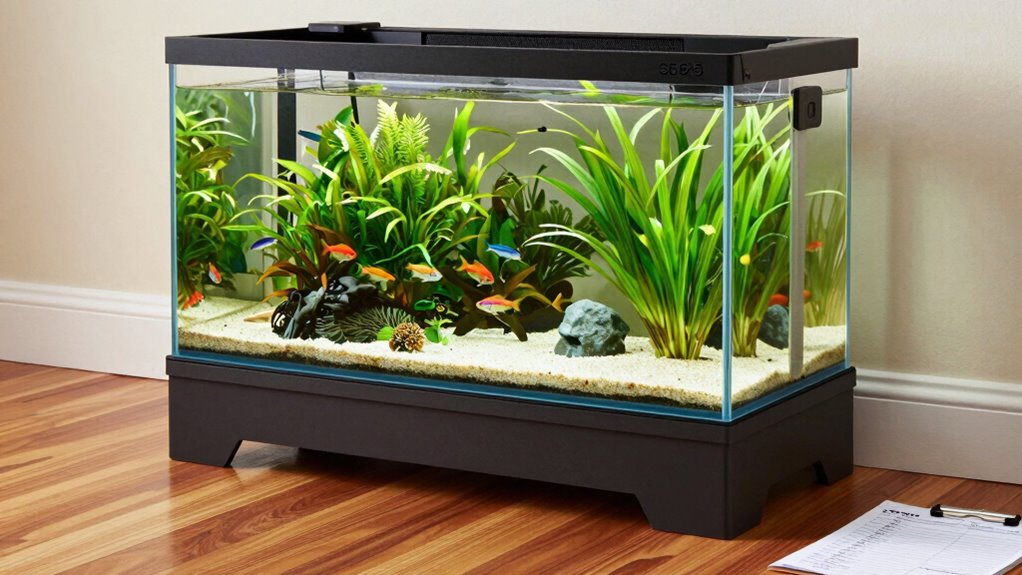
Choosing the right stand and position for your 55-gallon aquarium is crucial to guarantee stability and safety. You should carefully consider stand placement to ensure it’s on a level, sturdy surface that can support the weight of the filled tank. Avoid placing it on uneven or weak flooring, which could lead to accidents or damage. Height considerations are also important; position the stand so the tank is at a comfortable viewing height without risking spills or accidents. Keep the stand away from direct sunlight, drafts, and high-traffic areas to prevent temperature fluctuations and disturbances. Making sure the stand is secure and well-placed helps maintain stability, minimizes risk, and creates a safe environment for your aquatic life. Proper positioning sets a strong foundation for your aquarium. Additionally, just as precise field-of-view considerations are crucial in astrophotography, ensuring your tank’s placement promotes optimal conditions for your aquatic environment. It’s also beneficial to regularly inspect the stand and surrounding area to prevent any potential issues over time. Regularly checking the support surface can help identify early signs of wear or instability, ensuring your aquarium remains safe and secure. Being aware of aquarium weight distribution can further prevent stress on your flooring and supports. Moreover, understanding floor load capacity helps prevent unintentional structural damage.
As an affiliate, we earn on qualifying purchases.
Set Up Your Aquarium: Cleaning, Placement, and Installing Equipment
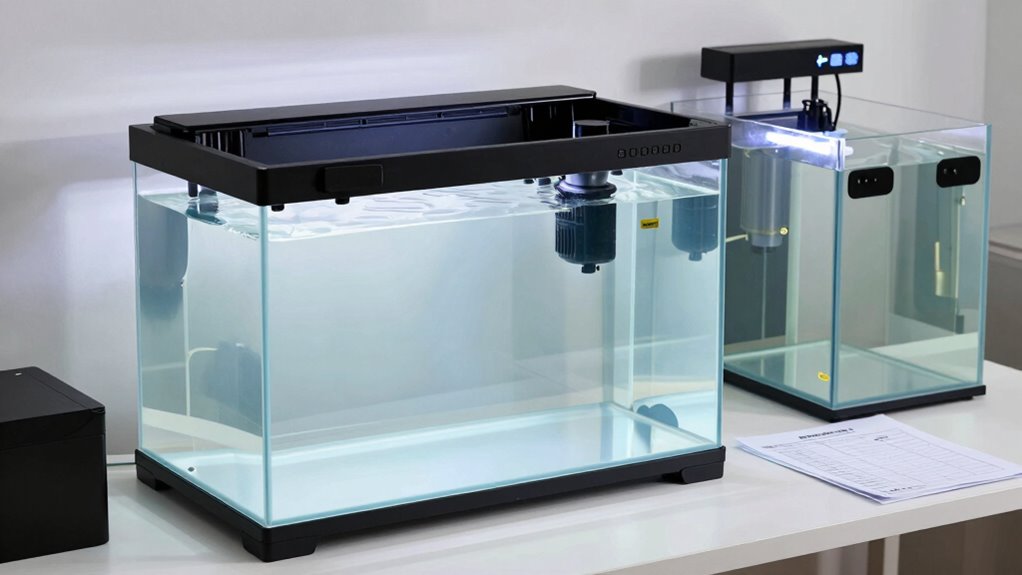
Before filling your 55-gallon aquarium with water, it’s important to thoroughly clean the tank to remove dust, residues, or manufacturing oils. Proper aquarium cleaning guarantees a safe environment for your fish and prevents future issues. Carefully rinse the tank with water—avoid soap or detergents—and use a soft cloth or sponge. When placing equipment, think about accessibility and safety; position filters, heaters, and other devices where they won’t obstruct view or interfere with fish movement. Additionally, ensuring the color accuracy of your setup can help create a more natural and visually appealing environment. Considering free floating decorations can also enhance the visual appeal without cluttering the tank or hindering water flow.
As an affiliate, we earn on qualifying purchases.
Install Filtration and Heating Systems for a Healthy Environment

Installing your filtration and heating systems correctly is essential for maintaining a healthy environment in your 55-gallon aquarium. Start by selecting appropriate filter media to guarantee effective biological, mechanical, and chemical filtration. Place the filter so water flows smoothly through the media, preventing dead spots. For heater placement, position it near the filter outlet or in a location with good water circulation, avoiding direct contact with tank walls or substrate. This helps distribute heat evenly and prevents hot spots. Make sure the heater’s temperature setting matches your desired tank conditions. Test the system before adding fish, ensuring that the filter runs quietly and the heater maintains a stable temperature. Proper installation assures a clean, stable environment for your aquatic life to thrive. Proper installation techniques are vital for ensuring all components work harmoniously and reduce maintenance issues.
As an affiliate, we earn on qualifying purchases.
Fill Your Tank and Add Substrate, Decorations, and Water Conditioners
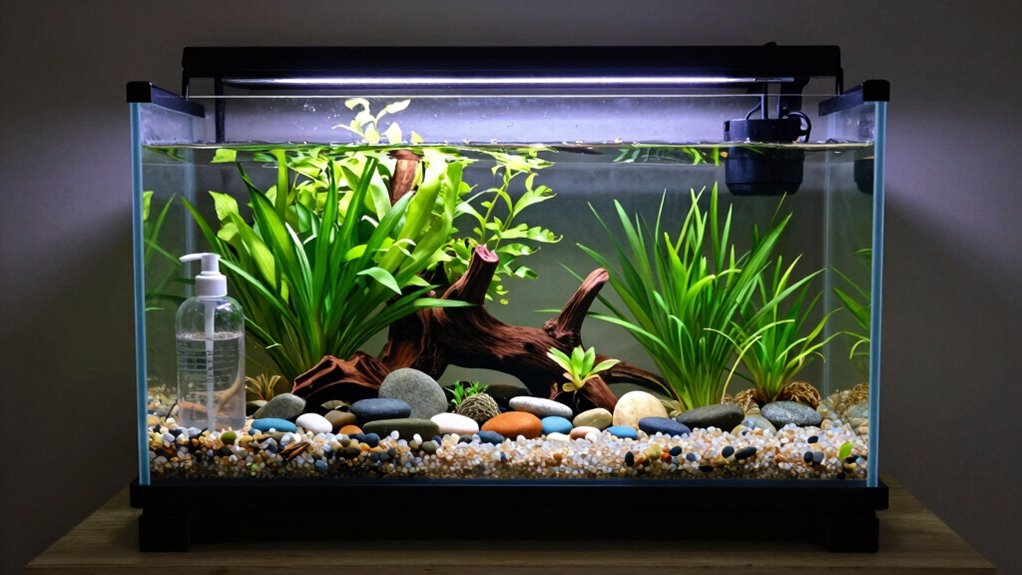
Once you’ve installed your filtration and heating systems, it’s time to fill your tank with water and prepare it for your aquatic inhabitants. Carefully add your chosen aquarium substrate to create a stable base for plants and fish. Then, place decorative elements like rocks, driftwood, or plants to enhance the environment and provide hiding spots. Before adding water, treat it with a water conditioner to remove chlorine, chloramine, and heavy metals, ensuring a safe habitat. Proper water management techniques can help you pour water slowly and evenly, preventing disturbances and keeping your setup neat. Additionally, performing a cycling process establishes beneficial bacteria that help maintain healthy water quality. Understanding aquarium maintenance can assist you in planning long-term maintenance and upgrades for your aquatic setup.
Cycle Your Aquarium Water to Protect Fish From Harm
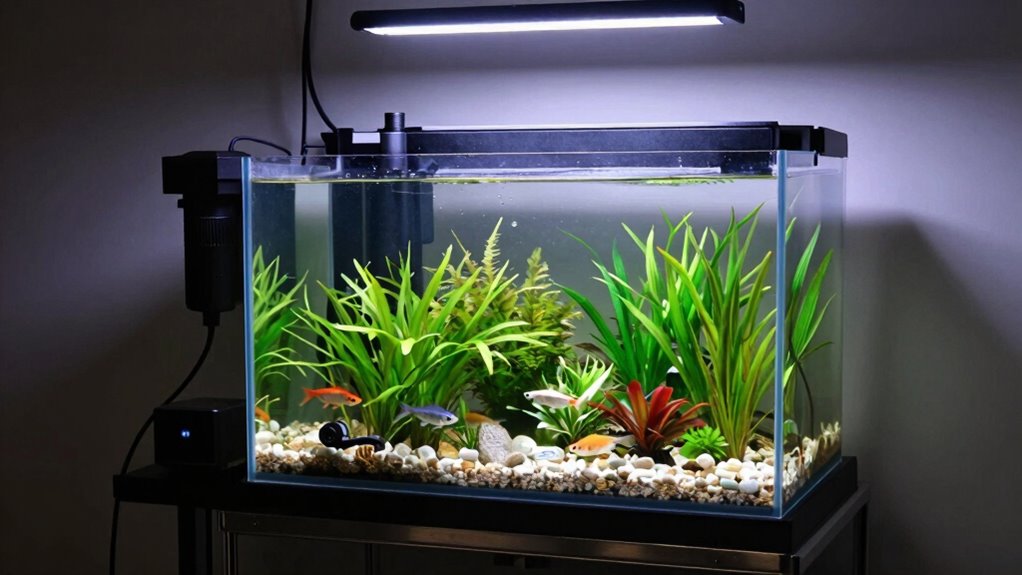
Before adding fish, you need to cycle your aquarium water to keep it safe. This involves establishing the nitrogen cycle, using proper filtration, and regularly monitoring water parameters. Doing this helps prevent harmful toxins and keeps your fish healthy. Additionally, community engagement in online forums can provide valuable tips and support throughout the cycling process community engagement. Understanding the biological processes involved in cycling can improve your success rate and ensure a healthier environment for your aquatic life. Educating yourself about water quality management can further enhance your ability to maintain a stable and safe habitat. Learning about chemical testing methods also allows you to detect imbalances early and make necessary adjustments. Gaining knowledge about aquarium maintenance ensures you can respond effectively to any water quality issues that arise.
Establish Nitrogen Cycle
Establishing a healthy nitrogen cycle is essential for keeping your 55-gallon aquarium safe for fish. This process allows beneficial bacteria to develop, converting harmful waste into less toxic substances. Proper cycling helps with nitrate removal, preventing dangerous buildup that can harm your fish. To speed up the cycle, you can add a small amount of fish food or a source of ammonia to encourage beneficial bacteria growth. Be patient—cycling can take several weeks. During this time, test your water regularly to monitor ammonia, nitrite, and nitrate levels. Once the beneficial bacteria are established, your aquarium will efficiently process waste, creating a safe environment for your fish. Remember, a stable nitrogen cycle minimizes stress and health problems for your aquatic friends. Understanding the nitrogen cycle is key to maintaining a healthy aquatic environment. Additionally, utilizing crypto pump tools can help monitor and optimize your setup process, ensuring a smooth cycling experience. Incorporating beneficial bacteria can further accelerate establishing a mature and stable cycle. Regular water testing and continuous monitoring are also important to ensure your cycle remains stable and your fish stay healthy.
Furthermore, maintaining robust contingency plans can help mitigate unexpected issues during the cycling process.
Use Proper Filtration
Using proper filtration is vital for maintaining a healthy 55-gallon aquarium, as it helps remove debris, toxins, and harmful bacteria from the water. Regular filter maintenance ensures your system functions efficiently, preventing clogs and maintaining ideal water flow. A good filter not only clarifies the water but also provides surface area for beneficial bacteria to thrive, which aids in biological filtration. Make sure to clean or replace filter media as needed, but avoid over-cleaning, as this can disrupt beneficial bacteria. Proper water flow is essential, as it distributes oxygen, prevents dead spots, and keeps debris suspended for removal. Additionally, selecting the right power tools for filter installation and maintenance can make the process safer and more efficient. Consistent filtration and maintenance create a stable environment, reducing stress and protecting your fish from potential harm.
Monitor Water Parameters
Monitoring water parameters is essential to guarantee your 55-gallon aquarium remains a safe environment for your fish. Regularly using water test kits helps you track key parameters like ammonia, nitrite, nitrate, pH, and temperature. Keeping these within the proper parameter ranges prevents stress and illness in your fish. Test your water at least once a week, especially during the initial cycling process or after water changes. Adjustments, such as adding conditioners or adjusting filtration, may be necessary to maintain stability. Consistent monitoring allows you to catch problems early before they harm your fish. Remember, stable water conditions are vital for a healthy, thriving aquarium. Staying informed about water quality factors and maintaining appropriate conditions will help ensure vibrant health and activity for your fish.
Monitor and Maintain Water Quality During and After Cycling
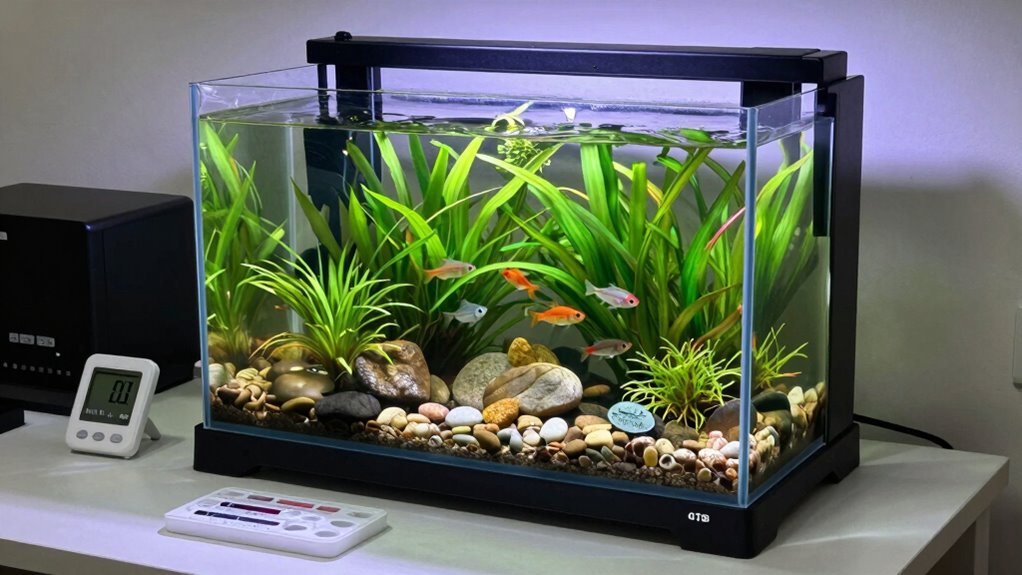
Keeping a close eye on water quality is essential during and after cycling to make certain your aquarium remains safe for your fish. Regular water testing helps you track key parameters like ammonia, nitrite, nitrate, and pH levels, ensuring the chemical balance stays stable. Consistent testing allows you to catch any imbalances early and take corrective actions before they harm your fish. During cycling, monitor these levels more frequently to verify the beneficial bacteria are establishing properly. After cycling, maintain routine testing to confirm water parameters stay within safe ranges. Proper maintenance includes performing partial water changes and adjusting filtration as needed. Staying vigilant with water testing and balancing chemicals guarantees a healthy environment, minimizing stress and preventing potential health issues for your aquatic inhabitants.
Select Suitable Fish and Stock Your 55-Gallon Aquarium Safely
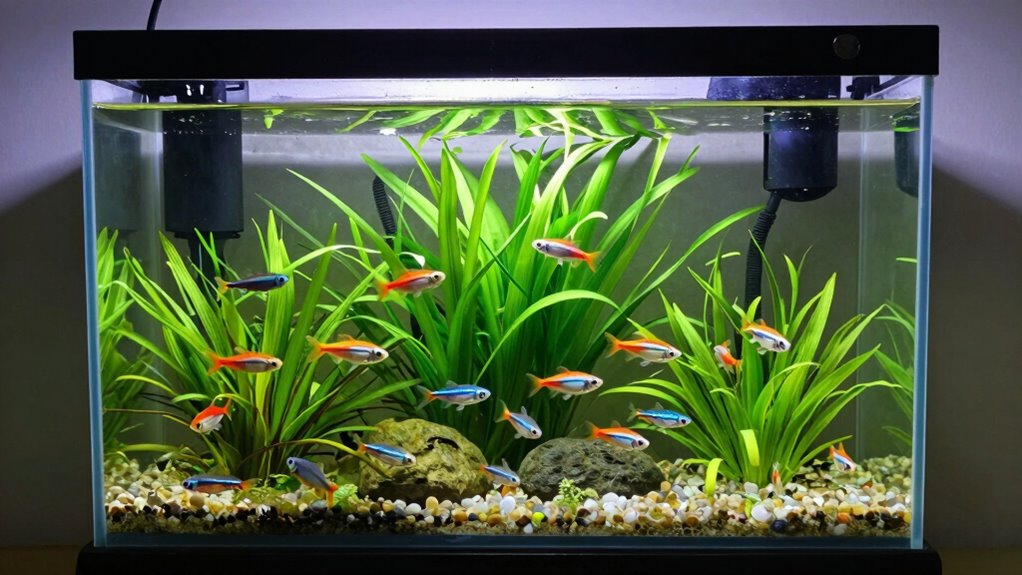
Choosing the right fish is essential for a healthy, balanced tank. Make sure to research compatibility and avoid mixing aggressive species with peaceful ones. Always quarantine new fish and acclimate them slowly to prevent stress and disease.
Fish Compatibility Tips
Selecting compatible fish for your 55-gallon aquarium is essential to establishing a healthy, harmonious environment. To guarantee success, focus on species compatibility and choosing the right tank mates. Mixing aggressive and peaceful species can lead to stress or injury, so plan your stock carefully.
- Research each species’ temperament and size before adding them
- Avoid combining fish with vastly different water parameter needs
- Keep similar active levels and social behaviors to prevent conflicts
Quarantine and Acclimate
Before adding new fish to your 55-gallon aquarium, it’s essential to quarantine them to prevent introducing diseases that could harm your tank inhabitants. Follow proper quarantine protocols by placing new fish in a separate tank for at least 2-4 weeks. During this time, monitor them for signs of illness and treat if necessary. Once cleared, you’ll need to acclimate your fish carefully to reduce stress and guarantee a smooth transition. Use acclimation procedures like floating the bag in your tank to equalize temperature, then gradually mix tank water with the bag water over 30-60 minutes. This step helps your fish adjust safely to their new environment, promoting healthier, longer-lasting life in your 55-gallon setup.
Troubleshooting Common Setup Problems Like Cloudiness and Algae
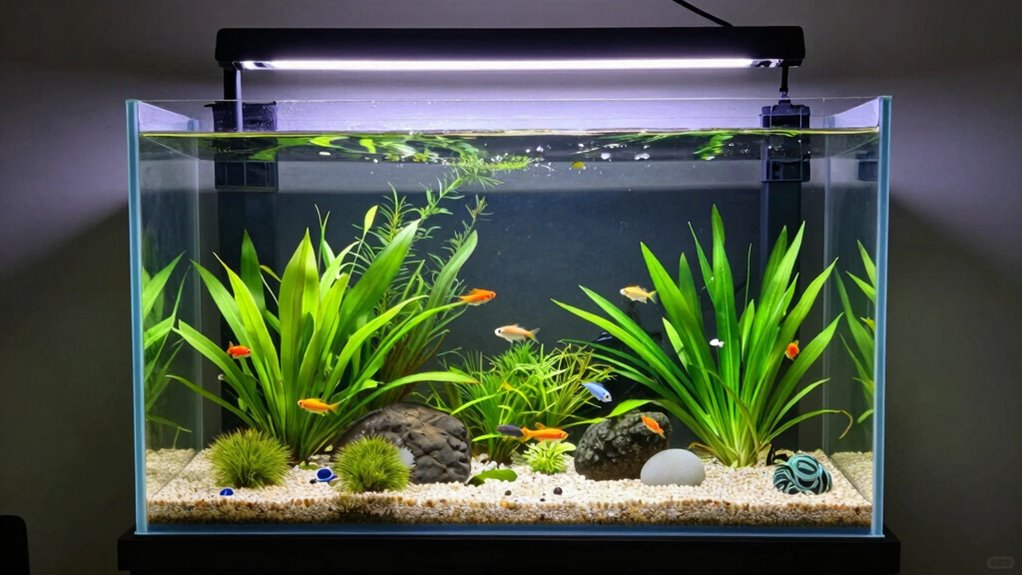
When setting up a 55-gallon aquarium, you might notice issues like cloudiness or algae growth, which can be frustrating but are often easy to fix. Cloudiness usually indicates excess nutrients or bacterial blooms, while algae can grow quickly if water conditions aren’t ideal. To improve water clarity and prevent algae, focus on algae prevention strategies like controlling light exposure and maintaining proper filtration. Regular water changes help remove excess nutrients fueling algae growth. Monitoring light duration and intensity also reduces algae outbreaks. Here are some tips to address common problems:
Keep water clear by controlling light, maintaining filtration, and performing regular water changes.
- Reduce light exposure to limit algae growth
- Increase water circulation with proper filtration
- Perform regular water changes to maintain water quality
Monitor Aquarium Conditions and Adjust Settings Over Time
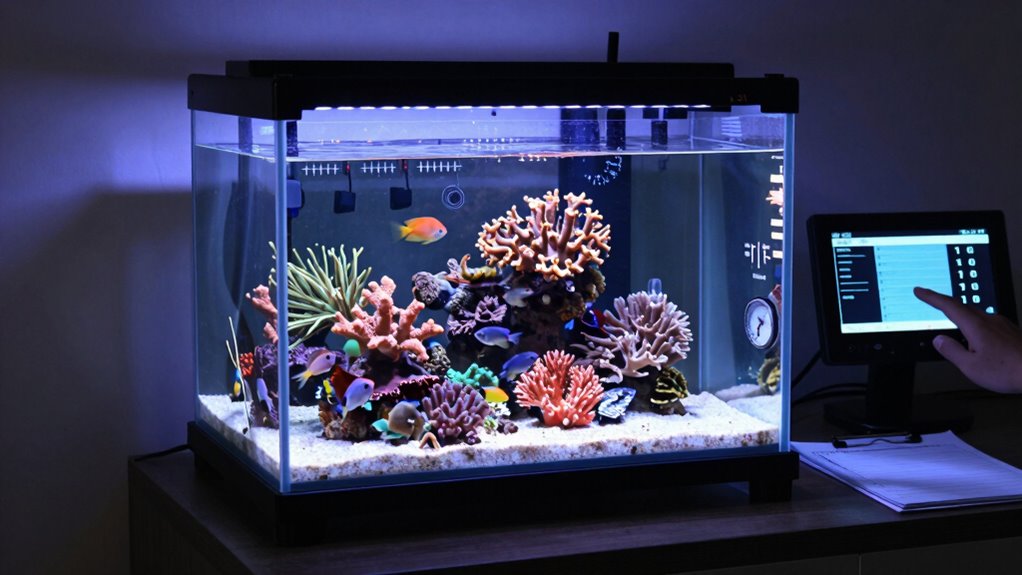
Regularly monitoring your aquarium’s conditions is essential to maintaining a healthy environment and catching issues early. Check water temperature regularly to ensure stable temperature regulation, preventing stress or illness for your fish. Adjust your heater or chiller if temperatures fluctuate outside the ideal range. Keep an eye on lighting conditions, making lighting adjustments as needed to prevent algae growth or stress on your aquatic life. Use a reliable thermometer and test kits to track water parameters like pH, ammonia, and nitrates. Over time, fine-tune your lighting schedule and temperature settings based on your tank’s needs and seasonal changes. Consistent observation helps you respond quickly to problems, ensuring your 55-gallon aquarium remains a thriving, balanced ecosystem.
Essential Equipment Checklist for a Smooth Aquarium Setup
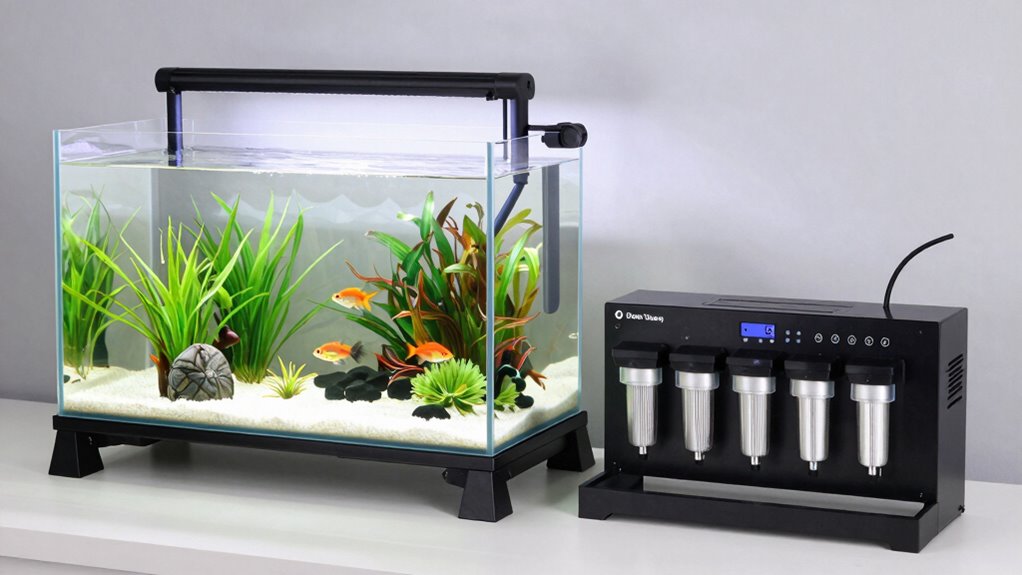
Setting up a 55-gallon aquarium requires gathering the right equipment to create a stable and healthy environment for your aquatic life. Essential items guarantee smooth operation and help prevent issues down the line. First, invest in quality aquarium lighting to promote plant growth and showcase your fish. Second, include reliable water testing kits to monitor parameters like pH, ammonia, and nitrite levels regularly. Third, choose a sturdy stand that can support the tank’s weight and provide easy access for maintenance. Additional equipment like a filter and heater is also vital. Proper lighting keeps your ecosystem vibrant, while water testing helps catch problems early, maintaining water quality. Having these essentials on hand makes your setup process more efficient and your tank healthier.
Frequently Asked Questions
How Often Should I Test Water Parameters in My 55-Gallon Tank?
You should test water parameters in your 55-gallon tank at least once a week, especially during the initial setup or if you notice any changes in fish behavior. Consistent water testing helps you monitor key parameters like ammonia, nitrite, nitrate, and pH to guarantee a healthy environment. Regular parameter monitoring prevents problems and keeps your tank balanced, so make it a routine part of your maintenance schedule.
What Are the Signs of a Properly Cycled Aquarium?
When your aquarium is properly cycled, ammonia levels stay low or zero, and you notice stable nitrite and nitrate levels. Fish behavior also signals healthy cycling; they swim actively and show no signs of stress or gasping at the surface. If ammonia spikes or fish become lethargic and gasp, your cycle isn’t complete. Regularly test water parameters to guarantee the cycle remains stable and your fish stay healthy.
How Do I Choose Compatible Fish Species for My Tank?
You choose compatible fish species by researching their compatibility and species pairing. Look for fish with similar temperament, size, and water parameter needs to prevent aggression and stress. Avoid mixing aggressive with peaceful fish, and verify no species are fin nippers or territorial. Check community tank guides and compatibility charts, and consider your tank’s size to ensure ample space. This thoughtful approach helps you create a harmonious, healthy environment for all your fish.
Can I Add Live Plants to My 55-Gallon Aquarium?
Yes, you can add live plants to your 55-gallon aquarium. Imagine vibrant green leaves swaying gently, creating a lush underwater jungle that enhances fish compatibility and water quality. Live plants not only provide hiding spots and reduce algae, but also promote a balanced ecosystem. Just choose hardy species like Java fern or Anubias, ensuring they thrive in your tank’s conditions and peacefully coexist with your fish.
What Should I Do if My Tank Develops Persistent Algae?
If your tank develops persistent algae, focus on algae control by reducing excess nutrients and limiting light exposure. Increase water circulation with proper filters to prevent dead spots where algae thrive. Regularly perform water changes, clean decorations, and avoid overfeeding. You might also consider adding algae-eating fish or invertebrates. Consistent maintenance and balancing light, nutrients, and filtration will help keep algae in check and maintain a healthy, clear tank.
Conclusion
With proper setup, your 55-gallon aquarium can become a vibrant, thriving ecosystem. Did you know that a well-cycled tank can support dozens of fish while maintaining water quality? By following this checklist, you’ll create a healthy environment where your fish can flourish. Remember, patience and regular maintenance are key—your aquatic paradise will reward you with stunning displays and lively activity that can brighten your home every day.
Halloween Picks
halloween
As an affiliate, we earn on qualifying purchases.