
Turn the school run and nap time into listening time
- Thousands of audiobooks, podcasts and originals
- Listen on your phone, tablet or Echo — also offline
- Cancel anytime
The Real Decision: Craft Table or Checkout Line
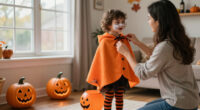
Every October, parents face the same fork in the road: make the kid’s Halloween costume yourself or buy one off the rack. It feels like a small decision, but it bundles together several real tensions — time versus money, originality versus reliability, and the memory-making appeal of crafting together versus the practical reality of a workweek that ends on October 30th with nothing started.

Dalmatian Costume Kids, Light Up Dog Halloween Costume Girls Tutu Skirt
- ✔ Pieces Included: 7 (LED tutu skirt, LED ears, bow tie, tail, socks)
- ✔ Light Modes: 3 — flash, slow, constant
- ✔ Batteries: Included
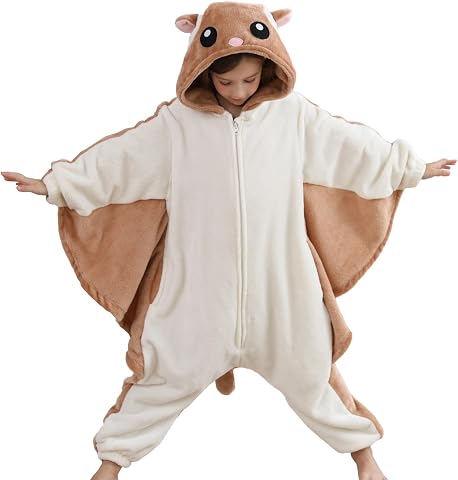
ATOZ Kids’ Animal Onesie Pajamas, Halloween Cosplay Costume
- ✔ Material: Fleece
- ✔ Closure: Full-length zipper
- ✔ Sizes: 100-140
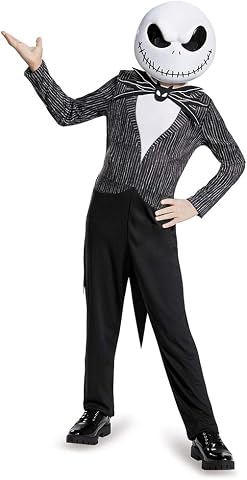
Disguise Nightmare Before Christmas Jack Skellington Costume for Kids
- ✔ Material: 100% polyester
- ✔ Pieces Included: 3 (jacket, pants, mask)
- ✔ Size Reviewed: Medium (7-8)
The two options are not just different products; they are different experiences with different failure modes. A DIY costume can be cheaper and far more distinctive, but it can also collapse into a hot-glue disaster at 11 p.m. on the 30th. A store-bought costume is finished, safe, and predictable, but it can cost three to five times more, may sell out of the popular sizes weeks early, and risks your child showing up to the school parade as one of six identical Elsas.
This guide compares the two across cost, time, quality, fit and comfort, originality, durability, age fit, and stress risk, so you can match the choice to your actual life — not the idealized version of it.
Dalmatian Costume Kids, Light Up Dog Halloween Costume Girls Tutu Skirt
This seven-piece Dalmatian set earns our top spot because it understands what Halloween night actually demands: being seen, being cute, and being comfortable enough to keep the costume on for hours. The LED tutu skirt and light-up ears are the headline feature, with three modes (flash, slow, constant) so your child can dial the drama up or down. Compared with the Jack Skellington costume, which relies on a printed design read from a distance, the lights here make your child genuinely visible at dusk — a genuine safety bonus during trick-or-treating.The set includes the skirt, ears, bow tie, tail, and socks, which means the complete look arrives in one box — something neither of our other picks fully matches, since the Jack costume’s impact depends heavily on the included mask sitting correctly. The elastic waist stretches from about 8 to nearly 20 inches, so it fits a wide age range of roughly 3 to 8 years, though that stretchiness is a double-edged sword: a petite 3-year-old and a tall 8-year-old will get very different silhouettes from the same skirt.The real tradeoff versus the ATOZ onesie is warmth and coverage. This is a tutu-and-accessories costume, so in colder climates you will need to layer leggings and a long-sleeve top underneath — and bulky layers can fight with the skirt’s fit. The electronics also add a care step: lights must be removed before the skirt goes in the washing machine. Still, as pure dress-up value that extends into everyday play, birthday parties, and school events, this pick makes the most sense for the largest number of families.
Pros:
- LED skirt and ears with three light modes add visibility and wow-factor at dusk
- Seven-piece set delivers a complete look with no separate accessory shopping
- Machine washable once LED components are removed
- Highly stretchy waistband spans a wide age and size range
Cons:
- Tutu-based design requires warm underlayers in cold weather
- LED components must be removed before washing, adding a fuss step
- One-size-fits-most sizing means the fit quality varies by child’s build
Best for: Parents who want a high-impact, complete costume for girls roughly 3-8 that keeps earning its keep in the dress-up box after Halloween
Not ideal for: Families in cold climates who don’t want to layer, or anyone who wants a single full-body garment with no electronics to manage
Bottom line: The most complete and eye-catching package of the three, ideal for families who want maximum Halloween impact with reusable dress-up value.
“The most complete and eye-catching package of the three, ideal for families who want maximum Halloween impact with reusable dress-up value.”
ATOZ Kids’ Animal Onesie Pajamas, Halloween Cosplay Costume
If the Dalmatian set is about spectacle, the ATOZ onesie is about practical longevity. This is the only pick in our lineup that solves two problems at once: it is a legitimate Halloween costume with detailed ears, tail, and nose, and it is a fleece pajama set your child will wear all winter. From a value standpoint, nothing else here competes — the Jack costume goes into a closet after October 31st, while this one migrates straight to the sleepwear drawer.The full-length zipper is a quieter advantage than it sounds. Anyone who has wrestled a reluctant toddler into a pull-over costume at 6:30 PM will appreciate quick dressing and — just as importantly — quick bathroom access during a long trick-or-treat route. Compared with the Jack Skellington costume’s pull-on styling, this is meaningfully easier for younger kids to manage independently.Height-based sizing from 100 to 140 (roughly ages 2 to 11) is more precise than the Dalmatian’s one-size approach, so you can buy with more confidence about fit. The tradeoffs: it is hand wash only, which is inconvenient for a garment kids wear this often, and despite the fleece, the description notes it may need additional layers in genuinely cold weather — the loose fit lets breeze in. The look is also cozy-cute rather than dramatic; there are no lights, no licensed character, no showpiece elements. This model is better suited to families who prioritize comfort and reuse over a big Halloween-night statement.
Pros:
- Doubles as warm winter pajamas, extending value far beyond Halloween night
- Full zipper allows easy dressing, undressing, and bathroom breaks
- Height-based sizing across ages 2-11 makes fit more predictable
- Cozy fleece with charming tail, ears, and nose details
Cons:
- Hand wash only — inconvenient for frequently worn clothing
- May still need layers underneath in very cold weather due to loose fit
- No standout features like lights or licensed branding for big visual impact
Best for: Parents of kids aged 2-11 who want a comfortable, warm costume that doubles as winter pajamas year after year
Not ideal for: Kids who want a dramatic or instantly recognizable character look, or parents who insist on machine washability
Bottom line: The smartest buy if you want your costume budget to work all winter, provided you can live with hand washing and a subtler look.
“The smartest buy if you want your costume budget to work all winter, provided you can live with hand washing and a subtler look.”
Disguise Nightmare Before Christmas Jack Skellington Costume for Kids
Some children don’t want to be a cute dog or a cozy animal — they want to be the Pumpkin King. This officially licensed Disguise costume is the only pick in our lineup with instant character recognition, and that specificity is its entire value proposition. The pinstripe suit, bat bowtie, and tailcoat faithfully reproduce Jack Skellington’s look, and the included mask completes the transformation in a way generic costumes simply can’t match.Compared with the Dalmatian set, this costume trades lights and stretch for authentic tailoring — the tailcoat silhouette is what makes the character read correctly from across a playground. The wrinkle-resistant polyester holds up through a school day better than most budget character costumes, and the regular fit runs true to size, so the medium (7-8) is a safer bet than the Dalmatian’s one-size stretch band for a child in that range.The drawbacks are worth weighing honestly. It is hand wash only with zero stretch, so getting the fit right the first time matters more here than with either other pick. The jacket-and-pants construction is warmer to wear than the Dalmatian’s tutu but less flexible for movement than the fleece onesie, and the mask may irritate kids who dislike things on their face — without it, the look loses much of its punch. This pick makes the most sense for a child who already loves The Nightmare Before Christmas; a kid without that attachment will get more joy from either of our other options.
Pros:
- Officially licensed design with faithful pinstripe suit, bat bowtie, and tailcoat
- Jacket, pants, and mask create a complete, instantly recognizable look
- Wrinkle-resistant polyester survives a full school day and party
- True-to-size regular fit takes the guesswork out of ordering
Cons:
- Hand wash only and no fabric stretch — fit precision matters more
- Mask-dependent look; kids who won’t wear masks lose most of the effect
- Layered suit construction can run warm during active parties
Best for: Kids aged 7-8 who are fans of The Nightmare Before Christmas and want an authentic, recognizable character costume
Not ideal for: Children who dislike masks, or families wanting a stretchy, forgiving fit with easy machine washing
Bottom line: The clear choice for a young Nightmare Before Christmas fan who wants to embody a specific character, provided the mask is a hit.
“The clear choice for a young Nightmare Before Christmas fan who wants to embody a specific character, provided the mask is a hit.”
As an Amazon Associate we earn from qualifying purchases.
At a Glance
| Criteria | DIY Kids Halloween Costumes | Store-Bought Kids Halloween Costumes | Winner |
|---|---|---|---|
| Upfront cost | Typically $5–$25 using items you already own plus thrift-store finds | Typically $20–$70 for licensed character costumes | A |
| Time required | 3–10+ hours across planning, shopping, and building | Under 1 hour including ordering or shopping | B |
| Originality and wow factor | High — one-of-a-kind costumes tailored to your child’s exact idea | Low to moderate — same costume as many other kids | A |
| Fit and comfort control | Fully controllable — you choose fabrics, closures, and weight | Fixed sizing; can run small, itchy, or include uncomfortable masks | A |
| Durability and quality | Varies wildly; often sturdier if sewn, flimsy if glued | Consistent but often thin polyester; survives one or two seasons | Depends |
| Age appropriateness | Best for ages 5–12 who can co-create; tricky for toddlers | Excellent for toddlers and preschoolers who refuse to cooperate with fittings | B |
| Risk of last-minute failure | High if you start late or overestimate your free time | Low — arrives complete, though popular sizes sell out early | B |
| Resale and reuse value | Often sentimental keepsake; rarely resellable | Good — popular characters resell well on secondhand marketplaces | B |
Key Differences
Key Differences and What They Mean
The biggest practical difference is the shape of the risk. DIY concentrates risk at the end: everything depends on your follow-through in the final week, and the failure mode — an unfinished costume the night before the party — is painful and expensive to fix, because store inventory is picked over by then. Store-bought concentrates risk at the beginning: if you buy early, the rest of the process is nearly risk-free, but if you wait past mid-October, the costume your child wants may simply not exist in their size, and shipping times stop being reliable.
The second difference is what the costume actually is. A store-bought costume is a product; a DIY costume is an activity. Part of the value of DIY is the process itself — a child who helps design and build their robot costume remembers that far longer than they remember wearing it. But that value only materializes if you genuinely have the time and temperament for the project. Parents who DIY out of guilt rather than enjoyment tend to produce neither a good costume nor a good memory.
Third, cost is not as lopsided as it first appears. DIY wins on dollars only if you already own the raw materials — cardboard, old clothes, fabric scraps, a glue gun. If you have to buy fabric, paint, and accessories at full retail, a DIY costume can cost nearly as much as a discounted store-bought one, while taking ten times longer. The real DIY savings come from thrift-store construction and closet raiding, not from craft-store runs.
Detailed Comparison
Upfront Cost (DIY Kids Halloween Costumes wins — moderate)
DIY typically lands between $5 and $25 when built from thrift-store finds, cardboard, and clothes already in the house. Store-bought licensed character costumes usually run $20 to $70, with premium or deluxe versions higher. DIY wins the dollar comparison — but only conditionally. If a DIY project requires buying new fabric, specialty paint, wig, and accessories at retail prices, the gap shrinks to almost nothing. The honest framing: DIY is cheap if you’re resourceful, and merely comparable if you’re not.
Time Required (Store-Bought Kids Halloween Costumes wins — major)
This is where the decision is really made. A store-bought costume costs under an hour total: pick it, order it, done. A DIY costume costs 3 to 10 hours minimum, spread across idea research, material sourcing, trial assembly, and the inevitable repairs after the first fitting. For a parent working full time with multiple kids, ten hours in October is a genuinely scarce resource. Store-bought wins decisively, and no amount of savings fully compensates a household that doesn’t have those hours.
Originality and Wow Factor (DIY Kids Halloween Costumes wins — major)
DIY produces the costume nobody else has. A hand-built cardboard dinosaur or a clever pun costume gets compliments and photos; a store-bought Spider-Man gets a nod of recognition. Store-bought costumes do deliver polish — licensed characters look exactly like the movie version, which matters enormously to some kids — but they are, by definition, mass-produced. If your child wants to be a very specific thing (a garbage truck, a blueberry muffin, a character from an obscure book), DIY is not just better, it is often the only option, because the store doesn’t stock it.
Fit and Comfort Control (DIY Kids Halloween Costumes wins — moderate)
With DIY you control everything: soft fabrics, no scratchy seams, no plastic masks, layers that work over a winter coat for cold-climate trick-or-treating. Store-bought costumes are notoriously thin, often run small, and frequently include stiff masks or headpieces kids refuse to wear after ten minutes. That said, DIY fit is only good if your construction skills are decent — a poorly made costume can be just as uncomfortable as a cheap one. DIY wins on potential; store-bought wins on consistency.
Durability and Quality (minor difference)
Neither option is reliably durable, but they fail differently. Store-bought costumes are usually thin polyester that survives one or two wearing seasons before seams give out — acceptable, because kids outgrow them anyway. DIY durability depends entirely on method: a sewn costume can last for siblings and hand-me-downs, while a hot-glued cardboard creation may not survive the school parade. If longevity matters to you, sewn DIY is best, store-bought is acceptable, and glued DIY is worst.
Age Appropriateness (Store-Bought Kids Halloween Costumes wins — moderate)
Toddlers and preschoolers are terrible DIY collaborators: they change their minds, refuse fittings, and will not wear anything that isn’t soft and simple — which is precisely what good store-bought toddler costumes are designed to be. Kids aged roughly 5 to 12 are the sweet spot for DIY, because they can contribute ideas, help build, and feel ownership over the result. Teenagers usually want the polished licensed version or a specific look that DIY can rarely match. Match the method to the age, not the other way around.
Risk of Last-Minute Failure (Store-Bought Kids Halloween Costumes wins — major)
DIY’s defining weakness. Store-bought arrives complete, and the only failure mode — inventory sellout — is fully within your control if you buy before early October. DIY failure happens at the worst possible moment: the costume isn’t finished, the glue isn’t holding, the child hates the fitting, and there is no fallback because the stores are empty. Every experienced DIY parent builds a backup plan for this reason. Store-bought wins, and the gap is the widest of any criterion here.
Resale and Reuse Value (Store-Bought Kids Halloween Costumes wins — minor)
Popular store-bought character costumes resell surprisingly well on local marketplaces — often for half their price if worn once and kept clean — and can be handed down or donated. DIY costumes rarely resell, though a well-sewn one can become a dress-up box staple or a sentimental keepsake. On pure economic recovery, store-bought wins; on emotional value, DIY does. For budget-focused families who treat resale as part of the plan, store-bought is the better system.
DIY Kids Halloween Costumes: Pros and Cons
Pros:
- Lowest cost when built from thrift finds and household materials
- One-of-a-kind costume nobody else at school will have
- The building process itself is a memorable activity with your child
- Full control over comfort, warmth, and fabric for sensitive kids
- Only option for obscure or highly specific costume requests
- A sewn DIY costume can be sturdy enough for hand-me-downs
Cons:
- Requires 3 to 10+ hours you may not have in October
- High failure risk if started late or skills are overestimated
- Quality depends entirely on your craft ability and available tools
- Hard to execute with toddlers who won’t cooperate with fittings
- Materials bought at retail can erase most of the cost advantage
Store-Bought Kids Halloween Costumes: Pros and Cons
Pros:
- Near-zero time investment — pick, buy, done
- Guaranteed complete well before Halloween if purchased early
- Licensed characters look exactly like the on-screen version kids want
- Designed for toddlers: soft, simple, easy on and off
- Strong resale market for popular characters worn once
- Consistent, predictable quality with no skill required
Cons:
- Costs two to five times more than a resourceful DIY build
- Your child may match several classmates in the same costume
- Often thin, runs small, and includes itchy seams or hated masks
- Popular sizes and characters sell out by early October
- Little to no creative involvement for the child
Who Should Choose What
Choose DIY Kids Halloween Costumes if:
- Your child wants something specific and unusual that stores don’t stock
- You enjoy crafting and have a glue gun, sewing machine, or both
- You have a child aged 5–12 who wants to help build it
- Your budget is tight AND you have thrift stores and craft supplies within reach
- You can realistically start by mid-October, not the 29th
Choose Store-Bought Kids Halloween Costumes if:
- You work long hours or have multiple kids and no spare evenings
- Your child is under 5 and just wants to be a recognizable character
- The request is a current licensed character (Bluey, Spider-Man, Elsa)
- You are a procrastinator or the event is less than a week away
- You plan to resell the costume after one wearing
Skip both if: Your child has no interest in dressing up or refuses all costume options — a simple themed t-shirt or accessory from a big-box store solves Halloween for a fraction of either approach’s cost and effort.
Value for Money
Is the Money Worth It?
Store-bought costumes carry a real premium — $30 to $70 against a $10 to $20 DIY build — and whether that premium is worth paying depends almost entirely on what your time is worth. If buying saves you eight hours you would otherwise spend stressed at a craft table, $40 is an excellent price. If you would enjoy those hours, the store-bought premium buys you nothing and costs you the experience.
The strongest value play is actually hybrid: buy the base costume cheaply (secondhand marketplaces in early October are full of last year’s barely-worn characters at 50–70% off) and DIY the accessories that make it distinctive — a custom wand, a painted accessory, a personal touch. You get store-bought reliability at near-DIY cost, with a dash of originality. Families on a strict budget should also remember that resale offsets store-bought pricing: a $40 costume resold for $20 costs $20 net, which matches DIY outright.
Paying full retail for a deluxe licensed costume is justified only if your child is deeply attached to that exact character and will wear it repeatedly for dress-up after Halloween. For one night of trick-or-treating, the standard version does the same job.
Final Verdict
For most busy families, store-bought is the right default — bought early, ideally secondhand. It is reliable, age-appropriate, and the time it saves is worth more than the price difference for anyone without genuine crafting time and inclination. The failure risk of DIY in a packed October schedule is real, and half-finished costumes are a worse outcome than an ordinary one.
Choose DIY when the specific conditions line up: your child wants something stores don’t sell, they’re old enough to co-create, you enjoy the work, and you can start by mid-October. Under those conditions DIY isn’t just cheaper — it’s the better Halloween, and no store can sell you that version.
The single biggest deciding factor is time, not money or creativity. If you have the hours and the desire, make it. If you don’t, buy it early, skip the guilt, and put your energy into the trick-or-treating instead of the costume. And if you want the best of both, buy the base secondhand and DIY the details — that combination beats either pure option on value.
Frequently Asked Questions
How early should I buy a store-bought costume?
By late September for popular licensed characters, and no later than the first week of October for common child sizes. Inventory for in-demand characters and standard sizes sells out first, and shipping reliability degrades as the 31st approaches. Buying early also leaves time for exchanges if the fit runs small.
What’s the cheapest way to get a good kids costume?
Secondhand marketplaces and thrift stores in early October, where barely-worn costumes from last year sell at 50–70% off retail. Pair a cheap base with one or two DIY details for distinctiveness. This hybrid approach typically beats both pure DIY (in time) and full retail (in cost).
Are DIY costumes actually cheaper?
Only if you build from thrift finds and materials you already own — typically $5–$25. If you buy fabric, paint, wigs, and accessories at craft-store retail prices, a DIY costume can cost nearly as much as a discounted store-bought one while taking many hours longer. The savings come from resourcefulness, not from the method itself.
My child keeps changing their mind — DIY or store-bought?
Store-bought, and buy late in the second week of October after the final decision. DIY requires committing to a design days in advance, and a mid-project mind change wastes all the work. With store-bought you can wait until the choice is firm, as long as you don’t push past the sellout window.
What if my child wants a costume no store sells?
Then DIY is your only real option — but keep it simple. The best obscure costumes are built from modified everyday clothing and cardboard, not sewing patterns. Give yourself two weekends, build a prototype early, and keep a cheap backup costume in the closet in case the build fails.
Evergreen bestsellers Picks
bestsellers
As an affiliate, we earn on qualifying purchases.