
You need a dual-zone wine fridge if you frequently store both reds and whites at their ideal temperatures for aging or serving. This setup helps preserve the flavors, aromas, and overall quality of each wine type while preventing cross-contamination of odors. It’s especially useful if you want ready-to-serve bottles alongside those that need aging. If you want to understand more about who truly benefits from two zones, keep exploring the details.
Prime for Young Adults — start your free trial
Fast free delivery, streaming and member deals for eligible 18–24 year olds.
As an affiliate, we earn on qualifying purchases.
Key Takeaways
- Wine collectors with both reds and whites benefit from separate temperature zones for optimal preservation.
- Casual drinkers with only one type of wine usually find single-zone fridges sufficient.
- Professionals or enthusiasts seeking precise aging and serving conditions need dual-zone storage.
- Those storing both aging and ready-to-drink wines prefer dual zones for tailored environments.
- Users prioritizing long-term preservation and flavor integrity require independent temperature controls.
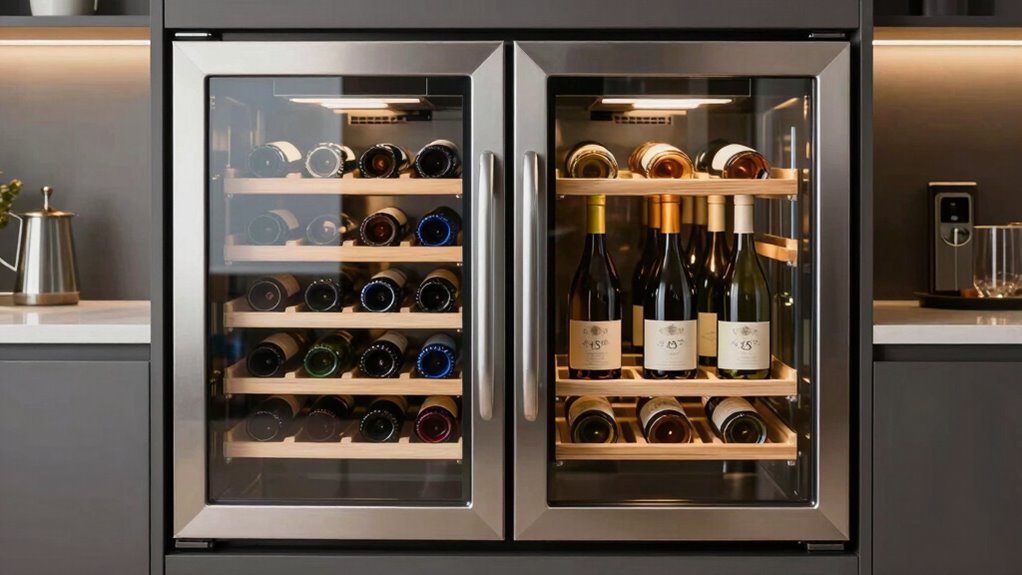
If you’re serious about preserving the quality of your wine, a dual-zone wine fridge is an essential investment. Not all wine storage solutions are created equal, and having the right climate control can make a significant difference in how your wines age. A dual-zone fridge allows you to set two separate temperature zones, giving you the flexibility to store different types of wine at their ideal conditions. This feature is particularly useful if your collection includes both reds and whites, which typically require different temperatures for ideal aging and serving. With precise temperature control, you can avoid fluctuations that might compromise your wine’s flavor, aroma, and overall excellence.
A dual-zone wine fridge preserves your wines’ flavors by maintaining perfect, separate temperatures for reds and whites.
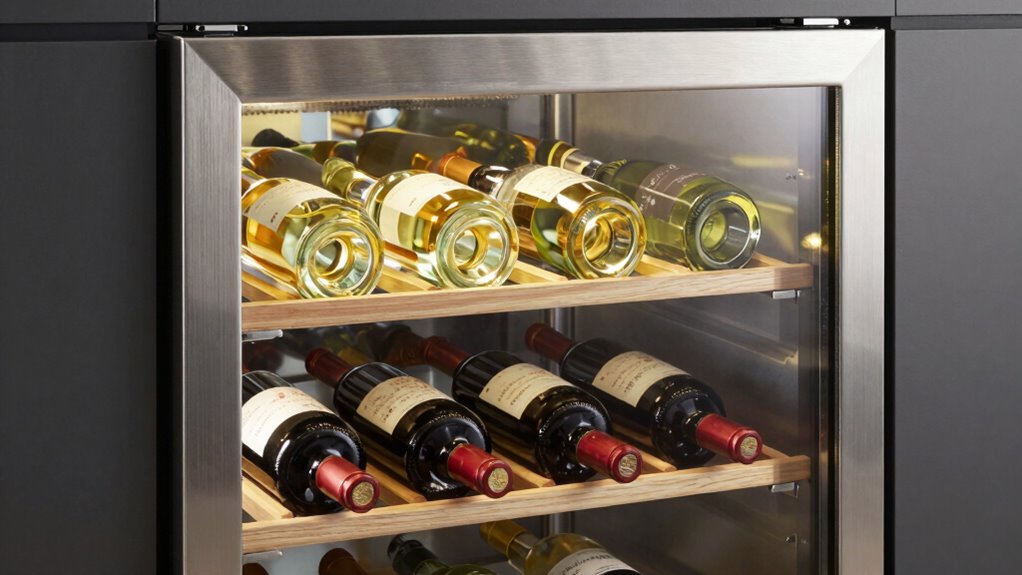
You might wonder if you really need two zones or if a single-zone fridge will do. The answer depends on your collection and how you enjoy wine. If you only drink one type of wine or keep most bottles at the same serving temperature, a single-zone fridge could suffice. However, if you’re a serious collector or enjoy entertaining with a variety of wines, dual zones become a game-changer. They enable you to keep red wines at a slightly warmer temperature, around 55°F, while whites stay cooler, between 45-50°F. This way, your wines are always ready to serve at their peak, no matter what type you’re opening.
Moreover, a dual-zone fridge enhances your wine storage by preventing cross-contamination of odors and flavors. Wines can be sensitive to external influences, especially when stored for long periods. Having two controlled environments ensures that reds and whites don’t interfere with each other’s delicate profiles. It also offers convenience; you can set one zone for aging and the other for ready-to-drink bottles, streamlining your wine inventory management. Additionally, knowing that temperature control is a key factor in wine preservation can help you make informed decisions about your storage options. Proper temperature control is essential to avoid spoilage and ensure optimal aging, especially when storing different types of wine.
Ensuring stable temperatures is crucial because fluctuations can lead to wine spoilage, which is why the ability to independently control each zone is so valuable. Temperature control is at the heart of effective wine storage. With a dual-zone fridge, you gain the ability to fine-tune each compartment independently, ensuring each wine is kept under ideal conditions. This precise control means fewer worries about temperature swings, which can cause corks to dry out or wines to prematurely age. A well-maintained environment also helps prevent temperature fluctuations, which can be detrimental to wine quality. It’s an investment that protects your collection and guarantees your wines are served at their best. Whether you’re a seasoned enthusiast or someone who simply appreciates good wine, having two zones allows you to tailor your storage environment to meet your needs, keeping your wines in perfect condition for years to come.
As an affiliate, we earn on qualifying purchases.
Frequently Asked Questions
Can a Single-Zone Fridge Be Modified to Have Two Zones?
You can’t easily modify a single-zone fridge into a two-zone one because it’s designed for uniform temperature control. To create separate zones, you’d need to add separate cooling units or partitions, which can be costly and complex. Instead, consider a dual-zone fridge if you want different storage capacities and temperatures for various wines, ensuring ideal preservation without risking temperature fluctuations that could harm your wine collection.
What Is the Energy Consumption Difference Between Single and Dual-Zone Fridges?
Think of it like a race—dual-zone fridges usually consume more power than single-zone models. While they offer better temperature control, their increased energy efficiency comes at the expense of higher power consumption. On average, dual-zone units require more electricity, which can impact your energy bills. If you’re looking to save, a single-zone fridge might be the way to go, but if variety’s your game, be prepared for the extra energy cost.
Are Dual-Zone Wine Fridges Suitable for Outdoor Use?
Dual-zone wine fridges are generally not suitable for outdoor use because they lack outdoor durability and temperature stability. Exposure to weather elements like sun, rain, or humidity can damage the unit and cause temperature fluctuations, risking your wine’s quality. If you want to keep wine outdoors, look for models specifically designed for outdoor environments, offering enhanced durability and stable temperatures to protect your collection.
How Often Should I Calibrate the Temperature in a Dual-Zone Fridge?
You should calibrate the temperature in your dual-zone fridge at least once every three to six months to guarantee temperature accuracy. Regular calibration helps maintain ideal conditions for wine storage, preventing spoilage or flavor loss. If you notice temperature fluctuations or the fridge’s display seems off, calibrate more frequently. Keep a thermometer inside each zone and compare readings to your fridge’s settings for precise calibration.
Do Dual-Zone Wine Fridges Require Special Maintenance or Cleaning?
You need to keep your dual-zone wine fridge clean and well-maintained to guarantee ideal wine preservation and temperature stability. Regularly wipe down shelves, door seals, and interior surfaces with a gentle, damp cloth. Check and clean the vents and filters, if applicable. Think of maintenance as a small price to pay for keeping your wines in top shape; neglecting it can lead to uneven temperatures and spoilage.
wine refrigerator with dual temperature zones
As an affiliate, we earn on qualifying purchases.
As an affiliate, we earn on qualifying purchases.
Conclusion
If you’re passionate about wine and want to serve it at its best, a dual-zone fridge might be just what you need. It keeps your reds and whites perfectly chilled, saving you from juggling different storage spots. While it’s not for everyone, if you’re serious about your collection, it’s an investment that pays off. Don’t let your wine sit and sulk—get the right fridge, and enjoy every sip as it was meant to be enjoyed.
As an affiliate, we earn on qualifying purchases.
wine storage fridge for reds and whites
As an affiliate, we earn on qualifying purchases.
As an affiliate, we earn on qualifying purchases.
NFL season / tailgating Picks
team gear
As an affiliate, we earn on qualifying purchases.