
When considering at-home laser hair removal, your skin tone and hair color play vital roles in safety and effectiveness. Lighter skin with darker, coarser hair offers the best results, while darker skin tones require devices designed for melanin-rich skin to reduce risks like burns or hyperpigmentation. Hair shades like blonde, gray, or red respond poorly because they lack pigment. To find out how to optimize your treatment and avoid common pitfalls, keep exploring the details.
Key Takeaways
- Lighter skin tones with darker hair respond best to at-home laser hair removal devices.
- Darker skin tones require devices with adjustable settings or specific technologies like Nd:YAG for safety.
- Dark hair (black, brown) provides the most effective results; light or blonde hair often reflects laser energy, reducing efficacy.
- Very light, gray, or white hair typically cannot be effectively treated at home due to lack of pigment.
- Consult a professional if you have very dark skin or light hair to ensure safe and effective treatment choices.
at-home laser hair removal device for light skin and dark hair
As an affiliate, we earn on qualifying purchases.
As an affiliate, we earn on qualifying purchases.
How Skin Tone and Hair Color Affect Laser Hair Removal

Your skin tone and hair color play a crucial role in how effective at-home laser hair removal will be. Variations in skin tone affect how well the laser targets your hair, as certain skin tones absorb laser energy differently. The skin tone variations across individuals mean that some devices work better on lighter skin, where contrast with hair color is highest. The hair color spectrum, from blonde to black, also impacts results; darker hair absorbs laser energy more effectively, making removal easier. Lighter hair shades, like blonde or gray, reflect laser light, reducing effectiveness. Additionally, skin tone classification helps in selecting appropriate laser settings to optimize safety and efficacy. Proper understanding of melanin levels can further improve treatment outcomes by tailoring the laser parameters to your specific skin type. Understanding your skin tone and hair color helps you choose the right device and set realistic expectations for your at-home laser hair removal journey. Proper device selection can enhance treatment outcomes and minimize side effects, especially when paired with knowledge about your specific skin and hair characteristics, as well as natural variations that influence treatment success.
Nd:YAG laser hair removal device for dark skin
As an affiliate, we earn on qualifying purchases.
As an affiliate, we earn on qualifying purchases.
Which Hair Colors Are Best Suited for At-Home Laser Devices

If you’re considering at-home laser hair removal, certain hair colors respond better than others. Darker shades like black and brown typically give the best results, while blonde, red, and gray hair may be less effective. Keep in mind that using the wrong device or treatment can sometimes cause a lightening effect on your hair or skin. Additionally, the best restaurants with live music often feature diverse crowds, which can be a fun way to relax after treatments. It’s also important to understand the impact of cookies on your online experience, especially when managing privacy preferences during your research. Proper piercing care and hygiene is essential during any skin treatment to prevent irritation or infection that could complicate your skin’s response to laser treatments. Being aware of skin tone compatibility can help you choose the most effective device and avoid unwanted side effects. For optimal results, device settings and usage should be tailored to your specific skin and hair type to minimize risks.
Best Hair Colors
Laser hair removal devices work best on hair with a strong contrast against the skin, making hair color a key factor in your treatment’s success. Generally, dark hair colors like black and dark brown are ideal because they absorb laser light effectively. Blonde, red, and light brown hair tend to be less responsive, but some devices may still work depending on your skin tone. If you’ve recently dyed your hair, it’s best to wait until the dye has fully faded, as artificial color can interfere with laser absorption. Additionally, hair texture plays a role; coarse hair responds better than fine hair. For suitable results, choose natural hair colors that provide a clear contrast, ensuring your device targets the hair follicle efficiently. Properly selecting the right hair color can significantly improve the effectiveness of your treatment, especially when considering hair color and skin tone compatibility. Recognizing the importance of device technology and wavelength can further enhance treatment outcomes. Understanding laser absorption principles can help you make informed choices about your at-home hair removal options. Moreover, selecting the appropriate hair color contrast can maximize the efficiency of the treatment and reduce the risk of skin irritation, especially when combined with professional guidance and device instructions.
Colors to Avoid
While dark hair colors typically respond well to at-home laser treatments, certain shades are less suitable and can hinder effectiveness. Very light or white hair lacks enough pigment for the laser to target, making color matching difficult and reducing hair removal success. Blonde, gray, and white hair reflect laser energy instead of absorbing it, leading to poor results. Red and light brown shades can sometimes be challenging, depending on the laser device’s capabilities. If your hair color doesn’t provide enough contrast with your skin tone, the laser may struggle to identify hair follicles accurately. Laser technology is continuously improving the effectiveness of laser devices for a wider range of hair and skin types. Avoid using laser hair removal devices on these colors, as ineffective treatment can cause frustration and waste time. Knowing which colors to avoid helps ensure safer, more effective hair removal.
Lightening Effect Risk
Which hair colors respond best to at-home laser treatments? Blonde, red, and light brown hair are generally most suitable because they have less melanin, reducing the risk of laser skin lightening or hair bleaching. Darker hair absorbs laser energy more effectively, making treatments safer and more effective. However, if you have very light or fine hair, there’s a higher chance of unwanted lightening effects. Laser skin lightening can occur if the laser targets pigment in the hair follicle, potentially causing the surrounding skin to lighten temporarily or permanently. To minimize this risk, stick to recommended hair colors and avoid using treatments on areas with very light hair, as the laser might affect the skin tone instead of just the hair. Understanding melanin levels can help you better determine which treatments are safest for your specific hair and skin type. Being aware of the private equity market trends can also inform you about innovative technologies that may improve treatment safety and efficacy. Additionally, consulting with a dermatologist can provide personalized guidance based on your skin tone and hair color compatibility.
laser hair removal for blonde and gray hair
As an affiliate, we earn on qualifying purchases.
As an affiliate, we earn on qualifying purchases.
Risks of Laser Hair Removal for Darker Skin Tones

If you have darker skin tones, laser hair removal can carry some risks. You might experience burns, and the treatment could be less effective or cause pigmentation issues. It’s important to understand these potential concerns before trying at-home laser devices. Additionally, skin safety precautions can help minimize adverse effects and improve treatment outcomes. Proper device research and understanding of your skin tone compatibility are crucial steps to ensure safety and effectiveness. Because of the increased risk of hyperpigmentation, consulting with a dermatologist before beginning treatment is highly recommended.
Increased Risk of Burns
Darker skin tones are more susceptible to burns during laser hair removal because the laser targets pigment in hair follicles, and increased melanin in the skin can absorb more laser energy. This raises the risk of skin injury if proper laser safety measures aren’t followed. To protect your skin, consider these tips:
- Always choose devices with adjustable settings for skin tone
- Conduct a patch test before full treatment
- Use cooling gels or devices to reduce heat absorption
- Follow manufacturer instructions carefully
- Seek professional guidance if unsure about your skin’s response
Lower Treatment Effectiveness
Laser hair removal can be less effective on darker skin tones because the increased melanin not only raises safety concerns but also competes with hair follicles for laser energy. This competition reduces the laser’s ability to target hair effectively, especially if your skin tone isn’t compatible with the device. Hair color compatibility also matters; darker or coarser hair absorbs laser energy better than lighter hair. If your skin tone is too dark or your hair is too light, you might see minimal results.
| Skin Tone | Treatment Effectiveness |
|---|---|
| Light to Medium | Higher effectiveness, better hair removal |
| Dark | Lower effectiveness, safety risks |
| Hair Color | Darker hair absorbs laser better |
| Light Hair | Less effective, limited results |
Higher Pigmentation Concerns
Because increased pigmentation in darker skin tones can absorb more laser energy, there’s a heightened risk of side effects during hair removal treatments. Your pigmentation concerns stem from the fact that melanin absorbs laser light, which can lead to complications like burns, hyperpigmentation, or scarring. If your skin tone is darker, laser energy may target surrounding skin instead of just hair follicles. To minimize risks, consider the following:
- Choose devices specifically designed for darker skin tones
- Use lower energy settings and longer pulse durations
- Conduct patch tests before full treatments
- Avoid sun exposure before and after sessions
- Consult a professional for personalized advice
Understanding your skin tone’s impact helps ensure safer, more effective at-home laser hair removal.
adjustable at-home laser hair removal machine
As an affiliate, we earn on qualifying purchases.
As an affiliate, we earn on qualifying purchases.
Choosing the Right Laser Technology for Your Skin and Hair Type
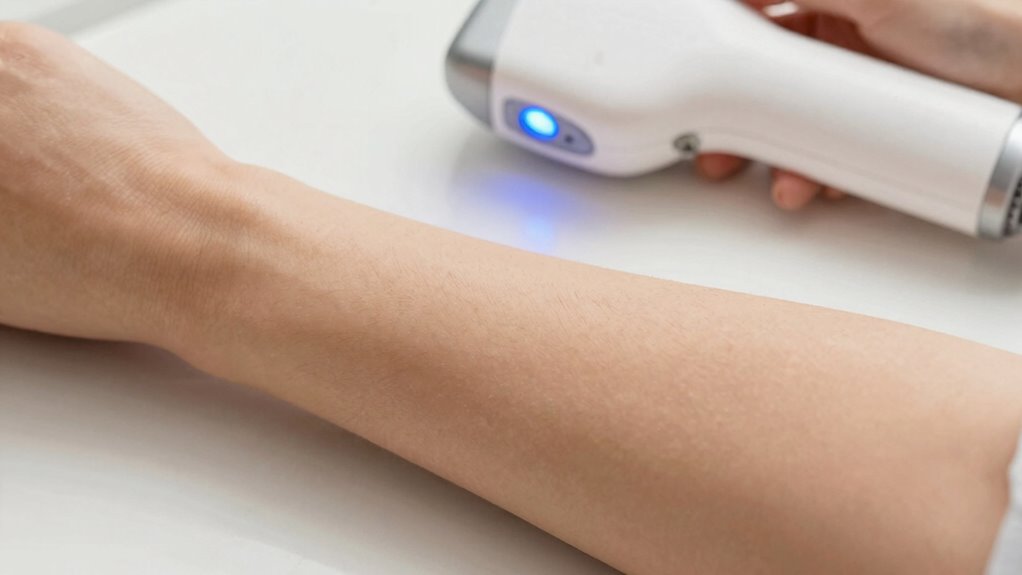
Choosing the right laser technology depends on your skin tone and hair color, as not all lasers are suitable for every combination. For lighter skin with dark hair, diode and Nd:YAG lasers offer effective results while maintaining laser safety. If you have darker skin, select a device with a longer wavelength, like Nd:YAG, to reduce risks. Proper device maintenance is essential to guarantee safety and peak performance; clean your device regularly and follow manufacturer guidelines. Avoid using inappropriate lasers that could cause burns or hyperpigmentation. Always choose a device designed for at-home use that matches your skin and hair type, and read the instructions carefully. This careful selection helps maximize results while minimizing side effects.
How to Test Your Skin Before Starting Laser Hair Removal

Before you start your at-home laser hair removal, it’s essential to test your skin to make certain of safety and effectiveness. Conduct a skin patch test to check for adverse reactions. Choose a small, discreet area, like your inner arm or behind your ear. Follow these steps:
- Clean the test area thoroughly.
- Apply a small amount of the device’s treatment area.
- Cover with a bandage or leave it uncovered, as specified.
- Wait 24-48 hours to monitor any reaction.
- Perform an allergy check by noting redness, swelling, or irritation.
This simple skin patch test helps identify sensitivities. Remember, a positive allergy check means you should avoid using the laser on that area until you consult a professional.
Practical Tips for Safe and Effective At-Home Laser Hair Removal

To guarantee safe and effective at-home laser hair removal, it’s important to follow practical tips that minimize risks and maximize results. First, always prioritize laser safety by wearing protective eyewear and following the device’s instructions carefully. Conduct a patch test to assess your skin sensitivity and ensure no adverse reactions occur. Avoid treating areas with open wounds, infections, or irritation, as these can increase risks. Keep your skin clean and dry before each session to enhance laser effectiveness. Be cautious around darker skin tones, as excess melanin may absorb laser energy unevenly. Limit sun exposure before and after treatments to prevent skin irritation or pigmentation changes. By following these tips, you’ll improve safety and achieve the best possible results from your at-home laser hair removal.
Common Mistakes to Avoid Based on Your Skin and Hair Color

Understanding how your skin and hair color affect laser hair removal is essential to avoiding common mistakes. If you ignore your skin tone and hair color, you risk ineffective results or skin damage. Always prioritize laser safety by choosing devices suited for your skin and hair type. Proper skin preparation is vital; avoid sun exposure and moisturizers before treatment. Be mindful of these common mistakes:
Prioritize laser safety by matching devices to your skin and hair for effective, damage-free treatments.
- Using the wrong laser settings for your skin tone
- Skipping skin patch tests to check for reactions
- Applying products that interfere with laser safety
- Treating areas with tanned or sunburned skin
- Neglecting to follow device instructions based on your hair color
When to See a Professional if You’re Not a Typical Candidate
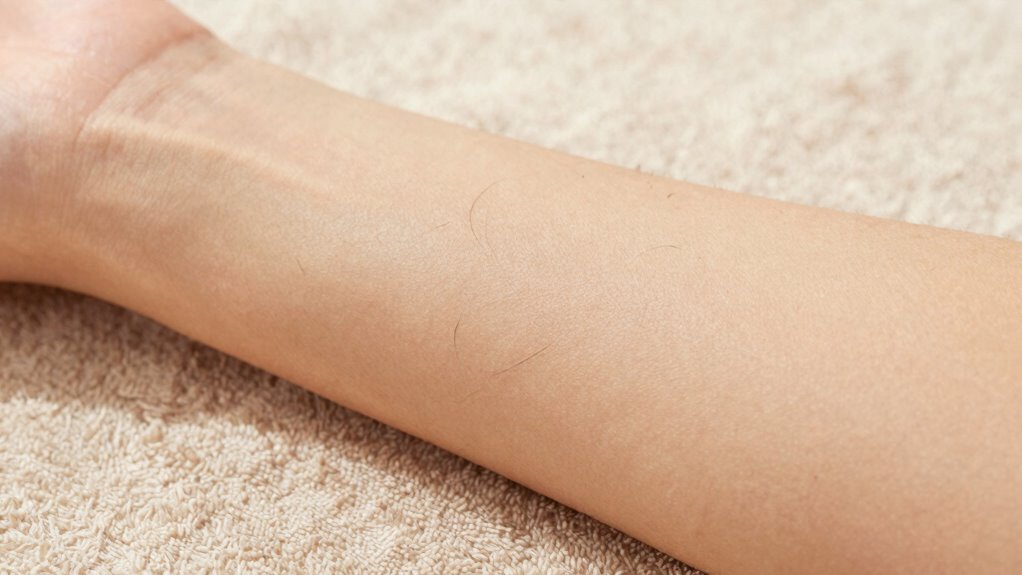
While many people can safely use at-home laser hair removal devices, those with certain skin or hair characteristics should consider consulting a professional before starting treatment. If you have a skin allergy or sensitive skin, a professional consultation can help determine if laser therapy is safe for you. People with very dark skin tones or very light hair may not be suitable candidates for at-home devices and might require expert guidance to avoid adverse reactions. Additionally, if you have any active skin conditions, such as eczema or psoriasis, or a history of skin allergies, it’s best to seek professional advice. A dermatologist or licensed technician can assess your individual skin type and hair color, ensuring safe and effective treatment tailored to your needs.
Frequently Asked Questions
Can Laser Hair Removal Work on Gray or White Hair at Home?
Laser hair removal doesn’t work well on gray or white hair because it targets pigment in your hair. Since gray and white hair lack melanin, the laser can’t effectively heat and destroy the follicles. If you have gray or white hair, you might want to contemplate alternative methods like waxing or electrolysis, which don’t rely on pigment. Always consult a professional for personalized advice.
How Do I Adjust Laser Settings for Sensitive or Uneven Skin Tones?
Adjust your laser settings carefully for sensitive or uneven skin tones by starting with the lowest energy level. Assess your skin’s response, and if you notice redness or discomfort, reduce the intensity further. Use gentle pulses on areas with skin sensitivity or uneven pigmentation, and always follow your device’s guidelines. Prioritize safety and patience, ensuring you don’t overexpose your skin, and consider consulting a professional if uncertain.
Are There Specific Brands Recommended for Different Skin and Hair Types?
For different skin and hair types, look for brand recommendations that prioritize hair and skin compatibility. Brands like Tria, Philips Lumea, and Braun Silk-Expert are popular because they offer devices suited for various skin tones and hair colors. Make sure to select a device that matches your specific skin tone and hair color, and always follow the manufacturer’s guidelines to guarantee safe and effective results.
What Should I Do if I Experience Skin Irritation During Treatment?
If you notice skin irritation during treatment, imagine your skin as a gentle garden needing care. First, stop the session and perform a skin patch test nearby to gauge sensitivity. Apply soothing remedies like aloe vera or cool compresses to calm your skin. If irritation persists, consult a dermatologist before resuming treatments. Always listen to your body and prioritize gentle care to protect your skin’s health.
How Often Should I Perform At-Home Laser Sessions for Best Results?
You should perform at-home laser sessions every 4 to 6 weeks to optimize results. Maintaining consistent session frequency helps guarantee effective hair reduction and extends treatment longevity. Avoid overdoing it, as too frequent treatments can cause irritation or diminish effectiveness. Stick to the recommended schedule, and you’ll see better, longer-lasting results over time. Patience and regularity are key to achieving smooth, hair-free skin.
Conclusion
Remember, your unique skin and hair qualities are like a delicate melody—finding the right harmony guarantees a safe, effective experience. While at-home devices offer convenience, tuning into your body’s subtle signals is key. If something feels off or your skin whispers discomfort, don’t hesitate to seek professional guidance. Embrace patience and care as your trusted companions, turning your hair removal journey into a gentle, confident voyage toward smoothness.