To keep your formula maker safe, always use water around 70°C (158°F) to effectively kill bacteria. After each use, thoroughly clean and disinfect all parts with baby-safe products, avoiding harsh chemicals. Regularly inspect and dry equipment to prevent mold and bacteria buildup. Proper storage in a cool, dry place is essential. Following these steps helps guarantee your baby’s formula stays safe and hygienic—the key to a healthy feeding routine.

Turn the school run and nap time into listening time
- Thousands of audiobooks, podcasts and originals
- Listen on your phone, tablet or Echo — also offline
- Cancel anytime
Key Takeaways
- Use water heated to about 70°C (158°F) to safely prepare formula and eliminate bacteria.
- Regularly disassemble, clean with baby-safe solutions, and air dry all formula-making equipment.
- Disinfect parts using antimicrobial solutions per manufacturer instructions to prevent mold and bacterial buildup.
- Inspect equipment frequently for mold, residue, or damage, and replace damaged parts promptly.
- Store prepared formula and equipment in a cool, dry place below 77°F (25°C) and avoid reusing leftover formula.
As an affiliate, we earn on qualifying purchases.
Why Water Temperature Is Critical for Safe Baby Formula
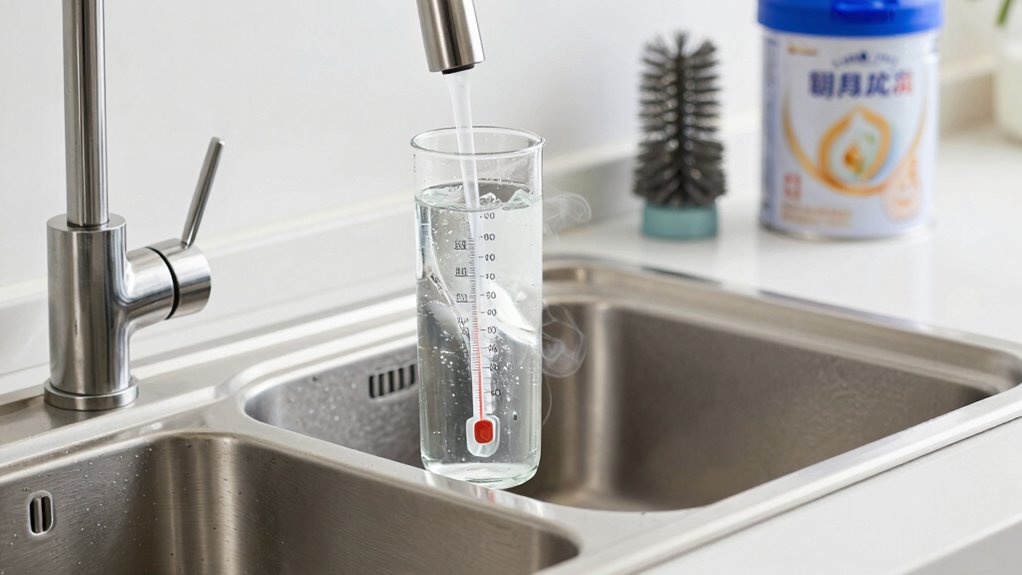
When preparing baby formula, water temperature plays a essential role in ensuring your baby’s safety. Proper temperature control is necessary to eliminate harmful bacteria that may be present in the water or formula. If the water is too cold, it might not kill bacteria, increasing the risk of infection. Conversely, water that’s too hot can cause burns or degrade nutrients in the formula. Maintaining the correct water temperature helps protect your baby from potential illnesses. It’s fundamental to always verify the temperature before feeding, ensuring it’s safe and comfortable for your little one. Prioritizing water safety through proper temperature control not only keeps your baby safe but also guarantees that they receive the best, most nutritious feed possible.
As an affiliate, we earn on qualifying purchases.
How to Achieve the Right Water Temperature Safely and Consistently
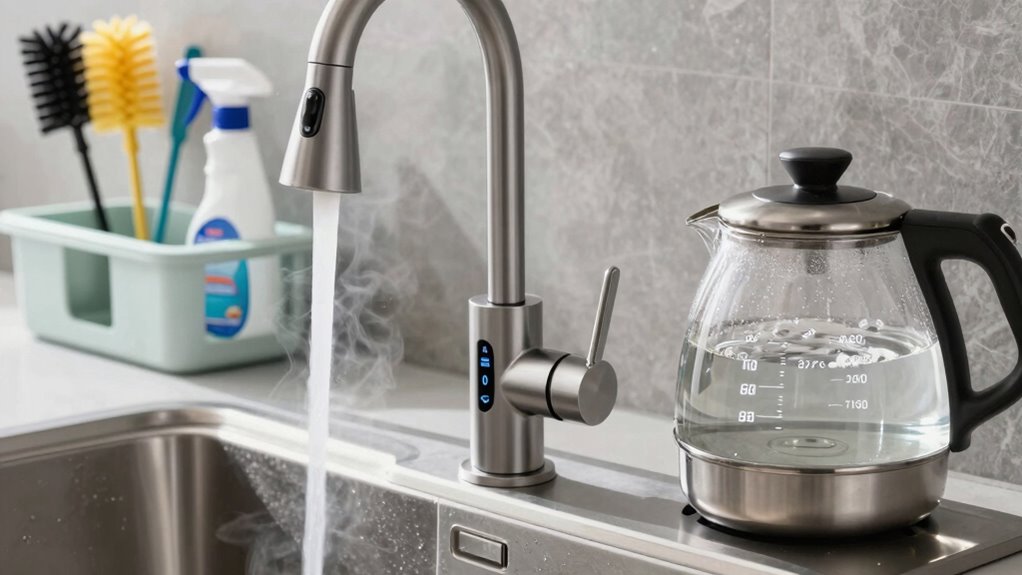
Achieving the right water temperature for baby formula requires careful attention and the right tools. Start by using a reliable thermometer to check the water temperature, aiming for about 70°C (158°F) to kill bacteria. Follow safety guidelines by never using hot water directly from the tap, as it may contain contaminants. Instead, boil water first, then let it cool slightly before pouring it into your formula maker. Consistency is key, so measure water carefully and adjust the temperature as needed. Always verify the final temperature before feeding to prevent burns or discomfort. Proper water heating techniques ensure your baby receives safe, properly heated formula every time. To maintain safety, regularly check your thermometer accuracy and replace it if it becomes unreliable. For added safety, consider using a temperature-controlled water heater to ensure consistent water temperatures. Additionally, cleaning your equipment regularly helps prevent mold growth and ensures the safety of the feeding process. Regularly inspecting your feeding equipment and hygiene practices can further reduce health risks. By adhering to these safety guidelines, you guarantee your baby receives safe, properly heated formula every time. This careful approach helps protect your little one’s health and promotes safe feeding routines.
baby bottle cleaning and disinfecting kit
As an affiliate, we earn on qualifying purchases.
As an affiliate, we earn on qualifying purchases.
Best Practices for Cleaning and Sanitizing Your Baby Formula Maker
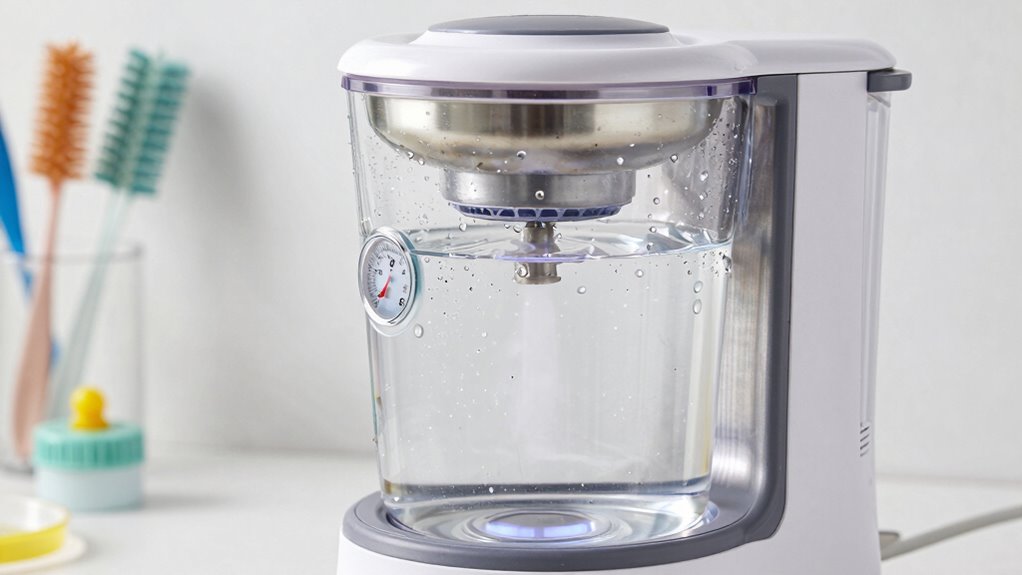
Keeping your baby formula maker clean and sanitized is essential for your child’s health. You should establish a regular cleaning routine and use proper sanitizing techniques to eliminate any bacteria or residue. Consistently following these practices helps ensure your baby’s formula is safe and free from harmful germs. Additionally, understanding how to properly navigate and maintain the device’s components can prevent mold buildup and prolong its lifespan support breakfast. Regularly inspecting the device for any signs of mold or residue can further help in early detection and prevention. Incorporating essential oil techniques, such as using antimicrobial agents like tea tree oil, can also enhance your cleaning routine and keep your device bacteria-free. Utilizing seasonal maintenance checklists can further optimize your device’s longevity and performance. Moreover, employing proper drying methods can reduce moisture that promotes mold growth.
Regular Cleaning Routine
Regularly cleaning your baby formula maker is essential to guarantee it functions properly and keeps your baby safe. Establishing a consistent cleaning schedule helps prevent mold buildup and ensures the device remains hygienic. Aim to clean all parts that come into contact with formula daily or after every use, including bottles, reservoirs, and nozzles. Use warm, soapy water and rinse thoroughly to remove residue. Pay close attention to areas prone to moisture retention, as these are common mold hotspots. Understanding filtration systems can help you select the best cleaning methods to maintain your device effectively. Incorporating proper hygienic practices further reduces the risk of bacterial contamination. Regular maintenance can also improve the overall power efficiency of your appliance, ensuring it operates optimally. By sticking to a regular cleaning routine, you reduce the risk of mold growth and bacterial contamination. Keep your cleaning tools handy, and don’t skip routine checks, so your formula maker stays in excellent condition for your baby’s safety.
Proper Sanitizing Techniques
To guarantee your baby formula maker is truly hygienic, it’s essential to follow proper sanitizing techniques after cleaning. Use effective sterilization methods like boiling, steaming, or chemical sanitizers, depending on your manufacturer’s instructions. Establish a consistent cleaning schedule—ideally daily—to prevent mold and bacteria buildup. Proper sanitizing keeps your device safe for your baby and helps maintain its functionality. Regularly inspecting your device for sustainable cloud solutions can also help identify any potential issues early. Additionally, utilizing air purifier maintenance tips ensures the device operates efficiently and remains free of contaminants. Incorporating routine checks can further enhance overall device longevity and safety.
As an affiliate, we earn on qualifying purchases.
How to Disassemble and Properly Clean Your Baby Formula Machine
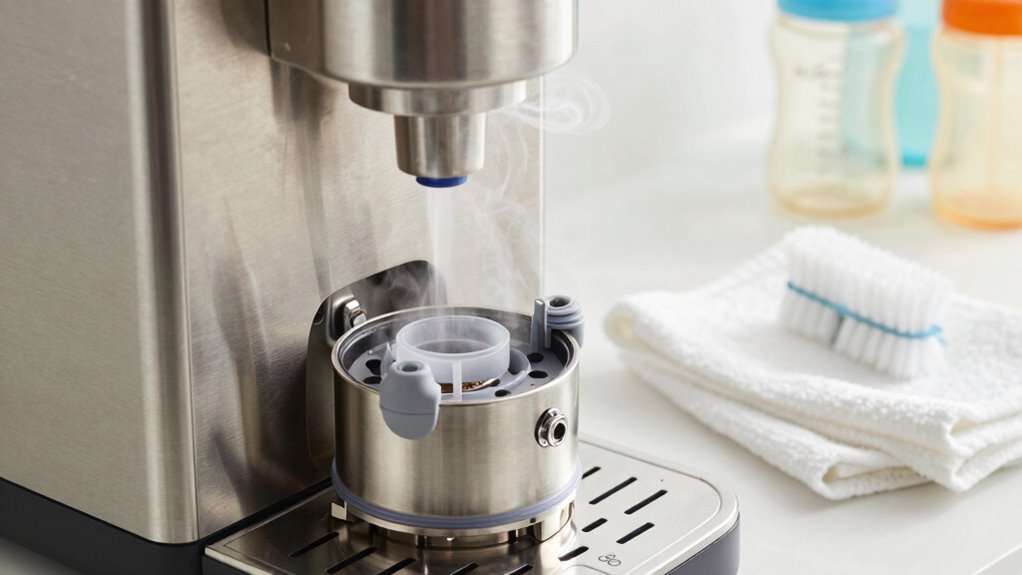
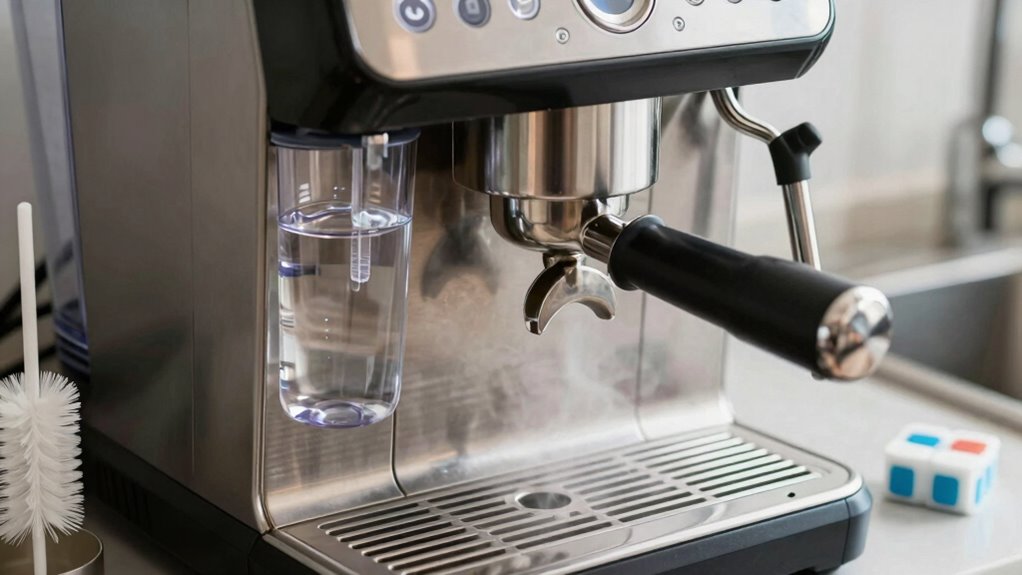
Disassembling your baby formula machine properly is essential for ensuring it remains hygienic and functions correctly. Start by unplugging the device and removing all detachable parts. Use appropriate disassembly techniques to take apart the components carefully, avoiding damage. Gather your cleaning tools, such as soft brushes and non-abrasive sponges, to clean each part thoroughly. Pay special attention to small or hard-to-reach areas where residue can build up. Rinse all parts with warm water and use mild soap if necessary. Avoid harsh chemicals that can leave residues or damage the materials. Once cleaned, let parts air dry completely before reassembling. Proper disassembly and cleaning tools help maintain your machine’s hygiene and performance, ensuring safe formula preparation for your baby. Regular maintenance reduces bacterial buildup and prolongs the lifespan of your device. Additionally, understanding appropriate cleaning practices can prevent mold and ensure your machine stays safe for daily use. Incorporating proper cleaning techniques for deep cleaning can further enhance the safety and longevity of your baby formula machine. Using the correct cleaning tools is also crucial to avoid damaging delicate components. Applying knowledge of decontamination methods can further improve the safety of your cleaning routine.
Preventing Mold and Bacteria Buildup in Formula Equipment and Storage
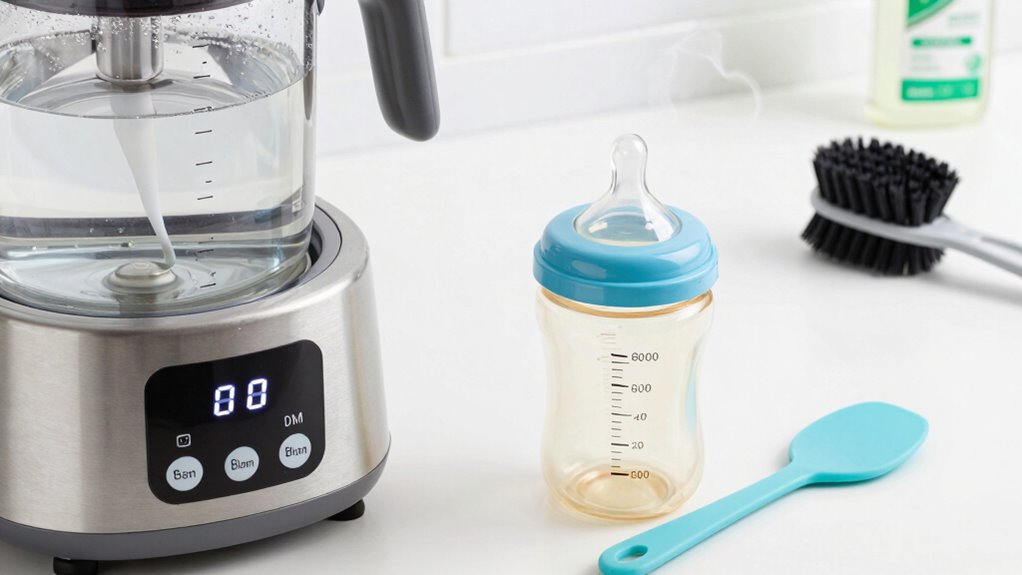
To keep your formula equipment safe, you need to focus on regular disinfection and proper storage. Using antimicrobial solutions can further minimize the risk of mold and bacteria growth. Prioritizing these practices helps ensure your baby’s formula stays fresh and safe to use. Proper water chemistry management is essential for maintaining a hygienic environment and preventing microbial development. Ensuring the use of proper water quality can significantly reduce contamination risks in your formula preparation process. Regular testing of your water supply can help identify any contaminant levels that may pose a risk to your equipment and baby’s health. Additionally, understanding art handling and storage procedures can further enhance safety and prevent microbial buildup.
Regular Equipment Disinfection
Regular equipment disinfection is essential for preventing mold and bacteria buildup in formula preparation and storage areas. Following proper cleaning protocols ensures that all surfaces and parts are thoroughly sanitized, reducing contamination risks. Consistent equipment maintenance keeps your tools in ideal condition and makes cleaning easier. Use hot water and appropriate disinfectants after each use, paying close attention to bottles, nipples, and storage containers. Don’t skip steps—neglecting proper disinfection can lead to mold growth and bacterial spread, compromising your formula’s safety. Regularly inspect your equipment for cracks or residue that might harbor germs. Maintaining a routine of diligent cleaning and disinfection not only keeps your equipment safe but also provides peace of mind, ensuring your little one’s formula remains pure and free of harmful bacteria.
Proper Storage Practices
Proper storage practices are essential for preventing mold and bacteria from contaminating formula equipment and supplies. Make certain your formula storage area stays clean, dry, and cool to inhibit microbial growth. Temperature control is key—store formula and supplies at a consistent, recommended temperature, typically below 77°F (25°C). Avoid storing formula in warm or humid environments, as these promote mold buildup. Keep storage containers tightly sealed to prevent exposure to air, dust, and insects. Regularly check expiration dates and discard any expired or compromised supplies. Maintain a clean storage space by wiping down shelves and containers frequently. Proper formula storage minimizes the risk of contamination, helping ensure your formula remains safe and fresh for feeding.
Use of Antimicrobial Solutions
Using antimicrobial solutions can markedly reduce the risk of mold and bacteria buildup in formula equipment and storage areas. These solutions help inhibit microbial growth on surfaces that come into contact with formula, keeping your setup cleaner and safer. When you regularly apply antimicrobial solutions to bottles, storage containers, and countertops, you create a barrier against microbial growth that can lead to contamination. Ensure you follow the manufacturer’s instructions for proper use and contact time, allowing the solutions to effectively eliminate harmful bacteria and mold spores. Incorporate antimicrobial solutions into your cleaning routine consistently, especially after preparing formula or storing it for later use. This proactive approach can greatly improve hygiene, protect your baby’s health, and extend the lifespan of your equipment.
Choosing Safe Cleaning Products and Tools for Baby Formula Equipment
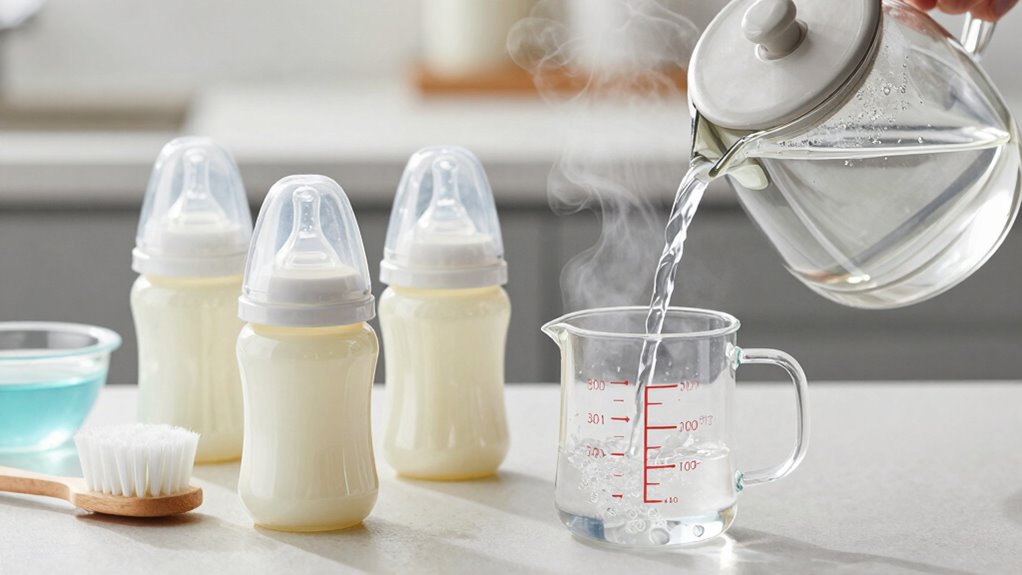
Cleaning baby formula equipment with safe products and tools is essential to protect your little one from harmful bacteria and chemicals. Choosing non-toxic cleaning options guarantees you avoid unnecessary chemicals that could leach into formula. Use gentle tools to prevent scratching or damaging equipment. Here are four tips to help you select the right cleaning supplies:
- Opt for non-toxic cleaning solutions specifically labeled safe for baby gear.
- Use soft, non-abrasive brushes or sponges to clean bottles and parts.
- Avoid harsh chemicals like bleach or strong disinfectants.
- Look for tools made from BPA-free, food-grade materials to ensure safety.
How Often Should You Clean Your Baby Formula Maker? Maintenance Tips
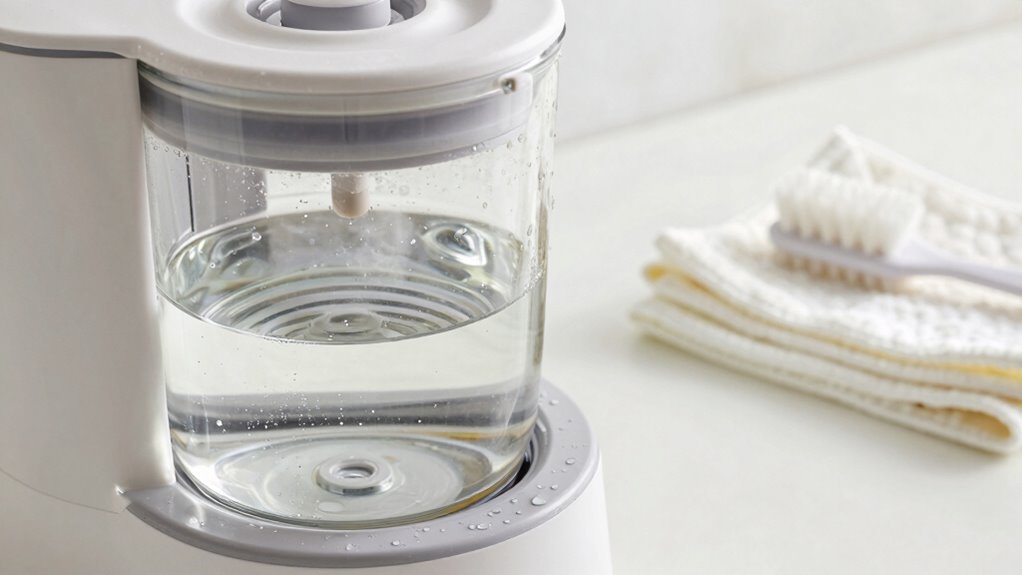
To keep your baby formula maker safe and functioning properly, you should establish a regular cleaning schedule. Proper maintenance is essential for maintaining formula hygiene and preventing bacteria buildup. Ideally, clean your device after each use or at least once daily if used frequently. Pay close attention to removable parts, like the water reservoir and dispensing area, ensuring they are thoroughly washed with safe cleaning tools. Regular cleaning not only keeps your formula safe for your baby but also extends the equipment’s longevity by preventing mold and mineral deposits. Use appropriate cleaning products that won’t damage the machine or leave harmful residues. Consistent maintenance helps you avoid costly repairs and ensures your baby’s formula remains clean, safe, and nutritious.
Common Mistakes When Preparing Baby Formula and How to Avoid Them
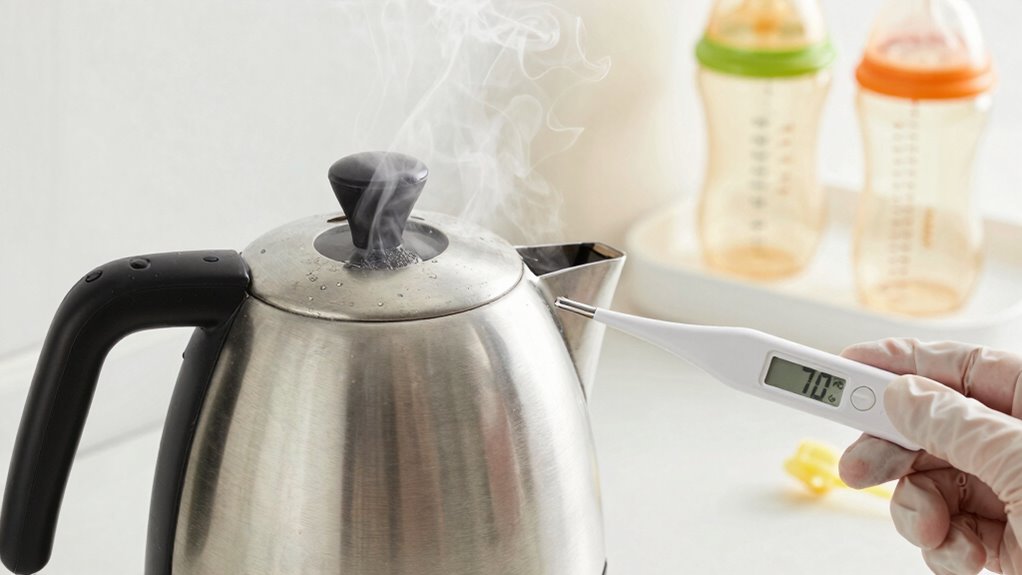
Many parents make simple mistakes when preparing baby formula that can compromise their baby’s safety and health. To guarantee proper formula safety, avoid these common errors:
- Using water that’s too hot or too cold, which can affect nutrient retention and bacterial growth.
- Not measuring or mixing formula accurately, risking overfeeding or underfeeding.
- Reusing leftover formula, which can harbor bacteria and cause illness.
- Skipping proper cleaning of bottles and equipment, leading to mold and bacteria buildup.
Following these preparation tips helps maintain formula safety and ensures your baby gets the right nutrition. Always use the correct water temperature, measure precisely, discard leftover formula, and keep equipment clean. Proper preparation protects your baby’s health and promotes safe feeding practices.
Signs of Mold and Bacteria in Baby Formula Equipment and Troubleshooting Tips
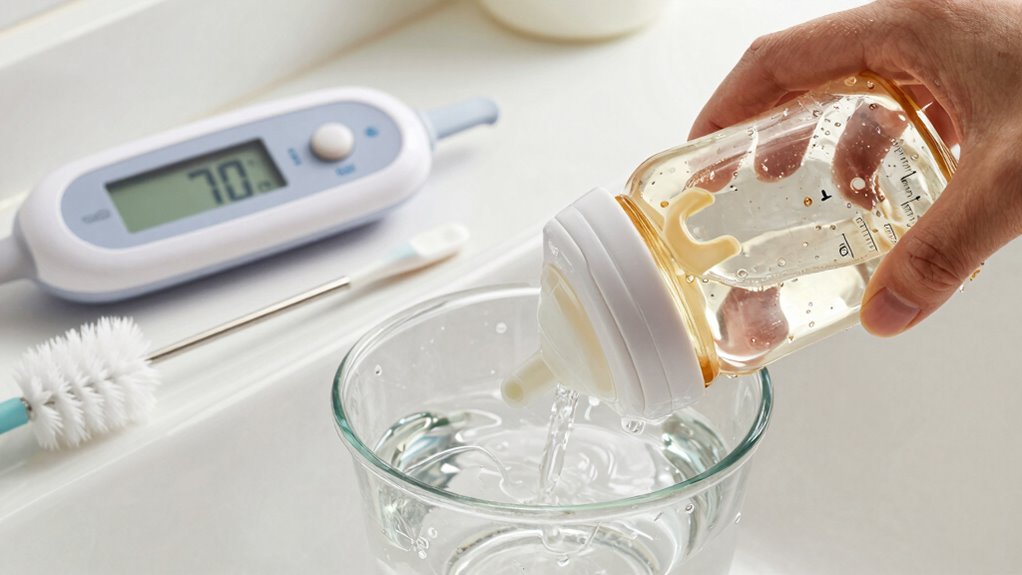
Even with careful cleaning, mold and bacteria can still develop in baby formula equipment if you’re not vigilant. Look out for formula mold, which often appears as fuzzy or slimy spots, usually green, black, or white. Bacteria signs include a sour or foul smell, slimy residue, or discoloration on bottles, nipples, or parts. If you notice any of these indicators, stop using the equipment immediately. Regularly inspect all components, especially after storing or prolonged use. Guarantee thorough cleaning and drying between feedings. Using hot water and proper sterilization methods can help prevent formula mold and bacteria buildup. Address any signs promptly to protect your baby from potential health issues and maintain a safe feeding environment.
Frequently Asked Questions
How Can I Tell if My Baby Formula Maker Is Functioning Correctly?
You can tell if your baby formula maker is working correctly by checking the water temperature and flow. Verify the sensor calibration is accurate by testing the temperature with a thermometer after use. Watch for consistent water flow during operation, and if the machine heats water properly and dispenses at the right temperature, it’s functioning well. Regularly clean and inspect the sensor and internal parts to maintain proper calibration and performance.
Are There Specific Cleaning Products Recommended for Delicate Formula Equipment?
Think of your baby formula maker as a delicate garden that needs tender care. Use gentle cleaning, non-abrasive solutions like diluted vinegar or mild dish soap, to keep it spotless without damaging parts. Avoid harsh chemicals that could harm your baby’s health. Regularly clean all components, paying special attention to crevices, to prevent mold and bacteria. Your careful attention guarantees your little one’s safety and health every time.
What Are the Risks of Using Tap Water Instead of Filtered Water?
Using tap water instead of filtered water can expose you to risks like bacteria, heavy metals, and contaminants that may linger in unfiltered water. These tap water risks can compromise your baby’s safety and health. Filtered water safety helps guarantee you’re providing clean, safe water for formula preparation, reducing the chance of illness. Always opt for filtered water to protect your little one from potential harmful substances in tap water.
Can Mold Develop in Sealed or Rarely Used Formula Machines?
Imagine a sealed container, untouched and forgotten, slowly developing a dark, fuzzy patch—mold growth can occur even if your formula machine isn’t in use. Mold can thrive in these rarely opened or sealed environments, especially if moisture or residue remains inside. Regularly inspecting and cleaning your machine prevents mold buildup, ensuring your baby’s formula stays safe and free from harmful bacteria.
How Do I Prevent Mineral Buildup in My Baby Formula Maker?
You can prevent mineral buildup in your baby formula maker by regularly cleaning it with effective techniques. Use a mixture of vinegar and water or a descaling solution to break down minerals. Run the solution through the machine, then rinse thoroughly with clean water. Doing this weekly or as recommended by the manufacturer helps keep mineral deposits at bay, ensuring your machine functions properly and safely for your baby.
Conclusion
Now that you know the secrets of water temp and cleaning, your baby’s formula is practically invincible—like a tiny fortress against mold and bacteria. Just remember, neglecting these steps is like inviting uninvited guests—mold, germs, and chaos—to crash your peace. So, stay vigilant, clean diligently, and keep your baby’s formula safe. Because nothing says “parenting pro” like turning your baby’s bottle into a germ-free, mold-free masterpiece—no magic wand required.
Fall Picks
fall essentials
As an affiliate, we earn on qualifying purchases.