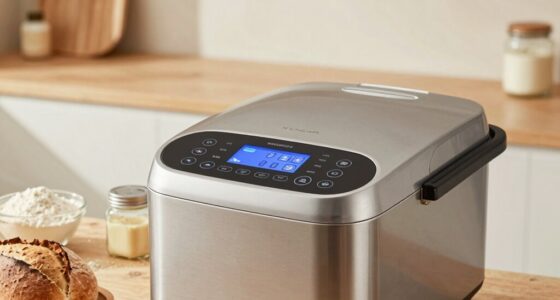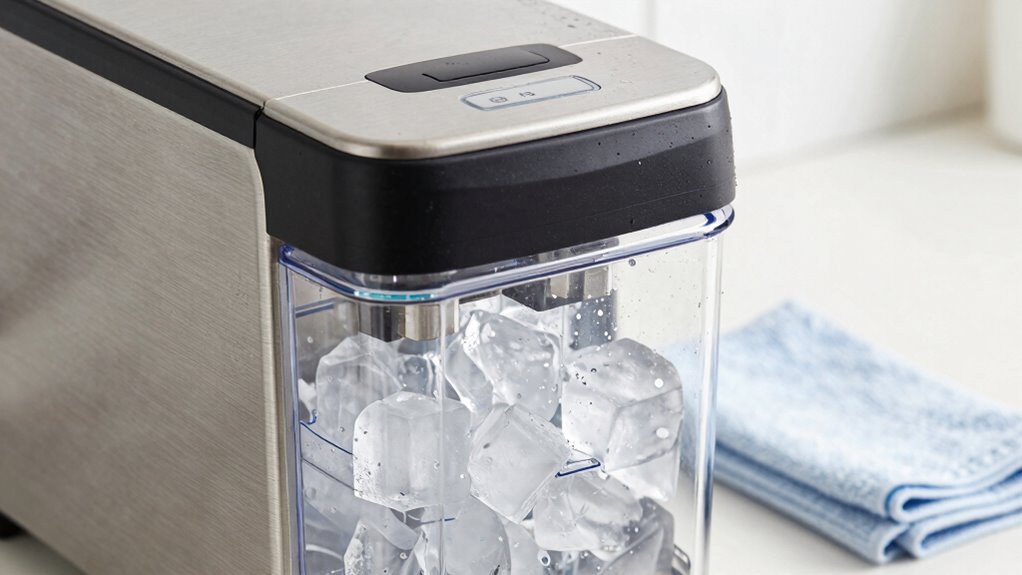

Many countertop ice maker owners skip regular cleaning, which can lead to buildup, foul odors, and declining performance. To keep your machine working efficiently, unplug it before cleaning, use mild soap or manufacturer-recommended solutions, and thoroughly rinse interior parts like the ice basket and water reservoir. Regularly removing mineral deposits and replacing filters helps prevent clogging. If you want to avoid costly repairs and guarantee high-quality ice, you’ll find tips that make maintenance easier if you explore further.
Listen free for 30 days with Audible
Thousands of audiobooks and originals — cancel anytime.
As an affiliate, we earn on qualifying purchases.
Key Takeaways
- Many owners neglect regular cleaning, leading to buildup, foul odors, and decreased ice quality.
- Skipping routine cleaning can cause mineral deposits and clogging, impairing ice maker performance.
- Infrequent maintenance increases the risk of mold and bacteria growth in the interior components.
- Overlooking cleaning schedules reduces energy efficiency and shortens the appliance’s lifespan.
- Proper cleaning, including thorough rinsing and descaling, is essential for consistent, high-quality ice production.
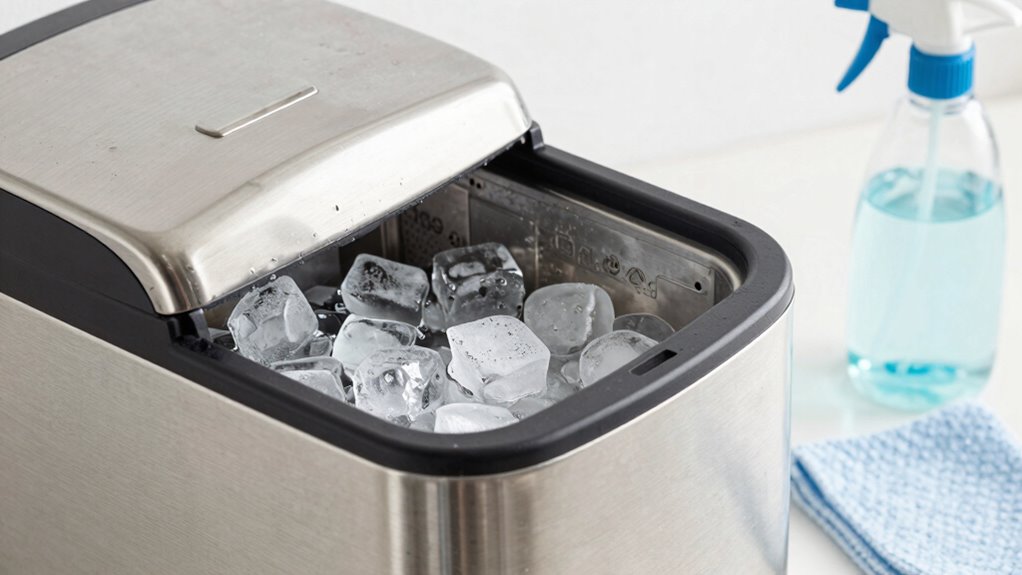
Regular cleaning is essential to keep your countertop ice maker functioning properly and producing clean, fresh ice. Many owners overlook this crucial step, but neglecting it can lead to buildup, foul odors, and decreased performance. A clean ice maker not only ensures the quality of your ice but also extends the lifespan of the appliance. When you’re setting up your ice maker, proper ice maker installation is key, as it influences how easily you can maintain and clean the unit. Proper installation ensures proper drainage, ventilation, and accessibility, making routine cleaning less of a chore. Additionally, installing the machine in a cool, dry spot helps maintain energy efficiency and reduces the risk of mold or bacterial growth.
To keep your ice maker in top shape, it’s important to establish a regular cleaning routine. This involves more than just wiping down the exterior; you need to clean the interior components, such as the ice basket, water reservoir, and any filters. Use a mixture of mild soap and water or a manufacturer-recommended cleaning solution to remove residue and mineral deposits. Be sure to unplug the unit before cleaning to prevent electrical hazards. After cleaning, rinse thoroughly to avoid soap or cleaner residues contaminating your ice. Regular maintenance prevents mineral buildup that can clog the machine and hinder ice production, which in turn impacts energy efficiency tips. When your ice maker is clean and functioning well, it uses less energy because it doesn’t have to work as hard to produce ice. Establishing a cleaning schedule and following proper setup guidelines can significantly extend the lifespan of your appliance. Many owners skip routine cleaning because they think it’s time-consuming or unnecessary. However, neglecting this task can cause the machine to run less efficiently, increasing energy consumption and lowering ice quality. A dirty ice maker has to work harder, which not only raises your electricity bill but also accelerates wear and tear on the components. To optimize energy efficiency tips, stick to a cleaning schedule—typically every 3-6 months, depending on usage. Keep the surrounding area free of dust and debris, and regularly check the water filter if your model has one. Implementing proper maintenance practices can also help prevent costly repairs down the line. Performing periodic descaling procedures can remove mineral deposits that accumulate over time, maintaining peak performance. This simple maintenance routine guarantees your countertop ice maker operates smoothly, produces clear ice, and saves you money on energy costs in the long run. Consistent cleaning and proper setup are your best strategies for hassle-free, efficient ice production.
countertop ice maker cleaning kit
As an affiliate, we earn on qualifying purchases.
As an affiliate, we earn on qualifying purchases.
Frequently Asked Questions
How Often Should I Replace the Water Filter in My Ice Maker?
You should replace the water filter in your ice maker every 6 months, following the recommended replacement schedule. Regularly changing the water filter guarantees clean, fresh-tasting ice and prevents buildup of impurities. Keep an eye on the filter’s lifespan, and mark your calendar for replacements. Timely filter changes help maintain peak ice production and extend your ice maker’s lifespan, keeping your appliance functioning smoothly.
Can I Use Bleach to Disinfect My Countertop Ice Maker?
Think of bleach as a double-edged sword—powerful but risky. You can use bleach for disinfection methods, but only if you follow bleach safety guidelines. Never pour undiluted bleach into your ice maker; instead, dilute it properly, then rinse thoroughly afterward. Using bleach improperly can cause damage and pose health risks. For safe disinfection, consider alternatives like vinegar or commercial sanitizers designed specifically for appliances.
What Signs Indicate My Ice Maker Needs Professional Repair?
If your ice maker shows repair signs like unusual noises, inconsistent ice production, or leaks, it’s time for professional help. During ice maker troubleshooting, you might notice freezing issues or strange odors, indicating deeper problems. Don’t delay repairs when you see these signs; ignoring them can worsen the damage. Contact a technician promptly to diagnose and fix the issue, ensuring your ice maker works efficiently and safely.
Is It Safe to Use Vinegar for Cleaning the Ice Maker?
Using vinegar for cleaning your ice maker is generally safe, but you should consider vinegar safety and cleaning effectiveness. Vinegar is a natural disinfectant that can remove mineral buildup and odors. However, make sure you dilute it properly—mix one part vinegar with three parts water—and rinse thoroughly afterward. This helps prevent any lingering vinegar taste or smell, ensuring your ice maker stays clean without risking damage or residue.
How Do I Prevent Mold Buildup in My Ice Maker?
Prevent mold buildup in your ice maker like a shield guards a castle. Regularly clean and dry all parts, especially the water reservoir and drip tray, with vinegar or a mild detergent. Keep the unit dry when not in use, and change filters as recommended. These mold prevention cleaning tips guarantee your ice stays fresh and safe, making your countertop ice maker a reliable, mold-free companion for everyday use.
As an affiliate, we earn on qualifying purchases.
Conclusion
Skipping your cleaning routine is like leaving your favorite book dusty on the shelf—eventually, the pages lose their shine. Regularly cleaning your countertop ice maker keeps it running smoothly, much like tending a delicate garden ensures vibrant blooms. Think of each clean cycle as watering your device’s roots, nurturing fresh, crystal-clear ice. When you care for it, your ice maker becomes a symbol of refreshment and reliability, always prepared to serve up cool comfort whenever you need it most.
As an affiliate, we earn on qualifying purchases.
As an affiliate, we earn on qualifying purchases.
Fall Picks
fall essentials
As an affiliate, we earn on qualifying purchases.