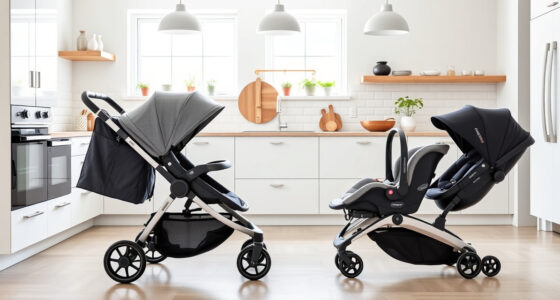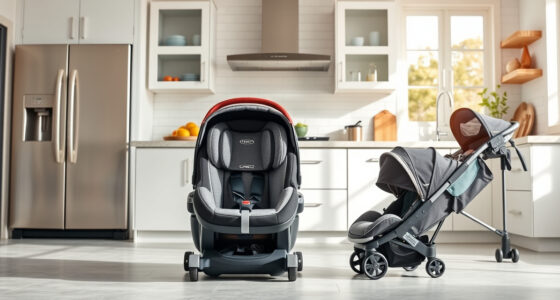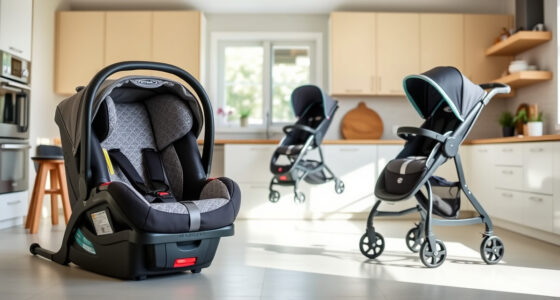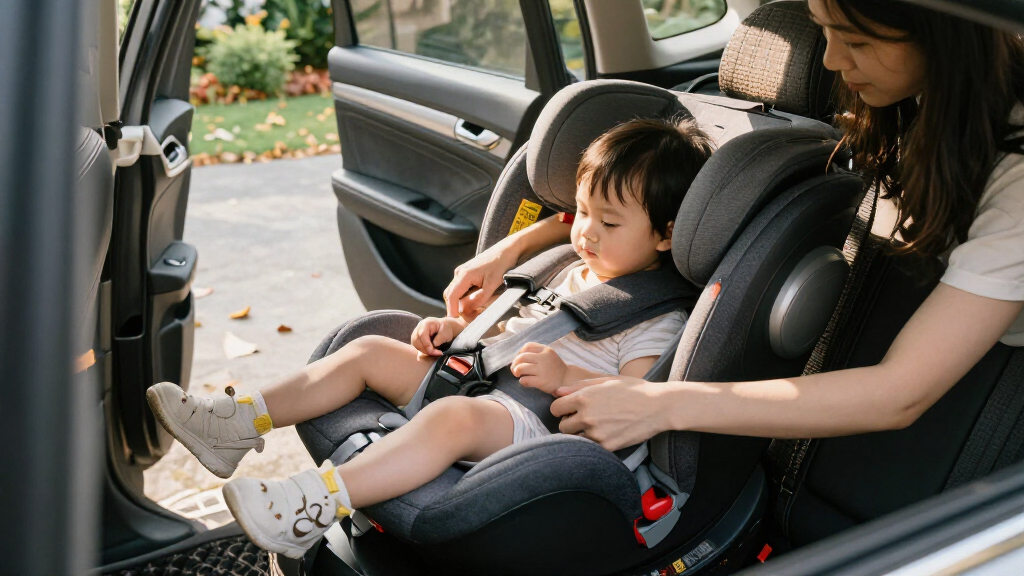
Choosing between an infant car seat and a convertible car seat is mainly a choice between portability now and longer use from one installed seat. Both can protect a child when they are appropriate for the child’s size, installed correctly, and used according to the manufacturer’s instructions. An infant seat is designed for rear-facing use and typically detaches from a car base, which makes carrying a sleeping baby and moving between compatible travel-system parts easier. A convertible seat remains in the car and can usually be adjusted from rear-facing to forward-facing as the child grows.

Turn the school run and nap time into listening time
- Thousands of audiobooks, podcasts and originals
- Listen on your phone, tablet or Echo — also offline
- Cancel anytime

Graco Tranzitions 3-in-1 Harness Booster Car Seat, Cinder
- ✔ Modes: Forward-facing harness, highback booster, backless booster
- ✔ Forward-facing harness range: 26.5–65 lb
- ✔ Highback booster range: 40–100 lb

Graco TurboBooster 2.0 Highback and Backless Booster Car Seat, Declan
- ✔ Model: TurboBooster 2.0
- ✔ Modes: Highback booster, backless booster
- ✔ Head support: Adjustable

Graco TurboBooster 2.0 Backless Booster Car Seat, Denton
- ✔ Type: Backless booster car seat
- ✔ Recommended age: 4–10 years
- ✔ Child weight range: 40–100 lb
For families who often carry a newborn between the car, home, and stroller, the infant seat’s convenience may justify buying another seat later. For families who want to avoid that handoff and prefer one seat with a longer usable span, a convertible seat may make better value. The deciding details are your baby’s fit, vehicle space, daily routine, and the exact limits and instructions for the models you are considering.
At a Glance
| Criteria | Infant car seat | Convertible car seat | Winner |
|---|---|---|---|
| Newborn fit and use | Typically designed for small infants; check stated minimum height and weight | Can fit newborns, but fit depends on the model, baby, and harness adjustment | Depends |
| Portability | Detaches from an installed base and can be carried | Stays installed; child is moved in and out of the car | A |
| Usable lifespan | Usually outgrown sooner; a later seat is needed | Usually lasts through rear-facing and forward-facing stages within stated limits | B |
| Everyday convenience | Convenient for transfers and short errands, though the carrier can become heavy | No carrier to haul, but each trip requires buckling the child in the car | A |
| Vehicle fit | Base stays installed; verify base and seat fit in each vehicle | Larger seat stays in the vehicle; check rear-facing space and installation | Depends |
| Cost and value | Lower initial cost, but many families later buy a second seat | Higher initial cost, with potential savings from longer use | B |
| Stroller compatibility | Often clips into compatible travel systems | Usually needs a separate stroller or stroller adapter, if compatible | A |
Graco Tranzitions 3-in-1 Harness Booster Car Seat, Cinder
The Tranzitions 3-in-1 is the broadest choice in this lineup because it starts with a forward-facing harness and later converts to highback and backless booster modes. Its harness range is listed as 26.5–65 pounds, while both booster modes begin at 40 pounds. That makes it the clearest pick for families whose child still needs a harness and who want a seat that can transition later, rather than purchasing a backless booster now.As children grow, the no-rethread harness and headrest adjust together across nine positions. This makes routine height adjustments simpler than a system requiring the straps to be manually rerouted, though caregivers still need to make adjustments and confirm harness fit. Compared with the TurboBooster Highback, the Tranzitions adds a forward-facing harness stage; compared with the Backless TurboBooster, it offers more support modes but involves a more complex seat and longer-term adjustment decisions.Its lightweight build may help families who move a seat between vehicles, and the machine-washable pad and rotating cup holders address practical upkeep. The tradeoff is that “three-in-one” should not be read as “suitable for every stage”: the booster modes have a 40-pound minimum, and the supplied details do not provide height limits or installation specifics. We should check the manual for the child’s size and vehicle before relying on any mode.
Pros:
- Three modes span harness, highback booster, and backless booster use
- Listed forward-facing harness range starts at 26.5 pounds
- Harness and headrest adjust together without rethreading
- Lightweight design with washable pad and rotating cup holders
Cons:
- Both booster modes have a 40-pound minimum
- Provided specifications do not state maximum height limits
- More modes mean caregivers must track which configuration is appropriate
Best for: Families seeking a forward-facing harness seat that can later convert to highback and backless booster modes.
Not ideal for: Children under 26.5 pounds or families who need precise height-limit and vehicle-fit information before selecting a seat.
Bottom line: Choose the Tranzitions when you need a harness now and want booster options later, provided your child meets each mode’s limits.
“Choose the Tranzitions when you need a harness now and want booster options later, provided your child meets each mode’s limits.”
Graco TurboBooster 2.0 Highback and Backless Booster Car Seat, Declan
The TurboBooster 2.0 Highback suits families who want a booster with more upper-body support before moving to a backless design. It converts between highback and backless modes, and its adjustable head support and open-loop belt guides offer two useful fit features: the head support adapts as a child grows, while the guides help route the vehicle belt into position. The supplied information does not specify weight or height limits, so caregivers should consult the seat manual rather than assume it matches another TurboBooster’s range.Compared with the Backless TurboBooster, this model gives families a supported configuration before removing the back. Compared with the Tranzitions, it is more focused: there is no listed harness mode, so it is not the choice for a child who still needs a forward-facing harness. That narrower purpose can make sense when booster use is the current need and adjustable support is a priority.The hide-away cup holders keep accessories available without making them permanent protrusions, but the product information does not give the exact child limits or elaborate on installation. We should treat those omissions as a reason to verify fit, not as evidence that the seat lacks a feature. Choose it for its highback-to-backless flexibility, and skip it if you need a seat with a stated harness stage or want documented limits in hand before comparing models.
Pros:
- Converts from highback to backless booster mode
- Adjustable head support and armrests
- Open-loop belt guides help position the vehicle seat belt
- Hide-away cup holders
Cons:
- No forward-facing harness mode is listed
- Provided product details do not state child weight or height limits
- Requires checking the manual to confirm suitability for a specific child and vehicle
Best for: Families choosing a booster with adjustable head support that can later convert to backless use.
Not ideal for: Children who still require a forward-facing harness, or caregivers who need stated weight and height limits before narrowing choices.
Bottom line: Pick the Highback when booster seating is appropriate and you want head support that can be removed as your child grows.
“Pick the Highback when booster seating is appropriate and you want head support that can be removed as your child grows.”
Graco TurboBooster 2.0 Backless Booster Car Seat, Denton
The Backless TurboBooster 2.0 is the most straightforward pick here for a child who is already ready for booster seating and falls within the stated limits. It is listed for ages 4–10, weights of 40–100 pounds, and a maximum height of 57 inches. Height-adjustable armrests and a seat designed to help position the vehicle belt give this compact design its purpose: raising a growing child for belt use without the added back and head support found in the Highback model.That simplicity is also its main limitation. Unlike the Highback TurboBooster, it provides no back or head support; unlike the Tranzitions, it has no harness stage for a child who has not moved on to booster use. Its stated age range alone should not determine readiness: caregivers should check the manual, local requirements, and whether the vehicle belt fits the child correctly.Graco says the seat uses ProtectPlus crash-test engineering and is tested for frontal, rear, and rollover crashes. That describes the supplied product claim, not a comparison proving greater protection than the other seats. The hide-away cup holders and adjustable armrests add convenience, but families wanting head support or a broader range of stages should choose one of the other two models. We rank it third because it serves a more specific point in a child’s transition.
Pros:
- Stated child range of 40–100 pounds and up to 57 inches
- Height-adjustable armrests
- Designed to help position the vehicle seat belt
- Hide-away cup holders and stated testing across frontal, rear, and rollover crashes
Cons:
- Backless design provides no back or head support
- Not suitable outside the stated age, weight, and height limits
- Offers no harness or highback mode as a child grows
Best for: Children who meet the listed limits and are ready for a backless booster, with caregivers seeking a simpler seat.
Not ideal for: Children who need a harness or families prioritizing a highback configuration with head support.
Bottom line: Choose this model for a child already ready for backless booster use; choose the Highback or Tranzitions if added support or another stage matters.
“Choose this model for a child already ready for backless booster use; choose the Highback or Tranzitions if added support or another stage matters.”
As an Amazon Associate we earn from qualifying purchases.
Key Differences
The clearest difference is what happens between car rides. An infant seat can come out with the baby still strapped in, and its base can remain in the vehicle. That can simplify transfers to a compatible stroller or between vehicles equipped with bases. A convertible seat trades that carrying option for a longer service window: it remains installed while the child uses it rear-facing and, when the child meets the seat’s requirements, forward-facing. The convenience gap is substantial for families who make frequent stops with a sleeping newborn; it matters much less when the car is used mainly for direct trips.
Value depends on the use period rather than the sticker price alone. An infant seat usually costs less at the start but is generally followed by another seat purchase. A convertible seat costs more upfront and may be used for several stages, though a child’s growth, the seat’s expiration date, or family needs can still mean buying another seat sooner than expected. Paying extra for a convertible makes sense when longer use and fewer seat changes matter more than carrying convenience. Paying for an infant model makes sense when its portability will be used often and the family accepts the later purchase.
Neither category automatically fits every newborn or every car. Check the child’s measured height and weight against the exact seat limits, and confirm that the harness and recline can be set as instructed. Before deciding, test whether the installed seat works in the vehicle, especially when it must fit behind a front passenger or alongside other seats. A correctly installed seat that suits the child and the car is a better choice than a more feature-rich seat that does not.
Detailed Comparison
Newborn fit and use (moderate difference)
Winner: Depends; the gap is moderate. Infant seats are purpose-built for rear-facing use with small babies, which can make their fit and setup more straightforward. Convertible seats can also accommodate newborns when the particular model’s minimum limits, recline, and harness adjustment suit the baby. Families should check the manufacturer’s fit guidance rather than assume that every seat in either category works from birth.
Portability (Infant car seat wins — major)
Winner: A; the gap is major. An infant carrier releases from its base and can be carried to the home or attached to a compatible stroller. A convertible seat stays in the vehicle, so the baby must be lifted out at each stop. This is a meaningful everyday advantage for families who walk between destinations or move a sleeping baby often, but it does not improve the seat’s protective performance by itself.
Usable lifespan (Convertible car seat wins — major)
Winner: B; the gap is major. Infant seats are generally outgrown earlier, after which a different seat is needed. Convertible seats are designed to cover rear-facing and forward-facing stages within the model’s height, weight, and use limits. That longer span can reduce replacement frequency, but the seat must still be changed when the child reaches a limit or the product expires.
Everyday convenience (Infant car seat wins — moderate)
Winner: A for transfers; the gap is moderate. The removable carrier can make errands, daycare drop-offs, and travel with a stroller simpler, particularly during the newborn months. B avoids carrying a bulky seat and can feel simpler for families who take the child directly from home to the car. The better routine depends on whether carrying the baby or buckling in place is the more frequent task.
Vehicle fit (moderate difference)
Winner: Depends; the gap is moderate. Both types need a suitable installation, and dimensions vary considerably across models. A base-based infant seat may be easy to install once but still take up room. A convertible seat can occupy more space rear-facing, which matters in a compact car or when front-seat legroom is limited. Try the seat in the actual vehicle and follow both manuals.
Cost and value (Convertible car seat wins — moderate)
Winner: B for longer use; the gap is moderate. An infant seat can be the less expensive first purchase, but it is commonly followed by another seat as the baby grows. A convertible seat costs more initially and can cover more stages, making it better value when it fits from birth and is used within its limits. If portability is central to daily life, the infant seat’s added purchase later may be a reasonable cost for convenience.
Stroller compatibility (Infant car seat wins — moderate)
Winner: A; the gap is moderate. Many infant seats are made to attach to a matching stroller or travel system, although compatibility is model-specific. Convertible seats generally stay in the car, so they do not provide the same car-to-stroller transfer. Choose A if that connection will be used regularly; if not, it may not be worth paying for stroller features.
Infant car seat: Pros and Cons
Pros:
- Removes from its base for carrying between destinations
- Often works with compatible strollers and travel systems
- Typically designed around small-infant use
Cons:
- Usually outgrown sooner than a convertible seat
- A second car seat purchase is commonly needed later
- Carrying the seat becomes less convenient as the baby grows
Convertible car seat: Pros and Cons
Pros:
- Can cover rear-facing and forward-facing stages within its stated limits
- Avoids carrying a separate infant carrier
- Can offer stronger long-term value when it fits the newborn and vehicle
Cons:
- Stays installed in the car and is less convenient for transfers
- May take up substantial room while rear-facing
- Higher upfront cost and newborn fit vary by model
Who Should Choose What
Choose Infant car seat if:
- You regularly carry the baby between the car, home, and errands.
- You plan to use a compatible stroller travel system.
- You want an easily removable carrier for a newborn and accept buying another seat later.
Choose Convertible car seat if:
- You want one installed seat to cover more than the newborn stage.
- You rarely need to carry the baby in the seat between stops.
- The specific model fits your newborn and vehicle and its longer use justifies the upfront cost.
Skip both if: Neither type fits the child or installs correctly in your vehicle; compare other models in the appropriate seat category and get qualified installation help if needed.
Value for Money
An infant seat generally has the lower initial price, but its shorter use period means families often pay for another car seat sooner. A convertible seat costs more at the start and can spread that purchase over a longer period, so it is usually the stronger value for families whose newborn fits the model and who do not need a removable carrier. Paying more for an infant system can still be worthwhile when stroller compatibility and easy transfers will make daily trips substantially simpler. Compare the total cost of the seat, base or bases, and any compatible stroller components you actually need; do not pay extra for accessories that will rarely be used.
Final Verdict
Choose an infant car seat if portability is a real part of your routine: frequent stops, stroller walks, and carrying a sleeping newborn are the strongest reasons to accept the later seat purchase. Choose a convertible car seat if you want longer use from one installed seat and have confirmed that it fits both your newborn and your car. For families without a strong need to carry the seat, a well-fitting convertible is the better value for most use cases. The biggest deciding factor is whether you will use the infant carrier’s portability enough to justify replacing it sooner.
Frequently Asked Questions
Is an infant car seat safer than a convertible car seat?
Neither type is inherently safer solely because it belongs to that category. Fit, correct installation, and use within the manufacturer’s instructions matter. Select a model that suits the child’s size and the vehicle, and follow its manual.
Can I use a convertible car seat for a newborn?
Often, yes, when the particular seat allows the baby’s height and weight and its recline and harness can be adjusted correctly. Check the model’s newborn guidance and confirm the baby fits as directed before relying on it.
When does a baby outgrow an infant car seat?
It depends on the specific seat’s height and weight limits and the manufacturer’s fit instructions. Switch when the child reaches a stated limit or otherwise no longer fits as directed; do not rely on age alone.
Is a convertible seat cheaper overall?
It can be, because it may serve through more than one stage and delay the next seat purchase. The savings depend on the seat fitting the newborn and vehicle, lasting within its limits, and meeting your family’s needs. An infant seat may justify its extra lifetime cost when portability is used often.
Fall Picks
fall essentials
As an affiliate, we earn on qualifying purchases.