Choosing the right conference speakerphone for Zoom can determine whether your meetings feel professional or frustratingly muffled. My top recommendation is the Anker PowerConf Speakerphone because of its Zoom certification and reliable six-microphone array that captures voices clearly from every angle. For those needing portability, the Jabra Speak 510+ Portable Speaker offers excellent connectivity, while the Yealink SP92 stands out for larger rooms requiring extended battery life and AI noise cancellation. The main tradeoff you will face is between audio fidelity and ease of setup, as premium models often require more configuration than plug-and-play options. Continue reading to see how these devices compare in real-world meeting scenarios.
Complete the kit


Turn the school run and nap time into listening time
- Thousands of audiobooks, podcasts and originals
- Listen on your phone, tablet or Echo — also offline
- Cancel anytime
Key Takeaways
- Zoom certification is not just a badge; certified devices like the Anker PowerConf often have pre-configured audio profiles that reduce echo and latency without user intervention.
- Microphone count does not always equal better pickup; a well-tuned 4-mic array in the EMEET Luna often outperforms poorly calibrated 6-mic setups in small home offices.
- Battery life is the primary differentiator between portable and desktop models, with the Yealink SP92 offering 20 hours compared to the 10-15 hour range of competitors.
- AI noise reduction is most effective in the mid-range tier, where dedicated processing chips can filter HVAC hum and keyboard clicks without distorting human speech.
- USB-C connectivity is becoming the standard for future-proofing, though older models like the Jabra Speak 410 remain viable for legacy corporate IT environments using USB-A.
| Yealink SP92 USB Speakerphone Bluetooth Conference Speakers and Microphone |  | Best Overall for Flexible Zoom Setups | Connectivity: Bluetooth, USB-C/A, and wired options | Microphone: 360° pickup with AI noise cancellation and full-duplex support | Battery life: Up to 20 hours | VIEW ON AMAZON | See Our Full Breakdown |
| Jabra Speak 410 Corded Speakerphone for Softphones |  | Best for a Simple Wired Desk Setup | Connectivity: USB | Power: Corded electric | Audio output mode: Wideband | VIEW ON AMAZON | See Our Full Breakdown |
| Jabra Speak 510+ Portable Speaker for Music and Calls |  | Best for Wireless Portability | Connectivity: Bluetooth and USB | Battery life: Up to 15 hours | Microphones: 1 | VIEW ON AMAZON | See Our Full Breakdown |
| Conference Speakerphone with 360° Voice Pickup, AI Noise Reduction & Echo Cancellation, USB Plug and Play Desktop Microphone for Zoom, Teams, Home Office & Online Meetings |  | Best for Small USB-Only Rooms | Connectivity: USB | Microphones: 2 | Audio mode: Full-duplex | VIEW ON AMAZON | See Our Full Breakdown |
| Conference Speaker and Microphone with 360° Voice Pickup and Smart Voice Enhancement |  | Best for a USB-A Desk Hub | Connectivity: USB-A | Microphone pattern: Omnidirectional | Microphone features: Smart voice enhancement, noise reduction, and echo cancellation | VIEW ON AMAZON | See Our Full Breakdown |
| Conference Speakerphone with AI Noise Reduction and 360° Voice Pickup |  | Best for Hybrid Home-Office Setups | Microphones: 2 AI Noise Reduction Mics | Connectivity: Bluetooth 5.4, USB-A, USB-C | Battery Life: 10 hours talk / 14 hours music | VIEW ON AMAZON | See Our Full Breakdown |
| EMEET Luna Conference Speaker and Microphone, 360° Voice Pickup for 8 Users |  | Best for Scalable Small Meetings | Microphone Arrays: 3 | Connectivity: USB, Bluetooth, AUX, Dongle | Max Users: 8 (single), 16 (daisy-chained) | VIEW ON AMAZON | See Our Full Breakdown |
| Anker PowerConf Speakerphone, Zoom Certified Conference Speaker with 6 Mics |  | Best Overall for Zoom Users | Microphones: 6 | Battery Life: 24 hours | Connectivity: Bluetooth, USB-C | VIEW ON AMAZON | See Our Full Breakdown |
| Conference Speaker and Microphone with USB Hub |  | Best Value for Desktop Workstations | Connectivity Technology: USB 2.0 | Additional Feature: Built-in USB Hub | Signal-to-Noise Ratio: 70 dB | VIEW ON AMAZON | See Our Full Breakdown |
| Jabra Speak 510 UC Wireless Bluetooth Speakerphone | | Best for Portability and Travel | Connectivity: Bluetooth, USB | Power Source: 1 CR2 Battery (included) | Max Range: 10 meters | VIEW ON AMAZON | See Our Full Breakdown |
| AIRHUG Conference Speaker and Microphone |  | Best Budget Starter | Connectivity: Bluetooth 5.0, USB Type-C | Microphone Type: Omnidirectional Boundary | Capacity: Up to 6 participants | VIEW ON AMAZON | See Our Full Breakdown |
| USB Speakerphone with Microphone for Home Office |  | Best Compact Desktop | Connectivity: USB Type-C (Wired only) | Microphones: 2 Omnidirectional | Range: 3 meters (10 feet) | VIEW ON AMAZON | See Our Full Breakdown |
| Jabra Speak 510 UC Portable Speakerphone |  | Best for Portability | Battery Life: Up to 15 hours talk time | Connectivity: Bluetooth 3.0, USB 2.0 | Microphones: 1 Omnidirectional | VIEW ON AMAZON | See Our Full Breakdown |
| Yealink SP92 Conference Speakerphone |  | Best for Noise Reduction | Noise Cancellation: AI-powered (1,000+ sounds) | Battery Life: 20 hours talk time | Connectivity: Bluetooth 5.3, USB-C, Optional Dongle | VIEW ON AMAZON | See Our Full Breakdown |
| EMEET M0 Plus Conference Speaker | 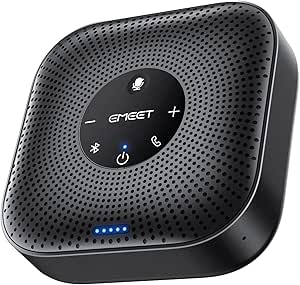 | Best for Small Groups | Microphones: 4 Omnidirectional | Capacity: Up to 16 participants | Bluetooth Range: 10 meters (33 feet) | VIEW ON AMAZON | See Our Full Breakdown |
| conference speakerphone for zoom | Connectivity | Dimensions |
|---|---|---|
| Yealink SP92 USB Speakerphone | Bluetooth, USB-C/A, and wired options | 5 × 5 × 1.3 inches |
| Jabra Speak 410 Corded Speaker | USB | 5.27 × 7.24 × 2.24 inches |
| Jabra Speak 510+ Portable Spea | Bluetooth and USB | 4.72 × 4.72 × 12.99 inches |
| Conference Speakerphone with 3 | USB | — |
| Conference Speaker and Microph | USB-A | 1.6 × 4.6 × 4.6 inches |
| Conference Speakerphone with A | Bluetooth 5.4, USB-A, USB-C | — |
| EMEET Luna Conference Speaker | USB, Bluetooth, AUX, Dongle | — |
| Anker PowerConf Speakerphone | Bluetooth, USB-C | — |
| Conference Speaker and Microph | — | — |
| Jabra Speak 510 UC Wireless Bl | Bluetooth, USB | — |
| AIRHUG Conference Speaker and | Bluetooth 5.0, USB Type-C | 3.94 x 3.94 x 0.79 inches |
| USB Speakerphone with Micropho | USB Type-C (Wired only) | 5.5" W x 2.6" D x 1.2" H |
| Jabra Speak 510 UC Portable Sp | Bluetooth 3.0, USB 2.0 | — |
| Yealink SP92 Conference Speake | Bluetooth 5.3, USB-C, Optional Dongle | 5.04 x 5.04 x 1.37 inches |
| EMEET M0 Plus Conference Speak | Bluetooth, USB-C | 4.6" W x 4.6" D x 1.6" H |
More Details on Our Top Picks
Yealink SP92 USB Speakerphone Bluetooth Conference Speakers and Microphone
The Yealink SP92 is the most adaptable pick here for Zoom users who may switch between a laptop connection and a wireless setup. Its 360° microphone and full-duplex audio are suited to table conversations, while AI noise cancellation can help reduce distracting room sounds. Unlike the corded-only Jabra Speak 410, it offers Bluetooth and a battery rated for up to 20 hours, so meetings need not stay next to a USB port. USB-C/A and wired options add flexibility, though the package does not include a dongle, and the plastic body is not built for wet settings. Choose it for a compact, portable speakerphone rather than a fixed room system; buyers needing broader room coverage should compare dedicated multi-microphone options.
Pros:- 360° microphone pickup and full-duplex conversation support
- Up to 20 hours of battery life for meetings away from an outlet
- Bluetooth, USB-C/A, and wired connectivity options
- Compact tabletop design weighs 276 g
Cons:- Wireless dongle is not included
- Plastic enclosure is not water-resistant
- Tabletop-only design offers no wall-mount option
Best for: Remote workers who move between a desk, shared workspace, and small meeting room and want both USB and Bluetooth connections.
Not ideal for: Teams needing a permanently installed room system, water-resistant hardware, or a supplied wireless dongle.
- Connectivity:Bluetooth, USB-C/A, and wired options
- Microphone:360° pickup with AI noise cancellation and full-duplex support
- Battery life:Up to 20 hours
- Speaker driver:50 mm dynamic driver with virtual bass technology
- Bluetooth range:30 meters
- Dimensions:5 × 5 × 1.3 inches
- Weight:276 g
- Mounting:Tabletop
Our verdict“Choose the SP92 if you want a portable Zoom speakerphone with longer battery life and more connection choices than the corded Jabra Speak 410.”
Jabra Speak 410 Corded Speakerphone for Softphones
The Jabra Speak 410 suits Zoom users who want a straightforward USB speakerphone and do not need wireless freedom. Its plug-and-play USB connection keeps setup simple, while 360-degree microphone pickup is more practical for a small table than relying on a laptop microphone. Compared with the battery-powered Yealink SP92 or Bluetooth-capable Jabra Speak 510+, the 410 is tied to its cable; in return, there is no battery to charge or Bluetooth pairing to manage. That makes it a sensible choice for a permanent home-office desk or occasional meeting room, but a poor fit for calls away from the computer. The listed UC compatibility includes Skype and Microsoft Lync, so Zoom users should confirm their computer recognizes it as the audio device.
Pros:- USB plug-and-play connection for a simple computer setup
- 360-degree microphone pickup for participants seated around a table
- Compact, lightweight design with a carrying case
- Wideband audio output and built-in microphone
Cons:- Corded USB connection limits placement and mobility
- No Bluetooth or battery-powered operating mode
- Touch controls may feel less tactile to some users
Best for: Home-office users who hold Zoom calls at one computer and prefer a simple, corded USB connection over battery-powered portability.
Not ideal for: People who move the speakerphone between rooms or want Bluetooth, battery operation, or cable-free placement.
- Connectivity:USB
- Power:Corded electric
- Audio output mode:Wideband
- Microphone:Built-in, 360-degree pickup
- USB ports:1
- Dimensions:5.27 × 7.24 × 2.24 inches
- Weight:6.08 ounces
- Mounting:Tabletop
Our verdict“Pick the Speak 410 for a fixed computer desk where dependable wired setup matters more than the portability of the Yealink SP92 or Jabra Speak 510+.”
Jabra Speak 510+ Portable Speaker for Music and Calls
The Jabra Speak 510+ is the better match for Zoom users who need to carry a speakerphone between workspaces and want Bluetooth as well as USB. Its 15-hour battery life supports extended use away from an outlet, and the compact speaker can also handle music playback between calls. Against the corded Jabra Speak 410, it brings far more placement freedom; against the Yealink SP92, however, its stated battery life is shorter and its single microphone may be less suited to larger groups. The one-microphone design makes it a more natural fit for solo callers or small huddles than a crowded conference table. It is not waterproof, and the listed C-battery requirement is a point to check before relying on it for frequent travel.
Pros:- Bluetooth and USB connectivity support flexible setups
- Up to 15 hours of listed battery life
- Compact design for carrying between work locations
- Can be used for calls and music playback
Cons:- Single microphone may not suit larger meeting groups
- Listed battery requirement is one C battery
- Not waterproof
Best for: Consultants and hybrid workers who take Zoom calls from different desks and want one portable device for calls and music.
Not ideal for: Larger teams that need broader microphone coverage, or users who want rechargeable power without dealing with the listed C-battery requirement.
- Connectivity:Bluetooth and USB
- Battery life:Up to 15 hours
- Microphones:1
- Wireless range:98 feet
- Maximum output power:10 watts
- Speaker size:4 inches
- Dimensions:4.72 × 4.72 × 12.99 inches
- Power detail:Battery powered; listing specifies one C battery
Our verdict“Choose the Speak 510+ for portable Bluetooth calling, but favor the Yealink SP92 if longer stated battery life and a 360° microphone are higher priorities.”
Conference Speakerphone with 360° Voice Pickup, AI Noise Reduction & Echo Cancellation, USB Plug and Play Desktop Microphone for Zoom, Teams, Home Office & Online Meetings
This compact conference speakerphone takes a focused approach: USB plug-and-play, two microphones, and 360-degree voice pickup for small or medium-sized Zoom meetings. AI noise reduction and echo cancellation aim to make shared-room calls clearer without asking participants to pass a laptop around. Compared with the Yealink SP92, it gives up Bluetooth and battery operation, but its two-microphone configuration is a useful distinction for a stationary table setup. The tradeoff is that room coverage is limited, and the computer may need its audio device selected manually before a call. That extra setup step is minor for a dedicated home-office computer, but less convenient for guests or people who frequently switch devices. It is a modest, cable-dependent choice, not a replacement for a larger-room system.
Pros:- Two microphones with 360-degree voice pickup
- AI noise reduction and echo cancellation
- USB plug-and-play connection
- Compact tabletop form for home offices and small rooms
Cons:- USB connectivity only, with no Bluetooth or battery operation
- Designed for small to medium-sized rooms rather than larger groups
- May require manual audio-device selection in system settings
Best for: Individuals or small teams using one computer in a small meeting room who want a simple USB speakerphone with two microphones.
Not ideal for: Mobile workers, larger conference rooms, or users who expect automatic audio-device selection across multiple computers.
- Connectivity:USB
- Microphones:2
- Audio mode:Full-duplex
- Voice pickup:360°
- Audio processing:AI noise reduction and echo cancellation
- Maximum output power:5 watts
- Mounting:Tabletop
- Color:Black
Our verdict“Choose this model for a fixed, small-room Zoom setup with two-microphone pickup; pick the Yealink SP92 if wireless use matters more.”
Conference Speaker and Microphone with 360° Voice Pickup and Smart Voice Enhancement
The standout here is not just the 360° omnidirectional pickup, but the built-in two-port USB hub. For a Zoom desk where ports are already occupied, that can make this a tidier single-device connection than the basic USB setup on the Jabra Speak 410. Smart voice enhancement, noise reduction, and echo cancellation are aimed at clearer calls, while plug-and-play operation keeps setup uncomplicated on compatible devices. The limitation is its USB-A-only, corded design: unlike the Bluetooth-capable Jabra Speak 510+ or Yealink SP92, it is not suited to cable-free use and newer devices may need an adapter. Its 4.6-inch footprint also takes more desk space than a very small travel speakerphone. This is a practical desktop hub-and-audio pick, not a mobile meeting companion.
Pros:- Two-port USB hub adds connection points to a desk setup
- 360° omnidirectional microphone pickup
- Smart voice enhancement, noise reduction, and echo cancellation
- Plug-and-play USB connection for compatible computers and tablets
Cons:- USB-A-only connection may require an adapter for newer devices
- No Bluetooth or wireless operating mode
- The 4.6-inch footprint may be bulky on a crowded desk
Best for: Home-office users with a USB-A computer who want a wired conference speakerphone and extra ports for desktop accessories.
Not ideal for: Laptop users with only USB-C ports, people who need Bluetooth or battery operation, and those with very limited desk space.
- Connectivity:USB-A
- Microphone pattern:Omnidirectional
- Microphone features:Smart voice enhancement, noise reduction, and echo cancellation
- USB hub:2 ports
- Power:Corded electric
- Signal-to-noise ratio:70 dB
- Dimensions:1.6 × 4.6 × 4.6 inches
- Compatible devices:Desktop PC, laptop, and tablet
Our verdict“Pick this for a USB-A home-office desk that would benefit from an integrated hub, but choose the Jabra Speak 510+ for wireless portability.”
Conference Speakerphone with AI Noise Reduction and 360° Voice Pickup
This unit stands out for its versatile connectivity options, offering both USB-C and Bluetooth 5.4, which makes it easier to switch between a desktop monitor and a laptop than the corded Q95mini. The AI noise reduction is tuned for typical home office environments, filtering out keyboard clicks and HVAC hum more effectively than the older Jabra Speak 510. However, the 10-meter wireless range is a significant limitation compared to the Anker PowerConf’s 20-meter reach, making it less suitable for large boardrooms. While the 5W speaker provides clear audio for small huddle rooms, it lacks the bass depth found in premium models. It is a solid choice for individuals who need a reliable, all-in-one device without dealing with dongles or proprietary software, though heavy users may find the battery life average.
Pros:- Supports Bluetooth, USB-A, and USB-C for maximum compatibility
- AI noise reduction effectively filters common home office background sounds
- 10 hours of talk time supports full workdays without charging
- Compact 360° pickup ensures everyone in a small room is heard
Cons:- Limited 10-meter Bluetooth range restricts placement flexibility
- Speaker output is adequate but lacks richness for larger spaces
- Requires specific platform compatibility for full feature set
Best for: Remote workers and small teams who need a single device that works seamlessly with both Mac and PC via multiple ports.
Not ideal for: Large conference rooms where devices need to connect wirelessly from across a long table.
- Microphones:2 AI Noise Reduction Mics
- Connectivity:Bluetooth 5.4, USB-A, USB-C
- Battery Life:10 hours talk / 14 hours music
- Speaker Power:5W full-range
- Voice Pickup Range:3 meters
- Wireless Range:10 meters
- Compatibility:Zoom, Microsoft Teams, Google Meet
Our verdict“This speakerphone is the ideal balance of connectivity and clarity for hybrid workers who prioritize ease of use over large-room coverage.”
EMEET Luna Conference Speaker and Microphone, 360° Voice Pickup for 8 Users
The EMEET Luna differentiates itself with daisy-chaining capability, allowing two units to cover up to 16 attendees, a feature absent in the single-unit focused Anker PowerConf. Its metal enclosure feels more durable and premium than the plastic housings of many competitors, providing better acoustic resonance. However, the need to purchase daisy-chain cables separately adds hidden costs and friction to the buying experience. While the 360° pickup with three microphones handles up to 8 people well, the lack of specific battery life data is a concern for mobile users compared to the transparent specs of the Jabra Speak 510. It is a robust choice for growing teams, but the connectivity complexity might frustrate those seeking simple plug-and-play simplicity.
Pros:- Daisy-chaining allows coverage for up to 16 people with two units
- Premium metal build offers better durability and sound isolation
- Three-microphone array provides clear 360° voice pickup
- Supports USB, Bluetooth, and AUX for versatile device connection
Cons:- Daisy-chain cables are not included and must be bought separately
- Lack of published battery life specs creates uncertainty for mobile use
- Setup can be more complex than single-unit devices
Best for: Growing startups or medium-sized teams that anticipate expanding their meeting capacity without buying entirely new hardware.
Not ideal for: Users who want a strict plug-and-play solution without needing to buy extra accessories or manage cables.
- Microphone Arrays:3
- Connectivity:USB, Bluetooth, AUX, Dongle
- Max Users:8 (single), 16 (daisy-chained)
- Enclosure Material:Metal
- Signal-to-Noise Ratio:80 dB
- Size:4.7 inches
- Compatibility:Desktop, Zoom, Skype, WebEx
Our verdict“Choose the EMEET Luna if you need a future-proof system that can scale from small huddles to larger meetings.”
Anker PowerConf Speakerphone, Zoom Certified Conference Speaker with 6 Mics
With Zoom certification and six microphones, the Anker PowerConf delivers superior voice isolation compared to the dual-mic FreeChat model, making it the stronger choice for noisy environments. The 24-hour battery life is a massive advantage over the Jabra Speak 510, ensuring you never miss a call due to a dead battery. The 20-meter Bluetooth range allows for flexible placement in larger rooms, far exceeding the 10-meter limit of most competitors. However, the device is bulkier and less sleek than the compact Q95mini, which might clutter a minimalist desk. While the audio quality is excellent for voice, it lacks the stereo separation found in higher-end dedicated audio systems. It remains the most reliable all-rounder for professional video conferencing.
Pros:- Officially Zoom-certified for optimized performance and reliability
- 24-hour battery life supports multi-day use without charging
- Six microphones provide exceptional 360° voice pickup and noise cancellation
- 20-meter Bluetooth range offers greater placement flexibility
Cons:- Bulky design is less portable than slimmer alternatives
- Lacks waterproofing, limiting use in rugged environments
- No included carrying case adds to the bulk when traveling
Best for: Professionals who rely heavily on Zoom and need maximum battery life and microphone sensitivity in noisy offices.
Not ideal for: Travelers who prioritize a slim, ultra-portable form factor over battery endurance and mic count.
- Microphones:6
- Battery Life:24 hours
- Connectivity:Bluetooth, USB-C
- Bluetooth Range:20 meters
- Certification:Zoom Certified
- Speaker Size:12.3 centimeters
- Frequency Response:20 hertz
Our verdict“The Anker PowerConf is the definitive choice for serious Zoom users who value battery life and audio clarity above portability.”
Conference Speaker and Microphone with USB Hub
This device serves a niche role by integrating a built-in USB hub, allowing users to connect peripherals without occupying laptop ports, a feature missing from the Anker PowerConf and EMEET Luna. The plug-and-play functionality makes it incredibly simple for non-technical users, eliminating the pairing struggles sometimes encountered with Bluetooth devices like the Jabra Speak 510. However, its reliance on a wired USB connection makes it completely unsuitable for mobile use or rooms without nearby power/computers. The audio quality is decent for standard calls but lacks the dynamic range and noise cancellation sophistication of the AI-driven competitors. It is a budget-friendly utility player for fixed desk setups, not a premium audio solution.
Pros:- Built-in USB hub expands connectivity for peripherals
- Simple plug-and-play setup requires no pairing or drivers
- Long cable allows flexible placement on large desks
- Effective echo cancellation for standard office environments
Cons:- Not portable; requires a constant wired connection to a computer
- Lacks advanced AI noise reduction found in newer models
- No independent volume control on the device body
Best for: Office workers with limited USB ports on their laptops who need a reliable, wired desktop solution.
Not ideal for: Remote workers or travelers who need a portable, wireless option for meetings in different locations.
- Connectivity Technology:USB 2.0
- Additional Feature:Built-in USB Hub
- Signal-to-Noise Ratio:70 dB
- Power Source:Corded Electric (USB)
- Frequency Range:20Hz – 20KHz
- Impedance:4 ohm
- Hardware Platform:Desktop, Laptop, PC
Our verdict“This speakerphone is a practical, low-cost upgrade for desktop users who value port expansion and simplicity over mobility.”
Jabra Speak 510 UC Wireless Bluetooth Speakerphone
The Jabra Speak 510 remains a favorite for travelers due to its slim, compact design and integrated cable management, making it far easier to pack than the bulkier Anker PowerConf. Its universal compatibility with various UC platforms and devices ensures it works with almost any hardware you already own, unlike some newer models that require specific drivers. However, the 10-meter Bluetooth range is restrictive compared to the Anker’s 20-meter reach, and the audio quality, while clear, lacks the modern AI noise cancellation precision of the EMEET Luna. The use of standard CR2 batteries is a double-edged sword: easy to replace, but less convenient than rechargeable lithium-ion cells in modern competitors. It is the go-to choice for frequent flyers who need reliability in a small package.
Pros:- Ultra-portable design with integrated cable storage
- Certified for Zoom and Google Meet for guaranteed compatibility
- Works with a wide range of devices including mobile phones and desk phones
- Includes a protective carrying case for travel
Cons:- Limited 10-meter Bluetooth range restricts placement options
- Uses disposable CR2 batteries instead of built-in rechargeable cells
- Audio clarity is good but lacks advanced AI noise suppression
Best for: Frequent travelers and consultants who need a durable, pocket-sized speakerphone that works with any device.
Not ideal for: Users who prefer rechargeable batteries and want to avoid carrying spare CR2 cells.
- Connectivity:Bluetooth, USB
- Power Source:1 CR2 Battery (included)
- Max Range:10 meters
- Certifications:Zoom, Google Meet, Avaya, Cisco
- Design:Slim, Portable with Case
- Microphone:360-degree pickup
- Warranty:Limited
Our verdict“The Jabra Speak 510 is the ultimate travel companion for professionals who prioritize size and universal compatibility over cutting-edge audio tech.”
AIRHUG Conference Speaker and Microphone
The AIRHUG serves as a no-frills entry point for small huddle spaces. While the Yealink SP92 offers advanced AI noise filtering, the AIRHUG provides basic echo cancellation and 360-degree pickup at a fraction of the complexity. Its dual Bluetooth and USB connectivity is convenient for users who need to switch between a laptop and a smartphone quickly. However, the plastic enclosure feels lightweight and less durable compared to metal-bodied competitors. It is strictly limited to 4-6 participants, meaning it will struggle if your team grows. This is a functional tool for individual users or tiny pods, not a solution for serious boardroom audio.Pros:- Supports simultaneous Bluetooth and USB connections for flexible device switching
- Lightweight at just 6 ounces, making it easy to carry in a bag
- Includes basic noise reduction and echo cancellation features
- Simple plug-and-play setup without complex software drivers
Cons:- Corded power source prevents untethered use on tables
- Plastic build quality feels cheap and prone to wear
- Audio clarity drops significantly beyond six participants
Best for: Individuals or pairs working in small home offices who need a simple, low-cost upgrade from a laptop microphone.
Not ideal for: Teams of more than six people or users who frequently move the device between different rooms, as the corded power requirement limits mobility.
- Connectivity:Bluetooth 5.0, USB Type-C
- Microphone Type:Omnidirectional Boundary
- Capacity:Up to 6 participants
- Power Source:Corded Electric (USB)
- Weight:6 ounces
- Dimensions:3.94 x 3.94 x 0.79 inches
- Features:Mute Button, Volume Control
Our verdict“A solid budget pick for solo users or dyads who prioritize connectivity flexibility over premium build quality.”
USB Speakerphone with Microphone for Home Office
This generic USB speakerphone stands out for its metal-plastic hybrid build, offering a sturdier feel than the all-plastic AIRHUG. The dual-microphone setup provides better voice isolation than single-mic options, making it suitable for noisy home environments. Unlike the Jabra Speak 510, this device is strictly wired via USB, which eliminates battery anxiety but restricts placement to areas with a power source. The 3-meter range is adequate for a single desk but insufficient for small meeting tables. It excels in simple, stationary setups where reliability and clear voice pickup matter more than wireless freedom or advanced features.Pros:- Dual microphones provide clearer voice capture than single-mic competitors
- Sturdy metal and plastic construction feels more durable than budget plastic models
- Plug-and-play USB connectivity ensures zero setup time
- Compact footprint saves valuable desk space
Cons:- No wireless connectivity option limits placement flexibility
- 3-meter range is too short for any collaborative table setting
- Low 3-watt output may struggle in larger, open-plan offices
Best for: Remote workers who need a reliable, plug-and-play desktop unit that doesn’t require charging or pairing.
Not ideal for: Users who need to move the speakerphone around the room or connect wirelessly to multiple devices.
- Connectivity:USB Type-C (Wired only)
- Microphones:2 Omnidirectional
- Range:3 meters (10 feet)
- Power Output:3 Watts
- Dimensions:5.5″ W x 2.6″ D x 1.2″ H
- Weight:0.29 kg (0.64 lbs)
- Noise Reduction:Echo Cancellation Included
Our verdict“Ideal for stationary home office setups where wired reliability and a sturdy build outweigh the need for wireless features.”
Jabra Speak 510 UC Portable Speakerphone
The Jabra Speak 510 remains a benchmark for mobile professionals who need consistent audio on the go. Compared to the EMEET M0 Plus, which uses four mics for larger groups, the Jabra’s single mic and 30-foot Bluetooth range are perfectly tuned for one-on-one or small group calls. The standout feature is the 15-hour battery life, which outlasts many competitors and allows for a full day of meetings without a charger. While the Yealink SP92 offers superior AI noise cancellation, the Jabra’s simplicity and rugged portability make it a trusted companion for travel. It is not designed for large rooms, but for the mobile worker, it strikes a balance between size and performance.Pros:- 15-hour battery life supports full-day usage without recharging
- Compact and lightweight design is highly portable
- Fast 2-hour charge time minimizes downtime
- Reliable Bluetooth and USB connectivity for diverse devices
Cons:- Single microphone limits pickup range for group meetings
- 30-foot wireless range is shorter than some modern competitors
- Plastic casing lacks the premium feel of metal alternatives
Best for: Frequent travelers and remote workers who need a durable, long-lasting speakerphone that fits easily in a laptop bag.
Not ideal for: Users needing to capture audio from a wide table, as the single microphone struggles with distance and background noise in larger spaces.
- Battery Life:Up to 15 hours talk time
- Connectivity:Bluetooth 3.0, USB 2.0
- Microphones:1 Omnidirectional
- Wireless Range:30 feet (9 meters)
- Charge Time:2 hours
- Speaker Size:4 inches
- Weight:Lightweight portable form factor
Our verdict“The go-to choice for mobile professionals who prioritize battery life and compact size over advanced group audio features.”
Yealink SP92 Conference Speakerphone
The Yealink SP92 differentiates itself with AI-powered noise cancellation that filters over 1,000 background sounds, a feature absent in the basic AIRHUG and limited in the Jabra Speak 510. This makes it exceptionally effective in home offices with dogs, traffic, or construction noise. With 20 hours of battery life, it outlasts the Jabra, and its triple connectivity (Bluetooth 5.3, USB-C, optional dongle) offers more flexibility than the wired-only USB Speakerphone with Microphone. The metal and plastic hybrid build feels premium and durable. While it lacks the multi-mic array of the EMEET M0 Plus for very large rooms, its audio clarity for small groups is superior due to the advanced processing algorithms.Pros:- AI noise cancellation effectively filters complex background sounds
- 20-hour battery life exceeds most competitors in this class
- Premium metal and plastic hybrid build feels durable and high-end
- Bluetooth 5.3 ensures stable and fast wireless connections
Cons:- Optional Bluetooth dongle is not included in the box
- Mono audio output may feel less immersive for music playback
- Higher price point compared to basic plastic models
Best for: Remote workers in noisy environments who need advanced noise filtering and long battery life for uninterrupted meetings.
Not ideal for: Users on a tight budget, as the premium pricing and optional dongle cost may exceed simpler alternatives.
- Noise Cancellation:AI-powered (1,000+ sounds)
- Battery Life:20 hours talk time
- Connectivity:Bluetooth 5.3, USB-C, Optional Dongle
- Dimensions:5.04 x 5.04 x 1.37 inches
- Weight:0.28 kg (0.62 lbs)
- Bluetooth Range:30 meters (98 feet)
- Warranty:2 Years Limited
Our verdict“The top choice for professionals who need superior audio clarity in noisy environments and value premium build quality.”
EMEET M0 Plus Conference Speaker
The EMEET M0 Plus is engineered for group collaboration, featuring four microphones compared to the single mic in the Jabra Speak 510 or the dual mics in the USB Speakerphone with Microphone. This array allows it to capture voices clearly from up to 16 people, making it ideal for huddle rooms. While the Yealink SP92 offers better noise processing, the EMEET’s raw pickup capability is superior for multiple speakers. The Daisy Chain feature allows linking two units for even wider coverage. However, the 10-meter Bluetooth range is shorter than the Yealink’s 30 meters, and the plastic body feels less robust. It is the logical choice when the number of participants is the primary constraint.Pros:- Four microphones provide 360-degree pickup for up to 16 people
- Daisy Chain capability allows expansion to larger rooms
- Supports both USB-C and Bluetooth for flexible connectivity
- Over 10 hours of battery life supports half-day meetings
Cons:- 10-meter Bluetooth range is limited compared to premium competitors
- Plastic enclosure feels less durable than metal-hybrid options
- Larger footprint than ultra-portable single-mic devices
Best for: Small teams and huddle rooms requiring clear audio capture from multiple participants seated around a table.
Not ideal for: Solo users who need maximum portability or long-range wireless connectivity, as the 10-meter range is restrictive.
- Microphones:4 Omnidirectional
- Capacity:Up to 16 participants
- Bluetooth Range:10 meters (33 feet)
- Battery Life:Over 10 hours
- Connectivity:Bluetooth, USB-C
- Dimensions:4.6″ W x 4.6″ D x 1.6″ H
- Weight:0.26 kg (0.57 lbs)
Our verdict“The best value for small group meetings where capturing multiple voices clearly is more important than portability.”

How We Picked
I evaluated these speakerphones based on their ability to handle the specific compression algorithms used by Zoom, which can sometimes degrade audio quality if the input signal is not clean. I prioritized devices with native Zoom certification or verified compatibility, as these units are tested to minimize latency and echo cancellation errors. I also weighed the importance of pickup range versus portability, recognizing that a device for a boardroom has different needs than one for a home office desk.
Ranking logic favored models that offered a balance of build quality and software integration. Devices that required complex driver installations were penalized unless they offered superior audio fidelity. I also considered the longevity of the product, favoring brands with consistent firmware updates that address Zoom’s frequent API changes.
Factors to Consider When Choosing Conference Speakerphone For Zoom
Selecting the right hardware goes beyond brand recognition. You need to match the device’s technical capabilities with your specific meeting environment and Zoom usage habits.Understanding Zoom Certification vs. Generic Compatibility
Many speakerphones claim to work with Zoom, but Zoom Certified devices have undergone rigorous testing to ensure they interact correctly with Zoom’s audio processing engine. This certification often results in lower latency and more accurate echo cancellation because the hardware communicates directly with the software. Non-certified devices rely on your computer’s operating system to handle audio routing, which can introduce delays or feedback loops. If you host frequent client-facing meetings, the investment in a certified unit like the Anker PowerConf reduces the risk of technical glitches that disrupt professional credibility.
Microphone Array Geometry and Pickup Range
The physical arrangement of microphones matters as much as the quantity. A 360-degree pickup pattern is ideal for round tables, but it can struggle if participants are seated at a long rectangular table. Look for devices that specify an effective pickup radius, such as 10 feet or more, rather than just counting microphones. In larger conference rooms, a single unit may not suffice, and you might need to daisy-chain compatible models or place the device centrally. Misjudging this spatial requirement is a common mistake that leads to distant voices sounding distant and faint.
The Role of AI Noise Reduction in Home Offices
Home environments are rarely silent, with background noise from air conditioners, traffic, or family members often bleeding into calls. AI-driven noise reduction actively filters these non-speech sounds before they reach Zoom, but it is not perfect. Some aggressive noise cancellers can make voices sound robotic or choppy, especially if multiple people speak at once. I recommend testing the noise reduction level on your specific device; mid-range options like the EMEET Luna often strike a better balance between clarity and naturalness than budget models that lack dedicated processing chips.
Connectivity: USB-C, Bluetooth, and Multi-Device Pairing
While USB wired connections provide the most stable audio quality and zero latency, Bluetooth offers the flexibility to move around or connect to mobile devices. Many modern speakerphones support both, but switching between them can sometimes be cumbersome. Check if the device supports multi-point Bluetooth, allowing it to connect to your phone and laptop simultaneously. This feature is invaluable if you frequently jump between a mobile call and a desktop Zoom meeting, saving you from manually disconnecting and reconnecting during critical moments.
Portability and Form Factor Tradeoffs
If you travel often, a compact, portable speakerphone like the Jabra Speak 510+ is preferable, but be aware that smaller speakers generally produce less rich audio than their larger desktop counterparts. Portable units often sacrifice bass response and maximum volume to fit into a carry bag. For a dedicated home office or conference room, a larger unit with a heavier base will prevent vibration and provide fuller sound. Decide if you need a device that lives on your desk permanently or one that packs into a laptop bag, as this choice dictates the audio quality you can expect.
Frequently Asked Questions
Do I really need a Zoom-certified speakerphone if I already have a good headset?
If you are the only one speaking, a headset is often sufficient and more private. However, if you have colleagues in the room with you, a headset fails to capture their voices. A conference speakerphone is designed to pick up multiple voices in a shared space. Furthermore, Zoom-certified speakerphones optimize the echo cancellation specifically for Zoom’s codecs, which can prevent the ‘double voice’ effect that sometimes occurs when using generic hardware with the platform.
Why does my speakerphone sound distant even when I am sitting next to it?
This usually happens because the device’s automatic gain control is adjusting for background noise or multiple speakers. If the microphone sensitivity is set too low, it will not amplify your voice enough. Check the device’s companion app, if available, to adjust the input level. Additionally, ensure that Zoom’s ‘Automatic Gain Control’ is enabled in the audio settings, as this software feature works in tandem with the hardware to normalize volume levels across different speakers.
Can I use a Bluetooth speakerphone with a desktop computer for Zoom?
Yes, but it requires a computer with Bluetooth capability or a USB Bluetooth dongle. While convenient, Bluetooth can introduce slight audio delays or compression artifacts compared to a wired USB connection. For critical presentations where timing matters, I recommend using the USB cable even if the device supports Bluetooth. Use Bluetooth only for quick calls or when mobility is necessary, as the wired connection ensures the highest fidelity and most stable link to the Zoom application.
How many microphones do I need for a 10-person meeting?
For a 10-person meeting, a single small desktop speakerphone will likely fail to capture clear audio from everyone. You need a device with a wide pickup range, typically at least 15-20 feet, and a high-quality array of at least 4 to 6 microphones. In very large rooms, you may need to use two speakerphones placed at opposite ends of the table, or a dedicated ceiling microphone system. Do not assume a 4-mic device is enough for a large group; look for specific range specifications in feet or meters rather than just mic count.
Is AI noise reduction worth the extra cost for Zoom calls?
It depends on your environment. If you work in a quiet home office, basic echo cancellation is sufficient, and you can save money by skipping premium AI features. However, if you have pets, children, or live near a busy street, AI noise reduction is worth the investment because it filters out non-speech sounds that Zoom’s default noise suppression might miss. The cost is justified if it prevents you from having to mute yourself constantly to avoid background distractions for your colleagues.
Conclusion
Choosing the right conference speakerphone for Zoom depends on your specific meeting dynamics and environment. For most users seeking a balance of reliability and audio quality, the Anker PowerConf Speakerphone is the best overall pick due to its Zoom certification and robust microphone array. If you prioritize portability and travel frequently, the Jabra Speak 510+ Portable Speaker is the ideal choice for its compact design and seamless Bluetooth connectivity. For those managing larger conference rooms with diverse seating arrangements, the Yealink SP92 offers the necessary range and battery life to keep meetings running smoothly. Beginners or those on a tighter budget should look at the EMEET Luna for its straightforward setup and solid performance in small home offices. Ultimately, match the device’s pickup range and connectivity options to your typical meeting size to avoid audio issues that disrupt productivity.