
Shopping for the best toys and games for kids means balancing age fit, replay value, and whether a toy actually keeps children engaged past the first afternoon. My top overall pick is the Educational Insights Kanoodle, a compact logic puzzle that scales from easy challenges to genuinely tricky ones, so it grows with kids instead of getting abandoned. For younger children, the Magnetic Wooden Fishing Game quietly teaches letters and numbers, while the Handheld Retro Game Console is the standout choice for travel days when screen-free play isn’t realistic. The main tradeoff in this category is between open-ended toys that build skills and party-style games that burn energy but lose novelty faster. Read on for the full breakdown of all 15 picks.

Turn the school run and nap time into listening time
- Thousands of audiobooks, podcasts and originals
- Listen on your phone, tablet or Echo — also offline
- Cancel anytime
Complete the kit


Key Takeaways
- Logic and puzzle games like Kanoodle and Gravity Maze offered the strongest long-term value because their difficulty scales, while single-mechanic party games like The Floor is Lava! peaked after a handful of plays.
- Physical activity picks — Pass The Potato, Toss and Catch, and the dart board — were the only options that reliably worked across mixed ages at family gatherings, making them better multi-child buys than solo puzzle toys.
- Screen-based options, namely the retro handheld console, ranked lower for development but filled a niche nothing else in the lineup covered: quiet, portable solo entertainment for travel.
- Several classics, including Operation and Let’s Go Fishin’, still earn their place through nostalgia and motor-skill practice, but their appeal skews younger and narrower than modern alternatives like Guess in 10.
- Battery dependence and small-piece cleanup were the most common practical drawbacks across the lineup, which shifted rankings toward self-contained games like Kanoodle and the stacking blocks.
| BooTaa 29-Inch Large Dart Board for Kids with Sticky Balls |  | Best Active Family Game | Material: Nylex fabric, plastic | Diameter: 29 inches | Includes: 1 large dart board, 12 sticky balls, 1 hook | VIEW LATEST PRICE | See Our Full Breakdown |
| Educational Insights Kanoodle | 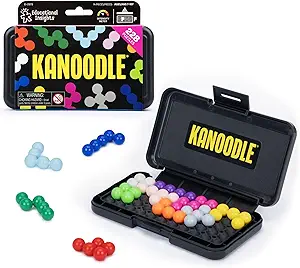 | Best Brain Teaser for Travel | Pieces: 12 puzzle pieces | Puzzle book pages: 48 | Number of puzzles: 228 (2D and 3D) | VIEW LATEST PRICE | See Our Full Breakdown |
| TOMY Pop Up Super Mario Family Action Game |  | Best Family Board Game Night Pick | Number of Players: 2-4 | Ages: 4+ | Play Modes: Classic Play, Coin Collection, Team Play | VIEW LATEST PRICE | See Our Full Breakdown |
| Handheld Game Console for Kids – 220 Retro Video Games | 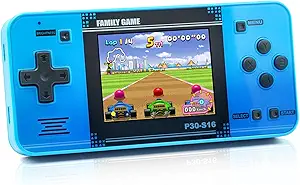 | Best Budget Screen-Time Option | Screen Size: 3.0 inches LCD | Battery: 860mAh lithium-ion, rechargeable | Number of Games: 220 preloaded retro titles | VIEW LATEST PRICE | See Our Full Breakdown |
| Magnetic Wooden Fishing Game for Preschoolers |  | Best Early Learning Toy | Brand: NASHRIO | Age Range: 36 months and up | Material: Wood (eco-friendly, non-toxic) | VIEW LATEST PRICE | See Our Full Breakdown |
| Skillmatics Guess in 10 Game – National Geographic Animals |  | Best Educational Family Game | Included Components: 50 Game Cards, 6 Clue Cards, 1 Card Holder, Instruction Manual, Travel Box | Age Range: 6 years and up | Material Type: Paper | VIEW LATEST PRICE | See Our Full Breakdown |
| Ziogogco 48-Piece Balance Stacking Blocks Game |  | Best All-Ages Party Game | Number of Pieces: 48 | Colors: Blue, red, green, yellow | Includes: 1 base, 22 draw cards | VIEW LATEST PRICE | See Our Full Breakdown |
| Move2Play Pass The Potato – Active Family Game |  | Best Active Game for Preschoolers | Brand: Move2Play | Age Range: 3-8+ (packaging lists 6 months+) | Included Components: 1 interactive potato | VIEW LATEST PRICE | See Our Full Breakdown |
| Let’s Go Fishin’ Game by Pressman |  | Best Classic First Game | Players: 1-4 | Ages: 4 and up | Includes: Deluxe plastic game base, 21 colorful fish | VIEW LATEST PRICE | See Our Full Breakdown |
| Yeeeasy Tangle-Free Parachute Toys, 4 Pieces |  | Best Budget Outdoor Stocking Stuffer | Quantity: 4 pieces | Material: High-quality, non-toxic materials | Design: Tangle-free | VIEW LATEST PRICE | See Our Full Breakdown |
| Chuckle & Roar Alphabet Matching Memory Game for Toddlers |  | Best Early Learning Pick | Recommended Age: 3 years and up | Game Type: Matching memory game | Theme: Alphabet (uppercase and lowercase) | VIEW LATEST PRICE | See Our Full Breakdown |
| Goliath The Floor is Lava! Game by Endless Games |  | Best Active Group Game | Players: 2-6 | Recommended Age: 5 years and up | Includes: 25 foam safety stones, 27 challenge cards, game spinner, instructions | VIEW LATEST PRICE | See Our Full Breakdown |
| Hasbro Gaming Operation Electronic Board Game |  | Best Classic Family Game Night Pick | Recommended Age: 6 years and up | Players: 1 or more | Type: Electronic skill-and-action board game | VIEW LATEST PRICE | See Our Full Breakdown |
| Ayeboovi Toss and Catch Ball Game |  | Best Budget Outdoor Pick | Brand: Ayeboovi | Recommended Age: 3 years and up | Includes: 4 paddles, 4 sticky balls, 1 storage bag | VIEW LATEST PRICE | See Our Full Breakdown |
| ThinkFun Gravity Maze – Falling Marble Logic Game |  | Best STEM Brain-Building Pick | Recommended Age: 8-14 years | Challenge Levels: 60 (beginner to expert) | Towers: 9 | VIEW LATEST PRICE | See Our Full Breakdown |
More Details on Our Top Picks
BooTaa 29-Inch Large Dart Board for Kids with Sticky Balls
This dart board earns its spot by making physical, screen-free play accessible to the widest age range in the lineup. Where the Kanoodle demands quiet concentration, the BooTaa board gets kids throwing, moving, and competing — and the 29-inch diameter means younger players actually hit the target instead of getting discouraged. The sticky-ball design removes the danger of real darts entirely, and the foldable fabric construction makes it a realistic option for backyard parties or rainy-day indoor play. Compared with the Ayeboavi Toss and Catch set, it works solo as well as in groups and sneaks in math and color-recognition practice through scoring. The tradeoffs are real: the balls collect lint and lose grip over time, and you need wall space to hang it.
Pros:- Oversized 29-inch board keeps young kids engaged with high hit rates
- Safe sticky-ball design with no sharp points
- Folds flat for travel and storage
- Sneaks in math and color learning through scoring
Cons:- Sticky balls gather lint and lose adhesion with heavy use
- Requires a wall or hook for setup
- Older kids may outgrow it by their early teens
Best for: Families with mixed-age kids (3–12) who want a safe, energetic group game that works indoors and out
Not ideal for: Households without convenient hanging space or buyers wanting a game older kids won’t outgrow
- Material:Nylex fabric, plastic
- Diameter:29 inches
- Includes:1 large dart board, 12 sticky balls, 1 hook
- Suitable Age:3-12 years
- Foldable:Yes
- Play Environment:Indoor and outdoor
Our verdict“The best pick for families who want an active, all-ages party game that doubles as gentle skill practice.”
Educational Insights Kanoodle
Kanoodle plays a completely different role from everything else here: it’s the quiet, solitary puzzle you toss in a backpack. With 228 puzzles in 2D and 3D formats, it scales from easy warm-ups to challenges that stump adults, which gives it far more longevity than age-limited options like the Magnetic Wooden Fishing Game. Compared with the ThinkFun Gravity Maze, Kanoodle is cheaper to replace, needs no batteries, and packs into a self-contained case with no loose marbles — a genuine advantage on planes and in cars. The flip side is that it’s a one-player experience, so it won’t save family game night, and there’s no stated age guidance, so parents of kids under 7 should expect frustration with the harder 3D tiers.
Pros:- 228 puzzles across 2D and 3D modes provide long-term challenge
- Self-contained case with no loose parts, ideal for travel
- Genuinely builds spatial reasoning and problem-solving skills
- Entertaining for adults as well as kids
Cons:- Single-player only, not a family game-night option
- Advanced 3D puzzles can frustrate younger children
- No official recommended age listed
Best for: Parents seeking a compact, screen-free solo puzzle for car rides, flights, and restaurant waits
Not ideal for: Families wanting a group activity — this is strictly single-player with no social element
- Pieces:12 puzzle pieces
- Puzzle book pages:48
- Number of puzzles:228 (2D and 3D)
- Includes:Carrying case, puzzle guide
- Players:1
- Power required:None
Our verdict“The go-to travel pick for kids who like solving things alone rather than competing.”
TOMY Pop Up Super Mario Family Action Game
If the goal is laughter around a table rather than skill-building, this is the strongest option in the batch. The three play modes — Classic, Coin Collection, and Team Play — give it more replay variety than most licensed board games, and the pop-up mechanic delivers the surprise element that the Hasbro Operation game also trades on, but with a theme kids already love. Unlike the BooTaa dart board, which is physical and freewheeling, this one teaches turn-taking, color recognition, and simple decision-making within structured rules — a better fit for calm evenings. The compromises: it caps at four players, and children over about 8 will find the mechanics thin compared with strategy-heavy picks like Gravity Maze.
Pros:- Three distinct play modes keep repeat sessions fresh
- Licensed Mario theme that instantly appeals to young kids
- Teaches turn-taking, colors, and decision-making
- Minimal setup and simple rules for preschoolers
Cons:- Too simple for experienced or older players
- Hard four-player ceiling excludes bigger families
- Licensed appeal may fade as kids age out of the theme
Best for: Families with kids aged 4–8 who want an easy-to-learn themed board game for regular game nights
Not ideal for: Households with more than four players or older kids who want strategic depth
- Number of Players:2-4
- Ages:4+
- Play Modes:Classic Play, Coin Collection, Team Play
- Theme:Super Mario
- Type:Pop-up family action board game
- Setup:Easy, minimal assembly
Our verdict“Best for young Mario fans and parents who want a low-friction, structured game-night centerpiece.”
Handheld Game Console for Kids – 220 Retro Video Games
This console fills the one niche the rest of the roundup ignores: affordable portable gaming. With 220 preloaded retro titles, it offers more variety per dollar than any physical game here, and the rechargeable 860mAh battery means no constant AA battery purchases — a real advantage over battery-hungry electronic picks like the Hasbro Operation game. The ergonomic, lightweight body suits small hands better than a full-size handheld, making it a sensible first device for kids not ready for an expensive console. The tradeoffs are obvious next to something like Kanoodle: it’s pure entertainment with no educational angle, the 3.0-inch screen is cramped, sound is basic, and there’s no way to add new games once the novelty of the built-in library wears off.
Pros:- 220 built-in games deliver huge variety with no purchases needed
- Rechargeable battery eliminates ongoing battery costs
- Compact, ergonomic design fits young children’s hands
- No internet connection required, so it’s fully self-contained
Cons:- Small 3.0-inch screen feels cramped for extended play
- No option to add or download new games
- No educational content and basic sound quality
Best for: Parents wanting an inexpensive, self-contained gaming device for travel or quiet downtime
Not ideal for: Buyers prioritizing educational value or kids who expect modern graphics and expandable game libraries
- Screen Size:3.0 inches LCD
- Battery:860mAh lithium-ion, rechargeable
- Number of Games:220 preloaded retro titles
- Color:Blue
- Design:Ergonomic, lightweight, portable
- Connectivity:None — fully offline
Our verdict“A reasonable budget pick for portable entertainment, as long as you’re not expecting learning value or longevity.”
Magnetic Wooden Fishing Game for Preschoolers
For the youngest end of the age spectrum, this fishing set does what none of the older-kid options can: it makes letter and number recognition physical. Catching a fish with the magnetic pole builds fine motor skills and hand-eye coordination while quietly teaching the alphabet, a combination the Chuckle & Roar Alphabet Matching game approaches only through memory cards. The eco-friendly wooden construction with smooth edges also feels more durable and safer than plastic alternatives like the Let’s Go Fishin’ rotating game, which adds motorized chaos but less explicit letter learning. The catch is the narrow window — kids past kindergarten will find it boring, the magnetic string can tangle, and the small pieces mean adult supervision is required for toddlers who still mouth toys.
Pros:- Combines physical play with letter and number learning
- Eco-friendly, non-toxic wood with smooth, safe edges
- Develops fine motor skills and hand-eye coordination
- Quiet, screen-free activity suited to calm play
Cons:- Narrow age range — quickly outgrown after preschool
- Small parts pose a choking risk for toddlers without supervision
- Magnetic line can tangle and frustrate small hands
Best for: Parents and grandparents of 3–5 year olds who want a calm, educational toy that builds school-readiness skills
Not ideal for: Families with kids over 5 or with very young siblings — the small magnetic pieces require close supervision
- Brand:NASHRIO
- Age Range:36 months and up
- Material:Wood (eco-friendly, non-toxic)
- Set Name:Alphabet & Number Fishing Game Set
- Model Number:SC-T004A1
- Skills Targeted:Literacy, numeracy, fine motor, coordination
Our verdict“The strongest early-learning pick in the lineup, provided your child is squarely in the 3–5 window.”
Skillmatics Guess in 10 Game – National Geographic Animals
Among the thinking games in this lineup, this one stands out for combining real learning with genuine replayability. Unlike the Let’s Go Fishin’ Game, which is purely reflex-based, Guess in 10 asks kids to formulate yes/no questions, which builds logical reasoning and vocabulary at the same time. The National Geographic animal cards add a layer of genuine educational value that most party games in this roundup, like Pass The Potato, simply don’t attempt. The included travel box makes it a smarter pick for road trips than bulkier options such as the Ziogogco Balance Stacking Blocks. The tradeoff: it’s a reading-dependent game, so pre-readers will need a partner, and sessions can run short once kids memorize the card set.
Pros:- Genuine educational value with National Geographic animal facts woven into play
- Compact travel box makes it one of the most portable picks in this roundup
- Builds logical thinking and communication, unlike reflex-only games
- Works equally well for family game nights and group play
Cons:- Not playable solo — requires at least 2 participants
- Younger children need reading help to participate fully
- Replay value drops once the 50-card set becomes familiar
Best for: Families with school-age kids (6+) who want a travel-friendly game that sneaks wildlife knowledge into game night
Not ideal for: Households with pre-readers or kids under 6 — the questioning format requires reading comprehension and sustained focus
- Included Components:50 Game Cards, 6 Clue Cards, 1 Card Holder, Instruction Manual, Travel Box
- Age Range:6 years and up
- Material Type:Paper
- Manufacturer:Grasper Global Inc.
- Model Number:SKILL1728GNGA
- Game Type:Yes/no guessing and trivia
Our verdict“Buy this if you want a portable, brain-building family game for kids who can read; skip it if your crew is still pre-literate.”
Ziogogco 48-Piece Balance Stacking Blocks Game
This pick earns its spot as the rare game in this roundup that genuinely spans generations. While Let’s Go Fishin’ skews toward preschoolers and Guess in 10 demands reading skills, the stacking format works for a 5-year-old, a teenager, and a grandparent at the same table. Compared with ThinkFun Gravity Maze, another logic-driven option here, it trades solo puzzle depth for social, head-to-head tension — the draw cards force creative, unstable placements that produce real suspense. The ABS plastic build feels like it will survive being knocked over repeatedly, which matters given how often towers collapse. The honest drawback is scope: once you’ve stacked and balanced, there isn’t much else to it, so families wanting variety may find it one-dimensional.
Pros:- One of the few picks here that truly works for all ages simultaneously
- Develops coordination, patience, and spatial reasoning through hands-on play
- Durable ABS plastic stands up to endless toppling
- Draw cards add unpredictability and keep repeat sessions fresh
Cons:- Very young children need supervision to manage the precision required
- Narrow gameplay concept limits long-term replay appeal
Best for: Multi-generational gatherings and parties where you need one game everyone from kids to adults can play together
Not ideal for: Families seeking long-term variety — the gameplay loop is limited to stacking and balancing with little else to discover
- Number of Pieces:48
- Colors:Blue, red, green, yellow
- Includes:1 base, 22 draw cards
- Material:ABS plastic
- Play Style:Competitive stacking and balancing
- Suitable For:All ages, family and party play
Our verdict“Pick this for family gatherings where mixed ages need one shared activity; skip it if your kids tire quickly of single-concept games.”
Move2Play Pass The Potato – Active Family Game
For burning off energy indoors, this option makes the most sense for the 3-to-8 crowd, filling a gap the calmer picks here leave open. Where Let’s Go Fishin’ keeps kids seated at a table, Pass The Potato gets them moving, and the talking, sound-effect potato adds a layer of silliness that hot potato with a plain ball can’t match. Compared with the Yeeeasy Parachute Toys, another active pick in this roundup, it works regardless of weather or available outdoor space — a real advantage for apartment families. The machine-washable, battery-included design removes two common annoyances. The tradeoffs are real, though: the audio will feel repetitive to adults within minutes, and the age ceiling is firm, so older siblings will quickly outgrow it.
Pros:- Gets young kids physically active indoors or out, unlike seated table games
- Interactive sound effects and sayings create real giggle moments
- Machine washable and arrives with batteries included
- Ideal party and camping activity for the preschool set
Cons:- Sound effects become repetitive for adults enduring long sessions
- Batteries will eventually need replacing
- Narrow age window means kids outgrow it quickly
Best for: Parents of 3-8 year olds who need a high-energy party game that works in small indoor spaces
Not ideal for: Families with older kids (9+) — the humor and gameplay are pitched squarely at preschool and early elementary ages
- Brand:Move2Play
- Age Range:3-8+ (packaging lists 6 months+)
- Included Components:1 interactive potato
- Model Number:FOOD102
- Power Source:Batteries (included)
- Play Environment:Indoor and outdoor
- Care:Machine washable
Our verdict“Grab this for young kids’ parties and rainy-day energy release; pass on it if your children are past second grade.”
Let’s Go Fishin’ Game by Pressman
This is the reliability pick — a decades-old format that still works when fancier options miss the mark. It’s one of the few games here that plays solo, a meaningful advantage over Guess in 10 and the Ziogogco Stacking Blocks, both of which require partners. The rotating pond and snapping fish mouths train hand-eye coordination and timing in a way passive toys don’t, and unlike the Move2Play Pass The Potato, there’s no sound track to wear on parents. Compared with the Magnetic Wooden Fishing Game elsewhere in this roundup, the motorized rotation adds urgency that keeps young attention spans locked in. But it’s firmly a young-child game: older kids will find it repetitive, and every round requires manual reset of all 21 fish.
Pros:- Solo play supported — rare among games in this roundup
- Fast-action rotating pond builds hand-eye coordination and timing
- Bright, durable plastic components survive enthusiastic play
- No batteries or reading required, so the youngest players can join
Cons:- Gameplay becomes repetitive quickly, especially for older siblings
- Manual fish reset required before every round
- Developmental appeal ends early compared with logic games like Guess in 10
Best for: Parents of 4-7 year olds, especially only children, who want a classic game that works with or without siblings to play against
Not ideal for: Families with kids over 8 — the simple catch-and-count loop won’t hold older players’ interest for long
- Players:1-4
- Ages:4 and up
- Includes:Deluxe plastic game base, 21 colorful fish
- Brand:Pressman
- Skill Focus:Hand-eye coordination
- Gameplay:Rotating pond fishing with mini poles
Our verdict“A safe, time-tested first game for young kids and solo play; choose Guess in 10 or the stacking blocks if your children are older.”
Yeeeasy Tangle-Free Parachute Toys, 4 Pieces
Not every great pick needs to be a structured game, and this set proves it. The tangle-free design solves the single most annoying failure mode of classic parachute toys — no knot-untangling adult required — which is exactly why it outranks generic alternatives for backyard play. Compared with the Ayeboovi Toss and Catch Ball Game, another outdoor option in this roundup, it demands no skill floor, making it accessible to toddlers and big kids simultaneously. The gentle descent also introduces basic physics ideas, a lighter educational angle than Guess in 10’s trivia but real nonetheless. The limitations are obvious: it’s outdoor-only, needs open space to perform, and there’s no scoring or structure, so kids who crave competitive rules may drift back to games like the Ziogogco Stacking Blocks.
Pros:- Tangle-free design eliminates the frustration of traditional parachute toys
- No skills or rules required, so mixed ages play together instantly
- Non-toxic, durable materials safe for young children
- Four-piece set reduces squabbles and suits group play or gifts
Cons:- Outdoor-only — useless for indoor or rainy-day play
- Requires open space for satisfying flights
- No competitive structure, so rule-loving kids may lose interest
Best for: Parents wanting an inexpensive, low-commitment outdoor toy that works across a wide age range, or a reliable party-favor gift
Not ideal for: Apartment dwellers without yard or park access — the parachutes need vertical and horizontal space to actually fly
- Quantity:4 pieces
- Material:High-quality, non-toxic materials
- Design:Tangle-free
- Intended Use:Outdoor flying game
- Age Suitability:Children of all ages
- Skill Focus:Physical activity, basic physics
Our verdict“A low-cost, zero-setup outdoor win for wide age ranges; choose a structured game if your kids need rules to stay engaged.”
Chuckle & Roar Alphabet Matching Memory Game for Toddlers
For preschoolers just starting to recognize letters, this matching memory game hits a sweet spot the older-kid picks in this roundup can’t reach. Where the ThinkFun Gravity Maze demands abstract logic and the Magnetic Wooden Fishing Game blends letters with fine motor play, this option keeps things simple: flip tiles, find pairs, learn uppercase and lowercase along the way. The cardboard construction is sturdy enough for toddler handling, and the compact format makes it one of the few games here that genuinely works on a plane or in a waiting room. The tradeoff is longevity — once a child comfortably reads, the challenge evaporates, and unlike Guess in 10, there’s no layered strategy to grow into. The vague tile count is also a minor annoyance when planning group play.
Pros:- Teaches both uppercase and lowercase letter recognition
- Durable, travel-friendly tiles survive toddler handling
- Works for solo play or small groups
- No batteries or screens required
Cons:- Limited replay value once letters are mastered
- Tile count and rule variations are under-documented
Best for: Parents of 3-5 year olds who want a screen-free, travel-ready game that quietly builds letter recognition
Not ideal for: Families with kids 6 and up — the matching format will be solved and abandoned quickly
- Recommended Age:3 years and up
- Game Type:Matching memory game
- Theme:Alphabet (uppercase and lowercase)
- Material:Cardboard
- Play Mode:Solo or group
- Power Required:None
Our verdict“A smart first board game for pre-readers, but plan on retiring it within a couple of years.”
Goliath The Floor is Lava! Game by Endless Games
Most games in this lineup keep kids seated — Gravity Maze and Operation are table games at heart. The Floor is Lava! flips that entirely, turning a living room into an obstacle course of cushioned foam stones and challenge cards. It’s the rare pick here that gets siblings of very different ages moving together, and the spinner plus 27 challenge cards keep rounds from feeling repetitive. Compared with Move2Play Pass The Potato, it scales better across a wider age band and works outdoors too. The honest drawbacks: you need real floor space, so apartment families may struggle, the six-player ceiling is tight for bigger gatherings, and foam stones compress and fray after a season of hard landings.
Pros:- Gets kids physically active rather than sedentary
- Works indoors and outdoors on most surfaces
- Challenge cards and spinner add variety to every round
- Genuinely fun for adults joining in
Cons:- Requires significant open floor space to play safely
- Foam stones show wear with heavy use
- Caps out at 6 players
Best for: Families with mixed-age kids (5+) who want a high-energy game that burns energy indoors or out
Not ideal for: Small-apartment households or quiet-time seekers — the jumping and shouting are non-negotiable
- Players:2-6
- Recommended Age:5 years and up
- Includes:25 foam safety stones, 27 challenge cards, game spinner, instructions
- Play Setting:Indoor or outdoor
- Activity Level:High (jumping, balancing)
- Power Required:None
Our verdict“The best pick in this roundup for rainy-day energy burn — as long as you have the room for it.”
Hasbro Gaming Operation Electronic Board Game
Few games have the cross-generational pull of Operation — grandparents know it, which makes it an easy sell for family game night in a way newer picks like Gravity Maze or Guess in 10 can’t match. The concept remains brilliant: steady hands win, and the electronic buzzer delivers a jolt of suspense on every turn. Solo play is genuinely viable here, something the Chuckle & Roar memory game also allows but the group-only Floor is Lava! doesn’t. Still, the design shows its age. The buzzer is loud and startling for sensitive kids, batteries aren’t in the box, and the small plastic ailments mean this stays far from toddlers. It’s also a fairly shallow skill loop — fun in bursts, not for hours.
Pros:- Instantly familiar rules with zero learning curve
- Genuine solo play option alongside group fun
- Builds fine motor control and steady-hand focus
- Strong gift appeal for birthdays and holidays
Cons:- Buzzer is loud and can startle young players
- Requires batteries that aren’t included
- Small parts pose a choking hazard for toddlers
Best for: Families wanting a nostalgic, easy-to-learn game that works solo or with a group of mixed ages
Not ideal for: Households with kids under 3 due to choking hazards, or noise-sensitive children who’ll hate the buzzer
- Recommended Age:6 years and up
- Players:1 or more
- Type:Electronic skill-and-action board game
- Theme:Medical / surgery
- Power Required:Batteries (not included)
- Play Mode:Solo or group
Our verdict“A dependable game-night classic that still delivers laughs, provided your kids can handle the buzz.”
Ayeboovi Toss and Catch Ball Game
If the goal is cheap, cheerful backyard fun, this toss and catch set is hard to beat. For roughly the price of a pizza, four kids get velcro paddles and sticky balls that build hand-eye coordination without any rules to learn — a contrast with rule-heavy picks like The Floor is Lava! or the patience-testing Operation. The waterproof build and reinforced stitching mean pool and beach trips are fair game, and the included storage bag keeps pieces from scattering across the garage. Compared with the BooTaa dart board, it’s more portable and better suited to open spaces. The catches: sticky balls lose their grip over time and perform poorly on rough surfaces, and this is strictly an outdoor toy — indoors, it becomes a broken-lamp hazard.
Pros:- Very low cost per player with four full paddle-and-ball sets
- Waterproof materials handle pool, beach, and sprinkler play
- Develops hand-eye coordination with zero setup or rules
- Storage bag makes it genuinely travel-ready
Cons:- Sticky balls collect debris and lose adhesion over time
- Not practical for indoor play
- Simple premise may bore older kids after a few sessions
Best for: Budget-minded parents wanting an inexpensive, portable yard or beach activity for kids 3-10
Not ideal for: Indoor-only families or anyone expecting multi-season durability from the sticky balls
- Brand:Ayeboovi
- Recommended Age:3 years and up
- Includes:4 paddles, 4 sticky balls, 1 storage bag
- Play Setting:Outdoor (yard, beach, pool, playground)
- Materials:Waterproof fabric with reinforced stitching
- Model Number:AB-680
- Power Required:None
Our verdict“The easiest, cheapest way to get kids running outside — just don’t expect it to last forever.”
ThinkFun Gravity Maze – Falling Marble Logic Game
Of everything in this roundup, Gravity Maze demands the most from its player — and rewards them the most too. With 60 challenges ramping from beginner to expert, it teaches spatial reasoning and sequential logic in a way the Chuckle & Roar memory game (too simple) and Operation (reflex-based, not analytical) simply don’t attempt. The closest comparison is Educational Insights Kanoodle, another solo logic puzzler; Gravity Maze wins on spectacle, because watching the marble cascade through a tower you designed feels like an actual payoff, not just a completed puzzle. The tradeoffs are real: kids under 8 will hit a wall early, each challenge involves a bit of fiddly tower setup, and once all 60 puzzles are solved, replay value drops sharply unless a sibling takes a turn.
Pros:- 60 challenges progress genuinely from easy to expert
- Develops spatial reasoning, planning, and engineering intuition
- Satisfying marble-run payoff makes solving feel rewarding
- Works as solo quiet time or collaborative puzzle-solving
Cons:- Too difficult for children under 8
- Tower setup between challenges slows the pace
- Limited appeal once every challenge is completed
Best for: Parents of curious 8-12 year olds who want a quiet, screen-free toy that builds real engineering thinking
- Recommended Age:8-14 years
- Challenge Levels:60 (beginner to expert)
- Towers:9
- Marbles:3
- Includes:Game grid, towers, marbles, target piece
- Category:STEM / logic puzzle game
- Play Mode:Solo or collaborative
Our verdict“The smartest purchase in this lineup for school-age kids who love figuring things out on their own.”

How We Picked
I evaluated each toy and game against four buyer-centered criteria: age range realism (does the manufacturer’s range match actual engagement), replay value (will it still come out of the closet in three months), skill and developmental payoff, and practicality — setup time, piece count, battery needs, and whether it works for solo play or requires a group. Because kids’ toys live or die on novelty, I weighted replay value heavily: an open-ended logic puzzle that scales in difficulty outranked a flashy one-note game.
The ranking also reflects versatility. Games that serve multiple settings — solo play, siblings, family game night, birthday parties — placed higher than niche picks, even excellent ones. Where two products covered similar ground, like the fishing game and the alphabet fishing puzzle, I favored the one with the stronger learning payoff and simpler cleanup, and I kept the lineup balanced across ages rather than stacking it toward any single age group.
Factors to Consider When Choosing Best Toys And Games For Kids
Before picking a specific toy, it helps to understand what actually separates a toy that gets played with for years from one that gets forgotten by the weekend. These are the factors that shaped my rankings and the mistakes I see buyers make most often.Match the Age Range — Then Push Slightly
Manufacturer age ranges are a reasonable starting point, but they describe safety and minimum ability, not maximum engagement. A toy rated for ages 3–6 will often bore a 6-year-old who is the older sibling, while logic games rated 8–12 can sometimes hook a sharp 6-year-old with adult help. The sweet spot for gifting is usually the middle of a range, not the top edge. Parents also tend to overestimate how long toddlers stay with any single toy; for preschoolers, shorter, repeatable play loops like fishing or matching games outperform long-form activities. If you’re buying for a child you see rarely, ask the parent what phase they’re in — a three-month age difference matters far more at age 4 than at age 10.
Replay Value Beats Initial Excitement
The most common buying mistake is confusing a big first impression with lasting play. Games with a single dramatic mechanic — pop-up surprises, one loud payoff — produce the loudest unwrapping reaction and the fastest drop-off. Toys with escalating difficulty, randomized outcomes, or open-ended building tend to survive much longer. A useful test: ask whether the tenth play session will look different from the first. If the answer is no, budget for that toy as a few weeks of fun, not a lasting purchase, and price your expectations accordingly. This is why I ranked stacking blocks and logic puzzles above equally fun party games despite the parties being louder wins on birthday morning.
Solo Play vs. Group Play
Think honestly about who will actually be available to play. A child with siblings or frequent playdates gets enormous value from group games like Pass The Potato or The Floor is Lava!, but an only child may find those boxes stay shut. Conversely, solo-friendly picks — Kanoodle, the handheld console, Gravity Maze — depend far less on someone else being willing to join in. Households with mixed ages face a different problem: a game that thrills a 4-year-old may bore a 9-year-old. Physical, luck-based games bridge age gaps better than skill-based ones because everyone genuinely has a chance to win. The best family collections include at least one of each type rather than three games that all need the same conditions.
Screen-Free Isn’t Automatically Better
Many parents set a blanket goal of screen-free play, but the real question is what the screen replaces. A shared board game builds social skills a solo tablet session doesn’t, yet a contained handheld console on a long car ride can be the difference between calm and chaos. The trap is passive screen time that crowds out hands-on play at home, where physical and logic-based toys have no real substitute. Skill-wise, fine-motor toys like Operation or the magnetic fishing game do work that a touchscreen cannot replicate. My suggestion: treat screen toys as situational tools with a defined purpose, and let physical and social games own the everyday default. That framing makes both types feel like intentional choices rather than a compromise.
Cleanup, Batteries, and Piece Count
The unglamorous side of toy buying decides what stays in rotation. Games with dozens of small pieces tend to be the ones parents quietly retire when pieces go missing, so self-contained designs earn their keep over time. Battery-dependent toys add hidden costs and a guaranteed disappointing moment when they die mid-game — check whether batteries are included before gifting. Also consider where the toy will live: a dart board needs wall space, outdoor toss games need a yard or park access, and travel consoles need to survive a backpack. If the adults in the house are the ones doing cleanup, a toy’s mess factor is a legitimate ranking criterion, not a trivial complaint.
Learning Payoff Without the Pressure
Educational value is real, but the best learning toys don’t announce themselves. A matching memory game teaches letter recognition through repetition a child chooses voluntarily, while a heavily structured ‘teaching’ toy can feel like homework and get rejected. Look for skills embedded in the fun: balance stacking builds spatial reasoning, guessing games build vocabulary and deduction, fishing games build fine motor control. The pattern I noticed across this lineup is that learning sticks when the child asks to replay the game rather than being asked. If a toy’s marketing leans harder on education than play, that’s usually a sign the play itself isn’t carrying the weight.
Frequently Asked Questions
Which option in this roundup is best if I’m buying for children of very different ages?
For mixed-age groups, physical luck-based games are the safest bet, and Pass The Potato or The Floor is Lava! fill that role best in this lineup. Because winning depends mostly on chance and movement rather than reading or strategy, a 4-year-old and a 10-year-old can compete fairly, which rarely happens with logic games or memory matches. The BooTaa dart board also bridges ages well since younger kids can throw from closer range. Skill-based picks like Gravity Maze or Kanoodle, excellent as they are, tend to exclude younger siblings entirely. If family gatherings are the main setting, prioritize the games everyone can join over the ones one child will love.
Are classic games like Operation and Let’s Go Fishin’ still worth buying given newer alternatives?
Yes, but with realistic expectations about lifespan. The classics earn their place through fine-motor practice and social ritual rather than novelty — Operation teaches steady hands and turn-taking in a way modern games don’t replicate, and Let’s Go Fishin’ is still one of the best first board games for preschoolers. The tradeoff is that their mechanics are fixed, so kids typically outgrow them within a couple of years, whereas a scaling puzzle like Kanoodle stays relevant much longer. Buy the classics for the ages they target, usually 4–7, and treat them as a phase rather than a decade-long investment. Their lower complexity is a feature at that age, not a weakness.
Should I buy the handheld retro console or steer my child toward the screen-free options?
The retro console makes sense as a situational tool — car rides, waiting rooms, flights — where screen-free alternatives genuinely struggle. It’s self-contained, needs no internet, and its simple games avoid the attention-hijacking design of modern apps, which many parents find acceptable. Where it falls short is everyday home play, where physical and social games deliver development the console can’t. If your child already gets abundant screen time elsewhere, this pick adds little and I’d skip it in favor of Kanoodle or the stacking blocks. If you need a portable calm-down option, nothing else in this lineup does that job.
What’s the best budget-friendly choice that won’t feel like a cheap gift?
The magnetic fishing puzzle and the parachute toys punch well above their cost because both deliver a complete, repeatable play experience with no missing pieces or add-ons needed. Cheap toys usually fail on durability or thin content, but these two have simple mechanics that fully work out of the box. Kanoodle is another strong value play — its challenge cards effectively contain dozens of puzzles in one small case, giving it the best cost-per-play-hour in the roundup. The categories where extra spending actually pays off are construction sets and logic games with many levels. Avoid budget electronic toys, which typically cut corners on build quality first.
My child loses game pieces constantly — which of these will survive that best?
Self-contained designs are your friends here. Kanoodle stores its pieces inside the case, the handheld console has nothing to lose, and the parachute toys are just four pieces with no small parts at all. Games with many loose components — Operation with its tiny plastic pieces, Let’s Go Fishin’ with its fish, the stacking blocks — can become unplayable once parts scatter, so set up a dedicated storage spot before the first play session rather than after. The dart board is forgiving on this front since losing a sticky ball barely affects play. A zip-top bag stored inside the box at gifting time is a small habit that doubles a multi-piece game’s lifespan.
Conclusion
The right pick depends entirely on the child and the setting. For best overall, the Educational Insights Kanoodle wins on scaling difficulty, portability, and a play life that outlasts everything else here. The best value pick is the magnetic wooden fishing game, which delivers real letter and number learning at a friendly price with almost no setup. For a premium, skill-building gift, the ThinkFun Gravity Maze is the standout — it’s the deepest challenge in the lineup for ages 8–12. Best for beginners goes to the Chuckle & Roar Alphabet Matching Memory Game, the gentlest entry point for toddlers. For specific needs: choose Pass The Potato or The Floor is Lava! for burning energy, the retro handheld console for travel, Guess in 10 for family trivia nights, and the BooTaa dart board or toss and catch set for outdoor play. Whatever you choose, favor the toy that matches how your child actually plays — not the one with the biggest box.
Fall Picks
fall essentials
As an affiliate, we earn on qualifying purchases.