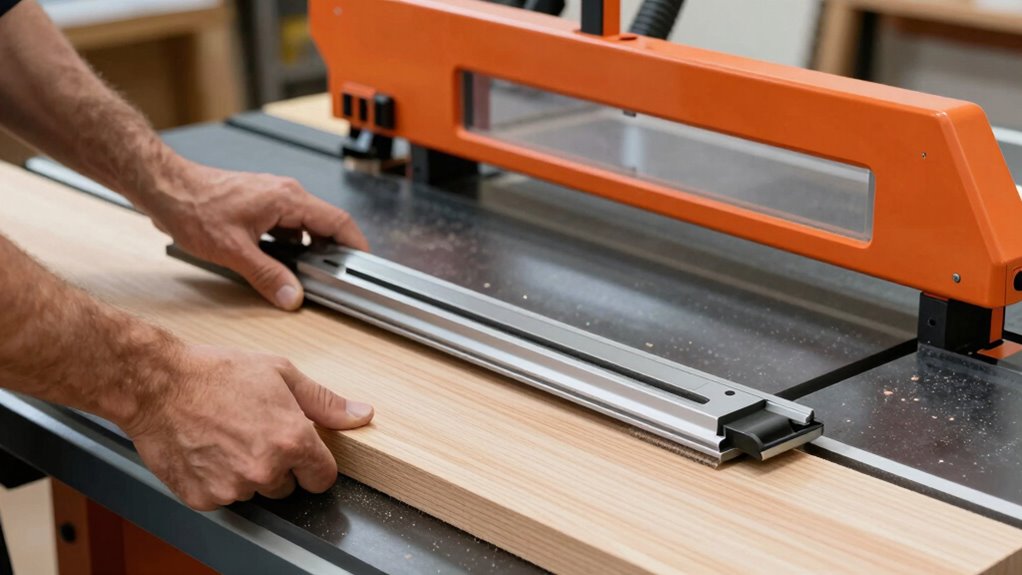
If you’re a beginner, a track saw is your best choice for making straighter cuts. Its guided rail system guarantees precision and reduces wobbling, making it easier to control than a table saw. While a table saw is powerful, it’s bulkier and less portable, which can affect accuracy if not set up properly. Want to discover how each tool stacks up in safety, cost, and projects? Keep exploring to find the perfect fit for your needs.
Key Takeaways
- Track saws provide guided, straight cuts easily with their rails, ideal for beginners seeking accuracy.
- Table saws can produce very straight cuts using rip fences but require precise setup and calibration.
- Track saws are more portable and easier to control for straight cuts in tight or on-site environments.
- Proper blade alignment and maintenance are crucial for both tools to ensure long-term cutting precision.
- Beginners may find track saws more straightforward for straight cuts due to their intuitive guide system.
What Are the Main Differences Between Track Saws and Table Saws?
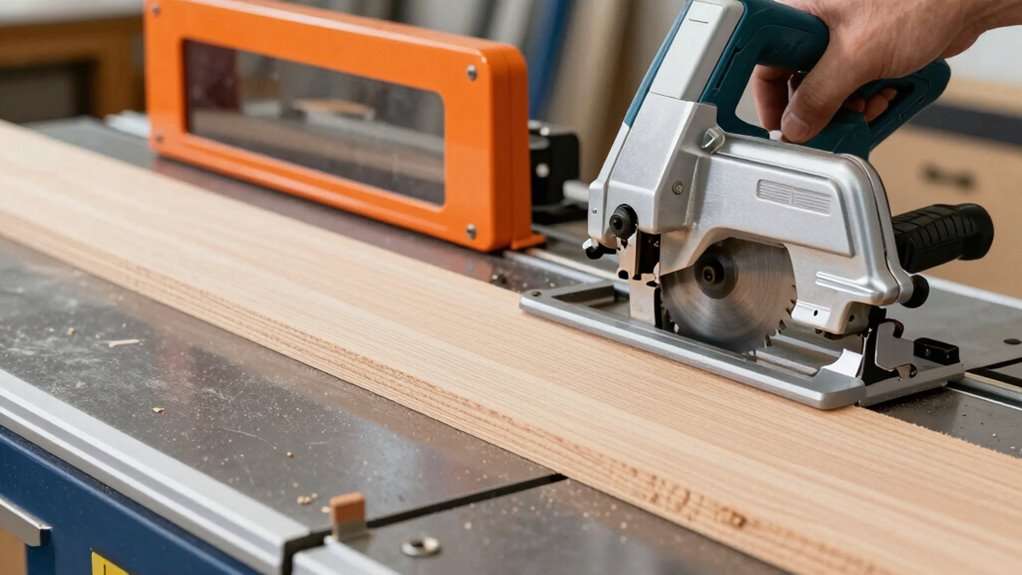
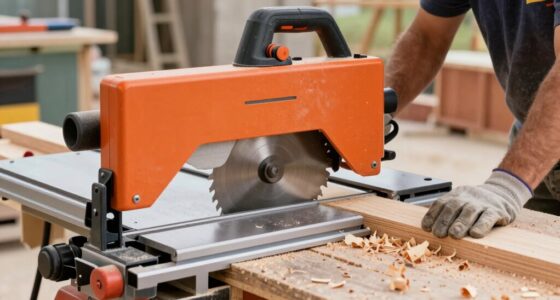
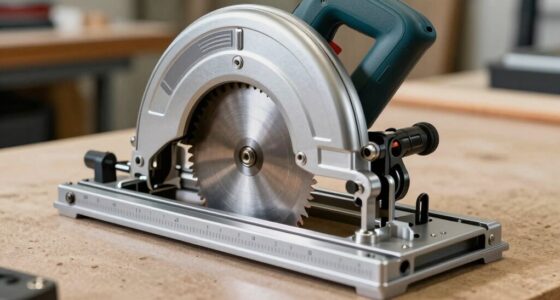
The main differences between track saws and table saws lie in their design and how they cut materials. Track saws feature a guided rail system, allowing you to make precise, straight cuts along a fixed path, which is especially useful for long cuts. Their blade width is generally narrower, making them more maneuverable for detailed work. Dust collection in track saws is usually efficient because the saw can be positioned close to the cut, and many models include integrated dust ports to minimize debris. In contrast, table saws have a large, stationary surface with a broad blade, making them ideal for ripping and cross-cutting large sheets. They often have built-in dust collection systems, but managing dust can be more challenging due to the larger area they cover. Additionally, cut accuracy is a key factor that distinguishes high-quality models of both tools, and understanding the precision capabilities of each can help you choose the right tool for your projects. For beginners, the ease of use and safety features of each tool are also important considerations to ensure a smoother learning curve.
Which Saw Gives You the Most Accurate and Straight Cuts?
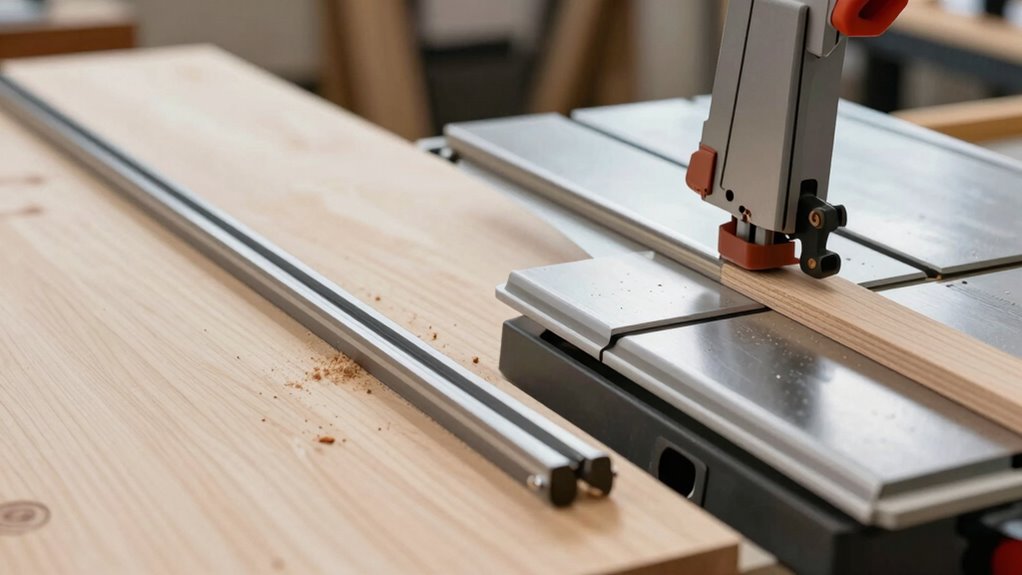
When it comes to getting the most accurate and straight cuts, your choice of saw matters. You’ll want to contemplate cutting accuracy, ease of alignment, and how well the saw maintains precision over time. These points can help determine which saw is best suited for your needs. Additionally, understanding the precision of small appliances and how they perform in real-world scenarios can further inform your decision.
Cutting Accuracy Precision
Ever wonder which saw delivers the most accurate and straight cuts? When it comes to cutting accuracy and precision, both the track saw and table saw have strengths. A track saw excels in maintaining consistent, straight cuts thanks to its guide rail, which helps reduce wobble and misalignment. Its blade sharpening is vital—dull blades can compromise cut quality, so regular maintenance guarantees cleaner, more precise results. Safety features also play a role; many track saws include protective blade guards and anti-kickback mechanisms, enhancing control. Additionally, proper blade maintenance is essential for preserving cutting accuracy and ensuring safety during operation. The stability of the saw during use also significantly impacts the quality of the cut. For beginners, understanding how saw stability affects your accuracy can make a big difference in your projects. A well-maintained saw with good dust collection can also improve visibility and overall cut quality. When considering your options, the ease of setup and how it influences your workflow are important factors to keep in mind. Table saws, especially with rip fences, offer high accuracy for repeated cuts, but require careful setup. Overall, your choice depends on your focus—if you prioritize portability and fine control, a track saw might be best; for power and stability, a table saw is ideal.
Ease of Alignment
Choosing between a track saw and a table saw for ease of alignment depends largely on how straightforward it is to set up and maintain straight cuts. With a track saw, blade alignment is simple—simply ensure the guide rail is properly positioned, and the saw’s track keeps your cut straight. Fence adjustments on a table saw can be be more involved; you need to carefully calibrate and lock the fence to guarantee precision. A well-aligned blade on either saw is vital for accuracy, but the track saw’s design often makes this process quicker and more intuitive for beginners. Overall, the track saw tends to offer more consistent ease of alignment, helping you achieve straight cuts without constant fuss over fence adjustments or blade calibration. Proper alignment is crucial for ensuring your cuts remain straight and accurate throughout your project.
Consistency Over Time
A track saw generally maintains its accuracy over time better than a table saw, thanks to its design and how it’s used. The consistent quality of the blade ensures clean, precise cuts, even after many uses. Because track saw blades are often easier to replace or sharpen, you can uphold cutting accuracy longer. Additionally, dust collection systems in track saws help keep the cut line clear, reducing debris that might cause inaccuracies. In contrast, table saws can experience blade alignment shifts and wear over time, which affect straightness. Regular maintenance and high-quality blades are essential for accuracy, but the track saw’s design inherently supports better consistency, making it a reliable choice for achieving precise, straight cuts over the long term. Moreover, blade alignment tends to stay more consistent in track saws, further enhancing their ability to produce accurate cuts over time. This stability is supported by the rigid guide system that keeps the cut line steady and true, even with extended use. Additionally, the stability of the guide rail minimizes movement during cuts, reinforcing consistent accuracy.
How Easy Are These Saws for Beginners to Use?
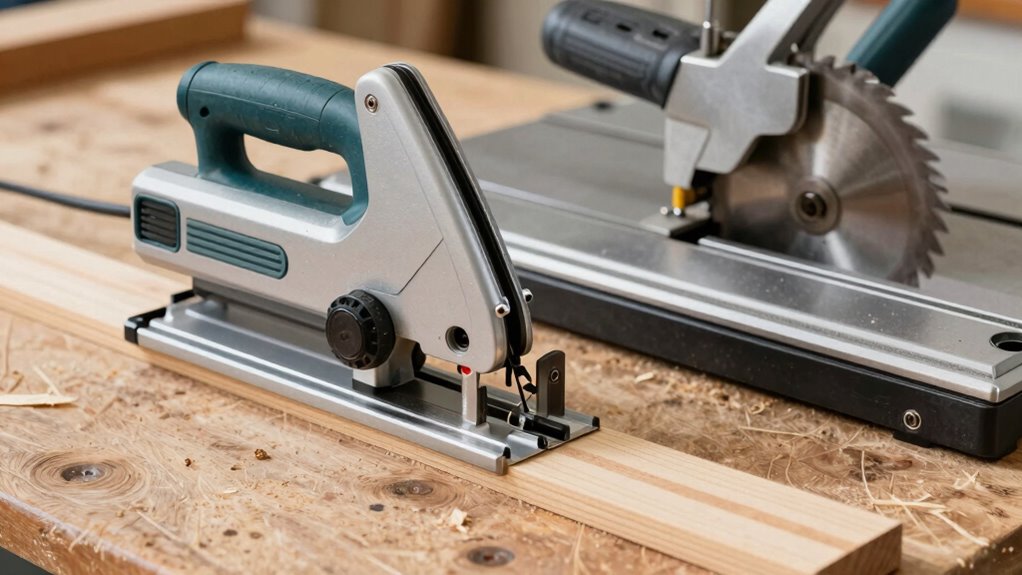
As a beginner, you’ll find that setup and assembly can vary between a track saw and a table saw, affecting how quickly you get started. Operating complexity also plays a role in how comfortable you’ll feel using each tool for the first time. Understanding these aspects helps you choose the saw that’s easiest for your skill level. Additionally, the ease of use of each saw can influence your confidence and the quality of your cuts as you gain experience. For example, initial setup procedures can be more straightforward with a track saw due to its modular design, making it more accessible for newcomers. Moreover, tool ergonomics and how intuitive the controls are can significantly impact a beginner’s comfort and safety during operation. Simplified control layouts can make handling easier and reduce the learning curve for new users. Recognizing the importance of visual and auditory cues can also assist beginners in mastering safe and accurate operation.
Setup and Assembly
Setting up both a track saw and a table saw can be straightforward for beginners, but each has its own learning curve. With a track saw, assembly usually involves attaching the track to your workpiece and installing the blade, which can be quick once you’re familiar with the process. Blade replacement is simple but requires safety precautions. Dust collection is built into many models, making cleanup easier. A table saw’s setup involves installing the blade, aligning fences, and ensuring stability, which might take more time initially. Assembly can be more involved, especially when adjusting the blade height and tilt. Managing dust collection on a table saw can be more challenging, often requiring external vacuums or dust collectors. Proper setup methods, such as aligning the blade and fence, can help ensure safe and efficient operation of either saw. Additionally, taking the time to calibrate and test your saws before starting your project can prevent errors and improve cutting accuracy. Overall, both saws are manageable for beginners with patience and careful attention.
Operating Complexity
Operating either a track saw or a table saw can be manageable for beginners, but each tool presents different challenges. The complexity depends on your familiarity with the tools and their features. For example:
- Blade maintenance: Track saw blades are easier to change and maintain, while table saw blades require more effort and safety precautions.
- Dust collection: Both saws generate dust, but table saws often have built-in dust ports, making cleanup easier.
- Operation controls: Track saws tend to be simpler with fewer adjustments, whereas table saws can be more involved with settings like blade height and rip fence adjustments.
- Safety features: Both tools require attention, but beginners might find the track saw safer due to its portability and easier handling.
- User interface: The ease of operation of a track saw typically involves fewer controls, making it more accessible for newcomers compared to the more complex controls of a table saw.
Is Portability and Space a Factor in Your Choice?
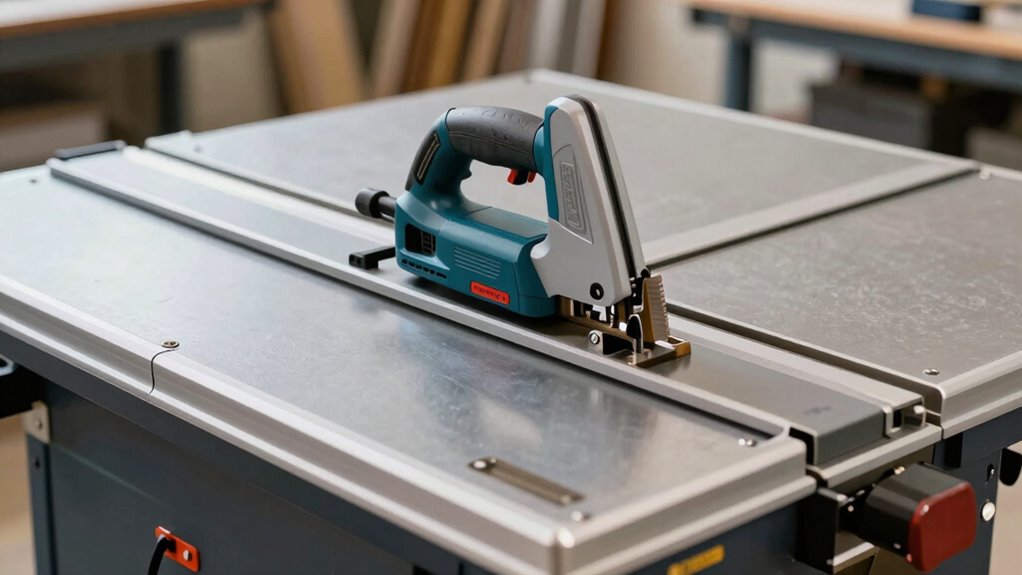
When space is limited in your workshop or job site, the portability of your saw becomes a crucial factor. A portable saw offers convenience, making it easier to transport and set up wherever you need. Space considerations also influence your choice; if your workspace is tight, a compact tool can save valuable room. To help you decide, consider this comparison:
| Feature | Track Saw | Table Saw |
|---|---|---|
| Portable Convenience | Lightweight, easy to carry | Bulkier, usually stationary |
| Space Considerations | Fits in small spaces | Requires more room |
| Mobility | Suitable for on-site jobs | Best in fixed workshop space |
Choosing based on portability and space ensures your workflow remains efficient. Additionally, understanding the science behind cutting accuracy can help you select the right tool for precise results.
How Do Cost and Value Compare for These Saws?
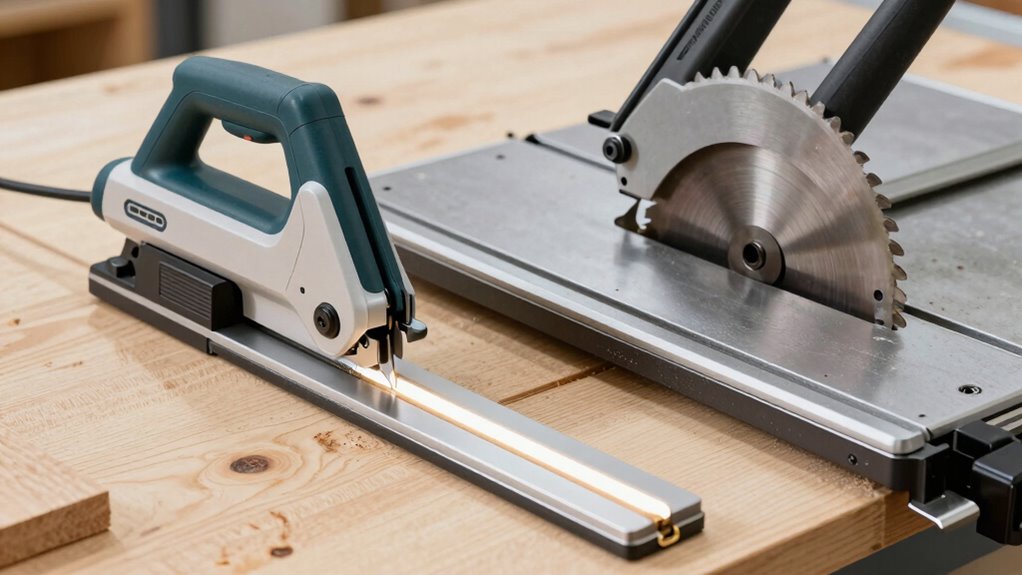
While track saws often come with a higher initial price tag, they tend to offer better value for frequent users due to their precision and ease of use. When comparing costs, consider these points:
- Price comparison shows track saws are generally more expensive upfront but can reduce material waste.
- Warranty coverage for track saws often includes extended periods, saving you repair costs over time.
- Long-term value favors track saws if you regularly work on large projects, thanks to their accuracy.
- Table saws may have a lower initial cost, but their maintenance and potential inaccuracies could add expenses.
Ultimately, your choice depends on how often you need precise cuts and whether the initial investment aligns with your budget.
What Common Mistakes Should Beginners Avoid When Using These Saws?
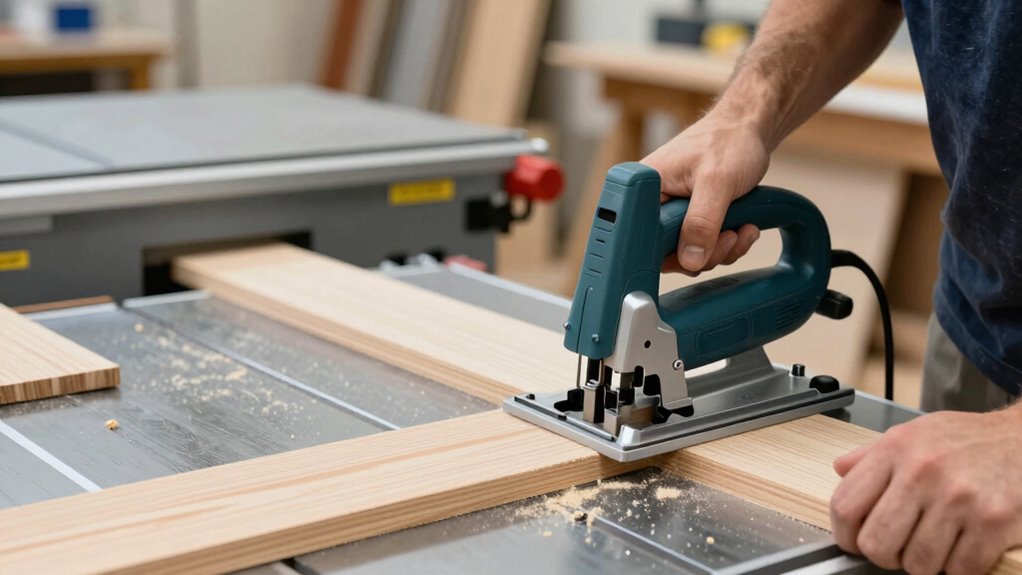
Beginners often underestimate the importance of proper setup and safety measures when using track saws and table saws. Failing to follow safety precautions can lead to accidents or damage to your tools. Always double-check blade alignment and secure your workpiece before cutting. Neglecting maintenance tips, like cleaning dust and inspecting blades regularly, can reduce saw performance and safety. Avoid rushing through setups or ignoring safety guards, as these are critical for precise, safe cuts. Keep your workspace clear of debris and distractions. Additionally, don’t ignore the importance of wearing safety gear such as goggles and ear protection. Proper setup, consistent maintenance, and cautious operation help prevent mistakes, ensuring safer cuts and prolonging your saw’s lifespan. Being aware of power tool safety protocols can further enhance your confidence and prevent mishaps during operation.
Which Saw Is Best for Your Projects and Skill Level?
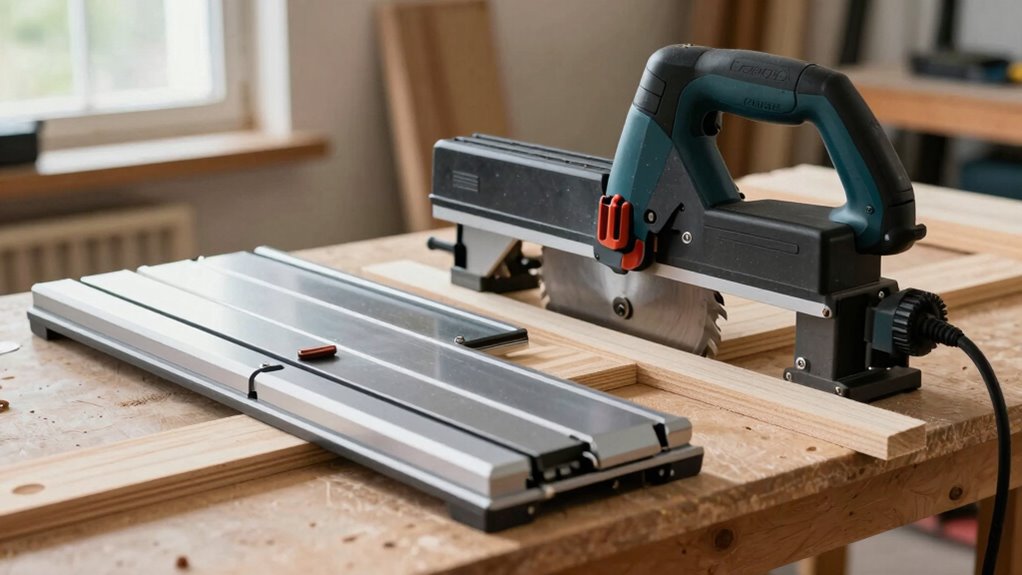
Choosing the right saw depends on your project needs and your experience level. If you’re just starting, a table saw offers versatility for various cuts but requires careful blade maintenance and strict safety considerations. A track saw is easier for precise, straight cuts on large panels and is more portable, making it ideal for beginners with smaller projects. To help decide:
- Consider your project scope—larger projects benefit from a table saw’s power.
- Focus on safety—ensure you understand blade maintenance to prevent accidents.
- Evaluate your skill level—track saws are simpler for straight cuts without complex setup.
- Think about storage and portability—track saws are more compact and easier to transport.
- Also, consider the precision of cuts—some saws are better suited for achieving perfectly straight lines, especially for detailed projects.
Matching your skill level with the saw’s features helps you work efficiently and safely.
Frequently Asked Questions
Can Track Saws Handle Larger or Thicker Materials Better Than Table Saws?
You’ll find that track saws handle larger or thicker materials better, thanks to their higher material capacity and adjustable cutting depth. They can cut through wider boards and thicker sheets with ease, making them ideal for larger projects. While table saws excel in precision and power for certain cuts, track saws give you greater flexibility for handling bigger or denser materials efficiently.
How Do Maintenance Requirements Differ Between Track Saws and Table Saws?
You’ll find that maintenance differs between track saws and table saws. With a track saw, you mainly need to focus on blade sharpening and keeping the track clean for precise cuts. For table saws, motor maintenance is essential to prevent overheating and guarantee smooth operation. Regularly check and lubricate moving parts, and sharpen blades when dull. Proper maintenance keeps both tools performing well, but their specific needs vary.
Are There Safety Advantages to Using One Saw Over the Other?
Imagine a workshop where safety is like a gentle guardian, guiding your every cut. Using a track saw offers safety advantages, as it’s easier to control and reduces the risk of kickback, helping with accident prevention. Always wear proper safety gear, like goggles and ear protection, regardless of your saw choice. Both saws can be safe when used carefully, but the track saw’s design provides an extra layer of security for beginners.
Which Saw Offers More Versatility for Different Woodworking Projects?
A table saw offers more versatility for different woodworking projects because it handles various materials and cuts with greater cutting accuracy. You can rip, crosscut, and bevel with ease, making it ideal for furniture or cabinetry. A track saw is limited mostly to straight cuts on sheet goods. If you want flexibility and precision across diverse tasks, a table saw is the better choice to meet your woodworking needs.
How Do Dust Collection Systems Compare Between Track and Table Saws?
Dust collection systems vary between track and table saws, impacting sawdust management. Track saws typically have portable dust ports that connect to vacuum systems, helping keep your workspace cleaner. Table saws often feature built-in or aftermarket dust collection ports, but they can be less efficient at capturing sawdust from the blade. Overall, both can improve sawdust management, but proper setup and additional vacuum accessories make a big difference in keeping your workspace tidy.
Conclusion
Choosing between a track saw and a table saw depends on your project needs and skill level. Did you know that nearly 60% of beginners find track saws easier to handle for straight cuts? If portability and precision are priorities, a track saw might be your best bet. But if you’re looking for power and larger cuts, a table saw could be the way to go. Pick what suits your projects, and you’ll build confidence and skill in no time.