
To stay safe on the jobsite with your table saw, make sure you use the riving knife and blade guard properly—they protect you from kickback and accidental contact. Adjust and maintain these safety features regularly to keep them effective, and always support your workpieces to prevent pinching. Proper safety habits and equipment checks help avoid accidents; if you keep up with these basics, you’ll operate more confidently and skillfully. Continuing will give you essential tips for safety and accident prevention.

Turn the school run and nap time into listening time
- Thousands of audiobooks, podcasts and originals
- Listen on your phone, tablet or Echo — also offline
- Cancel anytime
Key Takeaways
- Properly install and align riving knives and blade guards to prevent wood pinching and reduce kickback risks.
- Regularly inspect and maintain safety components, ensuring they move freely and are securely fastened.
- Use the correct blade height, alignment, and safety devices like pawls during operation for optimal safety.
- Support workpieces and maintain dust collection to prevent binding and improve visibility, reducing accident chances.
- In emergencies, stop the saw, disconnect power, assess injuries, and follow safety procedures to ensure safety and proper response.
As an affiliate, we earn on qualifying purchases.
Why Riving Knives and Blade Guards Are Essential for Jobsite Safety
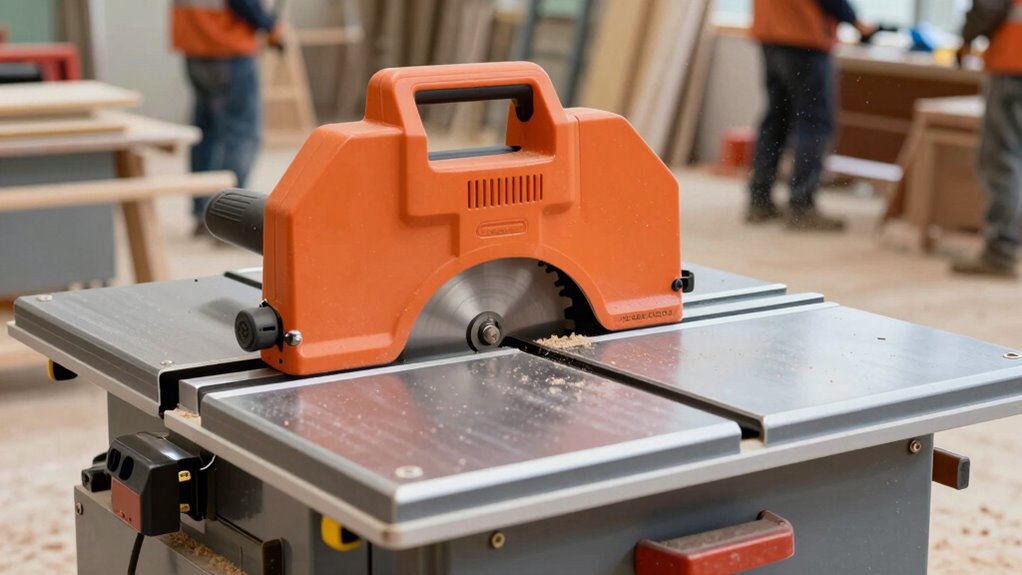
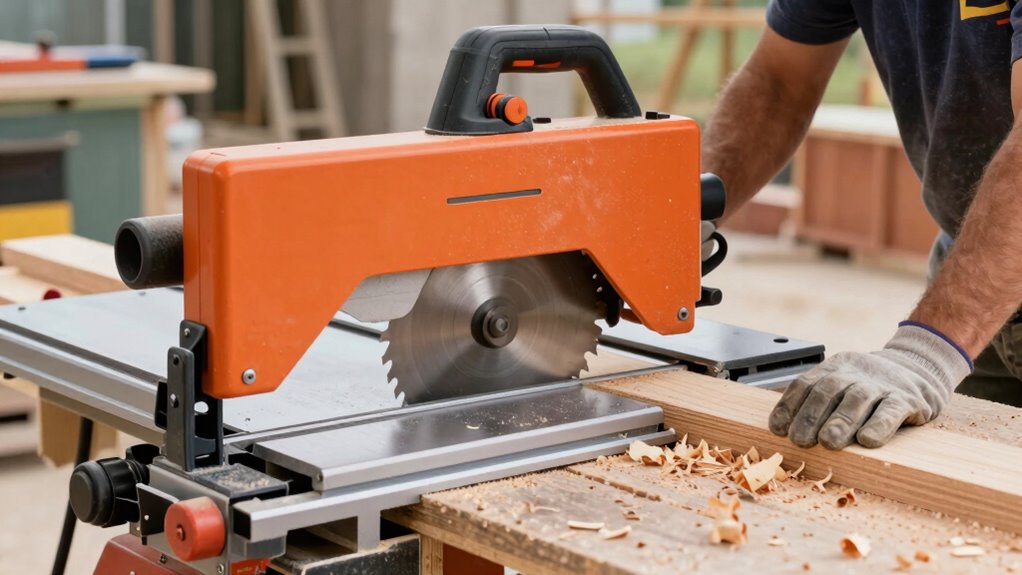
Riving knives and blade guards are crucial safety features that protect you from dangerous kickbacks and contact with the saw blade. Proper blade alignment ensures the riving knife stays close to the blade, reducing the chance of wood pinching and kickback. Blade guards act as a barrier, shielding you from accidental contact and debris. They also help with dust collection, keeping your workspace cleaner and improving visibility. When dust and sawdust are efficiently collected, you can better see your cut line and work safely. Without these safety features, you’re more exposed to potential injuries from kickback or blade contact. Using riving knives and blade guards correctly is essential for maintaining a safe jobsite environment and protecting yourself during every cut. Incorporating dust collection systems into your setup further enhances safety by reducing airborne particles and maintaining clear sightlines. Additionally, regular maintenance and inspection of safety components ensure continued performance and safety compliance. Ensuring proper blade alignment also minimizes the risk of dangerous kickbacks and enhances overall safety during cutting operations. Maintaining awareness of safety standards helps ensure your tools are always in compliance and operating safely. Regularly educating yourself on jobsite safety practices can further reduce the risk of accidents and improve overall safety awareness.
As an affiliate, we earn on qualifying purchases.
How to Install and Adjust Riving Knives and Guards Properly
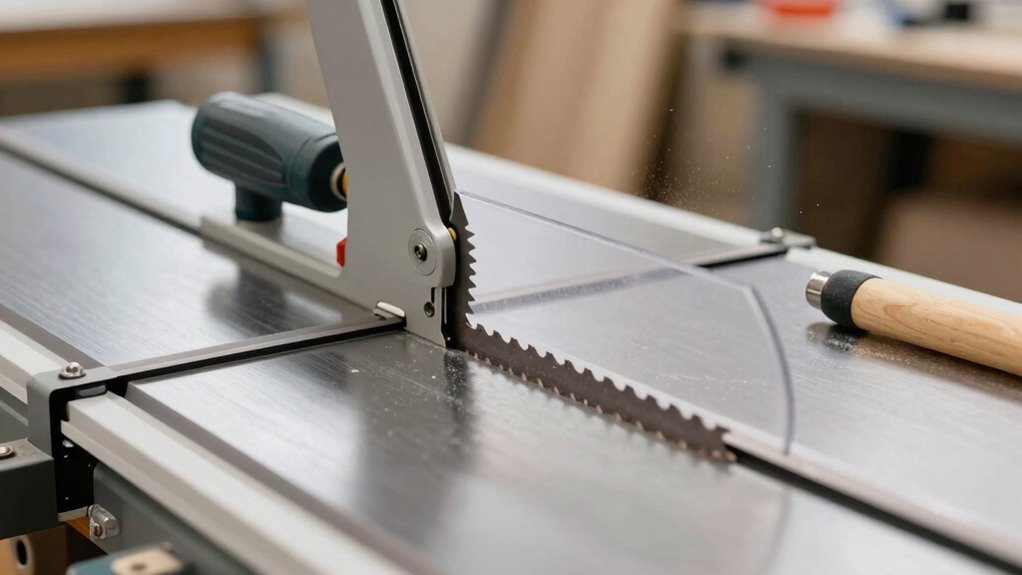
Installing and adjusting riving knives and guards correctly is vital for your safety. You need to follow proper techniques to guarantee they are secure and aligned properly. Accurate adjustment makes a significant difference in preventing accidents while working. Proper installation and maintenance procedures are essential to ensure the safety features function correctly over time. Additionally, regularly inspecting these safety components helps identify wear or misalignment before they pose a risk, ensuring ongoing safety compliance and effective protection. Staying informed about latest safety standards can further enhance your jobsite practices and prevent potential hazards. Being aware of risk mitigation strategies can also help you respond effectively if safety devices fail or are compromised.
Proper Installation Techniques
To guarantee your saw operates safely, proper installation and adjustment of the riving knife and guards are essential. Start by ensuring the riving knife is aligned with the blade, preventing kickback and ensuring smooth cuts. Secure the guards firmly, making sure they move freely and stay in position during operation. Check blade alignment carefully so the teeth cut cleanly through the material, reducing the risk of binding. Proper dust collection setup is also crucial; ensure hoses are connected tightly to minimize debris buildup that can interfere with safety features. Remember, a well-installed saw not only protects you but also improves performance and efficiency. Regularly inspecting and maintaining safety features helps ensure ongoing protection and optimal operation.
- Feel confident with each cut, knowing your safety features are correctly installed
- Experience smoother cuts with ideal blade and riving knife alignment
- Trust your dust collection system to keep your workspace safe and clean
Accurate Adjustment Procedures
Proper adjustment of your saw’s riving knife and guards guarantees safe and accurate cuts. Begin by checking blade alignment to ensure the blade is perfectly parallel to the miter slot and fence. Misalignment can cause kickback or poor cuts. Next, calibrate the fence tightly against the workpiece and verify its alignment with the blade, adjusting as needed for precise cuts. When installing the riving knife, ensure it’s positioned just behind the blade, at the same height, and securely fastened. Proper adjustments keep debris from getting caught and prevent kickback. Always double-check blade alignment and fence calibration after adjustments, then test on scrap material before working on your project. Precise setup minimizes hazards and enhances cut accuracy.
dust collection system for table saw
As an affiliate, we earn on qualifying purchases.
As an affiliate, we earn on qualifying purchases.
How to Prevent Kickback on Your Jobsite Table Saw
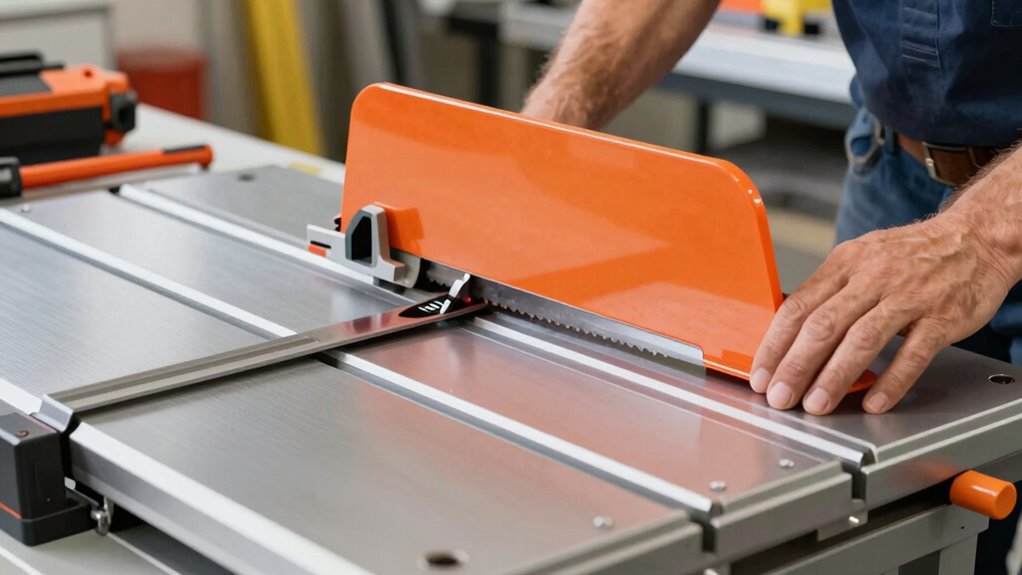
Kickback is one of the most dangerous hazards when using a jobsite table saw, but you can greatly reduce the risk by taking proper precautions. First, ensure your blade is sharp—dull blades increase the chance of kickback by causing uneven cuts. Use dust collection systems to keep your workspace clear; a clean surface improves visibility and control. Always support your workpiece properly to prevent binding or pinching. Additionally, understanding blade types and their uses can help you select the safest options for your specific tasks. Proper blade height adjustment also plays a crucial role in minimizing kickback and maintaining safe operation. Incorporating anti-kickback devices such as pawls and riving knives further enhances safety during cuts. Being familiar with cutting techniques can also help you avoid dangerous situations and ensure safer operation. Regularly inspecting and maintaining your saw components is essential for safe operation and to prevent unexpected hazards.
Remember these key points:
- Use safety riving knives and anti-kickback pawls to prevent the workpiece from pinching the blade.
- Maintain a sharp blade for cleaner cuts and safer operation.
- Keep your work area free of dust and debris for better control and visibility.
Staying alert and following these steps helps keep you safe on the jobsite.
As an affiliate, we earn on qualifying purchases.
Common Safety Mistakes to Avoid With Your Table Saw
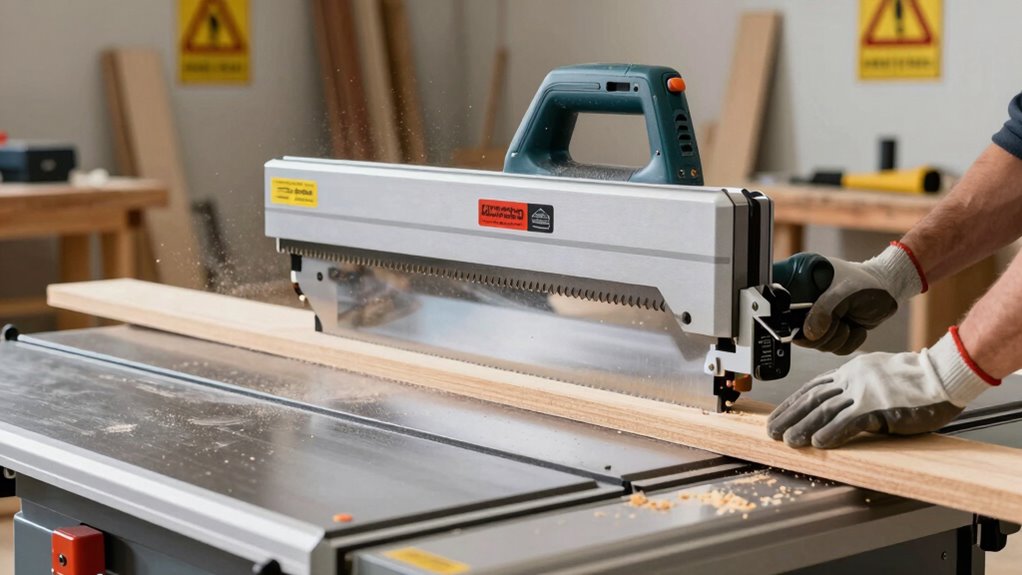
Many common safety mistakes on the jobsite can lead to serious injuries if you’re not careful. One safety misconception is that bypassing safety features, like guards and riving knives, speeds up work, but it actually increases risk. Don’t believe equipment myths that you can safely operate a saw without proper adjustments or safety gear—these can be dangerous. Always double-check that guards are in place and functioning correctly before starting. Rushing through cuts or ignoring safety procedures is another mistake that can cause accidents. Never use damaged blades or worn-out parts; they compromise safety and accuracy. Recognizing the importance of proper safety practices is essential for maintaining a secure work environment. Proper safety equipment and adherence to guidelines are essential for preventing injuries. Prioritize safety, and stay vigilant to prevent avoidable accidents. Additionally, understanding the support support available for safety training can help reinforce good habits on the jobsite. Remember, training resources are vital for keeping safety standards high and ensuring everyone understands the risks.
Tips for Maintaining Your Safety Equipment Long-Term

To keep your safety equipment effective, you need to stay on top of regular inspections and maintenance. Make it a habit to check your gear often for signs of wear or damage, and clean it properly to prevent buildup. Good maintenance guarantees your safety tools work when you need them most. Incorporating regular safety audits into your routine can help identify potential issues before they become hazards. Additionally, adhering to manufacturer guidelines ensures that your equipment remains in optimal condition and compliant with safety standards. Regularly inspecting your gear for wear and tear helps prolong its lifespan and maintain safety performance. Staying informed about environmental considerations can also assist in choosing the right storage conditions to prevent deterioration of safety equipment over time. Moreover, understanding the psychological aspects of safety can improve your overall vigilance and response during emergencies.
Regular Inspection Routines
Regular inspection routines are essential for ensuring your safety equipment remains effective over time. By sticking to a consistent inspection schedule, you catch potential issues before they become hazards. Use a thorough safety checklist to verify that all guards, riving knives, and kickback prevention devices are in place and functioning properly. Regularly inspecting your equipment gives you peace of mind and keeps your work environment safe. Skipping these routines can lead to unnoticed damage that compromises safety. Remember, safety isn’t a one-time task—it’s an ongoing process. By staying vigilant and proactive, you protect yourself and others on the jobsite. Make inspections a habit, and never underestimate the importance of maintaining your safety tools.
Proper Cleaning Practices
Ever wondered how proper cleaning can extend the life of your safety equipment? Regularly removing dust buildup from your table saw is essential for effective dust collection and safe operation. Use a brush or compressed air to clear dust from guards, riving knives, and vents. Keeping these parts clean prevents clogs and maintains proper airflow, reducing fire hazards. Additionally, lubricate the blade regularly to ensure smooth cutting and prevent rust. Proper blade lubrication also minimizes kickback risks by keeping the blade spinning freely. Wipe down all surfaces after each use and inspect for debris or damage. Consistent cleaning not only prolongs the life of your safety equipment but also keeps your saw functioning reliably, ensuring you stay safe during every cut.
What to Do if There’s an Accident or Emergency
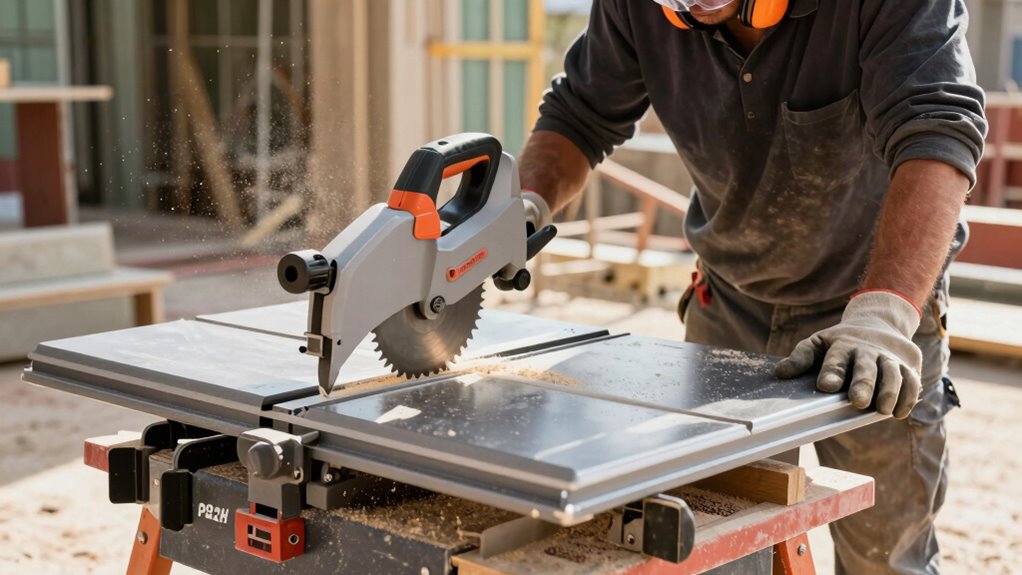
If an accident occurs while using a jobsite table saw, quick and calm action is essential to minimize injuries and prevent further harm. Your first step is to stop the saw immediately and disconnect it from power. Then, carefully assess the injury and follow proper emergency procedures. If someone is hurt, administer first aid confidently—stop bleeding, keep the injured person still, and avoid moving severe injuries. Call emergency services right away if necessary. Remember, staying calm helps you think clearly and act effectively.
- Stay composed to prevent panic and make sound decisions
- Prioritize calling for professional help when needed
- Use first aid to stabilize injuries before further assistance arrives
Frequently Asked Questions
How Often Should I Inspect Safety Equipment on My Table Saw?
You should inspect your safety gear on your table saw before each use to guarantee everything functions properly. Follow a regular inspection schedule—at least weekly if you use the saw frequently—checking guards, riving knives, and other safety features for damage or wear. Promptly replace or repair any compromised safety equipment to maintain ideal protection and reduce risk during your woodworking projects.
What Are Signs That a Riving Knife Needs Replacement?
You should replace your riving knife if you notice blade misalignment or excessive motor noise when cutting. Misaligned blades can cause uneven cuts and increase kickback risk, signaling the knife needs realignment or replacement. Unusual motor sounds may indicate wear or damage. Regularly inspect the riving knife for cracks, warping, or corrosion, and replace it promptly to maintain safe, efficient operation.
Can I Modify Guards for Specific Cuts Safely?
You should avoid modifying guards for specific cuts because it can compromise safety. Guard modification might seem helpful, but it often exposes you to more risk, especially if not done correctly. Always prioritize safety considerations by using guards as designed. If a guard doesn’t suit a particular cut, consult the manufacturer or use alternative safety equipment instead of risking injury through unsafe modifications.
What Training Is Recommended for New Table Saw Users?
Think of training like learning to ride a bike—steady guidance makes all the difference. As a new table saw user, you should start with hands-on instruction from an experienced professional, focusing on blade alignment, proper guard use, and dust collection. This helps you understand safety features, reduces kickback risk, and builds confidence. Always review the manufacturer’s safety guidelines, and practice in a controlled environment before tackling complex cuts.
How Do I Safely Transport and Store My Table Saw?
To safely transport and store your table saw, always disconnect power and remove safety accessories like guards and riving knives. Use a sturdy cart or frame for transportation, avoiding uneven surfaces. When storing, keep it in a dry, secure location away from children and moisture. Cover the saw with a dust cover to protect it, and guarantee safety accessories are reinstalled properly before use. This keeps your saw safe and ready for the next job.
Conclusion
Always prioritize safety when using your jobsite table saw—it’s your best defense against a potential disaster. Properly installed riving knives and guards are your shield, and staying vigilant prevents accidents that can change your life in an instant. Remember, neglecting safety could turn a routine cut into a catastrophe faster than you can say “kickback.” Stay alert, maintain your equipment, and never cut corners—your safety depends on it.
Fall Picks
fall essentials
As an affiliate, we earn on qualifying purchases.