Multiprocess welders combine MIG, TIG, and stick welding into one versatile machine, allowing you to switch between processes seamlessly, replacing multiple standalone welders. They save space, cut costs, and boost productivity by handling various materials and projects without changing equipment. These machines are ideal for fabrication, automotive, and industrial work. To discover how they can streamline your workflow and when they’re a smart investment, explore further details and tips.
Listen free for 30 days with Audible
Thousands of audiobooks and originals — cancel anytime.
As an affiliate, we earn on qualifying purchases.
Key Takeaways
- Multiprocess welders combine MIG, TIG, and stick functions, replacing multiple standalone machines with one versatile unit.
- They streamline workflows, reducing setup time and minimizing the need for separate equipment for different welding processes.
- These machines save space and costs by consolidating capabilities, lowering maintenance, and simplifying inventory management.
- Their advanced control systems and automation features enhance precision, safety, and ease of switching between welding techniques.
- Multiprocess welders are ideal for industries requiring diverse material handling, such as construction, shipbuilding, and automotive manufacturing.
As an affiliate, we earn on qualifying purchases.
What Are Multiprocess Welders and How Do They Work?
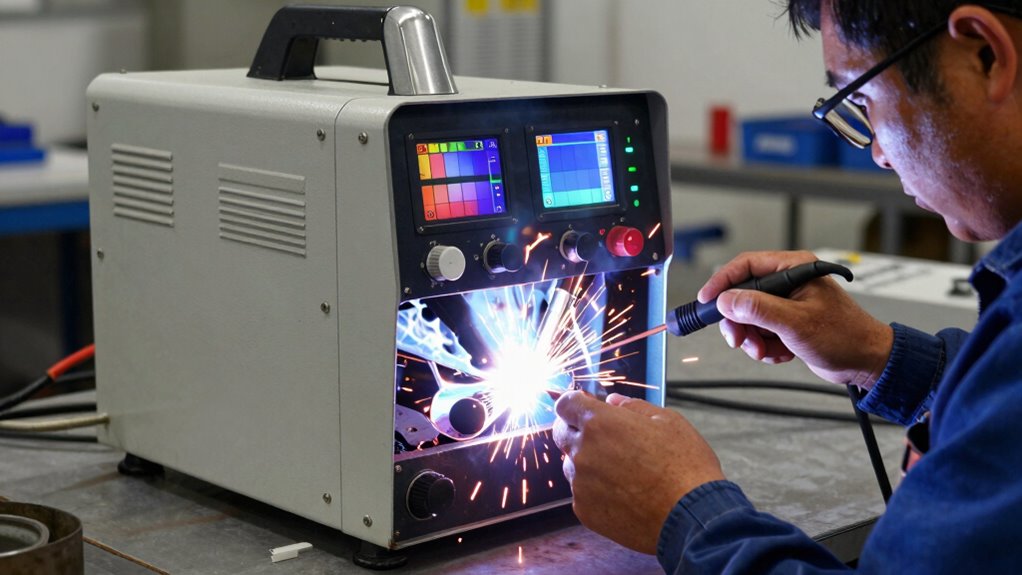
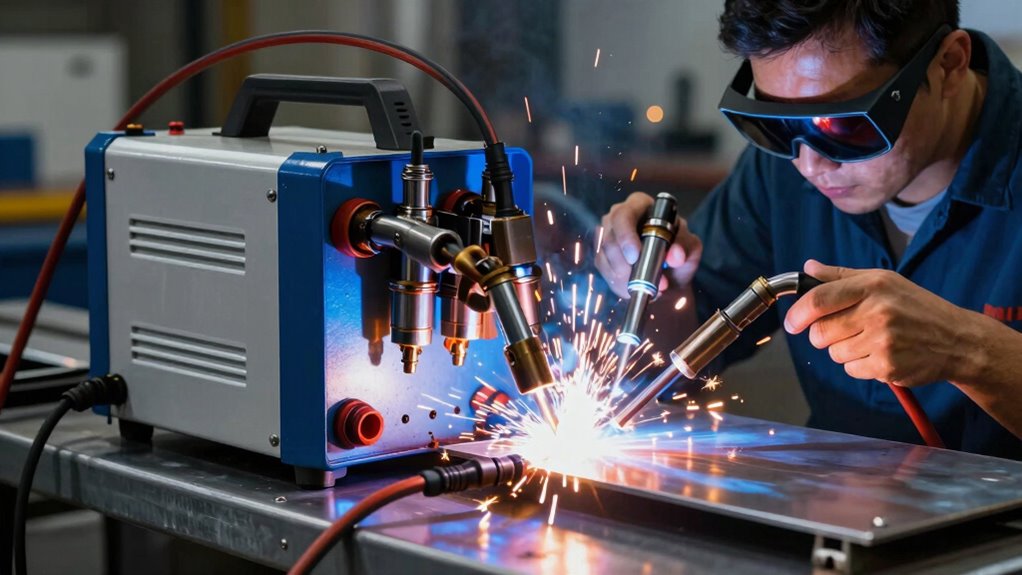
Ever wondered how multiprocess welders can handle different welding tasks with a single machine? These versatile tools combine various welding processes like MIG, TIG, and stick, enabling you to switch seamlessly without changing equipment. They leverage welding automation to streamline your workflow, reducing setup time and increasing productivity. The design optimizes thermal efficiency, ensuring that heat is applied precisely where needed, which minimizes energy waste and prevents overheating. This smart integration allows for consistent weld quality across different applications. By adjusting settings on a single control panel, you can tackle diverse projects efficiently. Thermal management is also a key feature, as it helps maintain optimal operating temperatures for various welding methods. Additionally, versatile functionality ensures that the machine can adapt to a wide range of tasks, making it a valuable investment for many workshops. These machines often incorporate advanced control systems that further enhance precision and ease of use. Multiprocess welders are engineered to adapt to your needs, making complex tasks simpler while maintaining high standards of precision and performance. Their energy-efficient design supports sustainable practices by reducing overall power consumption. Furthermore, their ability to adapt to different welding environments highlights their importance in modern fabrication.
multi-process welder with TIG MIG Stick
As an affiliate, we earn on qualifying purchases.
As an affiliate, we earn on qualifying purchases.
Why Choose a Multiprocess Welder? Key Benefits for Fabricators
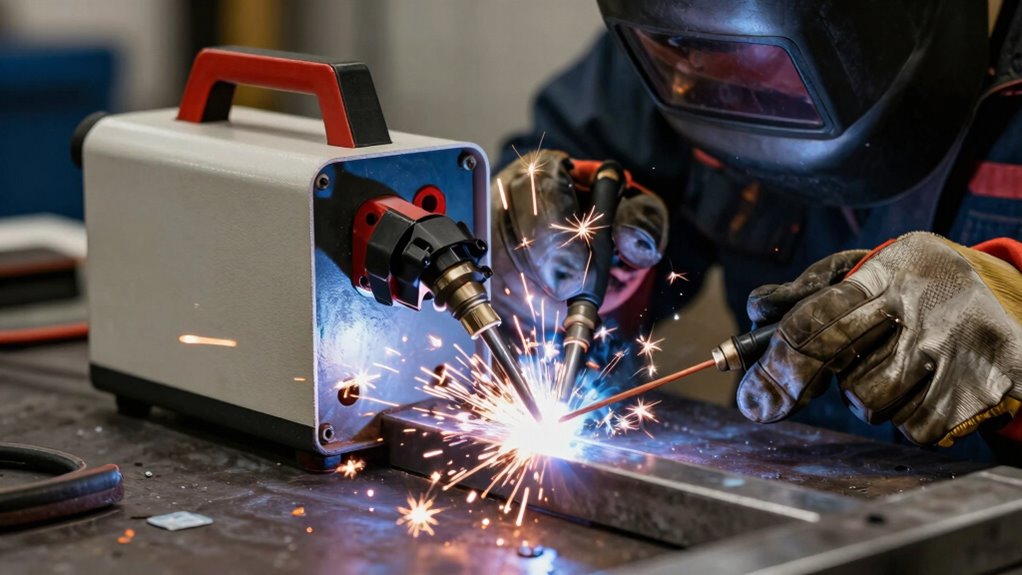
A multiprocess welder offers versatile capabilities that let you handle different projects with one machine, saving you time and effort. It also provides a cost-effective investment by eliminating the need for multiple standalone welders. With these benefits, you’ll streamline your workflow and boost productivity on every job. Additionally, understanding the best anime movies and animated films that touch hearts can offer inspiration and relaxation during your downtime. Moreover, selecting a model with high-quality components ensures durability and consistent performance across various welding processes.
Versatile Welding Capabilities
Multiprocess welders stand out because they allow you to switch seamlessly between different welding techniques, making them highly adaptable for various projects. This versatility means you can handle diverse materials and weld types with a single machine, enhancing welding safety by reducing the need for multiple setups. Additionally, they support broad material compatibility, enabling you to work with metals like stainless steel, aluminum, or mild steel efficiently.
To maximize these benefits, you should focus on:
- Choosing a welder with strong welding safety features to protect you across all techniques.
- Ensuring the machine supports a wide range of materials for flexibility.
- Maintaining proper settings for each process to optimize material compatibility and weld quality.
Cost-Effective Equipment Investment
Investing in a multiprocess welder offers significant cost savings by eliminating the need to purchase and maintain multiple individual machines. This reduces your upfront equipment costs and simplifies maintenance, lowering ongoing expenses. With one versatile machine, you can switch between welding processes quickly, increasing productivity and reducing downtime. Improved welding safety is also a benefit, as fewer machines mean fewer hazards and easier safety management. Maintenance becomes more streamlined, saving you time and money on repairs and part replacements. Over time, these efficiencies translate into better budget control and higher profitability. Plus, a multiprocess welder’s versatility makes it a smart long-term investment, giving you the flexibility to take on diverse projects without constantly upgrading or expanding your equipment. Additionally, these welders often include advanced safety features, enhancing overall safety during operation. Understanding multifunctionality can help you maximize the potential benefits of this adaptable equipment. A reliable power source further ensures consistent performance and reduces unexpected outages, making your workflow even smoother.
versatile welding machine for fabrication
As an affiliate, we earn on qualifying purchases.
As an affiliate, we earn on qualifying purchases.
How Multiprocess Welders Replace Multiple Machines : Is It Worth It?
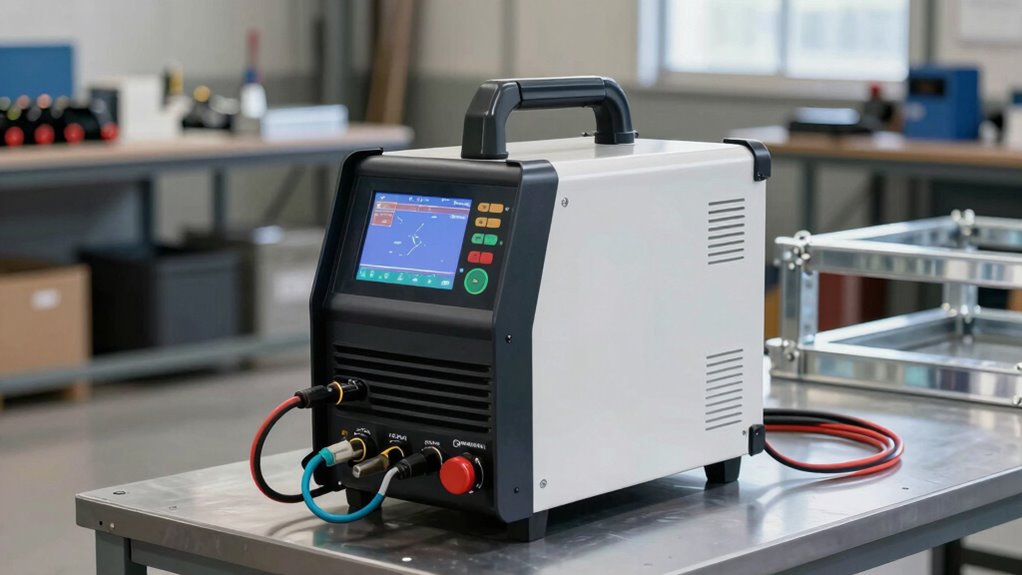
Switching to a multiprocess welder can save you money and simplify your workspace by replacing multiple machines. You’ll find it easier to operate and more versatile, fitting various projects with less hassle. Additionally, choosing the right luggage & bags can make transporting your equipment more manageable and reduce fatigue during travel. Proper ventilation considerations are essential to ensure safety and optimal performance when using multiprocess welders. Being aware of electrical safety requirements can help prevent accidents and ensure the longevity of your equipment. Moreover, considering digital distractions can improve focus and safety during welding tasks by minimizing interruptions. Incorporating lifestyle practices for longevity can also enhance your overall well-being, making your work environment more comfortable and sustainable. Let’s explore whether the cost, ease, and compatibility make it a smart choice for your needs.
Cost Effectiveness Analysis
When evaluating the cost-effectiveness of multiprocess welders, it’s clear they can significantly cut costs by replacing multiple machines, saving space and money. You’ll also benefit from improved welding safety, as fewer machines mean fewer hazards and easier oversight. Plus, equipment maintenance becomes simpler and more affordable since you’re managing one versatile unit instead of several. Here’s what to consider:
- Reduced upfront costs by purchasing one multiprocess welder instead of multiple specialized machines.
- Lower ongoing expenses through simplified maintenance and fewer spare parts.
- Increased productivity with quick transitions between welding processes, reducing downtime.
- Incorporating connected equipment and smart technology can further optimize performance and ensure long-term efficiency.
Ease of Operation
Multiprocess welders simplify the welding process by allowing you to handle multiple techniques with a single machine. This makes operation straightforward, reducing the need to switch between different equipment, which can be confusing and time-consuming. With user-friendly controls and intuitive interfaces, you can quickly learn how to set up and adjust settings for various welding methods. This ease of operation also enhances welding safety, as fewer machines mean fewer risks and less clutter on your workspace. Additionally, maintaining a multiprocess welder tends to be less complex since you’re caring for one device rather than multiple units. The streamlined operation benefits both beginners and experienced professionals by reducing setup time and minimizing errors, making the welding process more efficient. Incorporating multi-technique versatility can further improve workflow and expand your welding capabilities. Overall, the simplicity of operation is supported by smart technology integration, which enables more precise control and monitoring during welding tasks.
Versatility and Compatibility
Because multiprocess welders combine several welding techniques into one unit, they offer unmatched versatility and compatibility with different materials and projects. This means you can work with various metals like steel, aluminum, and stainless steel without switching machines. When considering material compatibility, you’ll find that these welders adapt easily to different thicknesses and types, saving you time and effort.
- They handle multiple welding processes, such as MIG, TIG, and stick, all in one device.
- They reduce the need for multiple machines, cutting costs and space.
- Safety considerations are vital, so ensure your welder includes proper safeguards for different materials and techniques.
As an affiliate, we earn on qualifying purchases.
Which Types of Multiprocess Welders Are Best for Your Needs?

Choosing the right type of multiprocess welder depends on your specific projects and skill level. If you’re working with different materials, ensure the welder offers good material compatibility. For welding safety, pick a machine with reliable safety features suited to your environment. Consider your skill level—beginners may prefer simpler models, while advanced users might opt for versatile units with multiple processes. Here’s a quick guide:
| Welding Process | Material Compatibility | Best For |
|---|---|---|
| MIG/Weldor | Steel, Aluminum | Home & light industrial use |
| TIG/Plasma | Stainless, Aluminum | Precision projects |
| Stick/TIG | Mild steel, Cast iron | Heavy-duty tasks |
Matching your needs with the right multiprocess welder ensures safe operation and ideal material compatibility.
Top Applications for Multiprocess Welding in Industry and Fabrication
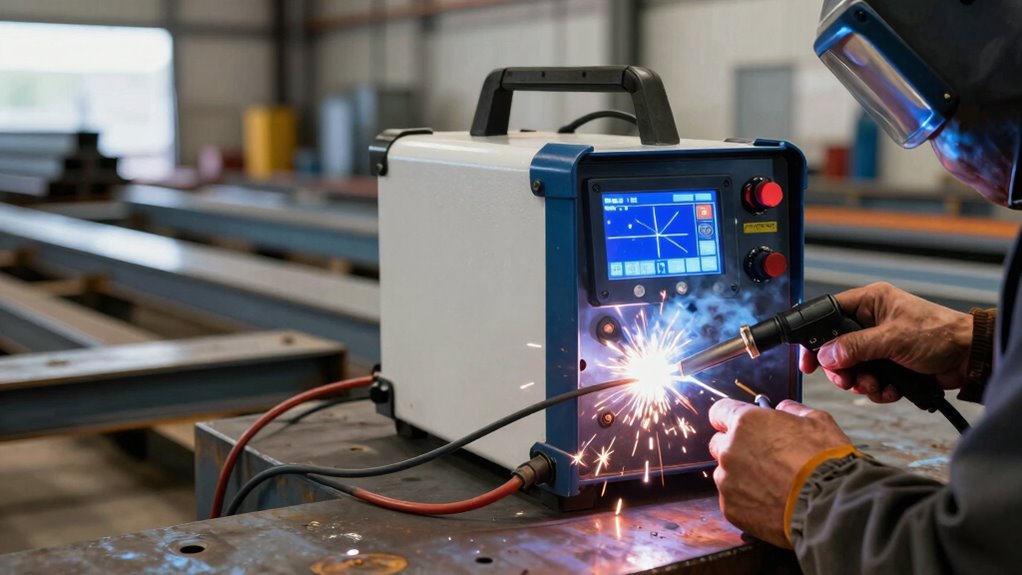
Multiprocess welding has become an essential skill in various industries due to its versatility and efficiency. It’s widely used where welding safety and material compatibility are critical. You’ll find multiprocess welders excel in:
Multiprocess welding boosts efficiency and safety across diverse industries by enabling versatile, high-quality welds.
- Shipbuilding and Marine: Handling thick metals, ensuring strong welds, and reducing downtime. Material versatility allows for the welding of different metals without switching equipment. This capability also improves overall welding process efficiency on complex projects.
- Automotive Manufacturing: Speeding up production lines while maintaining precise, high-quality welds.
- Structural Fabrication: Welding diverse materials safely and effectively in bridges, buildings, and infrastructure projects.
The ability to switch seamlessly between processes saves time and space on the shop floor. Additionally, multiprocess welding helps you adapt to different materials, ensuring safe, compatible welds across various applications. This flexibility makes it a top choice for many industry sectors. Versatile welding capabilities significantly enhance productivity and allow for a broader range of projects to be completed efficiently.
How to Select the Right Multiprocess Welder for Your Shop
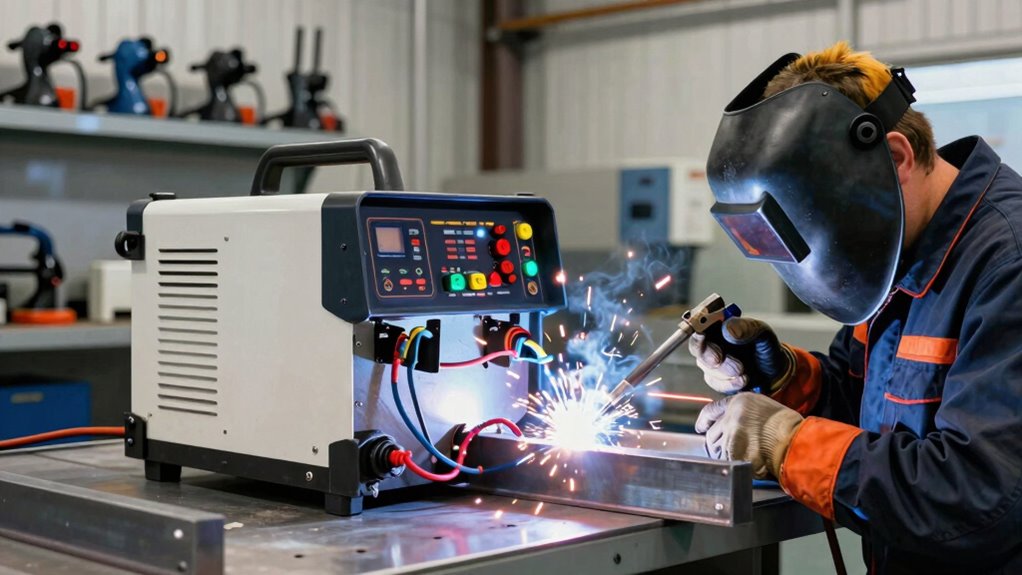
Selecting the right multiprocess welder for your shop involves understanding your specific needs and the types of projects you handle. Focus on welding safety by choosing a machine with proper safety features and certifications to protect your team. Material compatibility is vital; verify the welder can handle the metals you work with most often, whether steel, aluminum, or other alloys. Consider the power requirements and versatility of the unit—some models support MIG, TIG, and stick welding, reducing the need for multiple machines. Also, evaluate ease of use, maintenance, and available support. By aligning these factors with your shop’s workflow and safety standards, you’ll select a multiprocess welder that enhances efficiency, guarantees safety, and meets your material demands effectively.
Common Challenges With Multiprocess Welding and How to Solve Them
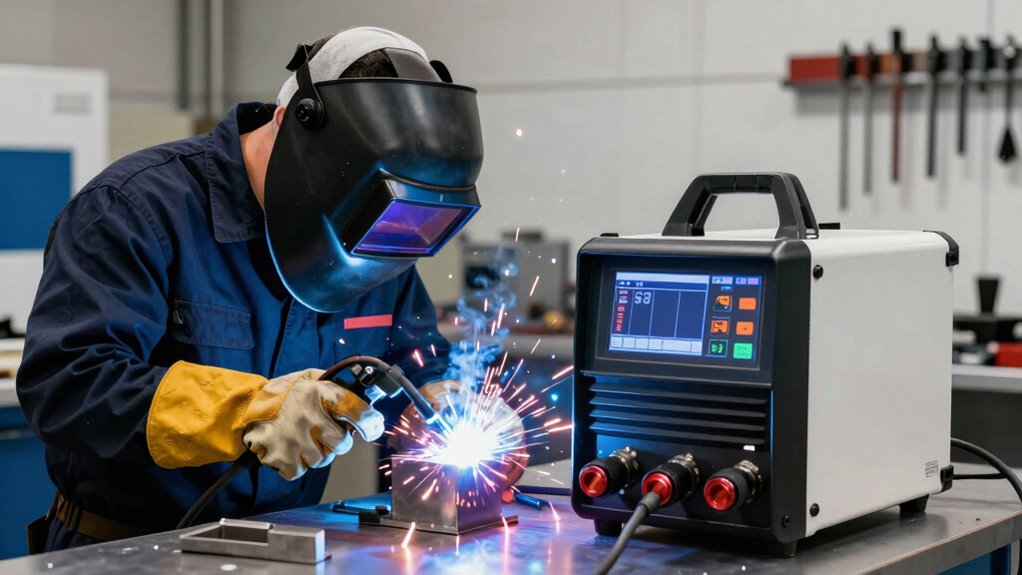
While multiprocess welding offers great versatility, it also presents unique challenges that can impact your workflow and weld quality. To overcome these, focus on:
- Welding safety – guarantee proper protective gear and workspace organization to prevent accidents.
- Equipment calibration – regularly calibrate your machine to maintain consistent welds across different processes.
- Technique mastery – familiarize yourself with switching between processes smoothly to avoid contamination or defects.
How Much Does a Multiprocess Welder Cost Compared to Multiple Units?
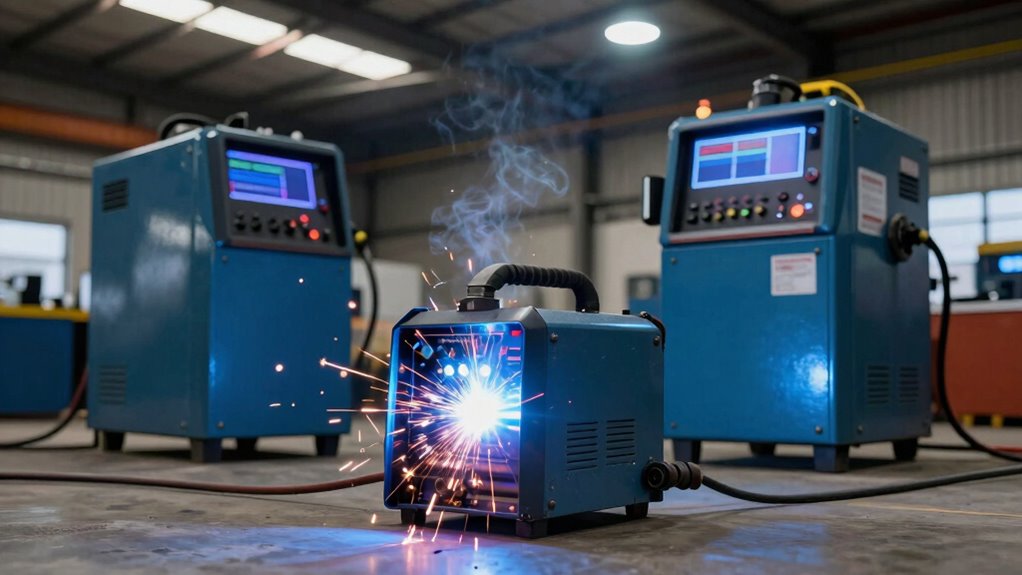
Investing in a multiprocess welder can often be more cost-effective than purchasing separate units for each welding process. When comparing costs, you’ll find that a single multiprocess machine generally costs less than three individual welders, saving you money upfront and over time. This simplifies budget planning by reducing equipment expenses and maintenance costs.
| Cost Comparison | Benefits |
|---|---|
| Higher initial investment | Fewer machines to maintain |
| Multiple units require more space | Streamlined workflow |
| Separate power sources needed | Cost savings over time |
| Increased energy consumption | Flexibility in welding tasks |
| Maintenance for multiple units | Better resource allocation |
What Skills Are Needed to Operate a Multiprocess Welder Effectively?
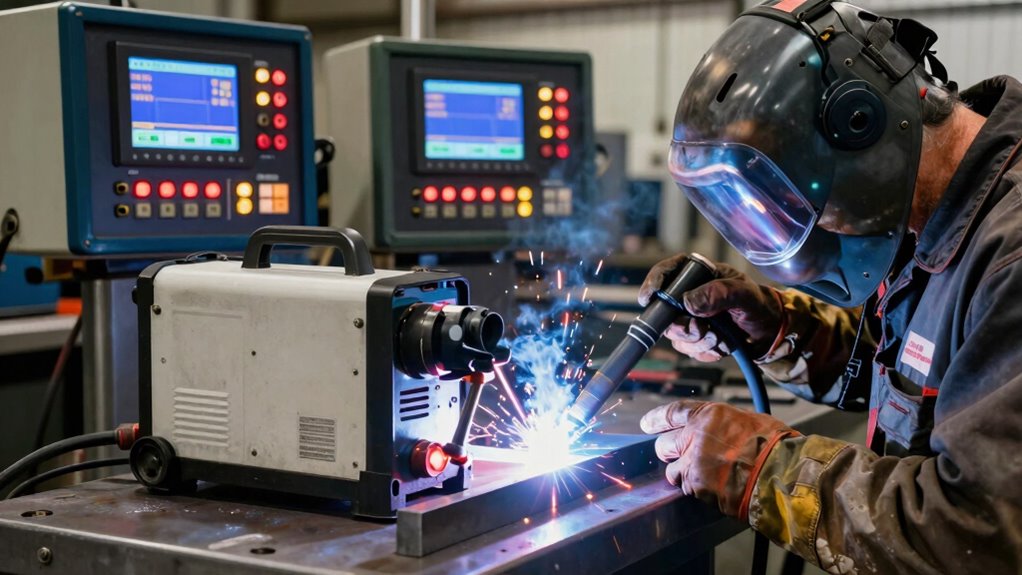
To operate a multiprocess welder effectively, you need solid technical welding knowledge to select the right settings and techniques. You also must be skilled in equipment setup to guarantee everything runs smoothly and safely. Additionally, troubleshooting and maintenance skills help you keep the welder in top condition and fix issues quickly.
Technical Welding Knowledge
What skills are essential to operate a multiprocess welder effectively? You need a solid grasp of technical welding knowledge. First, understanding welding metallurgy helps you predict how different metals react and guarantees strong, durable welds. Second, electrode selection is vital; choosing the right electrode guarantees proper fusion and minimizes defects. Third, you should be familiar with voltage, amperage, and wire feed adjustments to optimize each process. Being proficient in these areas allows you to switch seamlessly between processes, troubleshoot issues quickly, and produce high-quality welds. These skills not only improve your efficiency but also extend the lifespan of your equipment. Mastering welding metallurgy and electrode selection gives you the confidence to handle complex projects with precision.
Equipment Setup Skills
Mastering equipment setup is essential for operating a multiprocess welder effectively, as proper adjustments directly impact weld quality and safety. You need to understand how to select and configure the correct process modes, such as MIG, TIG, or stick, depending on the job. Precise equipment calibration guarantees accurate voltage, current, and wire feed speed, which are critical for consistent welds. Familiarize yourself with safety features like emergency shut-offs and proper grounding to maintain welding safety. Correctly setting parameters reduces defects and prevents equipment damage. Regularly review the manufacturer’s guidelines for setup procedures. By developing these skills, you’ll ensure safe operation, high-quality welds, and efficient use of the versatile multiprocess welder.
Troubleshooting and Maintenance
Effective troubleshooting and regular maintenance are key to keeping your multiprocess welder running smoothly. To operate it effectively, you need to master a few essential skills.
- Electrode selection – choosing the right electrode for each process ensures quality welds and prevents equipment issues.
- Performing safety precautions – always check for proper grounding, wear protective gear, and follow safety protocols to avoid accidents.
- Routine maintenance – clean and inspect contacts, replace worn parts, and verify settings regularly to prevent downtime.
The Future of Multiprocess Welding: Trends and Innovations
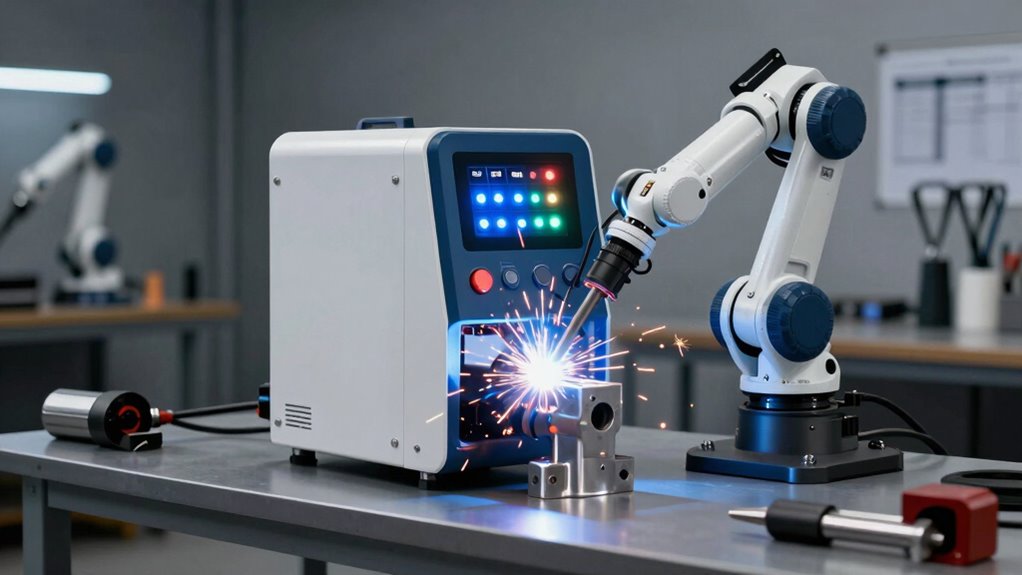
Ever wondered how multiprocess welding is poised to evolve in the coming years? Expect innovations like wireless connectivity, which will streamline workflows by enabling real-time monitoring and remote control of your equipment. This technology reduces downtime and enhances precision, making welding more efficient. Additionally, there’s a growing focus on environmental sustainability. Future welders will incorporate eco-friendly materials and energy-efficient systems, reducing carbon footprints. Smart sensors and automation will further optimize processes, lowering waste and energy use. These trends will make multiprocess welders more adaptable, cost-effective, and environmentally conscious. As technology advances, you’ll find welding becoming safer, smarter, and more sustainable, helping you meet industry demands while caring for the planet.
Frequently Asked Questions
What Maintenance Is Required for Multiprocess Welders?
To keep your multiprocess welder running smoothly, you should follow regular maintenance routines like cleaning the torch and checking cables for damage. Don’t forget to inspect the power supply considerations, ensuring connections are secure and voltage is consistent. Regularly replace consumables and keep ventilation clear to prevent overheating. These steps help maintain peak performance and extend your welder’s lifespan, minimizing downtime and costly repairs.
How Long Do Multiprocess Welders Typically Last?
You can expect multiprocess welders to last between 8 and 15 years with proper maintenance. This showcases their impressive durability, enhancing welding efficiency for years to come. Their robust construction and high-quality components contribute to long-term equipment durability, making them a cost-effective investment. Regular upkeep and careful operation extend their lifespan, ensuring you get maximum value and performance from your multiprocess welder over time.
Are Multiprocess Welders Suitable for Beginners?
Yes, multiprocess welders are suitable for beginners because they simplify welding techniques by combining multiple functions into one machine. They help you learn different processes without switching equipment. Plus, their compatibility with various materials makes them versatile for different projects. However, take time to understand each process and make certain of proper safety measures. With practice, you’ll find them easy to operate and a great investment for developing your skills.
Can Multiprocess Welders Handle Industrial-Scale Projects?
Yes, multiprocess welders can handle industrial-scale projects thanks to their cost efficiency and versatility. You can switch between welding methods quickly, saving time and reducing equipment costs. Their adaptability makes them suitable for large jobs, allowing you to tackle different materials and techniques without needing multiple machines. With the right setup, a multiprocess welder streamlines your workflow, making it an excellent investment for high-volume, demanding industrial applications.
What Safety Features Do Multiprocess Welders Include?
You’ll find that multiprocess welders include essential safety features like safety certifications, ensuring they meet industry standards. They also have an emergency shutdown system that activates quickly if a problem arises, protecting you from potential hazards. These features help maintain a safe working environment, giving you peace of mind during complex welding tasks. Always check the specific model’s safety certifications and emergency protocols before starting your project.
Conclusion
Investing in a multiprocess welder can truly be a game-changer—you’re getting more versatility with less clutter. It simplifies your workflow, saves money, and boosts productivity. Remember, “a stitch in time saves nine,” so choosing the right machine now can prevent headaches later. Embrace the innovation, stay adaptable, and watch your projects come together faster and better than ever before. The future of welding is multipurpose—are you ready to make the switch?
College move-in / dorm season Picks
dorm essentials
As an affiliate, we earn on qualifying purchases.