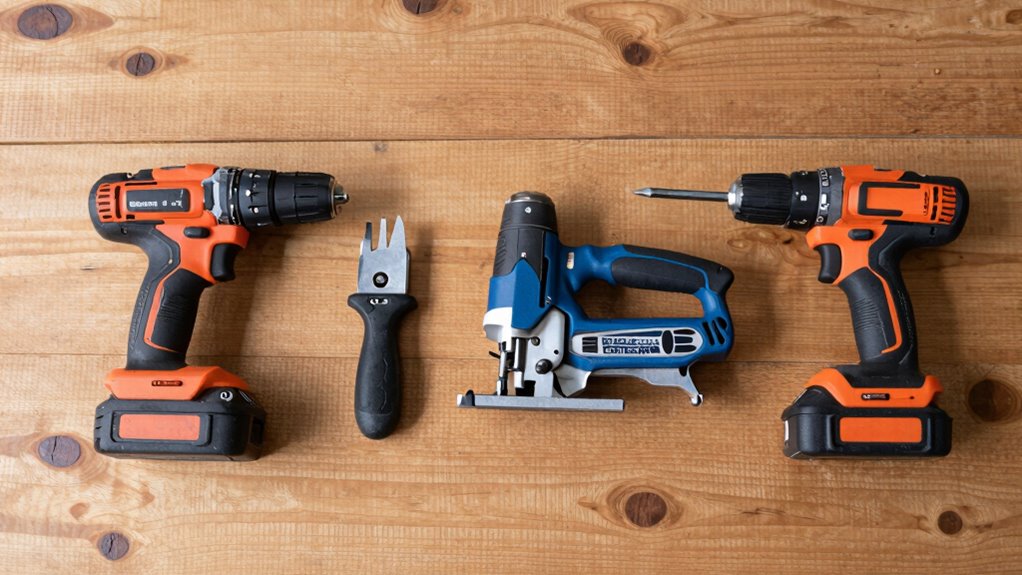
To build your skills efficiently, start with versatile tools like a cordless drill, which handles drilling, screwing, and attachments. Next, add a jigsaw for curved cuts and intricate projects, followed by a power sander to achieve smooth finishes. Once confident, consider a circular saw for straight cuts in larger tasks. Starting with these essentials creates a strong foundation, keeps safety a priority, and sets you up for more advanced projects as you grow. Keep exploring to learn more.

Get baby and family essentials delivered free — and shop member deals
- Fast, free delivery on millions of items
- Access to Prime Big Deal Days deals on October 6–7
- Prime Video, Amazon Music and more included
Key Takeaways
- Start with versatile, easy-to-handle tools like a cordless drill to build confidence and foundational skills.
- Progress to common, straightforward tools such as a jigsaw for intricate cuts and curves.
- Introduce power sanders to improve surface finishes once basic cutting skills are established.
- Advance to more specialized tools like a circular saw as comfort and skills grow.
- Focus on safety, maintenance, and proper technique at every stage to ensure efficient, safe DIY projects.
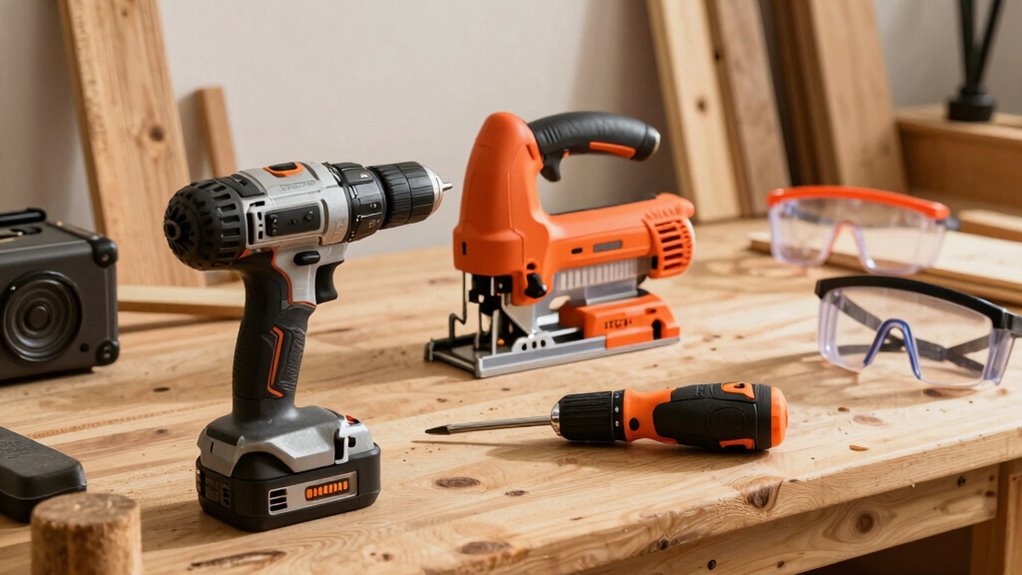
Starting with the right power tools can make your DIY projects safer and more efficient, especially if you’re new to woodworking or home improvement. When you’re just beginning, it’s tempting to buy everything at once, but a strategic approach guarantees you build a solid foundation without feeling overwhelmed. The first tools you should consider are essential, versatile, and easy to handle—these will serve as your core and help you develop confidence and skill before investing in more specialized equipment.
A good starting point is a cordless drill. It’s arguably the most useful tool for a beginner because it handles drilling, screwing, and even some sanding tasks with the right attachments. When selecting a drill, prioritize safety precautions like choosing models with ergonomic grips, safety locks, and ensuring you understand how to operate it properly. Regular maintenance tips, such as keeping the battery charged and cleaning dust from vents, will prolong its life and keep it functioning safely.
Next, a jigsaw is a versatile power tool that allows you to make curved and intricate cuts, which are common in many projects. It’s relatively lightweight and straightforward to operate, making it ideal for beginners. Remember to wear safety goggles and ear protection, and always secure your material properly before cutting. Maintenance tips for a jigsaw include inspecting blades regularly for dullness or damage, cleaning dust from the housing, and storing it in a dry place to prevent rust. Additionally, understanding power tool safety is crucial for avoiding accidents during operation. Familiarizing yourself with the proper handling of these tools can significantly reduce the risk of injury. Learning about indoor air quality can also be beneficial since dust and debris created during woodworking can impact your indoor environment if not properly managed.
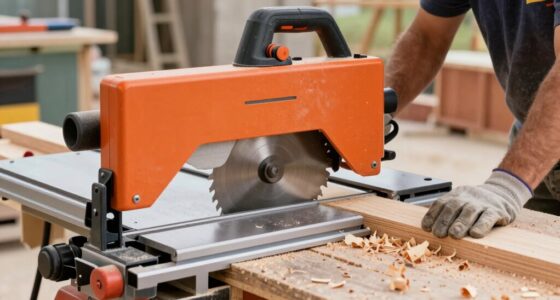
A circular saw can be your next purchase once you’re comfortable with more basic tools. It speeds up straight cuts in wood and other materials, and with proper safety precautions—like using a push stick, wearing safety glasses, and keeping your hands away from the blade—it can be quite safe. Maintenance tips involve checking the blade for sharpness, ensuring the guard moves freely, and cleaning dust and debris after each use to maintain peak performance.
Lastly, don’t forget about a power sander, which helps achieve smooth finishes. It’s easy to operate, but safety precautions include wearing a dust mask and ear protection. Regular maintenance involves replacing worn sanding pads and cleaning dust collection ports to prevent clogging.
As an affiliate, we earn on qualifying purchases.
Frequently Asked Questions
How Do I Determine Which Power Tool Brand Is Best for Beginners?
To determine the best power tool brand for beginners, consider tool weight and brand warranties. You want lightweight tools that are easier to handle, reducing fatigue. Look for brands that offer solid warranties, giving you peace of mind and support if something goes wrong. Research customer reviews to see how brands stand behind their products. Combining these factors helps you pick a reliable, beginner-friendly brand that meets your needs.
What Safety Gear Is Essential When Using New Power Tools?
When you’re starting with new power tools, don’t forget to wear essential safety gear—protective eyewear and hearing protection. These items shield your eyes from flying debris and safeguard your ears from loud noises, making your experience safer and more comfortable. Always prioritize your safety first, as even small mishaps can have lasting effects. Wearing the right gear turns a good project into a safe, enjoyable learning experience.
How Much Should I Expect to Spend on Beginner Power Tools?
You should budget around $150 to $300 for beginner power tools, including essential items like a drill, saw, and sander. Keep in mind, you’ll also want power tool accessories such as drill bits and sanding pads, which add to your costs. Starting with simple beginner project ideas helps you learn and grow. As you gain experience, you can invest more in specialized tools, making your projects easier and more enjoyable.
Are Cordless or Corded Tools Better for Beginners?
Cordless tools are better for beginners because they offer greater mobility and convenience, especially for small projects. You’ll appreciate their battery longevity, which allows you to work longer without recharging. Plus, their improved tool ergonomics make handling easier and less tiring. While corded tools provide consistent power, cordless options are more flexible, making them ideal as you learn and build your skills.
How Do I Maintain and Store My Power Tools Properly?
To maintain your power tools, regularly clean them with a damp cloth to remove dust and debris. Check for loose parts and tighten or replace them as needed. Store your tools in designated storage solutions like toolboxes or wall mounts to prevent damage and keep them organized. Always unplug tools before cleaning or storing, and keep them in a dry, cool place to prevent rust and guarantee longevity.
As an affiliate, we earn on qualifying purchases.
Conclusion
Remember, starting with the right power tools sets you up for success. As the saying goes, “A chain is only as strong as its weakest link.” Focus on building a solid foundation with essential tools first, then expand as your skills grow. Patience and proper planning will save you time and frustration in the long run. Stick to this order, and you’ll turn your DIY projects into impressive achievements with confidence.
As an affiliate, we earn on qualifying purchases.
As an affiliate, we earn on qualifying purchases.
Evergreen bestsellers Picks
bestsellers
As an affiliate, we earn on qualifying purchases.