To catch leaks early, place sensors near appliances, under sinks, and along plumbing lines, but don’t forget hidden spots like inside cabinets, behind walls, or in attic crawlspaces. Many people overlook these high-risk areas, allowing leaks to cause serious damage before detection. Proper placement and regular checks are essential. Keep an eye on these key spots—you’re about to learn even more ways to protect your home effectively.
Key Takeaways
- Place sensors near appliances, under sinks, and around plumbing lines to catch leaks early.
- Install sensors in hidden areas like behind walls, inside cabinets, and attic crawlspaces often overlooked.
- Position sensors at high-risk spots such as basement corners, near water heaters, and under sinks.
- Regularly inspect and calibrate sensors in out-of-sight areas to ensure optimal leak detection.
- Don’t forget to cover less obvious spots like attic vents, insulation gaps, and behind appliances for comprehensive protection.
Amazon Product B0D6RY1FSL
As an affiliate, we earn on qualifying purchases.
Why Proper Leak Sensor Placement Is Critical
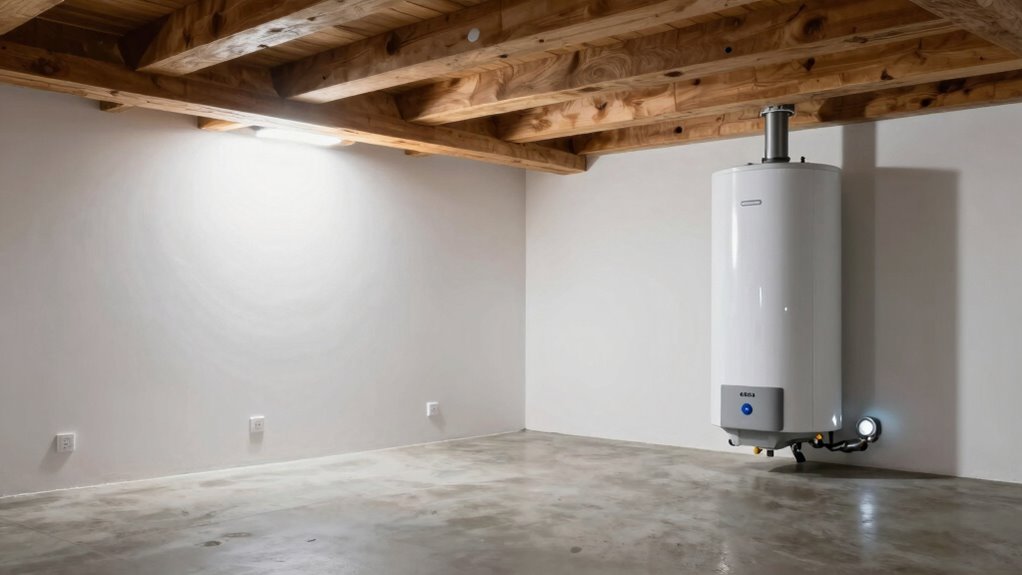
Proper leak sensor placement is essential because even the most sensitive detectors can miss leaks if they’re not positioned correctly. Accurate sensor calibration ensures your leak detection technology works at its best, but placement is equally important. If sensors aren’t installed in the right spots, they won’t detect leaks early enough, risking water damage or costly repairs. Position sensors near common leak sources like under sinks, around appliances, or along plumbing lines. Avoid placing sensors where airflow or humidity fluctuations could cause false alarms. Remember, the effectiveness of your leak detection system depends on strategic placement combined with proper calibration. When everything is aligned, you’ll have a reliable system that detects leaks promptly, saving you time, money, and stress. Safe and effective placement is vital for maximizing leak detection. Additionally, understanding ventilation considerations can help prevent false alarms caused by humidity or airflow disturbances, especially in areas with air circulation that might influence sensor accuracy. Incorporating sensor placement strategies can further enhance detection reliability in complex environments. Proper positioning ensures sensors are in optimal locations where leaks are most likely to be detected early.
Amazon Product B0D1R935KD
As an affiliate, we earn on qualifying purchases.
Common Mistakes When Installing Leak Sensors

Many people overlook hidden areas where leaks can occur, which can make sensors ineffective. Placing sensors in obvious spots alone often leaves gaps in coverage. To guarantee maximum protection, you need to identify and include all potential leak points, even those less visible. Additionally, understanding home and small-shop water systems can help you better anticipate where leaks might happen and ensure comprehensive sensor placement. Recognizing water pressure fluctuations and how they impact different parts of your system can further improve leak detection accuracy. Being aware of pressure variations within your system can help you prevent false alarms and missed leaks, ensuring your sensors work effectively. Regularly inspecting hidden plumbing can reveal leak risks that are not immediately apparent.
Ignoring Hidden Areas
Ignoring hidden areas during the installation of leak sensors can lead to missed leaks and costly damage. Many overlook hidden corners where water might accumulate unnoticed, such as behind appliances or inside cabinets. Attic spaces are another common blind spot; leaks here can cause extensive damage before detection. Failing to place sensors in these concealed areas means you might not detect leaks early, allowing water to seep into structures and cause mold or structural issues. To avoid this mistake, carefully evaluate every corner and space that’s out of sight. Place sensors strategically in hidden corners and attic spaces where leaks are most likely to go unnoticed. Addressing these hidden areas ensures thorough coverage and early leak detection, saving you money and preventing water damage. Additionally, understanding the importance of sensor placement can significantly improve leak detection effectiveness. Being aware of water flow patterns can help you identify the most vulnerable spots to install sensors for optimal coverage. Recognizing common blind spots in your home’s layout can help target installation efforts more effectively. Incorporating effective installation techniques ensures sensors are optimally positioned to detect even the most elusive leaks. Moreover, inspecting less obvious locations regularly can help catch leaks that might otherwise be missed.
Improper Sensor Placement
One of the most common mistakes when installing leak sensors is placing them in the wrong locations, which can prevent early detection of water leaks. Incorrect placement often results from overlooking key areas prone to leaks or relying solely on intuitive spots. Additionally, neglecting proper sensor calibration can reduce accuracy, causing false alarms or missed leaks. Modern leak detection technology relies on precise sensor positioning to work effectively. You should position sensors near potential leak sources, like under sinks or around appliances, and ensure they’re calibrated correctly for sensitivity. Misplaced sensors or improper calibration lessen their ability to catch small leaks early, risking water damage. Always follow manufacturer guidelines for placement and calibration to maximize your leak detection system’s effectiveness. Proper sensor placement ensures comprehensive coverage and early leak detection, reducing the risk of costly water damage. Furthermore, understanding proper sensor placement is essential for comprehensive coverage and early leak detection. Regularly inspecting your sensors and maintaining their calibration can also help prevent false alarms and improve detection accuracy. It is also beneficial to consider the types of sensors available to match specific needs and environments. Being aware of the most common leak sources in your home can guide you in selecting optimal sensor locations for better protection.
Amazon Product B0DSVFBXZT
As an affiliate, we earn on qualifying purchases.
Where Many People Miss Leak Detection: Inside Walls and Behind Appliances
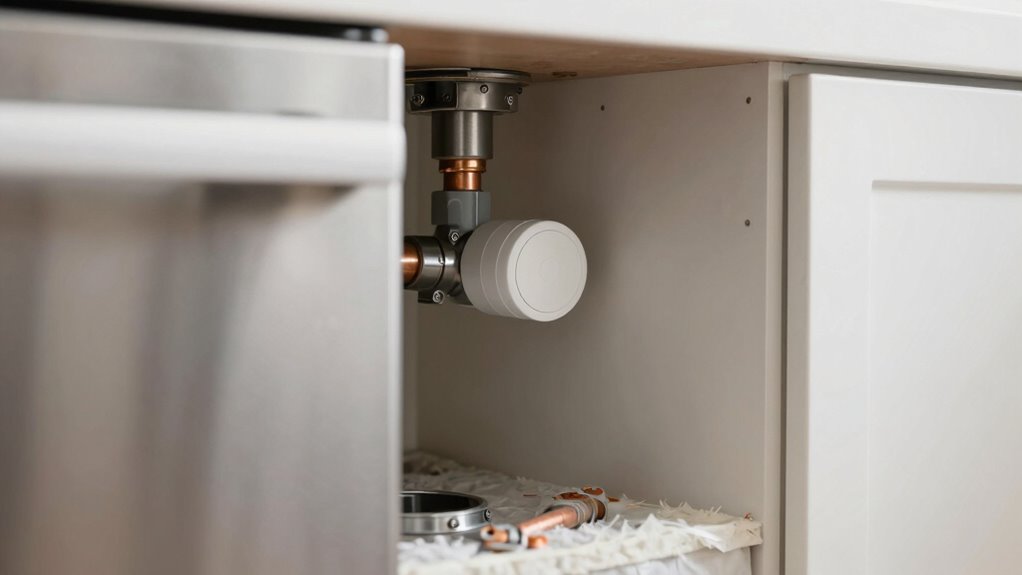
Many leaks hide behind walls or behind major appliances, making them easy to miss. You might not see a problem until significant damage occurs. Checking under cabinets, sinks, and inside wall spaces is essential for early detection.
Hidden Wall Spaces
Hidden wall spaces and behind appliances are common places where leaks often go unnoticed. These hidden wall spaces can trap moisture, leading to mold and structural damage if not detected early. Attic crawlspaces are especially vulnerable, as small leaks in plumbing or HVAC systems can accumulate behind walls or in tight corners. Since these areas are often out of sight, it’s easy to overlook signs of a leak, such as musty odors or discoloration. Installing leak sensors in these hidden spaces provides early warning before significant damage occurs. Proper sensor placement ensures early detection and is crucial for preventing costly repairs. Make sure to place detectors at strategic points in walls and near plumbing lines, especially in attic crawlspaces where leaks tend to develop quietly. Regular inspection and sensor placement in these concealed areas are key to preventing costly repairs.
Behind Major Appliances
Major appliances like dishwashers, refrigerators, and washing machines often hide leaks behind their panels or inside walls, making detection challenging. Proper appliance placement is key—install sensors near the base or behind these appliances where leaks are most likely to occur. Keep in mind that sensor calibration is essential; if your sensors aren’t calibrated correctly, they might miss small leaks or produce false alarms. Regularly check and adjust your leak detectors to ensure they respond accurately to moisture. Since these areas are often out of sight, proactively placing sensors here can save you from costly water damage. Remember, early detection depends on strategic placement and proper calibration, so don’t overlook these hidden spots in your home. Incorporating essential oils for detecting moisture in sensitive areas may also help identify early signs of leaks through subtle scent changes.
Under Cabinets and Sinks
Have you checked beneath your sinks or inside the cabinets? Many leaks hide here, often behind walls or under pipes. To catch trouble early, consider these key spots:
- Pipe insulation around exposed pipes, which can hide small leaks or moisture buildup.
- Drain traps, as leaks here can cause water damage and mold if unnoticed.
- Inside the cabinet walls, where water lines run, and leaks can seep into the framing.
- Beneath the sink, especially near connections and joints, where even minor drips can escalate.
- Regularly inspecting water quality and flow rate can help identify issues before they become costly problems.
Placing leak detectors near pipe insulation, drain traps, and beneath the sink guarantees you catch leaks before they cause major damage. Regular checks and sensor placement here save you time and money.
Amazon Product B0FW4H9MXB
As an affiliate, we earn on qualifying purchases.
Best Places to Install Leak Sensors in Your Plumbing System
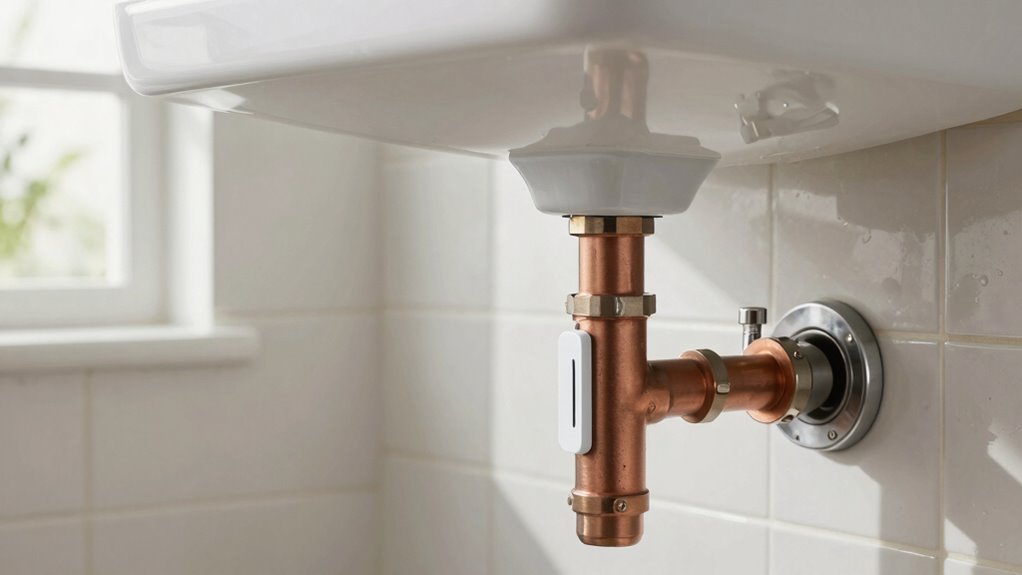
To effectively catch leaks early and prevent water damage, you should install leak sensors in the most vulnerable areas of your plumbing system. Focus on spots prone to leaks or damage, such as near appliances, water heaters, and along exposed pipes. Proper sensor placement helps with plumbing maintenance and conserves water by alerting you to issues before they escalate. Developing a methodical testing process for your leak detection system ensures consistent coverage and early leak identification. Additionally, choosing sensors with reliable detection capabilities can significantly improve your chances of catching leaks promptly.
How to Find High-Risk Spots for Leaks in Your Home

Identifying high-risk spots for leaks in your home involves understanding where plumbing is most vulnerable to damage or failure. Focus on key areas where issues are common:
- Pipe insulation—check for gaps or deterioration, especially in cold weather, which can cause pipes to freeze and burst.
- Attic vents—leaks can occur around poorly sealed vents, leading to water intrusion or mold.
- Under sinks and around appliances—watch for signs of leaks or corrosion in connections.
- Basement and crawl spaces—these areas are prone to hidden leaks, especially if plumbing runs through uninsulated or poorly protected sections.
Regular inspections of these spots help you catch potential problems early before they turn into major leaks.
Tips to Maximize Leak Sensor Effectiveness and Catch Leaks Early

Maximizing the effectiveness of your leak sensors requires proper placement, regular testing, and maintenance. Guarantee your sensors are correctly calibrated, as sensor calibration keeps them sensitive and accurate over time. Regularly test your leak detection technology to confirm it’s functioning properly; many sensors have built-in test features. Keep sensors clean and free of dust or debris that could impair performance. Position sensors in high-risk areas identified earlier, but also consider areas where leaks might develop unexpectedly. Early detection depends on proactive maintenance and timely calibration, preventing costly water damage. Incorporate advanced leak detection technology with features like alerts or remote monitoring to catch leaks sooner. Consistent attention to these tips helps you stay ahead of leaks and minimizes potential damage.
Final Checklist: Are You Covering the Key Spots for Leak Prevention?
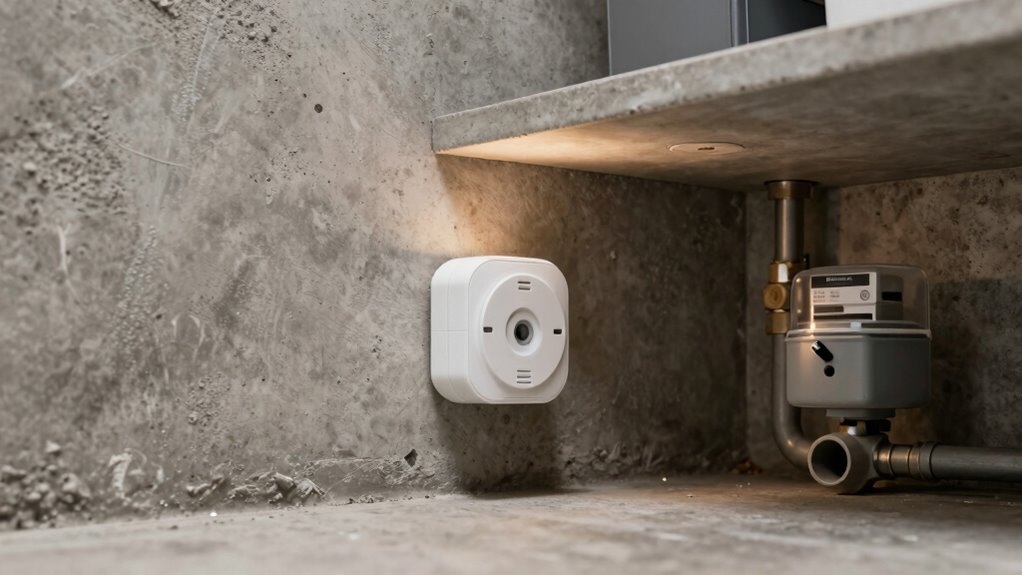
Ensuring your leak prevention efforts are thorough means double-checking that all key spots are covered. Start with a final review to prevent water intrusion and verify your sensors are properly calibrated.
Here’s a quick checklist:
- Confirm sensors are placed near water sources, including appliances, pipes, and basements.
- Check sensor calibration regularly to maintain detection accuracy.
- Inspect hidden or overlooked areas like behind appliances or under sinks.
- Test sensors to verify they trigger alerts promptly.
Covering these spots minimizes water intrusion risks and guarantees your leak detection system is reliable. Proper placement and calibration are vital for catching leaks early, saving you from costly damage. Stay vigilant, and keep your sensors functioning at their best.
Frequently Asked Questions
How Often Should I Test My Leak Sensors for Reliability?
You should test your leak sensors monthly to guarantee reliability. Regular sensor calibration helps maintain accuracy, so don’t skip it. During testing, verify that notification settings are functioning correctly, and alerts are sent promptly. This routine keeps your system dependable and prevents leaks from causing damage. Remember, consistent testing and calibration are key to maintaining trusted leak detection, giving you peace of mind knowing your sensors work when you need them most.
Can Leak Sensors Detect Slow Leaks or Only Sudden Bursts?
You can catch slow leaks with your sensors if they have high sensitivity, so don’t overlook that feature. Leak detection speed varies based on sensor sensitivity—some detect gradual leaks as well as sudden bursts. Keep in mind, the right sensor can alert you early, preventing bigger issues. When choosing sensors, look for those designed for slow leak detection, since catching leaks early is the key to avoiding costly damage.
Are There Specific Sensor Types Better for Certain Home Areas?
Yes, certain sensor types work better for specific home areas. For example, moisture sensors are ideal near sinks and appliances, while smoke detectors suit bedrooms and hallways. When considering sensor placement, choose the right sensor type for each zone to maximize detection efficiency. You’ll want to match sensor capabilities with the risks in each area, ensuring quick alerts and better safety coverage throughout your home.
How Do Environmental Factors Affect Leak Sensor Performance?
Imagine a leak sensor as a vigilant guard, standing firm amid changing weather. Humidity impact and temperature fluctuations can cause false alarms or reduce sensitivity, making it harder for your sensor to detect real leaks. When temperatures swing or humidity rises, it may trigger unnecessary alerts or miss actual leaks. To guarantee ideal performance, place sensors in environments with stable humidity and temperature, avoiding areas prone to extreme fluctuations.
What Maintenance Is Required to Keep Leak Sensors Functioning Properly?
You should regularly perform sensor calibration to make certain your leak detector remains accurate. Check and replace batteries as needed, typically every 6 to 12 months, to prevent false alarms or sensor failure. Keep the sensor area clean and free of dust or debris, and inspect for corrosion or damage. Proper maintenance, including calibration and battery replacement, keeps your leak sensors functioning reliably and extends their lifespan.
Conclusion
To catch leaks early, proper sensor placement is essential—you might miss 80% of leaks behind appliances or inside walls if you’re not careful. Regularly check the key spots mentioned, like under sinks and behind washers, to prevent costly water damage. Remember, investing a little time now can save you thousands later. Stay vigilant and guarantee your sensors are covering the most vulnerable areas—you’ll thank yourself when leaks are caught early and damage is minimized.