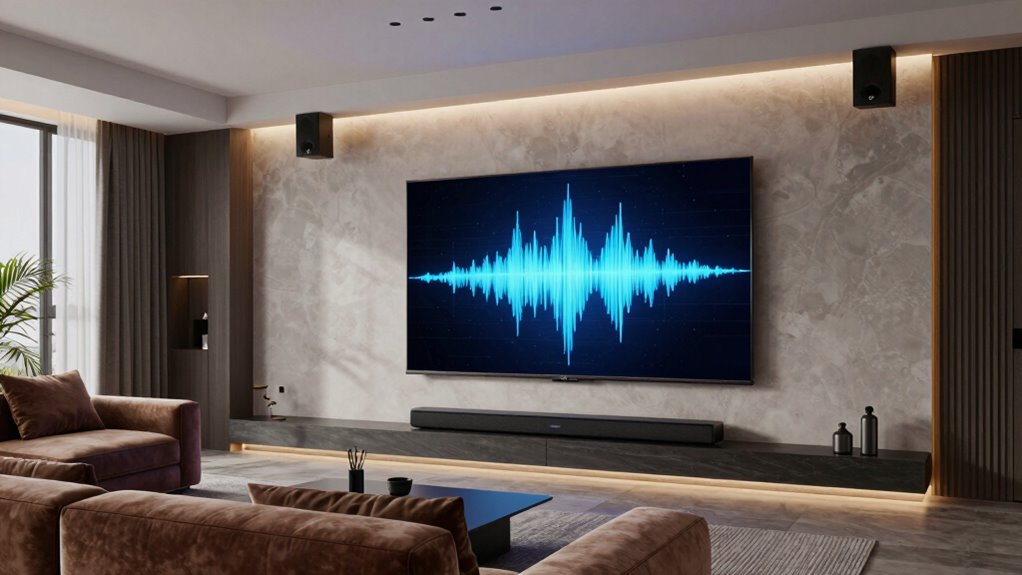

When choosing a Dolby Atmos soundbar, you’ll find both genuine systems with dedicated upward-firing speakers and virtual options that use processing to simulate height effects. Genuine Atmos offers more precise, immersive overhead sound, while virtual models deliver convincing effects through clever signal processing and speaker placement. Although virtual Atmos can sound impressive, it may lack the natural depth of true upward-firing speakers. Continue exploring to learn how to optimize your Atmos experience at home.
Key Takeaways
- Genuine Dolby Atmos soundbars use dedicated upward-firing speakers for true overhead sound, offering more precise spatial effects.
- Virtual Atmos relies on signal processing and speaker placement to simulate height effects without physical overhead speakers.
- True Atmos provides more natural, immersive 3D sound, while virtual Atmos may sound less accurate but still convincingly immersive.
- Genuine Atmos typically delivers clearer dialogue and dynamic sounds, whereas virtual Atmos can involve compromises in clarity.
- Proper calibration and room setup are essential for both, but genuine Atmos benefits from dedicated hardware for optimal experience.

ULTIMEA 5.1CH Surround Sound Bar with Subwoofer, Dolby Atmos, VoiceMX, BassMX, APP, 300W Soundbar for Smart TV, Home Theater Surround Sound System for TV, BT 5.4, Poseidon M60 (2025 Model)
Simplified 5.1ch Dolby Atmos Setup: Enjoy immersive 4D sound with real Dolby Atmos and 5.1-channel audio. Five built-in…
As an affiliate, we earn on qualifying purchases.
As an affiliate, we earn on qualifying purchases.
What Is Dolby Atmos and How Does It Work in Soundbars
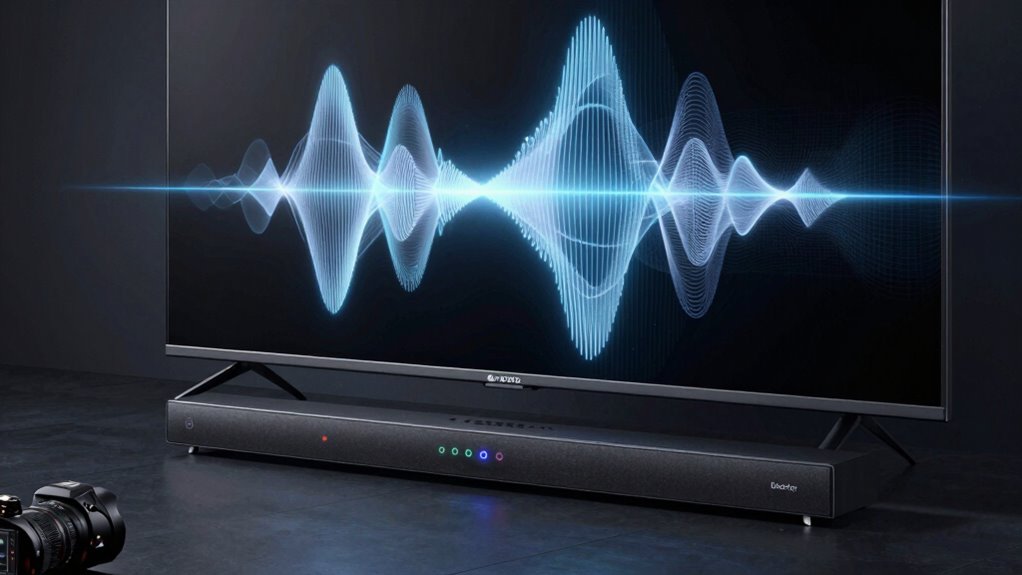
Dolby Atmos is a revolutionary audio technology that creates a more immersive listening experience by adding height channels to surround sound. Instead of just hearing sound from around you, Atmos uses audio virtualization to simulate sounds coming from above, making scenes feel more three-dimensional. In soundbars, this technology works by processing audio signals to position sounds precisely in space, giving you a sense of height and depth. It enhances the sense of realism, whether you’re watching movies or gaming. The soundbar’s internal processing creates the illusion of overhead sound, even without dedicated overhead speakers. This approach makes immersive audio accessible in smaller spaces, delivering a richer, more engaging experience with a surround sound feel that truly surrounds you. Additionally, channel virtualization techniques help simulate the overhead effects, further enriching the audio experience. Modern soundbars often incorporate digital signal processing to optimize these effects and improve overall sound quality. Furthermore, advancements in spatial audio technology continue to push the boundaries of what’s possible in home entertainment systems.

TCL S45H 2.0 Sound Bar for Smart TV | Dolby Atmos DTS:X Auto Room Calibration| 100W Power Wireless Bluetooth Home Theater Audio | App & Remote Control | Latest Model
Why Choose TCL: TCL is a global leader in TVs and audio, combining innovative technology with reliable performance….
As an affiliate, we earn on qualifying purchases.
As an affiliate, we earn on qualifying purchases.
How Genuine Dolby Atmos Soundbars Create Overhead Sound
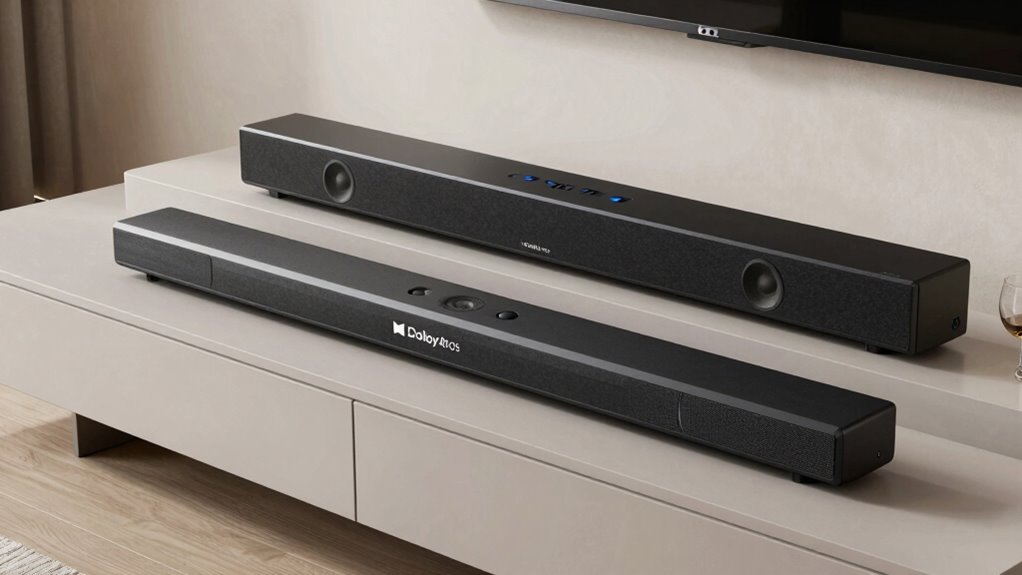
Genuine Dolby Atmos soundbars create overhead sound by using advanced speaker configurations and sophisticated processing techniques. They often include upward-firing or side-firing speakers that bounce sound off the ceiling, creating a sense of height in your surround sound experience. Proper speaker calibration is vital to maximize this effect; the soundbar adjusts its output based on your room’s acoustics to produce accurate overhead effects. These calibration processes ensure that the overhead sound integrates seamlessly with front and surround channels, delivering a realistic three-dimensional audio environment. By carefully managing speaker placement and calibration, genuine Dolby Atmos soundbars can convincingly simulate overhead sound, enhancing your immersion without requiring additional speakers or complex setups. Additionally, the effectiveness of these features depends heavily on room acoustics, which can influence how well the overhead sound is perceived and integrated.
ULTIMEA 5.1CH Surround Sound Bar with Subwoofer, Dolby Atmos, VoiceMX, BassMX, APP, 300W Soundbar for Smart TV, Home Theater Surround Sound System for TV, BT 5.4, Poseidon M60 (2025 Model)
Simplified 5.1ch Dolby Atmos Setup: Enjoy immersive 4D sound with real Dolby Atmos and 5.1-channel audio. Five built-in…
As an affiliate, we earn on qualifying purchases.
As an affiliate, we earn on qualifying purchases.
How Virtual Atmos Soundbars Simulate 3D Audio Effects
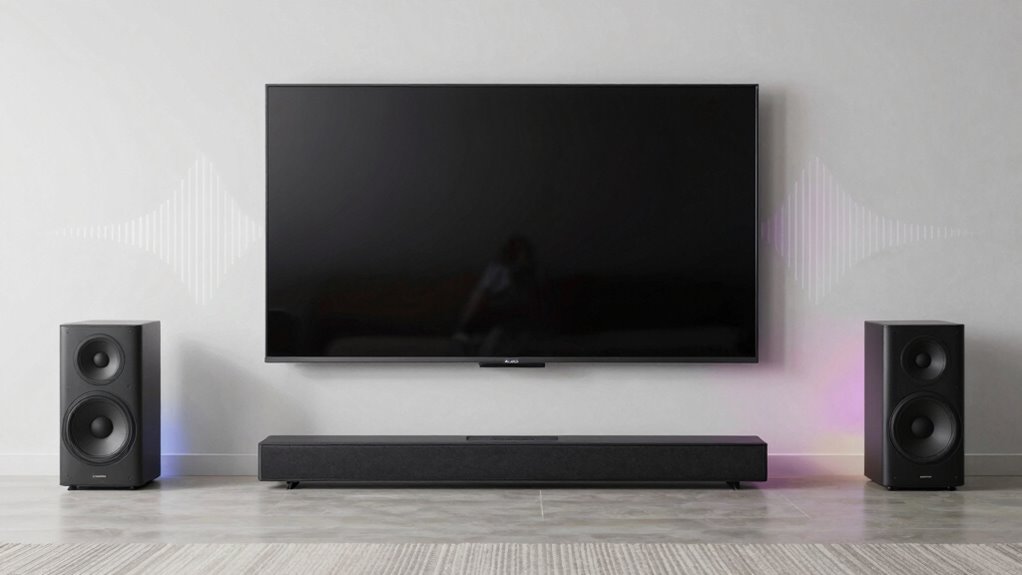
Virtual Atmos soundbars use sound field simulation techniques to create the illusion of 3D audio, making you feel immersed in the scene. They also rely on psychoacoustics to trick your brain into perceiving height and space with fewer speakers. However, these effects have limitations and may not fully replicate the experience of genuine overhead sound. Additionally, audio calibration can significantly impact the effectiveness of virtual Atmos effects. Understanding the acoustic principles behind sound design can help users optimize their setup for a more convincing experience. Incorporating connected equipment that supports precise calibration can enhance the overall virtual Atmos performance and immersion. Proper home audio setup and awareness of room acoustics are essential for maximizing these simulated effects. Being mindful of room acoustics can further improve the clarity and realism of virtual Atmos audio.
Sound Field Simulation Techniques
Sound field simulation techniques are what enable virtual Atmos soundbars to create immersive 3D audio experiences. They use sound field simulation to mimic how sound moves around you, tricking your ears into perceiving height and depth. By employing object-based audio, these soundbars position virtual sound sources in a three-dimensional space, enhancing realism. Sophisticated algorithms analyze your room’s acoustics and generate signals that emulate true spatial effects. This process involves manipulating sound waves to produce the sensation of sound coming from above and around you. The result is a convincing sense of envelopment despite the lack of physical height channels. Understanding these techniques helps you appreciate how virtual Atmos can deliver engaging audio, even without dedicated upward-firing speakers.
| Technique | Purpose |
|---|---|
| Sound field simulation | Creates spatial sound illusions |
| Object-based audio | Precisely positions sounds in 3D space |
| Room acoustics modeling | Adapts effects to your environment |
| Signal processing | Alters sound to simulate height and depth |
| Psychoacoustic tricks | Enhances perception of immersive sound |
Use of Psychoacoustics
Psychoacoustics plays a crucial role in how virtual Atmos soundbars create the illusion of three-dimensional sound. They leverage psychoacoustic illusions to trick your brain into perceiving sounds as coming from above or around you, even when they originate from a single speaker. By carefully manipulating sound cues like timing, volume, and phase, these devices influence your auditory perception, making it seem as if audio is coming from different heights and directions. This technique exploits natural auditory perception processes, enabling you to experience a more immersive soundstage without multiple speakers. Essentially, virtual Atmos soundbars tap into how your brain interprets spatial cues, creating a convincing 3D audio environment through strategic sound design rooted in psychoacoustics.
Limitations of Virtual Effects
While virtual Atmos soundbars can create impressive illusions of three-dimensional sound, they have inherent limitations that prevent them from fully replicating true spatial audio. These effects rely on psychoacoustic tricks that influence your spatial perception and sound localization. However, virtual effects can’t precisely mimic the way sound interacts with your environment or the subtle cues your brain uses to determine direction and distance. This often results in a less authentic experience compared to real Atmos setups. The table below highlights key differences:
| Aspect | Virtual Atmos Effects | True Atmos Experience |
|---|---|---|
| Spatial Perception | Simulated through psychoacoustics | Actual 3D sound environment |
| Sound Localization | Limited accuracy | Precise sound placement |
| Environmental Interaction | Reduced realism | Fully immersive |
| Dynamic Range | Restricted | Expanded |
| Overall Authenticity | Illusory | Genuine |
Additionally, virtual Atmos solutions Free Floating often struggle to emulate the full depth and clarity of a true Atmos setup, especially in complex acoustic environments.

FUGWEFRG Replacement Headset Assy Audio Calibration System for Bose Soundbar 300 500 600 650, 3.5mm Jack Male Audio Calibration Adapter Cable 10FT (638011-0010)
Perfect Compatibility: This audio calibration headset is specifically designed as a direct replacement for the Bose Soundbar120 130…
As an affiliate, we earn on qualifying purchases.
As an affiliate, we earn on qualifying purchases.
Do Genuine and Virtual Atmos Soundbars Differ in Sound Quality?
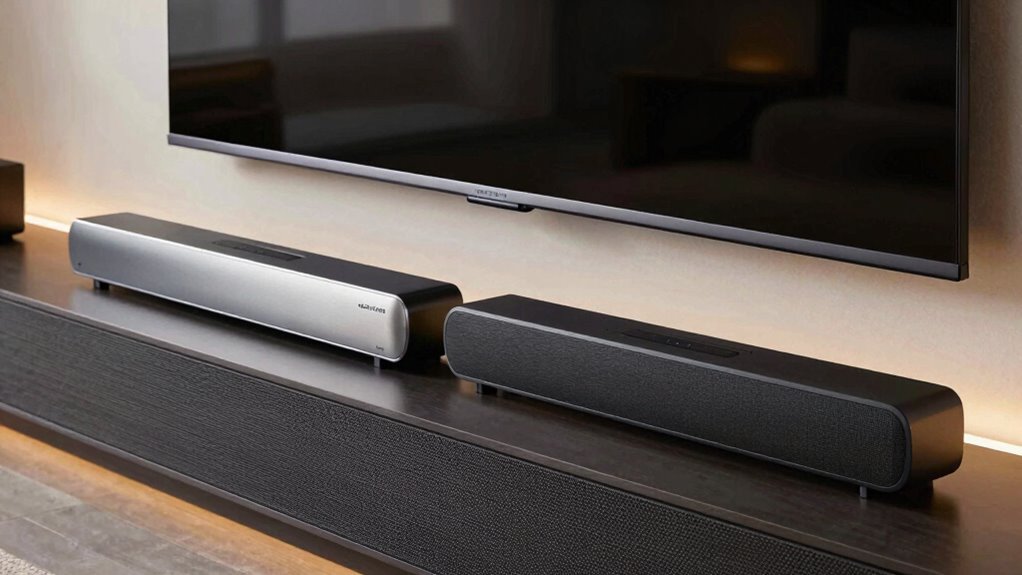
Genuine Atmos soundbars typically deliver a more immersive and precise audio experience because they contain dedicated upward-firing speakers that produce true overhead sounds. This speaker design allows for accurate spatial placement, making you feel surrounded by sound. In contrast, virtual Atmos relies on audio processing and clever speaker placement to simulate overhead effects, which can lead to some compromises. Additionally, audio compression used in virtual setups may reduce clarity and dynamic range, affecting overall sound quality. With genuine Atmos, the audio remains less compressed, preserving detail and spatial accuracy. While virtual Atmos can sound impressive, especially in smaller spaces, it generally can’t match the depth and realism of true Atmos soundbars with dedicated speakers. Moreover, the use of sound design techniques in genuine Atmos setups enhances the realism and immersive quality of the audio experience.
How to Choose Between Genuine and Virtual Atmos Soundbars
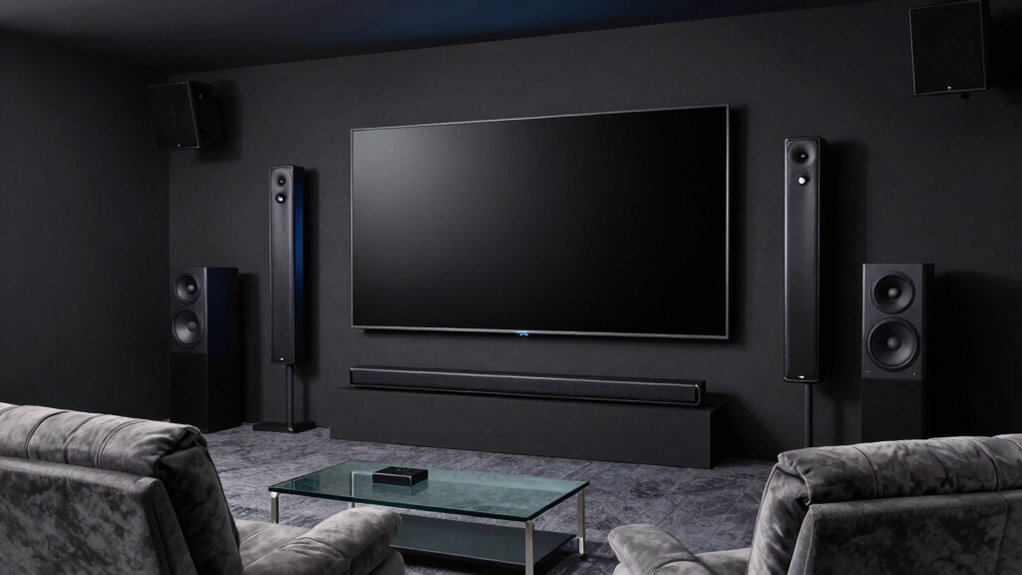
Choosing between genuine and virtual Atmos soundbars depends on your priorities and room setup. If you want a true surround sound experience with immersive height effects, a genuine Atmos soundbar with multiple speaker configurations is ideal. These models feature upward-firing speakers that bounce sound off the ceiling, creating a three-dimensional soundstage. However, they tend to be more expensive and require more space. Virtual Atmos soundbars, on the other hand, simulate surround sound with fewer speakers and advanced processing. They’re more affordable, easier to install, and work well in smaller rooms. Consider your budget, room size, and preferred audio experience. If you value authentic height effects and detailed surround sound, genuine Atmos is worth the investment. For convenience and cost savings, virtual models can still deliver impressive sound. Understanding the audio processing behind virtual Atmos can help you appreciate how they simulate immersive effects.] Additionally, understanding the difference between genuine and virtual Atmos can help you make an informed decision aligned with your home theater goals.
Pros and Cons of Genuine vs Virtual Atmos Soundbars
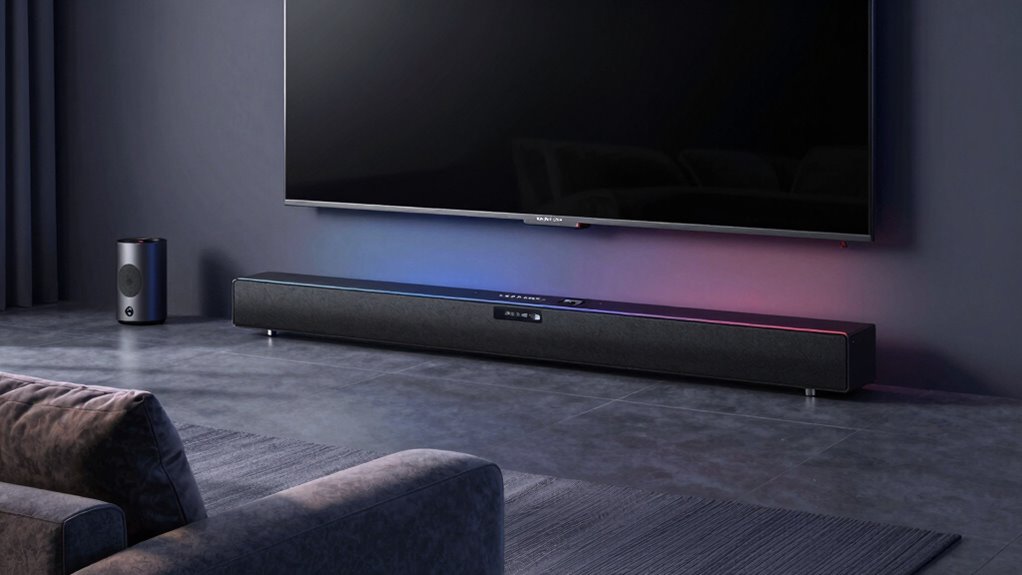
Deciding between genuine and virtual Atmos soundbars involves weighing their respective advantages and drawbacks. Genuine Atmos soundbars often deliver superior surround sound and deeper audio immersion, thanks to dedicated upward-firing speakers that create a more authentic Atmos experience. However, they tend to be more expensive and require more space for ideal placement. Virtual Atmos soundbars, on the other hand, use signal processing to simulate surround sound, making them more affordable and easier to set up. While they can produce a convincing sense of height and spatial audio, the immersion isn’t as natural or precise as genuine Atmos systems. Additionally, understanding audio processing techniques can help you better evaluate the effectiveness of virtual Atmos implementations. For example, the way sound elevation is simulated can significantly impact how immersive the experience feels. Ultimately, genuine soundbars offer better surround sound quality, but virtual options provide a practical, budget-friendly alternative for enhancing your home theater experience.
Tips to Get the Best Atmos Experience at Home
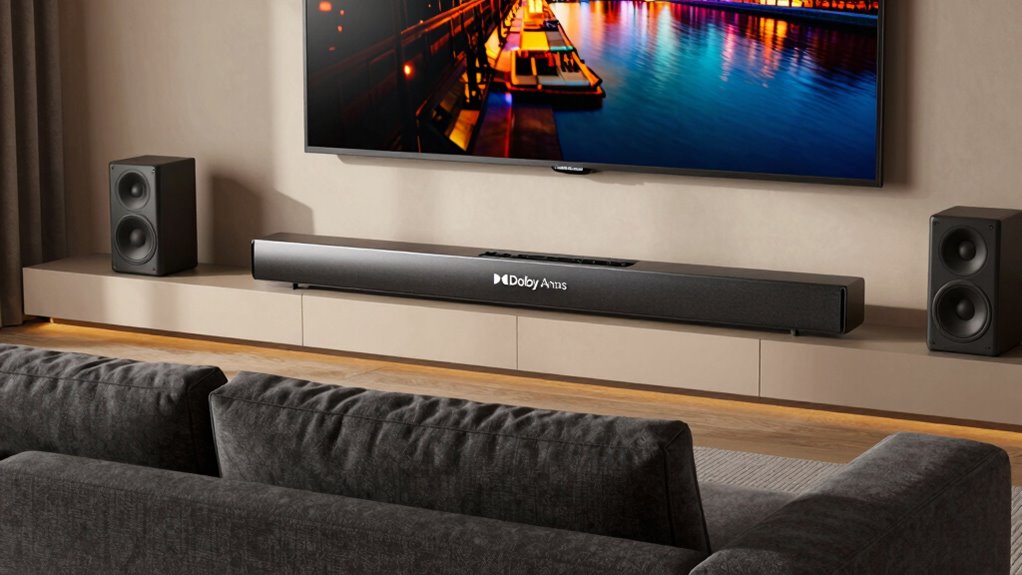
To maximize your Atmos experience, start with ideal speaker placement—position your soundbar and speakers for clear, immersive sound. Improving your room’s acoustics by adding rugs, curtains, or wall panels can also make a big difference. Small adjustments here can markedly enhance the surround effect and overall sound quality. Additionally, understanding the difference between *real Atmos* and virtual Atmos can help you choose the right setup for your space. Paying attention to room acoustics and how sound interacts with your environment can significantly impact your listening experience. Considering sound interaction within your room can help optimize your Atmos setup for the best immersive experience, especially when you understand how audio environment affects sound distribution. Being aware of sound reflection and how it influences sound clarity can further refine your setup for a truly immersive experience.
Optimal Speaker Placement
Getting the most immersive Dolby Atmos experience starts with strategic speaker placement. To optimize your setup, consider these key points:
- Position upward-firing or ceiling speakers at ear level when seated for clear sound.
- Place side speakers slightly behind your listening position to create a sense of height.
- Maintain consistent spacing between speakers and your seating area to ensure balanced audio.
- Use room acoustics to your advantage by avoiding reflective surfaces directly behind speakers, which can distort sound.
- Understanding the principles of sound localization can help you fine-tune your speaker arrangement for a more realistic Atmos experience. Being aware of Youngster Choice trends can also inspire creative placement ideas that enhance immersion.
Room Acoustics Enhancement
Optimizing your room acoustics can markedly enhance your Dolby Atmos experience by minimizing sound reflections and echo. This improves spatial perception and sharpens audio localization, making Atmos effects more immersive. To achieve this, consider adding soft furnishings like rugs, curtains, or upholstered furniture to absorb sound. Strategically placing diffusers or acoustic panels on walls can also help control reflections. Be mindful of room shape and avoid large, flat surfaces that cause echo. Incorporating acoustic treatment techniques tailored to your space can further refine sound quality. Here’s a visual to guide you:
| Surface Type | Effect on Sound | Tips |
|---|---|---|
| Hard surfaces | Reflect sound, cause echo | Use soft materials, curtains |
| Soft furnishings | Absorb sound, reduce reflections | Add rugs, cushions |
| Wall panels | Diffuse sound, improve clarity | Install acoustic panels |
Adjusting room acoustics helps your Atmos soundbar deliver precise, three-dimensional audio. Proper room acoustics management can significantly elevate your listening experience.
Should You Invest in a Genuine Atmos Soundbar?
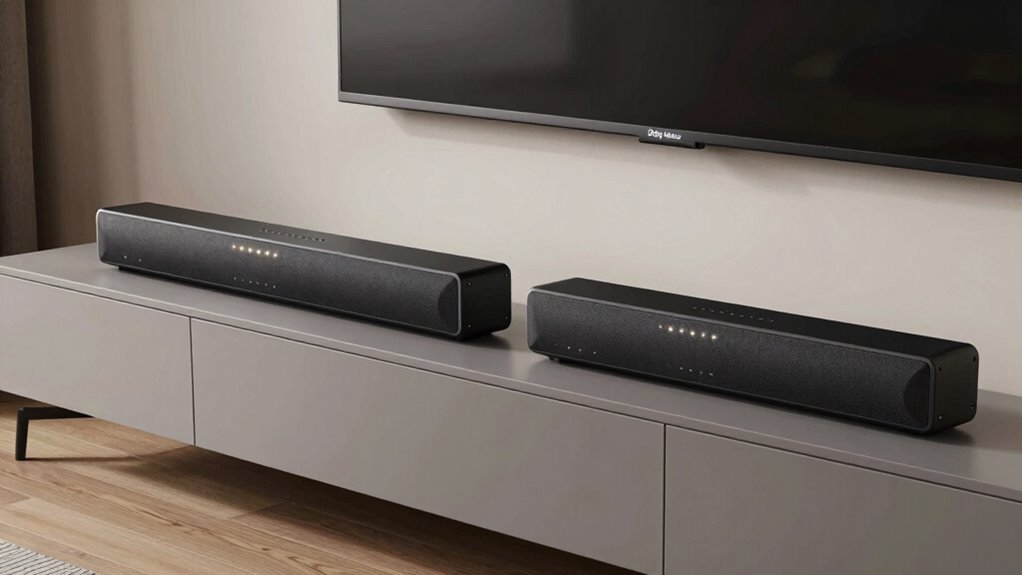
Deciding whether to invest in a genuine Atmos soundbar depends on your priorities and expectations for audio quality. If you crave immersive surround sound with precise audio calibration, a real Atmos setup can elevate your experience. Imagine:
- Crisp, overhead effects that make you feel like you’re in the scene
- Clear dialogue layered seamlessly with background sounds
- Dynamic sound movement that follows on-screen action
- Consistent audio performance regardless of room layout
A genuine Atmos soundbar often offers better surround sound accuracy than virtual options, but it requires proper calibration for ideal performance. If you value authentic, detailed sound and are willing to invest in calibration tools or professional setup, a real Atmos soundbar is worth considering. Otherwise, virtual Atmos may suffice for casual listening.
Frequently Asked Questions
Can Virtual Atmos Soundbars Be Upgraded to Genuine Atmos Later?
You can’t upgrade virtual Atmos soundbars to genuine Atmos later. Upgrading options are limited because virtual Atmos uses software to simulate spatial effects, which can’t be replaced with hardware that delivers true Atmos. To improve sound quality and experience genuine Atmos, you’ll need to invest in a dedicated real Atmos soundbar or a home theater system designed for true Atmos. Virtual Atmos provides a decent experience but isn’t upgradeable to the real thing.
How Does Room Size Affect Atmos Soundbar Performance?
Imagine your room as a concert hall, where size and acoustics shape the sound experience. In a large space, Atmos soundbars may struggle to fill the room, especially if listener distance is great. Room acoustics and distance affect sound clarity and immersion. Smaller rooms enhance Atmos effects, while larger ones can cause sound loss. For ideal performance, consider room size and acoustics when setting up your Atmos soundbar.
Are There Compatibility Issues With Existing Home Theater Setups?
You might face setup compatibility issues when adding a Dolby Atmos soundbar to your existing home theater, especially if your setup isn’t designed for advanced audio devices. Make sure your device integration is seamless by checking if your receiver and source components support Atmos. If not, you may need additional equipment or upgrades to fully enjoy immersive sound. Proper setup compatibility is key to getting the best Atmos experience without headaches.
Which Brands Offer the Best Value for Genuine Atmos Soundbars?
Sure, spending big on some fancy brand is the way to go, right? Actually, when it comes to genuine Atmos soundbars, brands like Vizio, Samsung, and Sony offer the best value, balancing quality with price considerations. You’ll find that these brands deliver immersive sound without breaking the bank. Comparing their features and prices helps you get the most out of your investment, proving that you don’t need to overspend for a truly immersive Atmos experience.
Do Virtual Atmos Soundbars Require Specific Content Formats?
Virtual Atmos soundbars do require specific content formats, mainly involving compatible audio encoding like Dolby Digital Plus or Dolby TrueHD. These formats are essential for delivering the immersive effects that simulate Atmos. If your content isn’t encoded correctly, the soundbar can’t produce the intended surround experience. So, make certain your streaming services or media players support the necessary audio format to enjoy the full virtual Atmos effect.
Conclusion
Ultimately, understanding the difference between genuine and virtual Dolby Atmos soundbars helps you make an informed choice. While genuine Atmos offers a more authentic, immersive experience—especially if the technology truly creates overhead sound—virtual models can still deliver impressive effects at a lower cost. It’s a reminder that sometimes, perceived realism depends on both technology and your environment. So, trust your ears, and remember that even the best tech can’t replace ideal room setup for the ultimate Atmos experience.