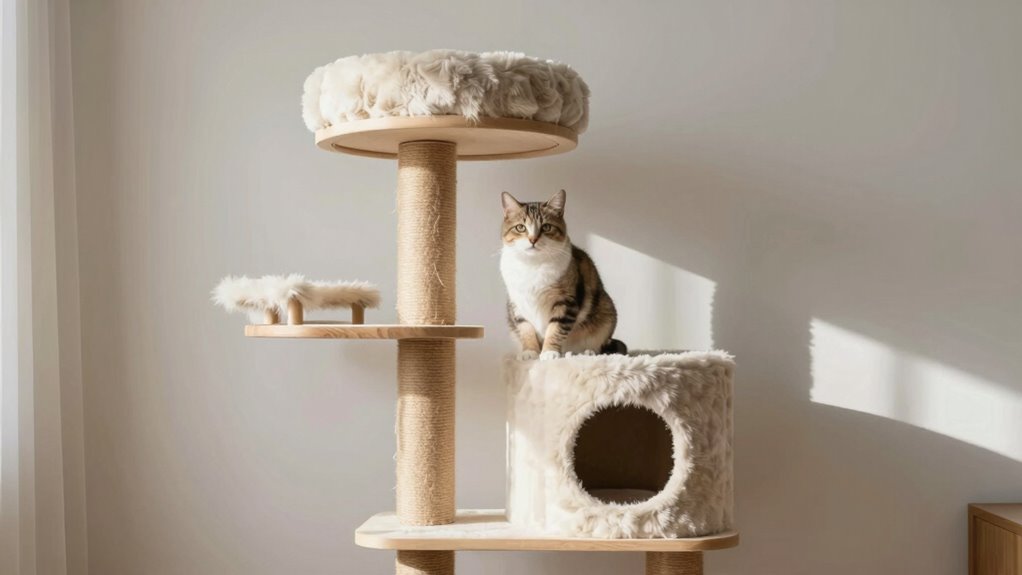

When choosing a cat tree, safety and durability matter more than color or style because they directly impact your cat’s well-being. Look for sturdy materials like solid wood, reinforced posts, and heavy bases that prevent tipping or wobbling. Check that all parts are securely attached and free from sharp edges. Prioritize a structure that can handle active play and jumping, ensuring your cat stays safe and happy. Keep exploring to discover essential tips for selecting the safest, most reliable option.

Turn the school run and nap time into listening time
- Thousands of audiobooks, podcasts and originals
- Listen on your phone, tablet or Echo — also offline
- Cancel anytime
Key Takeaways
- Prioritize durability and sturdy construction to ensure the cat tree withstands active behaviors and lasts longer.
- Verify stability with wide, heavy bases to prevent tipping and accidents during play.
- Ensure all parts are securely attached, free of sharp edges, and safe for scratching and biting.
- Avoid overly tall or unstable trees that could cause injury if they topple or fall.
- Focus on safety features over aesthetic appeal to provide a secure, long-lasting environment for your cat.
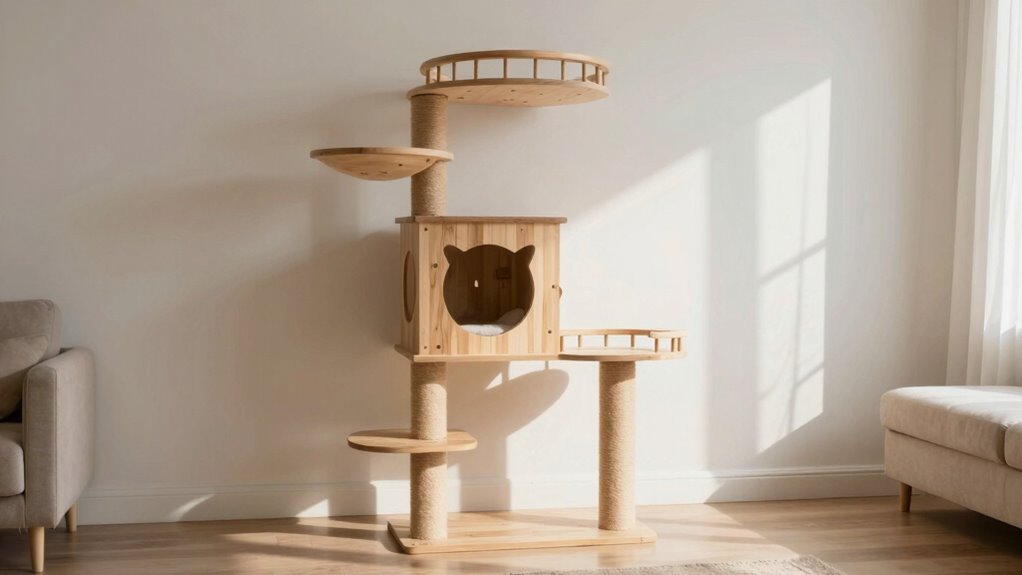
When choosing a cat tree, it’s easy to get caught up in selecting the perfect color or style to match your home decor. But while aesthetics matter, the most important factors are cat tree durability and safety. You want to invest in a piece that can withstand your cat’s playful nature and keep them safe during their adventures. A stylish, flimsy tree might look great temporarily, but if it wobbles or breaks easily, it can pose a risk to your feline friend.
Durability is key because cats are active animals. They scratch, jump, climb, and sometimes even chew on their furniture. A well-built cat tree uses sturdy materials like solid wood or high-quality composite, not cheap particleboard that can splinter or warp over time. Look for reinforced posts, secure platforms, and heavy bases that prevent tipping. The last thing you want is a collapsible tree that topples over when your cat gets too energetic. Investing in a durable structure not only saves you money in the long run but also provides a stable environment where your cat can safely explore and rest. Additionally, choosing a well-constructed structure ensures your pet’s safety over time. Ensuring the materials used are non-toxic and safe for cats is equally important to prevent any health issues from scratches or bites. Proper construction techniques also contribute significantly to the overall safety and longevity of the cat tree.
Cat tree safety is equally critical. Check that all parts are securely attached and that there are no sharp edges or loose screws that could hurt your pet. The surfaces should be non-toxic and safe for cats to scratch and chew. Avoid trees with small, detachable parts that can be swallowed or cause choking hazards. The height of the platforms should accommodate your cat’s size and jumping ability, but avoid overly tall trees that could result in injury if your cat falls. Stability is vital—an unstable tree can topple easily, risking injury and creating a mess. Make sure the base is wide and heavy enough to prevent tipping, especially if you have an energetic or large cat. Moreover, evaluating the stability of the tree before purchase can help prevent accidents in the future.
Additionally, selecting a durable and safe cat tree ensures it remains a reliable and secure place for your feline friend to play and relax over time. While style and color are tempting to prioritize, remember that your cat’s safety and well-being come first. Choose a design that’s practical and built to last, one that can handle your pet’s play habits without compromising safety. A durable, secure cat tree provides a dependable spot for climbing, scratching, and lounging, which keeps your cat happy and your home intact. In the end, selecting a well-made, safe structure ensures your feline’s happiness and your peace of mind—more important than just matching your decor.
As an affiliate, we earn on qualifying purchases.
Frequently Asked Questions
How Do I Clean and Maintain a Cat Tree?
To clean and maintain your cat tree, start by vacuuming the entire structure regularly to remove fur and dirt from climbing challenges and scratching zones. Spot clean with a mild soap solution for any stains or messes, focusing on areas where your cat scratches or climbs. Replace worn-out sisal rope and wipe down surfaces with pet-safe disinfectant. This keeps the tree safe and inviting for your feline friend.
What Safety Features Should I Look for in a Cat Tree?
You should prioritize safety features like sturdy construction with durable materials that can withstand your cat’s activity. Look for a cat tree with a solid base to prevent tipping and non-toxic, durable materials for long-lasting use. While aesthetic appeal matters, make certain the tree’s design doesn’t compromise safety. Features like secure scratching posts, stable platforms, and rounded edges help keep your cat safe and happy while maintaining overall durability and style.
Can a Cat Tree Help With My Cat’s Behavior Issues?
Think of a cat tree as a sturdy jungle gym, channeling your cat’s natural instincts. It helps with behavior issues by providing a safe space for scratching and climbing exercises, reducing destructive tendencies. By offering vertical territory, it satisfies your cat’s need for exploration and exercise, calming nerves and curbing unwanted behaviors. A well-designed cat tree acts as a symbol of a balanced, happy feline lifestyle.
How Do I Choose the Right Size for My Cat or Multiple Cats?
You should choose a cat tree size that comfortably fits your cats, giving them ample space to climb, scratch, and rest. Consider placement—position it in quiet, accessible spots, away from drafts. Look for a model with scratching post integration to keep claws healthy and reduce furniture damage. For multiple cats, opt for larger trees or multiple units to prevent competition, ensuring each cat has enough room to play and relax peacefully.
Are There Eco-Friendly or Sustainable Cat Tree Options Available?
Yes, eco-friendly and sustainable cat trees are available. Look for options made from recycled materials like reclaimed wood or recycled fabric. Check for green certifications, such as FSC or GreenGuard, to guarantee environmentally responsible manufacturing. These options reduce waste and minimize environmental impact, helping you make a greener choice for your cats and the planet. By choosing sustainable materials, you support eco-conscious brands committed to protecting the environment.
As an affiliate, we earn on qualifying purchases.
Conclusion
So, next time you’re faced with choosing a cat tree, remember that your cat’s happiness and comfort matter more than its color or style. It’s funny how, just when you think about matching your decor, your feline friend will probably end up preferring the cozy spot that suits their needs best. Sometimes, it’s the little surprises—like discovering your cat loves the scratched-up corner—that remind us the best choices come from understanding what really matters to them.
As an affiliate, we earn on qualifying purchases.
safe and stable cat climbing tree
As an affiliate, we earn on qualifying purchases.
As an affiliate, we earn on qualifying purchases.
Fall Picks
fall essentials
As an affiliate, we earn on qualifying purchases.