
When you see “commercial grade” in kitchen appliances, it means they’re built to handle heavy, nonstop use in busy environments like restaurants or cafeterias. They’re made with thicker metals, reinforced parts, and higher-quality components to guarantee durability, safety, and long-term performance. These appliances are designed for scalability and efficiency, supporting your growing business without breaking down. If you want to understand what truly sets them apart and how they benefit you, keep exploring more about these tough, reliable appliances.

Turn the school run and nap time into listening time
- Thousands of audiobooks, podcasts and originals
- Listen on your phone, tablet or Echo — also offline
- Cancel anytime
Key Takeaways
- Commercial grade appliances are built to withstand high-volume, continuous use in demanding kitchen environments.
- They feature thicker metals, reinforced parts, and industrial-grade materials for enhanced durability.
- These appliances meet strict safety standards to prevent hazards like electrical failures and fires.
- Designed for scalability and efficiency, they support larger capacities and faster workflows.
- They offer long-term reliability, reducing downtime and repair costs in busy commercial kitchens.
When running a busy restaurant or catering business, having reliable and durable kitchen appliances isn’t just a bonus—it’s vital. The term “commercial grade” often gets thrown around, but what does it truly mean? At its core, commercial grade refers to appliances built to withstand the rigors of a high-volume environment. Unlike residential appliances, which are designed for occasional use, commercial units are crafted for constant, heavy-duty operation. This difference isn’t just about size or power; it’s about construction quality, materials, and safety standards. You want appliances that won’t break down mid-service or compromise safety, and understanding what makes them different helps you make smarter choices.
One key aspect of commercial grade appliances is their home appliance durability. These machines are constructed with sturdier materials—thicker metal, reinforced components, and higher-grade wiring—so they can handle continuous use without failing prematurely. This durability isn’t just about longevity; it’s about maintaining performance in a demanding environment. When you invest in commercial appliances, you’re getting equipment designed to operate for years, even with daily usage that would wear out residential units quickly. This resilience ensures your kitchen runs smoothly, minimizes downtime, and reduces the costs associated with frequent repairs or replacements.
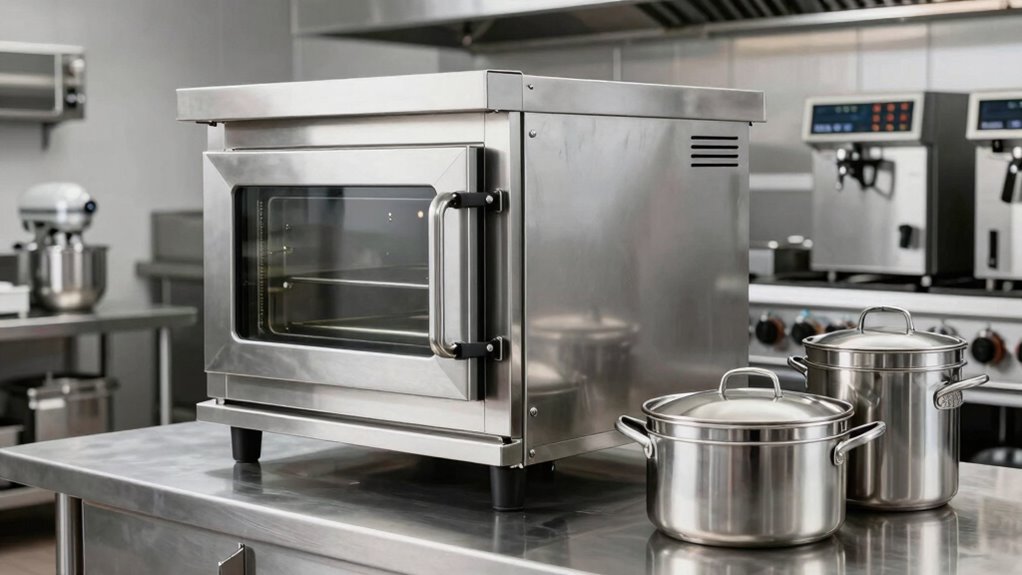
Commercial appliances are built with thicker metals and reinforced parts for lasting, reliable performance in busy kitchens.
Another critical factor that distinguishes commercial grade kitchen appliances is adherence to consumer safety standards. These appliances must meet rigorous safety regulations, ensuring they operate safely under high stress and prevent hazards like electrical failures or fires. Manufacturers of commercial appliances rigorously test their products to comply with industry standards, providing peace of mind that the equipment you rely on won’t pose safety risks. This focus on safety isn’t just a legal requirement—it’s a business necessity. Protecting your staff, customers, and your investment hinges on choosing appliances that meet or exceed these standards.
When you opt for commercial grade appliances, you’re also investing in scalability and efficiency. These units are designed to handle larger quantities and faster workflows, which is essential in a busy kitchen. Their superior construction and safety features mean you can push them to their limits without worry. This combination of durability, safety, and performance ultimately supports your business’s growth and reputation. In the end, understanding that “commercial grade” isn’t just a marketing term but a reflection of quality, safety, and resilience helps you make smarter, more informed decisions for your kitchen. Additionally, commercial appliances often incorporate industrial-grade materials, which further enhances their robustness and longevity in demanding environments.
commercial grade kitchen appliances
As an affiliate, we earn on qualifying purchases.
As an affiliate, we earn on qualifying purchases.
Frequently Asked Questions
Are Commercial Appliances More Energy-Efficient Than Residential Ones?
Commercial appliances are generally more energy-efficient than residential ones because they’re designed for high-volume use, which reduces energy consumption per task. This efficiency can lead to significant cost benefits over time, especially if you run your appliances frequently. You’ll notice lower energy bills and a more sustainable operation. Keep in mind, though, that initial costs might be higher, but the long-term savings often outweigh this upfront investment.
How Long Do Commercial Kitchen Appliances Typically Last?
Imagine your commercial kitchen appliances as marathon runners—they’re built to last. Typically, they last 10 to 15 years, thanks to strict durability standards. Regular maintenance reduces wear and tear, extending their lifespan even further. Unlike residential gadgets, these appliances are made to endure daily heavy use, so you can rely on them to perform reliably for years. Proper upkeep ensures they stay in top shape, saving you money in the long run.
Can Residential Kitchens Handle Commercial-Grade Appliances?
You can definitely handle commercial-grade appliances in your residential kitchen, but you need to take into account home aesthetics and design compatibility. These appliances are built for heavy use, so they’re durable and powerful, but their size and style might clash with your decor. Make sure your space can accommodate their dimensions and that their look complements your kitchen’s design. Proper planning ensures seamless integration without sacrificing style or functionality.
Are Commercial Appliances More Expensive to Repair?
Yes, commercial appliances are generally more expensive to repair. They often have higher replacement costs and may require specialized parts, which can drive up repair expenses. Additionally, warranty coverage might be more limited or costly, so you could end up paying more out of pocket if something goes wrong. Be prepared for these higher repair costs, especially if you’re considering commercial-grade appliances for your home.
Do Commercial Appliances Require Special Installation?
Yes, commercial appliances often require special installation because of unique installation requirements and safety considerations. You need to guarantee proper power, plumbing, and ventilation setups to keep everything running smoothly and safely. Skipping these steps could cause issues or hazards down the line. So, it’s wise to hire professionals who understand the specifics of commercial-grade equipment, ensuring your kitchen stays safe, efficient, and compliant with all safety standards.
heavy-duty restaurant appliances
As an affiliate, we earn on qualifying purchases.
As an affiliate, we earn on qualifying purchases.
Conclusion
Remember, in the world of kitchen appliances, “commercial grade” isn’t just a label—it’s a promise of durability and performance. While these appliances are built to handle heavy-duty use, they still require proper care and maintenance. As the saying goes, “A chain is only as strong as its weakest link.” Invest wisely, and you’ll find that the right commercial-grade appliance can be a reliable workhorse in your kitchen for years to come.
As an affiliate, we earn on qualifying purchases.
high-capacity commercial dishwasher
As an affiliate, we earn on qualifying purchases.
As an affiliate, we earn on qualifying purchases.
Fall Picks
fall essentials
As an affiliate, we earn on qualifying purchases.