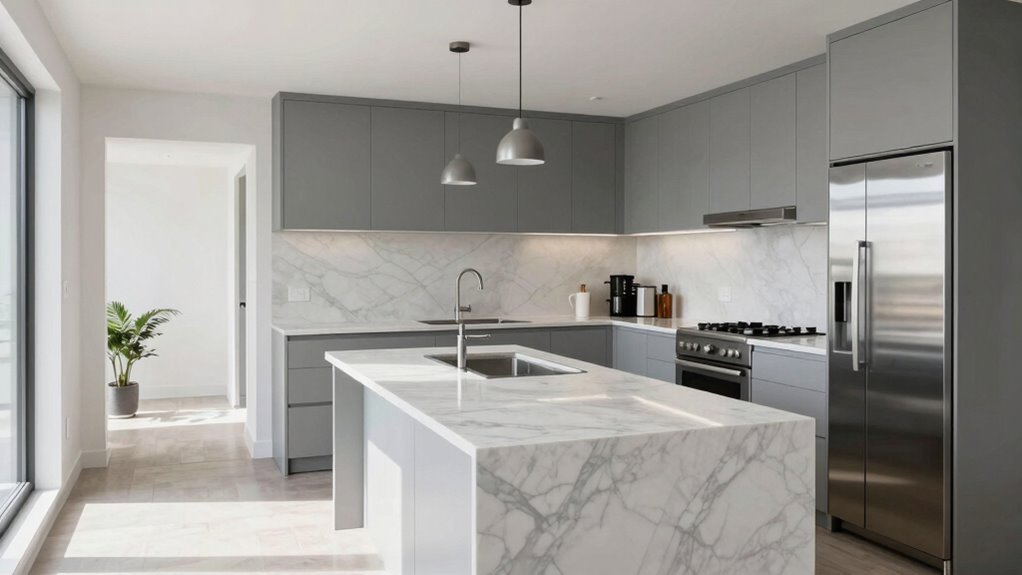

To avoid traffic jams around your kitchen island, keep at least 36 to 48 inches of clearance on all sides for smooth movement. Make certain pathways stay unobstructed by appliance doors or furniture, and position your island thoughtfully to prevent congestion, especially near entryways and work zones. Using properly sized and adjustable islands can help maximize space and safety. Continue exploring how to plan your layout for a more efficient, traffic-free kitchen.
Key Takeaways
- Maintain at least 36-48 inches of clearance around the island for safe, unobstructed movement.
- Position islands to avoid blocking doorways and main traffic routes, ensuring easy access.
- Use strategic furniture placement and integrated appliances to maximize space and prevent congestion.
- Incorporate proper lighting and slip-resistant surfaces for safety and navigation.
- Consult a kitchen designer for layout optimization and to verify compliance with clearance standards.
Why Proper Clearance Is Essential for a Safe Kitchen Island
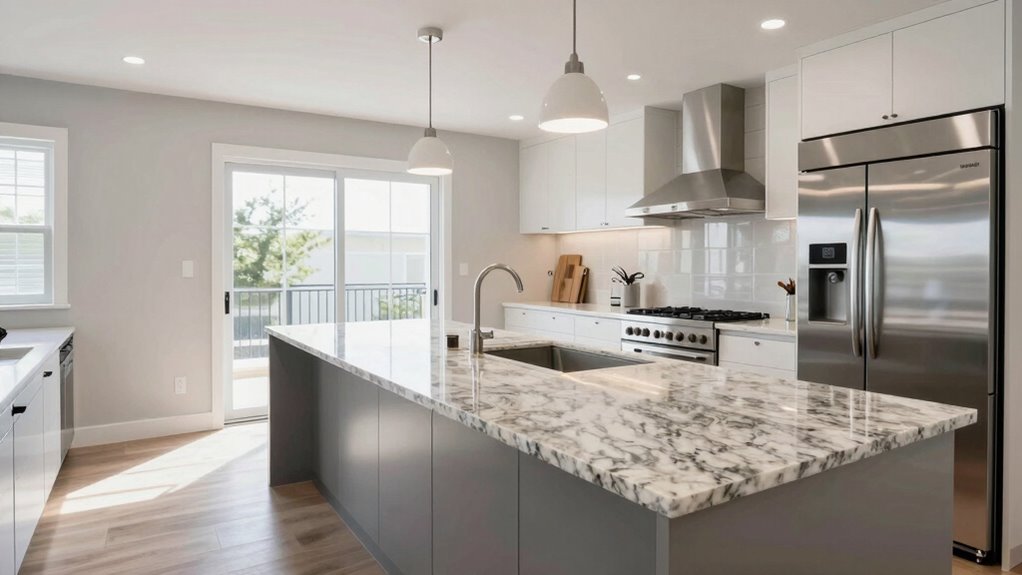
A kitchen island can be a functional centerpiece, but without proper clearance, it can quickly become a safety hazard. You need enough space around the island for easy movement and access, especially when opening appliances or drawers. Proper appliance placement is key; placing appliances too close to the island can create obstacles and clutter. Additionally, countertop height matters—an appropriately elevated surface guarantees comfortable use without forcing you into awkward positions. Color accuracy impacts how natural and true-to-life your kitchen appliances and decor appear, influencing overall aesthetic appeal. Insufficient clearance can lead to accidents, like bumping into cabinets or knocking over items. When planning your kitchen, prioritize clear pathways and consider how you’ll navigate around appliances and the island itself. Clearance guidelines are essential for ensuring safety and maintaining a smooth workflow in your space. Incorporating local automation and smart sensors can help monitor and optimize your kitchen layout for safety and efficiency. This not only enhances safety but also improves the overall efficiency and flow of your space. Ensuring proper load‑planning can also prevent overloads and maintain safe, reliable use of your kitchen appliances. Additionally, understanding ventilation considerations is crucial to prevent buildup of heat and humidity, especially in enclosed kitchen areas.
What Are the Standard Distance Rules for Kitchen Island Traffic?
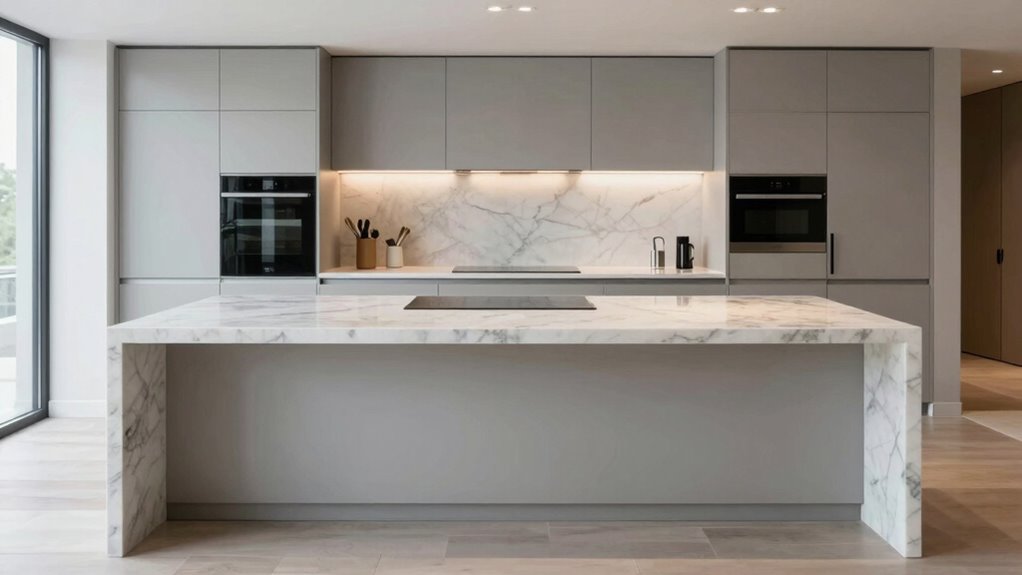
To keep your kitchen safe and functional, it’s important to follow standard distance guidelines for your island’s placement. Typically, you should allow at least 36 to 42 inches of clearance around the island for smooth traffic flow. This distance ensures easy appliance placement and access without congestion. When planning, consider the countertop height—usually 36 inches—to prevent obstructions and maintain ergonomic comfort. Use the table below to understand how clearances relate to kitchen flow:
| Space Between | Purpose | Ideal Distance | Notes |
|---|---|---|---|
| 36 inches | Traffic flow & appliance access | Minimum | For walkways and prep areas |
| 42 inches | Multiple users & safety | Recommended | For open space & movement |
| 48 inches | Large kitchen islands | Perfect | Ensures comfortable traffic |
| 24 inches | Adjacent counters | Close but accessible | To avoid crowding |
Additionally, clearance guidelines help ensure your kitchen remains both functional and safe for everyday use. Proper space planning can improve overall kitchen efficiency and safety. Being mindful of ergonomic comfort when designing your space can reduce fatigue and enhance usability. Considering unobstructed access is also vital for a smooth workflow and safety during busy cooking times.
How to Measure and Plan Your Kitchen Island Clearance Correctly
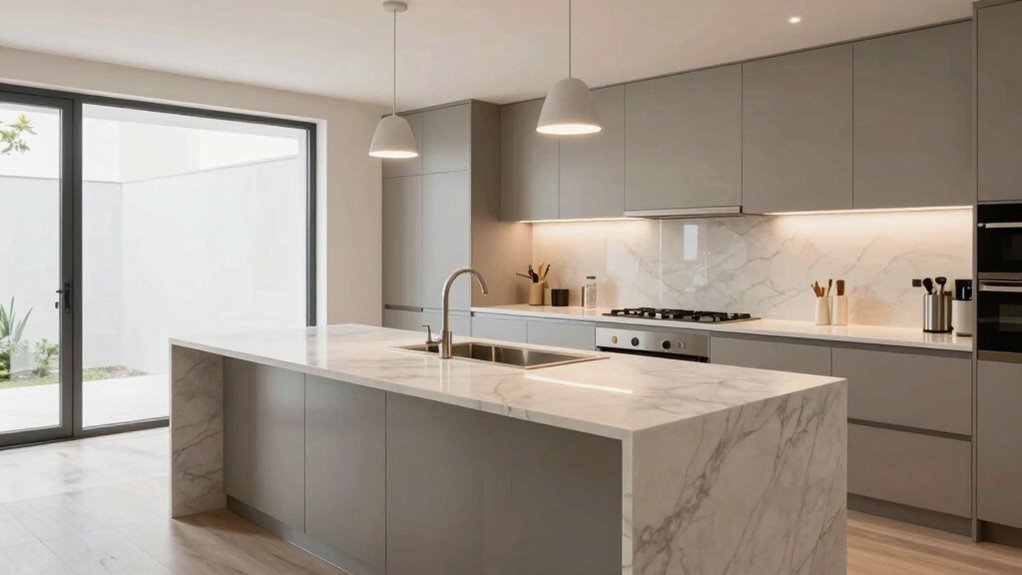
To guarantee your kitchen island is functional and safe, you need to measure accurately and plan for ideal clearance dimensions. Use a tape measure to confirm your space, leaving at least 36 to 48 inches around the island for easy movement. Proper measurement techniques help you create a layout that maximizes comfort and efficiency. Additionally, considering wall surfaces and finishes can influence the placement to ensure accessibility and aesthetic harmony. When planning your layout, also take into account lease terms and restrictions, especially if you are working within a rental or leased space, to avoid conflicts with existing agreements. Being aware of local building codes can also ensure your kitchen layout complies with safety standards and regulations. Familiarity with ergonomic design principles can further enhance the functionality and safety of your kitchen space. Incorporating traffic flow considerations into your planning can help prevent congestion and create a more comfortable environment.
Optimal Clearance Dimensions
Ensuring proper clearance around your kitchen island is essential for a functional and comfortable space. To optimize movement and workflow, aim for at least 36 to 48 inches of clearance on all sides. This allows for easy access to appliances and smooth traffic flow. When planning, consider how color coordination can create a cohesive look, tying the island seamlessly into your overall design. Additionally, think about appliance integration—ensuring that built-in features don’t obstruct pathways. Keep these key points in mind:
- Maintain a minimum of 36 inches of clearance for primary walkways
- Allow 42 inches for high-traffic areas
- Incorporate color accents to enhance visual harmony
- Design for seamless appliance integration without clutter
- Use furniture placement to maximize space efficiency
Understanding how sound vibrations impact cellular regeneration and overall health can inspire innovative kitchen designs that promote wellness. These steps help you create a balanced, stylish, and practical kitchen layout.
Accurate Measurement Techniques
Accurate measurement is the foundation of a well-planned kitchen island, and getting it right can make or break your design. Start by measuring the space from wall to wall to determine the maximum size your island can be. Use a tape measure for precise dimensions, and note the location of existing appliances to ensure seamless appliance integration. Consider clearance on all sides—allowing enough room for movement without crowding. When planning color coordination, measure the height and width of nearby cabinets or countertops to match or complement your island’s finish. Double-check measurements before cutting materials or ordering appliances. Properly gauging ensures your island fits perfectly, maintains flow, and aligns with your overall kitchen layout, making your space both functional and stylish.
Common Mistakes That Cause Traffic Jams in Your Kitchen Layout
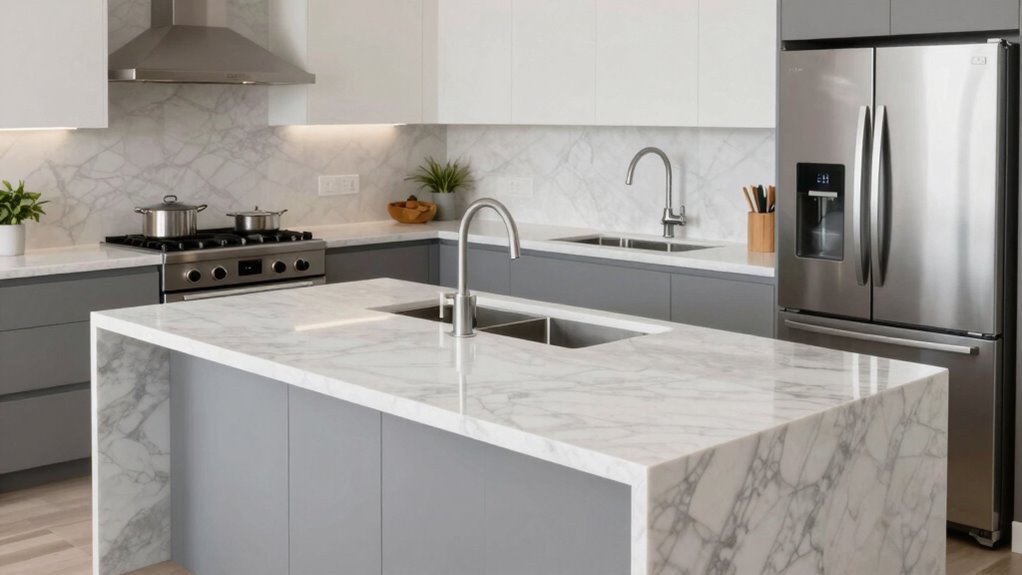
One of the most common mistakes that causes traffic jams in your kitchen is placing the appliances and work zones too close together. Poor appliance placement disrupts the natural flow, forcing you to navigate around obstacles. Additionally, neglecting kitchen decor can lead to cluttered pathways that hinder movement. To avoid this, consider these points:
Placing appliances too close disrupts flow and causes kitchen traffic jams.
- Overcrowding the cooking zone with multiple appliances
- Ignoring the three-foot clearance around the island and counters
- Positioning the sink, stove, and refrigerator too close (the work triangle)
- Blocking doorways or entry points with furniture or appliances
- Failing to account for varying heights and sizes of appliances and decor
- Proper clearance around key areas helps maintain smooth traffic flow and prevents congestion. Ensuring adequate space for movement is essential for a safe and efficient kitchen layout.
Tips to Keep Pathways Clear and Improve Kitchen Traffic Flow
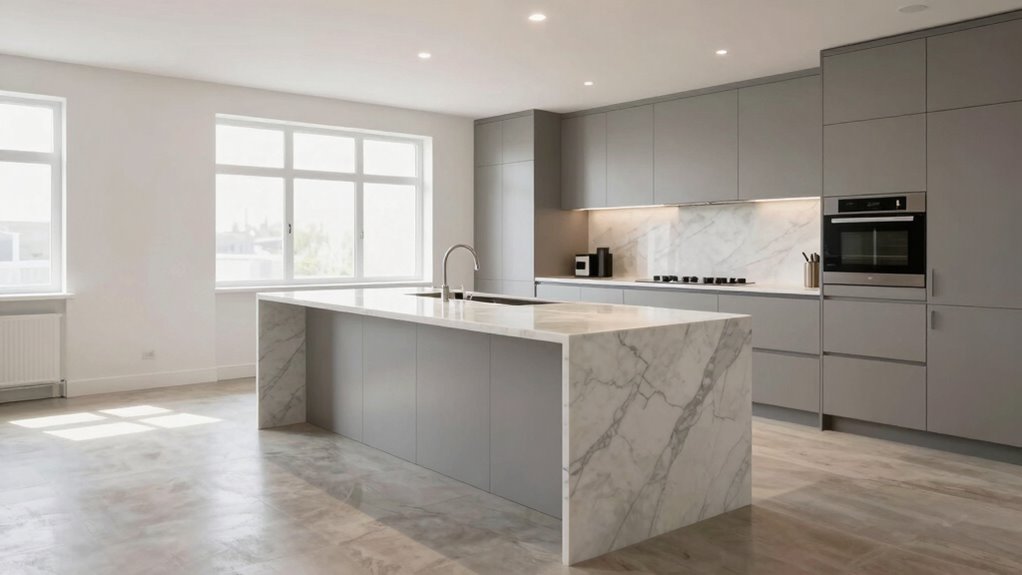
Keeping your kitchen pathways clear is key to maintaining a smooth workflow. To enhance traffic flow, focus on strategic design aesthetics and thoughtful material selection. Keep appliances and cabinetry aligned with your pathways, avoiding clutter that blocks movement. Use a table to visualize ideal spacing:
| Element | Tip |
|---|---|
| Counter Space | Leave at least 42 inches for main walkways |
| Island Placement | Position islands to avoid obstructing traffic |
| Doorways | Keep doors fully open without hitting furniture |
| Storage Accessibility | Store frequently used items within reach |
| Material Choice | Opt for smooth, durable surfaces to prevent hazards |
Additionally, choosing quality materials that are slip-resistant and easy to clean can further improve safety and efficiency in your kitchen. Incorporating proper lighting can also help prevent accidents and make navigation easier. Being mindful of traffic flow can significantly reduce congestion and create a more functional space. Furthermore, selecting easy-to-maintain surfaces can reduce cleaning time and keep your kitchen looking its best. Considering space optimization strategies, such as incorporating multi-functional furniture, can maximize your available area.
How Adjustable and Multi-Functional Islands Can Help Manage Traffic

Adjustable and multi-functional kitchen islands offer practical solutions for managing traffic flow by allowing you to customize their size and purpose as needed. With a well-designed multifunctional layout, you can seamlessly adapt features to suit different tasks and optimize space. Features like fold-away extensions, removable surfaces, and integrated storage help you create clear pathways while maintaining functionality. An adaptable island can serve as a prep station, casual dining area, or extra workspace, reducing congestion and improving movement. Incorporating these versatile elements ensures your kitchen remains efficient and inviting. Flexible design principles highlight the importance of adaptable and customizable features to enhance operational efficiency and user experience. Additionally, considering space-saving features can further optimize your kitchen’s traffic flow and overall usability.
When Should You Consult a Kitchen Designer for Optimal Layout?
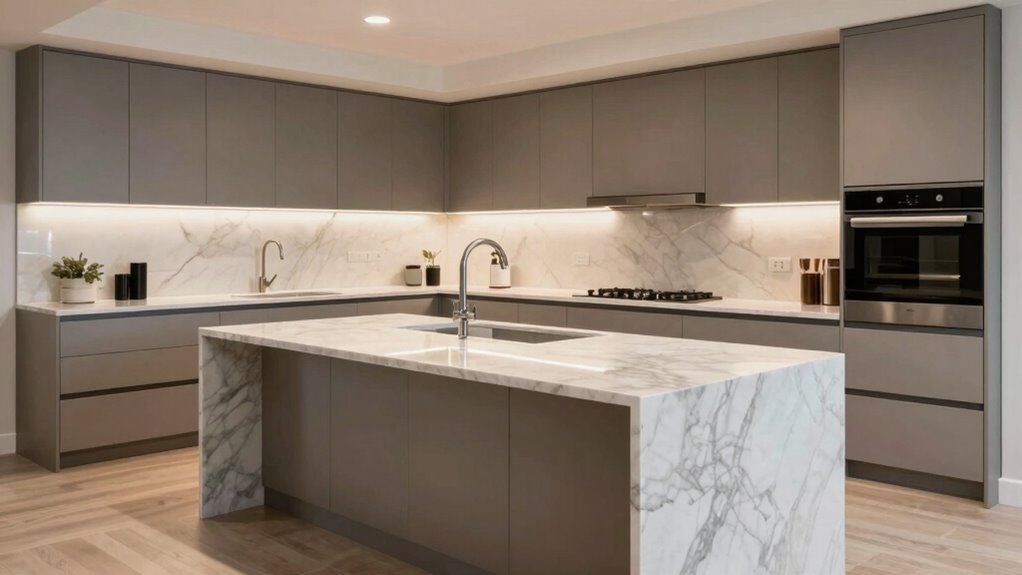
Knowing when to bring in a kitchen designer can make all the difference in creating a functional, efficient layout. If you’re unsure about ideal material selection or how to achieve cohesive color coordination, it’s time to consult a professional. A designer can help balance aesthetic choices with practical traffic flow, ensuring your kitchen island doesn’t obstruct pathways. They can advise on space planning, placement, and appropriate materials that withstand daily use. If you find yourself struggling to coordinate colors or select durable finishes that match your overall style, a designer’s expertise can streamline your decision-making. Early consultation ensures your kitchen layout promotes safe, smooth traffic circulation while reflecting your personal style seamlessly.
Final Checklist: Ensuring Your Kitchen Island Promotes Safe, Efficient Traffic
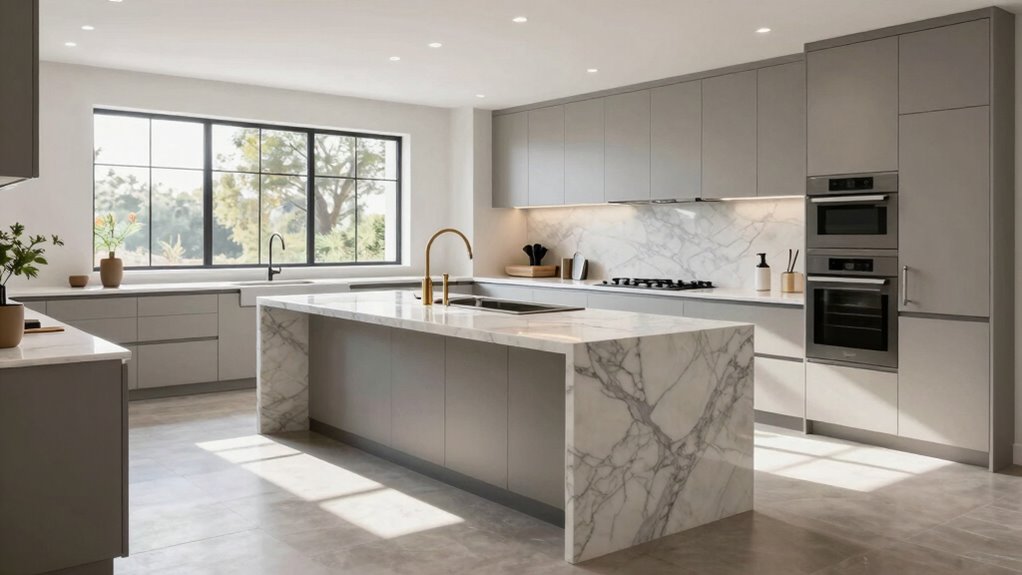
Before finalizing your kitchen island installation, it is vital to review key safety and traffic flow considerations. Making certain that traffic flows smoothly minimizes congestion and reduces accident risks. Take a moment to double-check that pathways around the island are at least 36-48 inches wide, allowing for easy movement. Consider the placement of appliances and cabinetry to avoid bottlenecks. Verify that door swings and drawers do not obstruct walkways. Keep safety considerations in mind by making sure electrical outlets and lighting are properly installed for visibility. Finally, evaluate whether the island’s height and seating arrangements support comfortable, unobstructed traffic flow.
Ensure clear pathways, proper clearance, and safety compliance before finalizing your kitchen island setup.
- Maintain clear, unobstructed walkways around the island
- Ensure proper clearance for appliance doors and drawers
- Position seating to avoid blocking main traffic routes
- Confirm electrical and lighting safety compliance
- Check overall layout for smooth, safe traffic movement
Frequently Asked Questions
How Do I Customize Clearance Space for Different Kitchen Sizes?
When designing open layouts, you should customize clearance space based on your kitchen size and workflow. For smaller kitchens, prioritize optimizing storage while maintaining at least 36 inches of clearance around the island for easy movement. In larger spaces, you can increase clearance to 42 inches or more to prevent traffic jams. Adjust based on how you use your kitchen, ensuring enough room for comfortable cooking and socializing without sacrificing storage or functionality.
Can I Install a Kitchen Island in a Small or Awkward Space?
You can install a kitchen island in a small or awkward space by choosing a compact design with decorative accents that enhance its look without overwhelming the area. Incorporate lighting fixtures that provide ample illumination while saving space, making the area feel more open. Opt for a movable or foldable island if space is very tight, ensuring you maintain functionality and style without creating traffic jams or clutter.
What Are the Safety Risks of Inadequate Clearance Around an Island?
Did you know that 30% of kitchen accidents are caused by collisions or fire hazards? Insufficient clearance around your island increases collision risk, making it easier to bump into sharp edges or appliances. It also heightens fire hazard risks, especially if you accidentally knock over hot pots or pans. To stay safe, make certain there is at least 36-48 inches of space around the island, reducing both collision and fire dangers in your kitchen.
How Do Appliance Placements Affect Kitchen Traffic Flow?
Your appliance arrangement directly impacts your kitchen traffic flow. Placing major appliances like the fridge, oven, and dishwasher thoughtfully guarantees smooth movement, reducing traffic congestion. Avoid clustering appliances in narrow pathways, which can cause bottlenecks. Instead, position them to create efficient work zones, allowing you to move freely while cooking or cleaning. Proper appliance placement keeps your kitchen functional, safe, and enjoyable to use without unwanted traffic jams.
Are There Specific Clearance Guidelines for Multi-Level or Curved Islands?
You should absolutely follow specific clearance guidelines for multi-level or curved islands to prevent chaos in your kitchen. For curved island clearance, aim for at least 42-48 inches so you don’t bump into the curve. Multi-level island spacing needs around 36-42 inches between levels for smooth movement. Ignoring these rules can turn your kitchen into a traffic nightmare, so measure carefully to keep everything flowing effortlessly.
Conclusion
Ensuring proper clearance around your kitchen island keeps traffic flowing smoothly and prevents accidents. Remember, a cluttered layout can reduce your kitchen’s efficiency by up to 20%. By measuring carefully and avoiding common mistakes, you create a safer, more functional space. If you’re unsure, consulting a designer can make a big difference. Prioritize clear pathways—your safety and comfort depend on it for a kitchen that’s both stylish and practical.