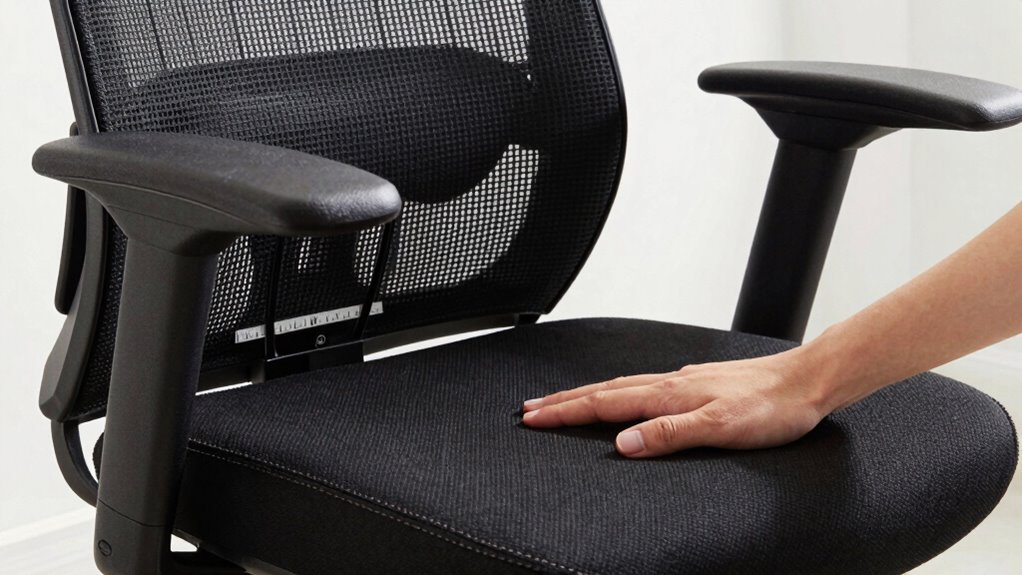

To guarantee your ergonomic chair fits properly, focus on seat depth and lumbar support. In just two minutes, you can do a quick fit test: sit back against the lumbar support with your feet flat, and check if a fist fits between your knees and the seat edge. Adjust armrests, seat height, and support to enhance comfort. Keep exploring for more tips on achieving ideal support and sitting posture.
Open a free Amazon Business account
Business pricing, bulk buying and tax-exempt orders.
As an affiliate, we earn on qualifying purchases.
Key Takeaways
- Proper seat depth ensures thigh support without pressure, preventing circulation issues and discomfort during extended sitting.
- Lumbar support maintains the natural curve of the lower back, reducing strain and promoting good posture.
- The 2-minute fit test involves sitting upright, checking space between knees and chair edge, and adjusting for optimal ergonomic support.
- Adjustable features like seat height, armrests, and lumbar support customize fit to individual body types for increased comfort.
- Regularly verifying and modifying seat depth and support ensures proper alignment and minimizes muscle fatigue over time.
ergonomic office chair with adjustable lumbar support
As an affiliate, we earn on qualifying purchases.
As an affiliate, we earn on qualifying purchases.
What Makes Proper Seat Depth and Lumbar Support So Important?
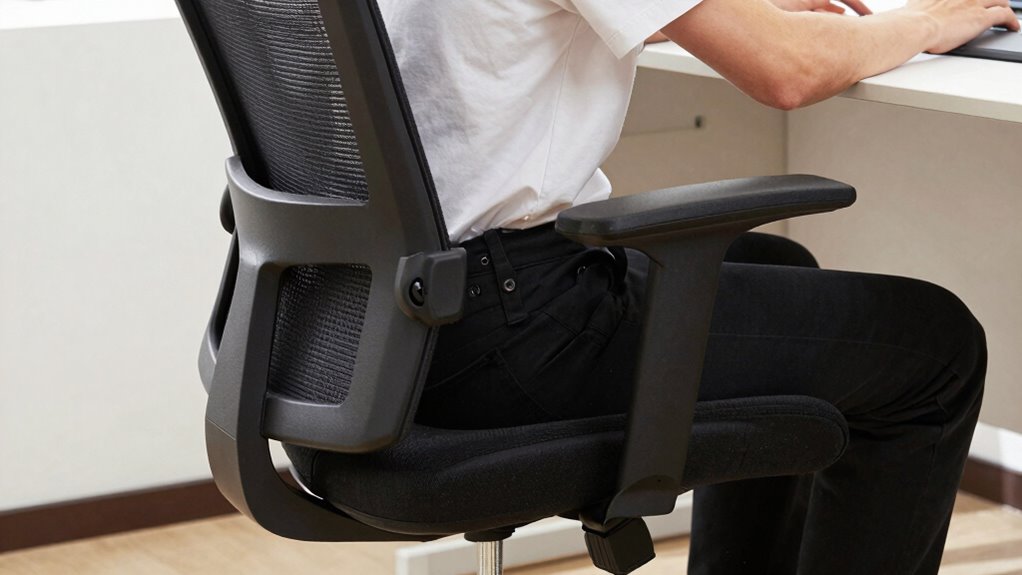
Have you ever experienced discomfort after sitting for a long time? Proper seat depth and lumbar support are essential for your comfort and health. An ergonomic design ensures your chair promotes good postural alignment, preventing strain on your back and hips. When your seat isn’t deep enough, your thighs may hang over the edge, causing discomfort and reducing circulation. Too deep, and your back might not fully contact the lumbar support, leading to poor posture. Lumbar support maintains the natural curve of your lower back, reducing muscle fatigue and the risk of chronic pain. Both features work together to keep your spine aligned, minimizing pressure points. Prioritizing proper seat depth and lumbar support helps you sit comfortably longer and supports your overall well-being. Additionally, adjustable features allow for a more customized fit, ensuring sustained comfort during extended sitting periods. Proper ergonomic design also incorporates adjustable components, making it adaptable to various body types and seating needs. Paying attention to these elements can prevent long-term health issues related to poor posture. Ensuring that chairs have customizable support can further enhance comfort and reduce the risk of musculoskeletal problems over time. Incorporating ergonomic principles into your chair choice can significantly improve your sitting experience and overall health.
ergonomic chair with seat depth adjustment
As an affiliate, we earn on qualifying purchases.
As an affiliate, we earn on qualifying purchases.
How to Quickly Check If Your Chair Fits You Using the 2-Minute Fit Test
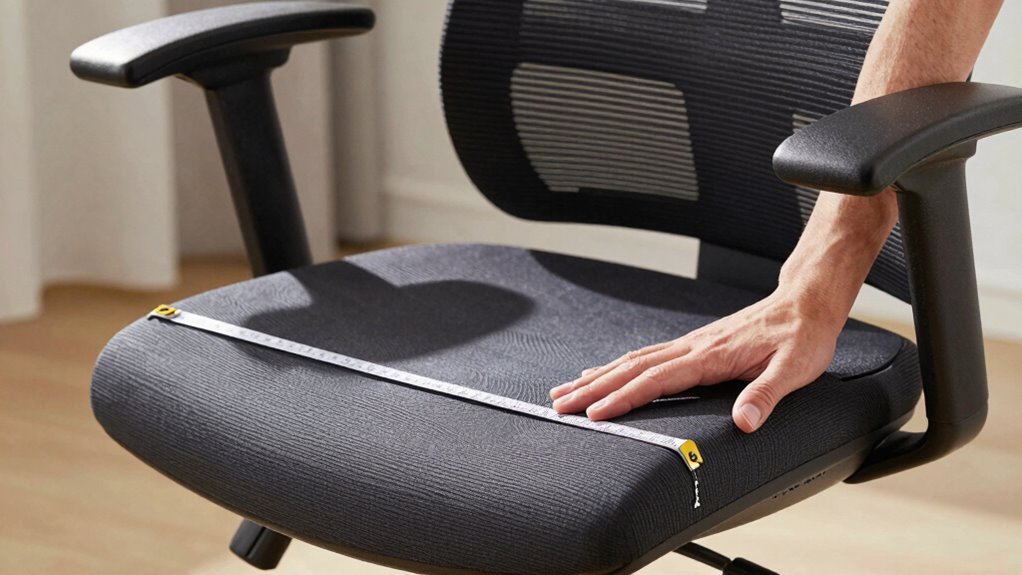
To determine if your chair fits properly, you can perform a quick 2-minute fit test that reveals whether your ergonomic setup supports your body effectively. Sit upright with your back against the lumbar support and your feet flat on the floor. Check if you can comfortably fit your fist between the back of your knees and the chair edge; if not, the seat depth may need adjusting. Ensure your shoulders are relaxed, and your posture correction is maintained naturally. Use ergonomic accessories like lumbar cushions or footrests if needed to optimize fit. This simple test helps identify misalignments early, allowing you to make quick adjustments and ensure your chair promotes good posture and comfort throughout your workday. Proper fit is essential for preventing discomfort and long-term musculoskeletal issues. Additionally, adjusting your chair to support your spinal alignment can further enhance comfort and reduce strain. Incorporating regular movement into your routine can also help maintain musculoskeletal health and prevent stiffness.
ergonomic lumbar support cushion
As an affiliate, we earn on qualifying purchases.
As an affiliate, we earn on qualifying purchases.
Simple Tips to Adjust Your Chair for Better Support and Comfort

Once you’ve performed the 2-minute fit test and identified areas needing adjustment, making simple tweaks to your chair can considerably improve your comfort and support. Start by adjusting your armrests so they support your elbows comfortably without raising your shoulders. Next, choose breathable materials for your chair’s upholstery to keep you cool during long periods of sitting. Finally, verify your seat height allows your feet to rest flat on the floor with your knees at a 90-degree angle. Additionally, ensuring your chair’s ergonomic features are properly aligned can help prevent strain and promote better posture throughout the day. Proper seat depth adjustment also plays a crucial role in distributing your weight evenly and avoiding pressure points. Regularly checking and adjusting your chair according to ergonomic principles can help maintain comfort and reduce fatigue over time. Incorporating adjustable lumbar support can further enhance spinal alignment and support. Paying attention to seat angle adjustments can also help reduce discomfort and improve overall seating posture.
As an affiliate, we earn on qualifying purchases.
Frequently Asked Questions
How Often Should I Replace My Ergonomic Chair for Optimal Support?
You should replace your ergonomic chair every 5 to 10 years for ideal support. The chair lifespan depends on usage and maintenance, but if you notice persistent discomfort, worn-out padding, or mechanical issues, it’s time for a replacement. Regularly evaluating your chair’s condition helps guarantee proper ergonomic support. Prioritize timely replacement to prevent posture problems and maintain comfort, especially if your current chair no longer provides the necessary seat depth, lumbar support, or fit.
Can Customized or Adjustable Chairs Improve Long-Term Comfort?
Customized or adjustable chairs definitely improve long-term comfort because they offer adjustability benefits, allowing you to tailor the chair to your body’s specific needs. With customization options, you can optimize support for your lumbar, seat depth, and height, reducing strain and discomfort over time. This personalized fit helps prevent fatigue and musculoskeletal issues, making your sitting experience more comfortable and sustainable for extended periods.
What Signs Indicate My Chair No Longer Provides Proper Support?
Your chair’s support may be slipping like a melting ice cream cone. If you notice posture issues, such as slouching or leaning forward, it’s a sign your chair isn’t holding up. Pain indicators—persistent back, neck, or shoulder aches—also signal trouble. When your comfort fades and your body protests, it’s time to reassess and adjust or replace your chair to restore proper support and prevent long-term issues.
Are There Specific Ergonomic Features Recommended for Different Body Types?
Yes, ergonomic features should suit your body type for ideal comfort. If you’re petite, look for chairs with adjustable seat depth and lower lumbar support. For larger or taller individuals, choose chairs with higher weight capacities and adjustable lumbar support to maintain proper posture. Curvy or broader body types benefit from wider seats and adjustable armrests. Always prioritize ergonomic features that match your body type to prevent discomfort and promote good support during long hours.
How Does Chair Material Affect Comfort and Support During Extended Use?
Like sinking into a cloud, your chair material influences comfort and support during long hours. Durable materials ensure your chair withstands daily wear, while cushion firmness influences how supported you feel. Soft cushions may feel cozy initially but can lose support, whereas firmer cushions maintain structure, reducing fatigue. Choosing the right material balances durability and comfort, so you stay focused and comfortable even during extended work sessions.
Conclusion
Think of your chair as a trusty ship steering your workday. When the seat depth and lumbar support fit just right, it’s like having a steady steering wheel guiding you smoothly through the waves. But if they’re off, it’s like fighting against the current. Taking two minutes to check your fit is your anchor, keeping you comfortable and supported. With the right adjustments, you’ll sail through your day with ease and stability.
NFL season / tailgating Picks
team gear
As an affiliate, we earn on qualifying purchases.