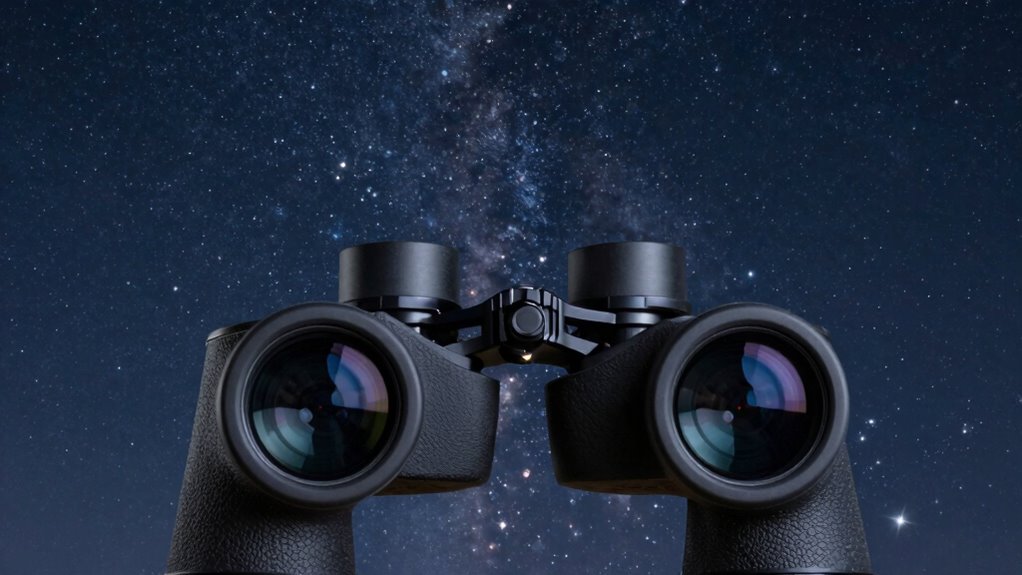

Finding the right binoculars for stargazing involves balancing power, light-gathering ability, and ease of handling. The ESSLNB Astronomy Binoculars 13-39X70 stand out for their versatile zoom and included tripod, making them ideal for detailed night sky views. For long-range viewing, the Celestron SkyMaster Pro 20×80 offers impressive brightness and clarity, while the Celestron SkyMaster 7×50 ED excels in wide, immersive sky vistas. Each of these options involves tradeoffs—higher magnification often means a narrower field of view, while larger lenses can be bulkier and heavier. Continue reading for a detailed comparison to find the best binoculars tailored to your stargazing needs.

Turn the school run and nap time into listening time
- Thousands of audiobooks, podcasts and originals
- Listen on your phone, tablet or Echo — also offline
- Cancel anytime
Complete the kit


Key Takeaways
- Higher magnification binoculars provide more detailed views but tend to be heavier and harder to stabilize without a tripod.
- Larger objective lenses gather more light, which enhances night sky visibility, but also increase size and weight, impacting portability.
- Wide-angle models are better suited for discovering large sky regions, especially for beginners or casual astronomers.
- Tripod compatibility is a key feature for prolonged viewing sessions, especially with high-power binoculars.
- Price varies widely; premium models offer better optics and durability, but mid-range options often deliver excellent value for casual stargazing.
| ESSLNB Astronomy Binoculars 13-39X70 Zoom Giant Binoculars with Tripod and Phone Adapters |  | Best for Versatile Long-Distance Viewing and Photography | Objective Lens Diameter: 70mm | Magnification: 13-39X | Field of View: 132 feet at 1000 yards | VIEW ON AMAZON | See Our Full Breakdown |
| Celestron SkyMaster Pro 20×80 Astronomy Binoculars for Long-Range Viewing |  | Best for Bright, High-Contrast Deep-Sky Observation | Magnification: 20x | Objective Lens Diameter: 80mm | Prism Type: BaK-4 | VIEW ON AMAZON | See Our Full Breakdown |
| Celestron SkyMaster Pro 15×70 Binoculars for Astronomy & Travel |  | Best for Versatile Travel and Astronomy Use | Magnification: 15x | Objective Lens Diameter: 70mm | Prism Type: BaK-4 | VIEW ON AMAZON | See Our Full Breakdown |
| Celestron SkyMaster 25×70 Binoculars for Astronomy, Long-Range & Wildlife |  | Best for High Magnification and Wildlife Observation | Magnification: 25x | Objective Lens Diameter: 70mm | Prism Type: BaK-4 | VIEW ON AMAZON | See Our Full Breakdown |
| Celestron SkyMaster Pro ED 7×50 Binoculars for Wide Night-Sky Views |  | Best for Wide-Angle Celestial and Low-Light Observation | Magnification: 7x | Objective Lens Diameter: 50mm | Glass Type: ED | VIEW ON AMAZON | See Our Full Breakdown |
| Celestron SkyMaster 20×80 Binoculars for Deep-Sky Astronomy |  | Best Overall for Serious Astronomy Enthusiasts | Magnification: 20x | Objective Lens Diameter: 80mm | Exit Pupil: 4mm | VIEW ON AMAZON | See Our Full Breakdown |
| Celestron Cometron 7x50mm Astronomy Binoculars |  | Best Value for Beginners and Versatile Use | Magnification: 7x | Objective Lens Diameter: 50mm | Field of View: 6.6° | VIEW ON AMAZON | See Our Full Breakdown |
| SVBONY SV407 Astronomy Binoculars 2.1x42mm, Wide Angle for Stargazing |  | Best Compact for Wide-Angle Constellation Viewing | Objective Lens Diameter: 42mm | Magnification: 2.1x | Field of View: 26 degrees | VIEW ON AMAZON | See Our Full Breakdown |
| Celestron SkyMaster 15×70 Astronomy Binoculars for Stargazing and Deep-Sky |  | Best for Deep-Sky and Long-Distance Viewing | Magnification: 15x | Objective Lens Diameter: 70mm | Tripod Mount: Yes | VIEW ON AMAZON | See Our Full Breakdown |
| Celestron SkyMaster 25×100 Giant Astronomy Binoculars for Deep Sky Viewing |  | Best for Serious Deep Sky Enthusiasts with Tripod Mounting Needs | Objective Lens Diameter: 100mm | Magnification: 25x | Tripod Mount: Yes | VIEW ON AMAZON | See Our Full Breakdown |
| 20×70 Binoculars for Adults – High Powered Bird Watching, Hunting, Travel |  | Best for High Magnification and Bright, Clear Views | Magnification: 20x | Objective Lens Diameter: 70mm | Field of View: 175 degrees | VIEW ON AMAZON | See Our Full Breakdown |
| binoculars for stargazing | Objective Lens Diameter | Magnification | Prism Type | Tripod Mount |
|---|---|---|---|---|
| ESSLNB Astronomy Binoculars 13 | 70mm | 13-39X | Porro Prism | — |
| Celestron SkyMaster Pro 20×80 | 80mm | 20x | BaK-4 | Yes |
| Celestron SkyMaster Pro 15×70 | 70mm | 15x | BaK-4 | Yes |
| Celestron SkyMaster 25×70 Bino | 70mm | 25x | BaK-4 | ¼”-20 adapter included |
| Celestron SkyMaster Pro ED 7×5 | 50mm | 7x | — | — |
| Celestron SkyMaster 20×80 Bino | 80mm | 20x | — | Yes |
| Celestron Cometron 7x50mm Astr | 50mm | 7x | BK7 Porro | Yes |
| SVBONY SV407 Astronomy Binocul | 42mm | 2.1x | Roof Prism | — |
| Celestron SkyMaster 15×70 Astr | 70mm | 15x | BaK-4 | Yes |
| Celestron SkyMaster 25×100 Gia | 100mm | 25x | BaK-4 | Yes |
| 20×70 Binoculars for Adults | 70mm | 20x | Roof Prism | — |
More Details on Our Top Picks
ESSLNB Astronomy Binoculars 13-39X70 Zoom Giant Binoculars with Tripod and Phone Adapters
This model stands out for its impressive zoom range, making it suitable for both detailed astronomical observation and terrestrial pursuits like bird watching. Unlike the Celestron SkyMaster 20×80, it offers a flexible 13-39X zoom, though this means it can be more cumbersome and requires a tripod at higher magnifications. The inclusion of smartphone and tripod adapters enhances its versatility, especially for capturing images. However, its weight of over 1200 grams may be tiring over prolonged sessions, and manual zoom adjustment can be less convenient than fixed magnifications. Overall, this pick is ideal for users who want adjustable magnification and photography integration but are prepared to manage its heft and need for stabilization.
Pros:- Wide zoom range from 13x to 39x for versatile use
- Includes smartphone and tripod adapters for photography
- Bright, high-contrast images even in low-light conditions
- Long eye relief suitable for eyeglass wearers
Cons:- Relatively heavy, which can cause fatigue during extended use
- Requires a tripod for steady viewing at high zoom levels
- Manual zoom adjustment may be less convenient for quick changes
Best for: Long-distance nature observers who want zoom flexibility and photo capabilities
Not ideal for: Casual stargazers seeking lightweight, straightforward binoculars without multi-purpose accessories
- Objective Lens Diameter:70mm
- Magnification:13-39X
- Field of View:132 feet at 1000 yards
- Eye Relief:18.5mm
- Prism Type:Porro Prism
- Water Resistance Level:Waterproof
Our verdict“This binocular excels for users wanting flexible zoom and photography options but should be avoided if portability is a priority.”
Celestron SkyMaster Pro 20×80 Astronomy Binoculars for Long-Range Viewing
The SkyMaster Pro 20×80 excels in delivering bright, detailed images in low-light conditions, making it a favorite for serious astronomers. Compared to the 15×70 model, it offers higher magnification for finer celestial detail but requires a stable mount because of its weight and increased shake risk. Its fully multi-coated BaK-4 prisms and waterproof, fog-proof housing ensure durability and clear views under challenging conditions. While the larger size and weight make it less portable than smaller options, this model is well-suited for users who prioritize image brightness and stability during extended sessions. It’s less ideal for casual stargazing or those who need ultralight gear.
Pros:- Bright, high-contrast images in low-light conditions
- Durable, waterproof, and fog-proof for all-weather use
- Includes tripod adapter for stable viewing
- Large 80mm objective lenses for maximum light collection
Cons:- Heavy and less portable than smaller binoculars
- High magnification can be shaky without a tripod
- Premium price may deter casual users
Best for: Dedicated astronomy enthusiasts seeking high magnification and superior light gathering
Not ideal for: Casual observers or travelers needing lightweight, compact binoculars
- Magnification:20x
- Objective Lens Diameter:80mm
- Prism Type:BaK-4
- Coatings:Fully multi-coated with XLT coatings
- Waterproof:Yes
- Tripod Mount:Yes
Our verdict“This binocular is perfect for serious astronomers who prioritize brightness and stability over portability.”
Celestron SkyMaster Pro 15×70 Binoculars for Astronomy & Travel
The 15×70 model offers a balanced mix of magnification and portability, making it suitable for both deep-sky viewing and travel. Its larger 70mm lenses gather plenty of light, comparable to the 20×80, but with less weight and bulk. Its waterproof, fog-proof construction ensures durability, and the included tripod adapter and reflex sight ready rail add convenience. Compared with the 20×80, it’s easier to handle for casual outings, yet still provides excellent low-light performance. Its 15x magnification can produce shaky images if not supported, so a tripod is recommended for extended use. This makes it an excellent choice for users who want a versatile, mid-range option that balances power and portability.
Pros:- Bright, high-contrast images with good low-light performance
- Durable, waterproof, and fog-proof for outdoor adventures
- Includes tripod adapter and reflex sight ready rail
- Lightweight for its class
Cons:- Requires tripod for extended viewing stability
- 15x magnification may be shaky without support
- Size may still be cumbersome for some travelers
Best for: Travelers and amateur astronomers seeking a lightweight yet powerful binocular
Not ideal for: High-magnification deep-sky observers who need maximum detail and stability
- Magnification:15x
- Objective Lens Diameter:70mm
- Prism Type:BaK-4
- Coatings:Fully multi-coated with XLT coatings
- Waterproof:Yes
- Tripod Mount:Yes
Our verdict“A versatile choice for travelers and casual astronomers who want good light gathering without excessive bulk.”
Celestron SkyMaster 25×70 Binoculars for Astronomy, Long-Range & Wildlife
The 25×70 binoculars push the limits of handheld viewing with their high 25x magnification, ideal for detailed celestial and wildlife observation. Unlike the 15×70, their increased magnification demands more steadiness, making a tripod almost essential for extended sessions. Their 70mm lenses still provide good light gathering, and their waterproof, fog-proof design ensures reliable performance in various conditions. While the added power offers finer detail, the size and weight make them less portable for casual outings. These binoculars suit dedicated users who don’t mind supporting their gear for sharper images but may be overkill for quick or casual stargazing.
Pros:- Excellent high magnification for detailed views
- Bright, sharp images in low-light conditions
- Durable, waterproof, and fog-proof
- Includes tripod adapter for stability
Cons:- Heavy and less portable
- Requires a tripod for steady viewing at high power
- High price may limit casual use
Best for: Astronomy enthusiasts and wildlife observers who prioritize high magnification
Not ideal for: Casual stargazers or those requiring lightweight, easy-to-carry binoculars
- Magnification:25x
- Objective Lens Diameter:70mm
- Prism Type:BaK-4
- Water Resistance:Yes
- Tripod Mount:¼”-20 adapter included
Our verdict“Ideal for dedicated observers seeking high detail and willing to support heavier gear for stability.”
Celestron SkyMaster Pro ED 7×50 Binoculars for Wide Night-Sky Views
The 7×50 SkyMaster Pro ED binoculars serve as a classic choice for wide-angle night sky viewing, providing a broad field of view and exceptional brightness thanks to ED glass. Compared with higher-magnification options like the 20×80 or 25×70, these excel at capturing large swaths of the sky and are easier to stabilize without tripods, making them more suitable for casual stargazing. The ED (Extra-Low Dispersion) glass ensures sharp, true-to-life images, even in challenging low-light conditions. Their bulkier size might be less convenient for travel, but for dedicated stargazing sessions, they offer unmatched wide coverage and bright images, especially in foggy or humid conditions where waterproofing helps.
Pros:- Wide field of view for expansive sky coverage
- Bright, sharp images with ED glass
- Waterproof and fog-proof for all-weather viewing
- Tripod adaptable for stable viewing
Cons:- Bulkier and heavier than smaller binoculars
- Limited magnification not suitable for detailed planetary views
- Higher price compared to basic models
Best for: Beginner and casual astronomers who want wide, bright views without the need for support equipment
Not ideal for: High-magnification users who want detailed planetary or deep-sky views
- Magnification:7x
- Objective Lens Diameter:50mm
- Glass Type:ED
- Housing Material:Polycarbonate and aluminum
- Waterproof:Yes
- Tripod Adaptable:Yes
Our verdict“A superb choice for wide-angle celestial viewing that prioritizes brightness and ease of use over magnification.”
Celestron SkyMaster 20×80 Binoculars for Deep-Sky Astronomy
This model stands out for its combination of large 80mm objective lenses and 20x magnification, making it highly suitable for deep-sky observation. Compared to the Celestron SkyMaster 15×70, the 20×80 delivers brighter, more detailed images in low-light conditions, but the increased size and weight mean it’s more cumbersome to handle without a sturdy tripod. The included tripod adapter makes extended viewing comfortable, yet portability is limited. The multi-coated BaK-4 prisms produce sharp images, crucial for identifying faint stars and nebulae. Heavy and requiring a tripod, this binocular is ideal for dedicated stargazers who prioritize image brightness and detail over portability, but less so for casual or quick observations.
Pros:- Bright, sharp images due to multi-coated BaK-4 prisms
- Excellent low-light performance with large 80mm objectives
- Includes tripod adapter for stable extended viewing
- Water-resistant, rugged rubber-armored construction
Cons:- Heavy and bulky, making transportation difficult
- Requires a sturdy tripod for stable viewing
- Less portable for casual outdoor use
Best for: Advanced amateur astronomers who need high brightness and detail for deep-sky objects
Not ideal for: Casual stargazers or outdoor enthusiasts seeking lightweight, portable optics for quick sessions
- Magnification:20x
- Objective Lens Diameter:80mm
- Exit Pupil:4mm
- Tripod Mount:Yes
- Water-Resistant:Yes
- Prisms:BaK-4
Our verdict“This binocular is best suited for serious astronomers who value high image quality and are prepared for the weight and setup requirements.”
Celestron Cometron 7x50mm Astronomy Binoculars
This pair makes a compelling choice for newcomers, combining ease of use with solid low-light performance. The 7x magnification is less powerful than higher-end models like the Celestron SkyMaster 15×70, but it provides a wide field of view that’s perfect for scanning the night sky or tracking large celestial objects. The large 50mm objectives gather plenty of light, making it a versatile option for both astronomy and terrestrial observations. While the tripod mount helps with stability, the tripod adapter is sold separately, adding a small extra cost. The binoculars are bulkier than compact options, so they’re better suited for stationary viewing rather than quick hikes. Its straightforward design and durability make it an excellent entry-level choice, though it lacks the high magnification needed for detailed planetary views.
Pros:- Wide field of view ideal for star scanning
- Large 50mm objectives enhance brightness in low light
- Easy to use for beginners
- Durable construction with a lifetime warranty
Cons:- Tripod adapter is sold separately
- Bulkier compared to compact binoculars
- Limited for detailed planetary or deep-sky viewing
Best for: Beginner astronomers and outdoor enthusiasts wanting an easy-to-use, affordable binoculars for night sky viewing
Not ideal for: Advanced astronomers seeking high magnification or detailed planetary observations
- Magnification:7x
- Objective Lens Diameter:50mm
- Field of View:6.6°
- Tripod Mount:Yes
- Prism Type:BK7 Porro
- Warranty:Limited Lifetime US Warranty
Our verdict“This binocular provides great value and ease of use for beginners exploring the night sky or outdoor scenery.”
SVBONY SV407 Astronomy Binoculars 2.1x42mm, Wide Angle for Stargazing
This model excels in providing a broad perspective, thanks to its 26° field of view and 2.1x magnification, making it ideal for scanning constellations and large star fields. Compared with the more powerful Celestron SkyMaster 20×80, the SV407 sacrifices magnification for portability and ease of handling, making it perfect for quick, casual sessions or indoor astronomy. The fully multi-coated FMC lenses deliver bright, clear images, especially in dark skies, and the compact size makes it accessible for casual observers. Manual focus and limited water resistance mean it’s less suitable for detailed planetary viewing or damp conditions. It’s perfect for those seeking a lightweight, wide-angle option for star mapping and indoor use, but not for detailed or long-distance astronomical observation.
Pros:- Extremely wide 26° field of view for star mapping
- Bright, clear images with FMC fully multi-coated lenses
- Compact, lightweight, easy to carry
- Independent focusing for each eye enhances clarity
Cons:- Low magnification limits detailed planetary study
- Manual focus can be less convenient
- Limited water resistance for outdoor use
Best for: Casual star gazers and constellation enthusiasts who value a wide view over high magnification
Not ideal for: Experienced astronomers needing high zoom levels or waterproof gear
- Objective Lens Diameter:42mm
- Magnification:2.1x
- Field of View:26 degrees
- Eye Relief:9mm
- Prism Type:Roof Prism
- Water Resistance Level:Water Resistant
Our verdict“This binocular is ideal for casual astronomers wanting a portable, wide-angle view of the night sky without the bulk of larger models.”
Celestron SkyMaster 15×70 Astronomy Binoculars for Stargazing and Deep-Sky
Choosing between the Celestron SkyMaster 15×70 and the 20×80 version hinges on balance: the 15×70 offers slightly lower magnification but remains excellent for deep-sky objects. Its 70mm objectives excel in gathering light, providing bright, detailed images, especially in dark skies. The 15×70 model’s lighter weight and slightly smaller size make it somewhat easier to handle, though it still benefits from a tripod for extended sessions. Its water-resistant, durable housing ensures resilience against outdoor conditions. While not as powerful as the 25×100, the 15×70 strikes a practical middle ground, offering high performance without the bulk of larger models. This makes it ideal for serious stargazers who want a portable, yet capable, deep-sky binocular.
Pros:- Excellent low-light performance with large 70mm objectives
- High magnification for detailed deep-sky viewing
- Water-resistant and durable for outdoor use
- Includes tripod adapter for stability
Cons:- Heavy and somewhat bulky, requiring tripod use
- Not as powerful as the 25×100 models
- Still large for quick or casual observations
Best for: Intermediate to advanced astronomers seeking a balance of power and portability
Not ideal for: Casual observers or those requiring ultra-high magnification for planetary detail
- Magnification:15x
- Objective Lens Diameter:70mm
- Tripod Mount:Yes
- Prism Type:BaK-4
- Water-Resistant:Yes
- Includes:Tripod adapter
Our verdict“This binocular offers a practical combination of magnification, light gathering, and portability for dedicated deep-sky viewing.”
Celestron SkyMaster 25×100 Giant Astronomy Binoculars for Deep Sky Viewing
The Celestron SkyMaster 25×100 stands out for its extraordinary 25x magnification and massive 100mm objectives, making it ideal for long-distance astronomical observations. When compared to the 20×80 or 15×70 models, this binocular delivers superior detail, especially in very dark skies, but the size and weight are significant. It’s almost impractical for handheld use and demands a sturdy tripod for extended sessions. The high-quality BaK-4 prisms and multi-coated optics ensure bright, crisp images, but the bulk can be intimidating for casual users or those with limited space. This model makes the most sense for dedicated deep-sky observers who prioritize image detail over portability and are equipped to handle its substantial footprint.
Pros:- Exceptional detail with high 25x magnification
- Bright, sharp images thanks to large 100mm objectives
- Includes tripod mount for stability during long sessions
- Water-resistant, durable construction
Cons:- Extremely large and heavy, difficult to handle without tripod
- Poor handheld stability at high magnification
- Not suitable for quick or mobile use
Best for: Professional or highly committed amateur astronomers focused on deep-sky objects and long viewing periods
Not ideal for: Casual star gazers or those seeking lightweight, portable binoculars
- Objective Lens Diameter:100mm
- Magnification:25x
- Tripod Mount:Yes
- Prism Type:BaK-4
- Water-Resistant:Yes
- Included Accessories:Tripod adapter
Our verdict“This binocular is best for dedicated deep-sky enthusiasts willing to handle its size for the highest detail and brightness in dark skies.”
20×70 Binoculars for Adults – High Powered Bird Watching, Hunting, Travel
This set of 20×70 binoculars stands out for delivering impressive magnification and bright, detailed images, making them ideal for long-range stargazing where clarity in low-light conditions is key. Compared to the Celestron SkyMaster Pro 15×70, these binoculars offer higher magnification but at the expense of a narrower field of view—175 degrees versus the 70-degree view of the 15×70. The high-quality optics and durable rubber coating provide impact resistance but lack water resistance, meaning careful handling is needed in damp environments. The weight of 1.19 kg may cause fatigue during extended use, especially without a tripod. While not as portable as smaller models, these binoculars are suited for dedicated stargazers who prioritize image brightness and detail over portability. Their manual focus allows precise adjustment, but the size and weight limit quick, casual use. This pick makes the most sense for serious outdoor enthusiasts focused on long-distance viewing in dry conditions.
Pros:- High 20x magnification provides detailed views of celestial objects
- Bright, clear images even in low-light conditions thanks to large 70mm objective lens
- Durable rubber-coated body offers impact resistance and firm grip
- Wide 175-degree field of view facilitates locating objects in the night sky
Cons:- Heavy weight of 1.19 kg can cause hand fatigue during extended use
- Lack of water resistance requires cautious handling in damp weather
- Large size makes these less portable for spontaneous stargazing trips
Best for: Experienced amateur astronomers or wildlife observers who need high magnification and bright images for stable viewing sessions.
Not ideal for: Casual stargazers or travelers who prefer lightweight, compact equipment for easy transport and quick setup.
- Magnification:20x
- Objective Lens Diameter:70mm
- Field of View:175 degrees
- Exit-Pupil Diameter:3.5mm
- Prism Type:Roof Prism
- Focus Type:Manual Focus
- Water Resistance Level:Not Water Resistant
- Weight:1.19 kg
- Size:20×70
Our verdict“This binoculars set is best suited for dedicated stargazers who prioritize high magnification and brightness, and are prepared for its weight and size.”

How We Picked
These binoculars were selected based on a combination of optical performance, build quality, user reviews, and value for money. Priority was given to models with large objective lenses and high-quality glass to maximize light collection, critical for stargazing. We also considered ease of use, stability features like tripod compatibility, and overall durability. The ranking reflects a balance between maximum astronomical performance and practical handling, ensuring options suitable for both serious astronomers and casual enthusiasts alike.| binoculars for stargazing | Prism Type | Tripod Mount |
|---|---|---|
| ESSLNB Astronomy Binoculars 13 | Porro Prism | — |
| Celestron SkyMaster Pro 20×80 | BaK-4 | Yes |
| Celestron SkyMaster Pro 15×70 | BaK-4 | Yes |
| Celestron SkyMaster 25×70 Bino | BaK-4 | ¼”-20 adapter included |
| Celestron SkyMaster Pro ED 7×5 | — | — |
| Celestron SkyMaster 20×80 Bino | — | Yes |
| Celestron Cometron 7x50mm Astr | BK7 Porro | Yes |
| SVBONY SV407 Astronomy Binocul | Roof Prism | — |
| Celestron SkyMaster 15×70 Astr | BaK-4 | Yes |
| Celestron SkyMaster 25×100 Gia | BaK-4 | Yes |
| 20×70 Binoculars for Adults | Roof Prism | — |
Factors to Consider When Choosing Binoculars For Stargazing
Choosing binoculars for stargazing involves understanding several key factors that directly impact your viewing experience. Unlike daytime models, stargazing binoculars need to excel in low-light conditions, which influences choices around size, magnification, and optical quality. Making the right tradeoffs can significantly enhance your enjoyment of the night sky, whether you’re observing distant galaxies or the moon’s craters. Here are the main considerations to help inform your purchase.Magnification and Field of View
Higher magnification, such as 20x or more, reveals more detail but often results in a narrower field of view, making it harder to locate objects and requiring a stable mount. Conversely, lower magnifications like 7x or 10x provide wider views, which are easier for beginners and still excellent for wide sky scans. A balanced approach usually involves 10x or 15x magnification for most stargazing, offering detail without overly sacrificing ease of use and stability.
Objective Lens Size and Light Gathering
The size of the objective lens, measured in millimeters, directly affects how much light the binoculars can collect. Larger lenses, such as 70mm or 80mm, excel in low-light conditions and enable better visibility of faint objects like nebulae and distant galaxies. However, they also add weight and bulk, which can be cumbersome for extended use. Smaller lenses are more portable but less effective in dark skies, making them better suited for casual or daytime use.
Optical Quality and Glass Type
Optics made from ED (extra-low dispersion) glass or coated lenses significantly improve image clarity and color accuracy, crucial for detailed night sky observation. Cheaper binoculars with basic glass may produce blurry or washed-out images, especially in low light. Investing in higher-quality optics pays off in brighter, sharper views but often at a higher price point. Think about how much you value image quality versus budget constraints.
Size, Weight, and Mounting Options
Stargazing binoculars can range from lightweight, handheld models to larger, tripod-compatible pairs. Heavy binoculars provide better light-gathering power but can cause fatigue during prolonged sessions. Tripod compatibility is essential for high-magnification models to stabilize the view and reduce shaking. If portability matters, consider a mid-sized pair that balances weight with performance, or plan to invest in a sturdy tripod for larger models.
Budget and Durability
Prices for stargazing binoculars vary from budget-friendly to premium options. While cheaper models might suffice for casual use, they often lack the optical quality needed for serious astronomy. Premium models boast superior lens coatings, rugged construction, and better waterproofing, but come at a higher cost. Assess how often you’ll use them and whether durability and optical performance justify the investment, especially if you plan to use them in outdoor conditions.
Frequently Asked Questions
Can I use daytime binoculars for stargazing?
Yes, many binoculars designed for daytime use can be used for stargazing, but their effectiveness depends on their specifications. Lower magnification and smaller lenses may limit your ability to see faint objects in the night sky. For optimal stargazing, look for binoculars with larger objective lenses (at least 50mm) and higher magnification options, which will gather more light and reveal more details. Upgrading to dedicated astronomy binoculars can significantly improve your night sky experience.
How important is tripod compatibility for stargazing binoculars?
Tripod compatibility becomes very important as magnification increases. Without a stable mount, even the steadiest hands struggle to keep high-power binoculars steady, resulting in shaky, blurry images. Using a tripod or mount reduces fatigue and enhances viewing clarity, especially during long sessions. For binoculars above 15x magnification, investing in a sturdy tripod is generally recommended to get the most out of your equipment.
Should I prioritize larger lenses or higher magnification?
Both factors matter, but for stargazing, larger lenses typically have a bigger impact because they gather more light, which is essential in low-light conditions. While higher magnification allows you to see more detail, it often comes with a narrower field of view and increased shakiness. For most sky observers, a good balance is a binocular with around 10x to 15x magnification paired with large lenses (70mm or more). This setup offers brightness, detail, and manageability.
Are waterproof or fog-proof binoculars necessary for stargazing?
Waterproof and fog-proof features add durability and reliability, especially if you’ll be observing in outdoor or humid environments. While not strictly necessary for clear skies, such features help protect your equipment from moisture, dew, and sudden weather changes. If you plan to use your binoculars frequently in outdoor settings, investing in waterproof, fog-proof models can prolong their lifespan and ensure consistent performance.
How much should I expect to spend on quality stargazing binoculars?
The price range for good astronomy binoculars varies widely. Budget models can start around $100 but often compromise on image brightness and clarity. Mid-range options, costing between $200 and $400, typically offer a solid combination of optical quality, durability, and ease of use. Premium models above $500 provide even superior glass and build quality, suited for serious astronomers. Consider how often you’ll use the binoculars and your specific observing needs when setting your budget.
Conclusion
For casual sky gazers or beginners, a lightweight, wide-field binocular like the Celestron SkyMaster 15×70 offers great value and ease of use. Serious astronomers seeking detailed views should consider the Celestron SkyMaster Pro 20×80 or larger models, especially if equipped with a sturdy tripod. Those prioritizing portability might prefer compact options like the SVBONY SV407, while premium users focused on ultimate clarity and durability should look at high-end ED glass models. Your choice ultimately depends on your experience level, budget, and how you plan to use your binoculars in the night sky.