To prevent dust blowback in your wet/dry shop vac, choose the right filter type and make certain it fits tightly. Options include paper filters for dry debris, foam filters for wet use, and HEPA filters for finer dust and allergens. Regularly inspect and replace damaged or clogged filters, and confirm seals are airtight. Proper installation and maintenance are key to keeping dust contained; explore further to discover proven tips for peak filter performance.
Key Takeaways
- Use appropriate filter types such as foam or HEPA for wet/dry vacuums to improve dust capture and reduce blowback.
- Ensure filters fit snugly and seals are intact to prevent gaps that allow dust escape during operation.
- Regularly inspect, clean, or replace filters based on dirt buildup or damage to maintain optimal performance.
- Choose durable, reusable filters like foam for wet debris, and replace disposable filters when they wear out.
- Maintain airtight seals and proper installation to minimize dust blowback and ensure effective dust containment.
Why Dust Blowback Happens in Wet/Dry Shop Vacs
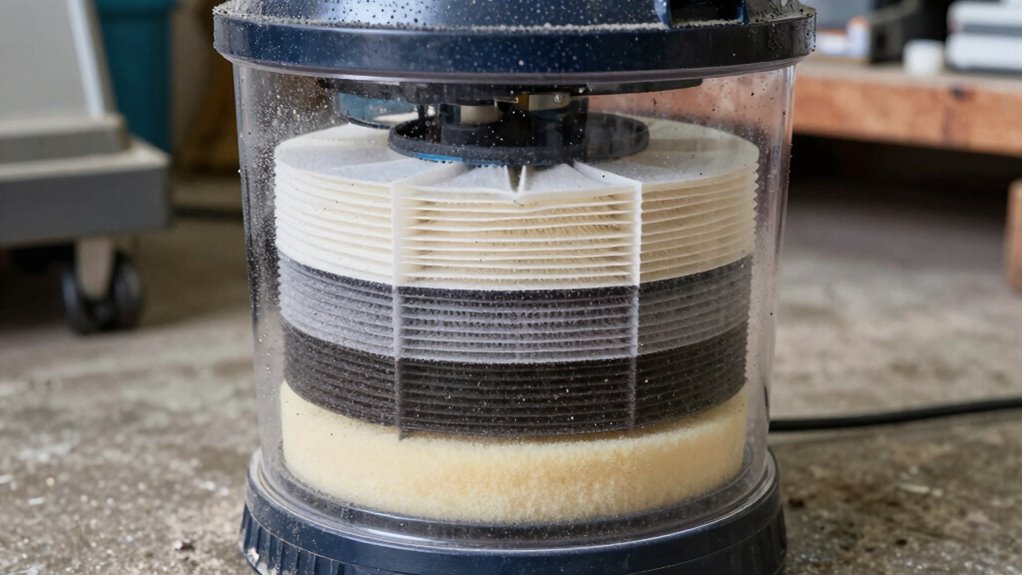
Dust blowback occurs in wet/dry shop vacs when fine particles escape the filter or sealing components during operation. This often results from airflow blockage, which can cause a buildup of debris and reduce the vacuum’s efficiency. When airflow is restricted, the vacuum’s motor works harder, increasing pressure on the filter and seals. Over time, this stress shortens the filter lifespan and can create gaps or leaks that let dust escape back into the environment. If the filter becomes clogged or damaged, dust and fine particles are more likely to blow back through seals or unfiltered areas. Proper filter maintenance and regular inspections are essential to prevent dust blowback and maintain optimal vacuum performance. Maintaining clear airflow paths, including checking for blockages, and replacing filters as needed helps prevent dust blowback, ensuring your vac operates effectively and safely. Additionally, understanding filter types and their specific maintenance requirements can significantly reduce dust blowback issues. Regularly checking for airflow restrictions can help identify potential problems before they lead to dust blowback, especially when considering filter lifespan and how it impacts vacuum efficiency.
What Types of Filters Are Available for Your Shop Vac
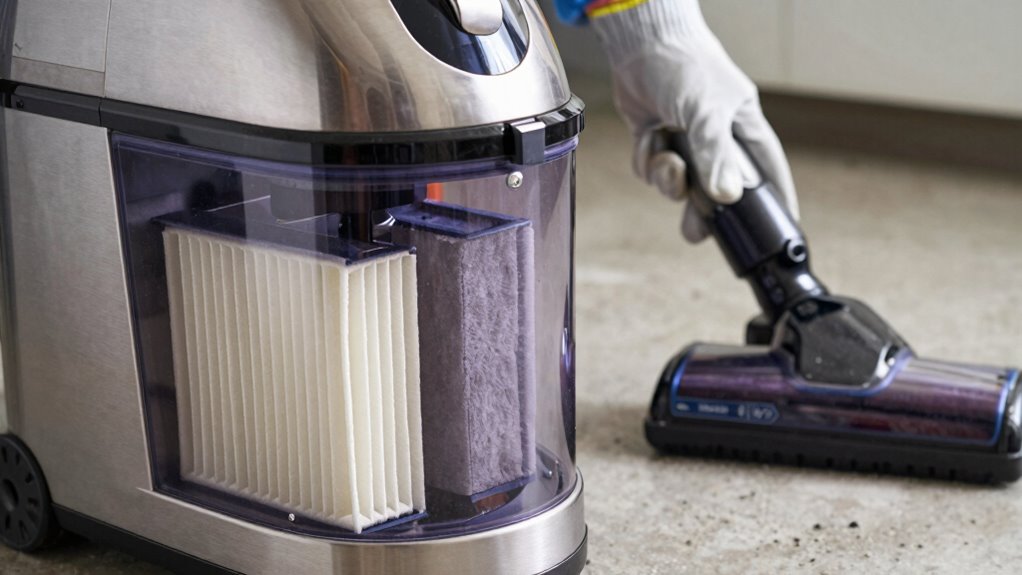
Depending on your cleaning needs, there are several filter options available for your shop vac, each designed to handle different types of debris and environments. The most common filter material is paper, used for dry debris, but these have a limited filter lifespan and must be replaced regularly. Foam filters are reusable and more durable, suitable for wet pickups, and can last longer with proper cleaning. Cloth filters offer versatility and extended lifespan but may require more maintenance. HEPA filters capture fine dust particles, improving air quality but often come with a higher cost and shorter lifespan. Choosing the right filter depends on your specific tasks, and understanding the filter material helps guarantee optimal performance and longevity of your shop vac. Additionally, selecting filters compatible with sauna ventilation systems can help maintain air quality in specialized environments. When selecting filters, consider the filter lifespan to ensure consistent performance over time and reduce replacement costs. Furthermore, understanding the filter material can help you select filters that are best suited for your particular cleaning tasks, ensuring efficiency and durability. It is also beneficial to evaluate the filter compatibility with your shop vac model to avoid fitting issues and maximize filtration efficiency.
How Different Filters Impact Dust Capture and Air Quality

Different filters substantially influence how well your shop vac captures dust and improves air quality. HEPA filters excel at dust filtration, trapping tiny particles like allergens, mold spores, and fine dust that typical filters miss. Using a HEPA filter guarantees that even the smallest harmful particles stay contained, preventing them from re-entering your workspace. Standard filters may handle larger debris effectively but often fall short in capturing fine dust, leading to dust blowback and poor air quality. Selecting the right filter impacts your health and the cleanliness of your workshop. High-quality dust filtration is essential for maintaining a safe environment, especially when working with materials that generate fine dust. Understanding the filter efficiency of different options helps you make an informed choice to improve air quality. Proper filter maintenance and timely replacement further enhance dust control effectiveness, preventing dust blowback and ensuring cleaner air. Additionally, Vetted – Perfect Fit Living offers various filter solutions tailored for optimal dust control and air purification. Regularly evaluating your filter’s performance ensures sustained effectiveness and healthier workspace conditions. To maximize dust capture, consider the filter material as it directly affects how well debris is trapped and contained.
Easy Tips to Install, Maintain, and Maximize Your Filters

Installing, maintaining, and maximizing your shop vac filters is straightforward when you follow a few simple steps. First, verify you regularly check your filter for dirt buildup or damage. When it’s time for filter replacement, remove the old filter carefully, avoiding knocking dust into the air. Use proper sealing techniques by making sure the filter fits snugly into the housing, with no gaps around the edges. Tighten clamps or latches securely to prevent dust blowback and improve suction. Clean reusable filters as recommended by the manufacturer, and replace disposable filters when they become clogged. Proper installation and sealing techniques help maintain peak airflow, prolong filter life, and ensure your vac performs at its best. Regular upkeep keeps dust contained and your workspace cleaner.
Common Causes of Dust Blowback and How to Stop It
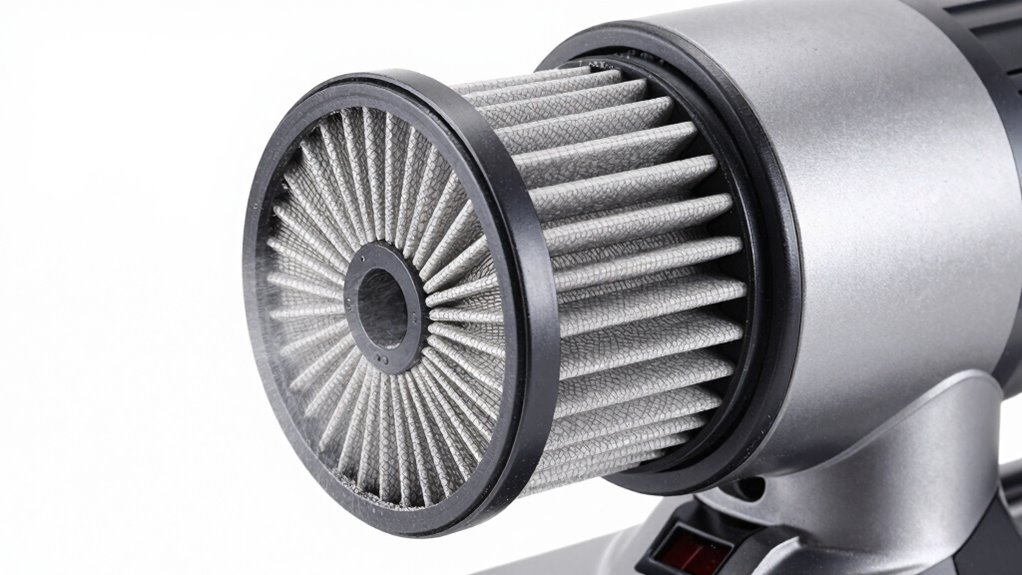
Dust blowback often happens when your filter seals aren’t tight or are damaged. Worn or broken filters can also let dust escape back into the air. Fixing these issues quickly keeps your vacuum working efficiently and prevents messes. Additionally, using the correct filter type for your specific vacuum model can help reduce dust blowback and improve overall performance. Ensuring your filters are compatible with vetted materials can further enhance dust containment and prolong filter life. Regularly inspecting and replacing filters based on seasonal maintenance checklists can help maintain optimal performance and prevent dust escape.
Improper Filter Seals
When the filter seal isn’t properly fitted, dust and debris can escape back into the airflow, causing dust blowback from your wet/dry shop vac. Poor seal integrity allows dust to bypass the filter, reducing efficiency and increasing mess. To guarantee a proper seal, check that the filter is seated correctly and securely. Regular filter replacement helps maintain airtight conditions and prevents deterioration of the seal. Be mindful of these points:
- Verify the filter is aligned correctly before sealing
- Avoid forcing the filter, which can damage the seal
- Clean the filter housing regularly to remove dust buildup
- Replace worn or damaged seals promptly to preserve seal integrity
- Using appropriate filter types ensures compatibility and optimal performance. Proper maintenance and understanding of filter compatibility can significantly reduce dust blowback issues. Additionally, inspecting the seal integrity regularly can help catch issues early before they cause dust leaks. Ensuring the dust containment system is functioning properly is crucial for a safe and clean workspace. Incorporating airtight seals into your system design is essential for minimizing dust escape and maintaining a cleaner environment.
Worn or Damaged Filters
Worn or damaged filters are among the most common causes of dust blowback in your wet/dry shop vac. Over time, filters lose their effectiveness as they reach the end of their filter lifespan, increasing the likelihood of dust escaping back into the workspace. Regular inspection is essential to identify tears, holes, or excessive dirt buildup. Replacing filters at recommended intervals or when damage appears can prevent dust blowback. Here’s a quick guide:
| Issue | Solution |
|---|---|
| Worn or torn filter | Replace immediately |
| Excessive dirt or clogging | Clean or replace based on replacement frequency |
| Damaged filter seal | Repair or replace seal |
| Visible damage or deterioration | Replace filter |
Maintaining your filter’s condition guarantees peak performance and minimizes dust blowback. Understanding filter types and proper filter maintenance techniques can further enhance your vacuum’s efficiency and longevity. Proper handling and timely replacements are crucial to ensure optimal dust containment and prolong the life of your equipment. Regularly checking for filter deterioration can help catch issues early before they lead to dust blowback.
How to Choose the Best Filter for Your Cleaning Needs

Choosing the right filter depends on the materials it’s made from, so you can match it to your specific cleaning tasks. Consider how well the filter functions with wet or dry debris, and think about how easy it is to maintain and how long it will last. Picking the best filter ensures your vac stays effective and saves you time on upkeep.
Filter Material Options
Selecting the right filter material is essential for ensuring your wet/dry shop vac performs effectively and lasts longer. When choosing from filter material options, consider how filter manufacturing impacts durability and filtration efficiency. Different materials serve various needs, from trapping fine dust to handling wet debris. For example:
- Paper filters are affordable but often less durable.
- Foam filters excel at handling wet messes and larger debris.
- HEPA filters capture tiny particles, ideal for dust-sensitive environments.
- Reusability depends on filter manufacturing quality, affecting cleaning and replacement frequency.
Understanding these options helps you match the filter material to your specific tasks, ensuring ideal airflow, dust containment, and longevity of your equipment.
Compatibility With Tasks
To effectively match your shop vac filter to your cleaning tasks, you need to contemplate the type of debris you’ll be handling. For dust collection, choose a filter with high filter efficiency to trap fine dust particles and prevent blowback. If you’re dealing with larger debris like wood chips or nails, a coarse or foam filter might be sufficient and prevent clogging. For liquids or wet messes, a wet filter designed specifically for moisture is essential to avoid damage and ensure proper operation. Matching the filter to your specific task improves dust collection performance and prolongs filter life. Select a filter that balances dust control with airflow needs, ensuring your shop vac performs efficiently without sacrificing power or risking dust blowback.
Maintenance and Longevity
Proper maintenance of your shop vac filter not only extends its lifespan but also keeps your cleaning performance at its best. Regular filter cleaning ensures dust containment remains effective, preventing dust blowback and airborne particles. To optimize filter longevity, inspect it frequently for wear or damage, and replace when necessary. Keep in mind:
- Clean filters after each heavy use to prevent buildup
- Use appropriate tools for filter cleaning, avoiding damage
- Store filters in a dry, dust-free environment when not in use
- Choose filters compatible with your tasks to maintain dust containment and filtering efficiency
Frequently Asked Questions
Can Wet/Dry Vacuums Be Used for Hazardous Dust Types?
Yes, wet/dry vacuums can handle hazardous dust if they have proper filtration safety features, like HEPA filters. These filters trap fine particles and prevent dust blowback, protecting your health. Always check the vacuum’s specifications and verify it’s rated for hazardous dust. Using the right filter and following safety guidelines keeps you safe and maintains effective dust containment during cleanup.
Are HEPA Filters Suitable for All Wet/Dry Shop Vac Models?
They say “know your tools,” and HEPA filters aren’t suitable for all wet/dry shop vac models. Before you attempt filter installation, check HEPA compatibility with your vacuum. Many models support HEPA filters, but some don’t due to design differences. Always read your vac’s manual or consult the manufacturer to guarantee proper fitment and performance. Using incompatible filters can compromise dust containment and safety, so double-check first.
How Often Should Filters Be Replaced for Optimal Performance?
You should replace your filter every 3 to 6 months for ideal performance, but it depends on your usage and the filter’s lifespan. Check it regularly for signs of wear, clogging, or damage, and replace it sooner if necessary. Frequent replacement ensures your vac stays efficient and prevents dust blowback. Keeping up with the recommended replacement frequency helps maintain suction power and prolongs your vacuum’s life.
What Are the Signs Indicating a Filter Needs Cleaning or Replacement?
You’ll notice your filter needs cleaning or replacing if you see clogged filters, which can cause reduced suction. Additionally, if your vacuum isn’t picking up debris as effectively or if it’s making unusual noises, these are signs. Reduced airflow and increased motor strain also indicate it’s time to check your filter. Regularly inspecting and replacing filters keeps your shop vac working efficiently and prevents dust blowback.
Do Aftermarket Filters Provide the Same Protection as Original Manufacturer Filters?
Aftermarket filters can offer similar protection as OEM filters if they’re compatible with your vacuum model. You should check filter compatibility carefully, as aftermarket vs OEM filters sometimes differ in quality or fit. Some aftermarket filters meet industry standards, but others might not provide the same dust protection or durability. Always read reviews and verify specifications to confirm the aftermarket filter will safeguard your vacuum effectively.
Conclusion
By choosing the right filter and maintaining it properly, you can prevent dust blowback and keep your workspace clean and safe. Imagine tackling a messy woodworking project, only to find dust flying back into your face—that’s frustrating. But with a high-quality filter installed correctly, you can stop dust in its tracks. Take control of your shop vac’s performance, and enjoy a cleaner, healthier environment every time you work.