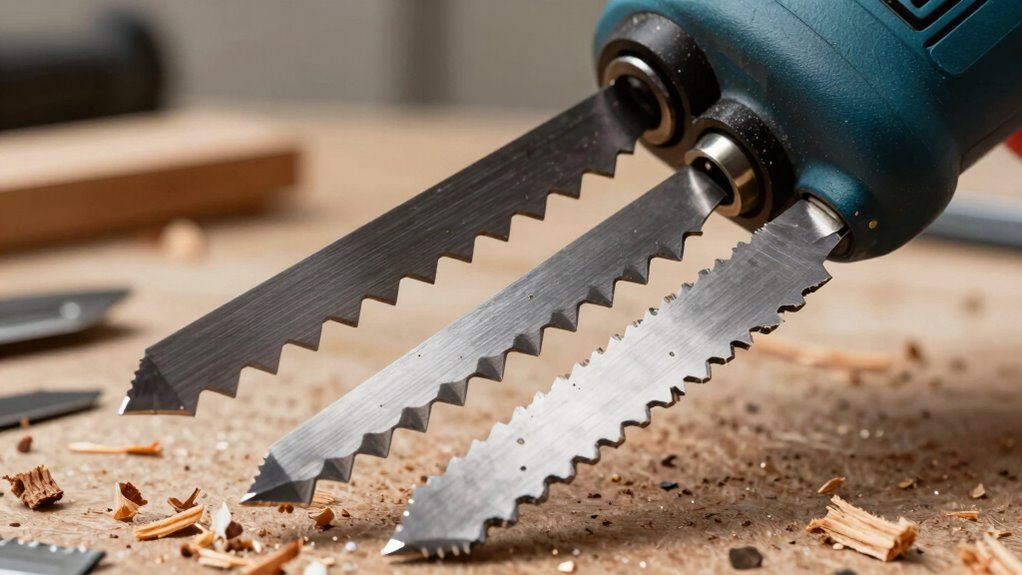

Choosing the right reciprocating saw blades depends on your project. For wood, look for blades with fine teeth for smooth cuts or coarse teeth for faster, rough work. Metal cuts require durable, reinforced blades with bi-metal or carbide tips to handle tougher materials. For demolition tasks, select heavy-duty blades with reinforced edges and tougher materials. Using the correct blade improves safety, efficiency, and results—you’ll find useful tips to help match your blades to your needs as you explore further.
Key Takeaways
- Choose blades with appropriate tooth design and pitch: fine teeth for wood, aggressive teeth for metal, reinforced blades for demolition.
- Select high-quality materials like bi-metal or carbide-tipped blades for durability in tough cutting tasks.
- Match blade length and thickness to your reciprocating saw and the material’s thickness for optimal performance.
- Ensure proper blade installation with teeth facing the correct direction and secure fitting before use.
- Regularly inspect, clean, and replace dull or damaged blades to maintain safety and cutting efficiency.
How Do Reciprocating Saw Blades Differ for Wood, Metal, and Demolition?
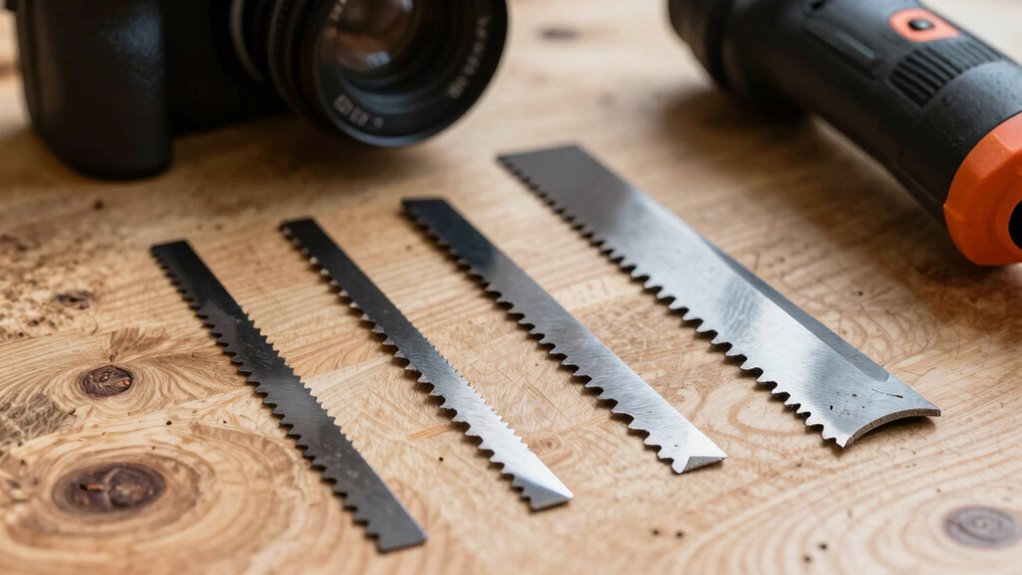
Reciprocating saw blades are designed specifically for different materials, and choosing the right one makes a significant difference in your cutting performance. The blade material plays a vital role; for example, high-speed steel blades excel at cutting metal, while bi-metal blades combine durability and flexibility for demolition tasks. When cutting wood, blades with sharper teeth and specific tooth configurations help increase cutting speed and reduce effort. For demolition work, blades are built tough with reinforced teeth to handle heavy-duty materials and abrasive surfaces. The material of the blade influences not just durability but also how quickly you can cut through different surfaces. Selecting the appropriate blade material ensures you work efficiently and achieve clean, precise cuts, whether you’re working with wood, metal, or demolition materials. Additionally, blade design can impact cutting efficiency and precision depending on the task at hand.
How to Choose the Best Saw Blade for Wood Cutting
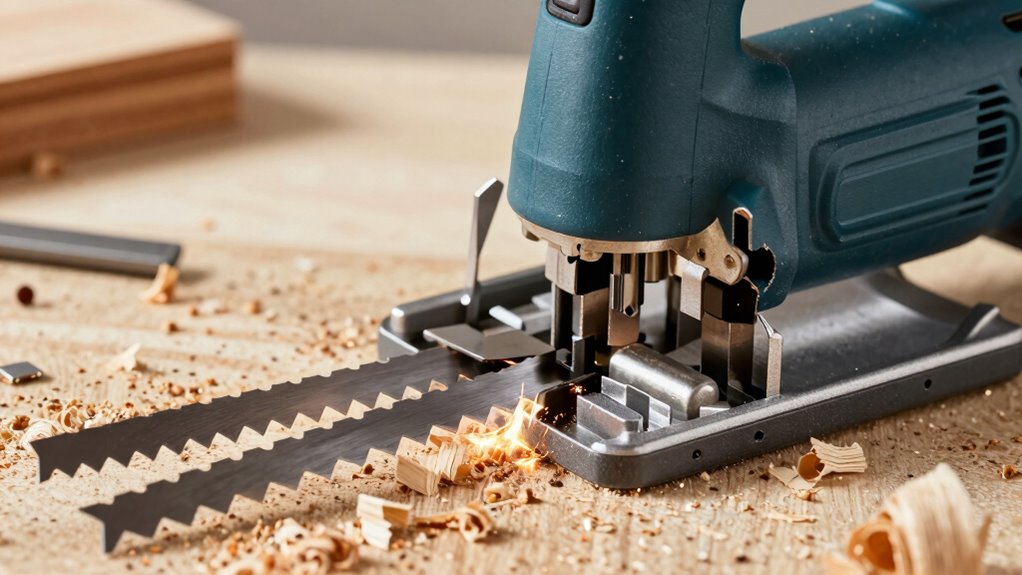
Choosing the right saw blade for wood cutting starts with understanding your specific project needs. Consider the wood grain; fine, smooth cuts require blades with a higher tooth count, while rougher cuts can use blades with fewer teeth. Blade type also impacts saw stability—thinner blades offer cleaner cuts but may flex more, reducing precision. For straight, accurate cuts, opt for a blade designed for stability and minimal vibration. If you’re working on detailed or delicate projects, select a blade with finer teeth and reinforced construction to enhance stability. Remember, a well-chosen blade improves cutting efficiency, minimizes splintering, and ensures safety. Matching the blade to your wood’s characteristics and your saw’s stability will give you the best results and a smoother cutting experience.
What Features Make a Good Blade for Metal?

When choosing a blade for cutting metal, you want one that’s durable and made from high-quality materials to withstand tough jobs. The tooth design and pitch influence how efficiently it cuts through different metals, so picking the right pattern matters. Additionally, look for a blade with the right balance of flexibility and strength to handle bending without breaking. For optimal safety and performance, it’s also important to select blades compatible with your reciprocating saw’s body jewelry materials and size specifications. Ensuring the blade’s material composition is suitable for metal cutting can significantly extend its lifespan and improve cutting accuracy.
Durability and Material Quality
What makes a blade for metal durable and reliable? The key lies in the blade material, which determines strength and resistance to wear. High-quality steel, such as bi-metal or carbide-tipped blades, offers superior durability by combining flexible and hard properties. A robust cutting edge is essential; it should be precisely engineered to withstand frequent use without dulling quickly. Look for blades with a reinforced edge that resists chipping and cracking, especially when cutting through tough materials. The overall construction should promote stability and reduce vibrations, extending the blade’s lifespan. Investing in blades with excellent material quality ensures you get consistent performance, less downtime, and more efficient cuts. Material composition plays a crucial role in the durability of saw blades and how well they resist deformation during intensive use. Additionally, understanding wear resistance can help in selecting blades that maintain sharpness longer under demanding conditions. Proper blade design also contributes significantly to durability by optimizing heat dissipation and reducing stress during operation.
Tooth Design and Pitch
Ever wondered how the tooth design and pitch influence a blade’s performance when cutting metal? Your teeth configuration plays a vital role in efficiency and clean cuts. Blades with a high tooth count, or fine teeth, are ideal for detailed, smooth cuts in thin metal sheets, while those with fewer, larger teeth excel at rougher, faster cuts in thicker material. Pitch variation, which refers to the distance between teeth, affects how smoothly the blade interacts with the metal. A smaller pitch provides smoother cuts but may wear faster, whereas a larger pitch offers durability for heavy-duty tasks. Selecting the right combination of teeth configuration and pitch variation ensures you get maximum performance, longer blade life, and cleaner cuts when working with metal. Additionally, understanding tooth design and its impact on cut quality can help you choose the optimal blade for specific applications. Recognizing the material type you are cutting is also crucial for selecting the appropriate blade to prevent premature wear and achieve the best results. Being aware of cutting speed and feed rate can further optimize your cutting process and extend blade life. Incorporating blade maintenance practices can also significantly enhance blade longevity and performance. Considering blade material can further improve durability and cutting efficiency during heavy-duty tasks.
Blade Flexibility and Strength
A good blade for cutting metal needs the right balance of flexibility and strength to handle tough materials without breaking or dulling quickly. Blade flexibility allows you to make precise cuts and absorb vibrations, reducing the risk of snapping under stress. Meanwhile, blade strength ensures the blade can withstand the resistance of metal without bending excessively or breaking. Look for blades with high-quality steel or alloy construction, which provide durability and resilience. A blade that’s too rigid may crack or chip when faced with tough metals, while one that’s overly flexible might bend and lose cutting efficiency. The ideal blade combines sufficient flexibility to prevent breakage and enough strength to cut efficiently through metal, making your work safer and more effective. Blade durability is also an important factor to consider, as it impacts the lifespan and performance of your cutting tools. Additionally, understanding blade design can help you select the most appropriate blade for different types of metal and cutting applications.
Best Reciprocating Saw Blades for Demolition Jobs

When tackling demolition projects, choosing the right reciprocating saw blades is essential for efficiency and safety. For heavy-duty jobs, look for blades with reinforced teeth and durable materials like bi-metal or carbide-tipped blades, which cut through wood, metal, and drywall with ease. Safety precautions are crucial; always wear protective gear and ensure the blade is securely fastened. Proper maintenance tips include cleaning blades after use, inspecting for damage, and storing them properly to prevent rust. Using the correct blades not only speeds up demolition work but also reduces the risk of accidents caused by blade failure. Additionally, understanding blade types and materials can help you select the most suitable blades for your specific demolition tasks. Recognizing the importance of connected equipment can further enhance safety and efficiency during demolition. By selecting the best blades for demolition and following safety and maintenance guidelines, you guarantee a safer, more productive project. Incorporating proper storage techniques can extend the lifespan of your blades and ensure they perform reliably when needed. Paying attention to load capacity helps prevent overworking the blades and potential breakage during tough cuts. Moreover, considering blade compatibility with your saw model ensures optimal performance and reduces the risk of mishandling.
Important Factors When Buying Reciprocating Saw Blades
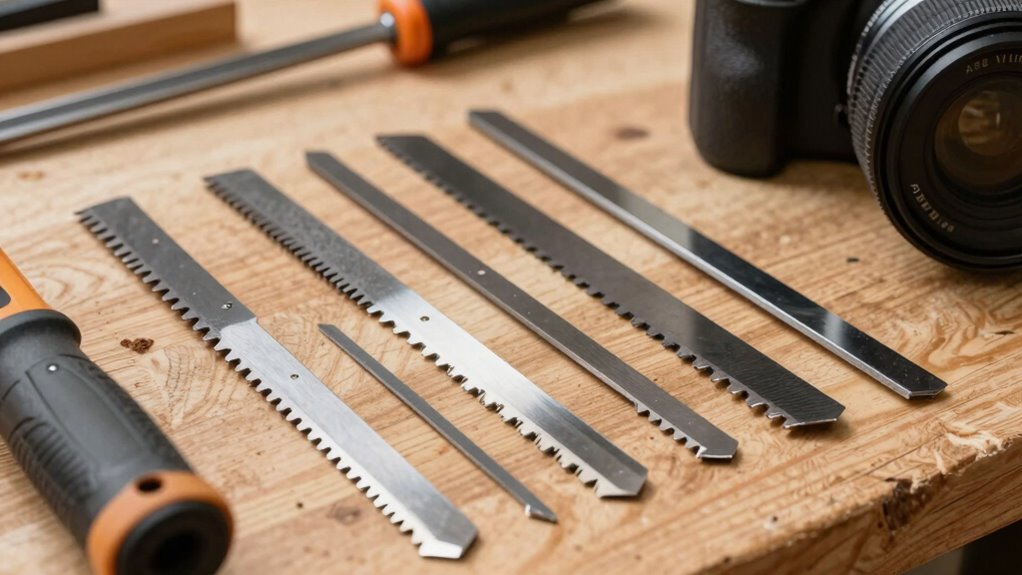
Choosing the right reciprocating saw blade depends on understanding several key factors that impact performance and durability. First, consider the blade material and tooth design, as these influence cutting speed and precision. For longer-lasting blades, look for options that are easily sharpened or replaceable; blade sharpening is essential to maintain efficiency over time. Safety precautions are also crucial—always wear protective gear and handle blades carefully to avoid accidents. Check the blade length and stroke rate compatibility with your saw to ensure proper fit and operation. Also, consider the type of material you’ll cut most often—wood, metal, or demo debris—and select a blade suited for that purpose. Making informed choices helps you achieve cleaner cuts and extend your blade’s lifespan. Additionally, reviewing vetted product reviews can help you select the best blade options based on real-world performance and durability feedback. Being aware of blade material properties can further enhance your selection process and result in better cutting outcomes. To optimize your cutting efficiency, understanding blade compatibility with your specific saw model is also vital.
How to Make Your Saw Blades Last Longer
Proper maintenance and careful handling can considerably extend the life of your reciprocating saw blades. Regular blade sharpening keeps your blades effective and reduces the strain on your saw, preventing premature wear. When not in use, store blades properly using storage solutions like blade organizers or cases to avoid unnecessary damage and dulling. Always clean blades after cutting to remove debris and residue, which can cause corrosion and dullness over time. Avoid forcing blades through tough materials—let the saw do the work. Check blades frequently for signs of wear or damage, replacing them when necessary. Understanding the importance of proper storage, sharpening, and handling are simple steps that significantly increase your blades’ durability, saving you money and ensuring consistent, efficient cuts. Additionally, choosing the right blade material for specific applications—such as bi-metal for metal or carbide-tipped for masonry—can greatly enhance blade performance and longevity. Being aware of blade lifespan indicators can help you know when it’s time to replace a blade before it fails unexpectedly.
Troubleshooting Common Blade and Cutting Problems

If your saw blade binds or pinches during cutting, it’s often due to improper blade installation or incompatible materials. Double-check that the blade is correctly installed and suited for your material to prevent these issues. Addressing these common problems can keep your cuts smooth and your saw running efficiently.
Blade Binding and Pinching
Blade binding and pinching occur when the saw blade becomes stuck or catches during cutting, often causing frustration and potential damage to the tool or workpiece. To avoid this, consider these steps:
- Check your blade for the correct type and sharpness; dull or incompatible blades increase the risk of blade pinching.
- Maintain steady pressure—push the saw smoothly without forcing it, which can cause binding.
- Adjust your cutting speed—slower cuts reduce the chance of blade binding, especially in dense materials.
- Ensure proper support for the workpiece—unsupported edges can cause the blade to pinch or bind.
Paying attention to these factors helps prevent blade binding and blade pinching, ensuring safer, cleaner cuts and prolonging your saw’s life.
Incorrect Blade Installation
Have you ever experienced cutting issues despite using a new blade? Incorrect blade installation is often the culprit. Start by checking the blade’s alignment; it must be securely seated and straight in the chuck. If the blade isn’t properly aligned, it can wobble, cause uneven cuts, or break under pressure. Always follow safety precautions—disconnect the saw from power before installing or adjusting blades. Make sure the blade teeth face the correct direction for cutting and are locked tightly in place. Improper installation not only hampers performance but also poses safety risks. Take extra care during installation to ensure everything is aligned correctly. A properly installed blade will cut smoothly, efficiently, and safely, giving you better control and results.
Material and Blade Compatibility
Choosing the right blade for your material is essential to achieve clean, efficient cuts with your reciprocating saw. If your blade isn’t compatible, you’ll encounter problems like rough cuts or blade damage. To troubleshoot, consider these steps:
- Ensure the blade type matches your material—wood, metal, or demo.
- Check if the blade is dull; dull blades require sharpening or replacement.
- Store blades properly—blade storage in a dry, organized area prevents rust and maintains sharpness.
- Replace blades when they become worn or damaged, rather than forcing cutting with dull blades, which can cause overheating and breakage.
Frequently Asked Questions
Can I Use Wood Blades on Metal or Vice Versa?
You shouldn’t use wood blades on metal or vice versa because of blade compatibility issues. Wood blades are designed for cross material cutting, but they lack the durability needed for metal, and metal blades won’t cut wood efficiently. Using the wrong blade can cause damage to the blade, tool, and your project. Always select the appropriate blade for your material to guarantee safe, effective cutting and to avoid unnecessary wear or breakage.
What Safety Precautions Should I Take When Using Different Blades?
When switching blades, always check blade compatibility to guarantee safe use. Wear appropriate safety gear like goggles, gloves, and ear protection to protect yourself from debris and noise. Before starting, inspect the blade for damage and secure the workpiece. Keep your hands away from the blade path and maintain a firm grip. Following these safety precautions minimizes risk and keeps you safe during different blade applications.
How Do I Recognize When a Blade Needs Replacing?
You recognize it’s time to replace a blade when it shows signs of dullness or damage, like missing teeth or excessive wear. The blade material influences its lifespan; for example, carbide blades last longer than steel. If cuts become rough or slow, it’s a clear sign the blade’s efficiency has decreased. Regularly inspect your blades to make certain safe, effective cuts and replace them promptly when necessary.
Are There Eco-Friendly or Biodegradable Blade Options?
Did you know that over 300 million blades end up in landfills each year? Yes, eco-friendly or biodegradable blades are available, made from biodegradable materials designed to break down naturally. These blades are produced through eco-friendly manufacturing processes, reducing environmental impact. Choosing biodegradable blades helps you cut through your projects while also caring for the planet, making your work more sustainable and responsible.
How Does Blade Speed Affect Cutting Performance?
Blade speed directly impacts your cutting performance by influencing the efficiency and quality of your cut. Higher blade speeds, combined with durable blade material, allow you to cut faster and smoother, especially in wood or metal. However, if the speed is too high for the material, it can cause overheating or damage. Adjust your blade speed carefully to match the material and blade material for ideal results.
Conclusion
Choosing the right reciprocating saw blade feels like a lucky find—you never know when you’ll stumble upon the perfect one for your project. By understanding the differences for wood, metal, and demolition, you’ll make smarter choices and avoid surprises. With the right blade and some care, your cuts will be cleaner and last longer. Sometimes, it’s the small details that make all the difference, turning a good job into a great one without even realizing it.