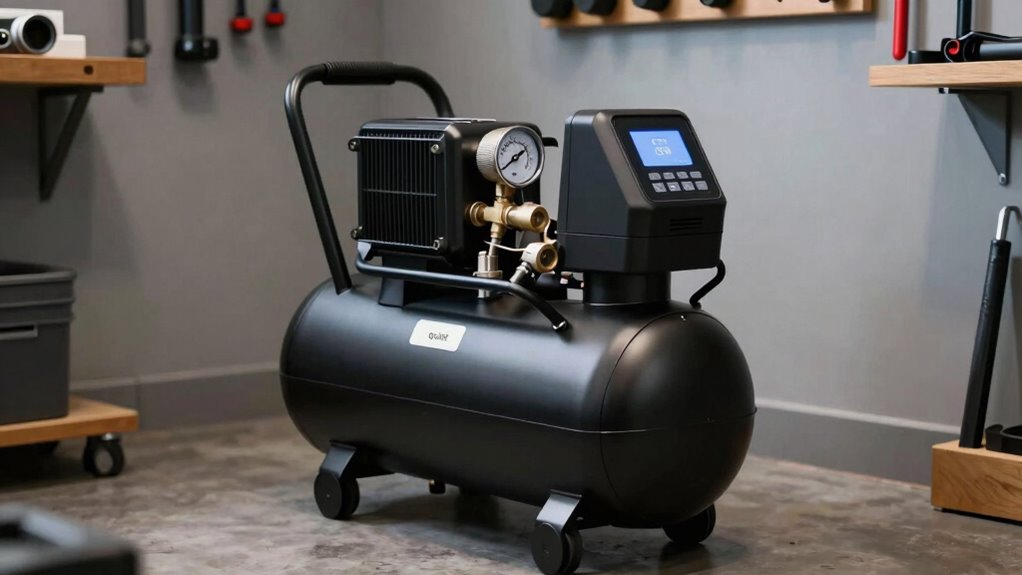
When selecting a quiet air compressor, don’t rely solely on decibel ratings. CFM and tank size are key factors that influence performance and noise levels. A larger tank helps maintain steady airflow and reduces startup noise, while higher CFM ensures your tools run smoothly. Keep in mind, a quieter model might struggle with heavy-duty tasks if it lacks sufficient power. To discover how these features work together for ideal quiet operation, explore more details ahead.
Key Takeaways
- Higher CFM is essential for powerful tools but may increase noise, so balance performance with soundproofing for quieter operation.
- Larger tank sizes support longer, smoother runs and reduce startup noise, but can still produce significant sound without proper insulation.
- “Quiet” compressors often focus on low decibel ratings, yet may lack the CFM or tank capacity needed for heavy-duty tasks.
- Soundproofing features, vibration damping, and strategic placement are critical to achieving true quietness beyond just dB ratings.
- A compressor’s ability to handle workload depends on both noise level and performance specs; quiet models aren’t always suitable for demanding jobs.
What Makes a Compressor Truly Quiet? Understanding Noise Levels and Ratings
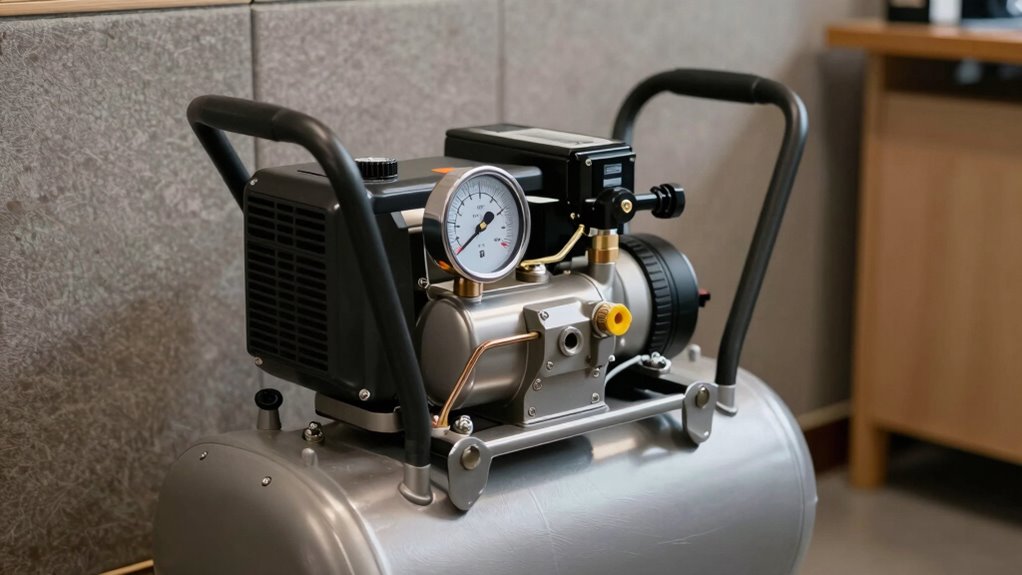
To determine if a compressor is truly quiet, you need to understand how noise levels are measured and rated. Noise ratings are typically expressed in decibels (dB), which quantify sound intensity. Lower dB ratings indicate quieter operation. Sound insulation plays a vital role in reducing noise transmission, making a compressor seem quieter even if its raw noise level is moderate. When evaluating compressors, look for models with good sound insulation features, such as insulated covers or vibration dampening mounts. These enhancements help contain noise within the unit and prevent it from spreading. Additionally, understanding how sound absorption materials work can further improve noise reduction. Properly installed soundproofing techniques can significantly diminish noise levels and enhance overall quietness. Incorporating noise mitigation strategies into your compressor setup can further optimize its silent operation. Remember, a compressor with favorable noise ratings combined with effective sound insulation will operate more quietly, providing a more comfortable environment while maintaining performance.
How Does CFM Impact Your Air Compressor’s Performance?
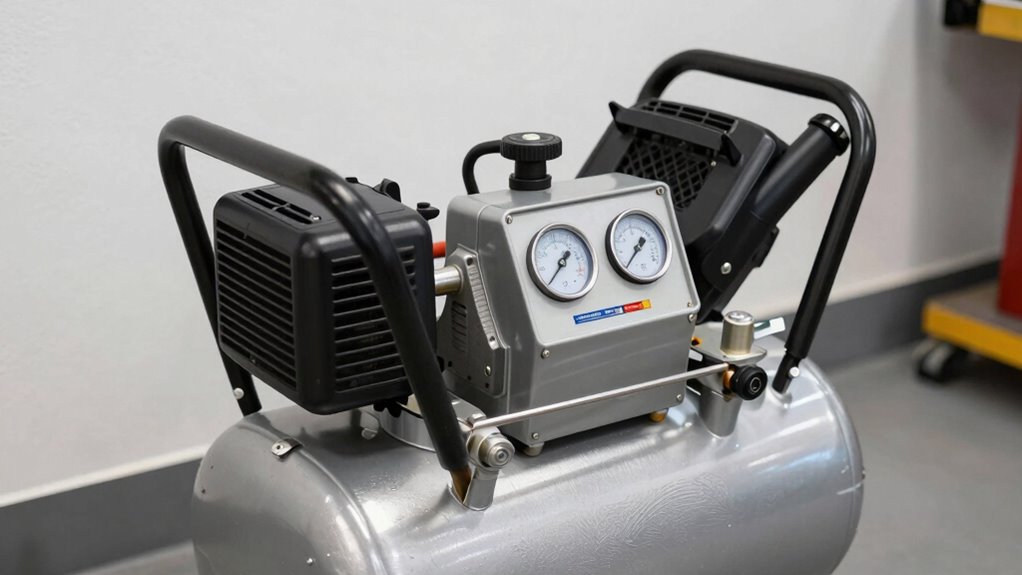
Understanding CFM is key to ensuring your compressor can meet your tool’s airflow needs. If the CFM isn’t high enough, tools might run slowly or lose power. Matching your compressor’s airflow volume to your tool’s demands keeps everything running smoothly. Additionally, selecting a compressor with appropriate tank size can help maintain consistent airflow during prolonged use. Proper maintenance of air purifiers, such as regularly checking and replacing filters according to manufacturer guidelines, can also prevent dust and debris from impacting compressor performance. Incorporating smart maintenance reminders can further optimize your equipment’s longevity and efficiency. Knowing about Youngster Choice and other related factors can help you make more informed decisions about your compressor setup.
Airflow Volume Significance
Have you ever wondered how the airflow volume affects your air compressor’s efficiency? Your CFM, or airflow volume, directly impacts how well your compressor performs. Higher CFM means more air is delivered quickly, improving airflow efficiency when running tools or equipment. If your airflow volume is too low, your tools may lag or work inefficiently, causing frustration and delays. Proper compressor placement also plays a role, as positioning it near your work area minimizes airflow restrictions and maintains consistent performance. Understanding how CFM influences airflow volume helps ensure your compressor meets your demands without overheating or overworking. Additionally, air compressor capacity plays a crucial role in determining overall system performance and longevity. Ensuring you select the right airflow requirements for your specific tasks guarantees smoother operation, better tool performance, and a quieter, more efficient workspace. Recognizing the relationship between tank size and airflow can help you optimize your compressor setup for both power and endurance. Selecting the appropriate air compressor size can also prevent unnecessary energy consumption and extend your equipment’s lifespan.
Matching Tool Demands
Matching your air compressor’s CFM to your tool’s demands is essential for peak performance. If your compressor’s CFM is too low, tools may run intermittently or underperform, causing frustration. Proper CFM guarantees consistent airflow, reducing noise and improving efficiency. To optimize sound insulation and noise reduction, select a compressor with adequate CFM that matches or exceeds your tools’ needs. Additionally, understanding air compressor specifications helps in selecting the right model to ensure quiet, effective operation.
Why Is Tank Size Important for Quiet Compressors?

Ever wonder why tank size matters when choosing a quiet air compressor? Your compressor’s tank capacity directly impacts its storage efficiency, allowing it to hold more compressed air and support longer operation times. A larger tank stores more compressed air, meaning it can run longer between cycles, reducing the frequency of startup noises that can disturb your quiet environment. This also helps to maintain consistent airflow, which is crucial for achieving a smooth and quiet operation. Additionally, smart contract technology is increasingly used to optimize compressor operation and maintenance, further enhancing efficiency. Larger tanks also help in reducing pressure swings, which contributes to a more consistent and quieter performance. It’s also worth noting that the horsepower of the compressor’s motor can influence how quickly the tank refills and how well it maintains steady pressure during use. So, if you want a truly quiet experience with fewer interruptions, opting for a larger tank ensures better storage efficiency and a more consistent, peaceful operation.
Can Quiet Compressors Handle Heavy-Duty Tasks?
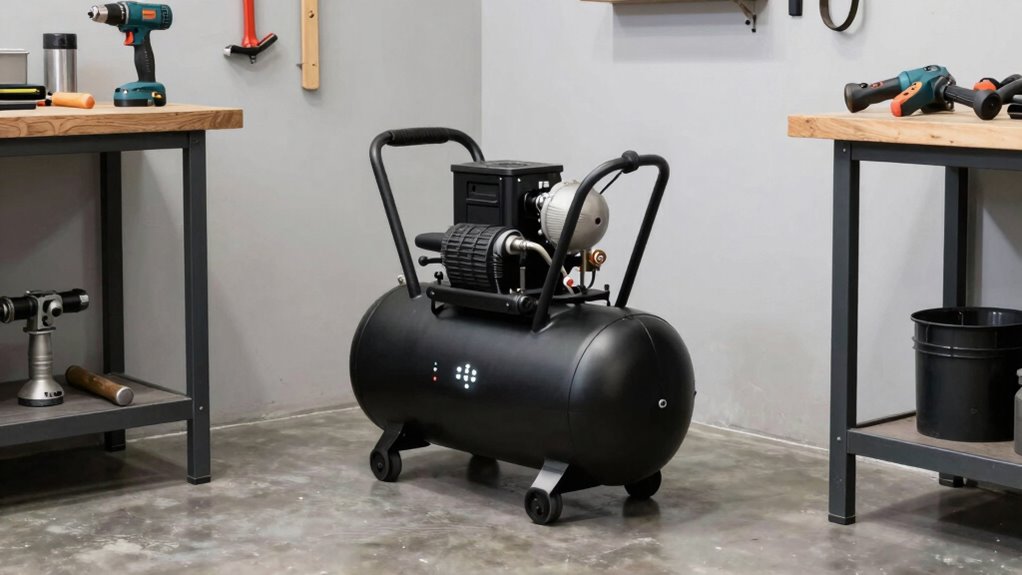
While larger tanks help quiet compressors run smoothly over longer periods, you might wonder if a quiet model can also handle demanding, heavy-duty tasks. Generally, quiet compressors excel in noise reduction, but their ability to sustain heavy workloads depends on factors like motor power and build quality. Some models are designed with compressor durability in mind, featuring robust components that withstand frequent use. Additionally, support networks for new fathers are vital for managing stress and maintaining productivity during intensive work periods. However, quieter units often have lower CFM ratings, meaning they may struggle with continuous, high-demand tasks. If you need a compressor for heavy-duty jobs, look for one specifically rated for high CFM output and reinforced construction. While quiet models can handle moderate tasks, their noise reduction features might limit their performance in rigorous, industrial applications. Moreover, understanding airflow capacity is essential in selecting a compressor that balances noise levels with performance requirements. In some cases, sound insulation techniques can be employed to improve performance without sacrificing quiet operation. Additionally, considering the motor design can influence a compressor’s ability to handle sustained workloads without overheating or failing.
Comparing Noise Ratings and Performance: What to Look For
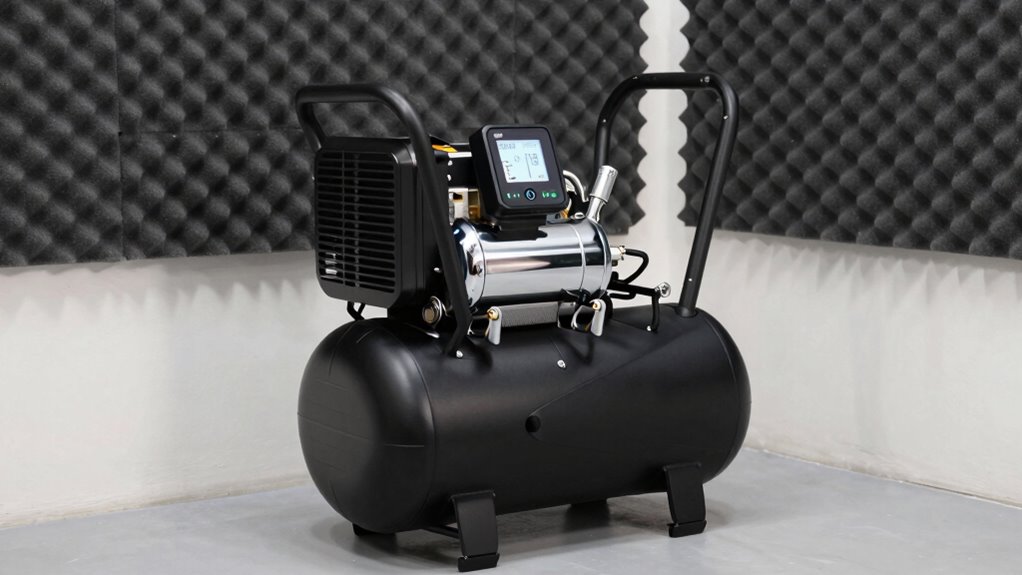
When evaluating quiet air compressors, it’s essential to compare their noise ratings alongside their performance capabilities. Look at the dB measurement to gauge how loud the compressor truly is—remember, lower decibel levels indicate quieter operation. However, don’t rely solely on dB ratings; consider how soundproofing materials are incorporated into the design. Quality soundproofing can considerably reduce noise transmission, making a compressor feel even quieter. Be cautious of models with high performance but minimal soundproofing, as they might still produce disruptive noise levels. Comparing both noise ratings and performance specs ensures you choose a compressor that balances power with comfort, helping you maintain a quieter workspace without sacrificing efficiency. Additionally, understanding how performance modifications impact noise levels can help you select a compressor that meets your needs without unnecessary noise. Incorporating soundproofing techniques can further enhance quiet operation and improve overall user experience. Furthermore, paying attention to tank size and CFM can influence noise levels and operational efficiency, as larger tanks and higher airflow rates might impact the overall sound profile.
How to Choose the Best Quiet Air Compressor for Your Workshop
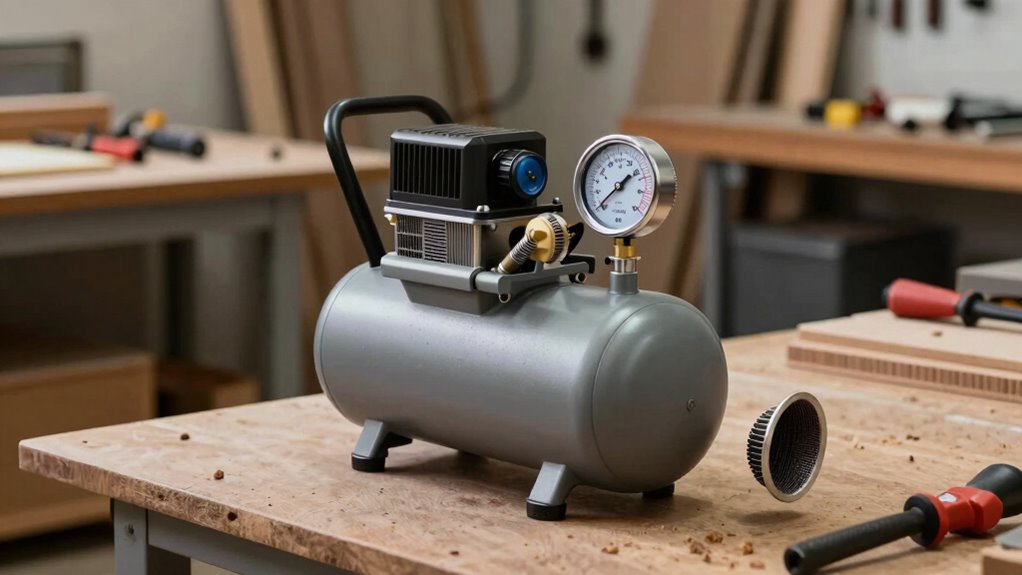
When selecting a quiet air compressor, you need to consider both noise levels and how much power you’ll need for your tasks. You’ll also want to think about portability if you move it around your workshop frequently. Balancing these points ensures you find a compressor that’s both quiet and practical for your workspace.
Noise Level Considerations
Choosing a quiet air compressor requires paying close attention to its noise level, especially if you’ll be working in a shared or residential space. To minimize disruption, look for models with soundproof enclosures that contain noise effectively. Consider compressors with vibration damping features, which reduce the vibrations that cause loud sounds. Here are three key factors to evaluate:
- Decibel (dB) Rating: Aim for compressors under 70 dB for quieter operation.
- Soundproof Enclosures: These contain noise and prevent it from spreading.
- Vibration Damping: Reduces noise caused by vibrations, making the compressor much less intrusive.
Prioritize these features to keep your workspace peaceful without sacrificing performance.
Power and Portability
Balancing power and portability is key to selecting the right quiet air compressor for your workshop. You need a compressor with enough power to handle your tasks efficiently while remaining easy to move around. Look for models with good power efficiency, so they use less energy without sacrificing performance. Portability features like wheels, sturdy handles, and lightweight construction make transportation simple, especially if you need to shift between job sites or different areas in your shop. Consider the compressor’s size and weight, but don’t compromise power for portability—find a model that offers a good compromise. This balance ensures you get a reliable tool that’s easy to use and move, helping you work efficiently without unnecessary effort.
Common Mistakes to Avoid When Buying a Quiet Air Compressor
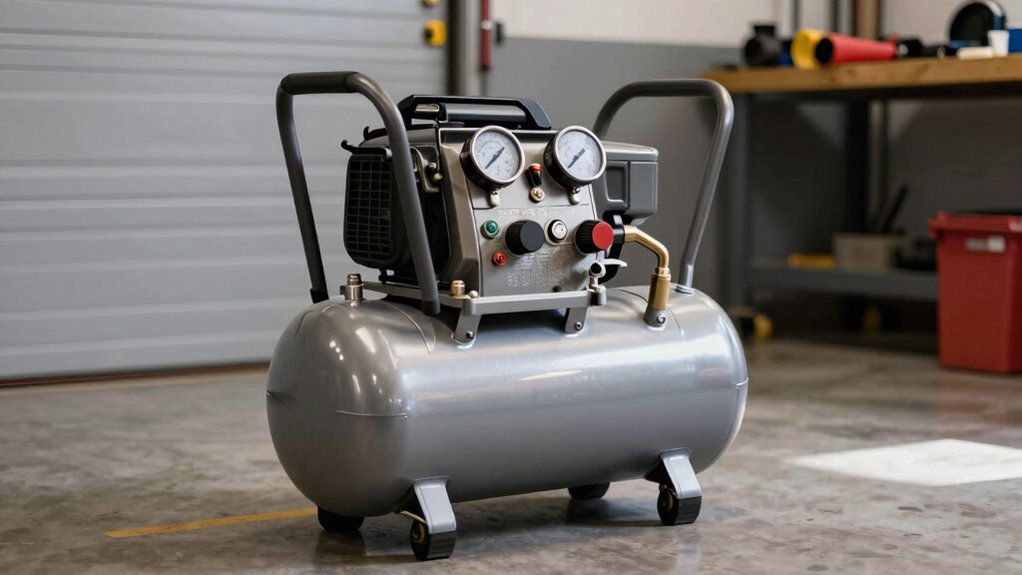
Buying a quiet air compressor can seem straightforward, but many overlook key factors that can lead to disappointment or unnecessary expenses. First, neglecting noise insulation can make a quiet model less effective in your space. Second, poor compressor placement can amplify noise and vibration, ruining the quiet environment you seek. Third, focusing solely on CFM or tank size without considering these factors can result in a machine that’s louder than expected or inefficient. To avoid these mistakes, prioritize models with good noise insulation and plan your compressor’s placement carefully—preferably in a corner or enclosed area. Ignoring these details can turn a “quiet” compressor into a noisy hassle, defeating its purpose and disrupting your workspace.
Simple Tips to Reduce Noise and Improve Your Compressor’s Efficiency
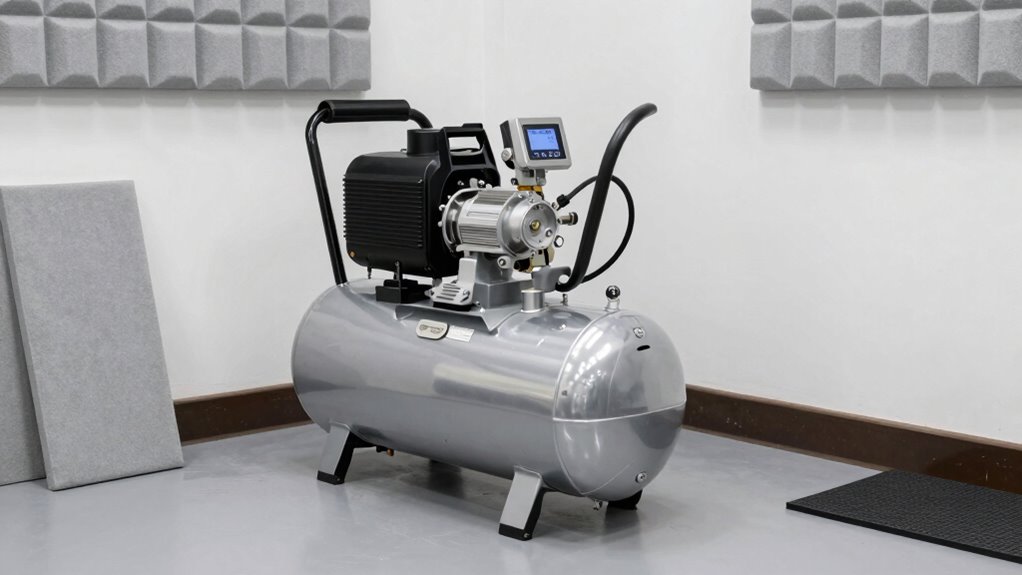
To keep your air compressor running quietly and efficiently, simple adjustments can make a big difference. Start with soundproofing techniques like installing insulation panels or placing the compressor inside a sound-absorbing enclosure. Regular compressor maintenance is vital—check and replace air filters, tighten fittings, and lubricate moving parts to reduce noise and improve performance. Keep the compressor on a solid, vibration-absorbing surface to minimize noise transmission. Avoid running the compressor at higher pressures than necessary, as this increases noise and wear. Additionally, make sure airflow around the unit is unobstructed to prevent overheating and inefficiency. These small steps help reduce noise and extend your compressor’s lifespan, making it more efficient and pleasant to operate.
Frequently Asked Questions
What Are the Long-Term Maintenance Costs of Quiet Air Compressors?
Your long-term maintenance costs for quiet air compressors depend on energy efficiency and installation considerations. Regular upkeep like replacing filters, checking seals, and lubricating parts helps keep costs down. Investing in models with better energy efficiency reduces your operational expenses over time. Proper installation also minimizes wear and tear, preventing costly repairs. Staying proactive with maintenance guarantees your compressor runs smoothly, saving you money in the long run.
How Does Air Quality Affect Compressor Noise Levels?
Air quality directly impacts compressor noise levels because poor air filtration allows dust and debris to enter, causing the compressor to work harder and produce more ambient noise. When filters are clean, the compressor runs smoothly and quietly. Regular maintenance of air filtration systems helps reduce noise, while contaminated air increases strain, leading to higher noise levels and more ambient noise, which can disturb your environment.
Are There Specific Brands Known for Quieter Operation?
Think of finding a quiet compressor like choosing a whisper in a crowded room. Brands like Makita, California Air, and Senco stand out for their reputation for quieter operation. You should check customer reviews to see real-world experiences, as some brands consistently deliver less noise. These brands prioritize sound reduction, making your workspace less disruptive. Trust their proven track record to help you select a compressor that keeps noise levels in check.
Can Noise Levels Vary During Different Operational Cycles?
Yes, noise levels can vary during different operational cycles. You might notice fluctuations in sound due to motor startup, pressure build-up, or when releasing stored air. Sound dampening features help reduce overall noise, but some fluctuation is inevitable. To minimize this, choose compressors with good soundproofing and consider quieter start-up modes. Understanding these variations helps you better anticipate and manage compressor noise during use.
What Safety Features Enhance Quiet Compressor Use?
Think of your compressor as a delicate symphony; safety features protect its harmony. Vibration damping reduces jolts that could cause hazards, while sound insulation keeps noise—and danger—at bay. These features act as guardians, ensuring safe operation by minimizing vibrations that might loosen parts or cause accidents. By incorporating vibration damping and sound insulation, you create a safer environment where noise doesn’t compromise your safety, allowing you to work confidently and quietly.
Conclusion
Choosing the right quiet air compressor means balancing noise levels, CFM, and tank size to match your needs. Don’t get caught up in the hype—sometimes, quieter isn’t always better for heavy-duty tasks. Do your homework, avoid common pitfalls, and you’ll find a machine that works smarter, not harder. Remember, the proof of the pudding is in the eating, so pick wisely and enjoy a quieter, more efficient workspace.