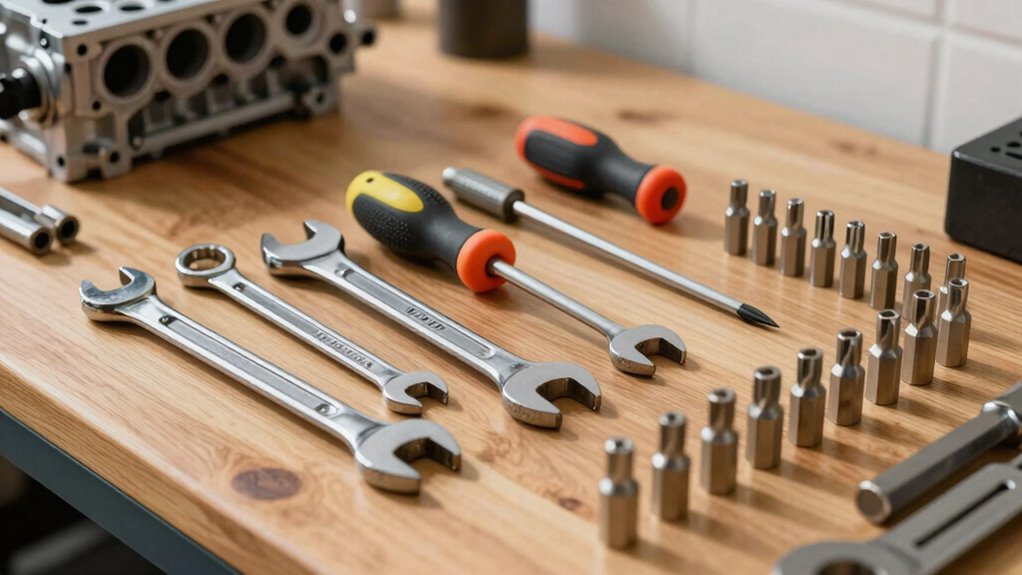

To build a weekly mechanic’s tool set, focus on versatile essentials like quality wrenches, screwdrivers, pliers, and specialty tools like torque wrenches for specific tasks. Skip duplicates, outdated items, and rare-use tools to keep your workspace organized and efficient. A compact, practical set saves time and reduces clutter. To keep your tools in top shape and ensure they serve you well long-term, you should continue exploring key maintenance and upgrade tips.
Key Takeaways
- Focus on essential, versatile tools like quality wrenches, screwdrivers, and torque wrenches for weekly tasks.
- Remove duplicate or outdated tools, such as unnecessary specialty or filler items, to streamline your toolbox.
- Prioritize high-quality, ergonomic tools that offer multi-purpose functionality and durability.
- Regularly organize, clean, and inspect tools to maintain safety, efficiency, and prolong their lifespan.
- Store infrequently used or specialized tools separately to keep your primary set practical and clutter-free.
Which Tools Are Essential for Your Weekly Mechanics Toolbox?
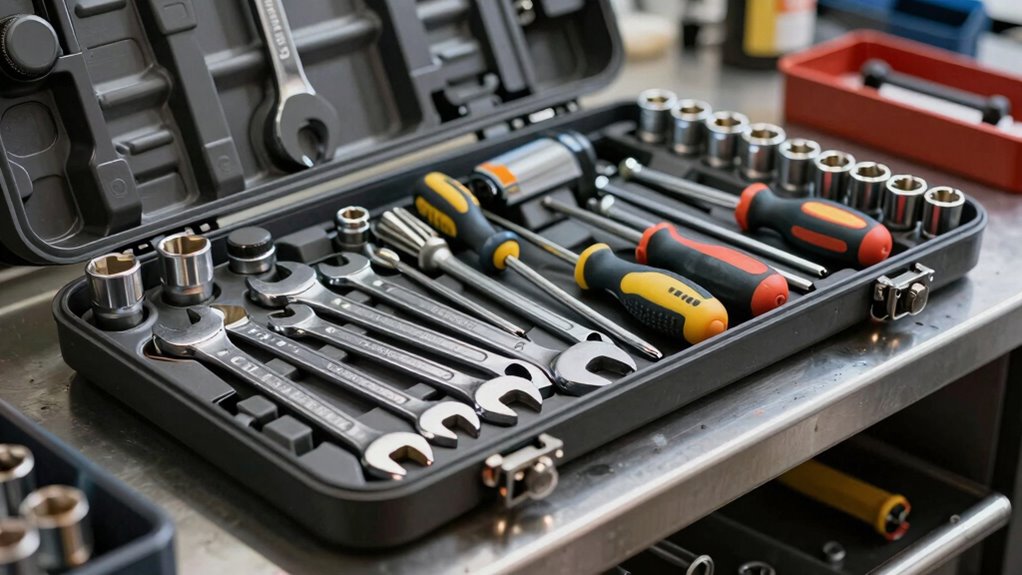
Ever wondered which tools you truly need to keep your weekly mechanic’s toolbox stocked? The key is focusing on specialized tools that handle specific tasks efficiently. A well-organized toolbox helps you find what you need quickly, so tool organization is essential. Include quality wrenches, screwdrivers, and pliers as basics, but also invest in specialized tools like torque wrenches or brake caliper tools for precision work. Having the right tools on hand saves time and prevents frustration. Keep your tools sorted by type or function, and regularly declutter to remove duplicates or unused items. This approach enhances your efficiency and ensures your toolbox remains effective for any job. Additionally, understanding proper tool maintenance can help you create a dedicated space for relaxation and entertainment. Proper tool maintenance also extends the lifespan of your equipment and keeps your workspace safe.
How to Identify the Tools You Use Regularly and Which You Can Skip
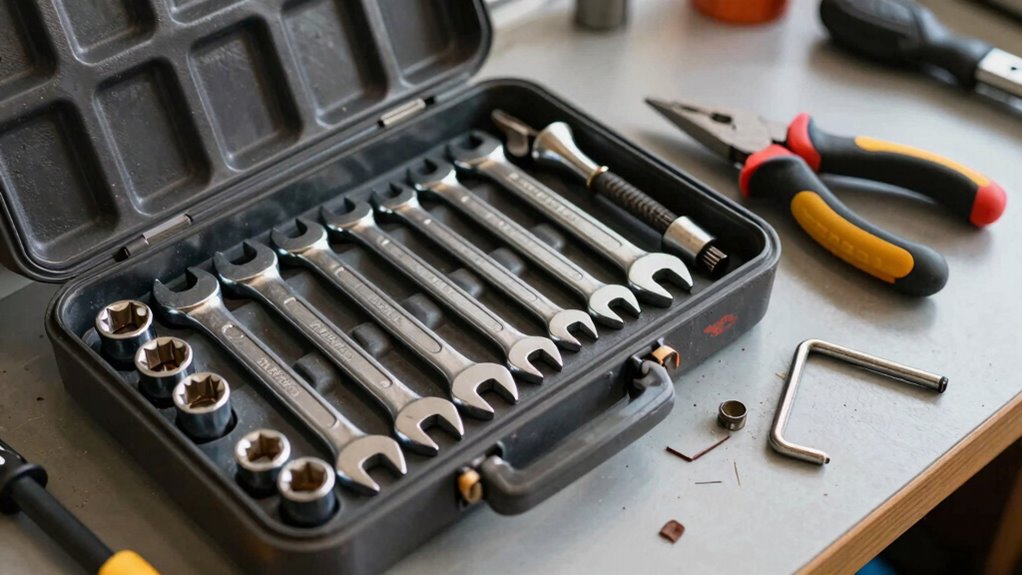
How can you determine which tools you actually use regularly and which ones are just taking up space? Start with tool selection by listing every item in your toolbox. Then, prioritize these tools based on how often you use them—those you reach for weekly should stay, while infrequent items can be stored elsewhere or sold. Consider the tasks you perform most often and identify the essential tools needed for those jobs. This item prioritization helps streamline your toolbox, making it more efficient. Remove or relocate tools that rarely get used to free up space and reduce clutter. Regularly reviewing your tools ensures your collection remains practical, saving you time and effort during projects. Focus on keeping what you truly need and use regularly. Additionally, understanding the horsepower of electric dirt bikes can help you choose the right tools and equipment for your off-road adventures. To make informed decisions about your tools, using a conversion tool for crores and popular units can assist in understanding large measurements and specifications.
Common Filler Tools Mechanics Should Leave Out and Why
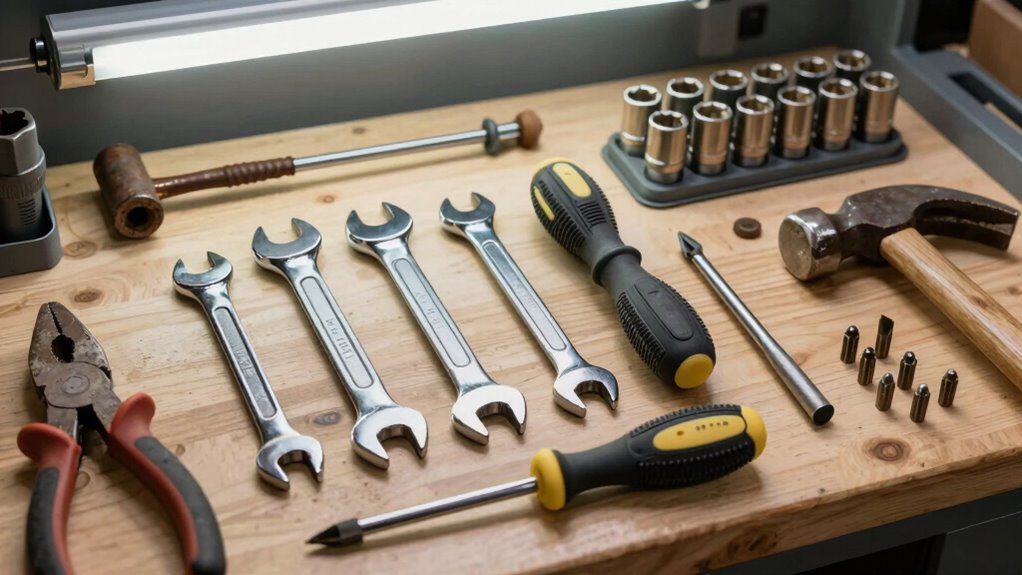
While sorting through your toolbox, you might notice some tools you rarely use but still keep just in case. These unnecessary tools often become common mistakes for mechanics trying to fill their set. Items like duplicate screwdrivers, outdated torque wrenches, or specialty tools that only fit rare jobs tend to clutter your space. Leaving out these fillers helps prevent clutter and saves money. Unnecessary tools can complicate your workflow and make it harder to find what you need quickly. Focus on quality, versatile essentials instead of filling your toolbox with items unlikely to see regular use. By avoiding these common mistakes, you keep your toolbox organized, efficient, and ready for the tasks you actually face. Less filler means a more practical, streamlined set. Additionally, understanding the importance of proper maintenance of your tools can extend their lifespan and ensure optimal performance. Incorporating AI-powered training programs can further help mechanics stay updated on essential skills and best practices. Regularly inspecting and maintaining your tools is crucial to avoid tool failure and ensure they perform safely and effectively when needed. Proper storage and organization techniques also contribute to a more efficient workflow and longer-lasting tools. Implementing correct tool selection can also improve your efficiency and reduce unnecessary expenses.
Tips for Building a Compact, Practical Mechanic Tool Set
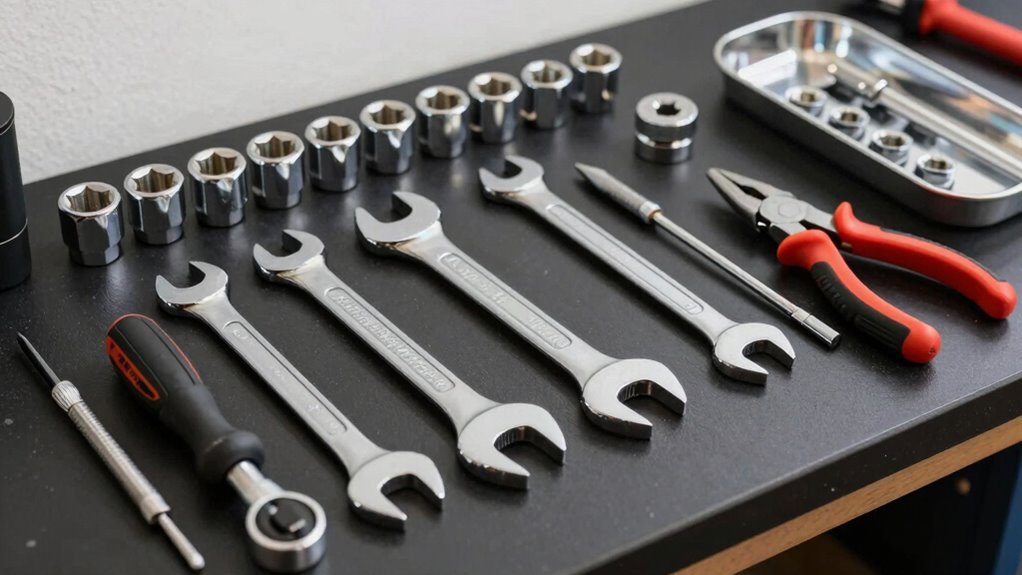
Building a compact, practical mechanic tool set starts with prioritizing versatility and quality over quantity. Focus on essential tools that handle a variety of tasks, and avoid filling your kit with rare tool collections that rarely see use. Invest in tools with ergonomic design to reduce fatigue and improve precision during long projects. Choose multi-purpose tools, such as adjustable wrenches and multi-bit screwdrivers, to maximize space and utility. Opt for durable, well-made pieces that won’t need frequent replacement. Keep your set organized with a sturdy, portable toolbox that allows quick access. Remember, a streamlined, high-quality toolkit saves time, reduces clutter, and ensures you’re ready for most repairs without carrying unnecessary filler tools. Additionally, selecting tools with appropriate grip and handle design can significantly improve comfort and control during use, and considering ergonomic features can help prevent strain during extended use. Incorporating efficient storage solutions can further enhance organization and accessibility of your tools. Choosing tools that feature durable construction materials can extend their lifespan and maintain performance over time.
How to Maintain and Update Your Toolkit for Long-Term Use
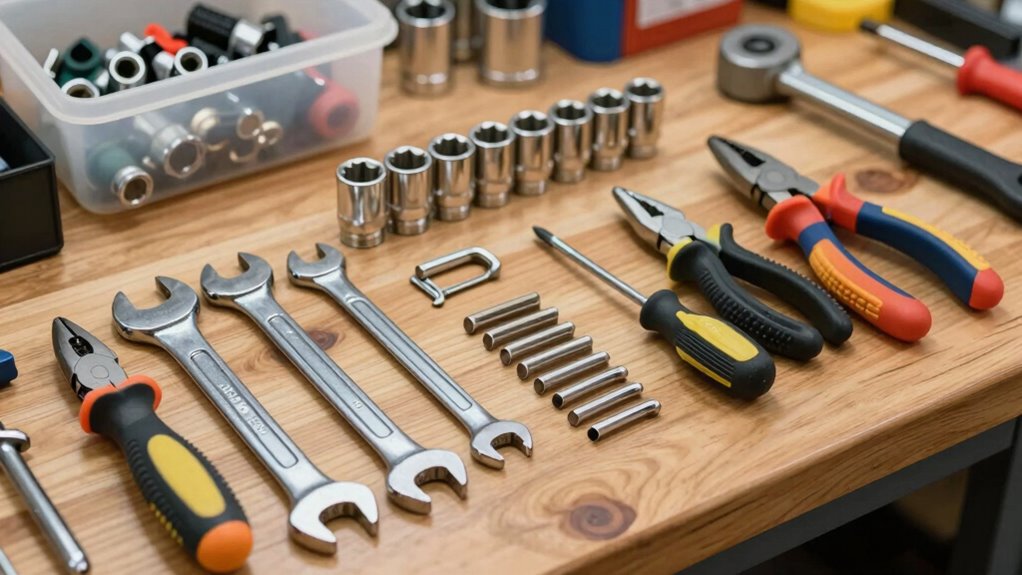
To guarantee your toolkit remains reliable and efficient over time, regular maintenance and thoughtful updates are essential. Start by performing routine tool maintenance, such as cleaning and lubricating your tools to prevent rust and wear. Proper tool organization is key—store your tools in designated compartments or containers, making it easy to find what you need quickly. Periodically review your collection to identify worn or unused items, replacing or removing them as necessary. Keep an inventory of your tools to track what’s available and what needs updating. Additionally, understanding tool lifespan can help you anticipate when replacements are needed. Recognizing tool durability can guide you in selecting high-quality tools that last longer, saving money over time. By staying proactive with tool maintenance and maintaining an organized setup, you assure your toolkit stays in top shape, ready for any job, long-term.
Frequently Asked Questions
How Often Should I Replace or Upgrade My Mechanic Tools?
You should replace or upgrade your mechanic tools when they show signs of wear or damage, as part of regular tool maintenance. Keep an eye on their tool lifespan—if sockets or wrenches become stripped or bent, it’s time for new ones. Regular inspections help assure safety and efficiency, so don’t wait until tools completely fail. Upgrading when necessary keeps your toolkit reliable and effective for your weekly work.
What Safety Precautions Should I Follow When Using Mechanic Tools?
When using mechanic tools, always wear personal protective equipment like gloves and safety glasses to protect yourself. Keep your tools well-maintained by inspecting them regularly and cleaning after use to guarantee safety and efficiency. Avoid using damaged tools, and follow proper techniques to prevent accidents. Staying attentive and following safety precautions helps prevent injuries and keeps your workspace safe. Remember, safety comes first every time you work on a project.
Are There Specific Brands Known for Durable Mechanic Tool Sets?
Think of brands like Snap-on, Craftsman, and Milwaukee as the Hercules of mechanic tools—known for their durability and strong reputation. You’ll appreciate their reliable performance and solid tool warranty, giving you peace of mind on tough jobs. These brands stand out because they’re built to last, making your work easier and safer. Investing in them means you’re choosing quality that won’t let you down, just like a trusted hero.
How Can I Organize My Tools for Quick Access During Repairs?
To organize your tools for quick access during repairs, use effective tool storage solutions like a sturdy toolbox or a pegboard. Label and categorize your tools clearly, so you can find what you need instantly. Keep frequently used items at the front or top of your storage, and regularly tidy up to prevent clutter. This approach guarantees your tools are always organized, accessible, and ready when you need them most.
What Are the Most Common Mistakes to Avoid When Assembling a Toolbox?
Avoid the trap of cluttered toolboxes that turn your workspace into a jungle. When assembling, focus on smart tool selection and use storage solutions that keep everything at your fingertips. Don’t rush—organize tools by frequency of use, and steer clear of filler tools that just add weight. This way, you’ll stay efficient, minimize frustration, and make repairs feel like a smooth dance rather than a chaotic scramble.
Conclusion
Building a streamlined mechanic’s toolkit means focusing on the tools you use weekly. Did you know that 70% of mechanics only rely on a core set of 10 essential tools? By eliminating filler tools and maintaining your gear, you save time and boost efficiency. Keep your toolbox practical and updated to stay prepared for any job. A well-curated set keeps you productive and ready for whatever comes next.