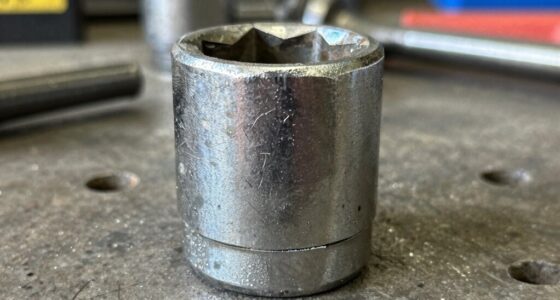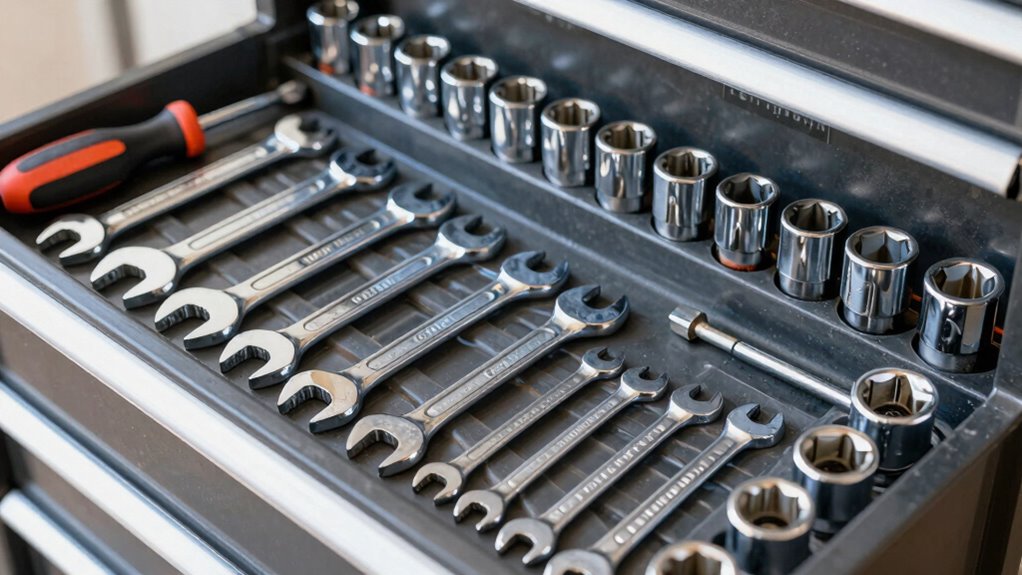

To avoid paying for unused pieces in a mechanics tool set, focus on selecting high-quality tools that match your specific repair tasks, like brakes or suspension work. Resist the urge to buy large sets with many extras you don’t need. Instead, opt for a compact, organized collection that covers your skill level. As your experience grows, you can gradually add specialized tools. Keep exploring to find out how to build a practical, efficient toolbox that saves money and time.
Key Takeaways
- Assess your repair needs to choose a tool set with only essential pieces for your typical tasks.
- Avoid oversized sets; opt for compact collections tailored to your skill level and common repairs.
- Purchase tools from reputable brands to ensure quality, durability, and reliability.
- Gradually add specialized tools as your skills and project requirements grow.
- Maintain and organize your tools to prevent unnecessary duplicates and maximize efficiency.
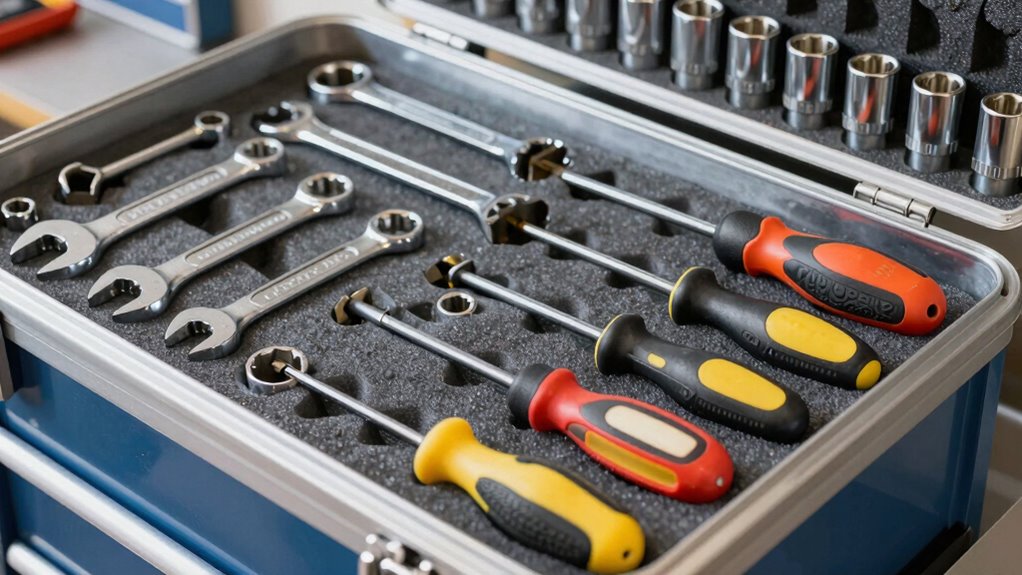
Are you tired of searching through a cluttered toolbox every time you need a specific tool? If so, you’re not alone. Many DIY enthusiasts and even seasoned mechanics struggle with disorganized collections of tools, making automotive repairs more frustrating than they need to be. When shopping for mechanics tool sets, it’s tempting to buy the biggest set available, thinking it’ll cover all your needs. However, larger isn’t always better, especially if it includes a bunch of pieces you’ll never use. The key is to choose a set that offers the essential, high-quality tools you need without overwhelming you with extras.
Start by evaluating the types of automotive repairs you typically tackle. Do you mostly work on brakes, suspension, or engine components? If so, focus on sets that include professional mechanic tools tailored for those tasks. Look for sets that emphasize quality over quantity—precision tools that stand up to frequent use and won’t strip or break easily. When you buy a set, check the included pieces carefully. Many kits come with socket sets, wrenches, screwdrivers, and pliers, but some also include specialty tools that might be unnecessary for your projects. Avoid falling for sets that contain dozens of bits and pieces you’ll never need, just to pay a higher price.
Choose tool sets with quality, tailored for your repair tasks to ensure durability and avoid unnecessary extras.
It’s also wise to contemplate your skill level. If you’re just starting out or only perform basic automotive repairs, you don’t need an extensive set with every possible tool. Instead, opt for a compact, well-organized collection of professional mechanic tools that covers the basics. This approach helps prevent tool overload and ensures you focus on essential items. Additionally, choosing tools made from high-quality materials can make a significant difference in your repair experience, as durable tools reduce the risk of damage during use. Investing in professional-grade tools can significantly improve your efficiency and confidence in handling repairs. Incorporating proper maintenance into your tool care routine can also extend the lifespan of your equipment and maintain their effectiveness over time. This way, you save money and space while ensuring you have reliable tools for common tasks. As your skills grow, you can add specialized tools gradually, instead of investing in a massive set upfront.
Another tip is to buy from reputable brands known for their durability and precision. Cheaper, generic sets might seem tempting, but they often lack the longevity and reliability you need for regular repairs. Investing in quality tools ensures they will last longer and perform better, especially during critical automotive repairs. Also, consider whether the set includes a sturdy case or organizer—this keeps your tools accessible and prevents buying duplicates or losing small pieces. Maintaining an organized toolbox can help you quickly find the right tool and improve your overall efficiency.
In the end, the goal is to build a practical collection that matches your needs. Don’t let the lure of a huge, all-inclusive set tempt you into paying for tools you’ll never use. Focus on essential, high-quality professional mechanic tools that streamline your work and make automotive repairs more manageable. By doing so, you’ll save money, avoid clutter, and enjoy a more efficient repair process every time you pick up your tools.

DEWALT 192 Pcs. Mechanics Tool Set, 1/2, 1/4, 3/8 Socket Set, SAE and Metric Socket Wrench Set, Hard Shell Tool Box (DWMT75049)
Comprehensive Assortment: Includes 192 pieces—covering 1/4", 3/8 ratchet, and 1/2" drive ratchets, 1/4 socket set, 1/2 socket sets…
As an affiliate, we earn on qualifying purchases.
As an affiliate, we earn on qualifying purchases.
Frequently Asked Questions
How Do I Determine the Essential Tools for My Projects?
To determine essential tools for your projects, start with careful project planning. Identify the specific tasks you’ll perform, then focus on tool selection that matches those needs. Avoid unnecessary items by researching the tools used in similar projects. Prioritize versatile, high-quality tools, and skip specialty pieces that won’t be useful. This approach guarantees you buy only what’s necessary, saving money and space while preparing you for successful project completion.
Are There Specific Brands Known for Durability and Value?
You should look for brands with a strong reputation for durability and value, like Snap-On, Craftsman, or GearWrench. These brands often offer solid warranty policies, giving you peace of mind if tools break or wear out. Checking customer reviews and warranty details helps guarantee you’re investing in reliable tools. Prioritizing reputable brands ensures you get long-lasting tools that stand up to your projects without costing a fortune.
How Can I Identify High-Quality Tools Versus Cheap Imitations?
To identify high-quality tools, check the tool material—look for durable steel or alloy construction. Also, consider the brand reputation; trusted brands often produce reliable, long-lasting tools. Avoid cheap imitations by researching reviews and sticking with well-known manufacturers. Quality tools usually come with a warranty, so don’t hesitate to invest a bit more for durability and safety. Remember, good tools save you money and frustration in the long run.
What’s the Best Way to Organize My Mechanic Tool Set?
To organize your mechanic tool set effectively, use tool storage solutions like labeled drawers, magnetic strips, or stackable bins to keep everything accessible. Regular maintenance and cleaning prevent rust and damage, helping tools last longer. Rotate tools based on use, and keep frequently used items within easy reach. This approach guarantees your tools stay organized, making your work quicker and more efficient while extending their lifespan.
How Often Should I Replace or Upgrade My Tools?
You should replace or upgrade your tools when they show signs of wear, damage, or become outdated. Ironically, neglecting proper tool maintenance and storage solutions often means you’re using subpar tools longer than you should. Regularly inspect your tools, keep them clean, and store them properly to extend their life. When they no longer perform reliably, it’s time to replace them—saving you time, money, and frustration in the long run.

Hi-Spec 67Pc Metric Auto Mechanic Tool Set, Motorcycle & Car Tool Kit, Auto Repair with Pliers, Screwdriver Set, Socket Kit & Tool Box Storage Case for Cars, Trucks, Boats RVs & Jeeps
METRIC Automotive Tool Kit, All-in-One Repair Solution: Handle a variety of car, motorcycle, and RV repairs; includes all…
As an affiliate, we earn on qualifying purchases.
As an affiliate, we earn on qualifying purchases.
Conclusion
Choosing the right mechanics tool set is like assembling a tailored wardrobe—you want pieces that fit your needs, not extras cluttering your space. Avoid wasting money on tools you’ll never use, just as you’d skip buying a suit in a color you’d never wear. By selecting essential, versatile tools, you create a streamlined collection, ready for any job. In the end, quality and relevance outshine quantity, ensuring your workspace stays organized and efficient.

Egofine 46 Pieces 1/4 inch Drive Socket Ratchet Wrench Set, with Bit Socket Set Metric and Extension Bar for Auto Repairing and Household, with Storage Case
Durable CR-V with Reinforced Walls:Our CR-V sockets deliver unparalleled reliability and safety by fundamentally eliminating the bursting risk…
As an affiliate, we earn on qualifying purchases.
As an affiliate, we earn on qualifying purchases.

Ernst MFG 10 Compartment Drawer Organizer: Heavy Duty Stackable Tray for Automotive Tool Organization -Low Profile Toolbox – Nuts and Bolts, Tools, Parts, Easy to Clean – Black – Made in the USA
Versatile Compartmentalization: This toolbox drawer organizer offers 10 flexible compartments, perfect for arranging an array of tools and…
As an affiliate, we earn on qualifying purchases.
As an affiliate, we earn on qualifying purchases.