Regular sockets crack because they’re made from standard materials that lack impact resistance, especially under heavy force. Impact sockets, however, use specialized alloys like chrome molybdenum and are thicker and reinforced to handle shocks. They’re designed to absorb and distribute force evenly, preventing fractures. Damage signs such as cracks, corrosion, or deformation indicate wear. Knowing the differences helps avoid failures, and staying informed will show you how to pick the right tools for heavy-duty tasks.
Key Takeaways
- Regular sockets lack impact-resistant materials, making them brittle and prone to cracking under high-torque impacts.
- Impact sockets are made from specialized alloys like chrome molybdenum, designed to absorb shock and prevent fractures.
- Signs of damage include cracks, corrosion, deformation, and surface pitting, indicating a socket is unsafe to use.
- Using non-impact sockets with impact tools increases the risk of cracking, deformation, and tool failure.
- Proper maintenance, inspection, and choosing impact-rated sockets ensure safety and longevity during heavy-duty tasks.
Why Regular Sockets Crack Under Heavy Impact?
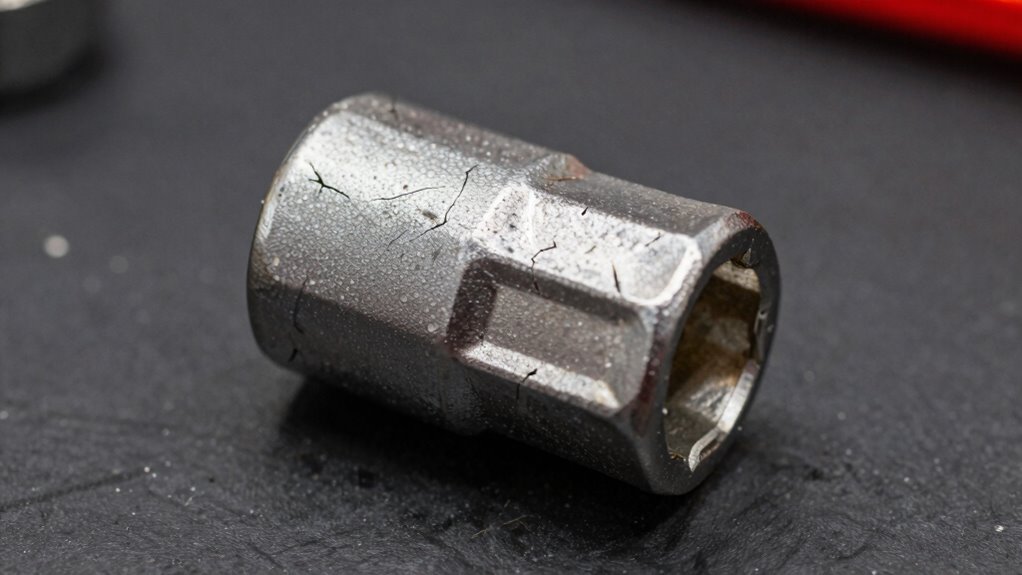
Regular sockets often crack under heavy impact because they are typically made from standard steel or alloy materials that lack the necessary toughness. The socket materials used in regular sockets usually prioritize cost and ease of manufacturing over impact resistance. As a result, they can become brittle or develop stress fractures when subjected to forceful impacts. When you apply excessive force, these materials can’t absorb the shock effectively, leading to cracks or complete failure. Impact sockets are specifically designed with stronger, more resilient materials to withstand such forces. Without this enhanced impact resistance, regular sockets are vulnerable to damage, especially during heavy-duty tasks. Additionally, using improper material toughness that are not impact resistant can increase the risk of cracking and failure. Choosing the right socket material is vital to prevent cracking and guarantee safe, efficient operation under tough conditions, especially since impact resistance plays a crucial role in durability. Incorporating impact-resistant alloys in socket manufacturing further enhances their ability to endure heavy impacts without cracking.
What Makes Impact Sockets More Durable Than Regular Ones?

Impact sockets are built tougher because they use stronger, specially formulated materials that resist cracking under heavy force. Their design and construction quality guarantee they can withstand high torque without deforming. Plus, they’re designed to work seamlessly with impact drivers, which helps prevent damage during tough jobs. Additionally, understanding proper lease terms can help prevent unexpected costs if you’re leasing tools or equipment for your projects. Using impact sockets also involves material strength considerations, ensuring they maintain integrity even under repeated stress. Incorporating material testing into manufacturing processes further enhances their durability and reliability over time. Being aware of manufacturing quality standards can also help ensure you choose impact sockets that meet safety and durability benchmarks.
Material Strength and Composition
The key to an impact socket’s durability lies in its material strength and composition. Impact sockets are made from specialized alloys designed to withstand high torque without cracking. The material composition includes high-grade alloy steel, often with added elements like chromium and molybdenum, which boost strength and toughness. This alloy strength allows impact sockets to absorb sudden shocks, preventing fractures. Keep in mind:
- Superior alloy composition enhances durability
- Chromium improves corrosion resistance
- Molybdenum increases toughness and impact resistance
- Precise heat treatment optimizes material properties
These factors ensure impact sockets resist cracking under heavy use, unlike regular sockets that lack such specialized composition. Understanding the importance of material strength helps you choose tools built for demanding applications. Material composition plays a crucial role in the overall performance and longevity of impact sockets.
Design and Construction Quality
Impact sockets are engineered with reinforced design and construction features that set them apart from standard sockets. These sockets prioritize socket ergonomics, guaranteeing better grip and easier handling during use. They often feature thicker walls and precisely machined surfaces to withstand sudden torque loads without cracking. Manufacturing standards play a vital role, as impact sockets are built to meet strict durability criteria, using processes like heat treatment and forging for added strength. This focus on quality control results in a more robust product designed to absorb shock and resist deformation. Unlike regular sockets, impact sockets are crafted specifically for high-torque applications, making them more resilient under stress. Their superior design and adherence to manufacturing standards ensure they last longer and perform reliably in demanding tasks. Additionally, impact sockets are often made from Free Floating materials that contribute to their enhanced durability and resistance to cracking under repeated impact. Moreover, the use of specialized alloys enhances their toughness and longevity, further preventing cracking and damage. Proper maintenance practices also extend the lifespan of impact sockets and help prevent cracking over time. Utilizing impact sockets with proper storage can also minimize damage caused by accidental impacts or mishandling.
Compatibility With Impact Drivers
Because impact sockets are specifically designed to handle the high-torque forces generated by impact drivers, they feature reinforced materials and construction methods that regular sockets can’t match. This design guarantees better socket compatibility with impact tools and higher impact ratings. You’ll notice they’re built to withstand sudden shocks without cracking or deforming. The key differences include:
- Heavy-duty chrome molybdenum or chromium vanadium steel
- Thicker walls for added strength
- Special coatings to resist wear and corrosion
- Rounded corners to prevent stress concentration
- Impact-rated construction ensures they can handle the torque levels without failure. Additionally, material composition plays a crucial role in their durability, as impact sockets are crafted from alloys that offer superior toughness and resilience. These features make impact sockets more durable and reliable when used with impact drivers. Their impact ratings confirm they can handle the torque levels typical of impact tools, preventing damage and ensuring safety during heavy-duty tasks. Proper socket maintenance also extends their lifespan and maintains their impact resistance over time. Regular inspection and cleaning help preserve the integrity of the socket’s reinforced materials, and incorporating proper storage practices can further protect against damage and wear, ensuring optimal performance.
How Torque and Force Damage Sockets: And How Impact Sockets Handle It

You might overload a socket beyond its torque limits, causing it to crack or strip. Impact sockets are designed to absorb and distribute force, reducing damage during heavy-duty use. This makes them far more durable than regular sockets, especially under high torque conditions. Additionally, understanding the force distribution properties of impact sockets can help prevent premature failure during demanding tasks. The material composition of impact sockets also plays a crucial role in their ability to withstand extreme forces. Moreover, the design structure of impact sockets enhances their resilience by allowing better shock absorption and load distribution.
Torque Limits and Risks
Have you ever wondered how applying too much torque can damage a socket? Exceeding the recommended torque specifications risks cracking or breaking the tool. Impact sockets are designed with a specific impact rating to handle higher forces, but they still have limits. Pushing beyond these can cause deformation or failure. To avoid damage, consider these points:
- Always check the socket’s impact rating before use
- Follow manufacturer’s torque specifications precisely
- Use the right socket for your application
- Avoid using extensions or adapters that increase force
- Understanding impact socket ratings helps prevent accidental damage and prolongs your tools’ lifespan
Impact-rated sockets are engineered to absorb and handle sudden force, reducing the risk of damage. Respecting torque limits ensures your tools last longer and perform safely, preventing costly replacements or accidents.
Impact Sockets Absorb Force
Impact sockets are specially designed to absorb and distribute the force generated during high-torque applications, preventing damage to both the tool and the fastener. Their enhanced socket strength allows them to withstand sudden, powerful impacts without cracking or deforming. Impact absorption is a key feature; the thicker walls and reinforced materials dissipate shock waves, reducing stress on the socket. This design helps prevent the common damage seen in regular sockets, which are more likely to crack under sudden force. When you use impact sockets, you benefit from their ability to handle torque spikes without compromising integrity. Their ability to absorb force ensures longevity and reliable performance, even in demanding work environments. Additionally, impact sockets utilize specialized materials that enhance durability and shock absorption, making them crucial for heavy-duty tasks where force and impact are unavoidable. Moreover, the material composition of impact sockets often includes alloys like chrome-molybdenum, which provide superior strength and resilience under stress. Incorporating shock-absorbing features in their design further enhances their capacity to withstand extreme conditions.
Socket Durability Differences
Regular sockets can quickly become damaged when subjected to excessive torque or sudden force, leading to cracks, deformation, or stripped fasteners. The key difference lies in socket material and impact resistance. Impact sockets are made from tougher alloys like chrome molybdenum, enhancing their durability. They absorb and distribute force more effectively, preventing damage under heavy loads. In contrast, standard sockets often use less durable steel, making them prone to cracking. Impact sockets also feature thicker walls and reinforced designs for added resilience. When choosing between them, consider:
- Material strength and impact resistance
- Wall thickness and reinforcement
- Resistance to cracking and deformation
- Suitability for high-torque applications
Signs Your Impact Socket or Regular Socket Is Worn or Cracked

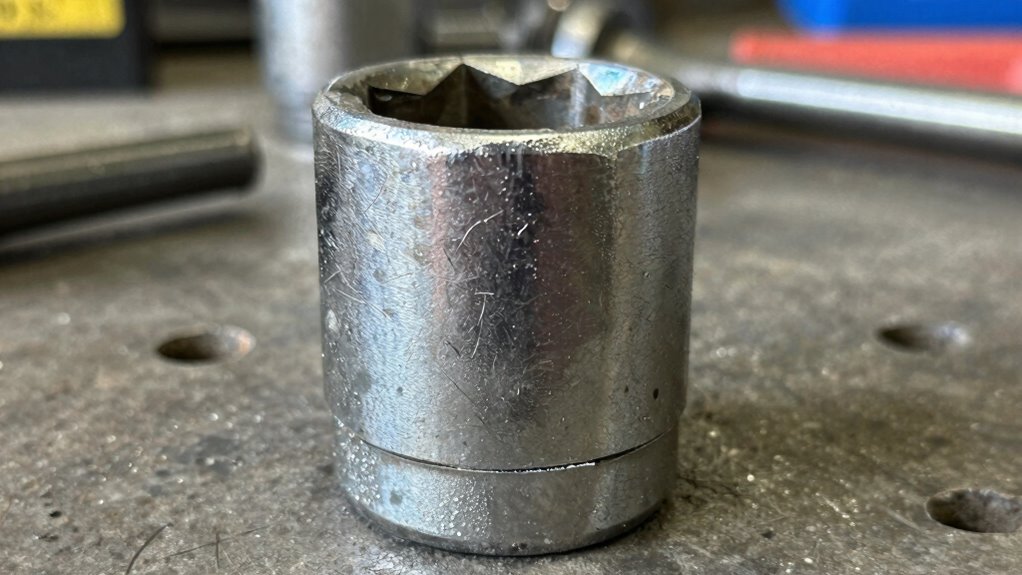
Cracks or visible wear on your socket are clear signs it’s time to replace it before it fails unexpectedly. Check for socket corrosion, which weakens the metal and compromises strength, making failure more likely. Also, inspect for signs of worn or damaged areas, especially around the socket’s edges and contact points. If the socket appears discolored or shows surface pitting, corrosion might be the culprit. Proper socket lubrication can prevent rust and reduce wear, so if you notice rust or roughness, it’s a sign you should clean and lubricate it or replace it if damage persists. Additionally, look for any deformation or cracks—these indicate that the socket’s integrity is compromised and it’s no longer safe to use.
Risks of Using Damaged Regular Sockets With Impact Wrenches
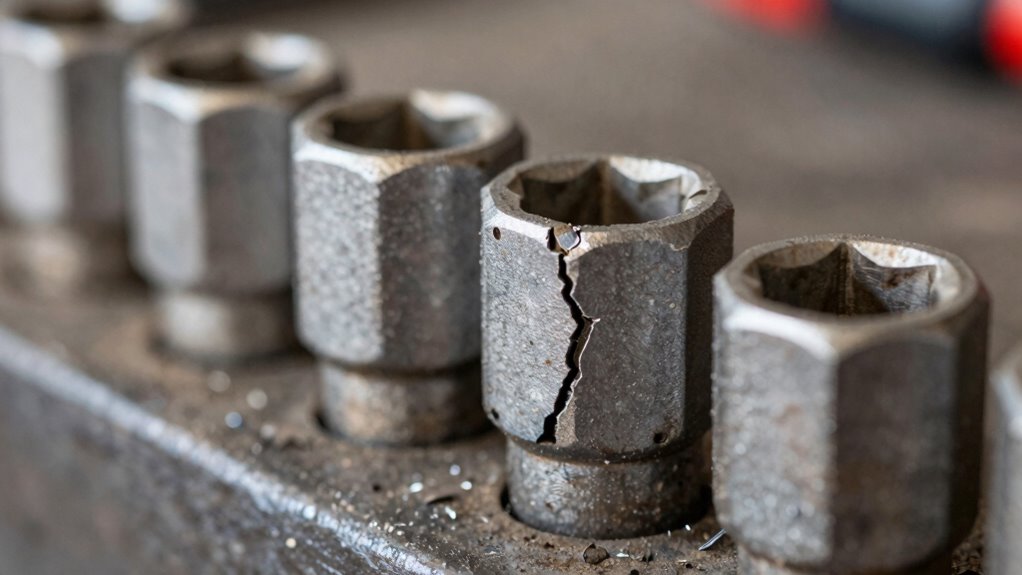
Using damaged regular sockets with impact wrenches can critically increase the risk of socket breakage under high torque. This not only endangers your safety but can also cause damage to your tools or surrounding equipment. It’s crucial to inspect sockets carefully and replace any worn or cracked ones before use.
Increased Socket Breakage Risks
When you operate impact wrenches with damaged sockets, the risk of breakage considerably increases. Damaged sockets, especially those affected by socket corrosion or mismatched socket compatibility, weaken under high torque. Using compromised tools can lead to sudden failures, damaging the tool or causing injury. You should be cautious about:
- Increased likelihood of cracking due to corrosion weakening the socket structure
- Sudden breakage from stress concentrations caused by surface damage
- Material fatigue exacerbated by previous damage or corrosion
- Misfit problems that put uneven pressure on the socket, raising breakage risks
Continuing to use damaged sockets with impact wrenches is risky. Always inspect for corrosion and verify socket compatibility before use to prevent unexpected failures.
Potential Tool Damage
Operating impact wrenches with damaged regular sockets can cause significant tool damage. When the socket’s integrity is compromised, it may slip or fail under high torque, risking damage to your impact wrench. Using damaged sockets also affects tool compatibility, leading to uneven force transfer and increased wear on the impact mechanism. Poor socket manufacturing quality can exacerbate these issues, causing cracks or deformations that worsen over time. To avoid damaging your impact wrench, inspect sockets regularly and replace any that show signs of damage. Understanding the importance of proper socket quality and maintenance helps prevent costly repairs and ensures safe, efficient operation.
| Socket Condition | Impact on Tool | Recommended Action |
|---|---|---|
| Cracks or Deformation | Damage to impact wrench | Replace immediately |
| Worn or Rounded Edges | Reduced grip, slippage | Replace promptly |
| Manufacturing Defects | Increased failure risk | Use quality sockets |
| Signs of Fatigue | Risk of sudden failure | Inspect regularly |
Why Impact Sockets Are a Better Choice for Heavy-Duty Jobs
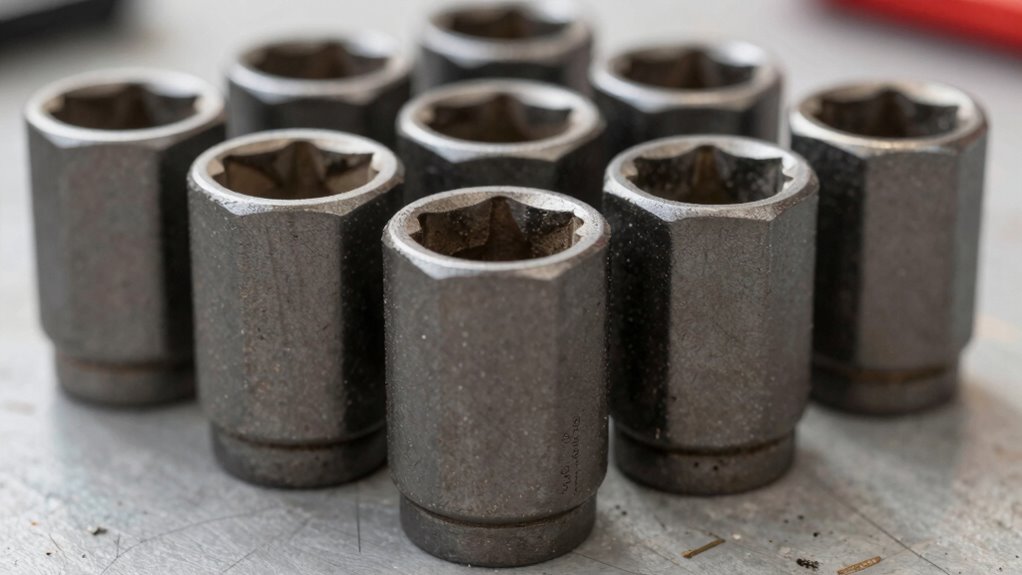
Impact sockets are specifically designed to withstand the intense torque and force generated during heavy-duty jobs, making them a smarter choice for demanding tasks. Their socket material, often chrome molybdenum or other impact-grade alloys, provides durability and resilience against cracking. When paired with an impact wrench, these sockets handle high torque without deforming or breaking. Unlike regular sockets, impact sockets feature thicker walls and reinforced construction, which distribute stress more evenly. This means you can tighten or loosen stubborn fasteners confidently. Using impact sockets reduces the risk of tool failure, saving you time and money. Plus, their design minimizes wear and extends lifespan during tough applications. For heavy-duty jobs, impact sockets are essential tools to ensure safety, efficiency, and reliability.
Features to Look for in Impact-Resistant Sockets
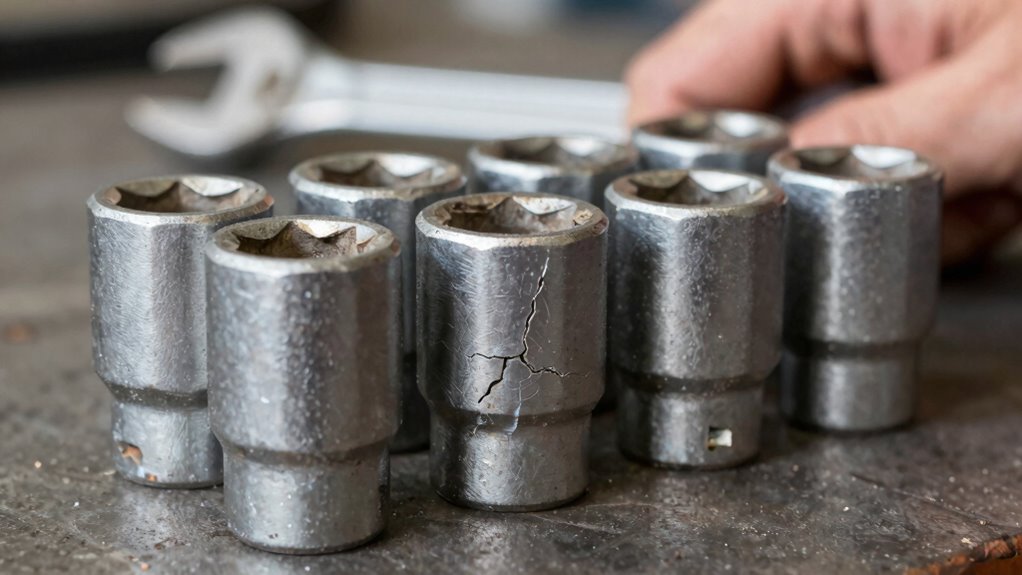
To make certain you select the right impact sockets for tough jobs, it’s crucial to look for key features that guarantee durability and performance. Start with material analysis—choose sockets made from high-quality chrome molybdenum or chromium-vanadium steel, which offer superior strength and resilience. Check for thick walls and reinforced construction to withstand high torque without cracking. Safety precautions are essential; ensure the socket’s design includes secure drive mechanisms and proper fit to prevent slippage and accidents. Look for impact-rated markings and certifications that confirm the socket’s suitability for heavy-duty use. By paying attention to these features, you’ll ensure your impact sockets are built to last, reducing the risk of damage and improving your safety on the job.
Common Mistakes That Damage Sockets and How to Avoid Them
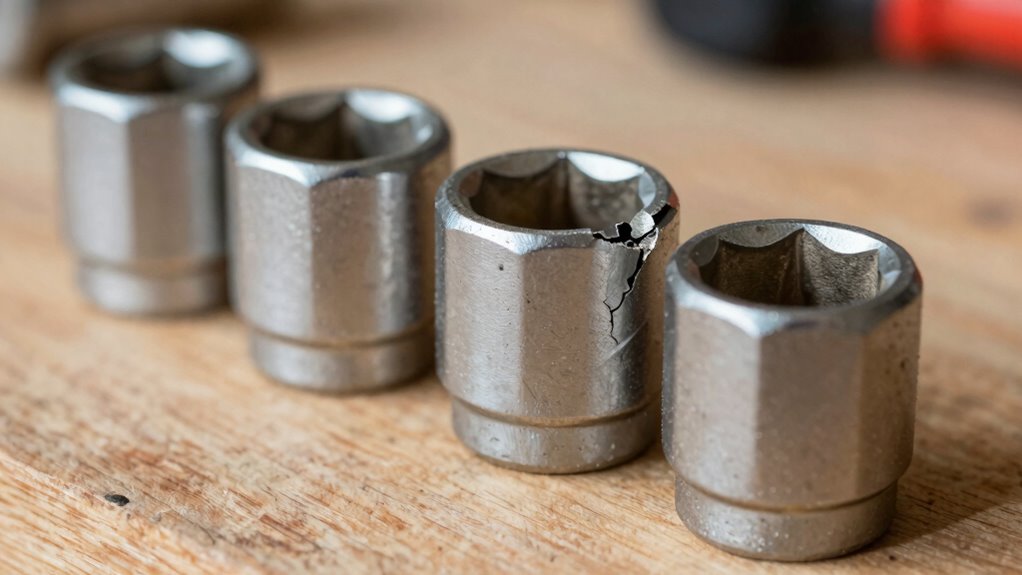
Using impact sockets improperly can lead to costly damage and safety hazards. One common mistake is using sockets made from low-quality socket materials, which are more prone to cracking under stress. Additionally, ignoring impact socket coatings can result in corrosion and weakened strength over time. Avoid using regular sockets for impact tools—they’re not built for the high torque involved. Also, don’t use damaged or worn sockets, as flaws can cause fractures during use. Finally, always select impact sockets with appropriate impact-rated design; improper sizing or incompatible materials increase the risk of cracking. By paying attention to socket materials and impact socket coatings, you ensure your tools last longer and perform safely under demanding conditions.
How to Maintain and Inspect Your Impact Sockets for Longevity

Regularly inspecting and maintaining your impact sockets is essential for ensuring they last longer and perform safely. Check for socket corrosion, which weakens the metal and increases the risk of cracking. Keep sockets clean and dry after use to prevent rust. Proper storage is vital—store your sockets in a dry, organized toolbox to avoid damage and corrosion. Use a soft brush or cloth to remove dirt and debris, and inspect for cracks or signs of wear before each use. Avoid exposing impact sockets to moisture or extreme temperatures. Here’s a quick reference:
| Maintenance Tip | Benefit |
|---|---|
| Keep sockets dry | Prevents socket corrosion |
| Store in a dry place | Extends socket lifespan |
| Regular visual inspection | Detects early signs of damage |
| Clean after use | Maintains integrity |
| Replace worn sockets | Ensures safety and performance |
Investing in Quality Impact Sockets Saves You Time and Money
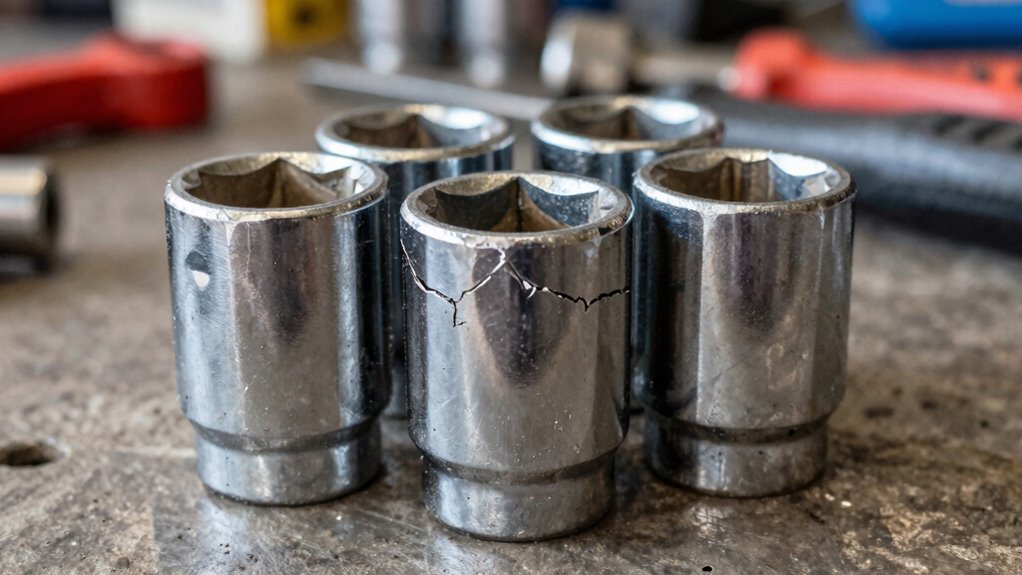
Investing in high-quality impact sockets might cost more upfront, but it pays off by saving you both time and money in the long run. Superior socket materials and advanced impact technology make these tools more durable and reliable. When you choose quality, you’re less likely to experience cracks, stripping, or breakage, which can cause delays and additional expenses. High-quality impact sockets also provide better torque transfer, reducing wear and tear on your tools. Plus, they last longer, meaning fewer replacements over time.
High-quality impact sockets save time and money with durability and reliable performance.
- Enhanced impact technology ensures better performance
- Stronger socket materials resist cracking and deformation
- Increased durability saves money on replacements
- Reduced downtime keeps projects moving smoothly
Frequently Asked Questions
Can Impact Sockets Be Used With Regular Wrenches?
No, impact sockets shouldn’t be used with regular wrenches because of socket compatibility issues. Impact sockets are designed to withstand high torque from impact wrenches, while regular wrenches don’t provide the same power or fit. Using impact sockets with regular wrenches can damage the socket, so avoid wrench adaptation. For safety and effectiveness, always match impact sockets with impact tools, and use regular sockets with standard wrenches.
What Safety Precautions Should I Follow When Using Impact Sockets?
When using impact sockets, you should always wear proper protective gear like gloves and safety glasses to prevent injuries. Make certain your work area is secure, with no tripping hazards or distractions. Check that the impact socket fits securely on the tool and the fastener. Avoid using impact sockets with regular wrenches, as they aren’t designed for that. Following these safety precautions helps prevent accidents and prolongs your tools’ lifespan.
Are Impact Sockets Compatible With All Impact Wrench Brands?
Using impact sockets is like fitting puzzle pieces together—they need to match perfectly. Impact socket compatibility varies, so not all impact sockets work with every impact wrench brand. Some brands design their sockets to be compatible across multiple brands, while others are more specific. Always check the manufacturer‘s specifications and guarantee the socket is rated for impact use to avoid damage and ensure safe, efficient work.
How Do I Choose the Right Size Impact Socket?
To choose the right size impact socket, you need to understand socket sizing and impact socket sizes. Measure the fastener or bolt head carefully, or check the specifications if available. Match your impact socket size to the fastener, ensuring a snug fit for peak torque transfer. Using the correct impact socket size prevents slipping or damage, making your work safer and more efficient. Always double-check sizes before starting your project.
Can Impact Sockets Be Repaired if They Crack or Break?
If your impact socket cracks or breaks, don’t try to repair it yourself—impact socket repair isn’t reliable, and it’s risky. Instead, you should opt for cracked socket replacement to guarantee safety and performance. Cracks weaken the socket’s integrity, risking further damage or injury. Always choose a new impact socket that matches your needs, and remember, investing in quality prevents future failures. Stay safe and replace, don’t repair damaged impact sockets.
Conclusion
Choosing the right impact socket is like building a sturdy bridge—you need strong materials to support heavy loads. Regular sockets crack under pressure, risking damage and injury, while impact sockets are designed to withstand those forces. By inspecting your tools regularly and avoiding common mistakes, you’ll keep your work seamless and safe. Invest in quality, and your tools will serve you like loyal allies, standing strong through every challenge that comes your way.