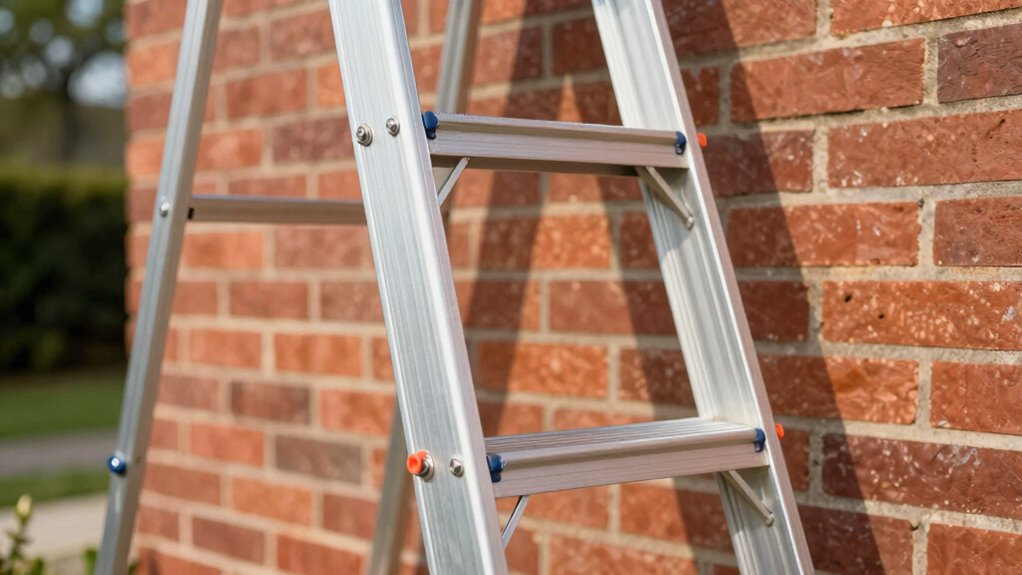

To choose a ladder without guessing, start by prioritizing safety features like slip-resistant steps and secure locking mechanisms. Confirm the ladder’s weight capacity exceeds your total load, including tools, to prevent overloading. Pick a height that reaches above your work area without overreaching, and select a material suited to your environment—fiberglass for non-conductive safety or aluminum for lightweight convenience. Considering durability and eco-friendliness helps guarantee long-term safety. Keep these factors in mind, and you’ll select the right ladder with confidence.

Turn the school run and nap time into listening time
- Thousands of audiobooks, podcasts and originals
- Listen on your phone, tablet or Echo — also offline
- Cancel anytime
Key Takeaways
- Assess your specific height and reach requirements to select the appropriate ladder extension and type.
- Prioritize ladders with safety features like slip-resistant steps and secure locking mechanisms.
- Calculate the total weight (user plus tools) and choose a ladder with a sufficient weight capacity.
- Consider environmental factors; choose materials like fiberglass for safety and sustainability.
- Regularly inspect and maintain the ladder to ensure durability and safety over time.

Have you ever struggled to find the right ladder for your project? It’s a common dilemma, but making the right choice doesn’t have to be guesswork. The key lies in understanding your specific needs and knowing what to look for before you make a purchase. One of the most important factors is safety, which is why following safety guidelines is essential. Always choose a ladder that’s designed with safety in mind. Look for features like slip-resistant steps, sturdy rungs, and secure locking mechanisms. These details help prevent accidents and give you peace of mind while working at height.
Another critical aspect is the ladder’s weight capacity. It’s tempting to pick a model based on its size or price, but ignoring weight capacity can be dangerous. The weight capacity indicates how much weight the ladder can safely support, including your own weight plus any tools or materials you’ll carry. To determine the right capacity, add your weight to the weight of your tools and materials. Then, select a ladder that exceeds that total to ensure safety and stability. For example, if you weigh 180 pounds and plan to carry 50 pounds of tools, look for a ladder with a weight capacity of at least 250 pounds. This extra margin helps prevent overloading, which can lead to slips, falls, or structural failure.
It’s also wise to take into account the height you need to reach. Choose a ladder that extends at least a few feet above your target area for safe and easy access. Remember, the maximum height listed on a ladder is the highest point you can stand on safely, not just the length of the ladder. To avoid overreaching, select a ladder that provides adequate reach without putting you in an unstable position. Additionally, considering the materials used in your ladder can help you make a more durable and sustainable choice, especially if you prioritize eco-friendly options. Being aware of the biodiversity impact of your materials can also help you make environmentally responsible decisions.
Material is another factor that influences your decision. Aluminum ladders are lightweight and durable but conduct electricity, so they’re not suitable for electrical work. Fiberglass ladders are heavier but non-conductive, making them safer around electricity. Wooden ladders tend to be heavier and require more maintenance but can be an excellent choice for certain tasks. Furthermore, understanding the environmental sustainability of your materials can guide you towards greener options that minimize ecological footprints. When selecting a ladder, consider also the longevity and maintenance needs to ensure it remains safe and effective over time.
slip resistant ladder with secure locking mechanisms
As an affiliate, we earn on qualifying purchases.
As an affiliate, we earn on qualifying purchases.
Frequently Asked Questions
What Safety Features Should I Look for in a Ladder?
You should look for safety features like slip-resistant feet, secure locking mechanisms, and sturdy materials that guarantee durability. Check that the ladder’s material is durable enough to handle your tasks without bending or breaking. Also, consider storage aspects—opt for a ladder that’s lightweight and easy to store, with foldable or compact designs. These features help keep you safe and make handling and storing the ladder more convenient.
How Do I Determine the Right Ladder Height for My Needs?
Measure the height you need to reach, then add a foot or two for safety. Choosing the right material, like aluminum for lightness or fiberglass for durability, guarantees stability. Consider storage tips—store your ladder in a dry, secure place to prolong its life. Remember, a chain is only as strong as its weakest link; pick a ladder that matches your task and always follow safety guidelines.
Are There Different Types of Ladders for Specific Tasks?
Yes, there are different types of ladders for specific tasks. You can choose from material options like aluminum for lightweight needs or fiberglass for electrical safety. For storage solutions, consider folding or telescoping ladders that save space. Each ladder type is designed for particular jobs, such as extension ladders for tall areas or step stools for quick, low-height tasks. Selecting the right combination guarantees safety, efficiency, and convenience.
How Much Weight Can Various Ladders Support?
Think of ladder weight limits as a safety net; they vary by ladder material and design. Aluminum ladders often support 200-300 pounds, while fiberglass ones can handle even more. Storage solutions matter too—keep ladders in dry, accessible spots to avoid damage that could weaken their support capacity. Always check the manufacturer’s weight rating label, and don’t overload—your safety depends on it.
What Maintenance Is Required to Keep a Ladder Safe?
To keep your ladder safe, regularly inspect it for damage, wear, or corrosion, especially if it’s made of metal or wood. Clean it after use and lubricate hinges or locks as needed. Store it in a dry, secure place, considering storage considerations like avoiding direct sunlight or extreme temperatures, which can weaken ladder material. Proper maintenance guarantees your ladder remains reliable and safe for every job.
fiberglass extension ladder for safety
As an affiliate, we earn on qualifying purchases.
As an affiliate, we earn on qualifying purchases.
Conclusion
Now you know the key considerations, so selecting the right ladder becomes simple and straightforward. Remember, safety, stability, and size are your steadfast standards. Don’t disregard details or delay decisions—diligence delivers durability. With a little research and a keen eye, you’ll confidently climb to new heights without guessing or guessing wrong. Equip yourself with knowledge, and elevate your efforts effortlessly. Choose wisely, climb confidently, and conquer your tasks with caution and care!
lightweight aluminum step ladder
As an affiliate, we earn on qualifying purchases.
As an affiliate, we earn on qualifying purchases.
heavy-duty ladder with high weight capacity
As an affiliate, we earn on qualifying purchases.
As an affiliate, we earn on qualifying purchases.
Halloween Picks
halloween
As an affiliate, we earn on qualifying purchases.