
Robot vacuums work great for some homes but struggle in cluttered or multi-level spaces because obstacles like cords and uneven surfaces can cause them to get stuck or miss spots. They excel in open, simple layouts but may need manual help in complex environments. Your willingness to perform maintenance and manage clutter also affects their performance. Want to discover how to maximize their efficiency in your space? Keep exploring to find out more.
Listen free for 30 days with Audible
Thousands of audiobooks and originals — cancel anytime.
As an affiliate, we earn on qualifying purchases.
Key Takeaways
- Open, clutter-free layouts enable robot vacuums to clean efficiently without frequent obstacles.
- Complex, cluttered environments with cords and furniture can cause navigation issues and missed spots.
- Proper surface management and maintenance optimize performance and prolong device lifespan.
- High-end models with advanced navigation work better in challenging home layouts.
- User willingness to perform regular upkeep affects long-term cleaning effectiveness.

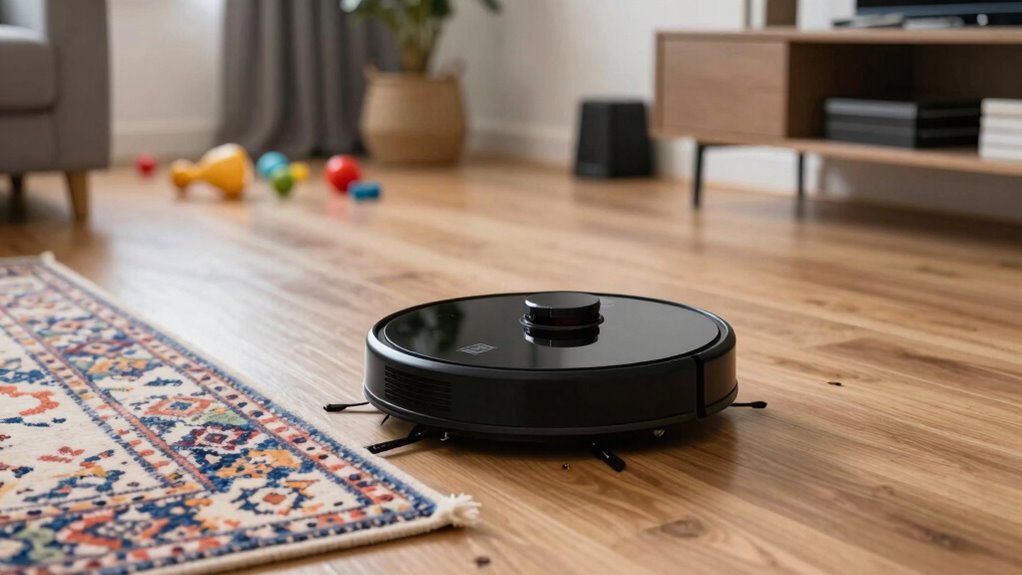
Robot vacuums have become popular for their convenience and ability to keep your floors clean with minimal effort. But whether they work well for your home depends on several factors. One of the main areas to evaluate is efficiency challenges. While these devices are designed to navigate your space and clean autonomously, they often face obstacles that can hamper their performance. If your home has cluttered floors, lots of cords, or uneven surfaces, the robot may struggle to clean thoroughly. It might repeatedly miss spots or get stuck, which defeats the purpose of having a device that’s supposed to save you time. Additionally, if you have a multi-level home, you’ll need to assess whether the robot vacuum can handle stairs or if you’ll have to move it manually between floors. These efficiency challenges mean you might need to intervene more often than you expect, diminishing some of the convenience.
Robot vacuums work best on open, clutter-free floors; obstacles and multi-level homes can reduce their efficiency.
Maintenance considerations also play an essential role in determining if a robot vacuum suits your lifestyle. Despite their automated nature, these devices require regular upkeep to perform at their best. You’ll need to empty their dustbins frequently, clean filters, and clear out brushes from hair and debris. Neglecting these tasks can lead to reduced suction power and overall inefficiency. If you’re not prepared to dedicate time to maintenance, the robot’s effectiveness will decline, and you might end up doing more manual cleaning anyway. Moreover, some models have parts that wear out faster, especially if you have pets that shed heavily. You’ll need to replace filters, brushes, or batteries periodically, adding to the ongoing maintenance considerations. It’s also important to consider battery lifespan and how it might affect long-term use. Ensuring your home’s environment is compatible with the robot’s capabilities can significantly impact its performance and longevity. Properly managing surface types in your home can help optimize the robot’s cleaning efficiency and reduce potential issues. It’s worthwhile to also evaluate the navigation technology of different models, as this can greatly influence how effectively a robot vacuum maneuvers around obstacles and adapts to your space.
Another aspect to evaluate is the initial investment versus the ongoing effort. High-end models tend to perform better but come with a higher price tag and often require more careful maintenance. Cheaper options may save you money upfront but could end up costing more in repairs or replacements over time, especially if they’re used in a challenging environment. If your home has a lot of tight corners or cluttered spaces, you might find that even the best robot vacuum struggles, which could lead to frustration and additional manual cleaning.
In the end, whether a robot vacuum works great for your home hinges on your specific environment and your willingness to keep up with maintenance. They excel in simple, open layouts with minimal obstacles but can fall short in more complex spaces. Think about your home’s layout, your cleaning needs, and how much effort you’re willing to put into upkeep before deciding if a robot vacuum is the right fit for you.
robot vacuum for cluttered homes
As an affiliate, we earn on qualifying purchases.
As an affiliate, we earn on qualifying purchases.
Frequently Asked Questions
How Long Do Robot Vacuums Typically Last Before Needing Replacement?
Robot vacuums typically last about 2 to 3 years before needing replacement. Their battery life gradually diminishes, which impacts cleaning performance, and the dust capacity decreases over time, requiring more frequent emptying. Proper maintenance, like replacing batteries when needed and emptying dustbins regularly, can extend their lifespan. However, after a few years, reduced battery efficiency and dust capacity often make replacement the better choice for ideal cleaning.
Can Robot Vacuums Handle Pet Hair Effectively?
Robot vacuums can handle pet hair effectively, removing up to 90% of pet hair in tests. They excel at pet hair removal, especially with powerful suction and specialized brushes. However, if you’re sensitive to allergies and dust, frequent cleaning is essential to prevent dust buildup. While they do a good job, you may still need to manually clean areas with stubborn pet hair or deep-clean upholstery for best allergy relief.
Are Robot Vacuums Safe for Homes With Young Children?
Robot vacuums are generally safe for homes with young children, but you should stay cautious about child safety and toy interference. Always supervise the vacuum during initial uses to prevent it from trapping or damaging toys and small objects that kids might leave around. Keep an eye on cords and small items that could pose choking hazards. Regularly check for any stuck toys or debris to guarantee smooth operation and safety for your little ones.
How Do Robot Vacuums Perform on Different Floor Types?
Robot vacuums handle different floor types well, but you might face floor shift challenges on areas like rugs or thresholds. They perform best on low-pile carpets, hardwood, or tile, where obstacle navigation is easier. However, thick rugs or uneven surfaces can cause issues, so you’ll need to manually adjust or guide your robot. Staying aware of these factors helps guarantee your vacuum cleans efficiently across various floor types.
What Maintenance Is Required to Keep a Robot Vacuum Functioning Well?
To keep your robot vacuum working well, regularly empty the dustbin to maintain ideal dustbin capacity and prevent clogs. Check the brushes and filters, cleaning or replacing them as needed. Keep an eye on the battery lifespan; avoid letting the battery fully deplete repeatedly, and recharge it promptly. Regular maintenance ensures your vacuum functions efficiently, extends its lifespan, and keeps your floors consistently clean.
high navigation accuracy robot vacuum
As an affiliate, we earn on qualifying purchases.
As an affiliate, we earn on qualifying purchases.
Conclusion
Just like the legendary Icarus, who soared too close to the sun, you might find that robot vacuums shine brightly in some homes but falter in others. Their success depends on your unique space and habits. Embrace their strengths, but stay mindful of their limits. With a little patience and adjustment, you can turn your home into a battleground won by efficiency—where technology and routine work together in harmony, much like Odysseus’ clever journey home.
robot vacuum for multi-level house
As an affiliate, we earn on qualifying purchases.
As an affiliate, we earn on qualifying purchases.
As an affiliate, we earn on qualifying purchases.
Flea & tick season Picks
flea and tick prevention
As an affiliate, we earn on qualifying purchases.