Before installing a smart garage door system, you need to verify your door’s type, age, and safety features. Check if your existing opener supports smart tech or needs an upgrade, and confirm compatibility with your chosen devices. Consider the door material and construction, as heavy or outdated models may pose challenges. If you’re unsure, more details will help you navigate compatibility issues and plan a safe, future-proof upgrade.
Key Takeaways
- Verify your garage door’s material, design, and construction to ensure compatibility with retrofit smart systems.
- Confirm your existing opener supports smart features or if additional adapters are needed.
- Assess the age, condition, and safety features of your garage door to determine retrofit feasibility.
- Measure door dimensions and track type to identify potential compatibility challenges and appropriate solutions.
- Consider professional assistance for complex issues and choose modular, future-proof smart systems for easy upgrades.
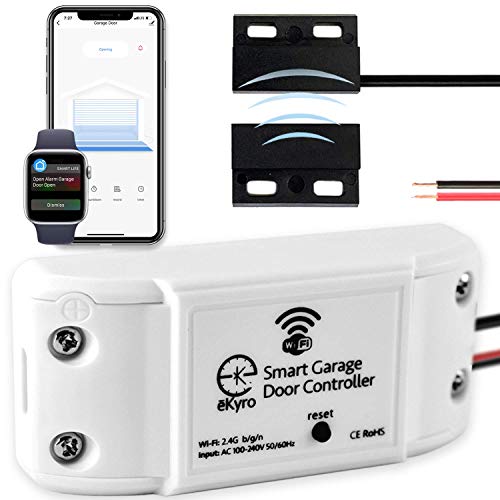
eKyro Smart Garage Door Opener – Universal WiFi Remote Controller Compatible with Alexa, Google Home, iPhone, Siri, Android, Door Left Open Alert, Door Security Systems, Updated Model
- Smart Garage Monitoring: WiFi-enabled control via mobile or voice
- Voice Assistant Compatibility: Works with Alexa, Google Home, Siri, Android
- Universal Compatibility: Compatible with most openers, adapter available
As an affiliate, we earn on qualifying purchases.
As an affiliate, we earn on qualifying purchases.
Do You Know Your Garage Door Type and Design?
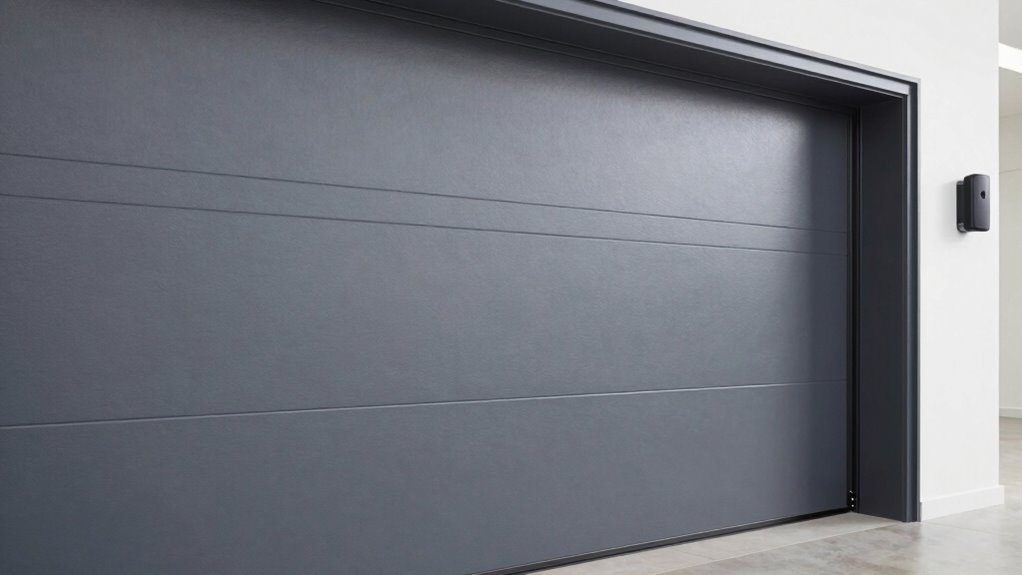
Do you know what type and design of garage door you have? Recognizing your garage door’s materials and design variations is essential before considering any retrofit. Garage door materials include steel, wood, aluminum, and fiberglass, each offering different durability and aesthetic appeal. Design variations range from traditional raised panels to modern, sleek styles like glass or contemporary panels. Your door’s construction influences how easily it can adapt to new smart features. For example, lightweight aluminum doors may be easier to retrofit than heavy wooden ones. Identifying your door’s style and material helps determine compatibility and guides you toward the best upgrade options. Knowing these details guarantees your retrofit process is smooth, effective, and tailored to your garage’s unique design. Additionally, understanding the garage door construction can help prevent potential compatibility issues during installation, ensuring a secure and reliable upgrade process. Being aware of your garage door’s material and design also aids in selecting the appropriate smart features and installation methods that align with your existing setup. Furthermore, considering the type of garage door can influence the choice of smart technology and hardware compatible with your specific model.

AQOVOR Garage Door Seal Kit for Steel/Wood Garage Door Bottom Seal(16.5 Ft)
- All-Weather Six-Layer Protection: Insect-proof, wind, snow, rain, dust, noise, insulation
- Durable Materials: High-strength aluminum and tear-resistant EPDM rubber
- Extreme Temperature Resistance: Operates from -40°F to 240°F, resists cracking and corrosion
As an affiliate, we earn on qualifying purchases.
As an affiliate, we earn on qualifying purchases.
Is Your Garage Door Opener Compatible With Smart Technology?

Before investing in smart technology for your garage, it’s important to check whether your existing garage door opener is compatible. Many modern openers support remote sensors, which allow you to monitor door status and control it remotely. If your opener has built-in Wi-Fi or Bluetooth, integration with smart home systems becomes easier. Keep in mind that some openers may require additional accessories, like a Wi-Fi adapter, to connect seamlessly. Solar panels powering your garage can also impact compatibility; ensure your smart device can draw power efficiently or operate independently. If your current opener lacks these features, upgrading or replacing it might be necessary for full smart integration. Additionally, reviewing the compatibility requirements of your smart device can help ensure a seamless installation process. Confirm compatibility before installation to avoid future issues and ensure your retrofit is smooth. Understanding smart device protocols can further optimize your setup and connectivity, especially when considering different communication standards used by various smart systems. Being aware of energy management features can also aid in making your smart garage more efficient and environmentally friendly. Furthermore, checking the installation process details can prevent unexpected complications during setup.

2026 Upgrade 41A5034 Safety Sensor Kit Compatible with Liftmaster Chamberlain Sears Craftsman Garage Door Opener Made After 1997, Replace G801CB-P (10 Years Warranty)
- Complete Sensor Kit: Includes 2 sensors, screws, nuts, and instructions
- Universal Compatibility: Fits all garage openers after 1997
- High-Quality Construction: Made from durable ABS material with strict testing
As an affiliate, we earn on qualifying purchases.
As an affiliate, we earn on qualifying purchases.
How Old Is Your Garage Door, and Is It Ready for a Retrofit?
The age of your garage door plays a crucial role in determining whether it’s ready for a retrofit. Older doors may lack the structural integrity needed for smart upgrades and might not support modern automation features. Additionally, if your garage door’s aesthetics are outdated, a retrofit can refresh its look, enhancing curb appeal. Consider whether your door allows for proper integration with outdoor lighting, which improves safety and convenience. If your garage door is over 15-20 years old, it’s wise to assess its condition before upgrading. Sometimes, replacing an aging door altogether is more cost-effective than retrofitting. Ensuring your garage door is compatible with smart tech and visually appealing will maximize your investment and create a more functional, attractive space. Wave and wind conditions can also impact the longevity and suitability of your garage door for retrofit upgrades. Furthermore, evaluating the structural integrity of your door can help prevent potential issues after installation. Regular inspections and understanding the home maintenance needs can guide you in making the best decision for your garage door’s upgrade potential. Additionally, considering outdoor environmental factors such as exposure to weather can influence whether a retrofit or replacement is more appropriate. Being aware of your door’s age and condition can help you plan for potential future repairs or upgrades.

Genie Aladdin Connect Smartphone Garage Door Opener – Monitor, Open & Close Your Garage Door from Anywhere Using Your iPhone or Android Device
- WiFi Enabled Garage Door: Monitor, open, and close remotely
- Smart Device Compatibility: Works with iPhone, Android, Alexa, Google
- Garage Door Security: Sensor alerts for door status changes
As an affiliate, we earn on qualifying purchases.
As an affiliate, we earn on qualifying purchases.
What Safety Features Does Your Garage Door Have, and Will They Work With Smart Tech?

Safety features are essential for protecting your garage and ensuring smooth operation, especially when integrating smart technology. Check if your garage door has safety sensors—these detect obstructions and prevent the door from closing on people or objects. Most modern doors include safety sensors, but older models might lack them or have malfunctioning units. Also, verify the emergency release, which allows manual operation if the power fails or smart tech malfunctions. When retrofitting with smart devices, confirm these safety features will still function properly. Compatibility isn’t just about the smart device itself; it’s also about how your existing safety features will work with new technology. If your safety sensors or emergency release aren’t compatible or effective, consider upgrades before proceeding with a retrofit. Additionally, understanding air purifier maintenance can help ensure your garage remains a clean and safe environment during installation. Ensuring proper garage door safety features are in place is crucial for preventing accidents and maintaining reliable operation when adding smart tech. Regularly testing your safety sensors and updates can also prevent malfunctioning safety features from compromising your garage’s security.
Which Smart Garage Door Devices Are Compatible With Your Setup?
When upgrading your garage door with smart technology, it’s important to verify the devices you choose are compatible with your existing setup. Start by considering your garage door’s aesthetics—some smart devices are sleek and discreet, blending seamlessly or standing out less. Check if your current door offers insulation options, as some smart openers work better with well-insulated doors, improving energy efficiency and noise reduction. Compatibility also depends on whether your garage door has the right wiring or smart hub connections. For example, certain brands require specific remotes or sensors. Make certain the smart device you select supports your door’s size, weight, and material. Doing this groundwork helps prevent installation surprises and guarantees your smart garage system functions smoothly. Additionally, understanding your garage door’s mechanics can help determine which smart features will integrate most effectively, especially considering factors like door type and operation, which influence compatibility. Being aware of your garage door’s electrical system can also help ensure safe and proper installation of smart components. Moreover, reviewing the tech ecosystem of your smart home setup can ensure your new garage device will integrate seamlessly with other connected devices. To further enhance your setup, consider researching installation requirements to avoid potential compatibility issues during setup.
How to Measure Your Garage Door and Prepare for Installation
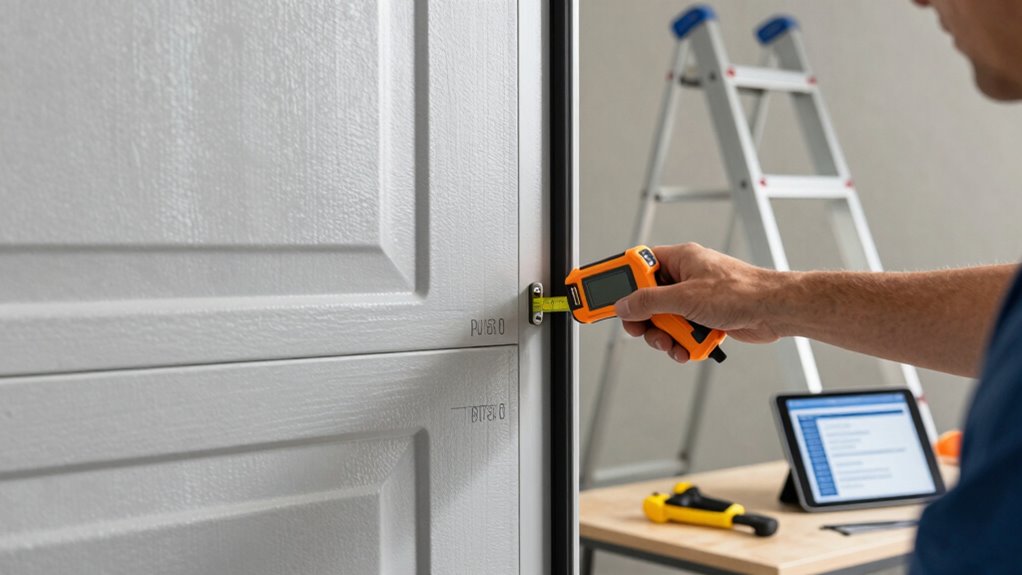
Before installing a new smart garage door opener, you need to accurately measure your existing door to guarantee compatibility and proper fit. Start by measuring the door’s width and height, noting whether it’s a single or double door. Check the track type—whether it’s sectional or one-piece—and measure the track length and height. Be aware of your garage door materials, as some openers work better with specific materials like steel or wood. Additionally, assess the insulation levels; well-insulated doors may require different mounting options or sensors for ideal operation. Confirm the mounting area is clear and level, and note any obstructions or unique features. Proper measurement and preparation help avoid compatibility issues, ensuring a smooth installation process. Understanding garage door types and their specific requirements can significantly simplify the retrofit process. It’s also helpful to familiarize yourself with garage door components to identify potential challenges early on. Conducting a thorough assessment of your garage door’s hardware and mounting points can help prevent unforeseen installation problems.
Troubleshooting Common Compatibility Challenges
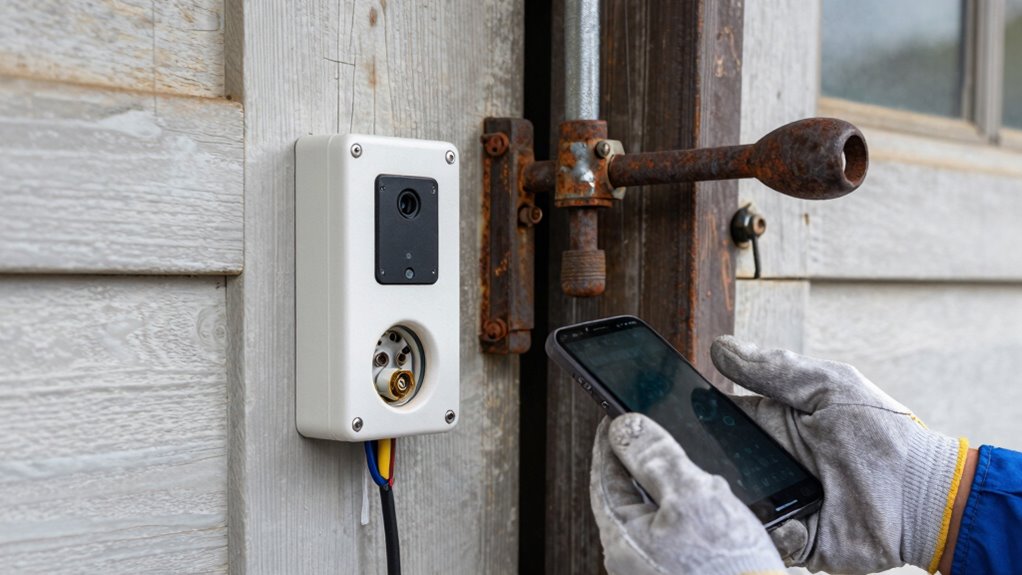
Even with careful measurement, compatibility issues can still arise when installing a smart garage door opener. Hardware limitations might prevent your new device from fitting or functioning correctly. For example, you might encounter:
- Outdated circuit boards that can’t support newer smart features
- Insufficient motor power to handle additional sensors or controls
- Old remotes or wall panels incompatible with current hardware standards
- Physical obstructions blocking sensors or connection points
Software updates also play a role. Sometimes, a device requires the latest firmware to work properly, but your garage door opener’s software may be outdated. Ensuring your hardware meets the minimum specifications and updating firmware can help avoid these common compatibility challenges.
What If Your Garage Door Isn’t Compatible Yet?
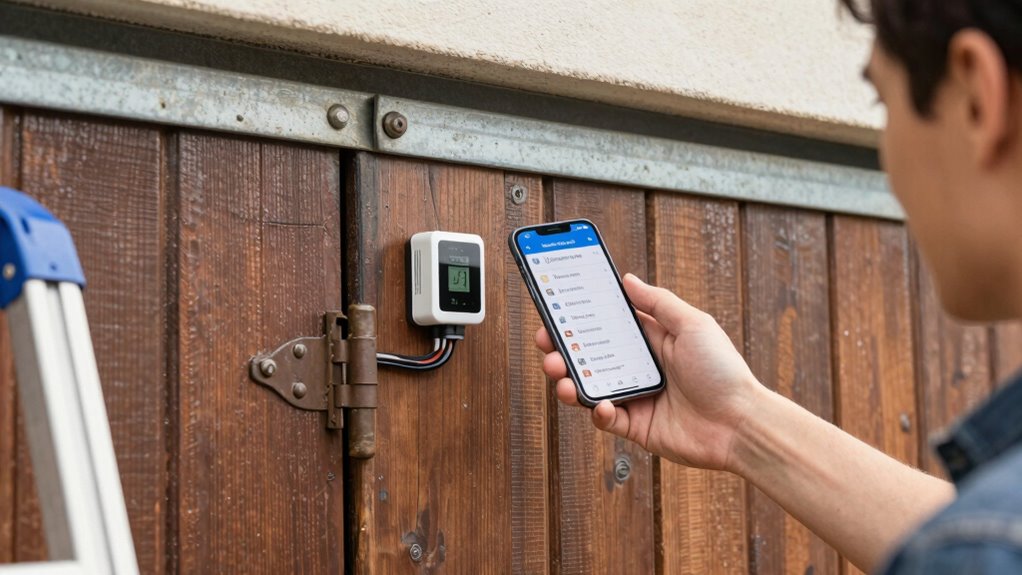
If your garage door isn’t compatible with a smart opener yet, don’t worry—there are still options to upgrade your system. Sometimes, compatibility issues stem from the door’s design or age, but you can improve your garage door aesthetics by replacing it with a newer model that supports smart technology. When selecting a new door, consider paint color options to match your home’s exterior and personal style. Upgrading the entire door might seem like a big step, but it ensures seamless integration with smart features and enhances curb appeal. Alternatively, you can explore external retrofit kits designed for non-compatible doors, which can be installed without replacing the entire unit. Either way, modern options let you enjoy smart control while maintaining your preferred look.
When Should You Call a Professional for Help?
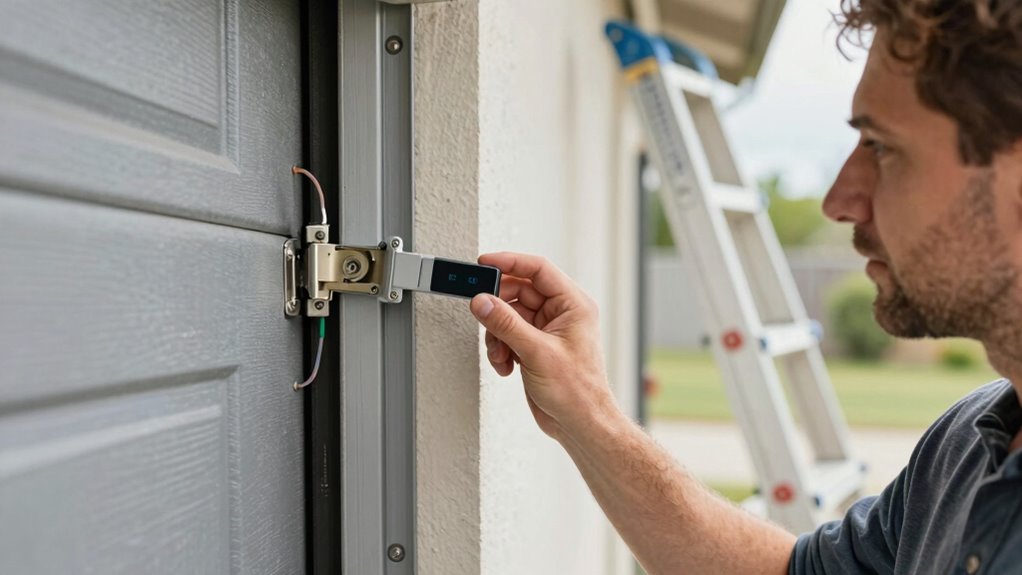
Upgrading to a smart garage door system can be straightforward, but certain issues require professional expertise to guarantee safety and proper functionality. If you encounter any of these, it’s time to call a pro:
- You notice loose or frayed cables that could snap unexpectedly.
- The motor struggles to lift or lower the door smoothly, risking DIY safety hazards.
- Your attempts to install or modify wiring threaten your warranty coverage or safety standards.
- You’re unsure about compatibility or electrical connections, risking damage or malfunction.
In these cases, professional help ensures proper installation, maintains your warranty, and minimizes safety risks. Don’t compromise DIY safety or future compatibility by tackling complex issues alone—know when to call in an expert.
How to Ensure Your Garage Door Remains Compatible for Future Upgrades

To make certain your garage door remains compatible for future upgrades, it’s essential to select a system that supports industry-standard components and modular parts. This ensures you can easily add features like smart openers or integrate new decorative hardware without replacing the entire door. When considering garage door insulation, opt for a design that allows easy removal or upgrades, so you can improve energy efficiency later. Additionally, choose a door that accommodates decorative hardware, like handles or decorative panels, that can be swapped or upgraded over time. By prioritizing compatibility with standard parts, you set the stage for seamless updates, whether it’s enhancing insulation, upgrading hardware, or integrating new smart features, saving you time and money down the line.
Frequently Asked Questions
Can I Upgrade My Existing Garage Door Sensors for Smart Integration?
Yes, you can upgrade your existing garage door sensors for smart integration, but sensor compatibility is key. Check if your current sensors are suitable with the new smart system, as retrofit limitations might prevent some upgrades. If your sensors are outdated or incompatible, replacing them with smart sensors designed for compatibility will ensure reliable operation. Always verify compatibility details before purchasing to avoid installation issues or system failures.
What Is the Cost Difference Between Retrofit and Replacing the Garage Door?
Think of upgrading your garage like fixing a leaky faucet versus replacing the entire sink. Retrofit costs typically range from $50 to $200, focusing on adding smart features to existing doors. Replacing the garage door itself can cost $1,000 to over $3,000, depending on materials and features. An expense analysis shows retrofit is more budget-friendly upfront, but replacement might be better long-term if your door is old or damaged.
Will Smart Garage Door Devices Interfere With My Home Wi-Fi Network?
Smart garage door devices typically won’t cause Wi-Fi interference or signal disruption if you install them correctly. They connect via your existing Wi-Fi network, and most operate on a frequency that doesn’t interfere with other devices. To avoid issues, guarantee your Wi-Fi signal is strong in the garage area, and consider using a Wi-Fi extender if needed. Proper placement minimizes potential interference, keeping your network stable while enjoying smart convenience.
How Long Does a Typical Smart Garage Door Retrofit Installation Take?
A typical smart garage door retrofit installation takes about 2 to 4 hours. Your installation timeline depends on preparation steps like gathering tools, reading instructions, and ensuring your garage door is compatible. You should also clear the workspace and disconnect power if needed. By following these steps, you can streamline the process, making it quicker and smoother. Be patient, and don’t rush—your smart upgrade will be worth it!
Are There Any Hidden Costs Involved in Retrofitting My Garage Door?
You might encounter unexpected costs during your garage door retrofit, such as additional wiring or hardware, so budget accordingly. Don’t forget to check warranty considerations, as some repairs or components may not be covered, leading to extra expenses. Be sure to ask your installer about potential hidden costs upfront to avoid surprises, and always review warranty details to protect your investment long-term.
Conclusion
Ensuring your garage door’s compatibility might seem like a delicate dance, but with a little patience and attention to detail, you’ll find the perfect fit. By carefully evaluating your setup now, you’re gently paving the way for seamless future upgrades. Remember, sometimes a gentle nudge in the right direction—possibly with professional guidance—can transform the process into a smooth journey. Embrace the process, and your smart garage door will serve you elegantly for years to come.