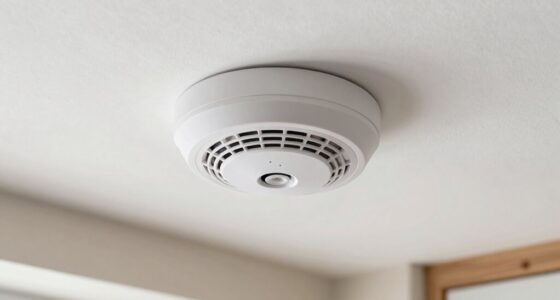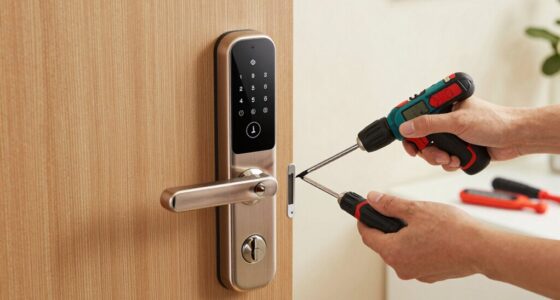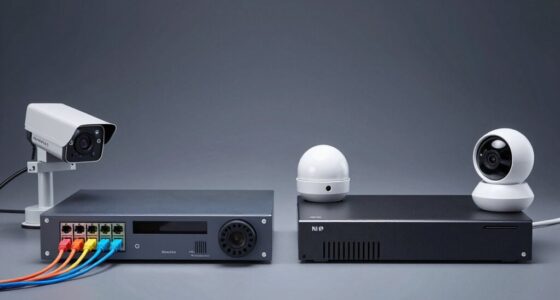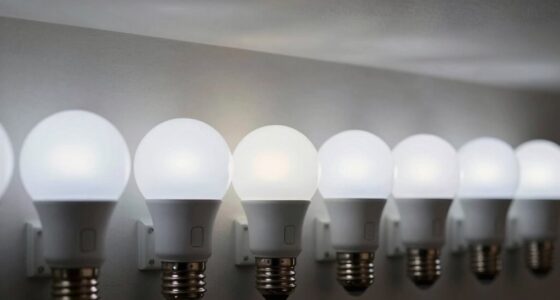
To start your smart home, first define your goals—whether for security, energy savings, or convenience. Choose a compatible ecosystem or hub that works with your voice assistant. Begin with essential devices like smart speakers, lights, and basic security gadgets such as cameras or doorbells. Smart lighting and security upgrades are easy to add later as you gain confidence. Keep exploring to learn how to grow your smart home step by step without overspending.
Key Takeaways
- Define your smart home goals, such as security, convenience, or energy efficiency, to prioritize the right devices.
- Choose a compatible ecosystem or hub aligned with your preferred voice assistant and network capabilities.
- Start with essential devices like a smart speaker, smart lighting, and basic sensors for easy setup and control.
- Leverage smart lighting with schedules and automation to enhance ambiance and save energy.
- Gradually expand your system with security devices like cameras and smart locks, maintaining a balance between safety and budget.
Figure Out What You Want From Your Smart Home
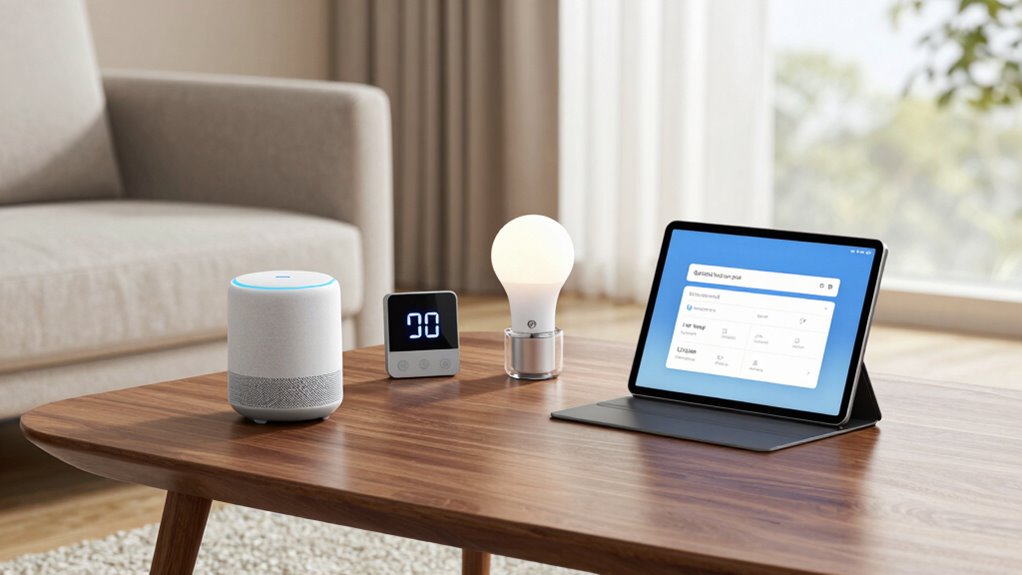
Have you thought about what you really want to achieve with your smart home? Clarifying your smart home goals helps you focus on features that match your user preferences. Are you aiming for increased security, energy efficiency, or convenience? Maybe you want voice control for everyday tasks or automated lighting to set the mood. Knowing what matters most to you guides your initial choices and prevents overspending on unnecessary gadgets. Take a moment to list your priorities—whether it’s remote access, smart locks, or climate control. This clarity ensures you select devices that serve your lifestyle and align with your user preferences. Setting clear smart home goals now makes the entire setup smoother and more satisfying later. Additionally, considering energy-efficient solutions can contribute to sustainability and reduce long-term costs. Understanding your decision-making process can also help you avoid common pitfalls and make smarter choices. Exploring smart home integration options can further enhance your experience and streamline device management.
Pick the Right Smart Home Ecosystem or Hub for You
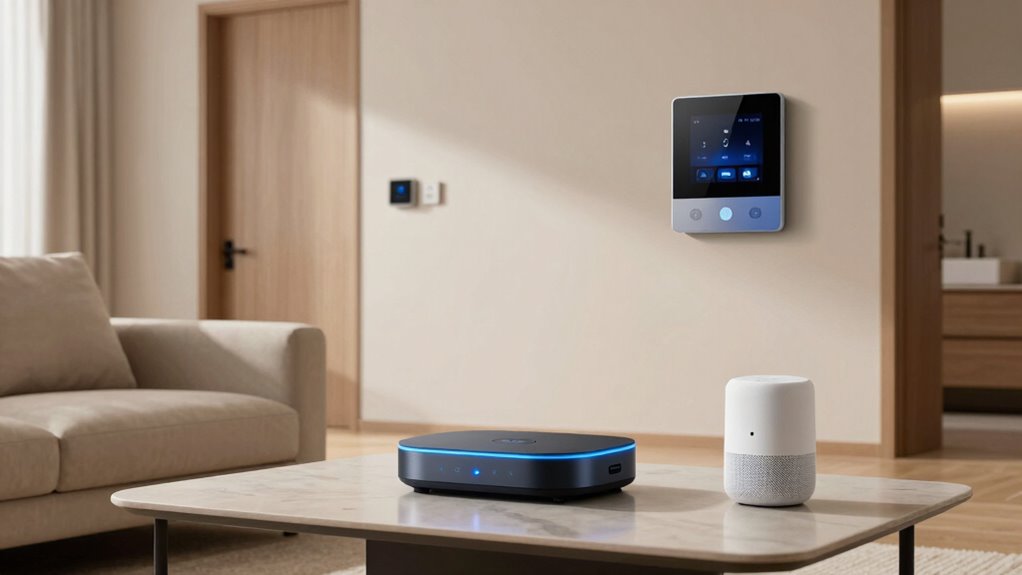
Choosing the right smart home ecosystem or hub is essential because it determines how well your devices work together and how easily you can control them. When selecting an ecosystem, consider its compatibility with the devices you plan to use, ensuring they will seamlessly connect and function together. Your hub selection should align with your preferred voice assistants and automation needs. For instance, if you favor Alexa, choose an ecosystem that integrates smoothly with Amazon-compatible devices. If you want broader compatibility, a platform like SmartThings might suit you better. Remember, a well-chosen ecosystem simplifies management and expands your smart home’s capabilities over time. Take your time to research ecosystem compatibility and hub options to create a cohesive, user-friendly smart home environment tailored to your needs. Additionally, understanding local automation capabilities can help you customize routines that work even without internet connectivity, enhancing reliability and privacy. Exploring network infrastructure options can also improve your smart home’s overall performance and stability, especially as you add more devices. Ensuring your network is robust with appropriate Wi-Fi coverage can prevent connectivity issues and support a growing ecosystem. Furthermore, considering security features within your chosen ecosystem can help protect your smart home from potential vulnerabilities. It’s also helpful to review how interoperability standards are supported across devices to future-proof your setup and allow easier integration of new technologies.
Kick off With Must-Have Devices: Speakers, Voice Assistants, and More
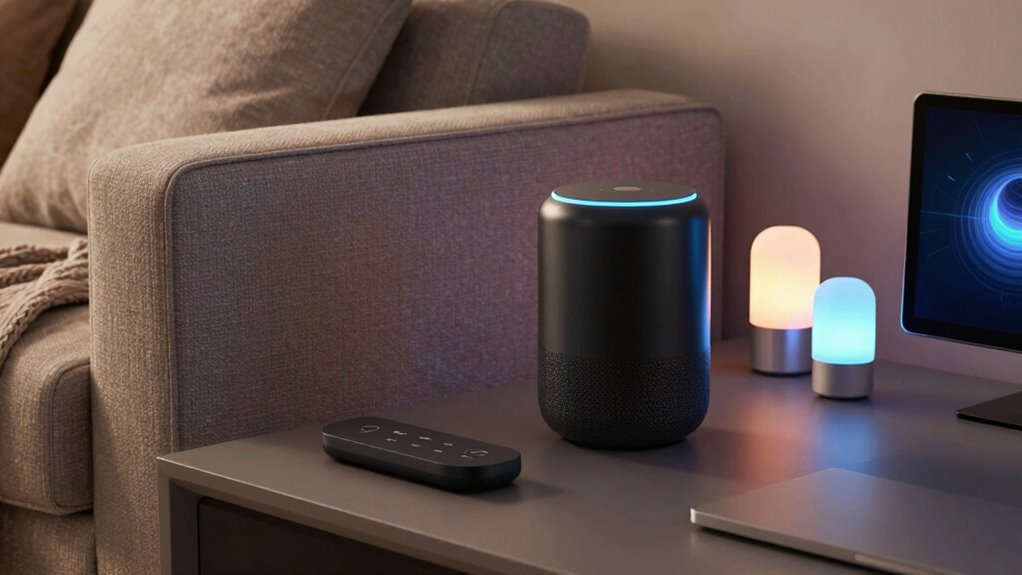
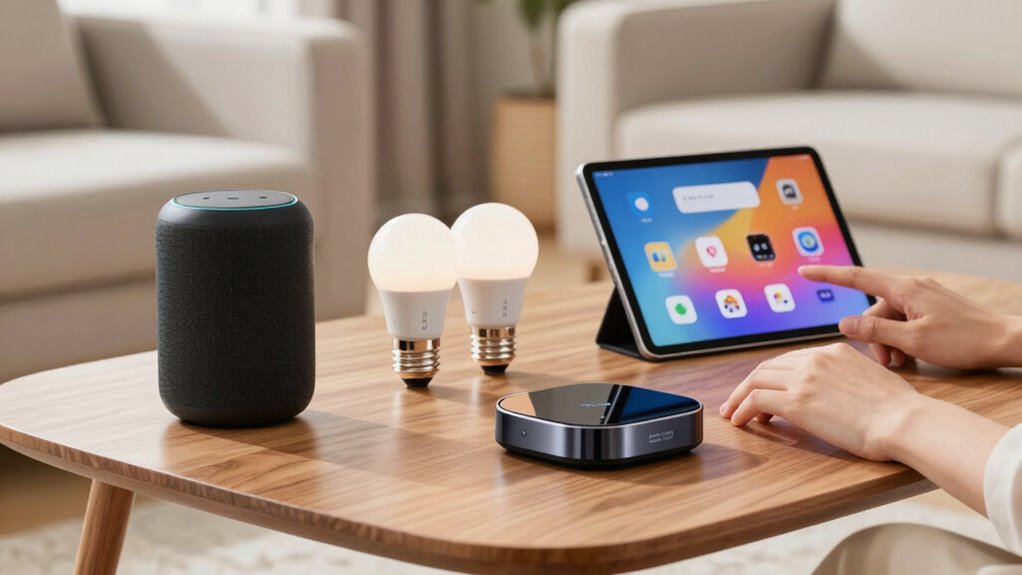
Starting with a smart speaker or voice assistant makes your home more convenient and connected. These devices improve your experience by providing quick access to music, information, and controls, all hands-free. With them, tasks become simpler, freeing up your time for what matters most. Incorporating a home automation system can further enhance your setup by enabling seamless integration with other smart devices. Additionally, choosing devices that support sleep-friendly features can help you create a more restful environment. Implementing personalized routines can optimize daily activities and enhance overall comfort in your smart home.
Smart Speakers Enhance Experience
Smart speakers are the cornerstone of a modern smart home, transforming your living space into an interactive, voice-controlled environment. They offer numerous smart speaker benefits, making daily tasks easier and more convenient. With voice control advantages, you can play music, set reminders, check the weather, or control other smart devices instantly, just by speaking. This hands-free interaction saves you time and keeps you engaged without needing to pick up your phone or use a remote. Plus, smart speakers connect seamlessly with other smart home gadgets, creating a centralized hub for automation. The more you use them, the more intuitive your home becomes, enhancing your overall experience and making everyday routines more efficient. They’re an essential first step toward a smarter, more connected living space.
Voice Assistants Simplify Tasks
Voice assistants built into smart speakers make managing daily tasks effortless. With just a simple voice command, you can set reminders, check the weather, or control other smart devices in your home. Hands free control means you don’t need to stop what you’re doing or pick up a device; instead, you speak naturally and get instant results. This convenience simplifies your routine, saving time and reducing clutter. Whether you’re cooking, working, or relaxing, voice assistants help you stay organized and connected. They also integrate seamlessly with other smart home gadgets, allowing you to manage everything with ease. Investing in a smart speaker with a voice assistant turns your home into a more efficient, hands-free environment that responds to your needs.
Add Smart Lighting to Make Life Easier and Save Energy
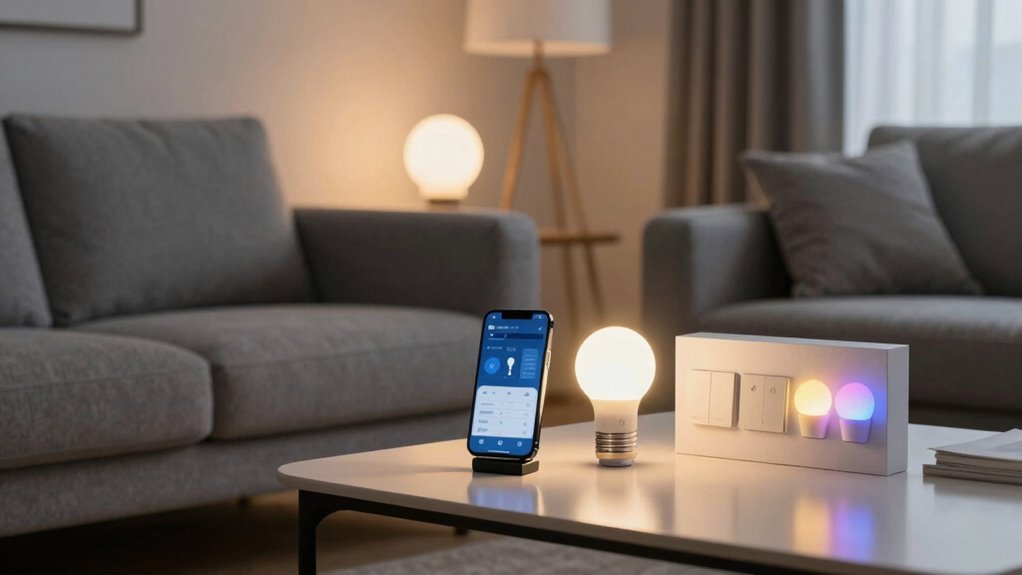
Installing smart lighting is quick and simple, even if you’re new to smart home tech. You can set up custom schedules to turn lights on and off automatically, saving energy without extra effort. With a few tips, you’ll make your life easier while reducing your energy bills. Additionally, understanding upgrades and maintenance can help you select the right smart lighting options that are both cost-effective and easy to install. Being aware of compatibility considerations ensures your smart lights work seamlessly with your existing devices and systems. Considering filtration and system compatibility can further improve your smart home setup and ensure long-term reliability. Exploring navigation and mapping features can also enhance automation and device placement for optimal performance. When choosing your smart lighting, paying attention to system integration can streamline your setup and reduce potential issues over time.
Easy Installation Tips
Wondering how to quickly upgrade your home with smart lighting? Start with the installation basics to guarantee a smooth setup. Most smart bulbs and fixtures are designed for easy installation—just screw in the bulb or connect the device to your existing wiring. Keep your Wi-Fi handy, as a stable connection is essential for setup troubleshooting. If the app isn’t recognizing your device, try restarting your router or resetting the smart bulb. Follow the manufacturer’s instructions carefully, and don’t rush through the pairing process. Many issues stem from weak Wi-Fi signals or incorrect app permissions. With a little patience, you’ll be able to install your smart lighting quickly and with minimal hassle, making your home smarter and more energy-efficient in no time. Ensuring your Wi-Fi network is strong can significantly improve your air quality by supporting seamless device connectivity.
Customizing Light Schedules
Setting up customized light schedules allows you to automate your home lighting, making daily routines more convenient and energy-efficient. With schedule customization, you can create specific times for your lights to turn on or off, ensuring your home always feels welcoming and comfortable. Use ambient lighting to set a cozy atmosphere during evenings or relax with softer tones. Adjust schedules to match your routines, such as dimming lights when you go to bed or brightening them in the morning. This control helps you save energy by reducing unnecessary lighting. Most smart lighting systems let you easily tweak these schedules through apps, giving you flexible control over your environment. By personalizing your light schedules, you enhance your home’s comfort while also cutting down on electricity use. Understanding indoor air quality can also help you create a healthier living space alongside your lighting adjustments. Incorporating air purifier maintenance into your routine ensures the air in your home remains clean and healthy, complementing your lighting setup. Additionally, incorporating energy-saving features ensures your smart home remains eco-friendly and cost-effective. Implementing these features not only benefits your wallet but also reduces your home’s carbon footprint, supporting a more sustainable lifestyle. Moreover, ensuring your smart lighting system is secure from cyber threats is crucial for safeguarding your privacy and data.
Saving Energy Effort
Adding smart lighting to your home makes it easier to save energy without sacrificing comfort. With smart bulbs and switches, you can automate lighting schedules, ensuring lights are off when not needed. This boosts your energy conservation efforts and reduces waste. You can set lights to dim during the day or turn off automatically when rooms are empty, maximizing efficiency tips. Smart lighting also allows you to adjust brightness remotely, preventing unnecessary energy use. By integrating these systems, you simplify your daily routine while lowering your energy bills. Consistently using automation and remote controls helps you stay on top of energy conservation without extra effort, making your home more eco-friendly and cost-effective. Smart lighting systems enable seamless control and further enhance your home’s energy savings, especially as the demand for AI cybersecurity professionals continues to grow.
Secure Your Home With Cameras, Doorbells, and Smart Locks
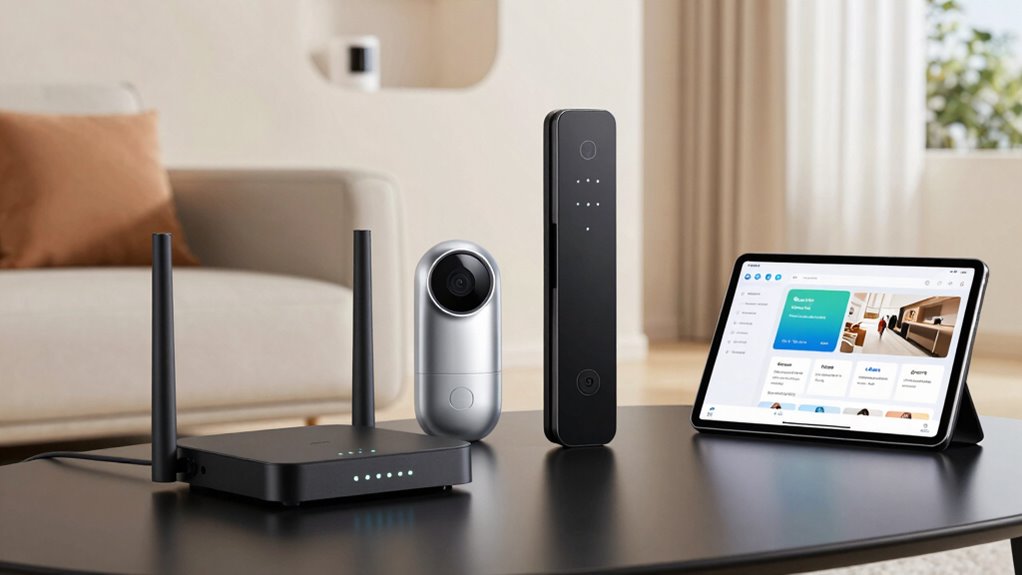
Securing your home is easier than ever with the right combination of cameras, doorbells, and smart locks. Video doorbells let you see who’s at your door from anywhere, providing peace of mind. Security cameras give you a full view of your property, deterring intruders and capturing evidence if needed. Smart locks allow you to control access remotely, so you can let in family or friends without keys. Imagine feeling safe knowing you can:
- Instantly see who’s at your door, even when you’re away
- Keep an eye on your property 24/7 with security cameras
- Grant or revoke access remotely, ensuring only trusted people enter
These devices work together to create a layered defense, making your home smarter, safer, and more secure.
Grow Your Smart Home Gradually With Budget-Friendly Gadgets

Starting your smart home journey doesn’t have to break the bank; you can gradually build your system with affordable gadgets that deliver real value. Budget-friendly gadgets help you learn the smart home basics without overspending, letting you expand at your own pace. Consider adding smart plugs, affordable smart bulbs, or motion sensors to enhance convenience and security. These gadgets are easy to install and often compatible with popular platforms like Alexa or Google Assistant. To visualize, here’s a quick look at options:
| Device | Function | Cost Range |
|---|---|---|
| Smart Plug | Control appliances remotely | $10 – $25 |
| Smart Bulb | Adjust lighting, set schedules | $15 – $30 |
| Motion Sensor | Automate lighting/security | $10 – $20 |
| Door/Window Sensor | Detect open/close events | $10 – $15 |
| Smart Outlet | Expand device control | $15 – $25 |
Frequently Asked Questions
Can I Mix Devices From Different Smart Home Brands?
Yes, you can mix devices from different smart home brands, but brand compatibility and device integration can be tricky. Check if the devices support common platforms like Alexa, Google Assistant, or Apple HomeKit. Using a universal hub or smart home app can help streamline device integration across brands. Just confirm each device’s compatibility before purchasing, so they work smoothly together and avoid frustration down the line.
Do I Need a Wi-Fi Extender for Larger Smart Home Setups?
If your smart home setup is large, you might need a Wi-Fi extender to guarantee reliable Wi-Fi coverage. Signal boosters help amplify your existing Wi-Fi signal, reducing dead zones and lag issues. You should consider a Wi-Fi extender if you notice slow connections or dropped devices across your home. Proper placement of signal boosters can markedly improve your smart home’s performance, keeping all your devices connected smoothly and efficiently.
Are Smart Home Devices Compatible With All Smartphones?
Most smart home devices are compatible with a wide range of smartphones, but you should check their device compatibility and smartphone requirements first. Typically, they work with both iOS and Android systems, but some features may need specific versions or app updates. Make certain your phone meets the app’s minimum requirements to avoid issues. Always verify device compatibility before purchasing to ensure smooth installation and operation in your smart home setup.
How Secure Are Smart Home Devices From Hacking?
Smart home devices can be quite secure if they use strong device encryption, but hacking vulnerabilities still exist. You should regularly update your device firmware and change default passwords to reduce risks. While encryption helps protect your data, hackers may exploit vulnerabilities if devices aren’t properly secured. Stay vigilant by monitoring device activity and using a secure Wi-Fi network to keep your smart home safer from potential hacking attempts.
What Is the Average Cost to Start a Basic Smart Home?
Starting a smart home typically costs around $200 to $500, depending on your smart home budget and the devices you choose. On average, starter kit costs include essential items like smart bulbs, a hub, and security cameras. Did you know that 40% of smart home buyers spend under $300 initially? This budget-friendly range lets you test the waters without overspending, making it easier to expand your smart home over time.
Conclusion
Starting your smart home journey might feel like opening a door to endless possibilities. Remember, it’s about taking small, confident steps—each device a brick building your smarter, more convenient space. With the right choices and a little patience, you’ll craft a home that adapts to your life, not the other way around. So, are you ready to turn the key and access the future of living? Your smarter home awaits—just take the first step.