
To stop buffering in big homes, choose a reliable mesh Wi-Fi system with extensive coverage like Netgear Orbi, Eero Pro, or Google Nest Wifi. Proper placement of nodes, optimizing their distance, and managing bandwidth can markedly improve performance. Look for systems with advanced features like seamless roaming, QoS, and security updates. Consistent optimization and choosing the right system make a real difference, and exploring more will help you achieve the best setup for your space.
Key Takeaways
- Choose a mesh Wi-Fi system with extensive coverage, high bandwidth capacity, and multiple nodes for seamless large-home connectivity.
- Properly position nodes elevated and within optimal distances to avoid dead zones and ensure strong, stable signals.
- Enable quality of service (QoS) settings to prioritize bandwidth for streaming and gaming devices.
- Minimize interference sources like thick walls, appliances, and other electronics to maintain high Wi-Fi performance.
- Regularly update firmware and leverage advanced features like automatic updates and signal overlap for consistent buffering-free experience.
Why Large Homes Need Mesh Wi‑Fi for Buffer-Free Internet
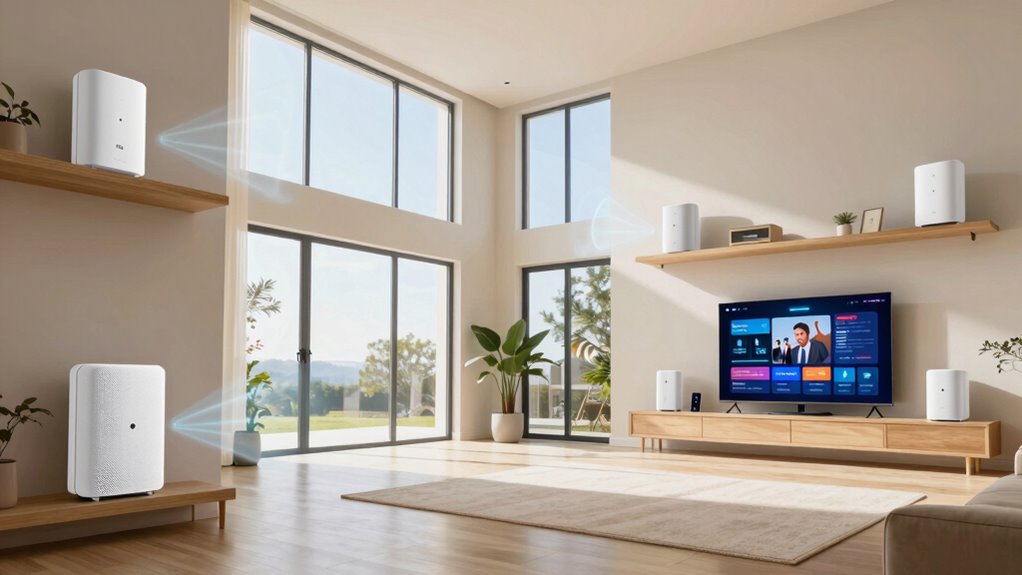
Large homes often pose unique challenges for maintaining reliable Wi-Fi coverage. Thick walls, multiple floors, and extensive layouts can create dead zones and slow connections. Without a proper setup, your smart appliances and virtual assistants struggle to stay connected, causing interruptions and frustration. Mesh Wi-Fi systems are designed to address these issues, providing seamless coverage across every corner of your home. They work by using multiple nodes that communicate with each other, ensuring a strong, stable signal everywhere. This means your smart devices respond instantly, and your virtual assistants can reliably process commands without buffering delays. Investing in a mesh Wi-Fi system keeps your entire smart home connected effortlessly, eliminating dead zones and buffering, so your digital life runs smoothly. Understanding network topology can help optimize your system’s placement for even better coverage. Additionally, the use of energy-efficient hardware in these systems supports sustainable living while maintaining high performance. Properly configuring wireless channels can further reduce interference and improve overall network stability.
What Features Matter Most in a Mesh Wi‑Fi System for Big Houses
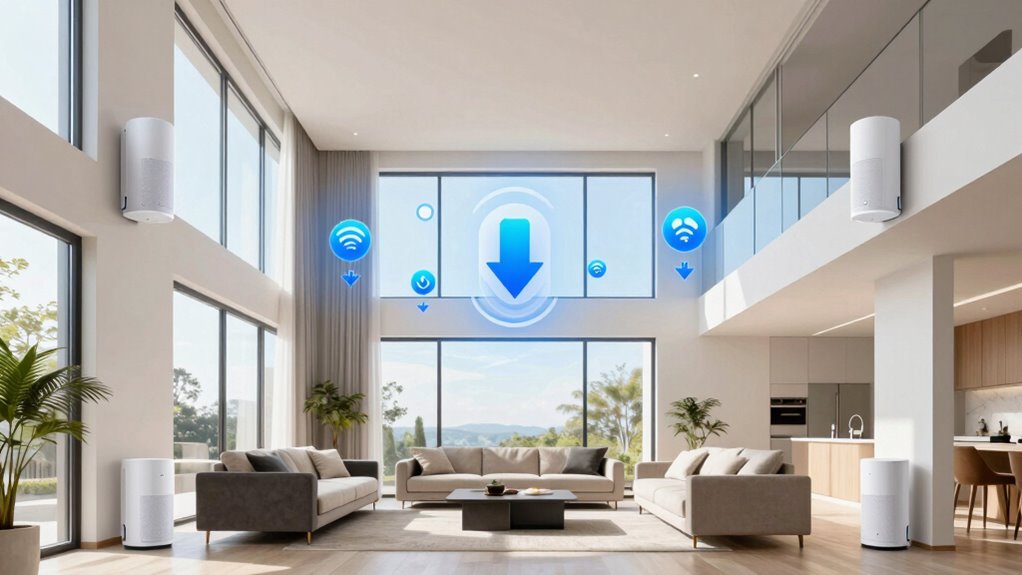
When choosing a mesh Wi-Fi system for a big house, several key features can make a significant difference in performance and reliability. Look for systems that support strong coverage, fast speeds, and easy management. If you have a smart home, ensure the system can handle multiple connected devices seamlessly. Parental controls are crucial for managing internet access for kids, keeping your network safe. Additionally, prioritize systems with robust security features to protect your data. A user-friendly app simplifies setup and ongoing management. To compare features, consider this table:
| Feature | Importance |
|---|---|
| Coverage | Ensures all areas in your big house stay connected |
| Device Compatibility | Supports smart home gadgets and numerous devices |
| Parental Controls | Manages kids’ internet use and enhances security |
| Network Reliability | Maintains consistent performance even during peak usage |
Including a reliable network can greatly improve your overall internet experience in large homes. For optimal performance, understanding the key features of mesh systems can help you make informed decisions and avoid common connectivity issues.
How to Choose the Best Mesh Wi‑Fi System for Your Space
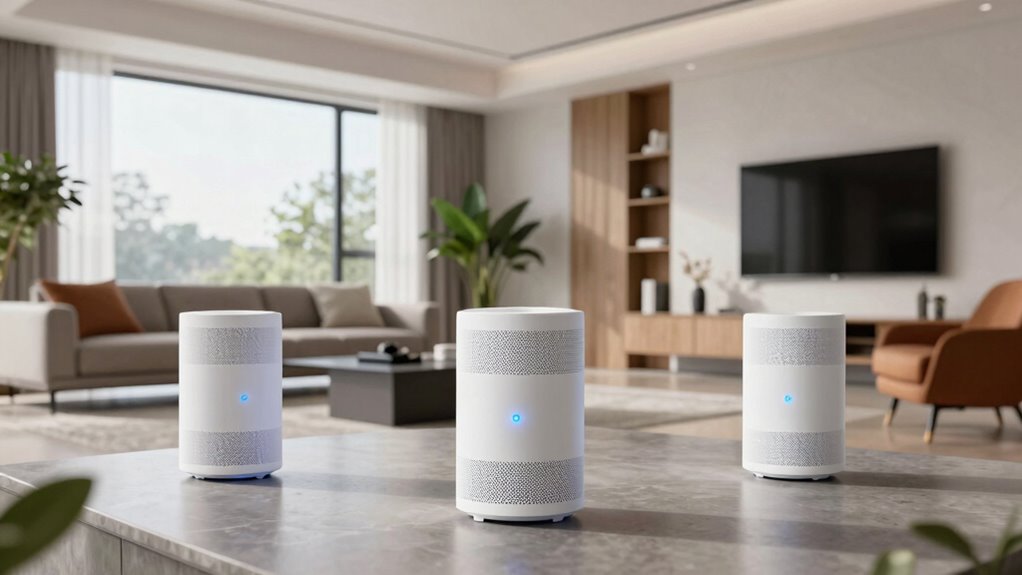
Choosing the right mesh Wi-Fi system for your space requires understanding your specific needs and the features that will best support them. If you have a smart home, look for systems that easily integrate with your devices and offer reliable coverage throughout your property. Consider digital security features like automatic firmware updates, robust encryption, and guest networks to protect your data. Think about the size and layout of your home—larger or multi-story houses may need more nodes or advanced mesh technology. Budget is also important, but prioritize quality and security over cost to ensure seamless connectivity and peace of mind. By evaluating your home’s layout and your digital security needs, you’ll select a system that keeps every corner connected and your smart home safe. Understanding network infrastructure can help you make more informed choices about coverage and hardware capabilities.
Top Mesh Wi‑Fi Systems for Seamless Coverage in Big Homes

Finding the right mesh Wi-Fi system for a big home can seem intimidating, but the key is selecting models that deliver reliable, seamless coverage across multiple floors and tricky corners. Top systems like the Netgear Orbi, Eero Pro, and Google Nest Wifi offer robust coverage, ensuring your smart home devices stay connected without interruptions. These systems are designed to handle high bandwidth needs, perfect for streaming, gaming, and security cameras. They also prioritize network security, providing features like automatic updates and guest networks to keep your data safe. With mesh technology, you’ll eliminate dead zones and enjoy consistent Wi-Fi throughout your large residence. Investing in a system with strong security features and wide coverage guarantees your smart home remains connected, protected, and buffer-free, no matter how big your home is.
How to Set Up Your Mesh Network for Maximum Range and Speed
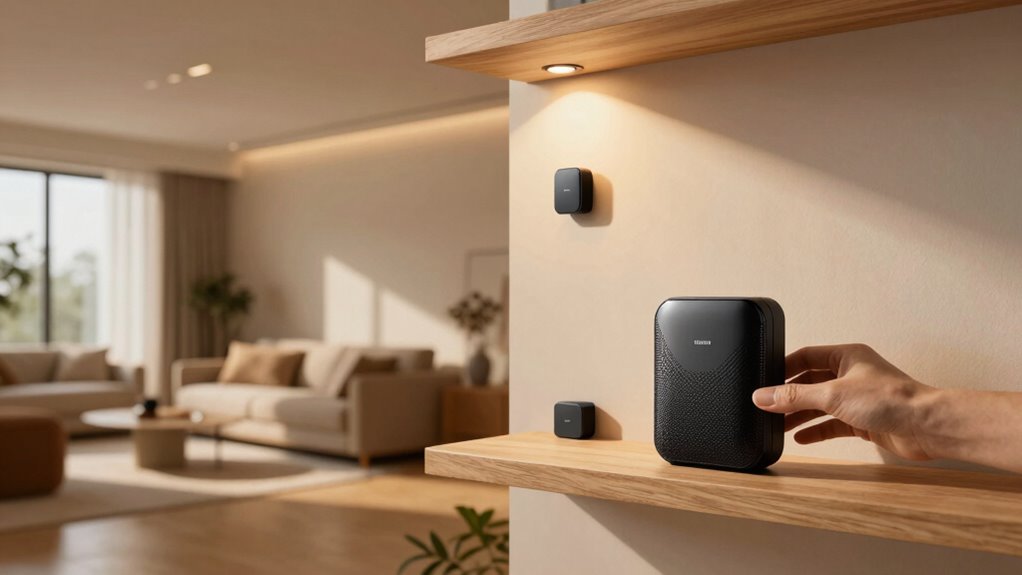
To get the best range and speed from your mesh network, start with ideal router placement—position it centrally and avoid obstructions. Make sure your nodes are spaced properly to maintain a strong, seamless connection throughout your home. Additionally, managing your network bandwidth by prioritizing devices and limiting unnecessary usage can prevent congestion and ensure optimal performance. Furthermore, local automation can help streamline your network management and improve overall coverage. Implementing bandwidth management tools can further optimize your network by dynamically adjusting device priorities based on your usage patterns. Understanding wireless signal propagation can also assist in optimizing placement and reducing dead zones for better coverage, as knowledge of radio frequency behavior can be crucial in identifying and mitigating interference issues.
Optimal Router Placement
Proper router placement is essential for maximizing your mesh network’s range and speed. Position your main router centrally in your home, avoiding obstructions like thick walls or large metal objects. Elevate it off the floor for better coverage. Keep it away from electronic devices that may cause interference. To enhance security and parental controls, ensure the router is in a secure location, out of reach of children. Use the table below to help you visualize ideal spots:
| Location | Tips |
|---|---|
| Central hallways | Maximize coverage with minimal obstructions |
| Near thick walls | Avoid for better signal transmission |
| Elevated surfaces | Use shelves or high furniture |
| Away from electronics | Reduce interference |
| Secure spot | Protect router security and parental controls |
Additionally, for optimal performance, consider mesh Wi-Fi systems that are designed to eliminate dead zones and provide seamless connectivity throughout your home. These systems often include features like automatic channel switching and adaptive routing to optimize your network’s performance for large homes. Proper placement combined with advanced system features can significantly improve overall network reliability and reduce buffering issues, especially in expansive spaces. Utilizing network optimization techniques can further enhance your Wi-Fi experience, ensuring strong, reliable Wi-Fi throughout your home.
Proper Node Spacing
Positioning your mesh nodes at the right distances is key to maximizing your network’s range and speed. Proper node placement ensures each device receives a strong, reliable signal. Aim to place nodes within 10-30 feet of each other, avoiding too much distance that weakens the connection. Keep in mind that some signal overlap is beneficial; it creates a seamless mesh network and reduces dead zones. However, too much overlap can cause interference, slowing your speeds. Find a balance by testing different placements, ensuring each node is close enough to maintain a strong link without excessive signal congestion. Understanding wireless signal strength can help you fine-tune your setup for optimal results. Additionally, proper node spacing is essential for achieving the best possible coverage and connection quality. Regular monitoring of your network’s performance can help identify areas where adjustments are needed to maintain optimal coverage. Incorporating signal overlap management techniques can further optimize your mesh network’s efficiency and stability.
Network Bandwidth Management
Effective bandwidth management is essential for maximizing your mesh network’s range and speed. To prevent bottlenecks, prioritize devices or applications that need the most bandwidth, ensuring smooth streaming and gaming. Enable wireless security features like WPA3 to protect your network from unauthorized access, which can slow down your connection. Setting up parental controls helps limit bandwidth usage on certain devices during peak hours, keeping your main devices fast. Regularly update your mesh system’s firmware to optimize performance and security. Use Quality of Service (QoS) settings to allocate bandwidth efficiently across devices. Additionally, understanding network bandwidth management can help you troubleshoot and optimize your setup more effectively. Proper network configuration and a clear understanding of your household’s usage patterns are crucial for optimal performance. By managing bandwidth thoughtfully, you ensure every corner of your big home benefits from fast, reliable Wi-Fi, while keeping your network secure and family-friendly. Incorporating advanced configuration techniques can further fine-tune your network for peak performance.
Troubleshooting Mesh Wi‑Fi Issues in Large Homes: Common Fixes

Large homes often pose unique challenges for mesh Wi-Fi systems, causing signals to drop or slow down in certain areas. One common issue is interference sources, like thick walls, appliances, or other wireless devices, which can disrupt your network’s stability. To troubleshoot, start by identifying and minimizing these interference sources. Also, check device compatibility; some older or incompatible devices may not connect properly or slow down your network. Updating firmware on your mesh nodes and connected devices can improve performance. Position your routers strategically—placing nodes in central, open locations helps reduce dead zones. Ultimately, ensure your mesh system supports the number of devices you use. Addressing interference sources and device compatibility issues can considerably improve your large home’s Wi-Fi reliability.
Tips to Boost Mesh Wi‑Fi Signal Strength Throughout Your House

Boosting your mesh Wi-Fi signal throughout your house often starts with simple adjustments that make a big difference. First, position your routers and nodes in central locations away from thick walls and metal objects to maximize coverage. Keep your network secure by updating firmware regularly and changing default passwords, which also helps prevent interference. Incorporate your mesh system into your smart home setup to streamline device management and guarantee ideal performance. Avoid placing nodes near cordless phones or microwaves that can cause signal interference. Consider adding extra nodes if certain areas remain weak, creating a more robust network. These tweaks improve coverage, strengthen signal, and maintain network security, making your smart home more reliable and responsive everywhere in your house.
Real-Life Success Stories of Mesh Wi‑Fi in Spacious Homes
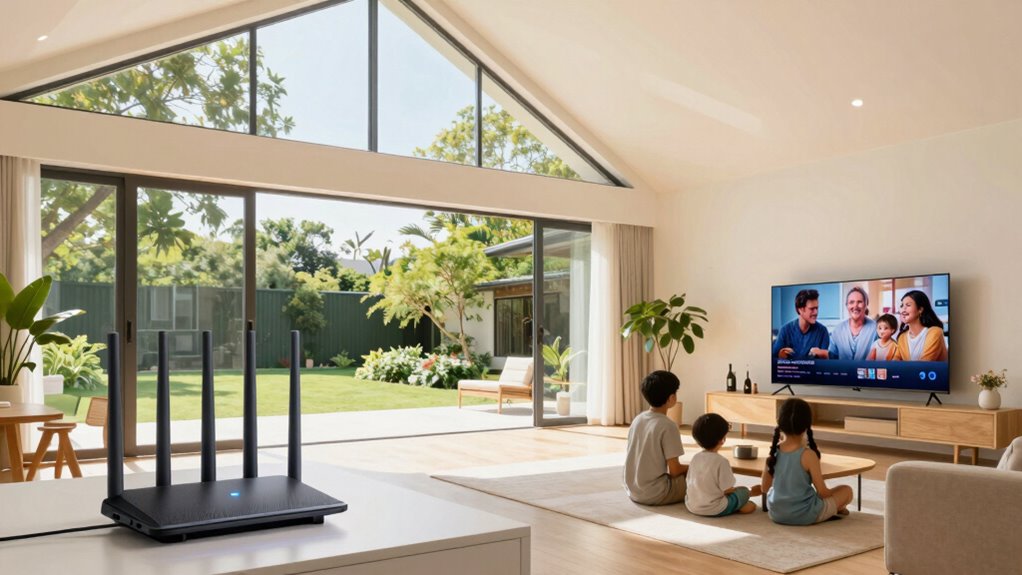
Many homeowners have achieved seamless coverage across their large spaces with mesh Wi‑Fi systems. They enjoy smoother streaming and fewer dead zones without hassle, thanks to easy setup and simple management. These success stories show how mesh networks can transform your experience in spacious homes.
Seamless Coverage Throughout
When you have a spacious home, guaranteeing reliable Wi-Fi coverage across every corner can be challenging. Mesh Wi-Fi systems deliver seamless coverage by strategically placing nodes throughout your space, eliminating dead zones. This setup guarantees that your devices stay connected as you move between rooms, providing consistent internet access. Plus, many mesh systems prioritize mesh security, protecting your network from threats without sacrificing performance. Device compatibility is also a key benefit, as most mesh networks work with a wide range of gadgets, from smart home devices to streaming boxes. Real-life success stories show how these systems transform large homes into connected havens, with no more buffering or dropped signals. With a well-designed mesh system, you get reliable, all-encompassing coverage that keeps your entire home connected effortlessly.
Enhanced Streaming Experiences
Have you ever experienced buffering or poor video quality during your favorite streaming session in a large home? With mesh Wi‑Fi, you can enjoy enhanced streaming experiences across your smart home. These systems provide consistent, high-quality connections that support multiple devices simultaneously. Here are some ways they improve your streaming:
- Reduce buffering by maintaining a strong signal in every room
- Enable seamless 4K and HDR content delivery without interruptions
- Support energy efficiency by optimizing device connectivity and reducing wasted power
- Guarantee reliable connection for smart home devices, improving overall system responsiveness
Easy Setup and Management
Setting up a mesh Wi‑Fi system in a spacious home is simpler than you might think, even if you’re not tech-savvy. Most systems offer straightforward apps that guide you through each step, making installation quick and hassle-free. Once set up, managing your network becomes just as easy, with options for smart home integration that allow you to control connected devices seamlessly. You can also customize parental controls to restrict access during certain hours or block specific content, giving you peace of mind. Many systems let you monitor network performance and add or remove devices effortlessly. With intuitive management tools, you stay in control without needing to be a tech expert. This user-friendly setup guarantees your big home stays connected and secure with minimal effort.
Future Trends in Mesh Wi‑Fi Technology for Large-Home Connectivity

As large homes become increasingly connected, future trends in mesh Wi-Fi technology are focused on enhancing coverage, speed, and reliability. You can expect smarter networks that adapt to your smart home devices, reducing latency and congestion. Innovations will also prioritize energy efficiency, helping you save on power without sacrificing performance. Here are some key developments to watch for:
- Integration of AI for dynamic network management
- Use of energy-efficient hardware to lower power consumption
- Enhanced support for IoT devices within smart homes
- Better interference mitigation for seamless streaming and browsing
These advancements will ensure your large home stays connected, efficient, and ready for future smart home innovations.
Frequently Asked Questions
How Does Mesh Wi-Fi Compare to Traditional Routers in Large Homes?
Mesh Wi-Fi systems excel over traditional routers in large homes because they reduce wireless interference and guarantee seamless coverage. You’ll experience fewer dead zones and buffering issues since multiple nodes work together, boosting signal strength. Plus, they’re compatible with most devices, making setup easy. Unlike single routers, mesh systems adapt to your home’s layout, providing consistent Wi-Fi across every corner, so you can stream, work, and browse without interruptions.
Can Mesh Wi-Fi Systems Be Expanded Easily Over Time?
A chain is only as strong as its weakest link, so you’ll appreciate how easily mesh Wi-Fi systems can be expanded over time. With flexible expandability options, you can add more nodes whenever your needs grow. This approach aligns with future-proofing strategies, ensuring your network stays reliable and fast as your home and devices evolve. You won’t need a complete overhaul—just simple additions keep your coverage seamless.
What Is the Typical Cost Range for High-Quality Mesh Systems?
High-quality mesh systems typically cost between $200 and $500, depending on the pricing tiers and features. Budget options may start around $200, while premium brands with advanced capabilities can reach $500 or more. When comparing brands, look at factors like coverage, speed, and ease of expansion. Investing in a reliable system guarantees seamless Wi-Fi coverage throughout your big home, reducing buffering and dead zones effectively.
Are There Specific Mesh Wi-Fi Systems Recommended for Smart Home Devices?
Imagine your smart home humming in perfect harmony. For this, look for mesh Wi-Fi systems like the Netgear Orbi or Eero Pro that offer smart home compatibility and device prioritization. These systems guarantee your smart devices get the bandwidth they need, reducing lag and buffering. With easy setup and reliable coverage, you’ll feel like your smart home is a well-orchestrated symphony, seamlessly synchronized for everyday magic.
How Do I Optimize Mesh Wi-Fi for Outdoor or Garage Coverage?
To optimize your mesh Wi-Fi for outdoor signal and garage connectivity, place your main router near an exterior wall facing the desired outdoor area. Add a mesh satellite or extender closer to your garage or outdoor space to boost coverage. Keep the nodes elevated and free of obstructions, and verify your firmware is up to date. This setup ensures strong, reliable outdoor signal and seamless garage connectivity for all your devices.
Conclusion
With the right mesh Wi‑Fi system, you’ll turn your sprawling mansion into a lightning-fast internet fortress—no more buffering, lag, or dead zones! Say goodbye to endless frustration and hello to seamless streaming, gaming, and working from any corner of your big home. Once you set it up, you’ll wonder how you ever lived without this unstoppable network. Prepare to conquer your digital world with Wi‑Fi so powerful, it’ll feel like you’ve got a supercomputer in every room!