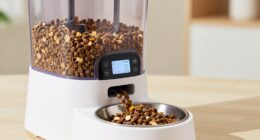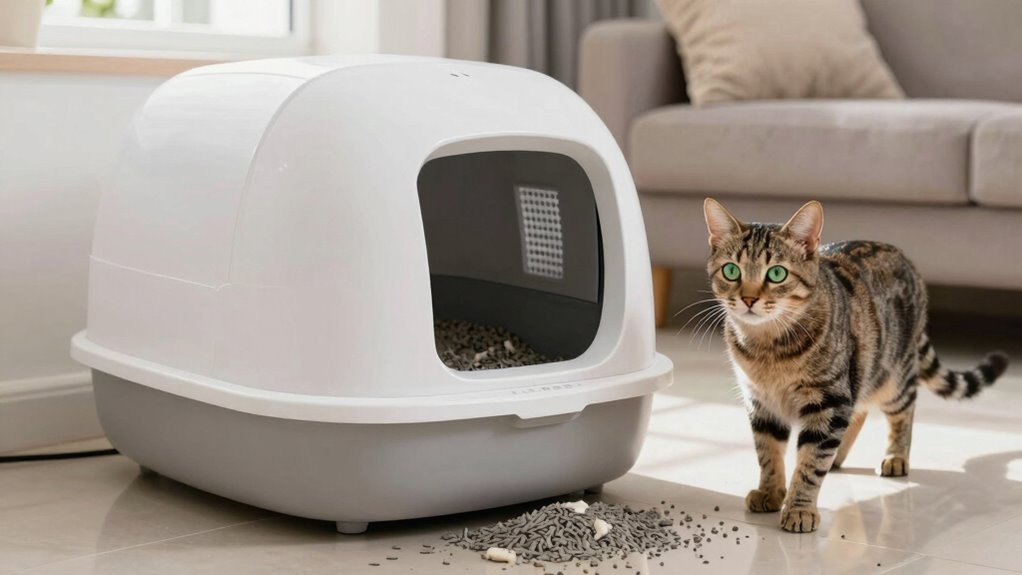

Many cats dislike self-cleaning litter boxes because they can be noisy, have sudden movements, or feel unfamiliar and scary. Sensitive or anxious cats may avoid them altogether, especially if their litter preferences or routines aren’t met. Confident, calm, and adaptable cats often tolerate these boxes better. To help your cat accept one, choose quiet models, introduce them gradually, and match the litter to your cat’s tastes. Discover more ways to create a comfortable setup below.
Key Takeaways
- Cats tolerate quiet, slow, and predictable self-cleaning units better than noisy, fast-moving mechanisms.
- Familiarity, consistent routine, and matching litter preferences increase acceptance of automatic litter boxes.
- Highly sensitive or anxious cats may avoid self-cleaning boxes due to noise, sudden movements, or unfamiliar features.
- Gradual introduction, positive reinforcement, and proper placement help cats adapt to self-cleaning litter boxes.
- Easy-to-maintain, odor-control models with minimal vibrations are more likely to be accepted by cats.
Why Do Cats Sometimes Dislike Self-Cleaning Litter Boxes?
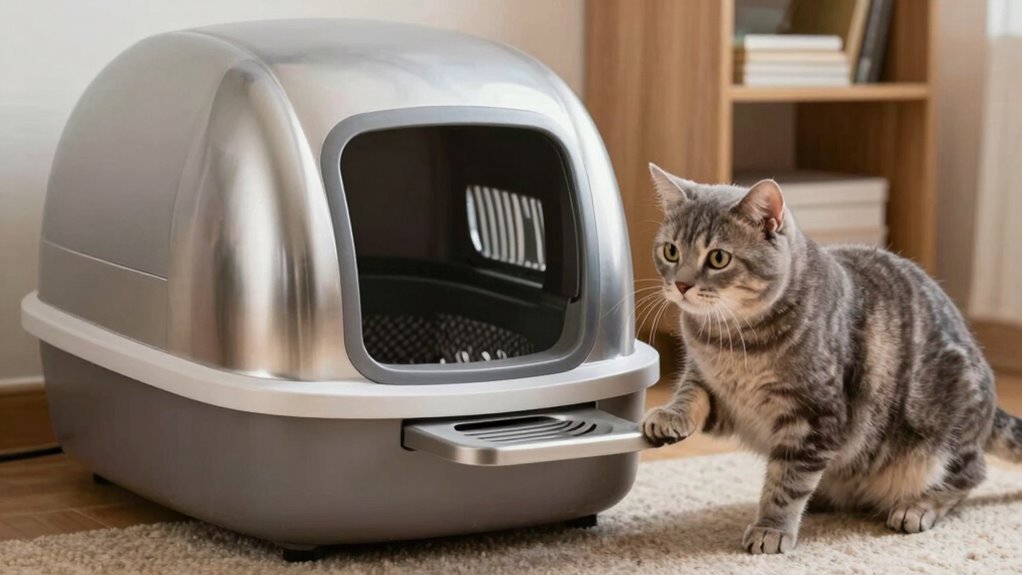
While self-cleaning litter boxes offer convenience, many cats sometimes dislike them. Your cat’s behavior and litter box preferences play a big role in this dislike. Some cats are sensitive to changes in their environment, especially around their bathroom area. The noise and motion of self-cleaning mechanisms can startle or scare them, making them hesitant to use the box. Additionally, cats have specific preferences for litter texture, box size, and cleanliness, which may not align with how self-cleaning boxes operate. If your cat is used to a traditional setup, the unfamiliarity and automatic features might cause anxiety or distrust. Understanding your cat’s behavior and respecting their preferences is key to encouraging consistent use and reducing stress. Regular inspection of the litter box environment can help identify issues that might deter your cat from using the self-cleaning unit. It’s also important to consider the technology used in cleaning mechanisms, as overly noisy or improperly functioning systems can contribute to your cat’s discomfort. Furthermore, some cats may develop a preference for certain litter types, and mismatched materials can lead to rejection of the new setup.
How Do Self-Cleaning Litter Boxes Work, and Are They Safe for Cats?
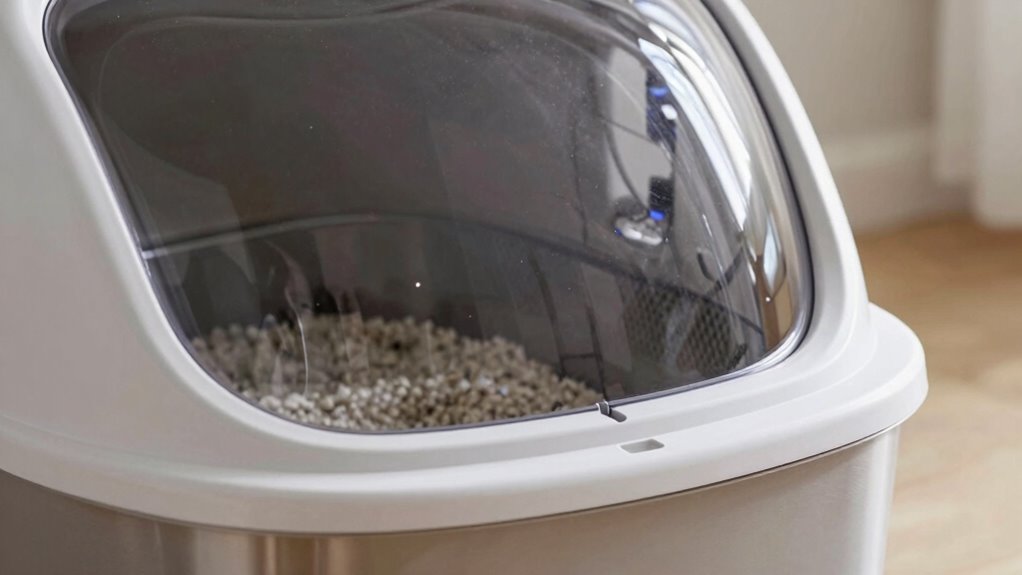
Ever wondered how self-cleaning litter boxes actually work? They use specific litter box mechanics to automate waste removal. Most have a rake or rotating mechanism that separates clean litter from waste after your cat uses it. When the unit detects use, it triggers a timer or sensor, activating the cleaning cycle usually within 10 to 20 minutes. During this process, waste is scooped into a sealed compartment or tray for easy disposal. As for safety considerations, modern models are designed with sensors to prevent operation while your cat is inside, reducing injury risk. It’s important to choose a unit with reliable safety features and ensure proper maintenance. Additionally, understanding cat behavior can help in choosing the right litter box model and placement to ensure your feline friend is comfortable. Proper placement and cat preferences can also influence how willingly your cat uses the self-cleaning unit. Overall, when used correctly, self-cleaning litter boxes can be safe and convenient for both you and your feline friend.
Which Cats Are Most Likely to Tolerate a Self-Cleaning Litter Box?
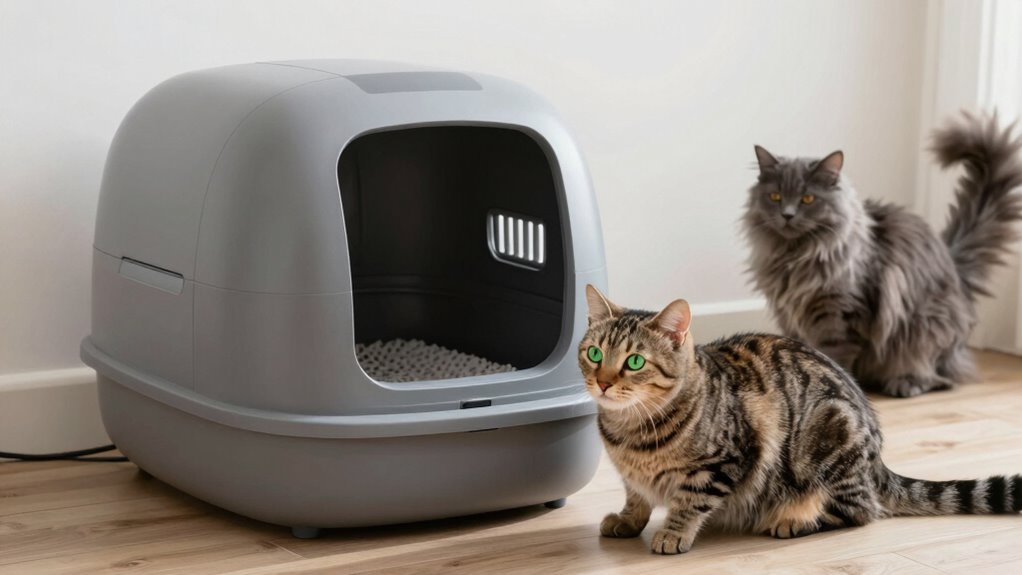
Certain cats are more likely to accept a self-cleaning litter box, especially those comfortable with new routines and unfamiliar devices. Cats with good behavioral adaptation tend to adjust faster, especially if they’re open to change. Their litter preferences also play a role—cats who prefer fine, unscented litter may be more tolerant. The following table highlights which cats are most likely to tolerate these boxes:
| Cat Type | Behavior Traits | Litter Preference |
|---|---|---|
| Confident explorers | Curious, adaptable | Fine, unscented litter |
| Older, calm cats | Less reactive to change | Consistent, familiar litter |
| Social, tolerant cats | Comfortable with routines | Neutral or scentless litter |
| Playful kittens | Quick learners | Open to new setups |
Understanding these traits helps predict which cats will adapt best. Additionally, behavioral traits like curiosity and adaptability are key factors in a cat’s ability to tolerate new devices like self-cleaning litter boxes. Recognizing user preferences can also help in selecting the most suitable litter type for each cat’s comfort and acceptance. Moreover, understanding the features of trusted litter box brands can improve the chances of a smooth transition for even the most hesitant cats.
What Features Make a Self-Cleaning Litter Box More Acceptable to Cats?

Cats are more likely to accept a self-cleaning litter box if it operates quietly, so it doesn’t startle them. An easy-to-maintain design also encourages regular use, reducing stress for your cat. Focusing on these features can make the progression smoother and increase your cat’s comfort. Additionally, choosing a simple homemade flautas recipe can help create a calm environment that your cat finds comforting. Understanding cat preferences and their reactions to new devices can further improve acceptance. Incorporating user privacy and cookies considerations, such as ensuring your pet’s environment remains secure and stress-free, can also contribute to a positive transition. Paying attention to security zone info can help you choose the safest and most effective features for your pet’s environment, aligning with the principles of haute couture that emphasize craftsmanship and tailored solutions.
Quiet Operation Matters
Since loud noises and sudden movements can startle cats, quiet operation is essential for a self-cleaning litter box to be well accepted. Low noise levels help prevent stress and encourage your cat to use the box without hesitation. Machines with minimal noise during the cleaning cycle are less likely to provoke anxiety or avoidance. Additionally, vibration effects can disturb cats if they’re too intense or jarring. Look for models that operate smoothly, with gentle vibrations that don’t mimic the sound or feel of a threat. A quieter self-cleaning litter box creates a calmer environment, making your cat more comfortable. Prioritizing noise control and reducing vibration effects ensures your feline friend views the device as non-threatening and tolerates it better over time. Incorporating innovative European cloud servers technology can also help in designing quieter, more efficient mechanisms through advanced noise reduction features. This noise mitigation can make a significant difference in how your cat perceives the device. Moreover, understanding the mechanisms of sound dampening can further assist manufacturers in creating truly silent operations. Implementing advanced noise reduction techniques, such as soundproofing materials and vibration dampening mounts, can enhance user experience for both cats and owners.
Easy Maintenance Design
An easy maintenance design can markedly influence a cat’s willingness to accept a self-cleaning litter box. Features that simplify cleaning and reduce mess inspire trust and comfort. Look for models with:
- Effective odor control systems that keep smells contained, making the box less off-putting.
- Ample litter capacity, so you don’t need frequent refills and the box stays clean longer.
- Clear, simple mechanisms that are easy to operate and maintain without hassle.
When these elements are in place, your cat is more likely to feel secure and comfortable. A well-designed self-cleaning box minimizes odors, reduces the need for constant upkeep, and promotes good hygiene—important factors for your cat’s acceptance and your peace of mind.
How Can You Introduce a Self-Cleaning Litter Box to Your Cat and Encourage Use?
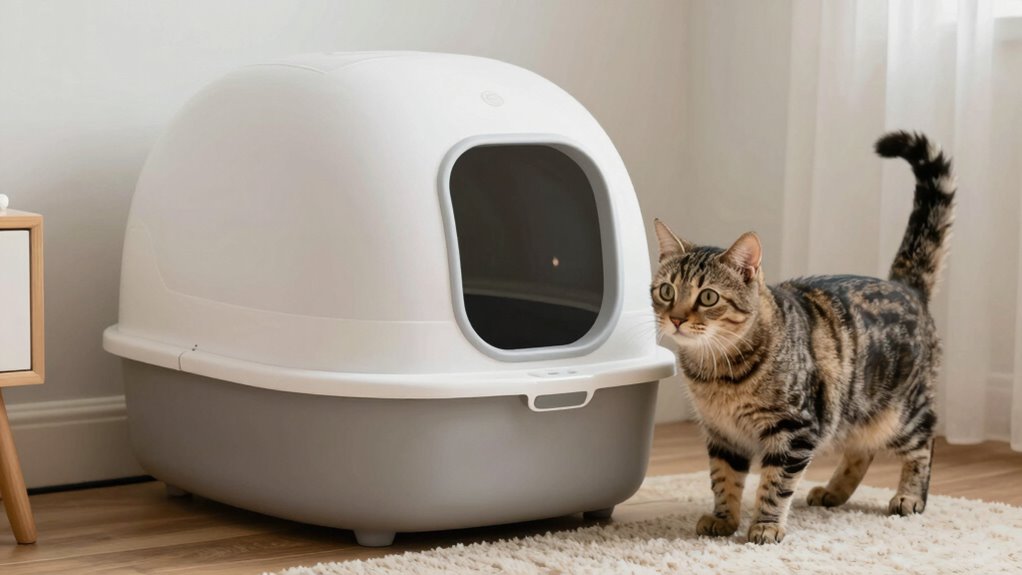
To get your cat comfortable with a self-cleaning litter box, start by gradually introducing it alongside the familiar one. Keep the litter consistent to prevent any confusion or resistance. With patience, your cat will learn to accept the new setup and use it confidently. Additionally, understanding best litter choices can make the transition smoother for your feline friend.
Gradual Transition Strategies
Introducing a self-cleaning litter box gradually helps your cat adjust comfortably to the new setup. Start by placing it in the same spot as the old litter box to ease litter box placement concerns. To help with scent management, gently clean the area around the box and use unscented litter initially. Encourage your cat to explore the new box by offering treats nearby or gently placing them inside. Keep the lid open if it has one, so your cat doesn’t feel trapped. Observe your cat’s reactions and give them time to get used to the sounds and movements of the self-cleaning mechanism. Consistency and patience are key, and small steps can make the transition smoother.
Maintain Litter Consistency
Maintaining litter consistency is essential when introducing a self-cleaning litter box because it helps your cat feel secure and familiar with the new setup. Stick to a consistent litter texture that your cat already prefers, whether it’s fine, chunky, or clumping. This familiarity reduces stress and encourages use. Good odor control is also fundamental; choose a litter that effectively neutralizes smells without creating strong scents that might scare your cat away. Keep the litter level steady, filling it to the same height each time, so your cat isn’t confused by sudden changes. By preserving these elements—litter texture and odor control—you create a stable environment that makes your cat more comfortable with the self-cleaning system, increasing the chances they’ll accept and regularly use it. Regular cleaning and monitoring can prevent odor buildup and ensure your cat continues to feel at ease with the litter box. Additionally, understanding your cat’s preferences for litter texture and composition can significantly improve their comfort and willingness to adapt to the new system. Paying attention to your cat’s behavior and litter box habits is key factors in successful adaptation, helping you identify and address any issues early on.
Signs Your Cat Is Uncomfortable or Avoids the Self-Cleaning Litter Box?
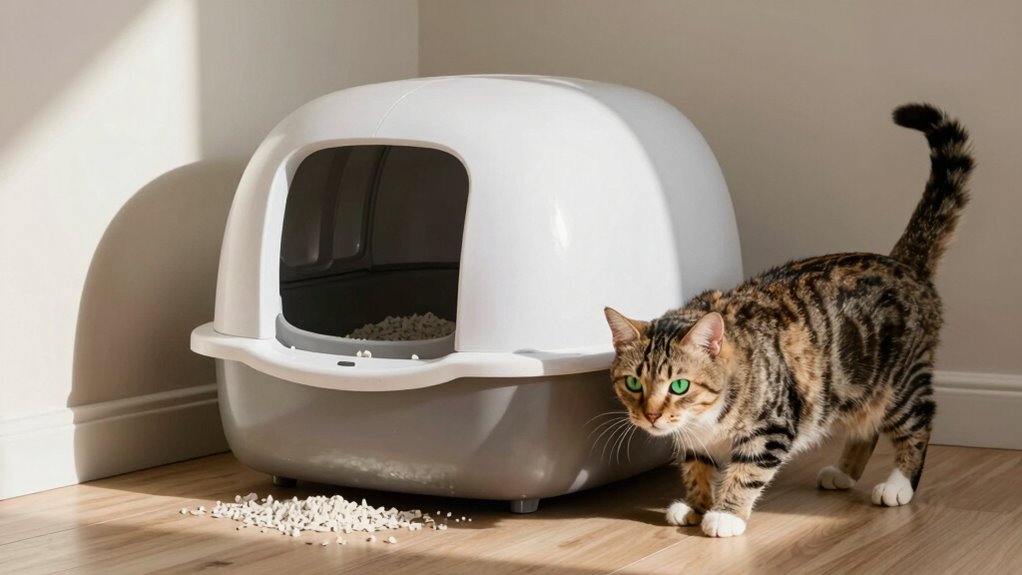
If your cat is uncomfortable with the self-cleaning litter box, it may show obvious signs of avoidance or distress. You might notice them hesitating to enter, scratching outside the box, or refusing to use it altogether. They could also exhibit signs like urine outside the box or increased vocalization when near it. These behaviors often stem from issues like lingering litter box odors or an unpredictable cleaning schedule that makes them feel insecure. Your cat might associate the box with discomfort and seek alternative spots to eliminate. Watch for signs of stress, such as tail flicking or hiding after using the box. Additionally, environmental factors like noise or unfamiliar scents can contribute to their discomfort. Addressing these issues promptly ensures your cat feels safe and encourages consistent use of the self-cleaning box. Incorporating appropriate cleaning routines can help reduce residual odors and improve their acceptance. Understanding your cat’s behavioral responses can help you identify specific issues and tailor solutions effectively.
Tips to Help Your Cat Accept and Use the Self-Cleaning Litter Box?
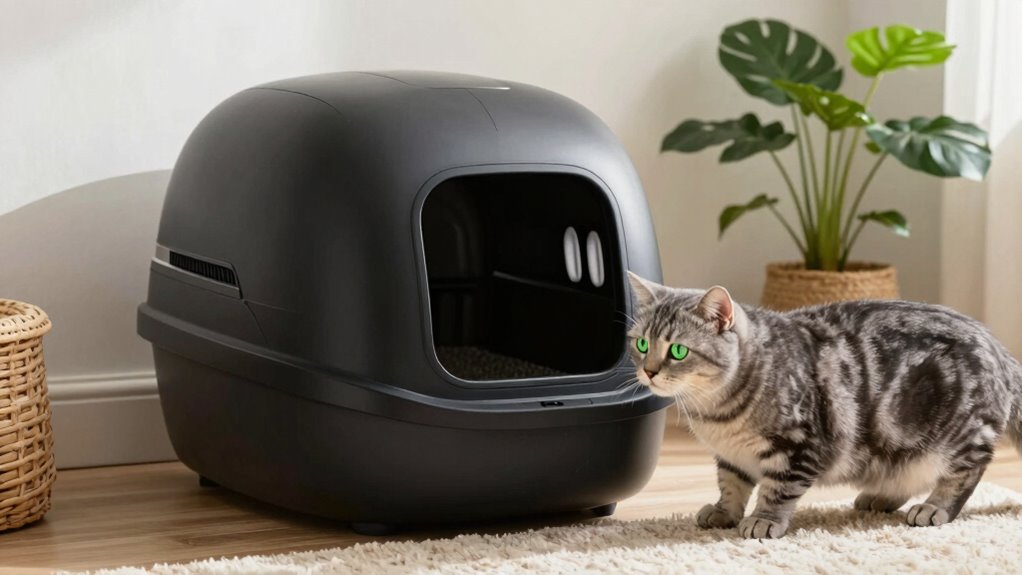
To help your cat accept and use the self-cleaning litter box, start by choosing a model that mimics a traditional box’s size and shape, making it less intimidating. Keep the litter box in a quiet, accessible spot to reduce litter box odors and ease your cat’s anxiety. Watch for cat behavior cues like hesitation or avoiding the box, which can indicate discomfort. To encourage use, clean the area around the box regularly and ensure the lid isn’t too noisy or overwhelming. Here’s a quick guide:
| Tip | Why it helps |
|---|---|
| Use familiar litter | Reduces unfamiliar smells that deter your cat |
| Keep it clean | Minimize litter box odors that discourage use |
| Place in quiet spot | Less stress, more acceptance |
| Observe behavior cues | Adjust setup based on your cat’s reactions |
| Be patient | Gradual adjustment fosters acceptance |
Are There Alternatives to Self-Cleaning Litter Boxes Your Cat Might Prefer?
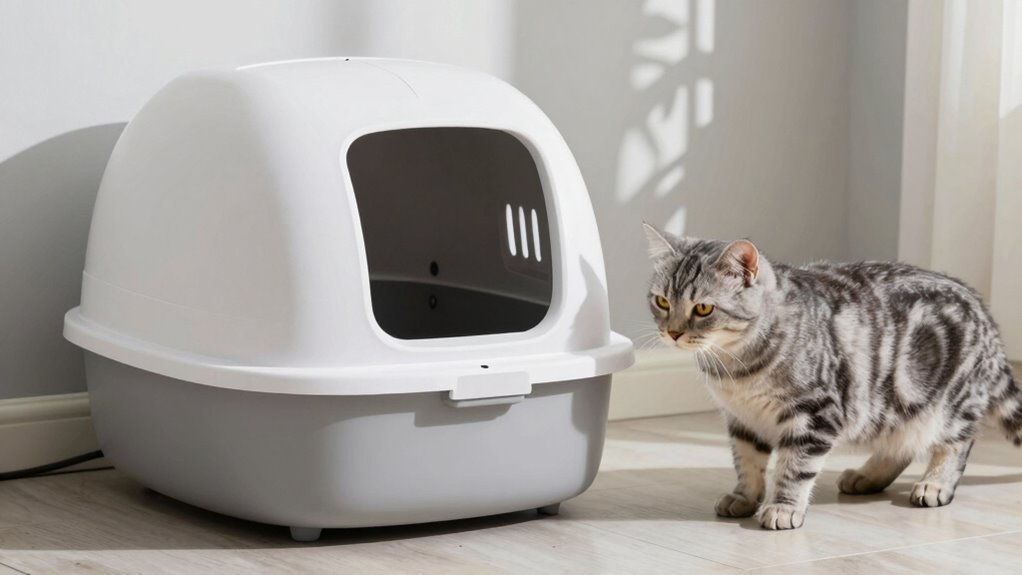
While self-cleaning litter boxes offer convenience, some cats may prefer more traditional options or alternative setups that better suit their preferences. If your cat isn’t comfortable with a self-cleaning box, consider these alternatives:
- Open litter boxes with high sides for better odor control and easy access
- Covered litter boxes that trap smells but still allow your cat to feel secure
- Multiple small boxes placed around the home to reduce stress and improve odor management
These options can help you find a setup your cat tolerates better. Keep in mind, good odor control is key to maintaining a clean environment and encouraging your cat to use the box regularly. Experimenting with different styles may lead to a setup both you and your feline friend prefer.
Frequently Asked Questions
How Often Should I Clean the Self-Cleaning Litter Box?
You should follow a regular maintenance schedule for your self-cleaning litter box, typically cleaning it every 24 to 48 hours. This cleaning frequency guarantees your cat remains comfortable and avoids odors that might deter them from using it. Keep an eye on the litter levels and machine functioning, and adjust your cleaning routine if you notice any issues. Consistent maintenance helps keep your cat happy and the box odor-free.
Can Self-Cleaning Litter Boxes Eliminate All Odors?
While self-cleaning litter boxes do a good job with odor control, they can’t eliminate all smells completely. Regular maintenance, like checking and cleaning as needed, helps keep odors at bay. Keep in mind, the effectiveness varies based on your cat’s habits and the box’s design. To stay fresh, stay attentive to maintenance frequency and consider additional odor-neutralizing products if needed.
Are There Specific Brands Recommended for Sensitive Cats?
If you have sensitive cats, look for brand recommendations that prioritize gentle features, like quiet operation and customizable settings. Brands like Litter-Robot, CatGenie, and Chillax offer options designed for sensitive cat needs, with minimal noise and easy maintenance. You should choose a model that’s user-friendly, reduces stress, and avoids harsh scents or abrupt movements, ensuring your feline friend feels comfortable and safe with their self-cleaning litter box.
What Are Common Reasons Cats Refuse to Use the Box?
You might notice your cat refuses the litter box, and it’s heartbreaking. Often, it’s due to litter box preferences or discomfort with the location or smell. Cats follow specific behavior patterns, seeking privacy and cleanliness. If the box is dirty, noisy, or in a busy area, they’ll avoid it. Understanding these cues helps you adjust, ensuring your feline feels safe and comfortable, encouraging consistent use.
How Does a Self-Cleaning Litter Box Impact Litter Box Training?
A self-cleaning litter box can make litter box habits easier, but it might also disrupt your training consistency. Cats prefer predictable routines, so if the box cleans itself too quickly or unexpectedly, they may feel uneasy or refuse to use it. To prevent issues, introduce the self-cleaning feature gradually, ensuring your cat gets comfortable with it. Stay consistent with training, and observe how your cat adapts to maintain good litter box habits.
Conclusion
Ultimately, finding the right litter box is like tuning a fine instrument—you need to listen closely to your cat’s preferences. While self-cleaning boxes offer convenience, they don’t suit every feline’s taste. Pay attention to your cat’s comfort signals and be patient as you introduce new options. With a little trial and error, you’ll discover what makes their paws purr with contentment, turning a chore into a harmony of happy paws.