To keep your canister filter running smoothly, guarantee the flow rate matches your tank size—typically 4-6 times volume per hour—and adjust it for your fish’s needs. Set up your media with mechanical at the top, biological in the middle, and chemical at the bottom for maximum efficiency. Regularly clean or replace media and check your filter to prevent clogging and maintain water quality. Keep these tips in mind to optimize your setup and maintain a healthy environment.
Key Takeaways
- Match flow rate to tank size (4-6x volume/hour) and fish species to ensure proper circulation and oxygenation.
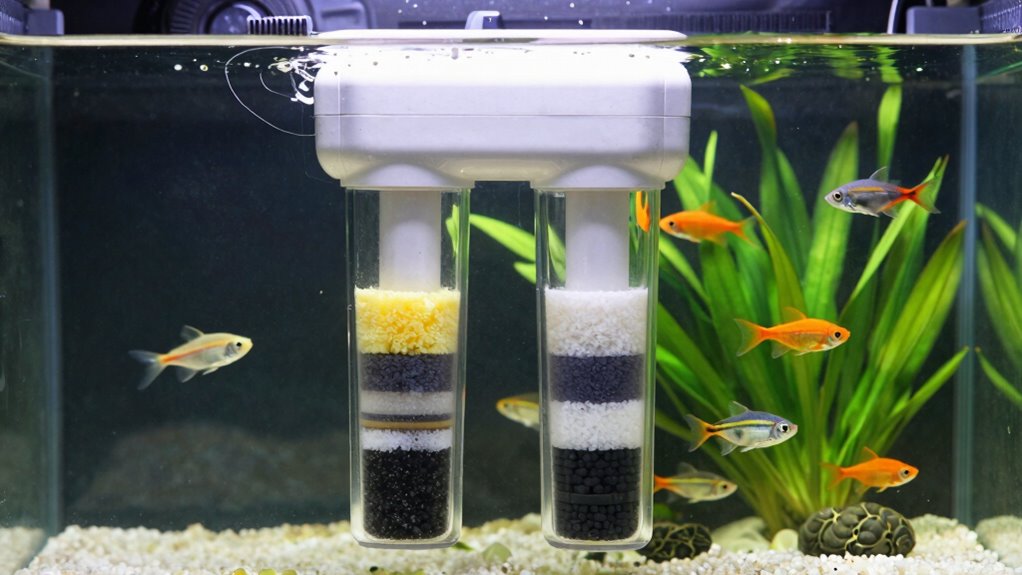
- Arrange filter media in layers: mechanical (top), biological (middle), and chemical (bottom) for optimal filtration.
- Regularly clean mechanical media with tank water every 4-6 weeks to prevent clogging without harming beneficial bacteria.
- Replace chemical media as needed to maintain water clarity and toxin removal efficiency.
- Adjust flow gradually using filter controls and monitor fish behavior to prevent stress and promote ecosystem stability.
Why Filtration Matters in Your Aquarium
Filtration is essential for maintaining a healthy aquarium because it removes harmful substances and keeps the water clean. When your filter works effectively, it helps maintain stable water chemistry, preventing toxic build-up that can stress or harm your fish. Proper filtration also supports healthy algae growth and clear water, making your aquarium visually appealing. While aquarium lighting enhances the appearance and promotes plant growth, it can also influence algae levels if not balanced. A good filtration system ensures that nutrients and waste are efficiently processed, reducing water quality fluctuations caused by inconsistent light or feeding. Additionally, flow rate management plays a crucial role in ensuring that water is circulated properly without stressing delicate aquatic life. Proper maintenance of your filter is vital to sustain optimal performance, which is why understanding your media setup and scheduling regular cleaning is essential. Regularly checking and adjusting your filtration system can help prevent common issues and extend the lifespan of your equipment. Understanding the importance of biological filtration can further enhance your tank’s health by supporting beneficial bacteria that break down waste. Employing a comprehensive filtration approach can optimize water quality and create a more stable environment for your aquatic inhabitants. Ultimately, a well-maintained filter stabilizes your water chemistry, creating a safe environment where your aquatic life can thrive.
How to Choose the Right Flow Rate for Your Tank
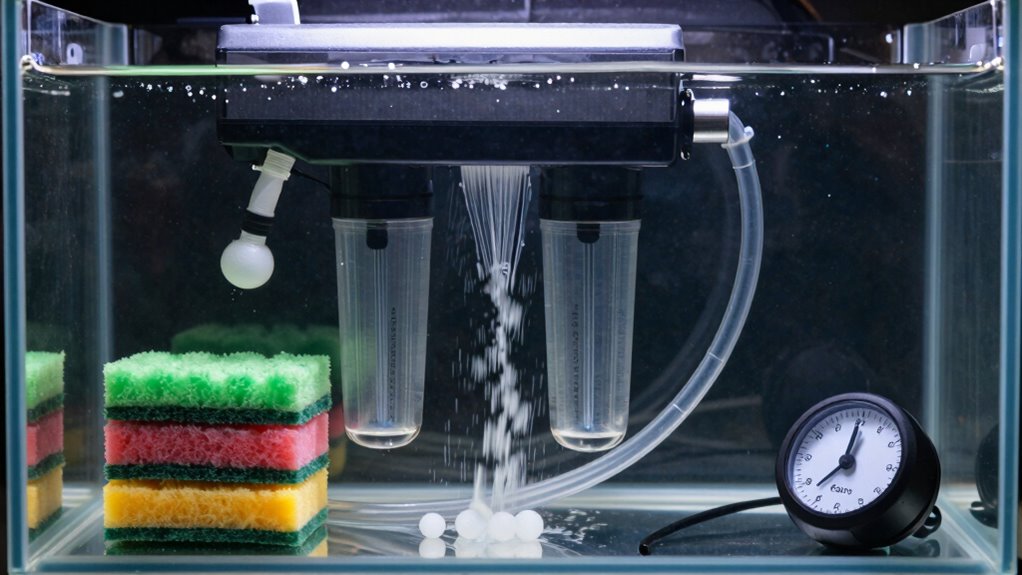
Choosing the right flow rate depends on your tank size and the needs of your fish. If your tank is larger or hosts sensitive species, you’ll need a higher or more adjustable flow. Adjusting your filter’s flow makes certain of a healthy environment without stressing your aquatic life. Incorporating support for breakfast can help ensure you have the energy to maintain your tank and enjoy your day. Proper flow rate management is essential for maintaining optimal water circulation and oxygenation, which directly impacts water quality and overall tank health.
Tank Size Considerations
How do you determine the right flow rate for your tank? Tank size directly influences flow rate needs. Larger tanks require higher flow rates to ensure proper water circulation, while smaller tanks need gentler flow to prevent stress. Consider these key points:
- Tank volume: Larger tanks often need 4-6 times the volume in flow rate per hour.
- Aquarium lighting: Bright lighting can promote algae growth if water isn’t circulated well.
- Water chemistry: Proper flow helps maintain stable water parameters, reducing fluctuations.
- Fish and plant needs: Some species prefer calmer waters, so adjust flow accordingly.
- Understanding fish behavior can help tailor flow rates to suit specific aquatic inhabitants. Additionally, monitoring water movement can assist in optimizing flow for your particular setup. Recognizing microbial activity is also essential, as adequate flow promotes beneficial bacteria that keep your tank balanced. It’s also important to consider filter specifications to ensure your equipment can handle the desired flow rate effectively.
Matching flow rate with tank size ensures your aquarium stays healthy, water remains clear, and your aquatic life thrives without stress.
Fish Species Needs
Different fish species have specific preferences for water movement, which makes selecting the right flow rate essential for their well-being. Slow-moving fish like bettas and dwarf gouramis prefer gentle currents, while active species like tetras and barbs thrive with stronger flow. The flow rate also influences aquarium plants and lighting effects, as too much current can hinder plant growth and create turbulent lighting. Use the table below to help match your fish’s needs:
| Fish Species | Ideal Flow Rate |
|---|---|
| Betta, Dwarf Gourami | Low (1-3 times tank volume/hour) |
| Tetras, Barbs | Moderate (4-6 times/hour) |
| Cichlids | Moderate to high (6-8 times/hour) |
| Goldfish | Low to moderate |
| Rainbowfish | Moderate |
Choose a flow rate that balances your fish’s comfort, aquarium plants, and lighting effects. Proper flow rate selection is also crucial for maintaining water quality and ensuring a healthy environment for your aquatic life. Additionally, understanding the evolution of arcade games can offer insights into how entertainment technology has advanced over time, affecting the design of modern aquarium equipment. Recognizing the importance of aquarium technology can help you optimize your setup for both functionality and aesthetics. To achieve optimal tank health, regular monitoring of flow rate adjustments is recommended as your fish and plants grow and change.
Flow Rate Adjustment
Determining the right flow rate for your aquarium is essential to create a healthy environment tailored to your fish’s needs. Proper flow rate control guarantees water circulates effectively without stressing your aquatic life. To adjust your canister filter’s media flow, consider these steps:
- Assess your tank size and fish species to gauge appropriate flow levels.
- Use the flow rate control feature to slow or speed up water movement.
- Regularly check media flow adjustment to prevent clogging or reduced filtration.
- Observe fish behavior; if they seem stressed or are struggling against current, tweak the flow rate accordingly.
Balancing flow rate control with media flow adjustment helps maintain ideal water quality and fish comfort. Adjustments should be made gradually to avoid sudden changes that could harm your tank’s ecosystem.
Setting Up Your Filter Media for Maximum Efficiency
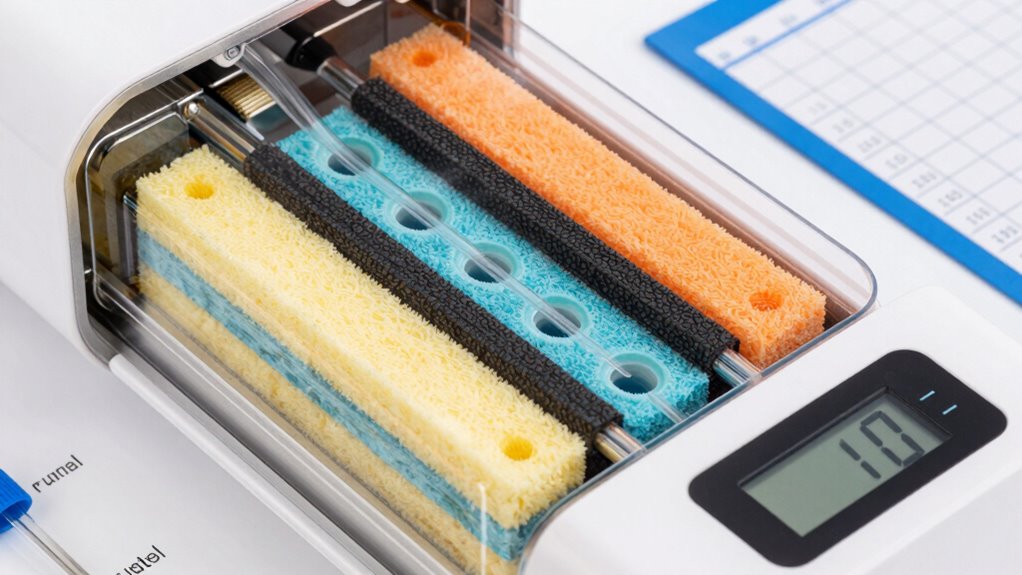
To get the most out of your canister filter, you need to select the right media types and layer them properly. This guarantees beneficial bacteria thrive while waste gets filtered out efficiently. Proper media layering techniques help optimize biological filtration and prevent dead zones within the filter. Additionally, understanding the flow rate and how it interacts with media placement can significantly impact overall filtration performance. Remember, regular media maintenance keeps everything running smoothly. Incorporating proper filtration techniques ensures your aquarium remains healthy and clear. Proper media setup not only improves water quality but also extends the lifespan of your filter components.
Choosing Appropriate Media Types
Choosing the right media types is essential for optimizing your canister filter’s performance. Your goal is to support biological filtration and chemical media effectively. First, use bio-media like ceramic rings or bio-balls to foster beneficial bacteria. Second, incorporate chemical media such as activated carbon to remove toxins and odors. Third, add mechanical media like sponges or floss to trap debris and prevent clogging. Fourth, ensure media are suited to your tank’s specific needs and flow rate. Proper media setup promotes efficient filtration, maintains water quality, and prolongs filter life. Regularly monitor and replace media as needed, keeping biological filtration active and chemical media effective. This balanced approach guarantees your aquarium stays clean, healthy, and vibrant.
Layering Media Effectively
Have you ever wondered how to maximize your canister filter’s efficiency? Proper layering of media is key. Start with mechanical media at the intake to trap debris, ensuring smooth water flow. Next, add biological filtration media—like bio-balls or ceramic rings—that provide surface area for beneficial bacteria. This biological media converts harmful toxins into less dangerous substances. Place chemical media—such as activated carbon—after biological media to remove odors, toxins, and impurities. Proper layering ensures water flows through each stage effectively, optimizing filtration and maintaining water quality. Remember, the placement of each media type influences filtration performance. By setting up your media thoughtfully, you enhance biological filtration, improve water clarity, and create a healthier environment for your aquatic life.
Regular Media Maintenance
Maintaining your filter media regularly guarantees it continues to perform at its best. Consistent upkeep ensures your biological balance stays stable and chemical filtration remains effective. Neglecting maintenance can lead to reduced flow, buildup of debris, and less efficient filtration. To maximize your media setup, consider these steps:
- Rinse mechanical media gently to remove debris without disturbing beneficial bacteria.
- Replace chemical filtration media as recommended to maintain chemical filtration efficacy.
- Inspect biological media for clogging and gently agitate to preserve biological balance. Regularly checking biological media also helps prevent clogging, which can hinder water flow and compromise water quality.
- Schedule regular cleanings, typically every 4-6 weeks, to prevent buildup and keep your filter functioning at its peak.
- Ensure proper media placement within the filter to optimize flow and filtration efficiency. Proper placement of media ensures optimal water flow, which is essential for effective filtration.
- Incorporate a regular maintenance routine to monitor filter performance and address potential issues early. Being aware of the flow rate helps in detecting early signs of clogging or media degradation, preventing major disruptions.
Arranging Media Layers for the Best Filtration
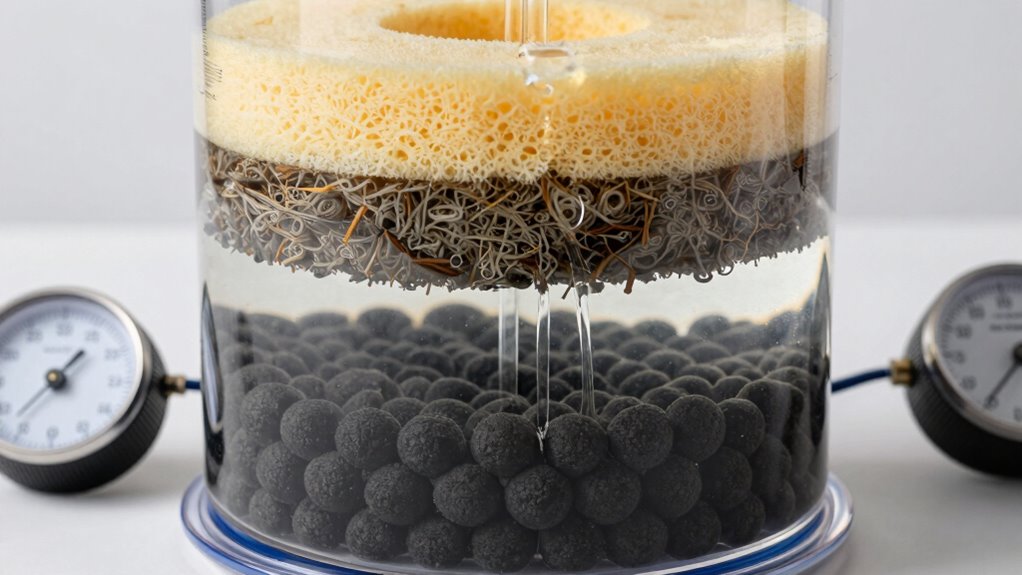
To achieve ideal filtration, it’s vital to arrange the media layers in your canister filter correctly. Start with mechanical media, like sponges or filter floss, at the top to trap debris before water reaches the biological and chemical stages. Beneath this, place biological media, such as ceramic rings or bio-balls, which foster beneficial bacteria essential for maintaining biological balance. Finally, position chemical filtration media, like activated carbon, at the bottom to remove odors, toxins, and impurities. Proper layering ensures water flows efficiently through each stage, optimizing filtration performance. This setup helps sustain a healthy environment for your aquatic life by promoting biological balance and effective chemical filtration, resulting in clearer water and a healthier ecosystem.
Creating a Maintenance Routine to Keep Your Filter Running Smoothly

Once you’ve arranged your media layers correctly, establishing a regular maintenance routine guarantees your canister filter continues to perform at its best. Consistent upkeep supports biological cycling and chemical filtration, preventing issues like build-up or stagnation. To keep your filter running smoothly:
- Check and clean media periodically, avoiding disruption to beneficial bacteria.
- Rinse sponges and bio-media with tank water to preserve biological cycling.
- Replace chemical filtration media as recommended to maintain water clarity.
- Inspect and clean the impeller and hoses to ensure proper flow.
Following these steps helps maintain a healthy ecosystem, reduces the risk of malfunctions, and prolongs your filter’s lifespan. Regular maintenance is your best tool to keep your canister filter operating efficiently and your aquarium thriving.
Troubleshooting Common Canister Filter Problems
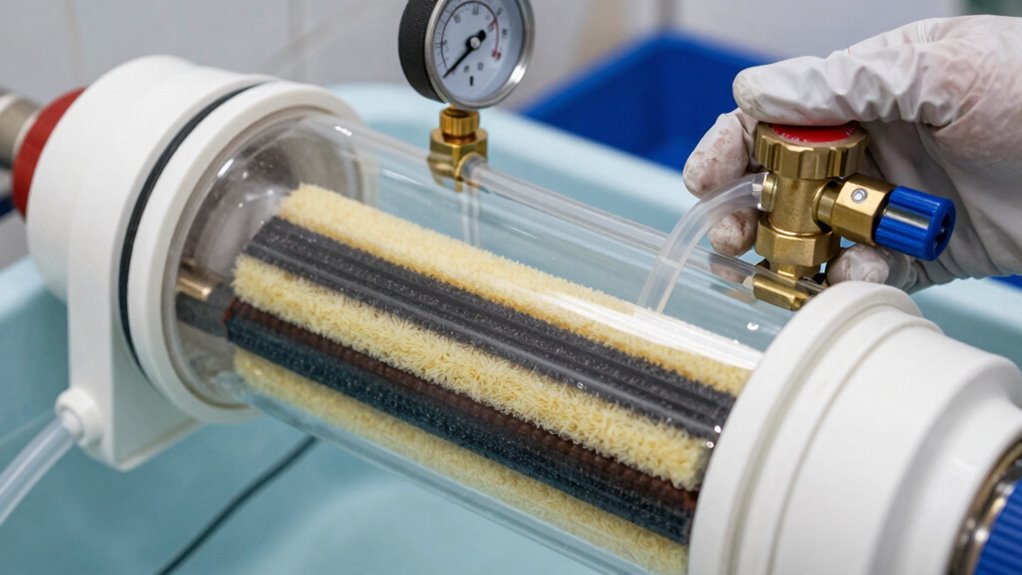
Even the most well-maintained canister filters can encounter issues that disrupt their performance. If your filter isn’t running smoothly, check for blockages or clogged media, which can reduce flow and affect aquarium plants that rely on consistent water movement. Sometimes, inadequate lighting considerations lead to algae buildup, which can clog intake tubes or hoses. Make certain the intake isn’t blocked by debris or excess algae, and clean the media regularly. If your flow rate drops suddenly, inspect for air bubbles trapped in the system or worn-out seals. Also, verify that the media is properly arranged to prevent bypass. Addressing these common problems promptly keeps your filter functioning efficiently and maintains a healthy environment for your aquarium plants.
How Often Should You Replace Media and Clean Your Filter?
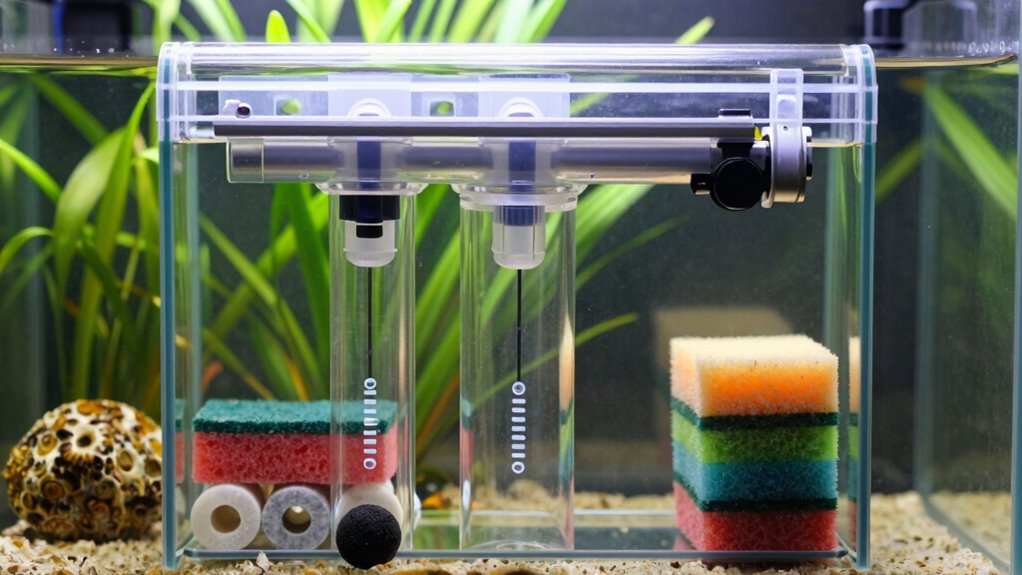
Regularly replacing media and cleaning your filter is essential for maintaining peak performance. Proper maintenance supports biological balance and guarantees effective chemical filtration. How often you do this depends on your tank size and bioload. Generally, replace mechanical media weekly to prevent debris buildup. Biological media should be rinsed every 4-6 weeks to preserve beneficial bacteria. Chemical filtration media, like activated carbon, typically needs replacement every 2-4 weeks for ideal results.
Here’s a quick guide:
- Replace mechanical media weekly.
- Rinse biological media every 4-6 weeks.
- Replace chemical media every 2-4 weeks.
- Clean filter components monthly.
Sticking to this schedule helps keep your tank healthy and your filter functioning efficiently.
Tips to Optimize Flow and Media Setup for a Healthy Aquarium
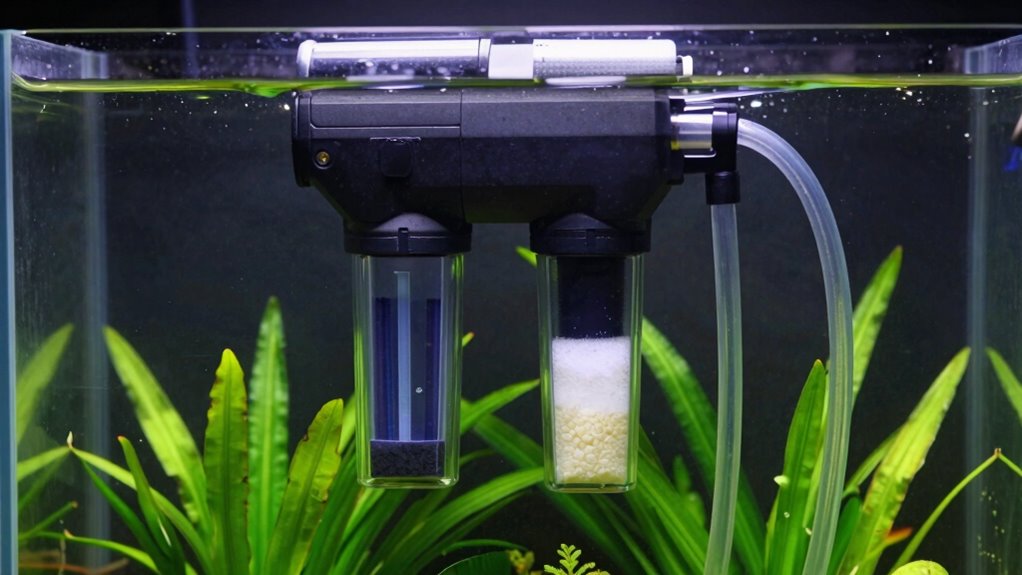
To maintain a healthy and balanced aquarium, optimizing flow and media setup is essential. Proper flow ensures oxygen reaches all areas, supporting biological filtration where beneficial bacteria break down waste. Adjust your canister filter’s flow rate to prevent dead zones and strong currents that stress fish. Use media layers effectively: biological media should have ample surface area for bacteria, while chemical filtration media, such as activated carbon, removes toxins and odors. Regularly monitor flow to ensure it remains consistent, cleaning or replacing media as needed. Avoid overloading the filter, which can hinder flow and reduce filtration efficiency. Balancing flow and media setup promotes a thriving environment, keeps water clear, and maintains optimal conditions for your aquatic life.
Frequently Asked Questions
How Do I Prevent Leaks in My Canister Filter Assembly?
To prevent leaks in your canister filter assembly, regularly check and maintain seals, replacing them if they become cracked or worn. Guarantee hose connections are tight and properly secured, avoiding over-tightening that could damage fittings. Keep the entire assembly clean, especially the seals and connections, and inspect for any signs of wear or damage. Proper seal maintenance and secure hose connections are key to keeping your filter leak-free and functioning properly.
Can I Use Different Media Types Together in One Canister?
Yes, you can use different media types together in one canister, but you need to take into account media compatibility. To maximize effectiveness, layer the media properly, placing mechanical media like sponges or pads at the intake first, followed by biological media such as bio-balls or ceramic rings. Avoid mixing incompatible media that might hinder flow or cause chemical reactions. Proper media layering ensures efficient filtration and maintains a healthy aquatic environment.
What Signs Indicate My Filter Needs an Immediate Cleaning?
You’ll notice your filter needs an immediate clean when it starts clogging and flow reduces unexpectedly—ironic, isn’t it? Reduced flow means your filter can’t do its job, and clogging signals it’s time for a thorough clean. If your tank’s water looks cloudy or smells off, it’s a clear sign. Don’t ignore these signs; prompt cleaning keeps your aquarium healthy and your filter working smoothly.
How Does Water Temperature Affect Filter Performance?
Water temperature critically affects your filter efficiency. When water is too cold, it slows down beneficial bacteria, reducing biological filtration. Conversely, high temperatures can cause bacteria to overgrow, clogging your filter faster. Maintain a stable temperature suited for your tank inhabitants to guarantee optimal filter performance. Regularly check water temperature and adjust heater settings if needed to keep conditions ideal, helping your filter operate smoothly and efficiently.
Are There Eco-Friendly Media Options for Canister Filters?
Imagine switching to biodegradable media in your canister filter, making your tank more eco-friendly. These eco-friendly alternatives break down naturally, reducing waste and harm to your aquatic environment. For example, using coconut shell-based bio-media not only filters efficiently but also supports sustainable practices. By choosing biodegradable media, you actively contribute to environmental conservation while maintaining healthy water quality in your aquarium.
Conclusion
Maintaining your canister filter isn’t just about routine; it’s about understanding how flow rate and media setup influence your aquarium’s health. While some believe less frequent cleaning benefits beneficial bacteria, recent studies suggest regular maintenance actually supports a stable environment. By staying proactive with your filter’s upkeep, you guarantee a thriving, balanced tank. Remember, a well-maintained filter isn’t just a myth—it’s the key to a vibrant, healthy aquarium.