
TL;DR

Turn the school run and nap time into listening time
- Thousands of audiobooks, podcasts and originals
- Listen on your phone, tablet or Echo — also offline
- Cancel anytime
In an opinion article published by The 74, a New Jersey high school senior says young people are inheriting deep political divisions and must help restore civility. The student describes a school program that encouraged disagreement across viewpoints and calls for more structured discussion in classrooms and everyday life.
A New Jersey high school senior is urging young people to help rebuild civil political debate, arguing in an opinion article for The 74 that schools should teach students how to disagree across political lines. The essay draws on the writer’s experience at a Washington, D.C., program and a local civics event where a discussion of translated ballots turned briefly into a partisan exchange.
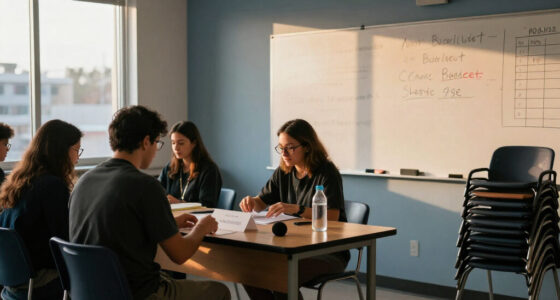
The writer describes attending a nonpartisan civics event at a town library, where residents discussed representatives, ballot design and voting. During a conversation about ballot translation, a university history professor said, “Republicans are out to get us. We must fight back!” The writer says much of the room applauded and the professor’s students cheered. The senior, who believed the issue had a more complicated explanation, says they stayed silent.
The essay explains that ballot-language requirements are shaped in large part by Section 203 of the Voting Rights Act, which requires translated election materials when language-minority populations meet specified Census thresholds, alongside decisions by state and county officials. The author presents this as a legal framework subject to debate, rather than evidence of a partisan scheme.
The student says a semester at the School for Ethics and Global Leadership in Washington brought them into contact with peers from across the country and challenged their views. They argue that listening to opposing arguments does not require abandoning one’s beliefs: it can strengthen a position or help someone change their mind. The writer also says that, as a student representative on a district board of education, they are discussing ways to help teachers encourage engagement with differing viewpoints.
Classrooms as Places for Disagreement
The article focuses on a practical question for schools and families: how students learn to discuss political differences without treating opponents as morally beyond the pale. The writer argues that when disagreement becomes a judgment about a person’s character, conversation shifts from policy to personal conflict. That is the author’s interpretation, not a finding established by the examples in the essay alone.
The proposals are directed at schools as well as students. The writer suggests that civics classes could make structured disagreement a recurring activity, ask students to present positions they do not personally hold, and evaluate how fairly they summarize another view. The essay also proposes training teachers to guide difficult discussions. If adopted, these approaches would make civic argument a classroom skill rather than an occasional debate exercise.
For readers, the essay’s broader point is that civic habits are learned through practice. The author contends that social media feeds and like-minded peer groups may not routinely expose young people to contrasting arguments. The proposed response is deliberate: read writers with different perspectives, remain in challenging classroom conversations and seek out respectful exchanges beyond one’s usual circle.
Products Worth Considering

Graco Magnum Project Painter Plus Paint Sprayer

Graco Magnum X7 Cart Airless Paint Sprayer

Nanit Smart Baby Video Monitor with Wall Mount
As an affiliate, we earn on qualifying purchases.
From Library Meeting to D.C. Program
The essay begins with a local disagreement about language access on ballots. The author says the New Jersey county involved has residents who speak dozens of languages, while ballots are available in English and Spanish. The source does not identify the county or provide details about its population or the applicable election requirements.
The writer contrasts that incident with an earlier experience growing up in South Orange, a town the author describes as reliably liberal. A semester at the Washington program brought the student into sustained contact with high schoolers from elsewhere in the country. The writer says those conversations led to greater certainty on some issues, less certainty on others, and a belief that cross-party discussion requires effort.
The author also recalls a kindergarten teacher who taught students to listen to others and consider their perspectives. The essay says the writer has not experienced similarly explicit instruction in how to disagree well since then, while acknowledging that teachers may avoid political topics because they fear backlash. The author frames this as a gap schools could address, not as a criticism of teachers generally.
“Republicans are out to get us. We must fight back!”
— The history professor at the library event, as quoted by the student author
Evidence Beyond One Student’s Account
The article is a first-person opinion essay, and its library-event account and reflections are the student’s own. The source does not provide independent accounts from the professor, other attendees, school administrators or teachers. It also does not identify the author by name in the supplied material or give the article’s publication date.
The essay refers to public opinion on political division, partisan views of morality, student self-censorship and a 2026 low in campus tolerance for speakers from the left and right. The supplied article text gives no study names, survey dates, sample sizes or links for those claims, so their methods and precise scope cannot be assessed here. It is also unclear whether the writer’s school district will adopt any of the suggested classroom practices or how such programs would be evaluated.
The District’s Next Steps
The writer says discussions are underway with school administrators about helping teachers encourage students to engage with opposing viewpoints. The essay does not name a policy, timetable or decision already made by the district. The next concrete development to watch is whether those conversations lead to teacher training, recurring classroom exercises or changes to civics instruction.
The student also says they emailed the professor after the library event and later met her for coffee. They describe a 30-minute conversation about public discourse, nonpartisan education and moral judgment, and say the two plan to meet again. The essay leaves open whether that exchange will lead to further public discussion; its immediate point is that the participants made contact rather than continuing to argue only before an audience.
Key Questions
What is the student asking young people to do?
The author urges peers to seek out people they disagree with, read writers with different views and stay engaged when difficult political issues arise in class. The essay argues that listening is not the same as conceding.
What does the essay say about translated ballots?
The writer says ballot translation is shaped in large part by Section 203 of the Voting Rights Act, which sets requirements based on Census thresholds for language-minority populations, as well as state and county decisions. The source does not give details about the county’s specific legal obligations.
What changes does the author propose for schools?
The student suggests making structured disagreement a regular part of civics education, having students accurately present positions they do not hold, and training teachers to facilitate challenging conversations. These are proposals in the opinion article, not changes the source says have been adopted.
Has the school district approved a new program?
The source does not report an approved program or a timeline. The student says they are discussing ways to support teachers with school administrators, but the outcome remains unknown.
Source: the74million.org