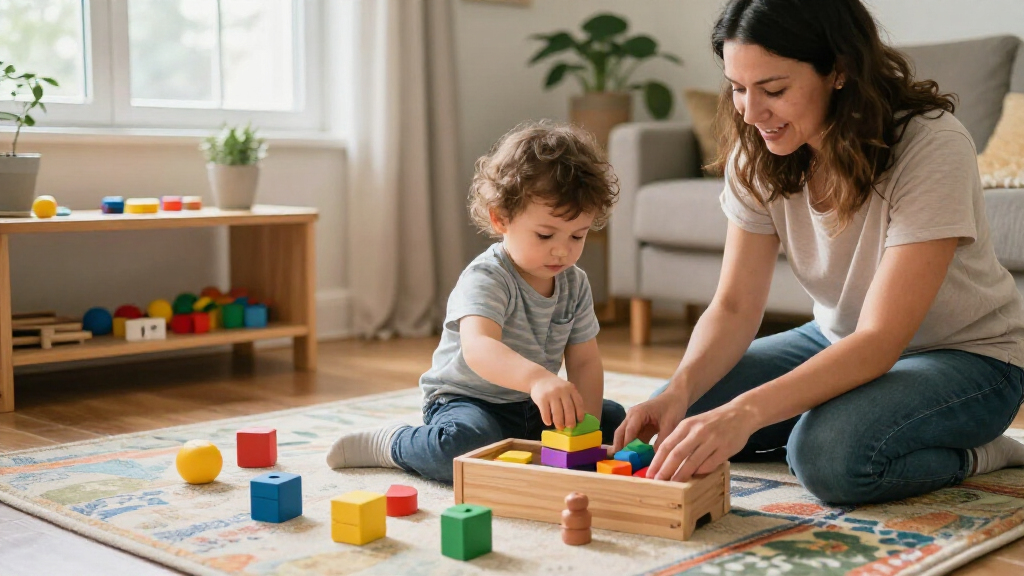

Use this guide to choose educational toys for a preschooler, check that they are safe and suitable, and set them up for play at home or in a classroom. It is for caregivers and educators who want practical choices without needing specialist knowledge. Plan for 30-60 minutes to review what you have, compare options, and prepare a small play area; shopping time varies.

Turn the school run and nap time into listening time
- Thousands of audiobooks, podcasts and originals
- Listen on your phone, tablet or Echo — also offline
- Cancel anytime

Beestech Alphabet ABC Learning Educational Toys for Toddlers
- ✔ Brand: Beestech
- ✔ Age range: 3–6 years
- ✔ Materials: Wood and paper
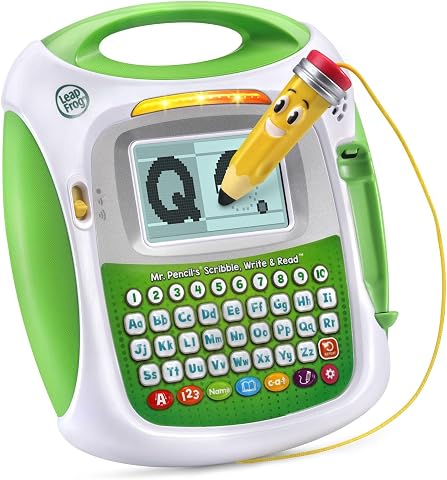
LeapFrog Mr. Pencil’s Scribble, Write and Read
- ✔ Brand: LeapFrog
- ✔ Manufacturer: VTech
- ✔ Model: 80-617000

NASHRIO Magnetic Wooden Fishing Game with Alphabet and Numbers
- ✔ Brand: NASHRIO
- ✔ Age range: 3–5 years
- ✔ Material: Wood
Difficulty: Beginner | Time: 30-60 minutes to choose and set up; allow extra time for shopping
What You’ll Need
Tools & Materials:
- Paper or a phone for a short list
- A measuring tape if checking toy or storage size
- Access to product labels or manufacturer safety information
Knowledge:
- Know the child’s approximate age and any relevant developmental, sensory, or mobility needs
- Be ready to supervise play and check toys regularly
Check the age grading and safety warnings on each product. Age labels reflect safety and intended use as well as challenge level. Follow local product safety guidance, and ask the child’s caregiver about allergies, mouthing behavior, or any specific support needs.
Beestech Alphabet ABC Learning Educational Toys for Toddlers
For a preschooler beginning to connect printed letters with words, Beestech’s card-and-letter format offers a practical starting point. Children match wooden letters to pictures and words on the flash cards, turning abstract alphabet practice into a task they can handle piece by piece. The set includes 52 wooden letters and 28 cards, so there is enough material for repeated matching without requiring an electronic prompt or a complicated setup.Compared with LeapFrog Mr. Pencil, Beestech is less instructional: it does not guide a child through letter strokes or phonics with animations and sound. Its advantage is that children can move the pieces around and work at their own pace. Against NASHRIO, it puts more emphasis on letter and word association than on coordination through a game. The polished wooden pieces and included storage bag suit families who prefer a tactile activity, though the set remains focused on basic literacy and can feel repetitive once a child has mastered the cards. Wooden pieces also call for more careful cleaning than plastic toys.
Pros:
- Pairs printed cards with movable wooden letters for tactile matching
- Includes 28 flash cards and 52 letters for repeated practice
- Simple format can support independent play
- Storage bag helps keep the small pieces together
Cons:
- Activities focus mainly on alphabet and basic word matching
- Wooden pieces need careful cleaning and supervision
- May offer limited challenge after a child masters the cards
Best for: Preschoolers who enjoy matching activities and are starting to recognize letters or simple words, especially families looking for a hands-on literacy set.
Not ideal for: Children who need guided handwriting instruction, varied pretend play, or advanced reading challenges as their skills grow.
Bottom line: We recommend Beestech as the most balanced pick for preschoolers beginning letter and word recognition through hands-on play.
“We recommend Beestech as the most balanced pick for preschoolers beginning letter and word recognition through hands-on play.”
LeapFrog Mr. Pencil’s Scribble, Write and Read
When a preschooler wants to know how to form letters, Mr. Pencil makes practice more structured than the matching tasks in Beestech’s set. A stylus guides children through uppercase and lowercase letters, numbers, and their own names. The toy then uses animated transformations, such as letters becoming animals, to connect a symbol with a memorable image. Its sound-it-out bar adds an early spelling and phonics element that neither wooden option provides.This is the most instruction-focused toy in the lineup, making it a better choice than NASHRIO for a child who is ready to sit with a guided activity. That structure is also its main limitation: the child follows a defined set of exercises rather than inventing their own ways to play. The plastic body and powered features trade the tactile simplicity of Beestech’s wooden letters for animation and sound, and the included batteries are only for demonstration, so ongoing use requires three AA batteries. We would choose it for specific writing readiness goals, not as a substitute for open-ended play.
Pros:
- Guides children through tracing uppercase and lowercase letters
- Includes number and personalized name practice
- Animations connect letters and numbers with familiar images
- Sound-it-out bar supports early spelling and phonics
Cons:
- Requires three AA batteries beyond the demo batteries
- Activities are more prescribed than the wooden matching and fishing games
- Plastic construction may be less suited to rough handling
Best for: Preschoolers who are interested in letters and ready for step-by-step tracing, number practice, and early phonics activities.
Not ideal for: Families seeking a battery-free toy, open-ended creative play, or a wooden activity that can be manipulated freely.
Bottom line: We’d pick Mr. Pencil when guided letter formation and phonics matter more than open-ended, hands-on play.
“We’d pick Mr. Pencil when guided letter formation and phonics matter more than open-ended, hands-on play.”
NASHRIO Magnetic Wooden Fishing Game with Alphabet and Numbers
NASHRIO gives preschool practice a game-like goal: use the magnetic pole to catch fish marked with letters and numbers. That turns recognition into an active tabletop challenge, with the child coordinating the pole and target rather than simply matching a card or following a screen. Its wooden construction and compact board make the activity easy to bring out for a short indoor play session.Compared with Beestech, NASHRIO adds number recognition and a stronger fine motor component, but offers less direct word practice. Compared with LeapFrog, it is quieter and more tactile, though it cannot explain letter sounds or demonstrate how to write them. The game’s simple rules can help preschoolers focus on one clear task, yet the product is described as single-player, so it is less suited to siblings or group play. Its tabletop format also limits where it can be used, and children who want imaginative or varied activities may outgrow the fishing mechanic sooner than the broader card set.
Pros:
- Magnetic fishing adds a clear play goal to recognition practice
- Includes both alphabet and numbers
- Exercises fine motor skills and hand-eye coordination
- Wooden board has a slim tabletop profile
Cons:
- Designed for single-player use
- Limited to indoor tabletop play
- Fishing mechanic offers less variety than card matching or guided lessons
Best for: Children ages 3–5 who learn well through short, hands-on games and need practice with letter and number recognition alongside coordination.
Not ideal for: Families looking for a multiplayer activity, writing instruction, or a toy designed for play outside the home.
Bottom line: NASHRIO is the strongest fit when a preschooler will engage more readily with a simple fishing game than with cards or guided tracing.
“NASHRIO is the strongest fit when a preschooler will engage more readily with a simple fishing game than with cards or guided tracing.”
As an Amazon Associate we earn from qualifying purchases.
Before You Start
Set a budget and inspect toys already available before buying anything. A few versatile toys can support many kinds of play. Avoid toys with small parts for children who still mouth objects, and keep magnets, button batteries, water beads, and other hazardous items inaccessible. Supervise use when a toy includes pieces that could be swallowed, cords, or tools.
Step-by-Step Instructions
Step 1: Observe the child’s interests
Watch the child play or ask what they enjoy. Note two or three interests, such as building, pretend cooking, animals, music, drawing, puzzles, or outdoor movement. Also note what holds their attention and what feels frustrating. Use these observations to guide your choices instead of buying a toy only because its packaging lists many skills.
Tip:Interests can change. Choose toys that allow more than one kind of play, such as blocks used for building, sorting, or pretend play.
Check: You have a short list of interests and at least one example of a play activity the child enjoys.
Step 2: Choose a few learning goals
Select one or two skills you would like play to support. Preschoolers can practice language by telling stories, early math by sorting or counting, problem-solving by building, fine-motor control by drawing or using large manipulatives, and social skills by taking turns. Match each goal to an activity the child can enjoy; the toy does not need to teach a formal lesson.
Tip:Keep expectations flexible. Children learn through repeating, pretending, testing ideas, and making changes at their own pace.
Check: Each goal connects to a specific kind of play, such as counting toy food while pretending to run a shop.
Step 3: Check age fit and accessibility
Read the package age range, instructions, and warnings. Consider whether the child can handle the pieces, reach the controls, understand how to begin, and use the toy with reasonable independence. Check whether sound, lights, textures, or moving parts suit the child. For a toy that seems too difficult, look for a simpler version or plan to play together.
Tip:Ask a caregiver or specialist about adaptations when a child has sensory, motor, vision, hearing, or communication needs. A simple adjustment, such as a larger grip or quieter setting, may make play more usable.
Check: The toy’s safety rating fits the child, and the child has a realistic way to access the main play activity.
Step 4: Inspect safety and durability
Before purchase or use, check for sharp edges, loose seams, splinters, peeling paint, damaged cords, and parts that come loose under ordinary handling. Look for sturdy construction and washable surfaces when appropriate. Follow the manufacturer’s cleaning and battery instructions. Do not use a damaged toy, and keep packaging, plastic film, and twist ties away from children.
Tip:For secondhand toys, check that all parts are present, product recalls do not apply, and the toy meets current safety advice where you live.
Check: The toy is intact, its warnings and care directions are available, and no unsafe loose parts or damage are visible.
Step 5: Compare play value and cost
Compare candidate toys by asking what the child can do with each one, whether it supports repeat play, and whether it can be used in different ways. Consider the total cost, including batteries, replacement pieces, or accessories. Prefer a manageable number of useful options over a large set that is hard to store or supervise.
Tip:Open-ended materials such as blocks, art supplies, play dough, and dress-up items often support varied play. Choose non-toxic products intended for children and supervise materials that should not be eaten.
Check: You can name at least two ways the child could use each toy, and the choice fits your budget and storage space.
Step 6: Prepare a reachable play area
Place selected toys in a clean, accessible area with enough room to sit, build, or move safely. Use stable, low storage and keep heavy items near the floor. Store small pieces in closed containers out of reach when the child is not using them. Separate items that need close adult supervision, such as scissors or messy materials.
Tip:Offer a few toys at a time. Put the rest away and rotate them later to make the play area easier to use.
Check: The child can reach appropriate toys, and the play space has clear floor area with supervised materials stored separately.
Step 7: Introduce the toy through play
Show one simple way to begin, then let the child explore. Describe what the child is doing, ask open questions such as “What could we build next?”, and follow their ideas. Join when invited or when support is needed. Avoid correcting every choice or turning play into a quiz; model a skill briefly, then allow the child to try.
Tip:If the child loses interest, pause and offer another activity. Interest and attention can vary from day to day.
Check: The child can start or continue an activity, with adult help matched to their needs.
Step 8: Review and rotate the collection
After several play sessions, notice which toys the child returns to, which are too easy or frustrating, and whether anything is damaged or missing. Keep favorites available, repair or remove unsafe items, and rotate a few less-used toys after a break. Adjust the collection as interests and abilities change.
Tip:Ask the child what they like about a toy. Their answer can reveal whether they value the story, movement, colors, challenge, or playing with someone.
Check: The current collection is safe, usable, and based on observed play rather than assumptions about what a preschooler should enjoy.
Common Mistakes to Avoid
- Buying a toy because it promises many educational benefits, without checking whether the child likes the activity. — Connect each purchase to an observed interest and a play activity the child can start.
- Choosing pieces that are too small or ignoring warnings and age guidance. — Read the label, account for mouthing behavior, and keep hazardous pieces away from young children.
- Putting every toy out at once. — Offer a small selection and store the rest safely so the child can find and use each item.
- Expecting a toy to teach a skill without interaction or practice. — Join play when useful, talk about what the child is doing, and let them repeat activities at their own pace.
Troubleshooting
Problem: The child does not use a new toy.
Solution: Demonstrate one short activity, connect it to an existing interest, and leave it available for another day. If the child continues to avoid it, return, exchange, or store it rather than insisting.
Problem: The toy is too difficult or causes frustration.
Solution: Simplify the activity, remove some pieces, or play together to model the first move. If it remains a poor fit, choose an easier version and revisit the harder toy later.
Problem: Pieces keep going missing or spreading across the room.
Solution: Use a labeled container sized for the pieces, set out only part of the set, and make cleanup part of the routine. Check that storage is stable and any small parts stay inaccessible when unsupervised.
Problem: The toy’s noise, texture, or movement bothers the child.
Solution: Turn off sound or motion settings if possible, offer a quieter alternative, and ask the child or caregiver what adjustment helps. Stop use if the toy causes distress.
What Success Looks Like
The finished collection includes a manageable number of intact, age-appropriate toys that reflect the child’s interests and offer varied play. The child can access suitable items in a safe area, and an adult knows which activities need supervision. Success means the toys invite exploration and repeat use; it does not require a child to meet a particular learning milestone.
Next Steps
Check toys periodically for damage, missing pieces, recalls, and changing safety needs. Clean them according to the manufacturer’s directions, store small parts securely, and rotate the selection when interest fades. If you are choosing toys for a child with specific developmental or sensory needs, ask their caregiver or relevant professional which adaptations may help.
Frequently Asked Questions
How many educational toys does a preschooler need?
There is no required number. Start with a small mix that supports different play, such as building, pretend play, art, puzzles, movement, and books. The right amount depends on space, the child’s interests, and how easily toys can be stored and supervised.
Do toys need to teach letters and numbers?
No. Many preschool skills develop through everyday play. Building, pretending, drawing, singing, and taking turns can support problem-solving, language, coordination, and early math without a formal lesson.
Are electronic toys appropriate for preschoolers?
They can be, if they are age-rated, safe, accessible, and suited to the child. Check volume controls, battery compartments, and whether the child can make choices and interact rather than only watch. Balance electronic play with active, creative, and social activities.
What should I do if a toy is labeled for an older child?
Follow the age guidance and warnings, especially when the toy has small parts, powerful magnets, or other hazards. If the concern is only challenge level, ask the manufacturer or caregiver about suitability, but do not disregard safety labeling.
How often should I rotate toys?
Rotate when the child stops choosing some toys, when the area feels crowded, or when you want to bring back a familiar activity. There is no fixed schedule; keep well-used favorites available if they remain safe.