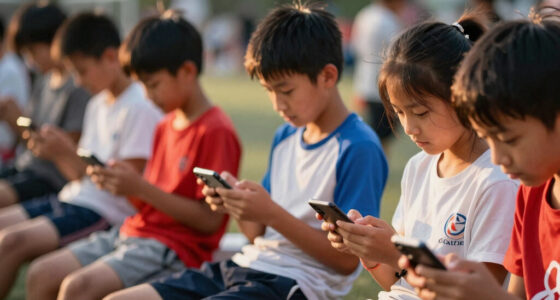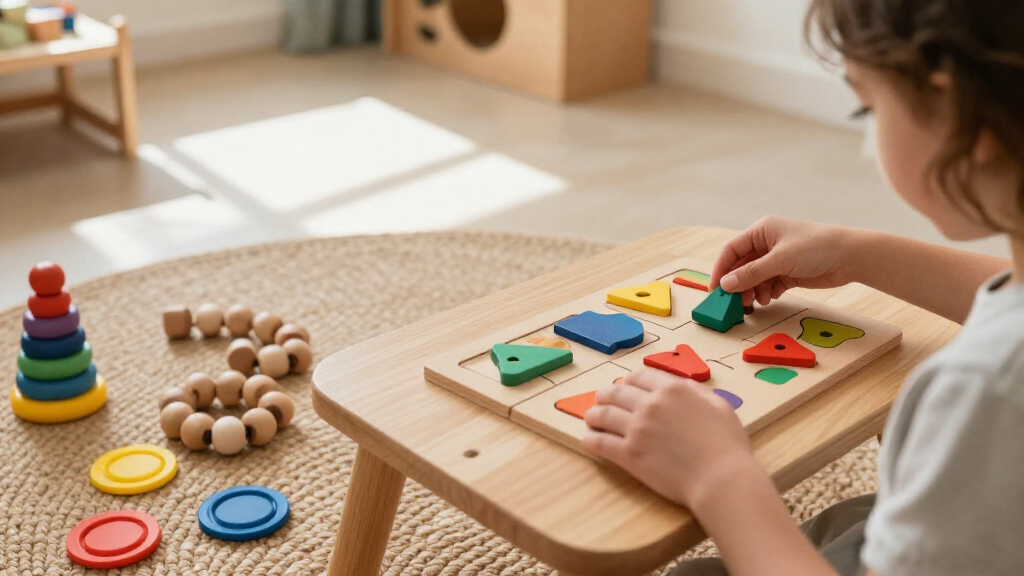

When choosing educational toys for preschoolers, the real decision is whether learning should happen mainly through physical exploration or through guided activities on a screen. Hands-on toys such as blocks, puzzles, pretend-play sets, and art materials invite children to handle objects, test ideas, and make their own games. Screen-based options such as learning tablets and interactive apps can offer clear instructions, immediate feedback, and activities that adjust to a child’s progress.

Turn the school run and nap time into listening time
- Thousands of audiobooks, podcasts and originals
- Listen on your phone, tablet or Echo — also offline
- Cancel anytime
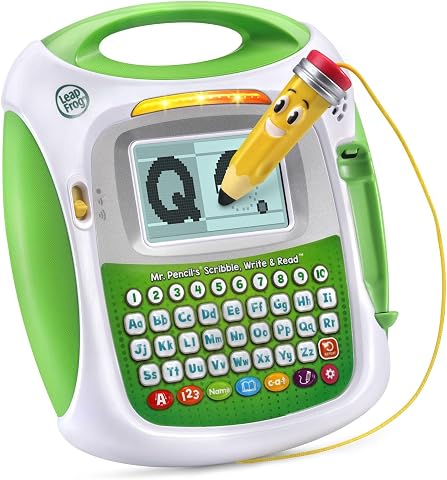
LeapFrog Mr. Pencil’s Scribble, Write and Read
- ✔ Brand: LeapFrog
- ✔ Manufacturer: VTech
- ✔ Age range: 3+ years

Beestech Alphabet ABC Learning Educational Toys for Toddlers
- ✔ Brand: Beestech
- ✔ Age range: 3–6 years
- ✔ Material: Wood and paper

NASHRIO Magnetic Wooden Fishing Game with Alphabet and Numbers
- ✔ Brand: NASHRIO
- ✔ Age range: 3–5 years
- ✔ Material: Wood
Hands-on toys are the stronger default for families seeking varied, active play and fewer screen sessions. Screen-based toys can suit families who want short, structured practice in early literacy or numeracy, provided an adult checks the content and sets limits. The biggest tradeoff is flexibility and physical engagement versus convenience and guided feedback.
At a Glance
| Criteria | Hands-on educational toys | Screen-based educational toys | Winner |
|---|---|---|---|
| Learning through play | Open-ended practice with objects, stories, and everyday play | Guided activities focused on specific skills such as letters, numbers, or matching | A |
| Physical and social engagement | Encourages movement, manipulation, and shared play | Mostly seated and individual, though adults can join in | A |
| Structure and feedback | Usually child-led; feedback comes from trying, noticing, and adult conversation | Immediate prompts, corrections, rewards, and progress cues | B |
| Adaptability | Can be reused in many ways, though it rarely adjusts to skill level | Some apps adjust difficulty or track progress | B |
| Adult involvement | Often benefits from an adult joining, explaining, or extending play | Adults need to choose content, manage access, and supervise use | Depends |
| Screen exposure | No screen required | Adds to a child’s screen time | A |
| Cost and longevity | Quality sets can cost more upfront but often support years of varied play | Devices and subscriptions can raise costs; app availability and interest may change | Depends |
LeapFrog Mr. Pencil’s Scribble, Write and Read
For preschoolers beginning to form letters and numbers, Mr. Pencil offers the clearest learning sequence in this group. A stylus guides children through uppercase and lowercase letters, numbers, and writing their own names. Animated transformations and a sound-it-out bar add visual and phonics cues, so the activity reaches beyond simply identifying a letter. Compared with Beestech’s card-and-letter matching, this pick is more instructional and specifically geared to writing practice; compared with NASHRIO, it asks for more focused tracing than quick hand-eye coordination.That structure makes it a strong fit when a child is interested in copying shapes or wants to practice a familiar name. Personalizing practice with first, middle, and last names gives families a concrete way to connect the toy to the child. Still, it is a screen-like electronic activity rather than open-ended play, and its plastic build may be a concern for rough handling. The included batteries are for demonstration, so ongoing use calls for three AA batteries. We rank it first for its breadth of guided early literacy activities, while families seeking quiet, electronics-free play may prefer Beestech.
Pros:
- Guides children through uppercase and lowercase letter and number tracing.
- Allows practice with a child’s first, middle, and last name.
- Uses animations to connect letters with animals and numbers with countable objects.
- Includes a sound-it-out bar for early phonics and spelling prompts.
Cons:
- Requires three AA batteries; included batteries are for demonstration only.
- Plastic construction may not suit rough handling.
- Activities are focused and structured rather than open-ended.
Best for: Preschoolers ready for guided letter and number tracing, especially children motivated by practicing their names.
Not ideal for: Families who want an electronics-free, open-ended toy or children likely to handle a plastic device roughly.
Bottom line: We rank Mr. Pencil first for preschoolers who benefit from guided writing and early phonics practice in one focused activity.
“We rank Mr. Pencil first for preschoolers who benefit from guided writing and early phonics practice in one focused activity.”
Beestech Alphabet ABC Learning Educational Toys for Toddlers
Beestech makes alphabet practice tangible: children match wooden letters to flash cards showing words. Its 52 letters and 28 cards give preschoolers pieces to handle, compare, and place, without requiring a stylus or batteries. That simplicity is its distinction beside LeapFrog, whose guided prompts are better for practicing letter formation but offer a more prescribed experience. Beestech is also less game-like than NASHRIO’s magnetic fishing, making it the calmer choice for a child who enjoys sorting and matching at a table.The polished wooden pieces and rounded-corner description support a straightforward, tactile activity, and the storage bag helps gather the components afterward. It is best viewed as a focused early literacy set, not a toy with a long ladder of increasingly difficult tasks. The supplied description notes that older children may lose interest because matching stays centered on the alphabet and basic words. Wooden pieces also need more careful cleaning than plastic alternatives. We place it second because the learning task is clear and accessible, but it covers a narrower range of practice than Mr. Pencil.
Pros:
- Combines 52 wooden letters with 28 word flash cards.
- Polished wood and rounded corners are described as suitable for young learners.
- Matching supports language, problem-solving, coordination, and motor skills.
- Includes a storage bag and gift box.
Cons:
- Practice is limited to alphabet and basic word matching.
- May not sustain interest for older children.
- Wooden pieces need more careful cleaning than plastic alternatives.
Best for: Preschoolers who like handling, sorting, and matching physical letters to simple word cards.
Not ideal for: Families seeking writing instruction, varied game modes, or a toy likely to hold older children’s interest over time.
Bottom line: We recommend Beestech for tactile, low-tech matching practice when a child is not yet looking for structured handwriting lessons.
“We recommend Beestech for tactile, low-tech matching practice when a child is not yet looking for structured handwriting lessons.”
NASHRIO Magnetic Wooden Fishing Game with Alphabet and Numbers
NASHRIO turns recognition into a physical challenge: preschoolers use a magnetic pole to catch colorful fish marked with letters and numbers. That makes it the most game-like option here, and the fishing motion gives hand-eye coordination and fine-motor practice a central role. Compared with Beestech’s deliberate card matching, NASHRIO brings more movement to the tabletop; compared with LeapFrog, it offers less direct instruction in writing or phonics. Its value for learning depends on how an adult or child uses the pieces—for example, naming the character caught or finding a requested letter.The wooden construction, smooth-edge description, and water-based dyes are practical points for families who prefer a wood-based toy. At 11.8 by 8.9 inches, it is a compact indoor activity, though its thin 0.6-inch profile and tabletop format do not make it an all-purpose play set. The key limitation is single-player use, which makes it less suited to siblings who want a shared game. We rank it third because its active format is appealing, but the listed learning scope is narrower than Mr. Pencil’s and less explicit than Beestech’s card-based word matching.
Pros:
- Magnetic fishing combines letter and number recognition with hand-eye coordination.
- Wooden pieces are described as polished with smooth edges.
- Uses eco-friendly, non-toxic water-based dyes, according to the product description.
- Compact dimensions suit an indoor tabletop activity.
Cons:
- Designed for single-player use.
- Limited to indoor tabletop play.
- The described activity focuses on recognition rather than guided writing or spelling.
Best for: Preschoolers who enjoy tabletop games and benefit from practicing coordination while naming letters and numbers.
Not ideal for: Families looking for a multiplayer activity, writing instruction, or a toy intended for outdoor play.
Bottom line: NASHRIO is the playful movement pick for one preschooler, especially when families want recognition practice paired with fine-motor activity.
“NASHRIO is the playful movement pick for one preschooler, especially when families want recognition practice paired with fine-motor activity.”
As an Amazon Associate we earn from qualifying purchases.
Key Differences
The clearest difference is how each type of toy invites a child to learn. A set of blocks can support counting, balance, planning, storytelling, and collaboration in the same play session. An educational app is more likely to target a narrower skill and guide the child through a sequence. That focus can help with practice, but it does not replace the variety of experiences a child gets from handling materials and inventing play.
Screen toys have an advantage when families want quick, structured activities and visible feedback. A well-designed app may respond immediately when a child identifies a letter or solves a problem. Hands-on toys rely more on the child’s experimentation and on conversation with a caregiver or peer. For preschoolers, that open-ended quality is a major strength: there is rarely just one right way to use the toy.
Cost and supervision depend on the specific products. A durable toy can be passed along or used in new ways as a child grows, while a tablet may already be in the household but still require paid apps, subscriptions, or adult oversight. Neither category automatically guarantees learning. The best choice is the one that fits the child’s interests and the family’s routines, with adults making time for play and conversation.
Detailed Comparison
Learning through play (Hands-on educational toys wins — moderate)
Hands-on toys win by a moderate margin for breadth. A puzzle can develop persistence and spatial reasoning; pretend food can prompt counting, sorting, and language. An app can provide focused practice in a skill, but the activity is usually bounded by its design. For broad, everyday learning, physical toys offer more ways for a preschooler to explore.
Hands-on toys win by a major margin. Building, drawing, and pretend play involve touch and movement, and they can naturally bring siblings, caregivers, or friends into the activity. Screen-based play is often seated and solitary, although an adult can turn it into a shared activity by talking through prompts or taking turns.
Structure and feedback (Screen-based educational toys wins — moderate)
Screen-based toys win by a moderate margin for guided practice. They can give a prompt, mark an answer, and offer another activity without waiting for an adult. Hands-on play is less structured, so children may need a caregiver to introduce a challenge or ask questions. This makes screens convenient for a short practice session, but feedback does not by itself make an app educationally strong.
Adaptability (Screen-based educational toys wins — minor)
Screen-based toys win by a minor margin when an app genuinely adjusts difficulty to a child’s responses. Most physical toys do not track progress, but they can grow with a child in a different way: blocks, art supplies, and role-play materials support increasingly complex play. Families should check whether an app’s adaptive features are meaningful rather than assuming every digital toy personalizes learning.
Adult involvement (moderate difference)
This is a tie because the kind of involvement differs. Hands-on toys often reward adults who join, model language, or extend the play. Screen toys need adults to select appropriate content, set boundaries, and sometimes play alongside the child. A screen may keep the activity moving on its own, but a caregiver still has a role in choosing what is used and when.
Screen exposure (Hands-on educational toys wins — major)
Hands-on toys win by a major margin for families trying to keep screen use low. They add no digital viewing time. Screen-based toys necessarily involve a screen, so their fit depends on the family’s existing routines and the duration and context of use. A brief, supervised activity is different from unrestricted access, but it still counts as screen time.
Cost and longevity (moderate difference)
Neither category wins across the board. Hands-on toys can carry a higher initial cost for quality materials, but durable, open-ended sets may remain useful across ages and children. A screen device may already be available, yet paid content, subscriptions, replacement, or changing software can add expense. Compare the full cost and likely reuse, rather than just the shelf price.
Hands-on educational toys: Pros and Cons
Pros:
- Supports movement, tactile exploration, and imaginative play
- Can combine several learning areas in one activity
- Often easy to share with adults and other children
- No screen exposure and many durable sets can be reused
Cons:
- May need adult participation to introduce useful challenges
- Feedback is less immediate and explicit
- Some quality materials have a high upfront cost
Screen-based educational toys: Pros and Cons
Pros:
- Offers structured activities and immediate feedback
- Can provide focused practice in early literacy or numeracy
- Some apps adjust activities to a child’s responses
- May be convenient for a short, independent activity
Cons:
- Adds screen time and is often sedentary
- Quality varies, so adults must review content and features
- Devices, apps, or subscriptions may create ongoing costs
- Activities can be narrow and less open-ended
Who Should Choose What
Choose Hands-on educational toys if:
- You want a screen-free default for everyday play.
- Your child enjoys building, drawing, pretend play, or hands-on puzzles.
- You value toys that can be shared, adapted, and reused as skills grow.
Choose Screen-based educational toys if:
- You want short, guided practice in a specific early learning skill.
- Your family can supervise the content and set clear screen limits.
- Your child responds well to prompts and immediate feedback.
Skip both if: Skip a particular toy if it does not suit the child’s age, interests, or ability to use it safely; choose simpler shared play with everyday objects instead.
Value for Money
Hands-on toys are generally the better long-term value when a set is durable, versatile, and likely to be used repeatedly. Paying more can make sense for safe, sturdy materials that invite different kinds of play over time, but a high price alone does not make a toy educational. For screen-based options, paying more is worthwhile only if the content is age-appropriate, useful, and free of unwanted costs or distractions. If a suitable device is already available, a carefully chosen low-cost app may be practical; buying a new device mainly for preschool learning is harder to justify for most families.
Final Verdict
Choose hands-on educational toys as the everyday foundation for most preschoolers. They provide broader play, more physical engagement, and no added screen time, while supporting learning through experimentation and conversation. Choose screen-based toys as a limited supplement when focused practice and immediate feedback suit your child and your household can guide use. The deciding factor is whether you want open-ended exploration or structured digital practice; for general learning and play, hands-on toys are the stronger choice.
Frequently Asked Questions
Are educational screen toys better for teaching letters and numbers?
They can offer clear, repeated practice and instant feedback, which may help a child engage with basic activities. Hands-on games, books, and everyday routines can teach the same ideas through conversation and play. An app is a useful option when it holds the child’s interest and an adult has checked the content.
Do preschoolers need educational toys to learn?
No. Children learn through everyday play, conversation, stories, and helping with simple tasks. Toys can provide materials and prompts, but a toy marketed as educational does not guarantee a learning benefit.
How can I tell whether a learning app is suitable?
Check the age guidance, privacy and advertising practices, and whether the child can use it without being pushed toward purchases or unrelated content. Try the activity yourself before handing it over, and see whether it encourages thinking or simply rewards tapping.
Should I buy an expensive educational toy?
Pay more when the materials are durable, the toy supports varied play, and your child is likely to use it often. For a screen product, consider ongoing app costs and whether a device is already available. Price and educational value are not the same thing.