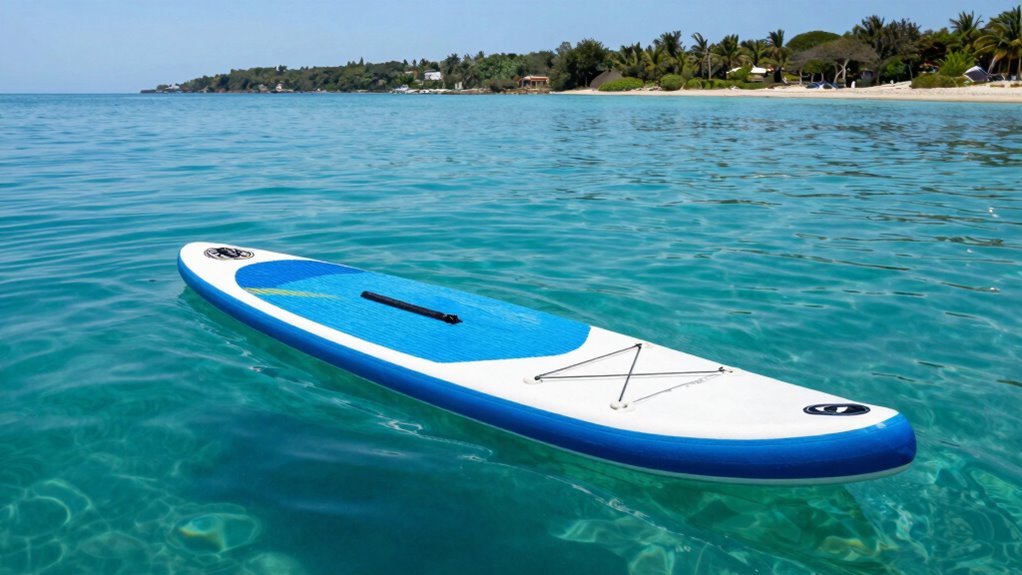

When choosing a touring paddle board, understanding length, width, and tracking helps you improve your paddling experience. Longer boards provide better speed and straighter tracking, making them ideal for covering distances efficiently. Wider boards offer greater stability and comfort, especially in choppy water. Tracking refers to how well the board maintains a straight course; good tracking means less effort to stay on track. Keep exploring how these features impact your paddling for the best setup.
Key Takeaways
- Longer touring paddle boards (typically 12-14 feet) enhance speed, glide, and tracking for efficient long-distance paddling.
- Width influences stability; wider boards (30+ inches) offer better balance, especially for beginners or rough waters.
- Proper fin placement and design improve tracking, helping the board maintain a straight course with less effort.
- Material choices like epoxy or carbon fiber reduce weight and increase rigidity, boosting speed and maneuverability.
- Selecting the right length and width depends on skill level, water conditions, and desired performance, ensuring optimal touring experience.
What Features Matter Most When Choosing a Touring Paddle Board?
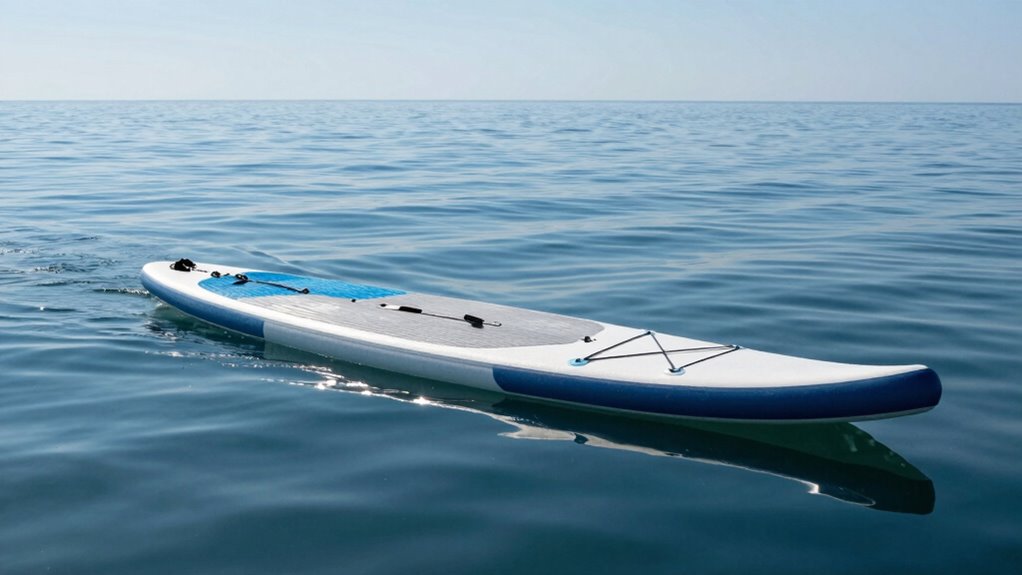
When choosing a touring paddle board, understanding which features truly matter can make all the difference in your experience on the water. Deck padding is vital for comfort during long paddles; look for thick, cushioned areas that prevent fatigue and provide a secure footing. Proper fin placement also plays a fundamental role in stability and tracking. A well-placed fin system ensures your board moves smoothly straight ahead, reducing the need for constant correction. Some boards have removable fins, allowing customization based on water conditions. Additionally, consider the fin shape and size, as they influence maneuverability and speed. Prioritizing these features helps you select a board that’s comfortable, stable, and suited to your touring needs, making every trip more enjoyable and efficient. Understanding board features can also help you optimize your setup for different water conditions, and being aware of fin placement ensures better control and tracking in diverse environments. Proper fin design can further enhance your paddling experience by matching your skill level and typical water conditions. Moreover, selecting the right fin system can improve your board’s performance and adaptability across various water terrains. Recognizing and understanding performance factors like these can ultimately lead to a more confident and enjoyable paddling experience.
How Length Affects Speed and Tracking in Touring Paddle Boards
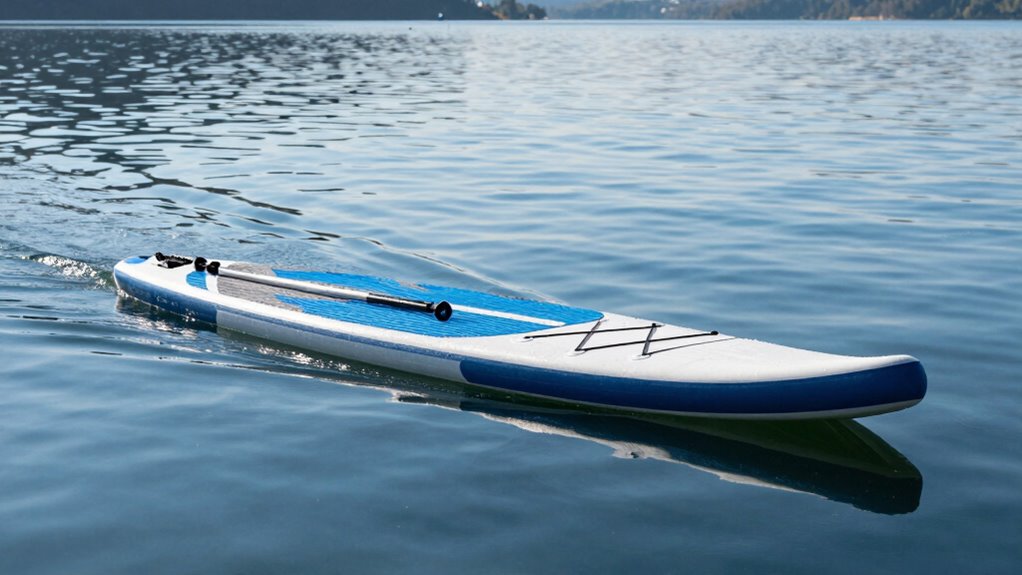
The length of your touring paddle board plays a key role in how fast you can go. Longer boards tend to pick up and maintain speed more easily, making long-distance paddling smoother. Additionally, the length impacts tracking, helping your board stay straight without much effort. Properly calibrated color accuracy can also enhance your visual experience on the water, especially in varying light conditions. Moreover, the design and shape of the board influence its overall performance and maneuverability. Understanding how board dimensions affect handling can help you choose the right setup for your adventures.
Longer Boards Enhance Speed
Longer touring paddle boards typically offer greater speed and improved tracking because their length allows for a more efficient glide through the water. The increased length reduces drag and creates a longer waterline, helping you move faster with less effort. When selecting a longer board, consider the materials used, as lightweight options like epoxy or carbon fiber enhance performance without adding weight. Your choice of paddle accessories also impacts speed; a well-designed paddle with an appropriate blade size maximizes propulsion. Keep in mind that a longer board demands better technique and stability, but the payoff is smoother, faster paddling over long distances. Ultimately, the combination of the right materials and accessories makes longer boards more effective for achieving higher speed on your touring adventures.
Length Influences Tracking Ability
As you choose a touring paddle board, you’ll notice that length plays a crucial role in tracking ability. Longer boards tend to track straighter, making your journey smoother and more efficient. This is because increased length improves the board’s glide and stability, especially over long distances. Your choice of board material can also influence tracking; rigid materials like epoxy enhance stiffness, aiding straight-line movement. Additionally, paddle design impacts tracking—narrower paddles reduce drag and help maintain a straight course. When selecting your board, consider how these factors interact: longer length, stiff materials, and streamlined paddles all contribute to better tracking, especially in open water. Properly balancing these elements ensures your touring experience is both swift and stable. Incorporating reliable safety features can further enhance your confidence and control on the water. Understanding board design considerations can help you optimize performance and achieve better tracking in various conditions. Being aware of how weather and water conditions influence tracking can also help you adapt your technique for optimal stability. Additionally, selecting a suitable paddle length can significantly improve your overall control and efficiency.
Why Width Is Key for Stability and Comfort on the Water
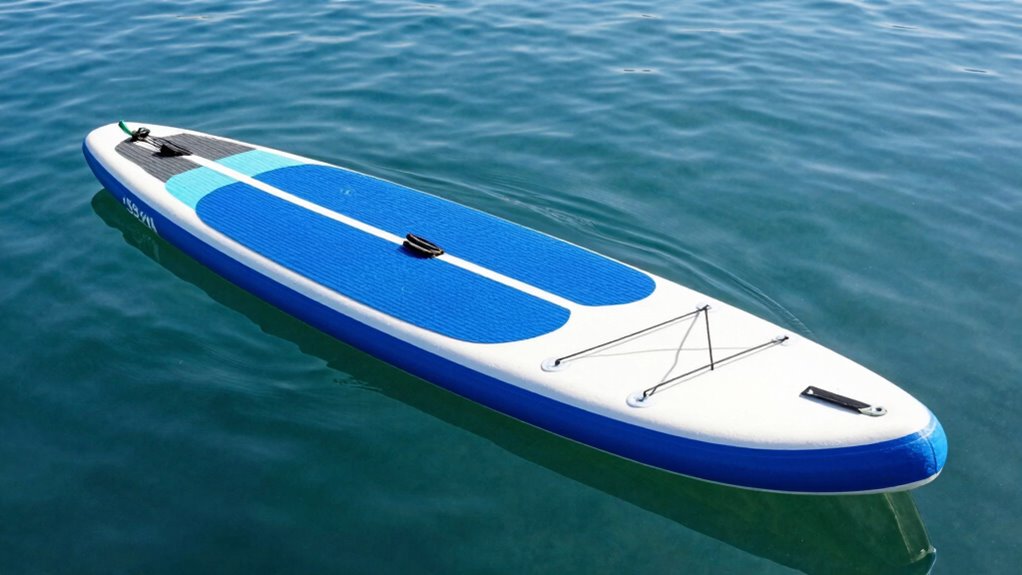
A wider paddle board gives you better balance and easier control, making your ride smoother and safer. It also provides greater comfort, so you can paddle longer without feeling fatigued. When your stability improves, your confidence on the water naturally increases. Additionally, understanding the horsepower of your board can help you gauge its power and performance capabilities. For optimal performance, consider how ventilation considerations can prevent overheating and improve overall comfort during extended paddling sessions. Being aware of the board’s design features, such as weight distribution and construction, can further enhance your paddling experience. Incorporating innovative portable solutions into your gear can also elevate your overall paddling setup for added convenience and safety. Moreover, attention to auditory processing techniques can help paddlers with sensory sensitivities better enjoy their time on the water.
Enhanced Balance and Control
Because a wider paddle board provides a larger footprint, it offers greater stability and makes balancing easier, especially for beginners. This increased stability enhances your control, allowing you to focus on paddling smoothly and maintaining momentum. With better balance, you can more confidently perform docking techniques and handle unpredictable water conditions. Additionally, a stable platform makes it easier to use paddle board accessories, such as safety leashes and storage compartments, without wobbling. To maximize control, consider the following:
- Optimize your stance for improved balance
- Use paddle techniques that enhance stability
- Select accessories that don’t compromise your center of gravity
A wider board creates a solid foundation, helping you stay centered and in control, whether you’re steering through choppy waters or practicing advanced maneuvers. Proper stability is essential for confidence and safety on the water, and understanding how board width affects performance can help you choose the right paddle board for your needs. Additionally, selecting the appropriate board length can further influence your overall control and maneuverability.
Being aware of performance factors such as width and length ensures you select a paddle board that aligns with your skill level and water conditions, ultimately enhancing your experience.
Greater Comfort and Confidence
Choosing a wider paddle board naturally boosts your comfort and confidence on the water. The increased width provides greater stability, making it easier to balance and reducing the risk of wobbling. This added stability is especially beneficial for beginners or those venturing into rougher conditions. Additionally, a wider board often features enhanced board construction to support a more stable platform, ensuring durability and safety. Comfort is also improved because you can stand more naturally and relax while paddling. Plus, the wider design allows for better accessory compatibility, so you can add gear like seats, storage, or safety attachments without compromising stability. Moreover, market trends can help you understand the evolving features and innovations in paddle board designs. simple safety tips can help you make responsible choices and stay prepared while enjoying your paddleboarding experience. For example, exploring appropriate paddle board sizes can further enhance your stability and confidence on the water. You might also consider the importance of selecting a well-designed deck that provides traction and comfort during extended paddling sessions. Overall, a wider paddle board enhances your experience by offering a secure, comfortable ride that encourages confidence on the water.
What Is Tracking on a Paddle Board, and Why Is It Important?

Have you ever wondered why some paddle boards glide smoothly in a straight line while others feel wobbly and difficult to control? That’s where tracking comes into play. Tracking refers to your board’s ability to maintain a steady course with minimal effort. It’s influenced by factors like board materials, shape, and design, which affect stability and glide. A board with good tracking allows you to paddle efficiently and stay on your intended path. Additionally, paddle accessories such as fin setups can enhance tracking performance. To improve your experience, consider the following:
- The shape and length of the board
- The fin configuration and size
- The quality of materials used in construction
Understanding tracking helps you choose a board that aligns with your skill level and paddling style.
How to Pick the Right Paddle Board Length for Your Paddling Goals
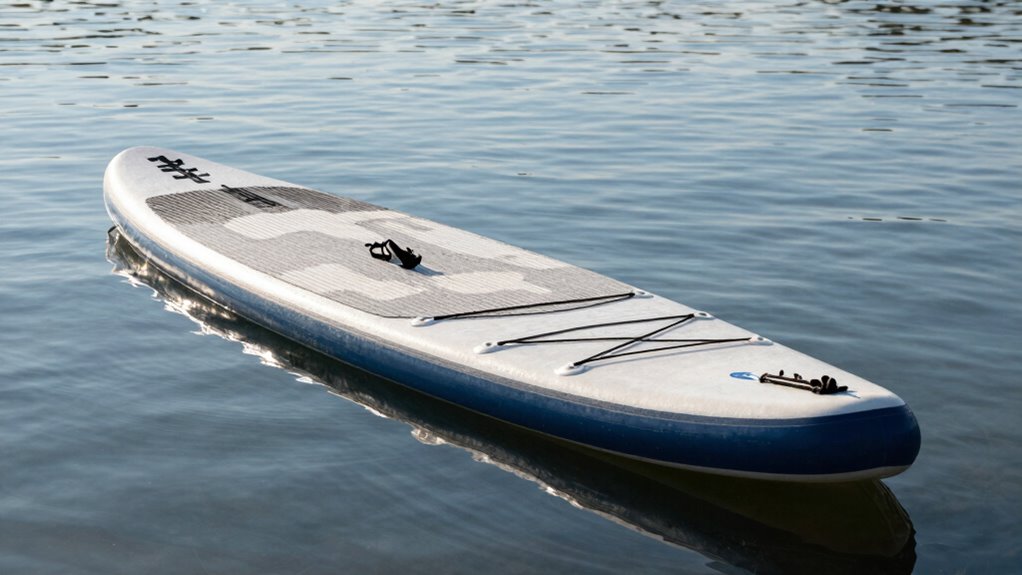
Selecting the right paddle board length is key to matching your paddling goals and ensuring a smooth experience on the water. Longer boards are ideal for touring and covering distance efficiently, while shorter boards offer better maneuverability for calmer lakes or beginner paddlers. Consider your preferred paddling environment and how you plan to use your board daily. When choosing length, also think about compatible paddle board accessories, like paddles and safety gear, to optimize your setup. Proper paddle board maintenance, such as regular cleaning and checking for damage, extends your board’s lifespan and keeps it performing at its best. Ultimately, selecting a board that aligns with your goals will improve your confidence and enjoyment on the water, making each paddle session more rewarding.
How Width Influences Your Balance and Maneuverability
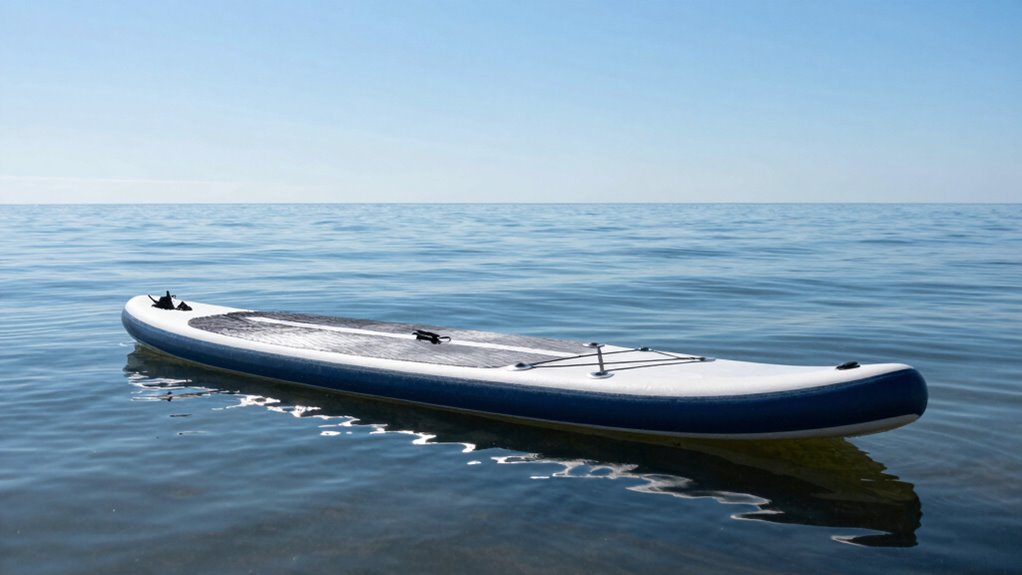
The width of your paddle board plays a crucial role in determining your balance and maneuverability on the water. A wider board offers greater stability, making it easier to maintain your footing, especially when standing for extended periods. However, increased width can limit quick turns, requiring more effort to pivot. The rocker shape influences how the board responds to your movements, enhancing maneuverability or stability depending on its curvature. The deck pad provides grip, helping you stay balanced during sharp turns or choppy conditions. Consider these factors:
- A broader deck increases stability but may reduce agility.
- Narrower boards excel in quick, tight turns.
- The combination of width and rocker shape impacts overall handling and comfort.
Choosing a Paddle Board Based on Your Skill Level and Environment
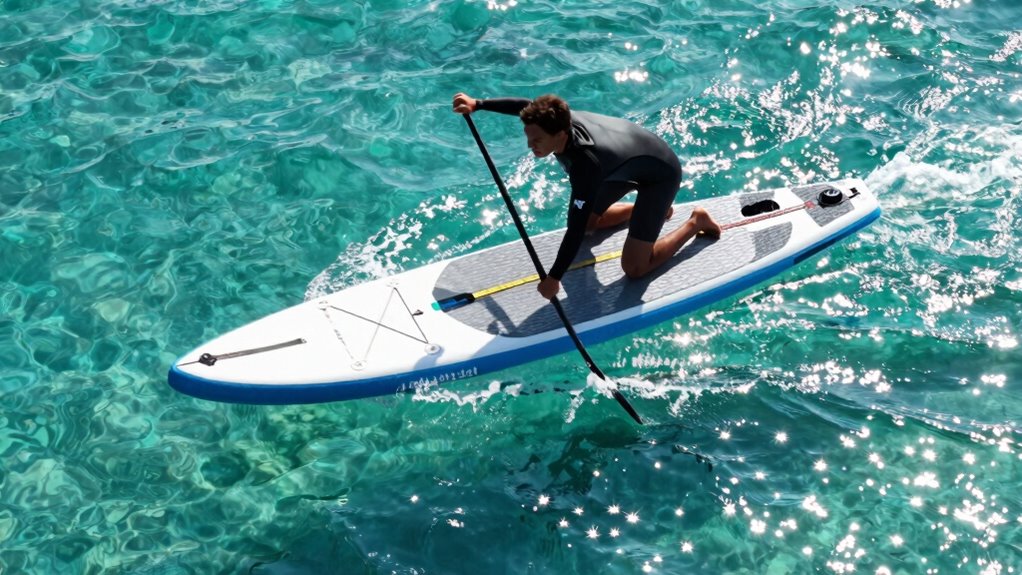
Choosing the right paddle board depends on your skill level and the environment where you’ll be paddling, as these factors directly influence the type of board that will perform best for you. Beginners benefit from stable, durable boards made of foam or epoxy, ideal for calm lakes or gentle rivers. Advanced paddlers may prefer lighter, responsive boards with carbon or fiberglass materials for better speed and agility. Environment also matters: touring on open water requires a longer, tracking-focused board, while calm inland waters suit wider, more maneuverable options. Consider paddle types too—adjustable paddles for versatility or lightweight fixed paddles for specific conditions. Here’s a quick guide:
| Skill Level | Environment | Recommended Board & Paddle Materials |
|---|---|---|
| Beginner | Calm lakes | Foam, epoxy; adjustable paddles |
| Intermediate | Rivers | Fiberglass, carbon; lightweight paddles |
| Advanced | Open water | Carbon; high-performance paddles |
| All levels | Mixed | Customizable paddle types |
Frequently Asked Questions
How Does Paddle Board Shape Affect Performance and Handling?
You’ll notice that the shape of your paddle board directly impacts performance and handling. A narrower, pointed nose boosts speed and tracking, making it easier to glide straight ahead, while a wider, rounded shape enhances board stability, giving you confidence on rough waters. For maneuverability, a more tapered design allows sharper turns. Choosing the right shape depends on whether you prioritize stability for beginners or agility for advanced paddling.
What Materials Are Best for Durable Touring Paddle Boards?
For durable touring paddle boards, you want materials with premium durability and strong board construction. Most often, epoxy resin combined with fiberglass or carbon fiber offers excellent durability, impact resistance, and light weight. These materials withstand rough water conditions and frequent use, ensuring your board lasts longer. You should look for a well-constructed board that uses high-quality materials, so it handles bumps and scrapes while maintaining performance over time.
How Does Weight Capacity Influence Paddle Board Selection?
Imagine you’re planning a multi-day trip with gear and supplies; your paddle board’s weight capacity directly influences your choice. If your load surpasses the board’s load limit, stability and safety suffer. Always select a board with a higher weight capacity than your total gear weight. This ensures you stay balanced, maneuver easily, and avoid overloading, making your paddleboarding experience safer and more enjoyable.
Can I Use a Touring Paddle Board for Surfing?
You can use a touring paddle board for surfing, but its surfing compatibility depends on its design. Touring boards aren’t typically optimized for wave riding, so they may lack the agility and maneuverability needed for fun, sharp turns. If wave riding is your main goal, consider a shorter, more agile board designed specifically for surfing. However, if you’re okay with less responsiveness, a touring board can handle small waves reasonably well.
What Accessories Enhance Touring Paddle Board Safety and Convenience?
To enhance safety and convenience on your touring paddle board, you should invest in essential safety gear like a life vest, leash, and whistle. Additionally, consider storage solutions such as waterproof bags or deck baits to keep your belongings dry and secure. These accessories make your journey safer and more comfortable, allowing you to focus on paddling while ensuring you’re prepared for any situation on the water.
Conclusion
Choosing the right touring paddle board is like finding the perfect dance partner—you want it to move smoothly with you. By understanding how length, width, and tracking influence your experience, you’ll glide across the water with confidence. Remember, the right board matches your skills and paddling goals, turning every outing into a graceful waltz on the waves. So gear up wisely, and let your paddling journey be as effortless as a gentle breeze.