
When setting up solar generators for overlanding, avoid underestimating your energy needs and choosing panels that are too inefficient or small. Make sure your battery capacity matches your device demands and optimize your solar panel positioning to prevent shading. Think about future expansion and sustainable options to minimize environmental impact. Proper balance and planning are key to reliable power during your adventures. Keep learning how to fine-tune your system for maximum efficiency and dependability.
Key Takeaways
- Properly assess your total energy needs to avoid power shortages during extended trips.
- Choose solar panels with high efficiency and ensure correct mounting to maximize sunlight capture.
- Balance battery capacity with solar panel efficiency to prevent slow recharging or insufficient power.
- Consider environmental impacts and select eco-friendly energy solutions aligned with local ecosystems.
- Plan for system scalability to accommodate future energy demands and avoid costly upgrades later.
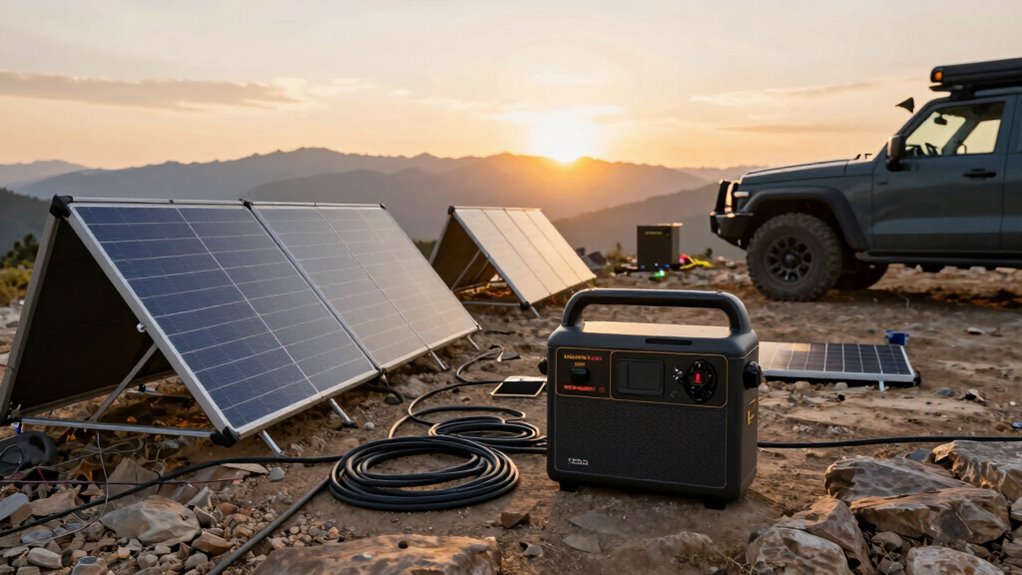
Are you looking for a reliable power source that keeps your overlanding adventures running smoothly? When choosing a solar generator, one of the most common setup mistakes is neglecting to consider battery capacity. You might think a smaller capacity is enough to power your devices, but underestimating your energy needs can leave you stranded without power when you need it most. Take stock of all the devices, gadgets, and appliances you plan to run, then select a generator with a battery capacity that comfortably meets those demands. Too often, overlanders opt for a generator with minimal capacity, only to find it quickly drained during extended trips. Properly assessing your battery needs ensures you won’t be caught off guard, especially when relying on solar power, which can be unpredictable due to weather conditions. Understanding the importance of biodiversity in the ecosystems you explore can also influence your choice in sustainable energy solutions. Being aware of the local environment can encourage you to choose eco-friendly and sustainable energy options that minimize your impact. Additionally, considering energy storage methods can help you maintain a steady power supply during periods of low sunlight.
Assess your power needs carefully to prevent running out of juice during extended overlanding adventures.
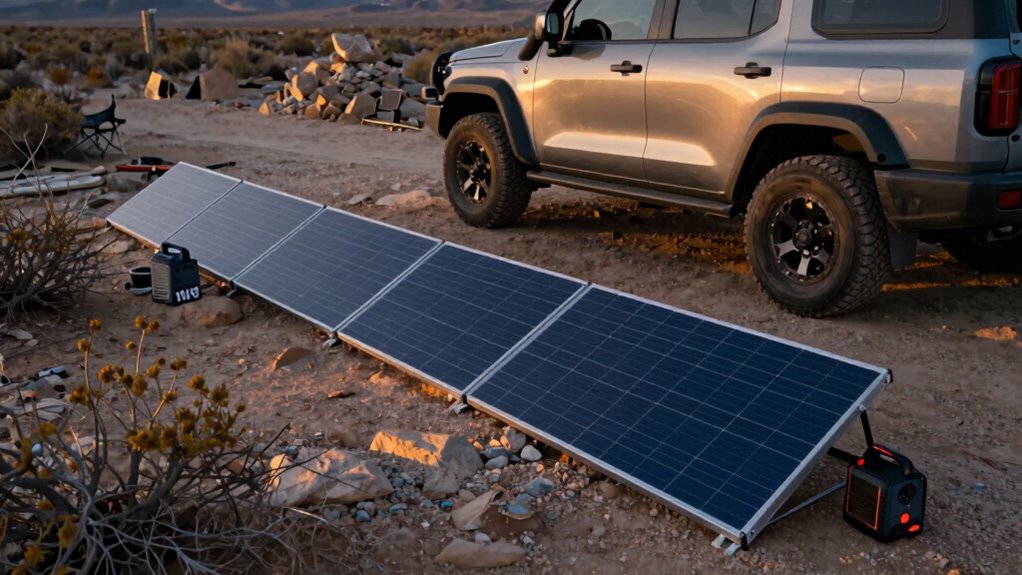
Another mistake is overlooking solar panel efficiency. Many overlanders assume that any solar panel will do, but not all panels are created equal. Solar panel efficiency directly impacts how quickly your generator recharges during the day. If you choose a low-efficiency panel, it’ll take longer to replenish your battery, which could mean running out of power when the sun isn’t shining. You should prioritize high-efficiency panels that maximize sunlight conversion, especially if you’re in areas with limited sun exposure or frequent cloud cover. Mounting and positioning your panels correctly is equally important—aim for optimal angles and avoid shading from trees or other obstacles that can reduce efficiency. Additionally, understanding how to optimize solar input can significantly enhance your setup’s performance, especially in variable weather conditions. Regularly monitoring and adjusting your setup can further improve overall efficiency and ensure reliable power.
Additionally, a common mistake is failing to understand the relationship between battery capacity and solar panel efficiency. If your battery capacity is large, but your solar panels are inefficient, your system won’t recharge quickly enough to sustain your power needs. Conversely, having high-efficiency panels with a small battery might mean you need to recharge more often or limit your device usage. Balancing these two factors ensures a setup that can reliably support your adventures without constant worry about power. This balance is crucial for long-term overlanding success and adapting to changing energy demands. Finally, don’t forget to consider the overall setup’s scalability. Your power needs might grow over time, so selecting a system that allows for easy expansion—adding more panels or upgrading the battery—can save you headaches later. By carefully evaluating your battery capacity, solar panel efficiency, and potential for expansion, you’ll create a solar generator setup that keeps your overlanding adventures powered and worry-free.
high capacity solar generator for overlanding
As an affiliate, we earn on qualifying purchases.
As an affiliate, we earn on qualifying purchases.
Frequently Asked Questions
Can Solar Generators Power High-Wattage Appliances Reliably?
Yes, solar generators can power high-wattage appliances reliably, but you need to take into account their battery capacity and charging speed. A larger battery capacity ensures your appliances have enough power during extended use, while faster charging speeds allow quick recharging from sunlight. To avoid issues, choose a solar generator with sufficient wattage output and a high-quality solar panel system, guaranteeing your high-wattage devices run smoothly without interruptions.
How Long Do Solar Panels Typically Last in an Overlanding Setup?
Solar panels in an overlanding setup typically last between 25 to 30 years, but this depends on your panel’s durability and how well you maintain it. Over time, battery efficiency may decline, so inspecting panels regularly helps guarantee peak power generation. You should also protect your panels from harsh weather and debris, which can impact their longevity. Proper care keeps your solar setup reliable for many adventures ahead.
Are Portable Solar Generators Theft-Proof During Overnight Stops?
Portable solar generators aren’t entirely theft-proof during overnight stops, but you can improve security by using theft prevention measures like locking enclosures, cable locks, or storing them out of sight. Keep an eye on your setup and choose discreet locations to minimize theft concerns. While no solution is foolproof, combining these strategies helps protect your equipment and gives you peace of mind during your overlanding adventures.
What Maintenance Is Required for Solar Generators While Overlanding?
You won’t need a degree in astrophysics to keep your solar generator happy on the road. Just follow a simple maintenance checklist—keep it clean, check connections, and monitor the battery lifespan regularly. A little TLC guarantees your device’s longevity and peak performance, saving you from unexpected power outages. Think of it as giving your solar buddy a spa day—simple, quick, and totally worth it for endless adventures.
Can Solar Generators Be Expanded for Increased Energy Needs?
Yes, you can expand your solar generator for increased energy needs. You’ll mainly want to increase battery capacity by adding extra batteries or modules, and consider different charging options like AC, DC, or solar input to keep everything charged efficiently. Make sure your setup supports expansion, and verify compatibility with additional components. This way, your overlanding adventures won’t be limited by energy constraints, keeping your gear powered and ready.
high efficiency portable solar panels
As an affiliate, we earn on qualifying purchases.
As an affiliate, we earn on qualifying purchases.
Conclusion
To keep your overlanding adventures powered smoothly, avoid common setup mistakes like overestimating your energy needs or neglecting proper wiring. Picture Sarah, who thought a small solar generator would suffice but ended up stranded with dead batteries during her trip. Learn from her mistake—calculate your power requirements accurately and invest in quality components. With the right setup, you’ll enjoy endless off-grid adventures without the worry of losing power.
solar panel mounting kit for RV
As an affiliate, we earn on qualifying purchases.
As an affiliate, we earn on qualifying purchases.
solar power monitoring system for camping
As an affiliate, we earn on qualifying purchases.
As an affiliate, we earn on qualifying purchases.