
You should prioritize your water storage and filtration planning because they safeguard your health, especially during emergencies when water access may be disrupted. Properly storing and filtering water guarantees it stays safe and free from harmful contaminants, reducing illness risks. Investing time now helps build resilience, decrease reliance on single-use bottles, and lessen your environmental footprint. If you want to understand how to make your water system more reliable and sustainable, there’s more to explore below.

Turn the school run and nap time into listening time
- Thousands of audiobooks, podcasts and originals
- Listen on your phone, tablet or Echo — also offline
- Cancel anytime
Key Takeaways
- Proper planning ensures sufficient, safe water supply during emergencies, preventing dehydration and waterborne illnesses.
- Investing in storage and filtration reduces reliance on single-use bottles, promoting environmental sustainability.
- Well-designed systems improve water quality, safeguarding health and minimizing contamination risks.
- Strategic planning enhances household resilience against water shortages and infrastructure failures.
- Developing these systems proactively supports long-term resource efficiency and emergency preparedness.
Are you prepared to guarantee a reliable supply of clean water in your home or community? Water storage and filtration planning might not seem urgent until a crisis hits, but neglecting it can leave you vulnerable when you need it most. By taking the time to develop a solid plan, you ensure that you’re ready for emergencies and contribute to sustainability practices that benefit both your household and the environment. Proper planning helps you avoid shortages, contaminated water, and unnecessary expenses, giving you peace of mind in uncertain times.
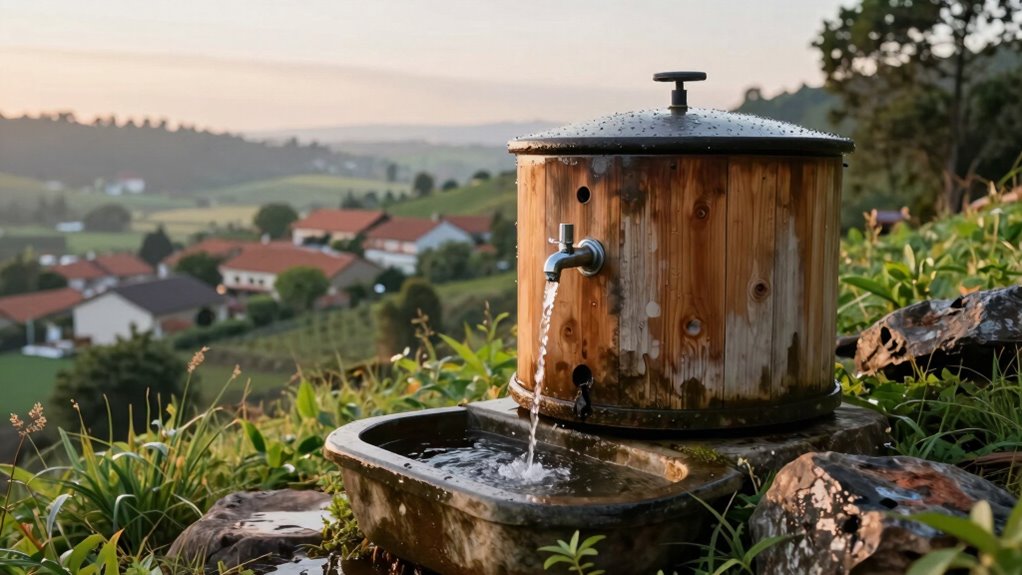
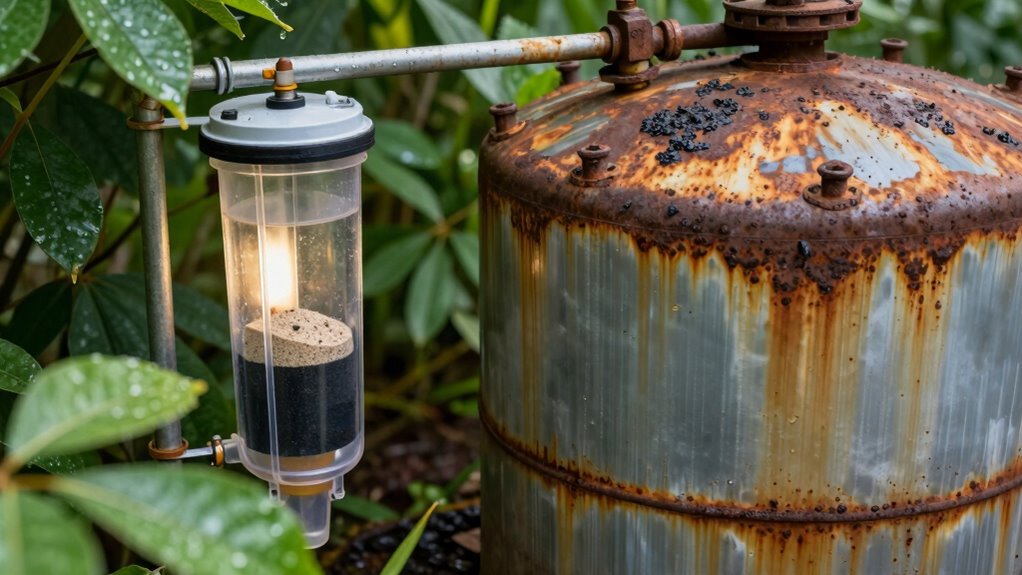
Emergency preparedness is at the core of why water storage and filtration deserve more attention. Disasters like natural calamities, power outages, or infrastructure failures can quickly disrupt your access to safe water. When you plan ahead, you can store enough water to last several days, preventing dehydration and waterborne illnesses. Choosing appropriate storage containers—preferably food-grade, durable, and sealed tightly—ensures that water stays clean and safe over time. Regularly rotating stored water keeps it fresh, and installing reliable filtration systems removes harmful contaminants from tap or well water, giving you an extra layer of security. These measures are simple yet vital components of emergency preparedness, making sure you’re not caught unprepared when the unexpected occurs. Additionally, understanding the importance of water quality and how it impacts health reinforces the need for effective filtration systems. Recognizing the significance of biodiversity in maintaining healthy water ecosystems can also influence your choices in sustainable water management. Incorporating water testing into your routine can help monitor the effectiveness of your filtration systems and ensure ongoing water safety. A comprehensive plan that includes water conservation strategies can further enhance your resilience and reduce overall water demand during shortages. Developing a comprehensive water management plan can optimize your resources and ensure long-term sustainability.
Sustainability practices are another reason to give water storage and filtration more thought. Wasteful use of resources and reliance on single-use bottles contribute to environmental degradation. Reusable storage tanks, coupled with effective filtration, reduce plastic waste and lower your carbon footprint. Additionally, collecting rainwater or using greywater systems can supplement your water supply, further promoting sustainability. By planning carefully, you minimize water wastage and make efficient use of natural resources. This approach not only helps your household become more resilient but also supports broader environmental goals. It’s about creating systems that are efficient, eco-friendly, and capable of serving you well over the long term.
Ultimately, water storage and filtration planning are investments in your safety and the health of the planet. Instead of waiting for a crisis to reveal vulnerabilities, you can proactively develop systems that ensure a steady, clean water supply. This proactive stance aligns with emergency preparedness principles and sustainable practices, emphasizing resilience and responsible resource management. When you put thought into your water storage and filtration setup now, you’re building a foundation that will serve you reliably through any challenge that comes your way. It’s an essential step toward greater independence, safety, and environmental consciousness.
food grade water storage containers
As an affiliate, we earn on qualifying purchases.
As an affiliate, we earn on qualifying purchases.
Frequently Asked Questions
How Often Should Water Filters Be Replaced?
You should replace your water filters according to the manufacturer’s recommended filter lifespan, typically every 2 to 6 months. Regularly changing filters guarantees peak water quality, removing contaminants effectively. Keep an eye on signs like reduced water flow or bad taste, which indicate it’s time for a replacement. Maintaining your filters not only protects your health but also prolongs the lifespan of your filtration system.
What Is the Best Material for Water Storage Tanks?
The best material for water storage tanks is high-density polyethylene (HDPE) because it offers excellent material durability and resists corrosion, making it ideal for long-term tank maintenance. HDPE tanks are lightweight, durable, and easy to clean, which helps prevent bacteria buildup. When choosing a tank, prioritize these qualities to guarantee safe, reliable water storage, and remember regular maintenance to extend its lifespan.
Can Filtration Systems Remove All Types of Contaminants?
Think of filtration systems as gatekeepers trying to catch every troublemaker. Unfortunately, they can’t remove all contaminant types, especially the tiniest particles or chemicals that slip through the cracks. Filtration limitations mean some pollutants, like viruses or dissolved toxins, might still sneak into your water. You need multiple layers of treatment to cover all bases, ensuring your water is as pure as a mountain stream.
How Much Water Storage Capacity Is Needed for Emergencies?
You should aim for at least a three-day supply of water for emergency preparedness, which typically amounts to one gallon per person per day. This guarantees you maintain good water quality during crises. Adjust your storage capacity based on your household size and specific needs. Planning for sufficient water storage helps you stay prepared, reduces stress during emergencies, and ensures access to safe water when regular sources are unavailable.
Are There Eco-Friendly Options for Water Filtration?
Think of choosing water filtration as planting a garden of sustainable solutions. Eco-friendly options like biodegradable filters break down naturally, reducing waste, while solar-powered filtration harnesses the sun’s energy, making clean water accessible without harming the planet. These choices guarantee you’re nurturing a healthier environment, just as a garden flourishes with care. Embracing solar and biodegradable solutions transforms your water system into a resilient, eco-conscious oasis.
emergency water filtration system
As an affiliate, we earn on qualifying purchases.
As an affiliate, we earn on qualifying purchases.
Conclusion
Think of water as the lifeblood flowing through your world—essential, yet fragile if left unguarded. By planning your storage and filtration, you’re planting seeds of resilience, nurturing a future where purity and availability aren’t just hopes but guarantees. Let your efforts be the sturdy anchor in a stormy sea, symbolizing protection and foresight. When you prioritize water safety, you’re not just safeguarding supplies—you’re cultivating a legacy of health and stability for all who depend on it.
As an affiliate, we earn on qualifying purchases.
portable water purification filter
As an affiliate, we earn on qualifying purchases.
As an affiliate, we earn on qualifying purchases.
Fall Picks
fall essentials
As an affiliate, we earn on qualifying purchases.